
Subtotal ₹0.00



 Watch on YouTube

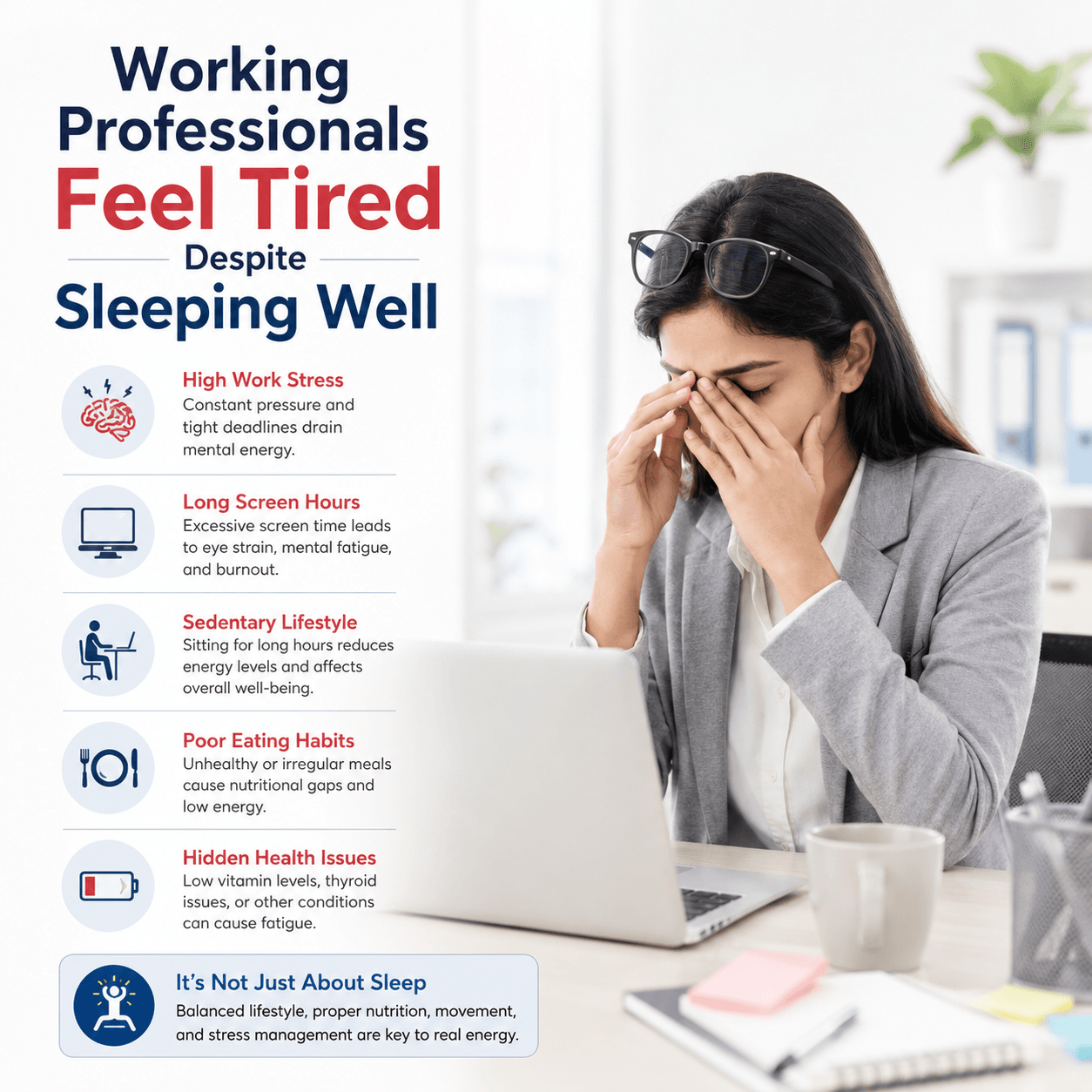
Why Working Professionals Feel Tired Despite Sleeping Well
Tired Despite Sleeping Well? 7 Possible Causes
Many working professionals today complain of constant fatigue even after getting what appears to be “adequate sleep.” They may sleep for seven or eight hours, yet still wake up feeling unrefreshed, mentally drained, low in energy, and dependent on caffeine to function throughout the day.
This often becomes frustrating because people assume that sleep duration alone should completely solve fatigue. However, the reality is much more complex.
Understanding why working professionals feel tired despite sleeping well is becoming increasingly important because persistent fatigue is frequently linked to stress overload, poor metabolic health, sedentary routines, hormonal imbalance, mental exhaustion, poor sleep quality, and unhealthy lifestyle patterns rather than sleep duration alone.

In clinical practice, I commonly see professionals who are sleeping for reasonable hours but are still struggling with low energy levels, reduced focus, poor stamina, irritability, sugar cravings, and declining metabolic health.
Why “Sleeping Enough” Does Not Always Mean Proper Recovery
One of the biggest misconceptions is assuming that sleep quantity automatically guarantees recovery. The body requires not only adequate sleep duration but also good-quality restorative sleep.
Several factors influence how restorative sleep actually becomes:
- Stress levels
- Sleep timing
- Mental overload
- Screen exposure
- Metabolic health
- Physical activity patterns
A person may technically sleep for seven to eight hours but still experience poor-quality recovery if these factors remain disturbed. This is one major reason why working professionals feel tired despite sleeping well.
Hidden Reason 1: Chronic Stress Keeps the Body in “Alert Mode”
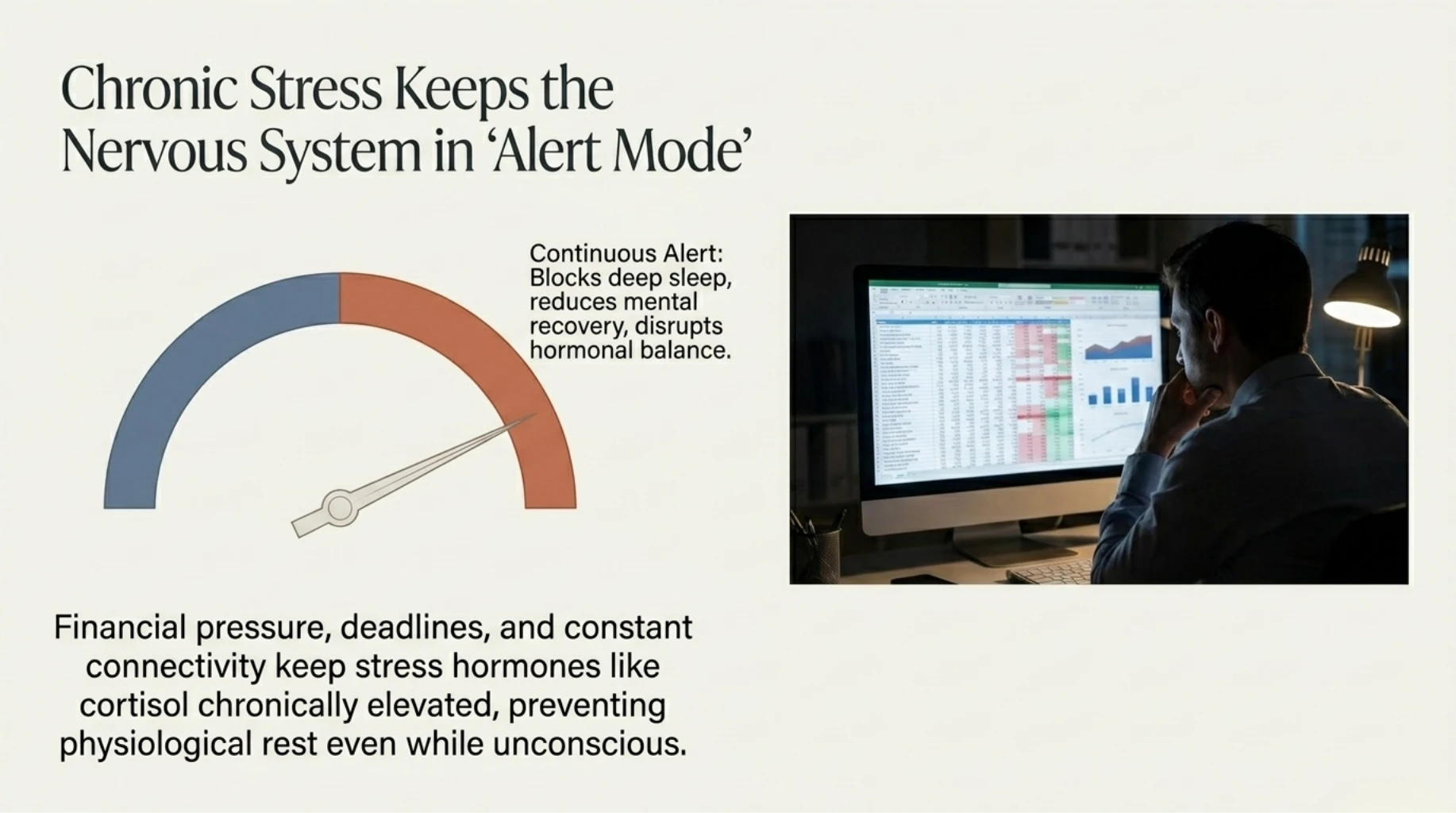
Modern professional life often involves continuous mental stimulation and psychological stress. Deadlines, multitasking, financial pressure, performance expectations, prolonged screen exposure, and constant connectivity keep the nervous system highly activated for long durations.
Even during sleep, the body may remain physiologically stressed.
Chronically elevated stress hormones such as cortisol can interfere with:
- Deep sleep quality
- Mental recovery
- Energy restoration
- Hormonal balance
As a result, many professionals wake up mentally tired despite apparently “adequate” sleep duration. This is one of the strongest explanations for why working professionals feel tired despite sleeping well.
Hidden Reason 2: Poor Sleep Quality Despite Adequate Sleep Duration
Sleep quality matters as much as sleep quantity.
Many individuals experience fragmented or shallow sleep because of:
- Late-night screen exposure
- Stress overload
- Irregular sleep timing
- Late-night meals
- Excess caffeine intake
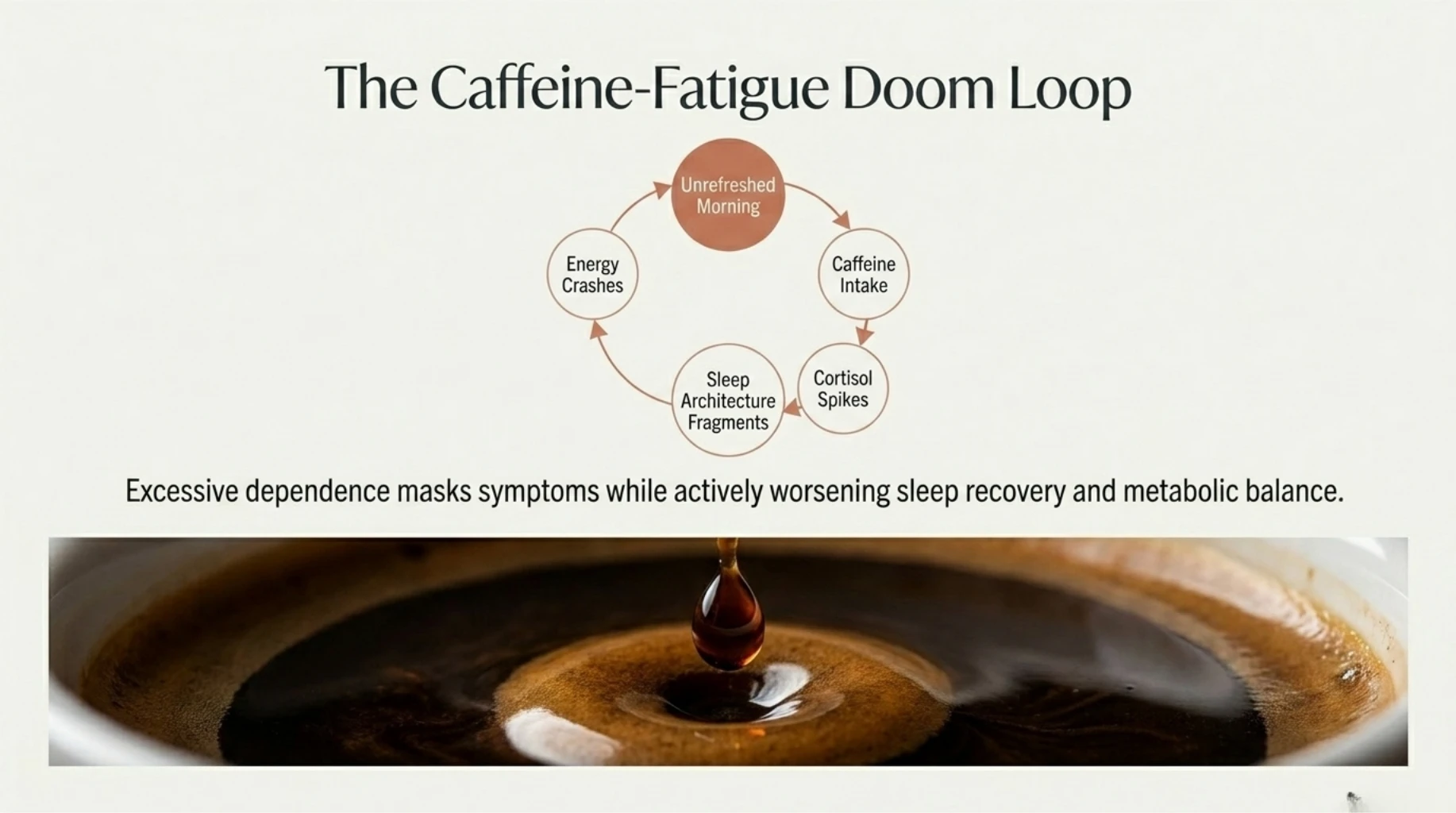
Even if total sleep hours appear acceptable, disrupted sleep architecture reduces the body’s ability to recover efficiently.
As a result, individuals may wake up feeling:
- Unrefreshed
- Mentally foggy
- Low in motivation
- Dependent on stimulants for energy
This hidden sleep-quality problem is extremely common among urban professionals.
Hidden Reason 3: Sedentary Lifestyle Reduces Energy Efficiency
Ironically, physical inactivity itself often contributes significantly to fatigue.
Many professionals spend most of the day:
- Sitting at desks
- Using screens continuously
- Engaging in minimal physical movement
- Remaining indoors for prolonged periods
Over time, prolonged inactivity reduces cardiovascular conditioning, muscular efficiency, and metabolic flexibility. As a result, the body gradually becomes less efficient at energy production and utilization.
This creates a cycle where low energy reduces physical activity, and low physical activity further worsens fatigue. This is another important reason why working professionals feel tired despite sleeping well.
Why Mental Fatigue and Physical Fatigue Often Overlap
Modern professional fatigue is often not purely physical. Continuous information overload, decision fatigue, multitasking, prolonged concentration, and digital stimulation create significant mental exhaustion.
The brain itself requires adequate recovery and downtime.
Without sufficient mental recovery, many individuals experience:
- Brain fog
- Poor concentration
- Irritability
- Reduced productivity
- Low motivation
This mental exhaustion often becomes mistaken for simple “lack of sleep” even though the underlying issue may involve broader lifestyle overload.
Why Persistent Fatigue Should Not Always Be Ignored
Occasional tiredness is normal during stressful periods or temporary sleep disruption. However, persistent fatigue lasting for weeks or months deserves attention because it may reflect deeper metabolic or lifestyle imbalance.
Many professionals gradually normalize:
- Daily exhaustion
- Dependence on caffeine
- Low exercise tolerance
- Poor concentration
- Reduced motivation
because these problems have become extremely common in modern urban life.
Understanding why working professionals feel tired despite sleeping well helps identify these warning patterns earlier before deeper metabolic dysfunction develops.
Hidden Reason 4: Blood Sugar Fluctuations Quietly Drain Energy
One of the most overlooked causes of persistent fatigue in working professionals is unstable blood sugar regulation.
Many individuals consume:
- Frequent sugary tea or coffee
- Refined snacks during work
- Irregular meals
- Late-night eating
- High-carbohydrate convenience foods
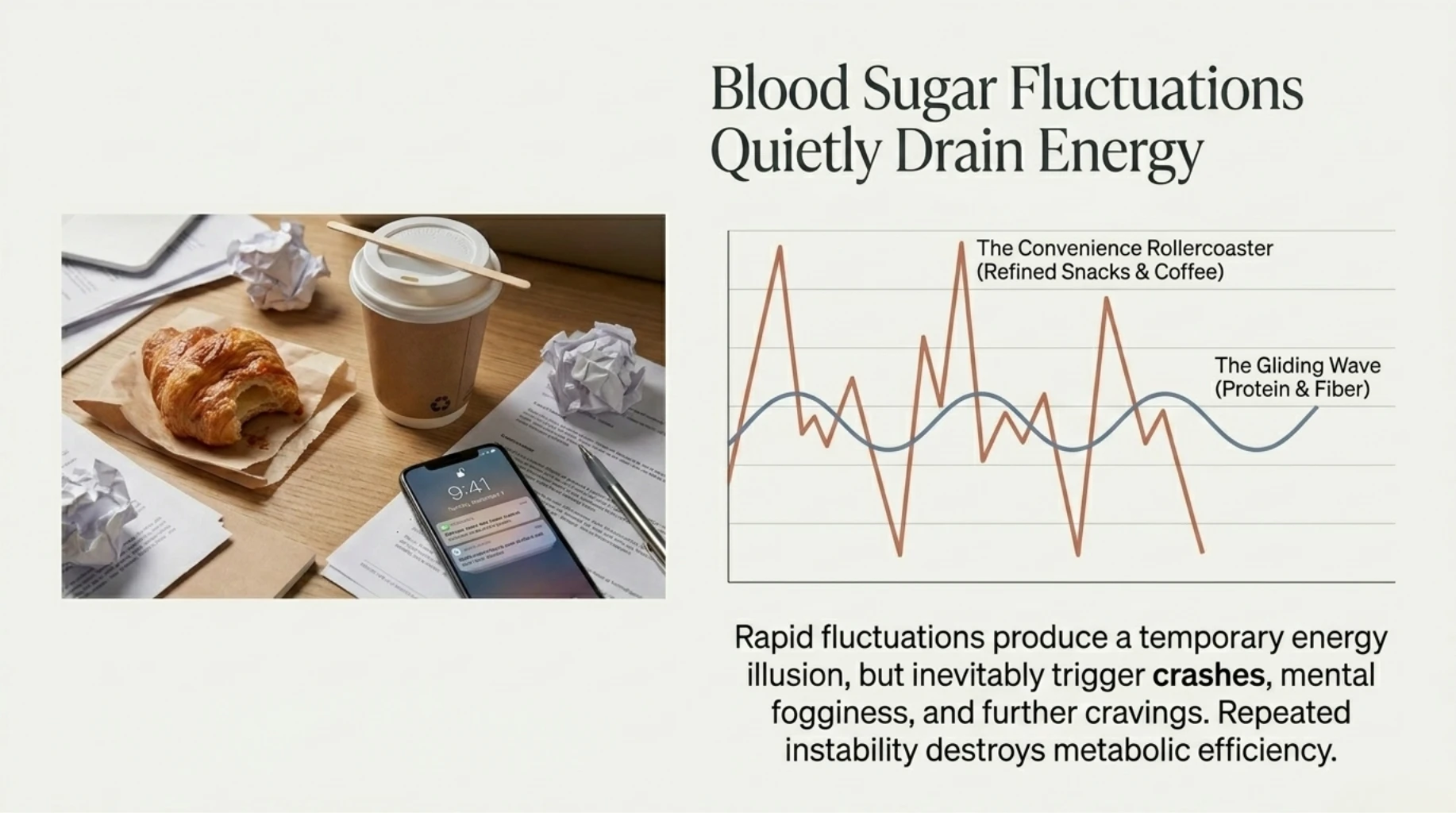
These patterns repeatedly disturb glucose and insulin balance throughout the day. Initially, sugary or refined foods may produce temporary energy improvement. However, rapid blood sugar fluctuations are often followed by energy crashes, mental fogginess, and cravings for more stimulants or snacks.
Over time, repeated blood sugar instability worsens metabolic efficiency and contributes to chronic fatigue. This is another major explanation for why working professionals feel tired despite sleeping well.
Hidden Reason 5: Poor Dietary Quality Affects Cellular Energy Production
Modern busy schedules often push professionals toward convenient but nutritionally poor food choices.
Meals may become dominated by:
- Processed foods
- Refined carbohydrates
- Fast food
- Excess caffeine
- Low protein intake
While calorie intake may remain high, nutrient quality may still be inadequate.
The body requires adequate:
- Protein
- Micronutrients
- Minerals
- Healthy fats
- Fiber
for efficient energy production and metabolic function. Poor dietary quality therefore contributes not only to weight gain and metabolic dysfunction but also to low energy and poor recovery.

Hidden Reason 6: Physical Inactivity Weakens Mitochondrial Efficiency
The body’s cells produce energy through structures called mitochondria. Regular physical activity improves mitochondrial efficiency and metabolic flexibility.
However, prolonged sedentary behavior gradually reduces cardiovascular conditioning and cellular energy efficiency.
As a result:
- Physical stamina declines
- Fatigue develops more easily
- Exercise tolerance worsens
- Recovery becomes slower
This is why many sedentary professionals feel exhausted after relatively minor physical activity despite apparently “adequate” sleep. The body gradually loses metabolic resilience when movement remains consistently low.
Hidden Reason 7: Hormonal Stress and Burnout Affect Energy Levels
Persistent professional stress affects hormonal balance significantly. When stress remains chronic for prolonged periods, the body continuously stays in a high-alert state.
Over time, this affects:
- Cortisol regulation
- Sleep quality
- Appetite control
- Mental recovery
- Metabolic efficiency
Many professionals eventually experience emotional exhaustion and burnout-like symptoms even while continuing their routine work schedules.
This type of fatigue often feels different from simple sleep deprivation because the body and mind remain mentally overloaded continuously. This is another major reason why working professionals feel tired despite sleeping well.
Why Excess Caffeine Often Makes the Problem Worse
Many tired professionals compensate through repeated caffeine intake during the day.
While caffeine may temporarily improve alertness, excessive dependence often creates additional problems:
- Poor sleep quality
- Higher stress hormone activity
- Energy crashes later
- Increased mental overstimulation
This creates a cycle where fatigue increases caffeine use, and excessive caffeine further worsens sleep recovery and metabolic balance.
Why Working Professionals Commonly Ignore Early Fatigue Warning Signs
One major challenge is that chronic fatigue develops gradually.
Most professionals normalize:
- Waking up tired
- Feeling dependent on coffee
- Reduced exercise motivation
- Mental exhaustion
- Weekend burnout
because these patterns are extremely common in modern work culture.
However, persistent fatigue may quietly indicate:
- Poor metabolic health
- Insulin resistance
- Chronic stress overload
- Poor sleep quality
- Lifestyle imbalance
This is why ongoing fatigue should not always be dismissed as “normal busy life.”
Why Modern Professional Life Creates Continuous Recovery Deficit
Modern work environments frequently combine multiple energy-draining factors together:
- Long sitting hours
- Mental overload
- Poor recovery routines
- Continuous screen exposure
- Reduced physical movement
- Irregular eating patterns
- Stress overload
Over time, the body gradually loses its ability to recover efficiently despite technically “sleeping enough.” Understanding why working professionals feel tired despite sleeping well helps explain that energy depends on much more than sleep duration alone.
How Working Professionals Can Improve Energy Levels Naturally
The good news is that persistent fatigue often improves significantly when underlying lifestyle and metabolic imbalances are corrected consistently.
The goal is not simply increasing stimulation temporarily through caffeine or sugar. The real objective is improving recovery quality, metabolic efficiency, physical conditioning, stress regulation, and overall energy balance.
This is where understanding why working professionals feel tired despite sleeping well becomes practically useful because it shifts the focus toward correcting the real causes of fatigue instead of masking symptoms temporarily.
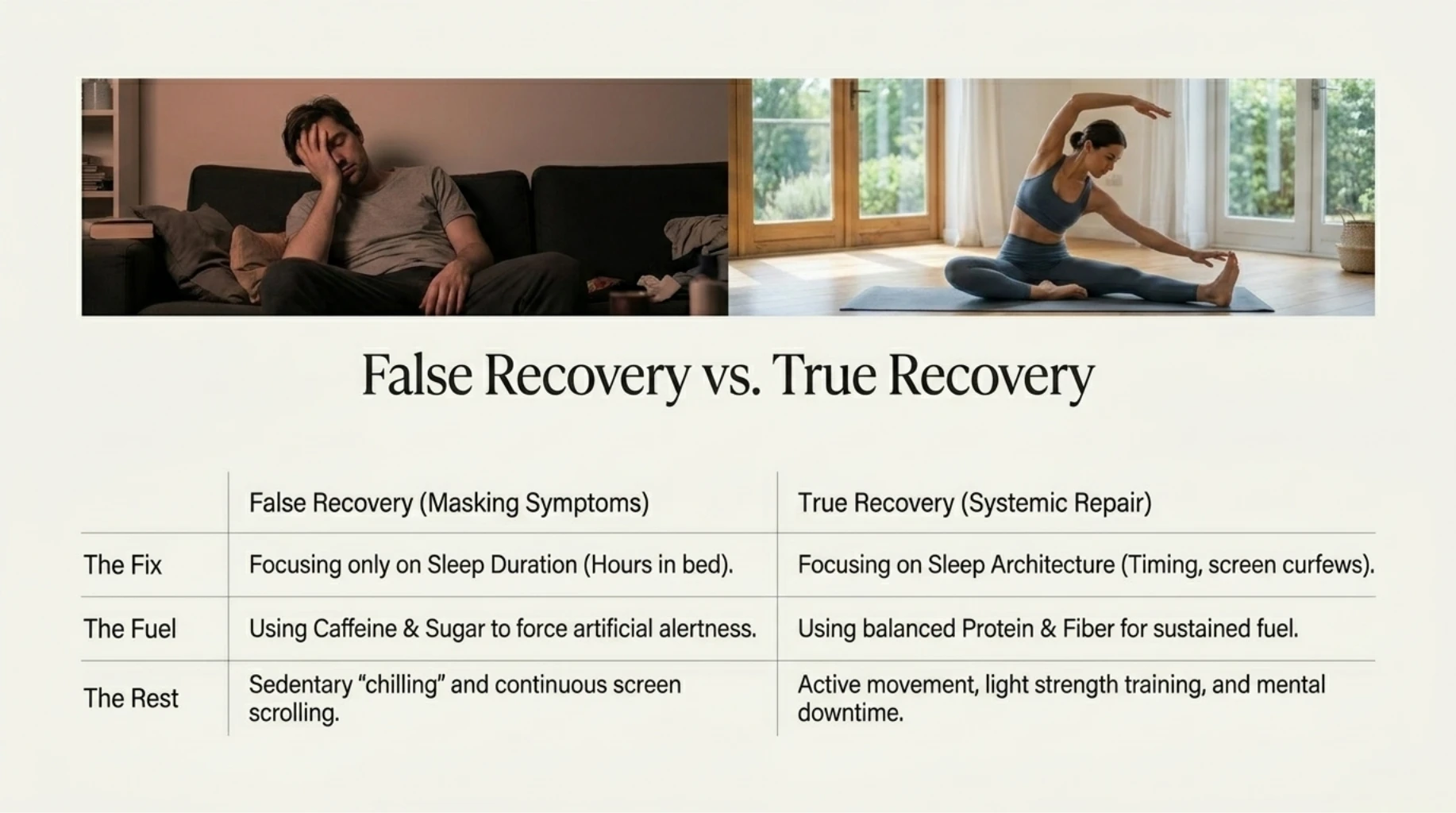
Improve Sleep Quality, Not Just Sleep Duration
Many professionals focus only on the number of sleep hours while ignoring sleep quality.
Restorative sleep depends heavily on:
- Stress levels
- Sleep timing consistency
- Reduced screen exposure
- Healthy recovery routines
- Reduced nighttime overstimulation
Helpful habits include:
- Maintaining more regular sleep timing
- Reducing late-night screen use
- Avoiding excessive mental stimulation before sleep
- Reducing heavy late-night meals
These changes often improve mental recovery and daytime energy significantly.
Regular Physical Activity Improves Energy Production
One of the biggest misconceptions is believing that exercise drains energy in already tired individuals.
In reality, regular movement improves:
- Cardiovascular conditioning
- Mitochondrial efficiency
- Circulation
- Metabolic flexibility
- Stress regulation
Over time, physically active individuals often experience better energy stability compared with highly sedentary individuals.
Even simple routines such as:
- Daily walking
- Light strength training
- Reducing prolonged sitting
- Increasing outdoor movement
may improve fatigue significantly when practiced consistently.
Stabilize Blood Sugar Through Better Meal Structure
Irregular eating patterns and excessive refined food intake commonly worsen fatigue by creating repeated blood sugar fluctuations. A more balanced meal structure helps improve metabolic stability and energy regulation.
Helpful strategies include:
- Reducing excessive sugary snacks
- Improving protein intake
- Maintaining more regular meal timing
- Reducing ultra-processed foods
- Increasing fiber-rich foods
Reduce Dependence on Continuous Caffeine Stimulation
Many professionals become trapped in a cycle where fatigue increases caffeine intake, and excessive caffeine worsens sleep quality and stress levels.
While moderate caffeine may be acceptable for many individuals, excessive intake often contributes to:
- Sleep disturbance
- Higher cortisol activity
- Energy crashes
- Mental overstimulation
Reducing excessive caffeine dependence gradually often improves both sleep quality and long-term energy stability.
Stress Management Is Essential for Recovery
Mental exhaustion is one of the biggest hidden drivers of fatigue in working professionals. Continuous multitasking, prolonged digital engagement, work pressure, and lack of psychological recovery gradually exhaust the nervous system.
Helpful recovery-supportive habits include:
- Regular movement breaks
- Improved work-life boundaries
- Outdoor activity
- Reducing unnecessary screen overload
- Creating mental downtime
Many professionals notice major energy improvement after reducing chronic stress overload even before major dietary changes occur.
Muscle Health Plays an Important Role in Energy Levels
Muscle tissue is not only important for strength and appearance. It also plays a major role in metabolic efficiency and glucose utilization. Sedentary lifestyles gradually reduce muscle conditioning and metabolic flexibility.
This is why maintaining muscle health through regular activity and adequate protein intake helps improve:
- Physical stamina
- Energy stability
- Insulin sensitivity
- Recovery efficiency
This becomes increasingly important with aging and prolonged office-based work routines.
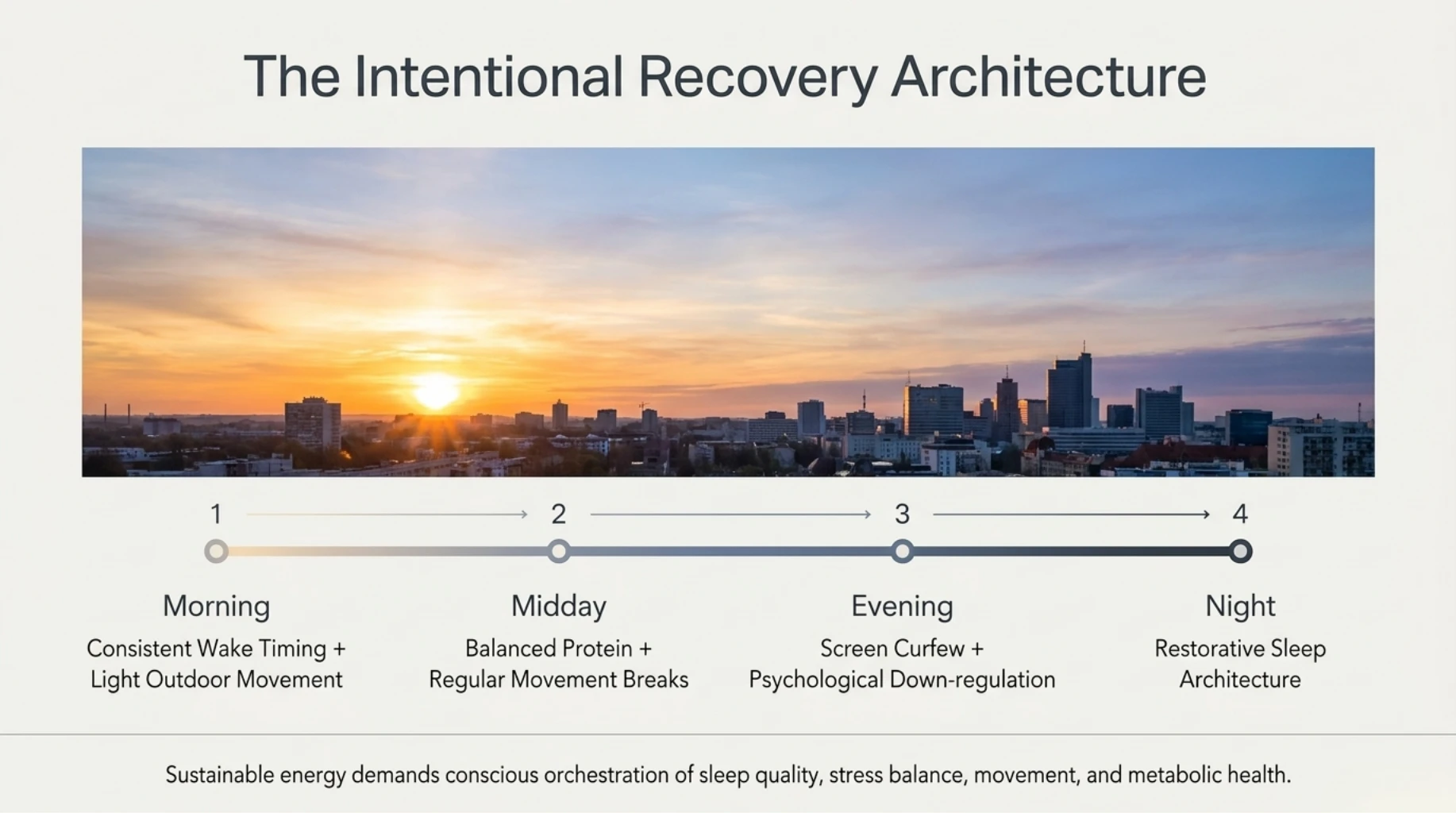
Energy Depends on Recovery Quality, Not Just Motivation
Many professionals blame themselves for “lack of motivation” when they feel persistently tired. In reality, fatigue is often a physiological signal indicating inadequate recovery, excessive stress load, poor metabolic health, or chronic lifestyle imbalance.
The solution therefore involves improving recovery systems rather than forcing constant productivity despite exhaustion.
Modern Professional Life Requires Intentional Recovery Planning
Earlier lifestyles naturally included more physical movement, outdoor activity, and recovery periods.
Modern professional life often combines:
- Long sitting hours
- Continuous mental stimulation
- Screen overload
- Reduced movement
- Irregular schedules
- Poor recovery routines
Without intentional lifestyle correction, fatigue gradually becomes chronic despite apparently adequate sleep duration. This is why sustainable energy management now requires conscious attention to sleep quality, stress balance, movement, nutrition, and metabolic health together.
You can explore a structured lifestyle approach here:
Lifestyle Modification Program
Key Take-Home Messages
- Sleep duration alone does not guarantee proper recovery or energy restoration
- Stress overload and poor sleep quality commonly cause persistent fatigue
- Blood sugar instability and sedentary routines worsen energy regulation
- Physical activity improves mitochondrial and metabolic efficiency
- Long-term energy depends heavily on recovery quality and lifestyle balance
Final Thoughts
Understanding why working professionals feel tired despite sleeping well helps explain that persistent fatigue is often driven by broader lifestyle and metabolic imbalance rather than sleep duration alone.
Modern work culture frequently combines stress overload, prolonged sitting, poor recovery routines, irregular meals, and continuous mental stimulation together. Over time, this creates chronic physiological and mental exhaustion.
The earlier healthier recovery habits become part of daily life, the greater the long-term improvement in energy, metabolic health, mental clarity, and overall wellbeing.
If you want a personalized metabolic and lifestyle assessment, you can book a consultation here:
Book an Appointment
Disclaimer: This article is for educational purposes only and should not replace medical advice. Individual treatment should be based on clinical evaluation.


