
Subtotal ₹0.00



 Watch on YouTube

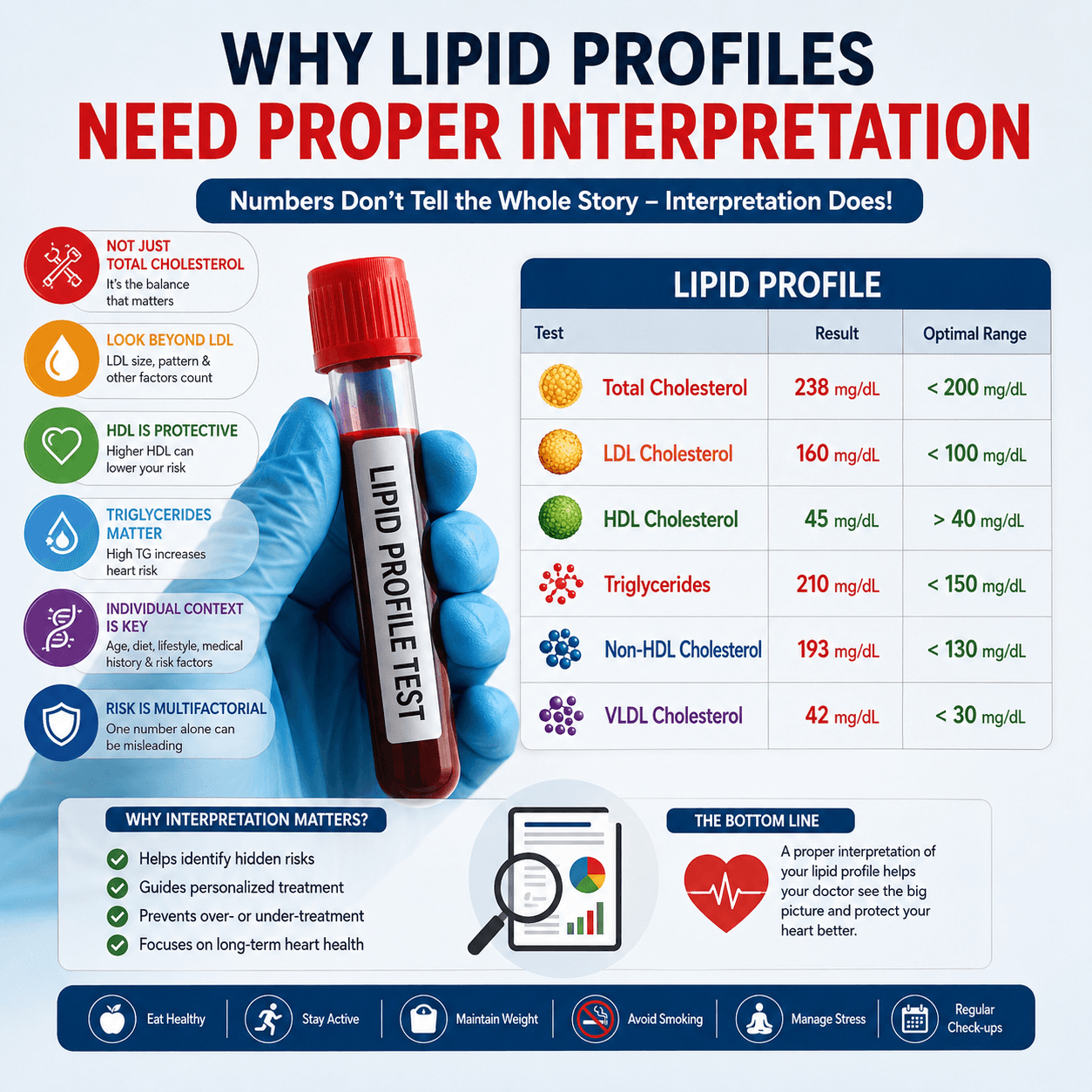
Why Lipid Profiles Need Proper Interpretation: 8 Hidden Mistakes Patients Make
One of the most common situations I see in clinical practice is patients becoming anxious after looking at a lipid profile report without fully understanding what the numbers actually mean.
Some patients panic because their total cholesterol is slightly elevated. Others feel reassured because one value appears “normal,” even though the overall pattern may still indicate metabolic risk.
This is exactly why why lipid profiles need proper interpretation is an important topic in preventive healthcare.
A lipid profile is not simply a collection of numbers. It is a metabolic snapshot that reflects how the body is handling fats, energy balance, insulin resistance, and cardiovascular risk.
Without proper interpretation, important warning signs can easily be missed.
What Does a Lipid Profile Actually Include?
A standard lipid profile usually includes:
- Total cholesterol
- Low-density lipoprotein (LDL)
- High-density lipoprotein (HDL)
- Triglycerides
Each of these values provides different information about cardiovascular and metabolic health.
However, many patients focus only on one number, usually total cholesterol, without understanding how these components interact with each other.
This is one of the biggest reasons why lipid profiles need proper interpretation instead of isolated analysis.
Why Looking at a Single Number Can Be Misleading
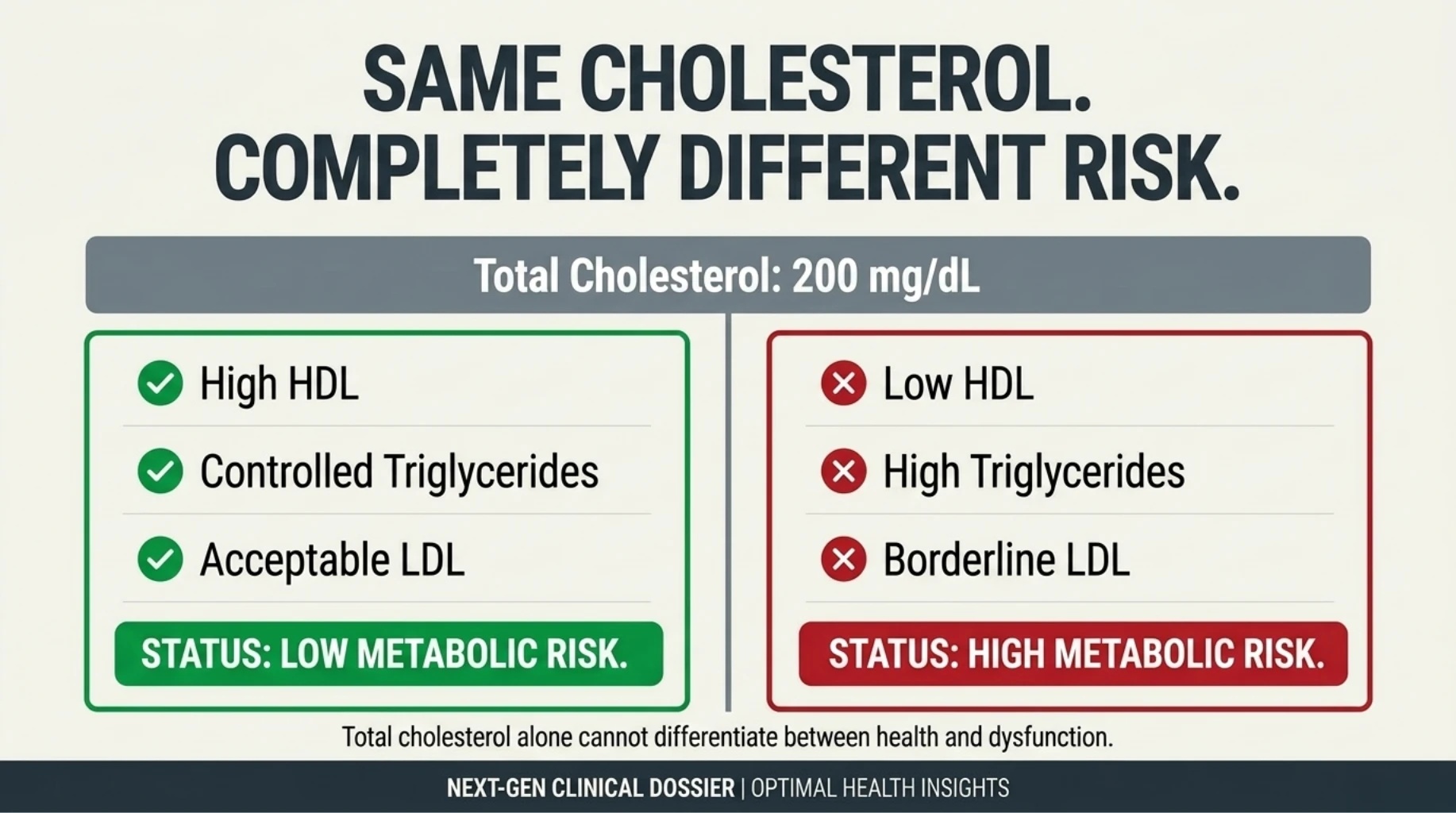
Imagine two patients with exactly the same total cholesterol level. The first patient has high HDL, controlled triglycerides, and acceptable LDL levels.
The second patient has low HDL, high triglycerides, and borderline elevated LDL. Even though the total cholesterol value may look similar, the second patient usually carries a much higher metabolic and cardiovascular risk.
This demonstrates why why lipid profiles need proper interpretation becomes clinically important.
The Hidden Role of Triglycerides
Triglycerides are often underestimated in routine practice, but they provide valuable information about metabolic health.
Elevated triglycerides commonly indicate:
- High refined carbohydrate intake
- Insulin resistance
- Fatty liver tendency
- Poor metabolic flexibility
Many individuals with elevated triglycerides still have “acceptable” total cholesterol values. Without proper interpretation, this early warning sign may be ignored for years.
Why HDL Is More Important Than Many Patients Realize
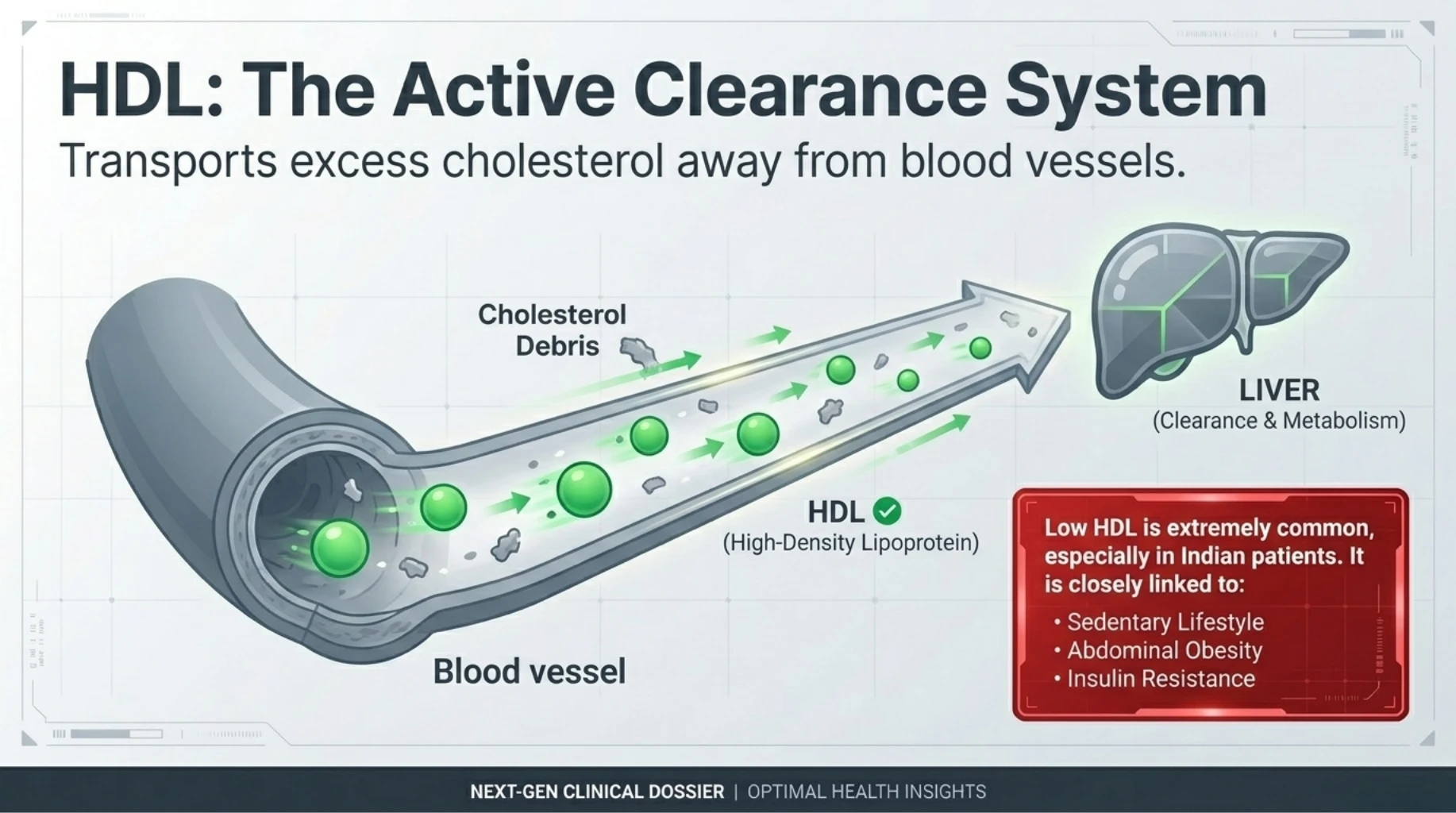
HDL is often referred to as “good cholesterol,” but its role goes beyond a simple label. HDL helps transport excess cholesterol away from blood vessels and back to the liver.
Low HDL levels are frequently associated with:
- Sedentary lifestyle
- Abdominal obesity
- Insulin resistance
- Poor metabolic health
In Indian patients especially, low HDL is extremely common.
This is another reason why why lipid profiles need proper interpretation matters more than simply checking total cholesterol.
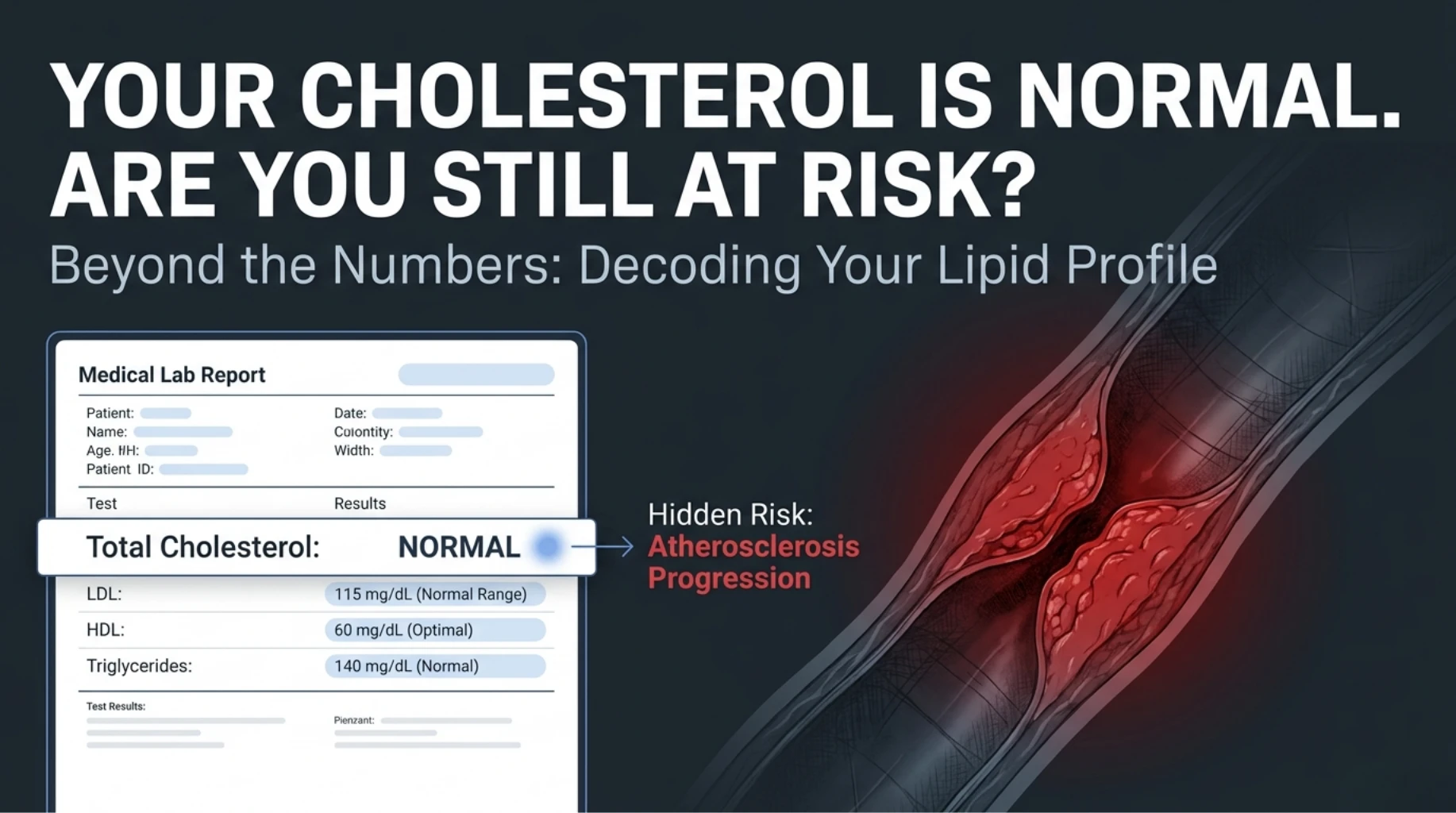
Why “Normal Reports” Can Still Hide Risk
One of the biggest misconceptions is assuming that “normal range” automatically means low risk.
In reality, metabolic disturbances often begin subtly.
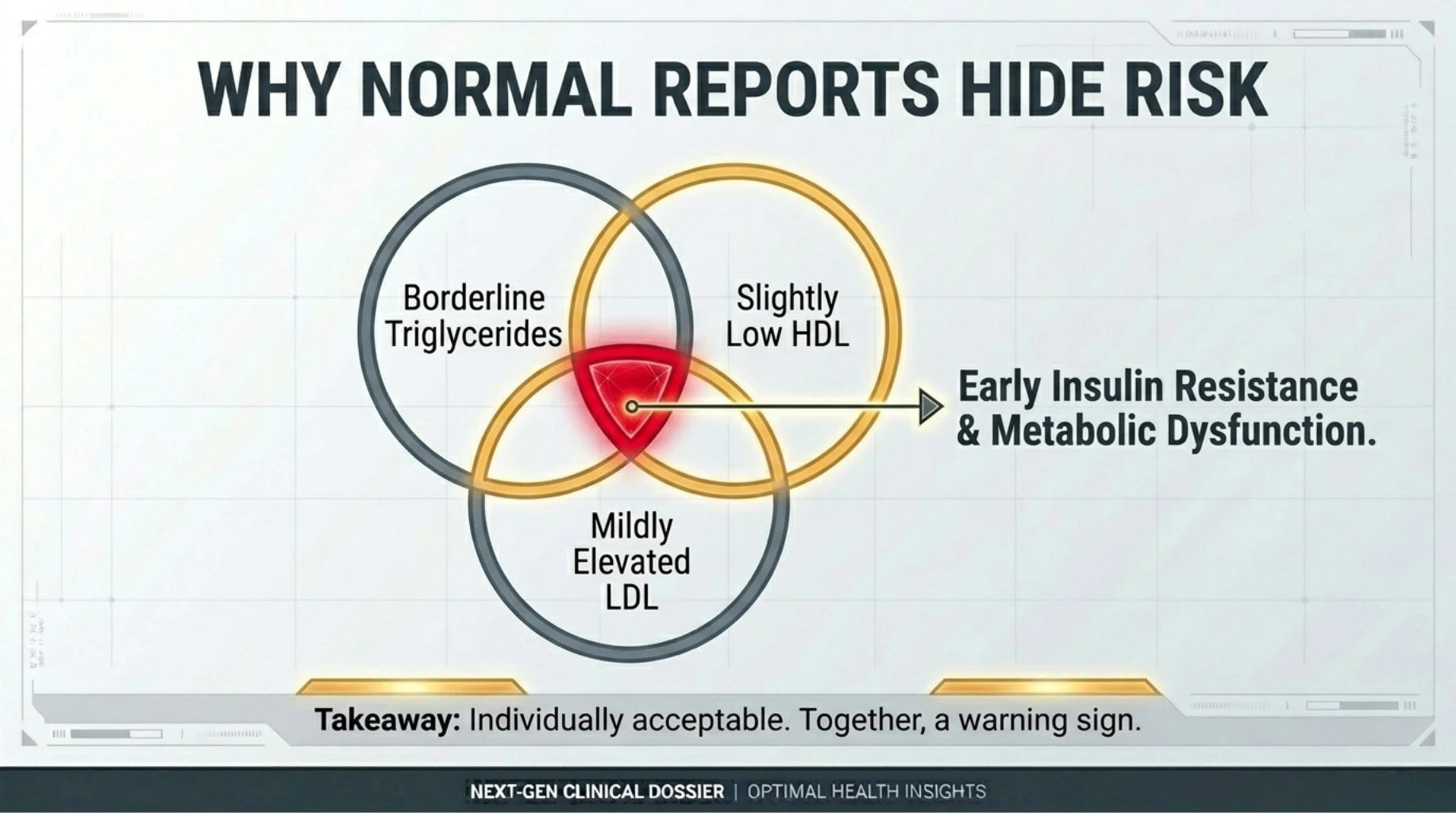
A patient may have:
Borderline triglycerides, slightly low HDL, and mildly elevated LDL — all still technically within range.
Individually, these values may not trigger concern. But together, they often reflect early insulin resistance and metabolic dysfunction.
This is why lipid profiles need proper interpretation in the context of the patient’s overall health, body composition, lifestyle, and metabolic status.
How Insulin Resistance Changes Lipid Patterns
One of the most important concepts patients often miss is the connection between insulin resistance and lipid profile changes.
Insulin resistance is a condition where the body’s cells do not respond effectively to insulin. As a result, insulin levels remain elevated for longer periods. This metabolic disturbance directly affects how fats are processed in the body.
Typically, insulin resistance causes:
- Higher triglyceride levels
- Lower HDL levels
- Formation of smaller, denser LDL particles
This pattern is particularly concerning because it increases cardiovascular risk even when total cholesterol appears “acceptable.”
This is one of the strongest reasons why why lipid profiles need proper interpretation is clinically important.
The Connection Between Fatty Liver and Lipid Profile
Many people think fatty liver and cholesterol are separate problems, but they are closely connected.
The liver plays a central role in fat metabolism. When excess fat accumulates in the liver, it disrupts normal lipid handling.
As a result, patients with fatty liver commonly show:
- Elevated triglycerides
- Reduced HDL
- Borderline or elevated LDL
Interestingly, these changes often appear gradually and may initially remain within “normal” laboratory ranges.
Without proper interpretation, these subtle metabolic warning signs are easy to overlook.
This again highlights why lipid profiles need proper interpretation instead of isolated number checking.
Why Small Dense LDL Particles Matter
Most patients are familiar with the term LDL, often called “bad cholesterol.” However, not all LDL particles behave in the same way.
Smaller and denser LDL particles are considered more harmful because they penetrate blood vessel walls more easily and contribute to plaque formation.
These particles are commonly associated with:
- Insulin resistance
- Abdominal obesity
- High triglyceride levels
- Poor dietary patterns
A person may not have dramatically elevated LDL levels overall, yet still carry increased risk because of these particle changes.
This is another reason why lipid profiles need proper interpretation beyond just checking whether LDL is slightly above or below a cutoff value.
Common Mistake 1: Focusing Only on Total Cholesterol
One of the most common mistakes patients make is becoming fixated on total cholesterol alone. A slightly elevated total cholesterol value does not automatically mean high cardiovascular risk.
Similarly, a “normal” total cholesterol value does not guarantee safety. What matters more is the overall metabolic pattern and balance between lipid components.
Common Mistake 2: Ignoring Triglycerides
Triglycerides are frequently ignored unless they become very high. However, even moderate elevations can signal early metabolic dysfunction.
Persistently high triglycerides often reflect:
- High refined carbohydrate intake
- Frequent snacking
- Sedentary lifestyle
- Underlying insulin resistance
Ignoring these early signals allows metabolic disease to progress silently.
Common Mistake 3: Assuming Medication Alone Solves Everything
Medication may be necessary in many situations, especially in high-risk patients. However, lipid imbalance is often deeply connected to lifestyle patterns.
Without addressing:
- Diet quality
- Physical inactivity
- Sleep disturbance
- Weight gain
long-term correction becomes difficult.
This is why lipid profiles need proper interpretation within the broader context of metabolic health.
Why Context Matters More Than a Single Lab Value
A lipid profile should never be interpreted in isolation.
The same report may mean very different things depending on:
- Age
- Waist circumference
- Presence of diabetes
- Fatty liver status
- Family history
- Lifestyle habits
This is where proper clinical interpretation becomes important.
How Doctors Actually Interpret Lipid Profiles in Real-Life Practice
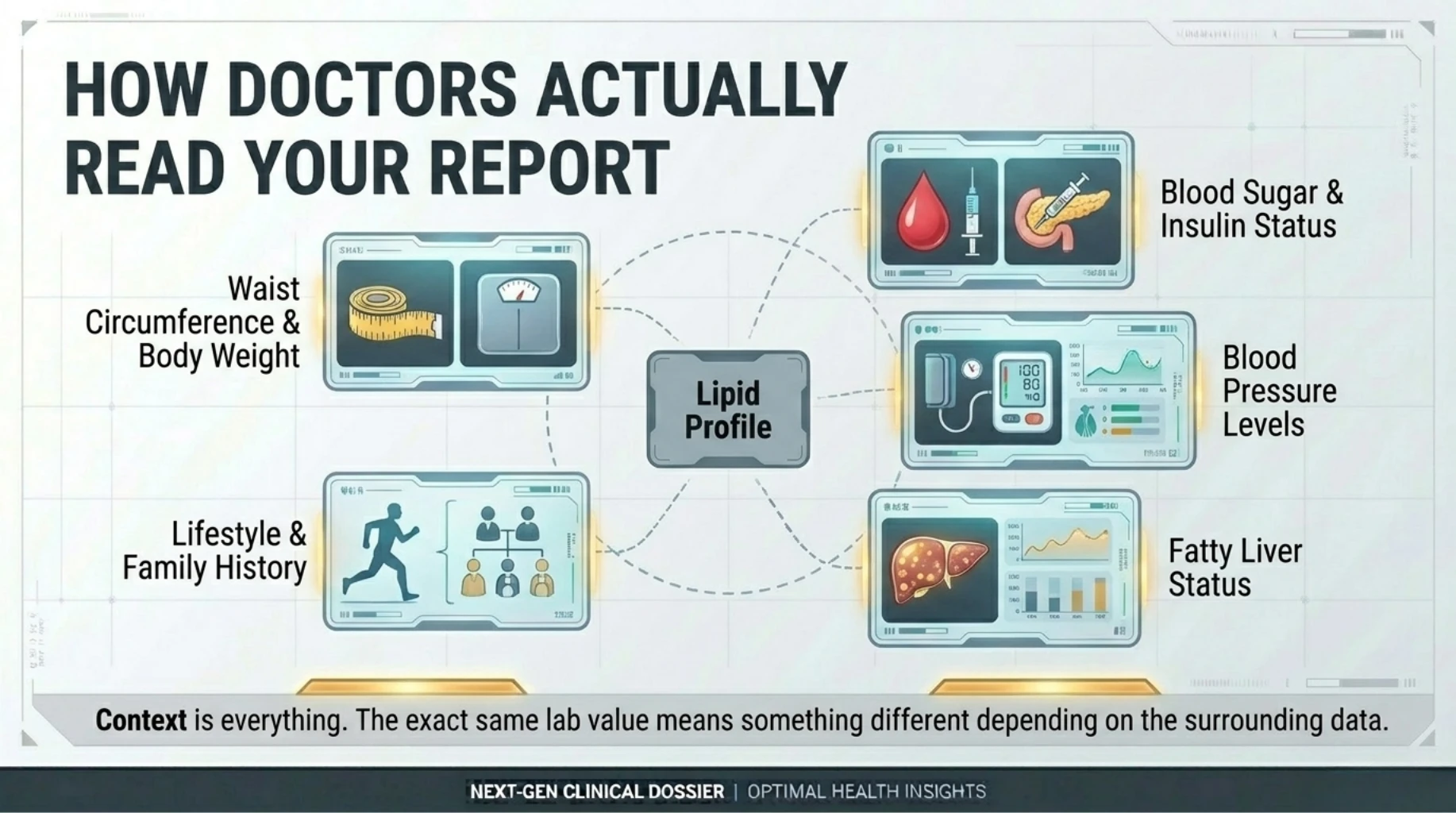
In real clinical practice, lipid reports are never interpreted by looking at a single value alone. Doctors usually look at the overall metabolic picture.
For example, a young physically active individual with slightly elevated total cholesterol but high HDL and controlled triglycerides may not carry the same risk as a sedentary individual with abdominal obesity and poor lipid balance.
This is why understanding why lipid profiles need proper interpretation becomes essential before jumping to conclusions.
The report should always be interpreted alongside:
- Body weight and waist circumference
- Blood sugar and insulin resistance
- Blood pressure levels
- Fatty liver status
- Lifestyle habits and family history
Only then can the actual cardiovascular and metabolic risk be understood properly.
What Numbers Usually Matter More in Metabolic Health
From a metabolic perspective, some patterns immediately attract clinical attention. High triglycerides combined with low HDL often suggest underlying insulin resistance.
Borderline LDL with abdominal obesity may indicate increased cardiovascular risk even before overt disease develops.
Persistently rising triglycerides may also indicate excessive refined carbohydrate intake and poor metabolic flexibility.
These patterns are often more informative than simply looking at whether total cholesterol is slightly above normal.
This again reinforces why why lipid profiles need proper interpretation matters in preventive healthcare.
Why Lifestyle Patterns Influence Lipid Profiles So Strongly
Many patients assume cholesterol imbalance is only genetic. Genetics certainly play a role, but lifestyle patterns have a massive influence on lipid metabolism.
Modern habits such as:
- Frequent snacking
- Excess sugar intake
- Processed food consumption
- Poor sleep
- Sedentary lifestyle
collectively disturb metabolic health over time.
This leads to elevated triglycerides, lower HDL, fatty liver, and gradual insulin resistance.
In many patients, correcting these patterns significantly improves lipid balance naturally.
How to Improve Lipid Balance Naturally
One of the most encouraging aspects of metabolic health is that early changes are often reversible.
The goal should not be crash dieting or extreme restriction. Sustainable correction works far better.
Focus on Reducing Refined Carbohydrates
Refined carbohydrates and sugary foods strongly influence triglycerides and insulin resistance.
Reducing:
- Sugary drinks
- Bakery products
- Frequent packaged snacks
- Highly processed foods
often produces noticeable improvements in lipid profile within months.
Increase Protein and Fiber Intake
Balanced protein intake helps improve satiety and metabolic control.
Fiber-rich foods improve digestion, support gut health, and reduce excessive calorie intake.
Together, these changes positively affect triglycerides and HDL levels.
Regular Physical Activity Is Essential
Exercise improves insulin sensitivity and lipid metabolism simultaneously.
Even simple daily walking can improve HDL levels and reduce triglycerides when done consistently.
Avoiding prolonged sitting is equally important.
Address the Root Cause, Not Just the Report
A lipid report is not the disease itself. It is a reflection of underlying metabolic health.
If insulin resistance, fatty liver, obesity, or poor lifestyle habits are driving the imbalance, these root causes must be addressed.
This is where structured lifestyle correction becomes highly effective.
You can explore a structured approach here:
Lifestyle Modification Program
When Should Medical Treatment Be Considered?
Lifestyle correction remains the foundation, but medication may be necessary in higher-risk individuals.
This includes patients with:
- Very high LDL levels
- Diabetes with cardiovascular risk
- Previous heart disease or stroke
- Strong family history of premature heart disease
The decision should always be individualized and based on overall risk assessment rather than a single number.
Key Take-Home Messages
- Lipid profiles should never be interpreted using only total cholesterol
- Triglycerides, HDL, and metabolic context matter significantly
- Insulin resistance and fatty liver strongly influence lipid balance
- Many “normal” reports can still hide early metabolic risk
- Consistent lifestyle correction can significantly improve lipid health
If you want a personalized metabolic assessment and lifestyle strategy, you can book a consultation here:
Book an Appointment
Disclaimer: This article is for educational purposes only and should not replace medical advice. Individual treatment should be based on clinical evaluation.


