

Fever is one of the most common reasons adults seek medical care, but it can also be one of the most confusing. One person may have a short viral illness that improves with rest and fluids, while another may need testing for dengue, malaria, a urinary infection, pneumonia, enteric fever or another condition.
Seeing a doctor for fever in Dwarka does not automatically mean receiving a long list of blood tests or an antibiotic prescription.
The first task is to understand the pattern.
Important questions include:
- How high is the measured temperature?
- How many days has the fever lasted?
- Are there cough, sore throat or breathing symptoms?
- Is there vomiting, diarrhea or abdominal pain?
- Is there burning during urination?
- Are there rash, body aches, bleeding or severe headache?
- Has there been recent travel or mosquito exposure?
- Does the patient have diabetes, kidney disease or another condition that changes risk?
India’s 2025 National Treatment Guidelines for infectious disease syndromes specifically emphasize that the timing of testing matters in acute undifferentiated fever. They also recognize that many short acute febrile illnesses are viral and resolve without antimicrobial treatment, while bacterial, parasitic, rickettsial and other causes need to be considered when the clinical pattern suggests them.
The useful question is therefore not: “Which fever test should I get?”
It is: “What is the likely source of this fever, and does the stage or severity of illness justify testing or specific treatment?”

When Does Fever Need Testing or Treatment?
Testing becomes more useful when fever:
- persists beyond the first few days
- has symptoms pointing toward a particular organ or infection
- occurs after relevant travel or mosquito exposure
- is accompanied by significant weakness or dehydration
- is worsening rather than improving
- occurs in someone at increased risk of complications
Treatment depends on the cause.
A viral respiratory illness usually does not benefit from an antibiotic. CDC continues to emphasize that antibiotics treat certain bacterial infections, not viruses.
Other illnesses are different.
Confirmed malaria needs antimalarial treatment. A bacterial urinary infection may require antibiotics. Influenza or COVID-19 may warrant early antiviral treatment in selected higher-risk patients. Severe dengue requires careful monitoring and supportive medical care rather than an antibiotic.
The correct treatment therefore starts with making the clinical problem more specific.
What Can Cause Fever in Adults?
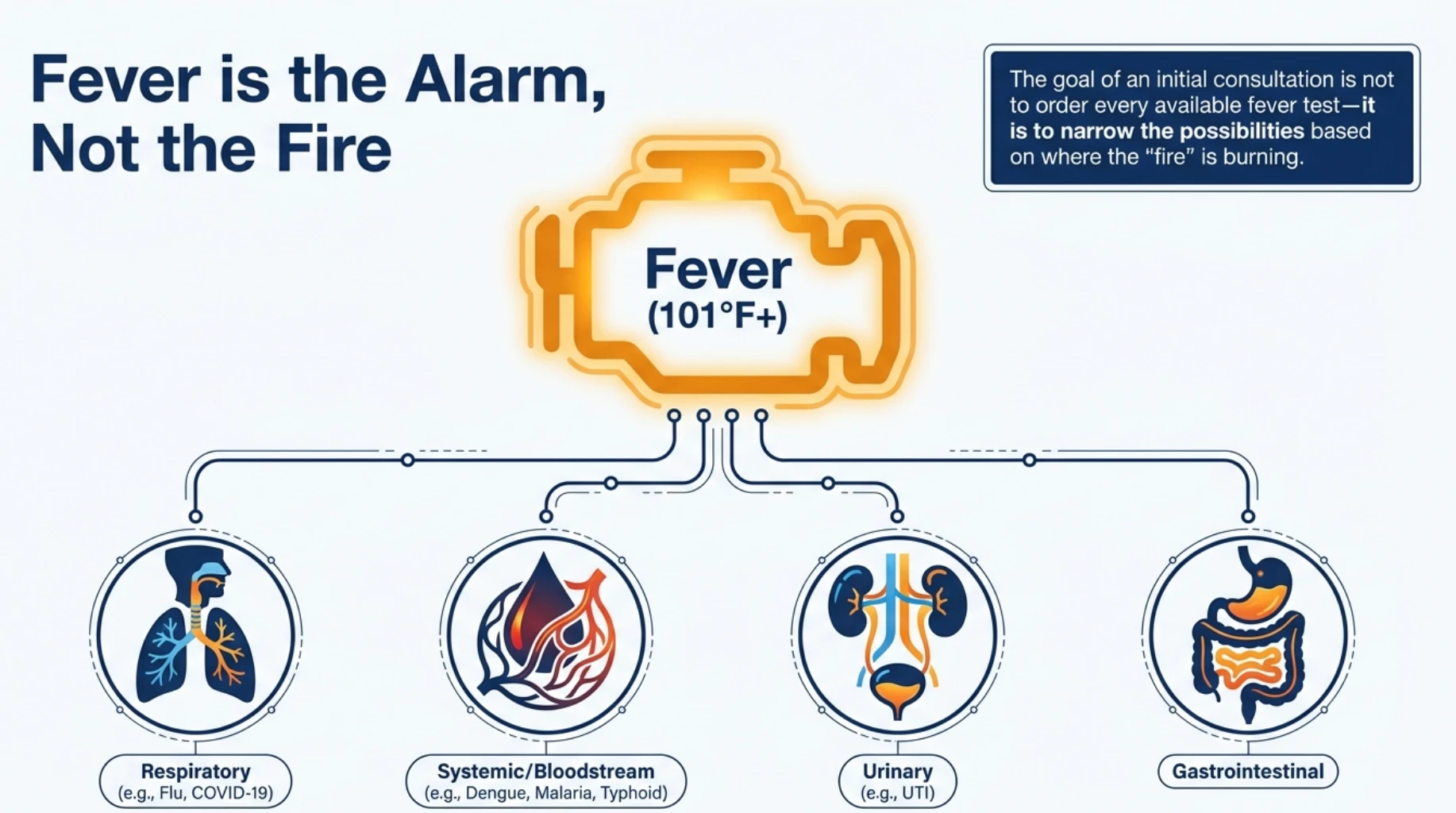
Fever itself is a symptom, not a diagnosis.
Common causes include infections affecting the:
- nose and throat
- lungs
- urinary tract
- gastrointestinal tract
- skin
- bloodstream
In India, an acute fever without an obvious localizing symptom can also raise consideration of conditions such as:
- dengue
- malaria
- enteric fever
- chikungunya
- scrub typhus
- leptospirosis
depending on the season, geography, exposures and clinical presentation.
The NCDC/ICMR National Treatment Guidelines describe acute undifferentiated febrile illness as frequently viral but also note bacterial, rickettsial, parasitic and non-infectious causes.
That is why symptoms accompanying the fever matter so much.
For example: fever + cough + breathlessness suggests a different diagnostic pathway from: fever + burning urination + back pain or: fever + intense body aches + rash or: prolonged fever + abdominal symptoms.
Occasionally fever is not caused by infection at all. Inflammatory diseases, medicines and other medical conditions can produce fever-like syndromes, particularly when the illness becomes prolonged or repeatedly returns.
The aim of an initial consultation is therefore not to order every available fever test.
It is to narrow the possibilities.
When Should You See a Doctor for Fever in Dwarka?
A brief uncomplicated fever in an otherwise well adult may sometimes be monitored initially, particularly when it occurs with mild symptoms of a self-limiting viral illness.
Medical assessment becomes more useful when:
- fever continues for several days
- temperature remains high or repeatedly returns
- symptoms are becoming worse
- significant body weakness develops
- vomiting makes hydration difficult
- a new rash or bleeding appears
- cough is associated with breathlessness
- urinary symptoms are present
- abdominal symptoms become significant
- there is an important travel or exposure history
The threshold for assessment should also be lower when someone is older, immunocompromised, pregnant or living with significant chronic disease.
India’s current national fever guidance specifically recommends earlier investigation when a patient is immunocompromised rather than following the same waiting approach used for an otherwise stable person with uncomplicated fever.
The presence of a localizing symptom can also change the timing.
For example, severe urinary symptoms may justify urine testing early.
Significant respiratory symptoms may lead to lung examination and respiratory testing.
So “day three of fever” is not by itself a rule that everyone receives the same laboratory package.
A Fever Consultation Looks for the Source Before Ordering Tests
A useful fever consultation may include assessment of:
- recorded temperature
- pulse
- blood pressure
- respiratory rate
- hydration
- throat
- chest
- abdomen
- skin or rash
- neurological symptoms
- relevant lymph nodes
- urinary or gastrointestinal symptoms
Exposure history can be equally important.
A doctor may ask about:
- recent travel
- mosquito exposure
- unsafe food or water
- contact with someone who was ill
- flood or contaminated-water exposure
- recent medicines
- previous antibiotics
That information determines whether the most useful next step is: no immediate testing or a targeted blood, urine, respiratory or infection-specific test.
This approach is more medically useful than automatically ordering “CBC + dengue + malaria + typhoid” for every fever on the first day.
Why the Day of Illness Matters When Evaluating Fever
The same test is not equally useful on every day of fever.
Some tests detect:
- the organism itself
- an antigen from the organism
- antibodies produced later by the immune system
- the body’s response to infection
Those markers appear at different points in illness.
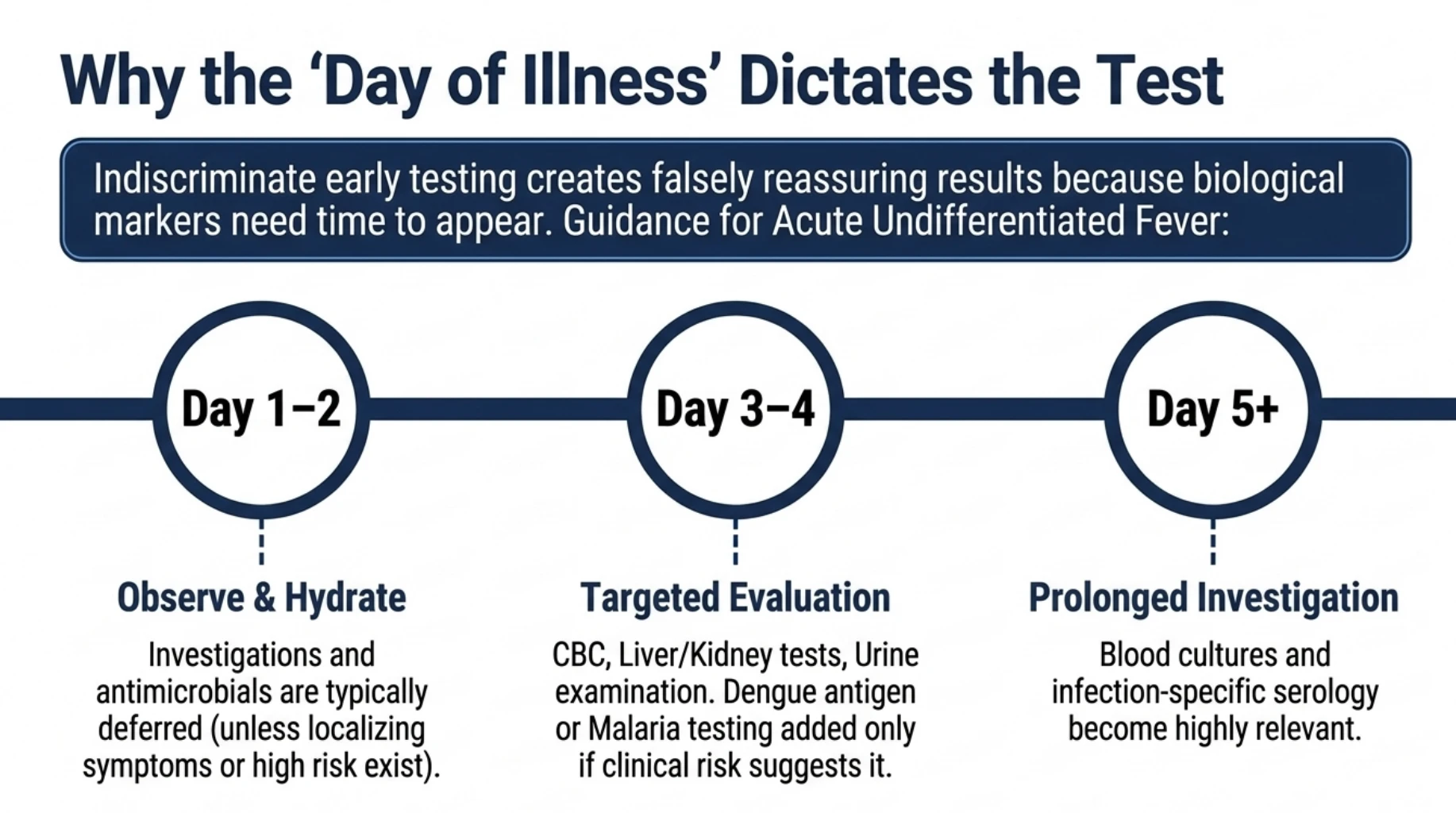
India’s 2025 National Treatment Guidelines give a practical framework for acute undifferentiated fever—that is, fever without an obvious organ-specific source at presentation.
For an otherwise uncomplicated case, the guideline advises:
Day 1–2: investigations and antimicrobials can often be deferred.
Day 3–4: evaluation may include a white-cell count with differential, liver and kidney tests, urine examination and random glucose, with additional tests such as dengue antigen or malaria testing according to clinical risk.
Beyond 5 days: further evaluation may include blood cultures and infection-specific serology depending on clinical suspicion.
The recommendations explicitly state that immunocompromised patients may need earlier investigation.
This is a useful framework—not a rigid timetable for every patient.
If someone becomes severely ill on the first day, investigations should not be delayed merely because the fever has not reached day three.
Likewise, a patient with clear pneumonia, urinary infection or another localized syndrome follows the diagnostic pathway for that condition rather than an undifferentiated-fever schedule.
The First 1–2 Days Do Not Always Need a Large Test Panel
This point is particularly relevant because many adults undergo several blood tests after only a few hours of fever.
Early testing can sometimes be useful.
But indiscriminate testing may also create confusing or falsely reassuring results because the biological marker being sought has not yet become detectable.
The current Indian national guideline specifically advises deferring investigations and antimicrobials on days 1–2 in uncomplicated acute undifferentiated fever.
That does not mean: “Never see a doctor during the first two days.”
Medical evaluation may still be appropriate when symptoms are severe or the patient is at increased risk.
It means that consultation and laboratory testing are not the same thing.
Sometimes the medically appropriate decision after an examination is: observe, hydrate, treat symptoms and reassess if the pattern changes.
When Fever Blood Tests May Be Useful
Blood tests become useful when they help answer a specific clinical question.
They are not all interchangeable.
Depending on illness duration and symptoms, a doctor may consider:
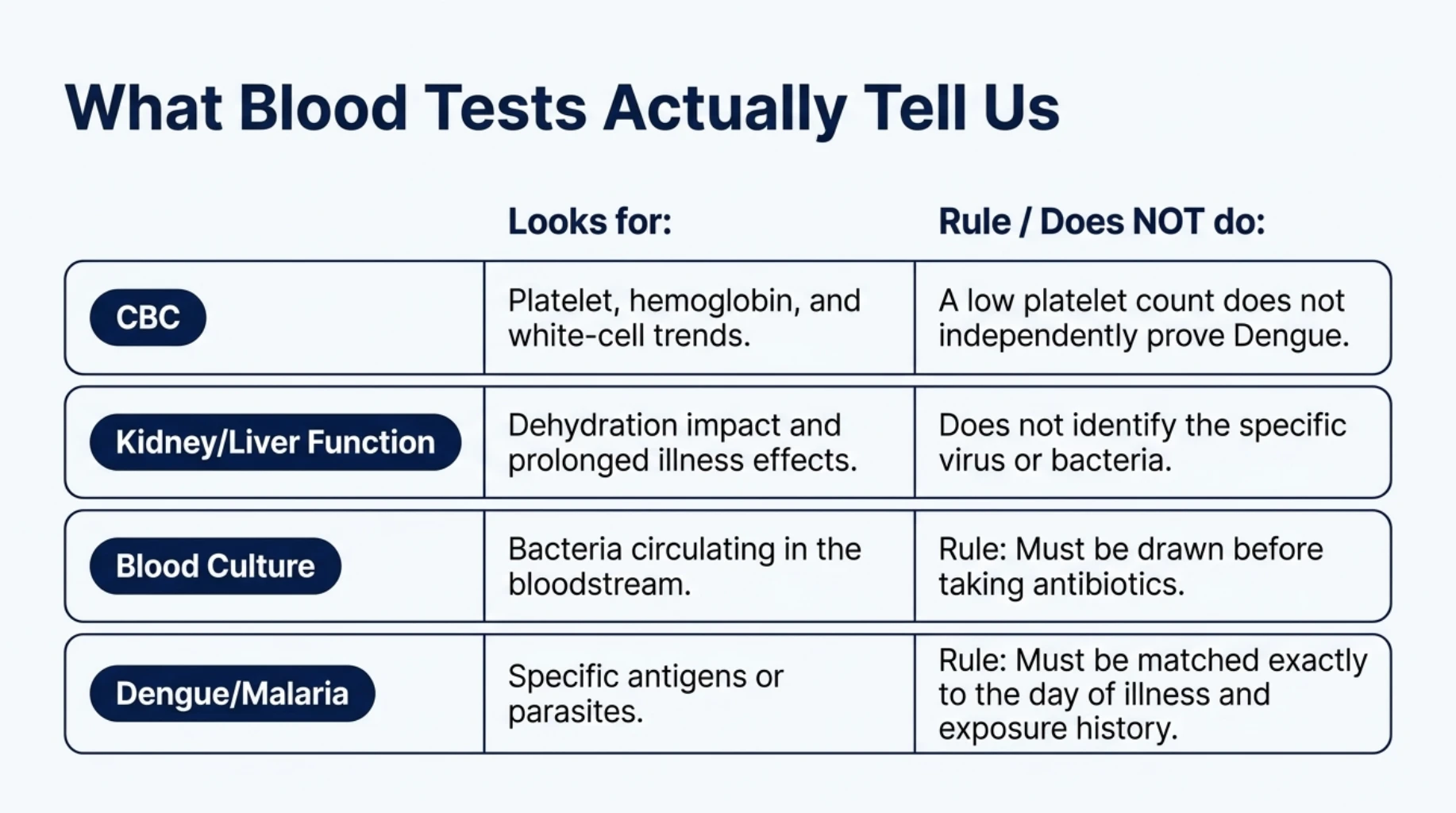
Complete Blood Count
A CBC can provide information about:
- white blood cells
- hemoglobin
- platelets
Changes in these values may contribute to the clinical picture, but a CBC rarely identifies the precise cause of fever on its own.
A low platelet count, for example, is not synonymous with dengue.
Likewise, a particular white-cell count does not independently prove whether an illness is viral or bacterial.
Kidney and Liver Function
Kidney and liver tests can become relevant when fever is prolonged, the patient is significantly unwell, dehydration is present or particular infections are being considered.
The NCDC/ICMR acute-fever guidance includes renal and liver function assessment from days 3–4 when investigation of uncomplicated undifferentiated fever becomes appropriate.
Urine Examination
Urinary infections may present with:
- burning urination
- urinary frequency
- lower abdominal discomfort
- fever
- back or flank pain
But older adults or people with certain medical conditions can sometimes have less typical symptoms.
A urine test is therefore useful when the clinical history supports it—not simply because every fever requires urine testing.
Blood Cultures
Blood cultures are intended to detect bacteria circulating in the bloodstream.
They can be particularly relevant in prolonged fever or when enteric fever, bloodstream infection or sepsis is suspected.
India’s current acute-undifferentiated-fever guidance introduces blood cultures after more than five days of fever in its standard uncomplicated framework, while severe illness may justify earlier culture sampling.
When bacterial infection is suspected and the patient is stable enough to allow it, obtaining appropriate microbiological samples before starting empirical antibiotics can improve the chance of identifying the organism and subsequently targeting therapy. India’s national antimicrobial guidelines emphasize this principle.
CBC, Kidney, Liver and Urine Tests Answer Different Questions
Patients sometimes ask: “Which blood test confirms fever?”
There is no such test.
A thermometer confirms that the temperature is elevated.
Laboratory tests are used to investigate why fever is occurring or whether the illness is affecting other organs.
A CBC may show a platelet trend.
A dengue antigen test looks for evidence of dengue infection.
A malaria smear or rapid diagnostic test looks for malaria.
A blood culture attempts to grow bacteria.
These investigations answer different questions and are selected according to the clinical pattern.
When Dengue or Malaria Testing May Be Considered
Mosquito-borne infections deserve particular attention in an adult with acute fever in India, but symptoms and timing still matter.
Dengue
Dengue commonly causes:
- fever
- headache
- pain behind the eyes
- muscle and joint pain
- nausea or vomiting
- sometimes a rash
WHO notes that most symptomatic cases improve within one to two weeks, but a minority develop severe dengue. Importantly, severe warning signs can develop after the fever begins to fall, rather than only while temperature is at its highest.
Testing strategy depends partly on when the illness began.
India’s national fever guideline lists dengue antigen testing among targeted investigations that may be considered around days 3–4 according to clinical symptoms and risk, while dengue IgM serology becomes more relevant later in the illness.
A dengue test should therefore be interpreted alongside:
- day of fever
- symptoms
- examination
- platelet and hematocrit trends when clinically relevant
- hydration status
- warning signs
A negative test performed at an inappropriate stage should not be used in isolation to dismiss an evolving illness.
Malaria
Malaria can also present as acute fever without a distinctive pattern.
Historically, particular patterns of fever have been associated with malaria, but fever periodicity by itself is not reliable enough to make the diagnosis.
India’s National Centre for Vector Borne Diseases Control uses microscopy or rapid diagnostic tests for malaria diagnosis as part of the national malaria programme.
Malaria testing becomes particularly relevant when there is:
- residence in or travel to a malaria-risk area
- compatible unexplained fever
- chills or rigors
- epidemiological or seasonal risk
- another clinical reason to suspect malaria
The important principle is that antimalarial treatment should be linked to an appropriate clinical and diagnostic assessment rather than prescribed simply because fever is present.
When Respiratory or Urine Testing May Be More Useful
Not every fever in Delhi requires a “tropical fever panel.”
Sometimes the symptoms already point toward a more common source.
Consider: fever + cough + sore throat + nasal symptoms
The likely pathway is different from: fever + painful urination + flank pain.
Respiratory viral testing may be particularly useful when identifying influenza or COVID-19 would change treatment or infection-control decisions, especially in people at higher risk of complications.
CDC notes that antiviral treatment for influenza and COVID-19 can be time-sensitive and advises higher-risk patients with compatible respiratory illness to seek healthcare promptly for testing and treatment consideration.
Similarly, urinary symptoms may make urine microscopy and culture more relevant than dengue serology.
The central principle is: test the clinical syndrome—not simply the word “fever.”
A careful history and examination often determine which investigation is most useful and which tests can safely be avoided.
When Should Typhoid or Enteric Fever Be Considered?
Enteric fever, which includes typhoid and paratyphoid fever, remains an important cause of prolonged fever in India.
It may be considered when fever persists and the clinical pattern includes features such as:
- persistent fever
- fatigue or marked weakness
- headache
- abdominal discomfort
- constipation or diarrhea
- nausea or reduced appetite
These symptoms are not specific enough to diagnose typhoid.
Dengue, malaria and several other infections can produce an overlapping presentation. WHO’s 2026 typhoid guidance specifically notes that clinical diagnosis is unreliable because typhoid resembles other febrile illnesses in endemic settings.
When enteric fever is genuinely suspected, microbiological confirmation is useful because antibiotic resistance patterns matter.
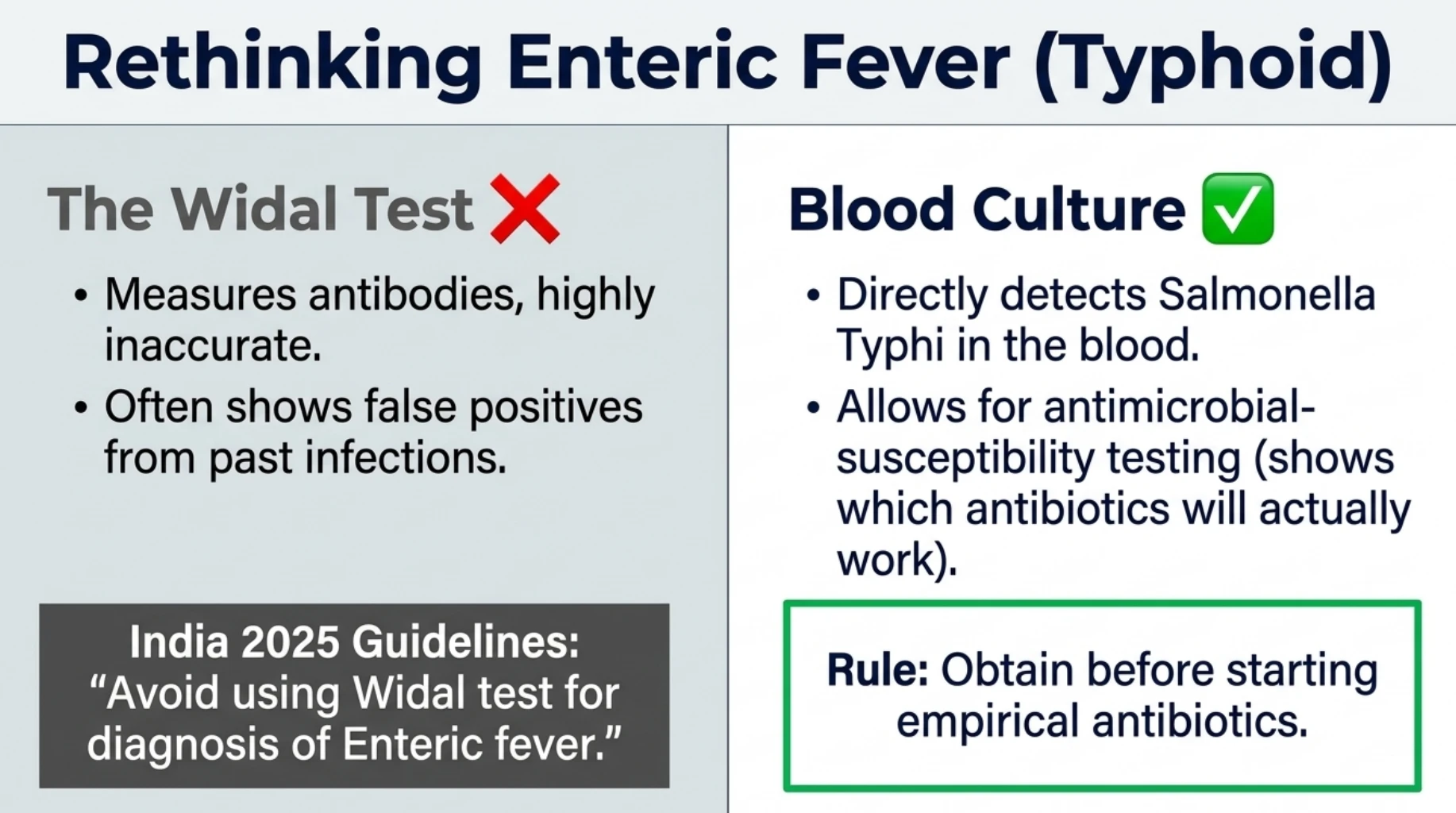
India’s current National Treatment Guidelines state that blood culture remains the gold standard for enteric fever and specifically advise avoiding the Widal test as the basis for diagnosis.
Ideally, blood culture is obtained before antibiotics when the patient is clinically stable enough for this approach because previous antimicrobial exposure can reduce culture sensitivity.
Why a Widal Test Should Not Be Used as a Stand-Alone Typhoid Diagnosis
The Widal test measures antibodies rather than directly detecting Salmonella Typhi in the bloodstream.
A single positive result can be misleading because antibodies may reflect:
- previous infection
- previous exposure
- cross-reacting infections
- background antibody levels in endemic populations
WHO’s 2026 position paper notes that Widal testing has poor and highly variable diagnostic accuracy and is not sufficiently reliable to replace an appropriately collected blood culture.
India’s 2025 National Treatment Guidelines are even more direct: “Avoid using Widal test for diagnosis of Enteric fever.”
This is particularly relevant when someone receives antibiotics solely because one Widal value is reported as positive.
A fever diagnosis should be based on the clinical pattern, illness duration and appropriate laboratory evidence—not one isolated antibody titer.
Does Every Fever Need Antibiotics?
No.
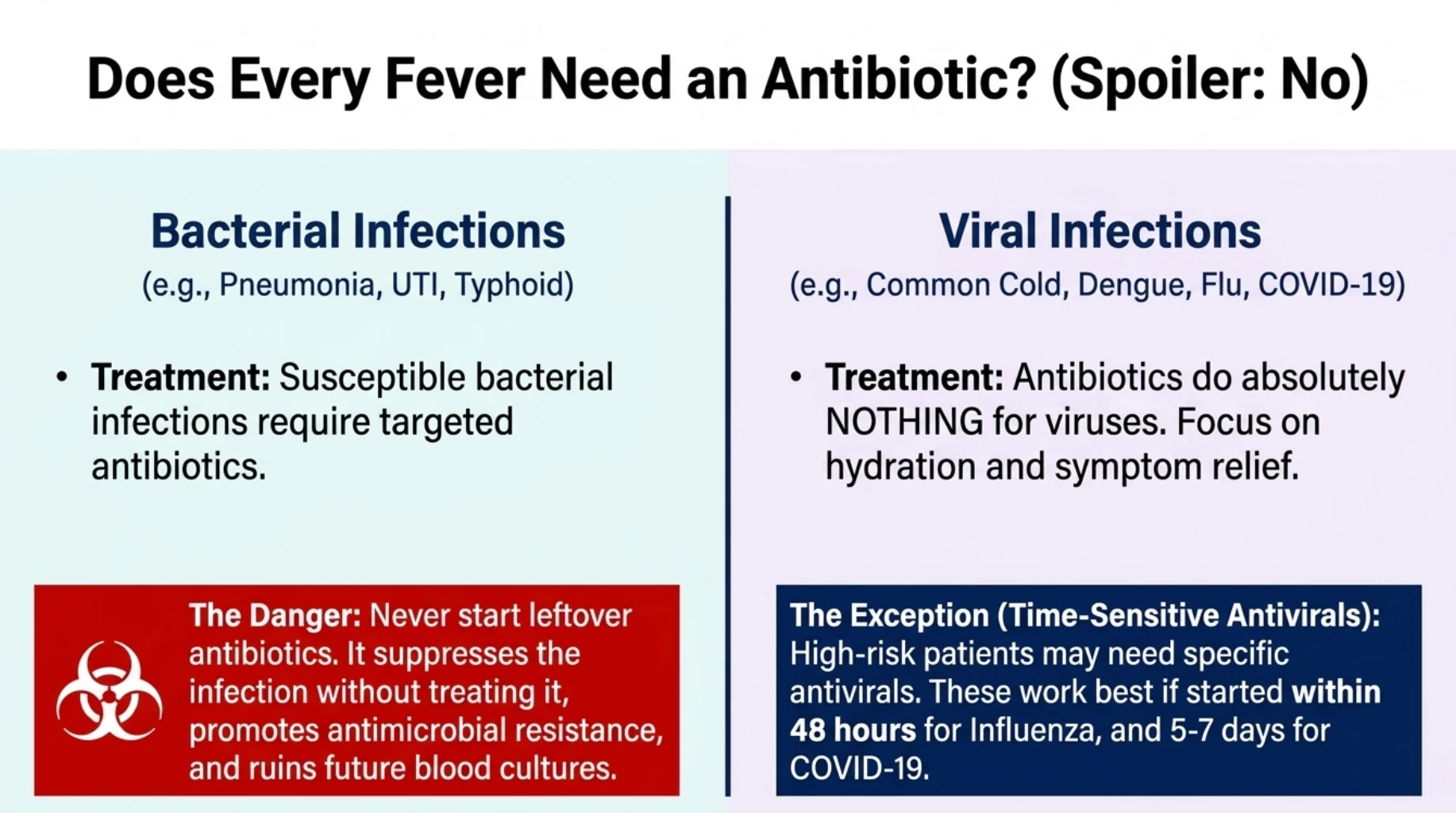
Antibiotics treat susceptible bacterial infections. They do not treat viral infections such as influenza.
This distinction matters because many short-duration febrile illnesses are viral.
Using antibiotics unnecessarily can:
- cause side effects
- disturb normal gut bacteria
- contribute to antimicrobial resistance
- make future bacterial infections harder to treat
WHO emphasizes that inappropriate antimicrobial use accelerates antimicrobial resistance, and antibiotics should not be used for viral illnesses simply because fever is present.
Antibiotics may be appropriate when the clinical picture supports conditions such as:
- bacterial pneumonia
- urinary tract infection
- confirmed or strongly suspected enteric fever
- certain bacterial skin infections
- bloodstream infection
The choice should depend on the suspected infection, local resistance patterns, severity and culture results where available.
This is why starting leftover antibiotics at home can make fever evaluation more difficult.
They may partially suppress an infection without treating it appropriately and can reduce the chance of obtaining a useful blood culture later.
When Antiviral Treatment May Be Time-Sensitive
Some viral illnesses do not need specific antiviral treatment.
Others do—particularly in people at increased risk of complications.
Influenza
Influenza antivirals work best when started early, ideally within the first 1–2 days after symptoms begin.
CDC recommends prompt antiviral treatment for people with suspected or confirmed influenza who are:
- hospitalized
- severely or progressively unwell
- at higher risk of complications
Higher-risk groups include older adults and people with conditions such as diabetes, chronic lung disease or heart disease.
For these patients, treatment decisions should not necessarily wait for laboratory confirmation when influenza is strongly suspected.
COVID-19
COVID-19 treatment can also be time-sensitive in higher-risk people.
Current CDC guidance states that eligible outpatient antiviral treatment needs to begin within approximately 5–7 days of symptom onset, depending on the medicine used.
This is one reason an older adult or someone with diabetes and respiratory fever should seek medical advice earlier rather than waiting a week to see whether the illness resolves.
Fever in Diabetes, Older Adults and Other Higher-Risk Patients
The same fever can carry different risks in different people.
A healthy young adult with mild viral symptoms may be able to maintain fluids, eat reasonably and recover without complications.
An older adult with diabetes may develop:
- dehydration
- higher or more variable glucose
- kidney-function deterioration
- medication-related problems
- secondary bacterial infection
more easily.
Diabetes is also recognized as a factor increasing the risk of serious influenza complications.
The threshold for medical review should therefore be lower in people with:
- diabetes
- significant kidney disease
- heart disease
- chronic lung disease
- weakened immunity
- pregnancy
- advanced age
- cancer treatment or other immunosuppressive therapy
People taking diabetes medicines may also need additional attention when eating and drinking poorly.
For example, vomiting, diarrhea and dehydration can make some usual medications unsafe until the situation is reviewed.
Do not automatically stop prescribed medicines during fever, but do discuss a sick-day medication plan when significant dehydration, poor intake or abnormal glucose occurs.
When Fever Needs Urgent or Emergency Assessment
Fever should not always wait for a routine clinic appointment.
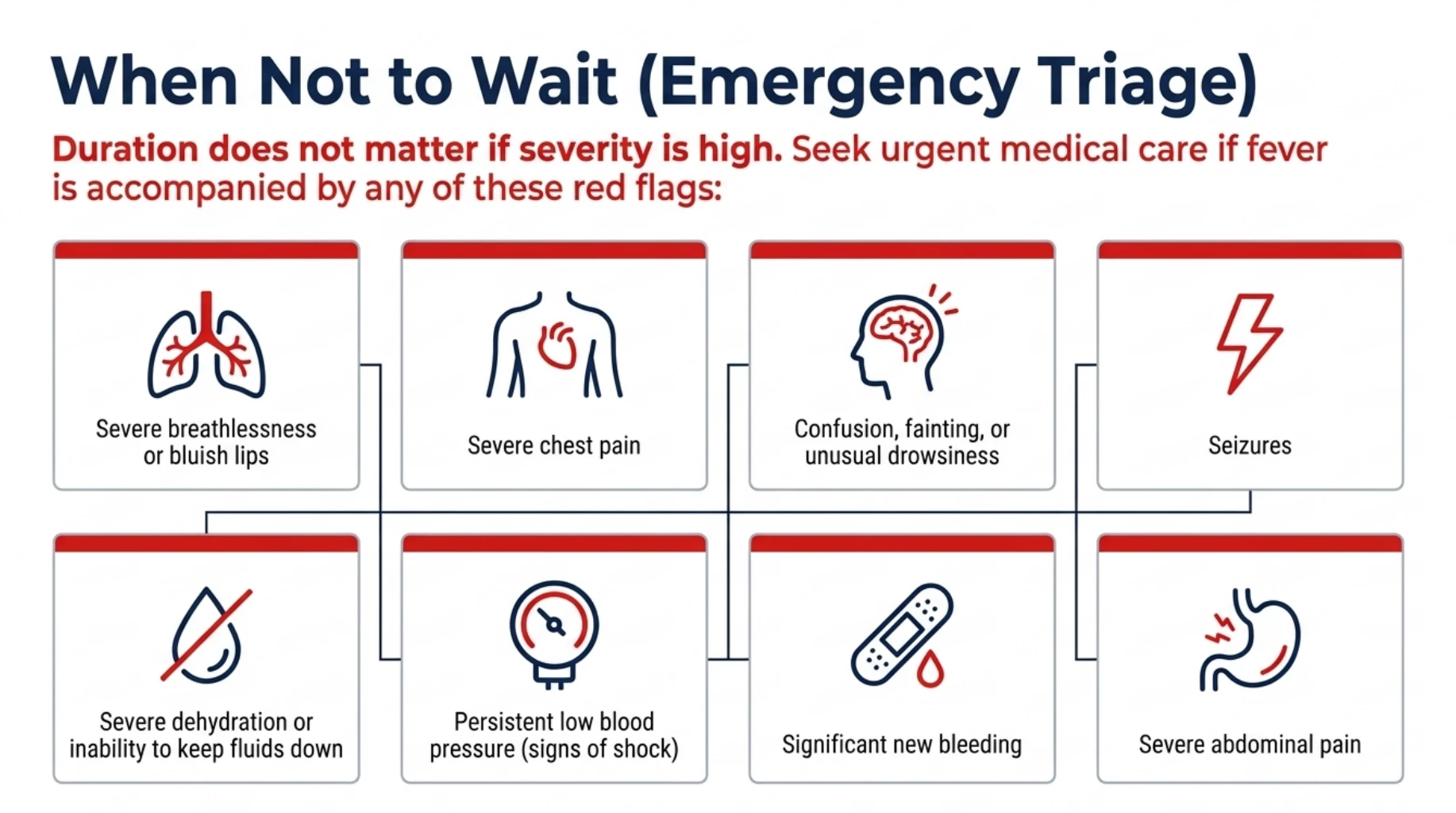
Seek urgent assessment when fever is accompanied by features such as:
- significant difficulty breathing
- severe chest pain
- confusion or unusual drowsiness
- fainting or collapse
- seizure
- severe dehydration or inability to keep fluids down
- bluish lips or severe respiratory distress
- persistent low blood pressure or signs of shock
- severe abdominal pain
- significant bleeding
- rapidly worsening illness
A person who appears seriously ill should be assessed urgently even when the fever has been present for only a few hours.
Duration is not more important than severity.
Dengue Warning Signs Can Appear as the Fever Starts to Fall
One particularly important misconception is: “The fever has come down, so dengue must be improving.”
That is not always true.
WHO notes that warning signs of severe dengue often appear after the fever has gone away, during the critical phase of illness.
Warning signs include:
- severe abdominal pain
- persistent vomiting
- rapid breathing
- bleeding from the gums or nose
- blood in vomit or stool
- marked weakness
- restlessness
- pale or cold skin
- excessive thirst
These symptoms require prompt medical care.
Another practical precaution is pain relief.
When dengue is suspected, avoid self-treating with aspirin or NSAIDs such as ibuprofen unless specifically advised, because bleeding risk may be increased. Paracetamol is generally the preferred fever and pain medicine in uncomplicated dengue, within appropriate dosing limits.
What Should You Bring to a Fever Consultation?
A little preparation can make the consultation more useful.
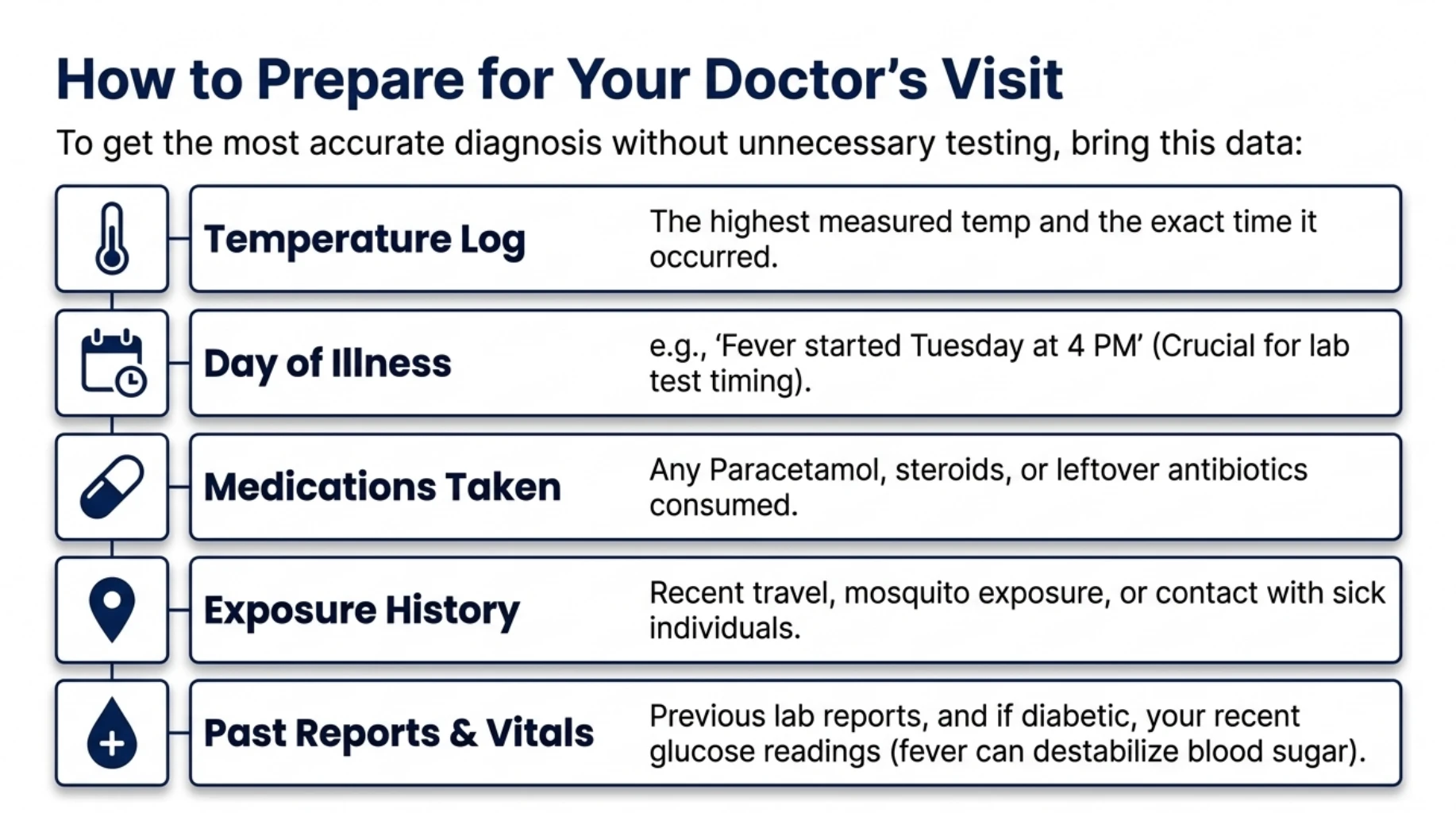
Bring or note: Temperature record
Include the highest measured temperature and when it occurred.
Day of illness
Knowing whether this is day 1, day 4 or day 8 can change which tests are useful.
Main associated symptoms
For example:
- cough
- sore throat
- breathlessness
- diarrhea
- vomiting
- abdominal pain
- urinary symptoms
- rash
- headache
- body aches
Medicines already taken
Particularly antibiotics, antipyretics or steroids.
Previous reports
Bring CBC, dengue, malaria, urine, liver or kidney reports if already tested.
Exposure information
Mention recent travel, mosquito exposure, unusual food or water exposure and contact with people who were ill.
For people with diabetes, bring recent glucose readings if fever has caused significant changes.
This can prevent unnecessary repetition of tests and help interpret whether the illness is improving or progressing.
Fever Assessment at Diet Plus Minus in Dwarka
Adults looking for a doctor for fever in Dwarka can consult Dr. Pankaj Kumar at Diet Plus Minus for assessment of uncomplicated or persistent fever.
A consultation may include review of:
- duration and pattern of fever
- respiratory symptoms
- gastrointestinal symptoms
- urinary symptoms
- rash or mosquito-borne illness symptoms
- hydration
- blood pressure and pulse
- current medicines
- diabetes and other chronic conditions
- previous blood or infection reports
- whether CBC or organ-function tests are useful
- whether dengue, malaria, urine, respiratory or blood-culture testing is appropriate
- whether antibiotic or antiviral treatment is indicated
- whether hospital or specialist assessment is required
Diet Plus Minus should not be used as a substitute for emergency care when severe warning signs are present.
Dr. Pankaj Kumar
MBBS, DNB Family Medicine, Sir Ganga Ram Hospital
General & Lifestyle Physician
Special interest in Diabetes
Diet Plus Minus
13A, Pocket-2, Sector-6, Doctors Lane
Dwarka, New Delhi – 110075
India
Book an Appointment with Dr. Pankaj Kumar
Frequently Asked Questions
When Should I See a Doctor for Fever?
Seek medical review when fever persists, repeatedly returns, worsens, produces significant weakness or occurs with concerning respiratory, urinary, abdominal, neurological or bleeding symptoms.
People with diabetes, weakened immunity, pregnancy or significant chronic disease may need earlier assessment.
Does Fever Need Blood Tests on the First Day?
Not always.
India’s current acute-undifferentiated-fever guidance allows investigations to be deferred during days 1–2 in uncomplicated illness, while higher-risk or seriously ill patients may require earlier testing.
Which Blood Test Is Best for Fever?
There is no universal “fever blood test.”
CBC, blood culture, dengue testing, malaria testing and liver or kidney tests answer different questions.
The most useful test depends on the symptoms, day of illness and suspected diagnosis.
Does Every Fever Need a CBC?
No.
A CBC may be useful when fever persists or particular infections are being considered, but it cannot by itself determine the exact cause of fever.
Does a Low Platelet Count Always Mean Dengue?
No.
Platelets can fall for several reasons.
Dengue diagnosis depends on the clinical pattern and appropriately timed dengue testing, not the platelet count alone.
When Should Dengue Be Tested?
The optimal test depends on the day of illness.
India’s acute-fever guidance includes dengue antigen testing among targeted investigations during the earlier febrile period when clinically indicated, with antibody testing becoming more useful later.
Can Dengue Become Serious After the Fever Goes Down?
Yes.
WHO specifically warns that severe-dengue symptoms often begin after temperature has started falling. Severe abdominal pain, repeated vomiting, bleeding, rapid breathing, marked weakness or cold pale skin need urgent assessment.
Should Malaria Be Tested for Every Fever?
No.
Malaria testing is most useful when symptoms and exposure history make malaria clinically plausible.
Diagnosis uses appropriate microscopy or rapid diagnostic testing rather than fever pattern alone.
Is the Widal Test Reliable for Typhoid?
A single Widal test should not be used to diagnose typhoid.
India’s current National Treatment Guidelines advise avoiding Widal testing for the diagnosis of enteric fever and identify blood culture as the gold standard.
WHO also highlights substantial limitations in Widal test accuracy.
What Is the Best Test for Typhoid?
Blood culture remains the preferred routine confirmatory test when enteric fever is suspected.
Its sensitivity is imperfect, particularly after antibiotics have already been taken, but it also allows antimicrobial-susceptibility testing.
Does Viral Fever Need Antibiotics?
No.
Antibiotics do not treat viruses such as influenza.
They should be used when a bacterial infection is diagnosed or sufficiently suspected to justify treatment.
Can I Start an Antibiotic Left Over From a Previous Illness?
That is not advisable.
The previous antibiotic may be inappropriate for the current illness and can cause adverse effects, promote resistance and interfere with subsequent culture results.
When Is an Influenza Antiviral Useful?
Influenza antivirals work best when started within about 48 hours.
They are particularly important for patients who are severely ill, hospitalized or at increased risk of complications, including people with diabetes and some other chronic medical conditions.
Can COVID-19 Still Need Specific Treatment?
Yes.
Higher-risk adults with mild or moderate COVID-19 may qualify for outpatient antiviral treatment, but treatment must be started early—generally within 5–7 days of symptom onset depending on the medicine.
Is Paracetamol Safe for Fever?
Paracetamol is commonly used for fever and discomfort when appropriate.
Dose limits and liver health matter, and combination cold medicines may already contain paracetamol.
If dengue is suspected, avoid casually adding aspirin or NSAIDs such as ibuprofen because of bleeding concerns.
Does a Fever Always Need to Be Brought Back to Normal?
No.
The purpose of an antipyretic is generally to improve discomfort rather than force every temperature reading to 98.6°F.
Hydration, the patient’s overall condition and the underlying cause matter more than repeatedly chasing the thermometer number.
Can Diabetes Make Fever More Concerning?
Yes.
Infection can destabilize glucose and increase dehydration risk, and diabetes can increase the risk of complications from infections such as influenza.
Monitor glucose more closely and seek earlier medical advice when food or fluid intake is poor or readings become markedly abnormal.
When Is Fever an Emergency?
Seek urgent care for significant breathing difficulty, severe chest pain, confusion, fainting, seizure, severe dehydration, major bleeding, severe abdominal pain or rapidly worsening illness.
A seriously ill patient should not wait until a particular “day of fever” before seeking help.
Author Box
Dr. Pankaj Kumar
MBBS, DNB Family Medicine, Sir Ganga Ram Hospital
General & Lifestyle Physician
Special interest in Diabetes
Dr. Pankaj Kumar provides general medical and lifestyle-based care at Diet Plus Minus in Dwarka, New Delhi. His clinical approach includes assessment of common adult illnesses such as fever, review of appropriate laboratory investigations, medication safety and management of chronic conditions that can influence illness severity, with specialist or hospital referral when appropriate.
Medical Disclaimer
This article provides general educational information and does not replace an individual medical consultation, examination, laboratory diagnosis or personalized treatment plan.
Do not self-start antibiotics, antimalarial medicines or prescription antivirals solely because you have a fever.
Testing requirements depend on illness duration, symptoms, exposure history, medical conditions and clinical severity.
Seek urgent medical assessment for significant breathlessness, chest pain, confusion, fainting, seizure, severe dehydration, major bleeding, severe abdominal pain or another rapidly worsening illness.
References
- National Centre for Disease Control, Ministry of Health & Family Welfare, Government of India. National Treatment Guidelines for Antimicrobial Use in Infectious Disease Syndromes. 2025. Includes guidance for acute undifferentiated fever, timing of investigations and current enteric-fever recommendations.
- World Health Organization. WHO Position Paper on Typhoid Vaccines. 2026. Reviews the limitations of clinical diagnosis and serological tests such as Widal and the role of blood culture in typhoid diagnosis.
- World Health Organization. WHO Laboratory Manual for Typhoid and Paratyphoid (Enteric Fever). 2026. Reviews laboratory isolation, identification and antimicrobial-susceptibility testing for Salmonella Typhi and Para typhi.
- World Health Organization. Dengue and Severe Dengue. Reviews symptoms, supportive care and warning signs of severe dengue, including deterioration after fever subsides.
- Centers for Disease Control and Prevention. Treating Flu With Antiviral Drugs. Updated 2026. Recommends early antiviral treatment, particularly for severe illness and patients at increased risk of complications.
- Centers for Disease Control and Prevention. Influenza Antiviral Medications: Summary for Clinicians. 2026. Advises prompt treatment for hospitalized, severe or higher-risk patients and notes that treatment should not always wait for laboratory confirmation.
- Centers for Disease Control and Prevention. COVID-19 Treatment Clinical Care for Outpatients. Updated October 2026. Reviews early outpatient treatment for people at higher risk of severe COVID-19.
- World Health Organization. Antimicrobial Resistance Guidance. Reviews the role of inappropriate antibiotic use in antimicrobial resistance and reinforces that antibiotics should not be used to treat viral infections.

Written by Dr. Pankaj Kumar
General & Lifestyle Physician in Dwarka Sector 6, New Delhi · MBBS, DNB (Family Medicine), DNHE · 16 years of experience.
About the doctor →Book a consultation → Beyond Blood Sugar
 The 90-Day Prediabetes Turnaround
 The Indian Diabetes Diet Reset
 Eat to Beat Gout
 Why Is My Hair Falling?
 The 30-Day Inflammation Reset