Home blood-pressure machines have made it much easier to track blood pressure between clinic visits. But if your readings vary from 128/78 one day to 154/94 the next, or remain high despite medication, the numbers can quickly become confusing. A blood pressure doctor in Dwarka can help determine whether the issue is true hypertension, measurement error, medicine timing, white-coat or masked hypertension, or another health factor affecting blood pressure.
Home monitoring is genuinely useful. The 2025 American Heart Association/American College of Cardiology hypertension guideline describes home blood-pressure monitoring as an important part of improving blood-pressure control when it is combined with standardized measurement and clinical follow-up.
But a home monitor does not make the diagnosis by itself.
The value comes from using the right device, measuring correctly, recording repeated readings and interpreting them in the context of symptoms, medicines and cardiovascular risk.
When Should Home Blood Pressure Readings Be Reviewed?
Home readings deserve medical review when they are repeatedly high, unexpectedly low, very different from clinic measurements, rising despite treatment or associated with symptoms such as dizziness, weakness, chest discomfort or breathlessness.
A single high reading is usually less informative than a pattern. The American Heart Association specifically advises repeating an unexpectedly high home reading and sharing the recorded results with a healthcare professional rather than making treatment decisions from one measurement.
If blood pressure is above 180/120 mmHg, repeat it after at least one minute. If it remains that high and is accompanied by chest pain, significant breathlessness, weakness, numbness, vision change or difficulty speaking, urgent emergency assessment is appropriate.

What Can Home Blood Pressure Monitoring Tell You?
Blood pressure measured at home can provide information that one clinic measurement cannot.
It can help show:
- whether blood pressure remains elevated across several days
- whether treatment appears to be controlling readings
- whether readings are higher in the morning or evening
- whether clinic values are consistently different from home values
- whether symptoms such as dizziness correspond with lower readings
The American Heart Association recommends home monitoring for people with high blood pressure because it can help assess treatment response and can contribute to confirming a diagnosis. It also stresses that home monitoring does not replace regular medical review.
This is particularly relevant in India, where hypertension remains common and frequently uncontrolled. WHO’s 2025 India hypertension profile estimates that about 30% of adults aged 30–79 years had hypertension in 2024, while only about 17% of adults with hypertension had it controlled.
The purpose of home monitoring is therefore not merely collecting numbers.
It is to convert those numbers into a reliable pattern that can guide appropriate treatment and follow-up.
Home Blood Pressure Monitoring Is Useful, but Technique Matters
Blood pressure can change from minute to minute.
It may rise after:
- walking quickly
- climbing stairs
- caffeine
- smoking
- exercise
- emotional stress
- pain
- talking during the measurement
The AHA advises avoiding smoking, caffeine and exercise for at least 30 minutes before measurement, emptying the bladder and sitting quietly for at least five minutes. The arm should be supported at heart level, with the cuff placed on bare skin.
Without these steps, the reading may reflect how the blood pressure was measured as much as the person’s usual blood pressure.
When Should You See a Blood Pressure Doctor in Dwarka?
A consultation becomes useful when you have more than an occasional isolated reading.
Consider medical review if:
- home readings are repeatedly above your advised target
- readings have risen despite taking medicines regularly
- your home readings differ substantially from clinic values
- blood pressure has become unusually low
- you feel dizzy after standing
- medicine side effects are suspected
- you have diabetes, kidney disease or cardiovascular disease
- you are unsure whether your monitor is accurate
WHO India emphasizes regular blood-pressure measurement, continued treatment and follow-up because uncontrolled hypertension is a major risk factor for cardiovascular disease.
The exact meaning of a reading also depends on which guideline and treatment target apply to the individual.
For example, WHO commonly defines hypertension in the clinic as repeated blood pressure of at least 140/90 mmHg, while the 2024 European Society of Cardiology guideline uses a home blood-pressure threshold of 135/85 mmHg or higher for hypertension. U.S. guidelines classify blood pressure using lower thresholds.
This is one reason a number should be interpreted in clinical context rather than against a random chart found online.
Reason 1: One High Reading Does Not Tell the Whole Story
Blood pressure is naturally variable.
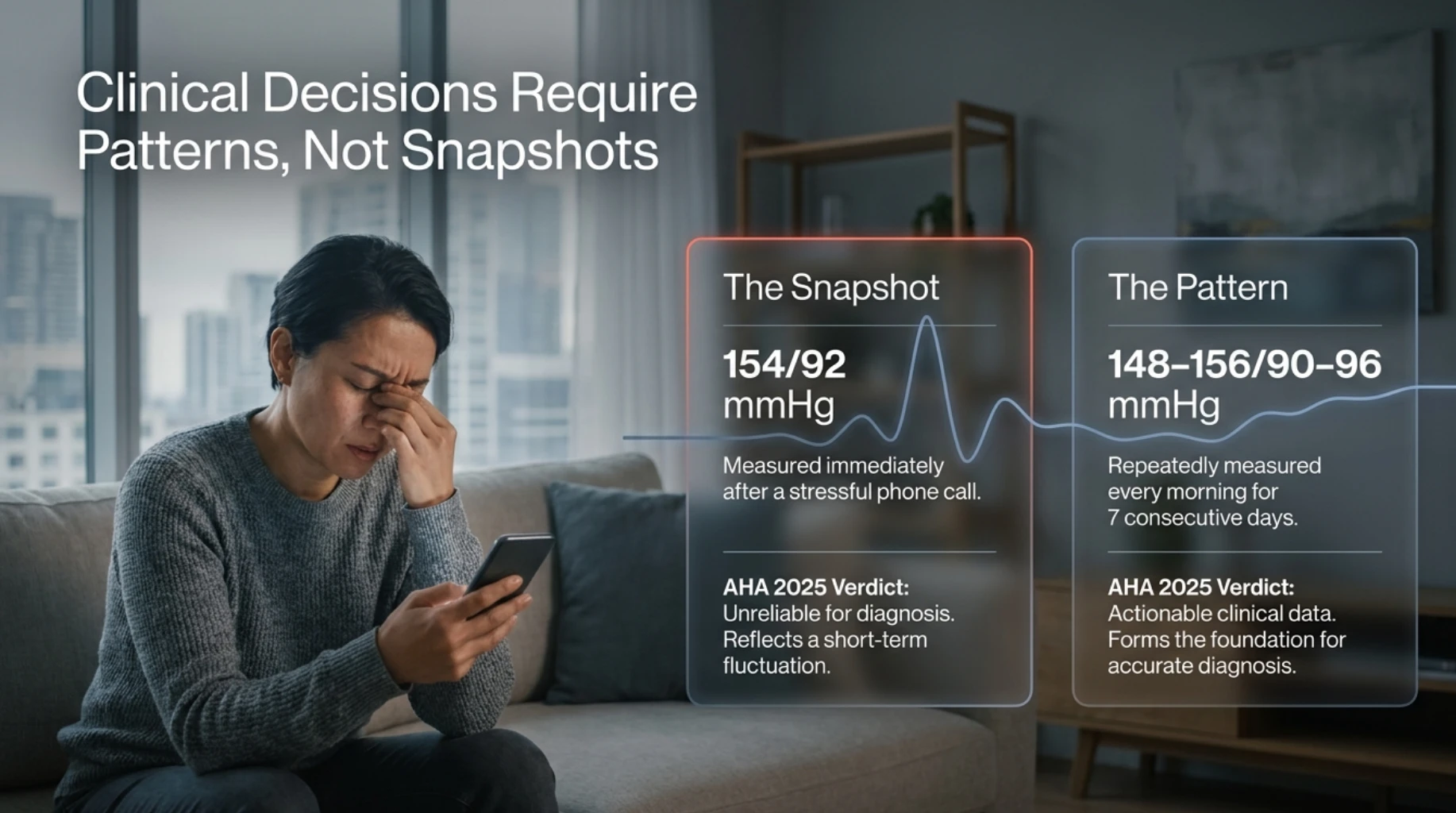
A single measurement provides information about one moment—not your usual pressure across the day or week.
Suppose you see:
154/92 mmHg
after a stressful phone call.
That deserves to be recorded, but it has a different meaning from:
148–156/90–96 mmHg repeatedly every morning for seven days
The second pattern is far more informative.
The American Heart Association describes a single blood-pressure measurement as a snapshot and recommends keeping a record over time so treatment decisions can be based on the broader pattern.
This is also why hypertension is not usually diagnosed from one isolated mildly elevated reading.
WHO describes diagnosis as requiring elevated measurements on more than one occasion rather than relying on a single value.
Blood Pressure Trends Matter More Than One Isolated Number
When your doctor reviews home blood pressure, useful information includes:
- morning readings
- evening readings
- repeated measurements on several days
- whether medicines were taken before the reading
- accompanying symptoms
- heart rate
AHA measurement guidance recommends taking two readings at least one minute apart rather than relying on the first measurement alone.
A week of properly recorded readings can often be more useful than checking blood pressure repeatedly whenever you feel anxious.
Excessive checking can also create confusion because normal short-term fluctuations start to look like medical emergencies.
The goal is structured monitoring, not continuous monitoring.
Reason 2: Measurement Technique Can Make the Reading Look Higher or Lower
Home blood-pressure technique matters much more than many people realize.
Common errors include:
- measuring immediately after walking
- talking during the measurement
- sitting with unsupported back
- crossing the legs
- keeping the arm below heart level
- placing the cuff over clothing
- checking immediately after coffee or smoking
- measuring with a full bladder
The AHA recommends sitting with the back supported, feet flat on the floor and legs uncrossed, while the upper arm rests at heart level. Measurements should be taken on bare skin after at least five minutes of quiet rest.
Small errors can add together.
For example, if someone measures while talking, with the arm hanging down and immediately after climbing stairs, the result may be noticeably higher than their true resting blood pressure.
That does not mean every high reading is an error.
It means technique should be checked before increasing medication solely because of home numbers.
A practical consultation can include reviewing how you actually measure blood pressure rather than simply looking at the final values.
Reason 3: The Monitor or Cuff Size May Be Giving Misleading Results
Not every blood-pressure monitor sold online or in a pharmacy has been independently validated for accuracy.
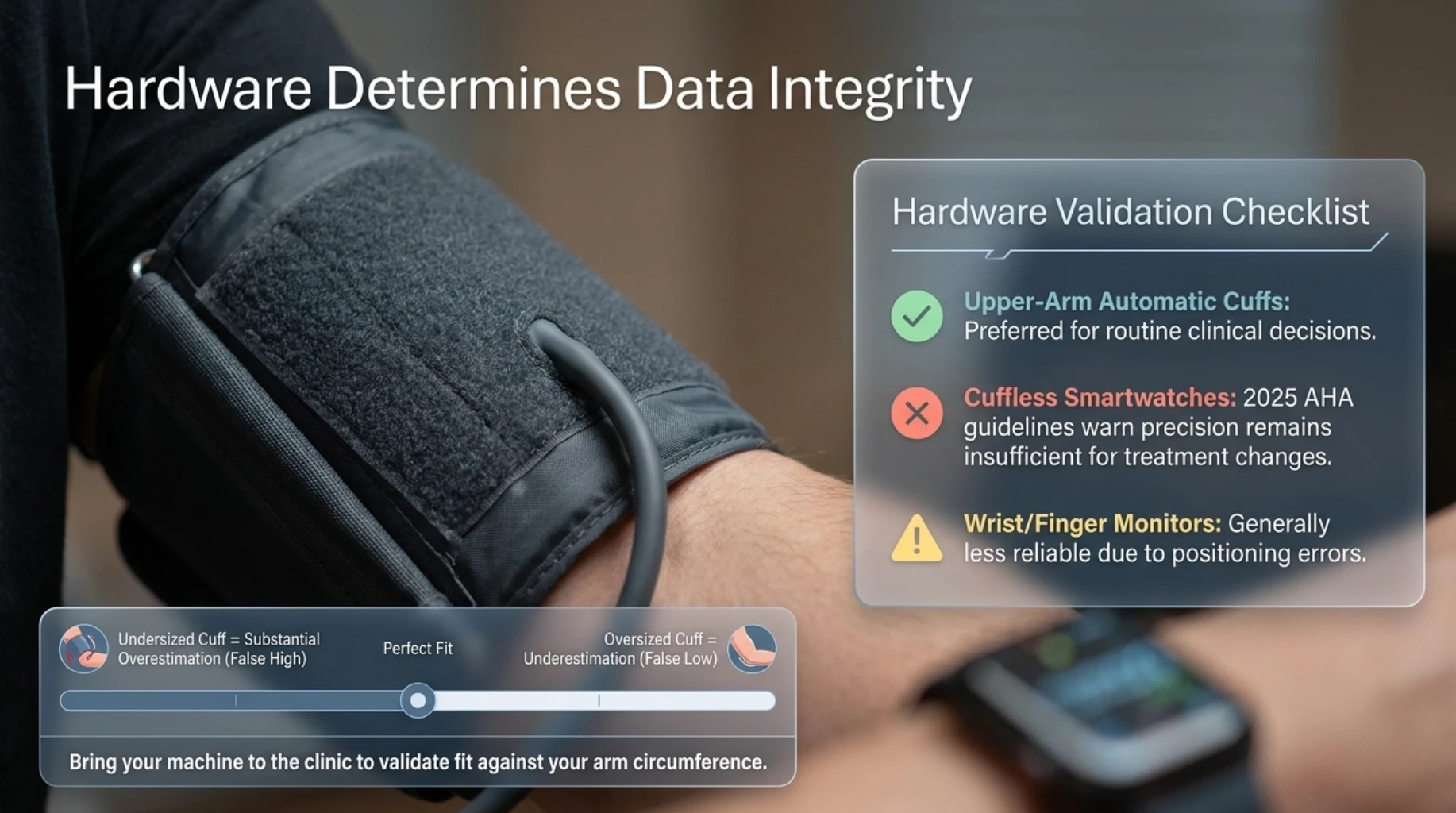
The 2025 AHA/ACC hypertension guideline specifically supports validated home monitors and advises against relying on cuff less blood-pressure devices such as smartwatches until their accuracy and reliability improve.
An automatic upper-arm cuff monitor is generally preferred for routine home measurement.
Cuff size matters too.
A cuff that is too small can produce an artificially high blood-pressure reading. A cuff that is excessively large can sometimes make the value appear lower.
Research highlighted by the AHA found clinically meaningful errors when a cuff did not match arm circumference, including large overestimation when a substantially undersized cuff was used.
This becomes particularly relevant in:
- adults with larger upper arms
- very lean adults
- people who have recently gained or lost considerable weight
If readings seem implausible or repeatedly conflict with clinic measurements, bring the monitor to your appointment.
It can be useful to review:
- brand and model
- cuff size
- arm circumference
- measurement technique
- stored readings
Do not assume the machine is correct simply because it displays a precise digital number.
Reason 4: Home and Clinic Blood Pressure May Not Match
A difference between home and clinic blood pressure is common enough to have specific medical names.
White-coat hypertension refers to blood pressure that is elevated in the medical setting but lower outside it.
Masked hypertension describes the opposite pattern—clinic readings appear acceptable, while blood pressure is elevated outside the clinic.
Both patterns are important because relying on clinic values alone may misrepresent a person’s usual blood pressure.
The AHA specifically recognizes home measurement as useful for identifying these discrepancies.
The 2024 ESC hypertension guideline also recommends out-of-office blood-pressure measurement for diagnostic purposes when feasible.
White-Coat and Masked Hypertension Need Different Interpretation
Consider two examples.
Person A
Clinic BP: 154/92
Home average: 126/78
Person B
Clinic BP: 128/78
Home average: 142/88
Those two patients should not automatically receive the same interpretation.
The first may have a white-coat pattern.
The second raises concern about masked hypertension or another reason blood pressure is higher during ordinary daily life.
A doctor may sometimes recommend further structured home monitoring or 24-hour ambulatory blood-pressure monitoring when the discrepancy remains unclear.
This is one of the strongest reasons not to make medicine changes from either a clinic measurement or a home measurement alone.
The objective is to identify which readings best represent the person’s usual blood-pressure burden.
Reason 5: Home Readings Help Show Whether Treatment Is Working
For someone already taking blood-pressure medicine, home readings can provide information that occasional clinic measurements may miss.
Suppose your clinic blood pressure is: 128/78 mmHg but home readings repeatedly average around: 148/90 mmHg
That pattern deserves review.
The opposite can happen too. Clinic values may remain high while properly measured home readings are consistently lower.
The American Heart Association recommends home monitoring for people with hypertension, particularly when treatment is being started or changed, because it can help show whether therapy is achieving adequate control.
This does not mean adjusting tablets after every reading.
Blood pressure naturally fluctuates, and most antihypertensive decisions should be based on an average pattern rather than a single morning or evening measurement.
A useful review may consider:
- average home blood pressure
- morning versus evening pattern
- missed medication doses
- medicine timing
- dizziness or other side effects
- kidney function
- other medicines that may raise blood pressure
The 2025 ACC/AHA guideline places particular emphasis on combining standardized home monitoring with ongoing clinical follow-up rather than treating home measurement as a stand-alone intervention.
Do Not Stop Blood Pressure Medicine Because One Reading Is Normal
A reading of 118/74 after several months of treatment may mean the treatment is working.
It does not necessarily mean hypertension has disappeared.
The AHA specifically advises people using home monitoring not to stop prescribed blood-pressure medicine without discussing the change with their healthcare professional.
Likewise, do not double a dose simply because one reading is unusually high unless you have been given a specific treatment plan for that situation.
Medication changes should take into account the full BP pattern and clinical context.
Reason 6: Blood Pressure Can Sometimes Become Too Low
People understandably focus on high readings.
But blood pressure can also fall too low, particularly after:
- starting a new medicine
- increasing a blood-pressure medicine
- significant weight loss
- dehydration
- vomiting or diarrhea
- prolonged illness
- taking several medicines that lower blood pressure
The American Heart Association generally describes blood pressure below 90/60 mmHg as hypotension, but also emphasizes that a low number is not necessarily harmful when the person feels well. Symptoms are what make low blood pressure more clinically important.
Possible symptoms include:
- dizziness
- blurred vision
- weakness
- nausea
- fainting
- unusual fatigue
- palpitations
A person whose usual blood pressure is 100/65 and feels completely well is different from someone whose pressure has suddenly fallen from 150/90 to 90/55 after a medication change and who becomes dizzy on standing.
Dizziness on Standing Needs a Different Review
If symptoms appear mainly after getting out of bed or standing from a chair, the question may be whether blood pressure is falling with a change in posture.
Orthostatic hypotension can coexist with hypertension and may be influenced by:
- dehydration
- autonomic dysfunction
- medicines
- prolonged bed rest
- other medical conditions
The AHA scientific statement on orthostatic hypotension in adults with hypertension stresses that identifying the underlying cause is an important first step rather than simply abandoning hypertension treatment.
If you repeatedly become light-headed after standing, record the symptoms and discuss them during follow-up.
Do not assume that every dizzy spell means your blood pressure medicine must be stopped.
Reason 7: Diabetes, Kidney Disease and Cardiovascular Risk Change the Context
The same home reading can carry different implications in different people.
Consider a repeated home blood pressure around:
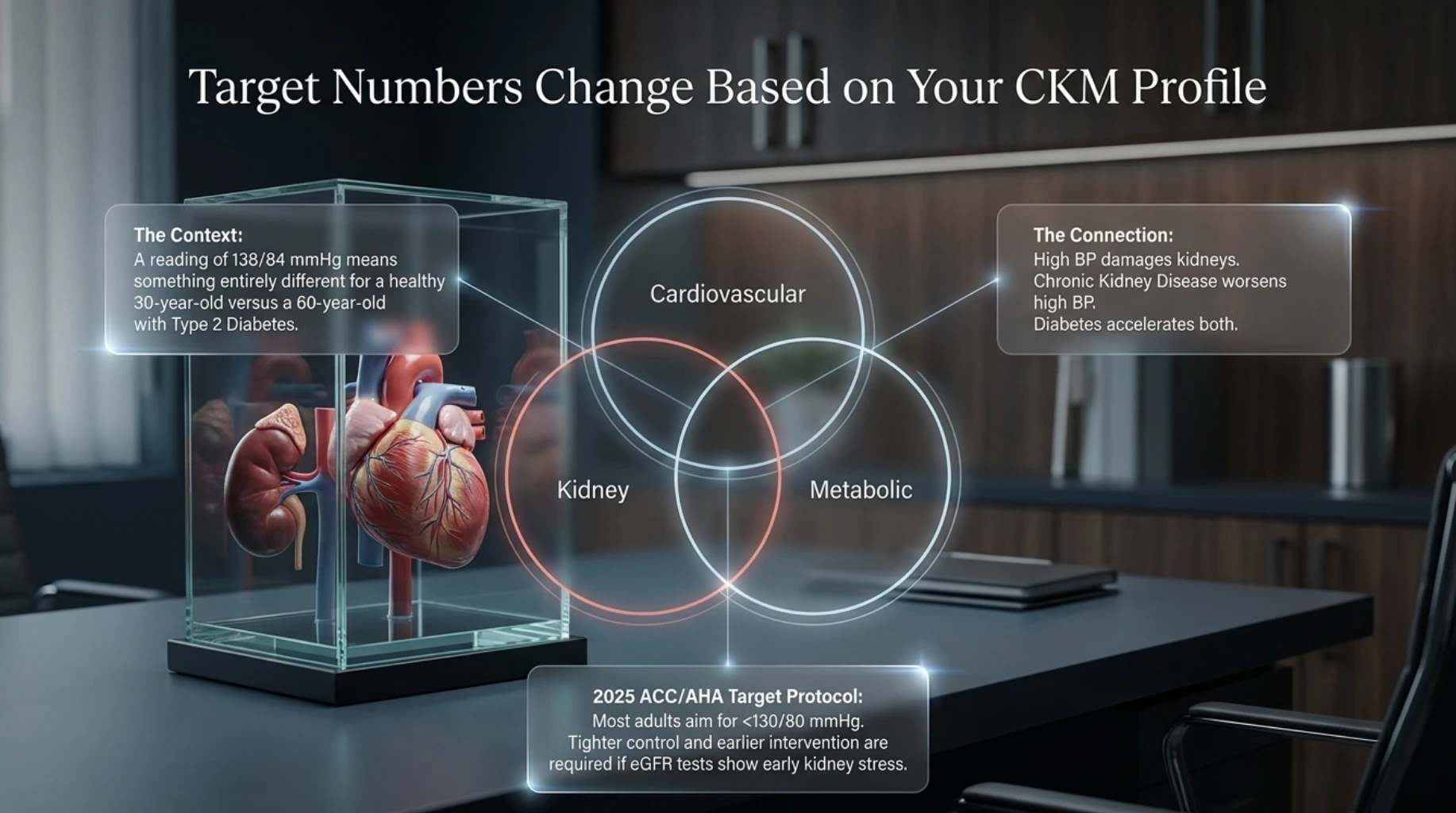
138/84 mmHg
The clinical context is different in:
Person A: young adult without diabetes, kidney disease or cardiovascular disease
and
Person B: adult with type 2 diabetes, chronic kidney disease and previous cardiovascular disease.
The 2025 ACC/AHA hypertension guideline recommends a treatment goal below 130/80 mmHg for most adults, while also emphasising individualization in people with particular clinical circumstances. It also recommends earlier use of medication in people with average BP of at least 130/80 when diabetes, chronic kidney disease, established cardiovascular disease or sufficiently high predicted cardiovascular risk is present.
WHO likewise identifies diabetes, chronic kidney disease and established cardiovascular disease as conditions in which tighter blood-pressure control may be appropriate.
This is why the consultation should not consist only of:
“Your BP is 138/84.”
A broader review may need to consider:
- HbA1c or glucose
- cholesterol
- smoking or tobacco exposure
- kidney function
- urine albumin
- body weight and waist circumference
- existing cardiovascular disease
- family history
- age
High blood pressure, diabetes and kidney disease are closely connected cardiovascular-kidney-metabolic risk factors. Current AHA guidance identifies blood pressure, glucose, cholesterol, body composition and kidney function as interconnected measures of cardiovascular risk.
Kidney Tests Can Be Important in Hypertension
High blood pressure can damage the kidneys, while kidney disease itself can contribute to hypertension.
For this reason, kidney assessment becomes important in established hypertension.
Current European hypertension guidance recommends measuring serum creatinine, estimated glomerular filtration rate and urine albumin-to-creatinine ratio when evaluating people with hypertension.
The AHA also highlights eGFR and urine albumin-to-creatinine ratio as important kidney-health tests in people with high blood pressure or diabetes.
A home BP log therefore sometimes reveals more than a need to change tablets.
It may prompt a broader cardiovascular and kidney-risk review.
Reason 8: Some Very High Readings Need Urgent Assessment
Most isolated mildly elevated readings do not require emergency treatment.
Very high values need a different approach.
For nonpregnant adults, the American Heart Association advises that if blood pressure is higher than 180/120 mmHg, wait at least one minute and measure it again.
If it remains in that range without concerning symptoms, contact a healthcare professional promptly for assessment and treatment advice.
If blood pressure remains above 180/120 and there are symptoms such as:
- chest pain
- significant shortness of breath
- weakness or numbness
- difficulty speaking
- sudden vision change
- severe new neurological symptoms
seek emergency medical care immediately.
Do not repeatedly recheck the machine for an hour while serious symptoms continue.
The combination of very high blood pressure plus signs suggesting acute organ injury is what makes hypertensive emergency dangerous.
The 2025 ACC/AHA guideline distinguishes this from severe hypertension without evidence of acute target-organ damage, which often requires prompt medication assessment but not necessarily hospitalization.
Pregnancy Uses Different Urgent Thresholds
Pregnancy is an important exception.
The AHA’s 2025 hypertension guidance uses 160 mmHg systolic or 110 mmHg diastolic as severe hypertension in pregnancy, which is lower than the 180/120 threshold generally used for nonpregnant adults.
Pregnant people with high blood pressure, severe headache, vision changes, abdominal pain, significant swelling, chest symptoms or breathlessness should seek appropriate obstetric medical assessment urgently.
What Should You Record in a Home Blood Pressure Log?
A useful blood-pressure log does not need to be complicated.
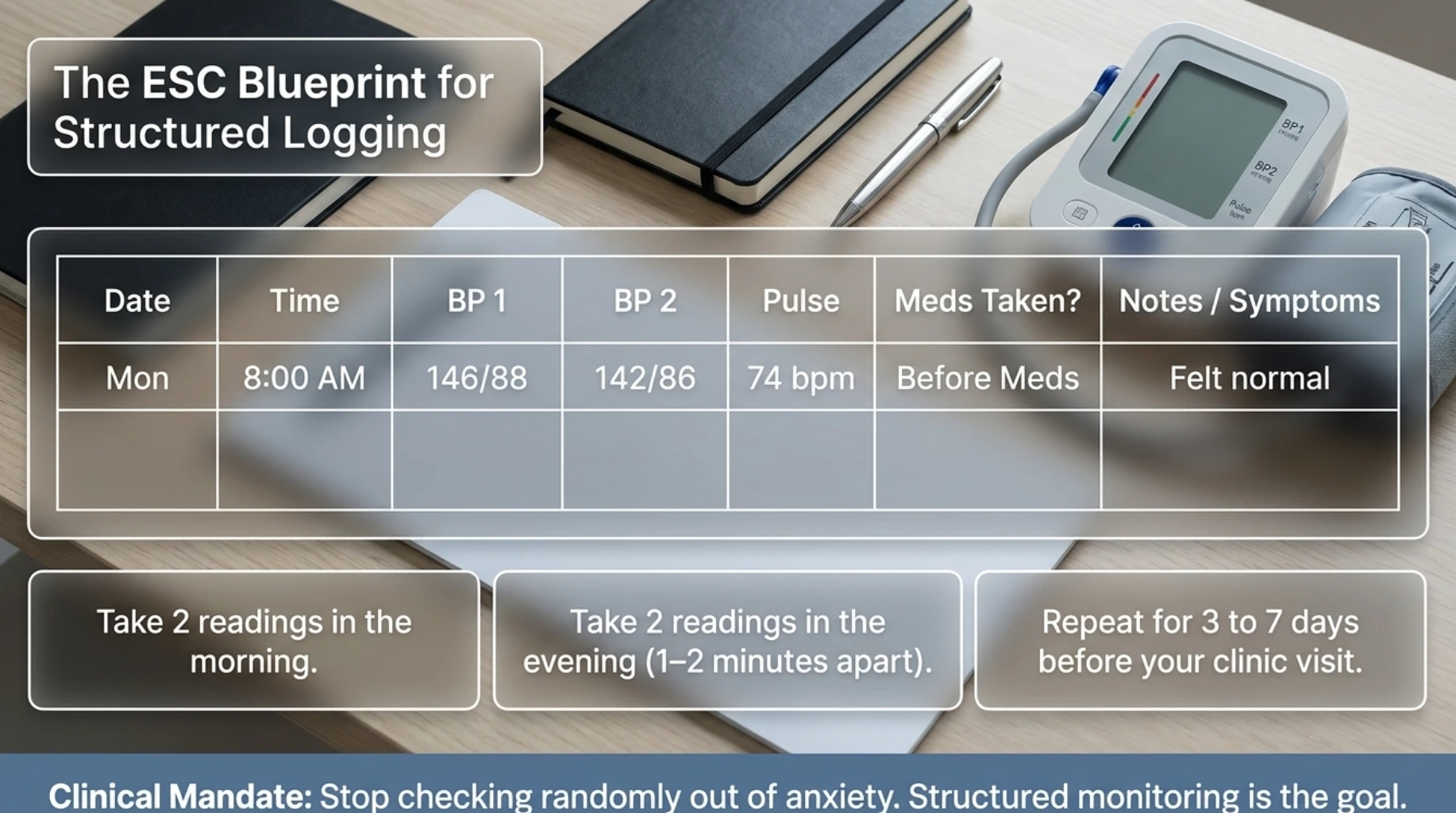
For structured home measurement, the 2024 ESC patient guidance recommends taking at least two readings in the morning and two in the evening, approximately 1–2 minutes apart, over at least three and ideally seven days.
Record:
- date
- time
- systolic pressure
- diastolic pressure
- pulse
- whether morning medicines had been taken
- relevant symptoms
For example:
| Date/Time | BP 1 | BP 2 | Pulse | Notes |
|---|---|---|---|---|
| Monday 8 AM | 146/88 | 142/86 | 74 | Before morning medicine |
| Monday 8 PM | 134/82 | 132/80 | 70 | No symptoms |
| Tuesday 8 AM | 144/87 | 140/84 | 72 | Before morning medicine |
Patterns like this are much easier to interpret than a list of random readings taken only when you feel worried.
Try to measure under similar conditions each day.
The ESC advises using a validated device, resting quietly for five minutes, supporting the back and arm and taking two measurements on each occasion.
Bring Your Monitor to the Consultation
The AHA recommends taking your home monitor to a medical appointment so its cuff fit and measurements can be reviewed.
This is especially worthwhile when:
- your home and clinic readings differ greatly
- the device is several years old
- cuff fit is uncertain
- readings change dramatically within minutes
- you use a wrist monitor
- you have recently gained or lost substantial weight
Do not rely on cuff less smartwatch blood-pressure estimates for treatment decisions. The 2025 ACC/AHA guideline states that cuff less devices should not yet be relied upon for accurate clinical blood-pressure measurement because precision and reliability remain insufficient.
Which Tests May Be Needed During Hypertension Follow-Up?
There is no universal “hypertension test package.”
Investigations should answer specific questions:
Is there associated cardiovascular risk?
Has high blood pressure affected organs?
Could another condition be contributing?
Is treatment safe?
Depending on the individual, assessment may include:
Kidney Function
Serum creatinine and eGFR help assess kidney function.
Urine albumin-to-creatinine ratio can detect albumin leakage, an important marker of kidney damage and cardiovascular risk. Current ESC guidance recommends these measurements in patients with hypertension.
Electrolytes
Sodium and potassium can be relevant before and during treatment with several common antihypertensive medicines.
An unexpectedly low potassium level may also provide a clue to certain secondary causes of hypertension.
Glucose or HbA1c
Hypertension frequently occurs alongside diabetes or insulin resistance.
The AHA identifies blood glucose as an important cardiovascular screening measure because diabetes increases cardiovascular risk.
Lipid Profile
Cholesterol and triglycerides contribute to overall cardiovascular-risk assessment and can influence preventive treatment decisions.
ECG
An ECG may identify rhythm abnormalities or signs suggesting the heart has been affected by longstanding hypertension.
Current ESC guidance recommends a 12-lead ECG as part of the evaluation of patients with hypertension.
Additional Tests When Indicated
Further investigation may be needed when blood pressure is:
- unusually severe
- difficult to control despite several medicines
- beginning at an unexpectedly young age
- associated with abnormal kidney results
- associated with unexplained low potassium
- accompanied by symptoms suggesting another underlying condition
The purpose is targeted investigation—not ordering every hormone, scan and blood test simply because one home reading was high.
Blood Pressure Review at Diet Plus Minus in Dwarka
If home readings are repeatedly high, unexpectedly low or inconsistent with clinic measurements, they can be reviewed in the context of your overall health.
Dr. Pankaj Kumar can review:
- home blood-pressure records
- how you measure blood pressure
- monitor and cuff suitability
- clinic blood pressure
- current medicines
- medicine adherence and timing
- dizziness or possible low blood pressure
- diabetes and glucose reports
- cholesterol
- kidney-function results
- cardiovascular risk factors
- whether an ECG or other targeted tests are appropriate
- whether specialist referral is needed
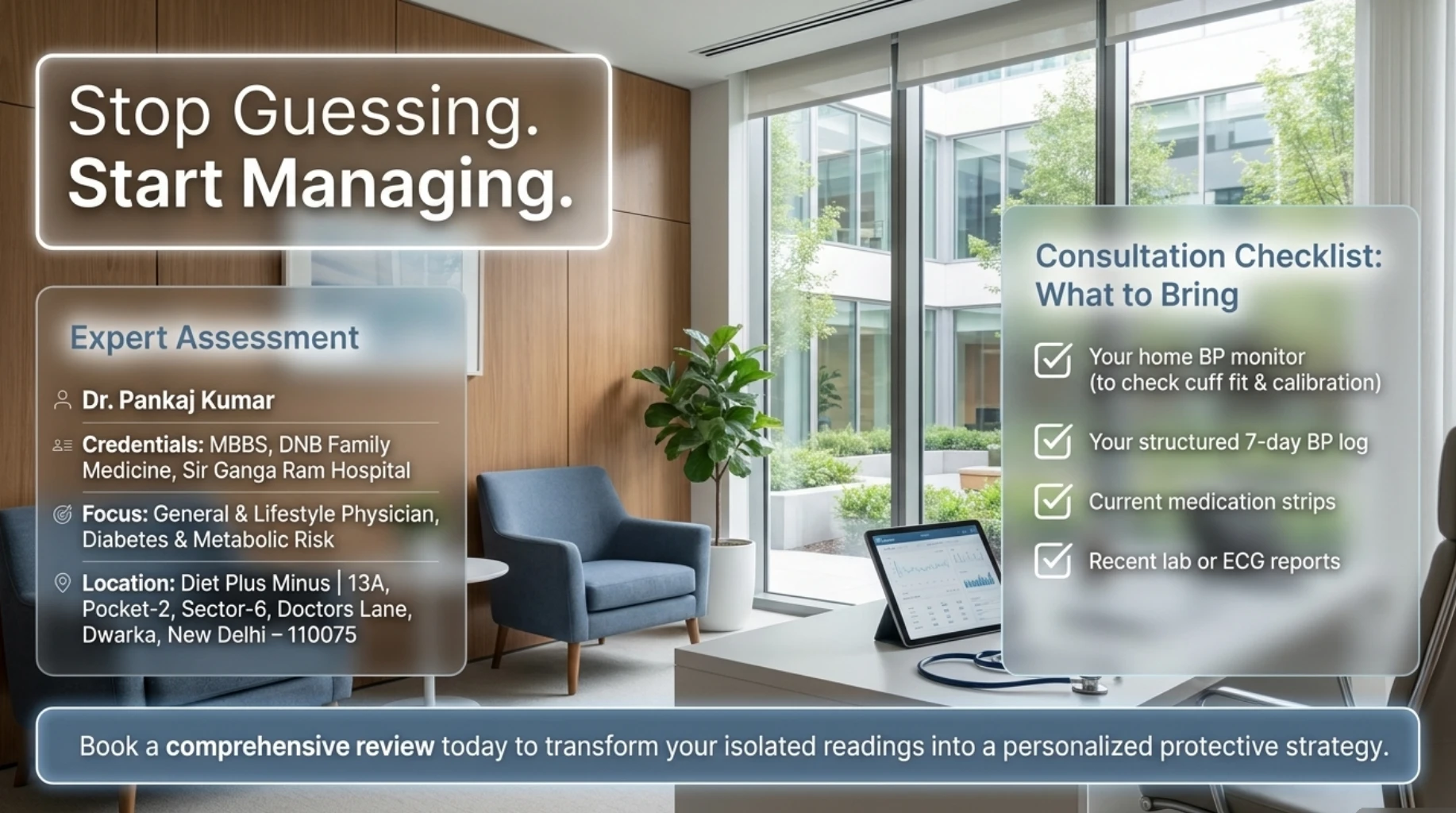
Bring the home BP monitor if practical, particularly when its readings differ significantly from clinic measurements.
Also bring:
- your recent BP log
- medication strips or prescription
- previous laboratory reports
- relevant ECG or specialist reports
Dr. Pankaj Kumar
MBBS, DNB Family Medicine, Sir Ganga Ram Hospital
General & Lifestyle Physician
Special interest in Diabetes
Diet Plus Minus
13A, Pocket-2, Sector-6, Doctors Lane
Dwarka, New Delhi – 110075
India
Book an Appointment with Dr. Pankaj Kumar
Frequently Asked Questions
What Is a Normal Home Blood Pressure?
Different professional guidelines use somewhat different classifications.
The 2024 ESC guideline defines home hypertension as an average home BP of 135/85 mmHg or higher, while the 2025 ACC/AHA guideline uses lower BP categories and generally targets treatment below 130/80 mmHg in adults receiving hypertension care.
Your individual target should therefore be interpreted according to the guideline being used and your cardiovascular risk.
Is 140/90 High at Home?
Repeated home readings around 140/90 are elevated and deserve review.
The 2024 ESC home threshold for hypertension is 135/85 mmHg or higher.
One isolated reading should still be repeated correctly before drawing conclusions.
Is One Blood Pressure Reading of 150/90 Dangerous?
Not necessarily.
A single elevated reading may be influenced by activity, stress, pain, caffeine or measurement technique.
Sit quietly, repeat the measurement correctly and record the result. Repeated readings are more informative than one isolated value.
What Should I Do if My BP Is 180/120?
Wait at least one minute and measure again.
If it remains above 180/120 without concerning symptoms, contact a healthcare professional promptly. If it is accompanied by chest pain, significant breathlessness, weakness, numbness, vision change or difficulty speaking, seek emergency medical care immediately.
Why Is My First BP Reading Always Higher?
The first measurement can sometimes be higher because you have not fully settled, the arm has not been positioned correctly or you are anxious about the result.
Guidelines therefore recommend repeated readings rather than relying only on the first number. ESC patient guidance recommends two readings approximately 1–2 minutes apart.
How Many Times Should I Check Blood Pressure at Home?
For a structured assessment, ESC guidance recommends two readings in the morning and two in the evening for at least three and ideally seven days.
Your doctor may recommend a different schedule during medication adjustment or long-term monitoring.
Should I Check BP Before or After Taking My Medicine?
Consistency is important.
When your doctor is assessing how well a medicine lasts between doses, morning measurements before medication may sometimes be particularly useful.
Record whether the medicine had been taken so the readings can be interpreted correctly.
Can Anxiety Raise Blood Pressure at Home?
Yes.
Stress and anxiety can temporarily raise blood pressure.
However, repeated elevated readings should not automatically be dismissed as anxiety, particularly when they are obtained correctly over several days.
Why Is My BP High at the Doctor but Normal at Home?
This can occur with white-coat hypertension or a white-coat effect.
Structured home monitoring or 24-hour ambulatory monitoring can help clarify whether blood pressure is genuinely elevated outside the clinic.
Can Blood Pressure Be Normal at the Doctor but High at Home?
Yes.
This is called masked hypertension when clinic values appear acceptable but blood pressure is elevated outside the medical setting.
Out-of-office monitoring is useful for recognizing this pattern.
Which BP Machine Is Best for Home Monitoring?
The AHA recommends an automatic, validated upper-arm cuff monitor.
Wrist and finger devices are generally less reliable, and cuff less smartwatch estimates should not currently be used as substitutes for validated cuff measurement.
Can the Wrong Cuff Size Raise My Blood Pressure Reading?
Yes.
A cuff that is too small for the arm can overestimate blood pressure.
Measure upper-arm circumference and use the cuff size recommended by the device manufacturer.
Is a BP of 90/60 Too Low?
Blood pressure below 90/60 is commonly described as hypotension.
It is not necessarily dangerous if you feel well, but dizziness, fainting, confusion or other symptoms warrant medical review.
Can Blood Pressure Medicine Make BP Too Low?
Yes.
Blood-pressure medicines can sometimes contribute to symptomatic hypotension, particularly after a dose change, dehydration, illness or substantial weight loss.
Do not stop the medicine abruptly on your own. Record the readings and symptoms and have the treatment reviewed.
Does Diabetes Change My Blood Pressure Target?
Diabetes increases cardiovascular risk and can influence when treatment is started and how aggressively blood pressure is managed.
The 2025 ACC/AHA guideline recommends an overall treatment goal below 130/80 mmHg for most adults and specifically identifies diabetes as a condition supporting medication treatment at lower BP thresholds.
Why Does Kidney Function Matter in High Blood Pressure?
Hypertension can damage the kidneys, and chronic kidney disease can worsen hypertension.
Creatinine, eGFR and urine albumin-to-creatinine ratio can therefore provide important information during hypertension assessment.
Can I Stop BP Medicine if My Home Readings Become Normal?
Do not stop prescribed blood-pressure medication solely because home readings are normal.
Normal readings may indicate that the medication is successfully controlling the blood pressure. The AHA specifically advises discussing any medication change with your healthcare professional.
When Should I See a Doctor About My Home BP Readings?
Arrange medical review if readings are repeatedly elevated, unexpectedly low, inconsistent with clinic measurements, worsening despite treatment or associated with dizziness or medication concerns.
Seek urgent assessment for very high readings or significant symptoms rather than waiting for a routine appointment.
Author Box
Dr. Pankaj Kumar
MBBS, DNB Family Medicine, Sir Ganga Ram Hospital
General & Lifestyle Physician
Special interest in Diabetes
Dr. Pankaj Kumar provides general medical and lifestyle-based care at Diet Plus Minus in Dwarka, New Delhi. His clinical approach includes assessment and follow-up of blood pressure, diabetes and metabolic risk, medication review and common adult health concerns, with specialist referral when appropriate.
Medical Disclaimer
This article provides general educational information and does not replace an individual medical consultation, examination, diagnosis or personalized treatment plan.
Do not start, stop, double or reduce blood-pressure medication solely on the basis of one home reading unless you have been given a specific medical plan.
If blood pressure remains above 180/120 mmHg and you develop chest pain, significant breathlessness, weakness, numbness, vision change, difficulty speaking or another severe new symptom, seek emergency medical care immediately.
Pregnancy has different thresholds for severe hypertension and requires pregnancy-specific medical assessment.
References
- American Heart Association/American College of Cardiology. 2025 Guideline for the Prevention, Detection, Evaluation and Management of High Blood Pressure in Adults. Updated recommendations covering blood-pressure classification, treatment goals, home monitoring, cardiovascular risk and severe hypertension.
- American Heart Association. Home Blood Pressure Monitoring. Updated August 2025. Guidance on validated upper-arm monitors, cuff fit, home measurement, repeat readings and medication safety.
- European Society of Cardiology. 2024 ESC Guidelines for the Management of Elevated Blood Pressure and Hypertension. Includes recommendations for out-of-office measurement and evaluation of hypertension.
- European Society of Cardiology. Patient Guidelines on Elevated Blood Pressure and Hypertension. Recommends validated home monitors, two morning and evening measurements over several days and defines home hypertension at an average of at least 135/85 mmHg.
- World Health Organization. Hypertension. Updated September 2025. Reviews hypertension diagnosis, cardiovascular risk, lifestyle management and treatment targets in higher-risk conditions.
- World Health Organization India. Hypertension. Reviews hypertension detection, ongoing treatment and the importance of continuity of care in India.
- American Heart Association. Low Blood Pressure—When Blood Pressure Is Too Low. Reviews hypotension, associated symptoms and situations requiring clinical assessment.
- Juraschek SP, et al. Orthostatic Hypotension in Adults With Hypertension: A Scientific Statement From the American Heart Association. Hypertension. 2024. Discusses causes and management of orthostatic hypotension in people who also have hypertension.
- American Heart Association. Cardiovascular-Kidney-Metabolic Health. Reviews the interrelationship between blood pressure, diabetes, cholesterol, body composition and kidney function.
Related reading and care options

Written by Dr. Pankaj Kumar
General & Lifestyle Physician in Dwarka Sector 6, New Delhi · MBBS, DNB (Family Medicine), DNHE · 16 years of experience.
About the doctor →Book a consultation → Beyond Blood Sugar
 The 90-Day Prediabetes Turnaround
 The Indian Diabetes Diet Reset
 Eat to Beat Gout
 Why Is My Hair Falling?
 The 30-Day Inflammation Reset