
Many adults see a doctor only when something hurts, a fever does not settle or a laboratory report comes back abnormal. But a family physician in Dwarka can also play a different role: following health patterns over time, monitoring chronic conditions, reviewing medicines and identifying which preventive checks are appropriate before a problem becomes difficult to manage.
Regular medical follow-up does not mean every healthy adult needs monthly consultations or a large package of blood tests each year. The appropriate frequency depends on age, family history, blood pressure, weight, medicines, previous reports and existing conditions.
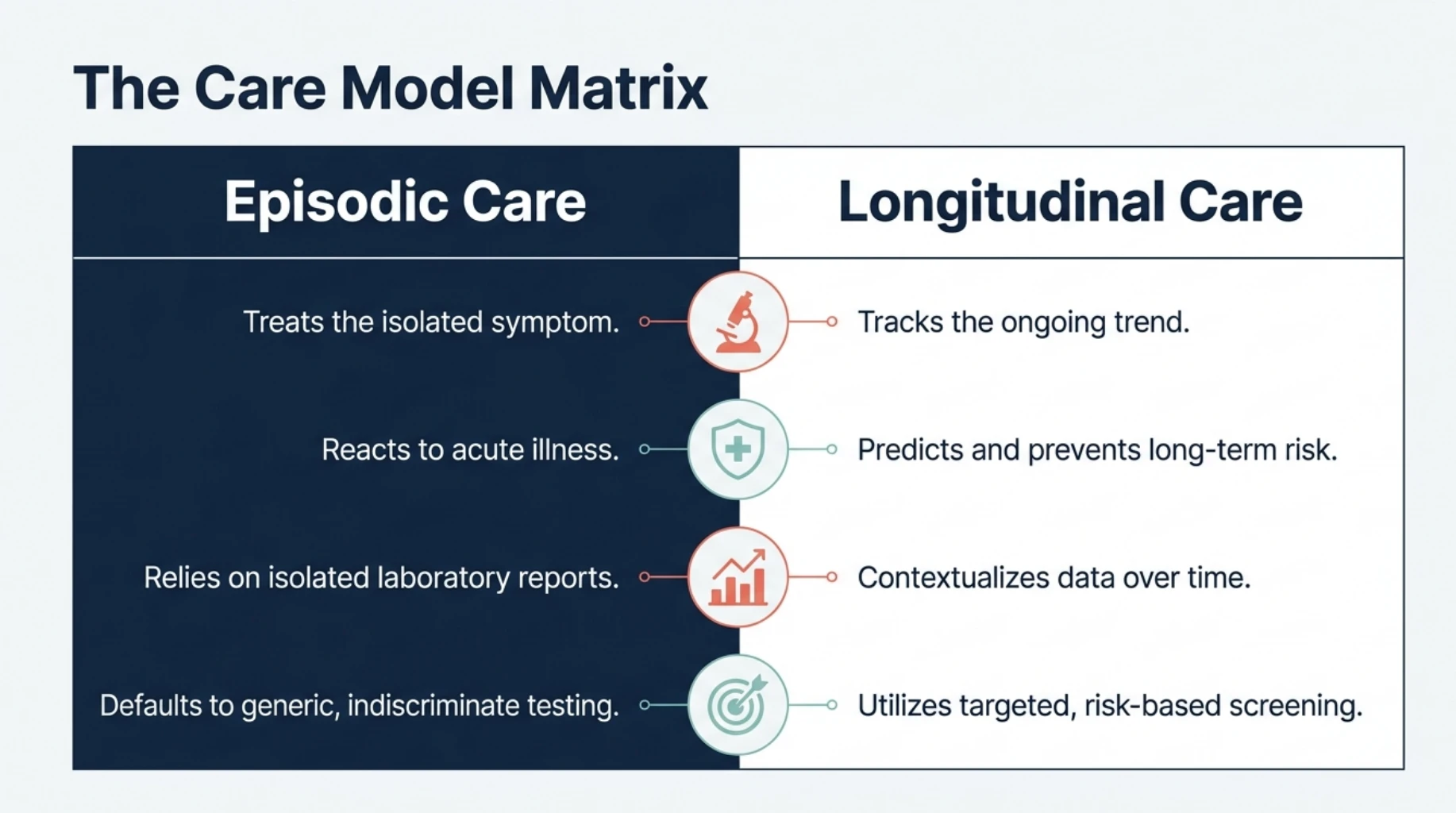
The World Health Organization describes continuity, comprehensiveness and coordination as core functions of good primary care. A regular primary-care relationship can therefore connect prevention, treatment, follow-up and specialist referral rather than treating each visit as an isolated event.
For adults in Dwarka, Dr. Pankaj Kumar provides general and lifestyle physician care at Diet Plus Minus, including follow-up for common adult medical and metabolic-health concerns.
Why Have Regular Follow-Up With a Family Physician?
Regular follow-up with a family physician can help track blood pressure, glucose, cholesterol, weight, medicines, persistent symptoms and preventive-care needs over time.
The value is not in ordering every possible test at every visit. It is in having someone who understands the broader clinical picture and can decide what needs monitoring, what can simply be observed and when specialist assessment is appropriate.
WHO’s 2025 Primary Care Checklist reflects this longitudinal approach by including vital signs, previous healthcare interactions, medicines, social factors, examination and follow-up planning within a structured primary-care visit.

What Does a Family Physician Do for Adults?
Family medicine is broader than treating cough, fever and minor infections.
A family physician can provide first-contact assessment for many adult health concerns while also maintaining continuity across longer-term conditions.
That may include reviewing:
- blood pressure
- diabetes and prediabetes
- cholesterol and cardiovascular risk
- thyroid concerns
- weight and metabolic health
- fatty liver
- persistent fatigue or other symptoms
- prescription medicines
- relevant preventive screening
WHO describes primary care through five core functions: first-contact access, continuity, coordination, comprehensiveness and people-centeredness. Family physicians are part of the workforce that can deliver these functions within primary care.
This means the physician’s role is not to personally provide every specialist service.
It also includes recognizing when a cardiologist, endocrinologist, gastroenterologist, gynecologist, ophthalmologist or another specialist should become involved, and then helping interpret how that specialist’s recommendations fit with the rest of the patient’s health.
Why Continuity With a Family Doctor in Dwarka Can Be Useful
Consider someone who visits three different clinics over a year: one visit for high blood pressure, another for fatigue, another after an abnormal glucose report. Each problem can be treated separately.
But viewed together, the pattern might include increasing waist circumference, rising HbA1c, higher blood pressure, poor sleep and several medicines.
Continuity allows these pieces to be considered as one clinical picture.
WHO specifically identifies continuity and coordination across levels of care as central to primary care, including appropriate referrals and follow-up when patients move between primary and specialist services.
That becomes increasingly useful when someone develops more than one chronic condition.
How Often Should You See a Family Physician?
There is no universal rule that every adult must see a family physician every six months or every year.
The interval should depend on risk.
A healthy young adult with normal blood pressure, no significant family history and no ongoing medicines may need less frequent medical review than someone with:
- hypertension
- diabetes or prediabetes
- high cholesterol
- thyroid disease
- kidney disease
- obesity or metabolic risk
- several prescription medicines
- repeatedly abnormal laboratory results
Follow-up may also become more frequent after:
- starting a new medicine
- changing a treatment dose
- receiving an abnormal test result
- developing persistent symptoms
- being discharged after an illness or hospital admission
Preventive screening itself follows different schedules depending on the condition.
For example, blood pressure screening, diabetes testing, cancer screening and vaccinations do not all occur at the same interval.
This is one reason a personalized follow-up plan is more useful than automatically ordering the same “full body check-up” package every year.
Reason 1: Blood Pressure and Cardiovascular Risk Can Change Quietly
High blood pressure often causes no obvious symptoms.
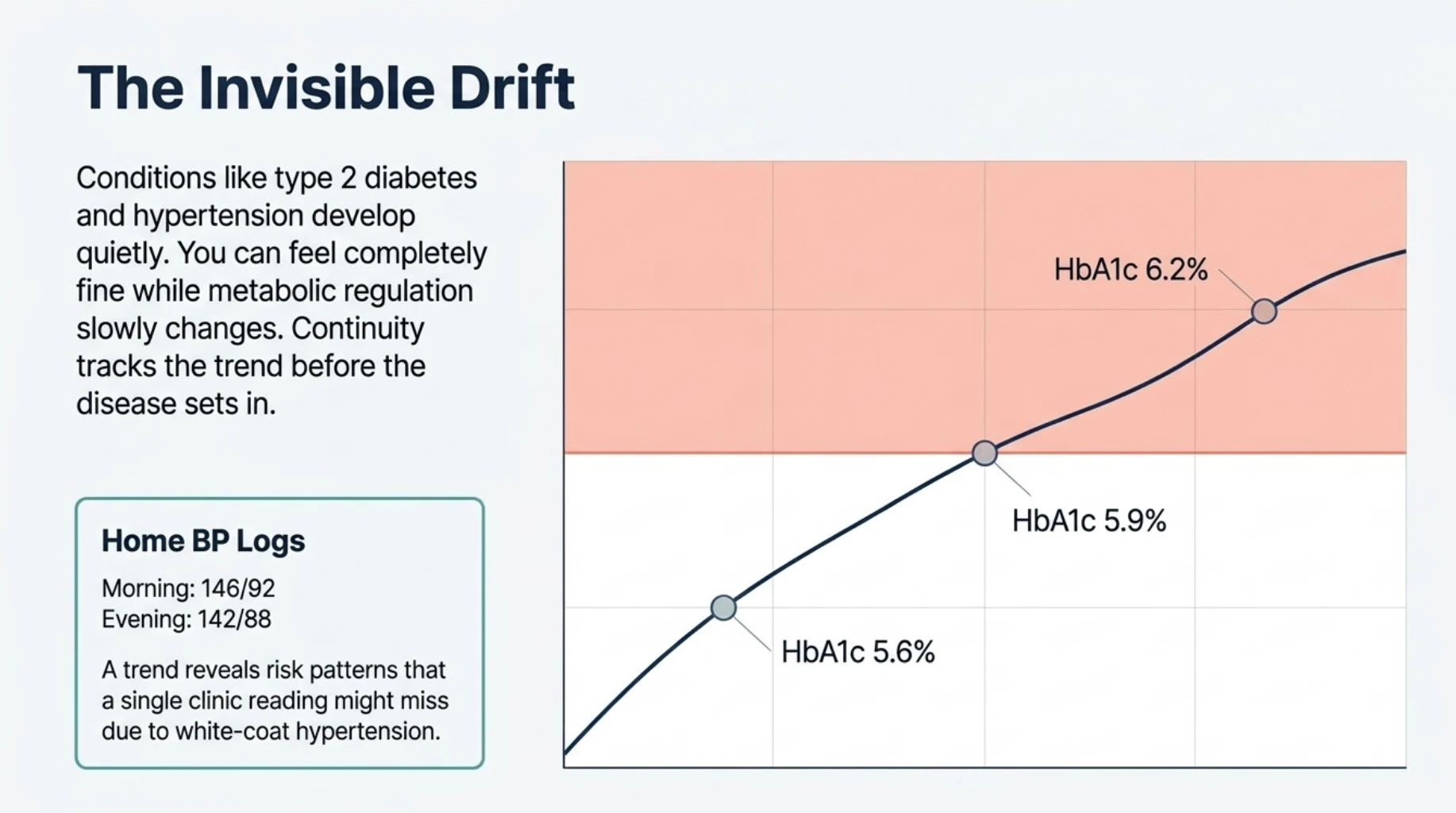
You can feel completely normal while blood-pressure readings remain elevated.
WHO’s India hypertension guidance emphasizes regular measurement, appropriate treatment and follow-up because uncontrolled hypertension is an important cardiovascular risk factor.
Regular primary-care follow-up allows several pieces to be reviewed together:
- office blood pressure
- home blood pressure where appropriate
- body weight and waist circumference
- smoking or tobacco exposure
- glucose
- cholesterol
- kidney function where clinically relevant
- family history of cardiovascular disease
One isolated high reading does not necessarily establish hypertension.
Blood pressure can temporarily rise because of anxiety, pain, caffeine, poor sleep or recent activity. Conversely, some people have normal readings in a clinic but higher blood pressure outside it.
Current screening guidance supports confirming elevated office readings with measurements outside the clinic when appropriate rather than diagnosing hypertension from one number alone.
Home Blood Pressure Readings Can Add Useful Information
Home measurements can be particularly helpful when:
- clinic readings vary considerably
- white-coat hypertension is suspected
- treatment has recently changed
- blood pressure appears well controlled in the clinic but there is concern about readings at other times
Use a validated upper-arm monitor and measure after sitting quietly rather than immediately after walking, climbing stairs or drinking coffee.
Bring the readings to the consultation.
A written pattern such as:
Morning: 146/92
Evening: 142/88
for seven days
provides much more useful information than saying:
“Sometimes my BP is high.”
Regular follow-up then becomes about the trend and cardiovascular risk—not chasing one abnormal number.
Reason 2: Diabetes and Prediabetes May Develop Before Obvious Symptoms
Type 2 diabetes often develops gradually.
Many people do not initially experience dramatic thirst, weight loss or frequent urination.
That is why screening matters.
India’s population-based noncommunicable-disease programme has included screening adults aged 30 years and older for conditions including hypertension and diabetes at the primary-care level.
International diabetes guidance also recommends risk-based screening earlier in adults with factors such as overweight or obesity, family history, hypertension, physical inactivity, PCOS or other evidence of insulin resistance. The 2026 ADA Standards recommend routine screening beginning by age 35 for adults who do not already meet earlier risk-based criteria.
A family physician may review:
- fasting plasma glucose
- HbA1c
- previous glucose trends
- weight and waist circumference
- blood pressure
- family history
- triglycerides and cholesterol
- medicines that can influence glucose
This becomes particularly relevant in Indian adults because metabolic risk can occur at comparatively lower BMI levels.
A Family Physician in Dwarka Can Review Glucose Trends, Not Just One Result
Suppose your HbA1c changes:
5.6% → 5.9% → 6.2%
None of those results should be interpreted in isolation.
The pattern suggests glucose regulation is changing and creates an opportunity to review:
- weight
- physical activity
- food patterns
- sleep
- family history
- medicines
- associated blood pressure and lipid changes
Likewise, someone with established diabetes needs more than an occasional fasting glucose test.
Follow-up may include HbA1c, glucose-monitoring patterns, medicines, hypoglycemia risk, kidney health, eye screening and other complication prevention according to the person’s treatment and disease duration.
The purpose is not merely to produce a lower laboratory number.
It is to reduce long-term risk while avoiding unnecessary treatment burden or low blood sugar.
Reason 3: Chronic Conditions Need Follow-Up Even When You Feel Well
Many long-term conditions become less noticeable once treatment starts working.
That can create a false sense that follow-up is no longer necessary.
Examples include:
- hypertension controlled on tablets
- type 2 diabetes with improved HbA1c
- hypothyroidism treated with levothyroxine
- high cholesterol on treatment
- fatty liver associated with metabolic risk
Feeling well is encouraging, but it does not always show whether treatment remains appropriate.
Follow-up can answer questions such as:
- Is the condition still controlled?
- Has the dose become too high or too low?
- Have kidney or liver results changed?
- Are side effects developing?
- Has body weight changed enough to alter treatment needs?
- Is another risk factor becoming more important?
WHO describes primary care as providing prevention and treatment across the life course rather than focusing only on episodes of acute illness. It also emphasizes continuity for chronic health conditions.
This does not mean every chronic condition requires frequent laboratory testing.
Monitoring should be matched to the condition and treatment.
For example, stable thyroid disease does not necessarily require repeated TSH testing every few weeks, while a recent dose change may justify earlier reassessment.
Similarly, someone with stable hypertension may eventually need less frequent review than someone whose medicines are still being adjusted.
Reason 4: Medicines and Supplements Need Periodic Review
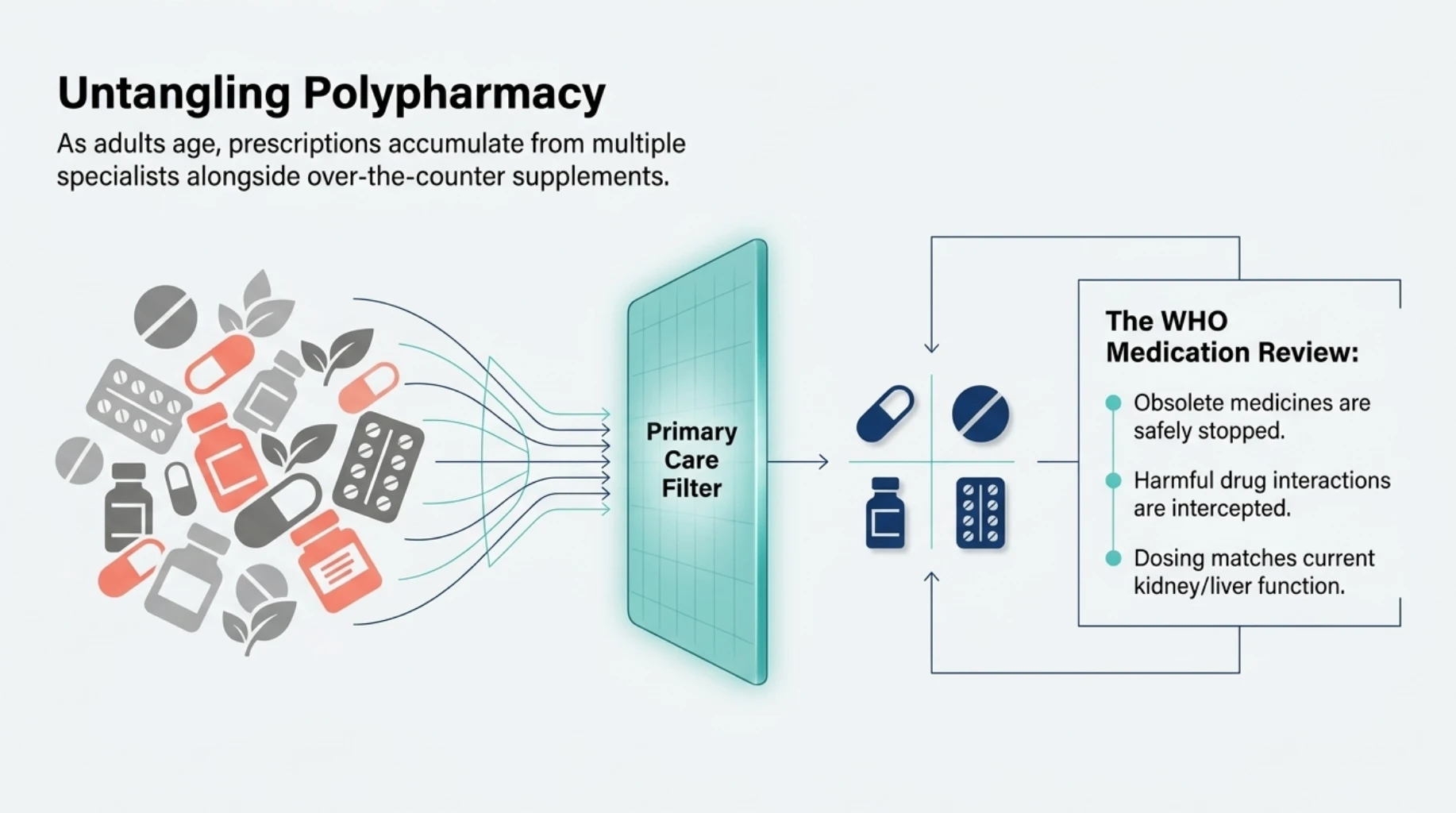
As adults accumulate diagnoses, they often accumulate medicines as well.
A prescription started several years ago may simply continue appearing on each subsequent prescription.
Meanwhile, another doctor may add:
- a blood-pressure medicine
- painkillers
- a diabetes medicine
- an acid-suppressing medicine
- a sleep medicine
The patient may also be using vitamins, herbal products or over-the-counter medicines.
Eventually, nobody may have reviewed the complete list together.
WHO identifies polypharmacy and transitions between healthcare settings as important medication-safety issues. Its medication-safety guidance describes medication review as a structured evaluation intended to identify drug-related problems and optimize treatment for the individual patient.
A regular medication review can ask:
- Is every medicine still needed?
- Is the dose still appropriate?
- Are two medicines doing the same job?
- Could one medicine be causing dizziness, fatigue or swelling?
- Are kidney or liver changes affecting dosing?
- Are over-the-counter medicines interacting with prescriptions?
- Has a hospital prescription been continued longer than originally intended?
This does not mean medicines should routinely be stopped.
The purpose is to make sure each treatment still has a clear reason, benefit and acceptable safety profile.
Bring the actual medicine strips, bottles or an updated medication list to the consultation. Include supplements and non-prescription medicines rather than mentioning prescription tablets alone.
Reason 5: Preventive Screening and Vaccination Needs Change With Age
Preventive care is not a single annual blood-test package.
The useful questions change with:
- age
- sex
- family history
- tobacco and alcohol exposure
- previous test results
- existing medical conditions
- vaccination history
For adults in India, the Ministry of Health and Family Welfare’s current National Program for Prevention and Control of Non-Communicable Diseases includes population-based screening from age 30 years and above for conditions including hypertension and diabetes, with screening pathways for oral, breast and cervical cancers and other NCDs according to the programme.
That does not mean every adult needs every available investigation at age 30.
It does mean prevention should become part of routine primary care rather than waiting until symptoms appear.
Depending on the individual, a preventive review may include discussion of:
- blood pressure
- diabetes risk
- cholesterol and cardiovascular risk
- tobacco and alcohol use
- weight and waist circumference
- age- and sex-appropriate cancer screening
- vaccinations
- family history
The 2025 WHO Primary Care Checklist specifically includes discussing prevention and immunizations as part of a longitudinal primary-care visit.
Vaccination needs also change with age, medical conditions, travel, pregnancy and previous vaccine history.
A family physician can help identify what is actually relevant rather than assuming childhood vaccinations are the end of preventive care.
Reason 6: Repeated or Persistent Symptoms Are Easier to Interpret Over Time
One of the advantages of continuity is that today’s symptom can be compared with what happened six months ago.
Consider someone who has visited repeatedly for:
- fatigue
- headaches
- dizziness
- abdominal discomfort
- recurrent fever
- palpitations
- poor sleep
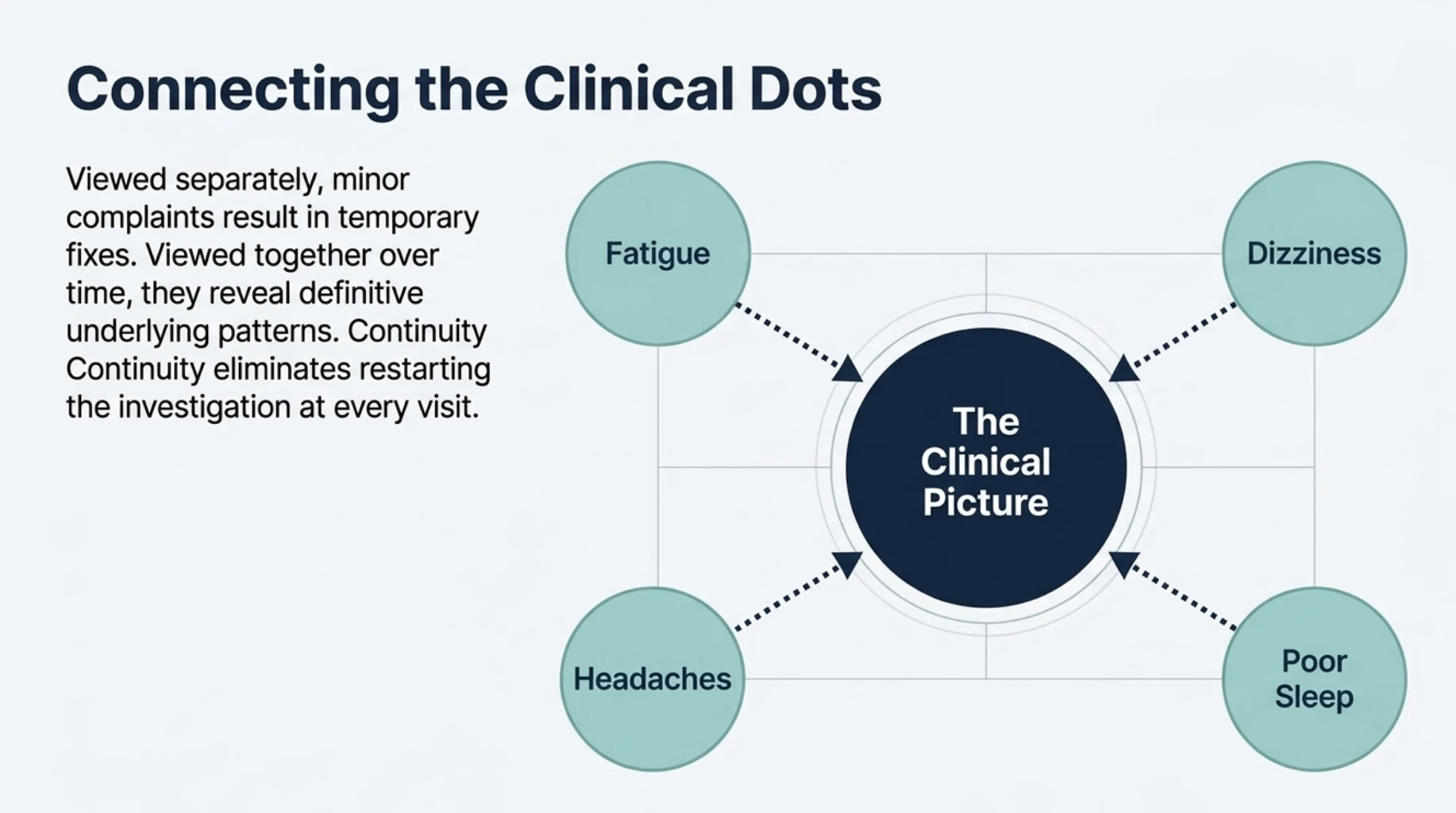
Each symptom may be minor when considered alone.
But repeated episodes can reveal a pattern.
Perhaps fatigue appeared when hemoglobin began falling. Maybe dizziness started after a blood-pressure medicine was increased. Perhaps recurrent headaches coincide with persistently elevated home blood pressure.
A physician who can review earlier consultations, medicines and investigations has more context than someone seeing the patient for the first time.
WHO’s Primary Care Checklist specifically recommends reviewing healthcare interactions since the previous visit, updating the problem list and documenting follow-up. These steps are intended to strengthen continuity and coordination.
Continuity does not guarantee that every diagnosis will be obvious.
What it can do is reduce the tendency to treat each new complaint as completely unrelated.
It can also prevent unnecessary repetition.
If a thyroid test, blood count or ultrasound was recently normal and remains clinically relevant, the existing result may sometimes be more useful than immediately repeating the investigation.
Conversely, a previously borderline result may become more important when symptoms persist.
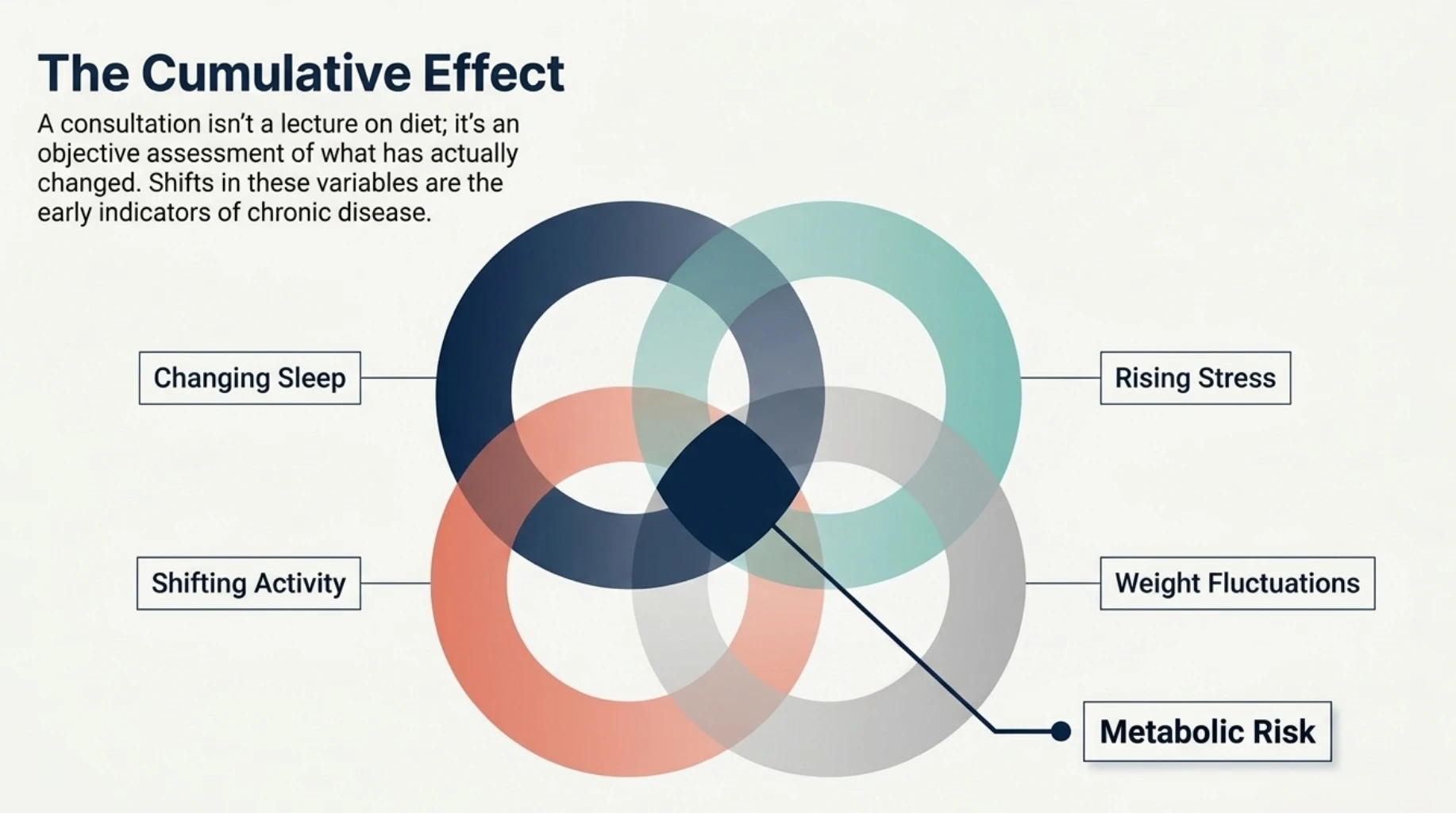
Reason 7: Weight, Sleep and Lifestyle Changes Affect Long-Term Health
Health can change significantly even when no new disease has been diagnosed.
Over several years, an adult may gradually:
- gain abdominal fat
- lose muscle
- become less physically active
- sleep fewer hours
- spend longer sitting
- eat more meals outside the home
- develop heavier alcohol use
- experience greater work stress
None of these changes necessarily produces an immediate medical crisis.
Together, however, they can influence:
- blood pressure
- glucose
- triglycerides
- fatty-liver risk
- physical fitness
- sleep quality
- long-term cardiovascular risk
This is where lifestyle-focused follow-up can be useful.
A consultation does not need to become a lecture about “diet and exercise.”
A more useful discussion asks:
What has actually changed since the last review?
For one person, the important change may be a 7-kg weight gain.
For another, it may be loud snoring and severe daytime sleepiness.
For someone else, glucose may be rising despite stable body weight.
WHO’s 2025 primary-care framework includes discussion of social circumstances and other factors influencing health, as well as healthy choices and prevention, as part of longitudinal care.
Regular follow-up gives an opportunity to identify these trends before they become several separate chronic diseases.
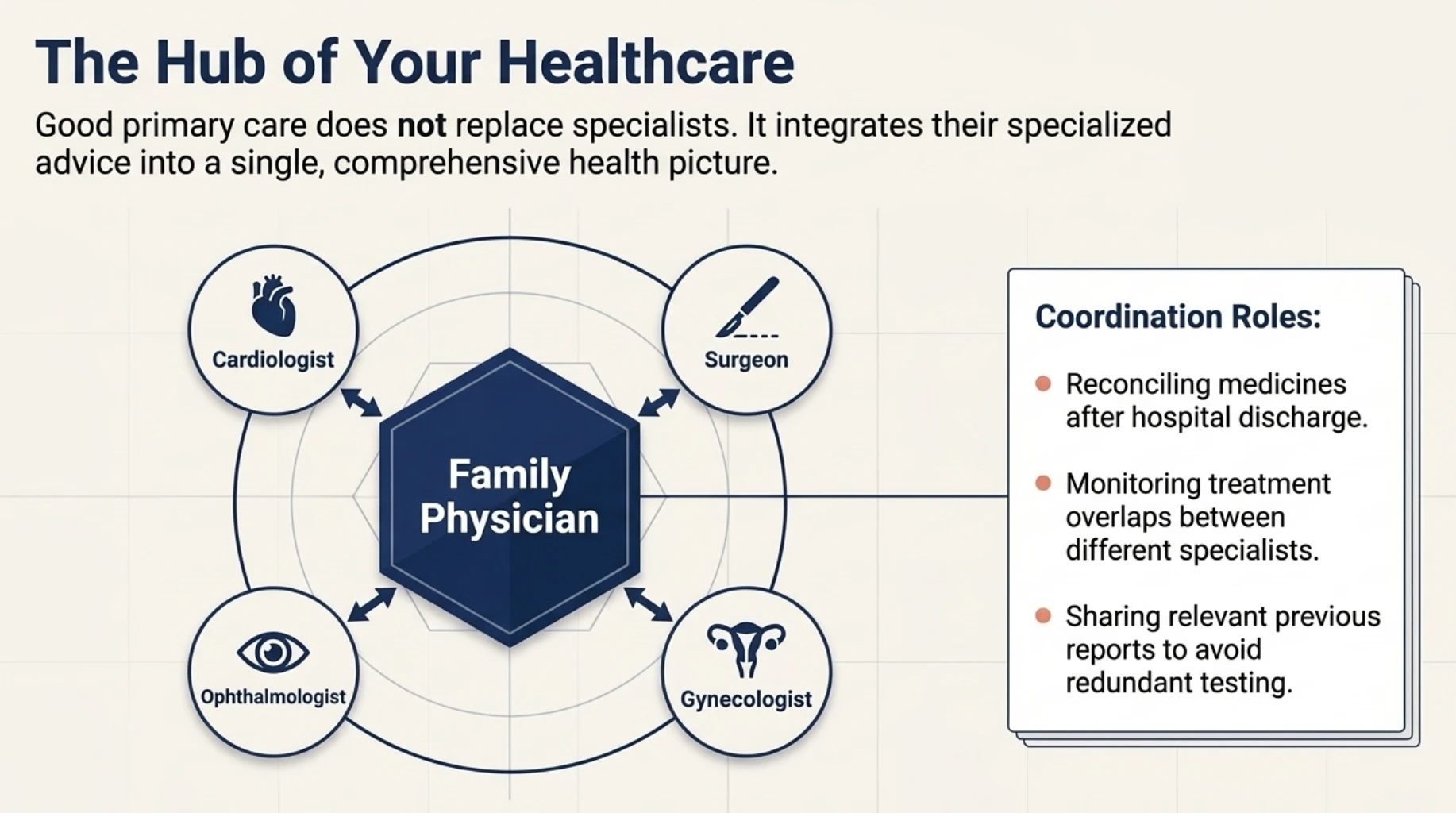
Reason 8: A Family Physician Can Coordinate Specialist Care
Good primary care does not mean avoiding specialists.
It means using specialist care when it is needed and integrating that advice with the rest of the patient’s health.
A person may simultaneously see:
- a cardiologist for heart disease
- an ophthalmologist for diabetic retinopathy
- a gynecologist for abnormal bleeding
- a surgeon after an operation
- another specialist for a specific condition
Each clinician is understandably focused on a particular area.
Someone still needs to look at the complete medication list, recent laboratory results and how the various treatment plans interact.
WHO identifies coordination as one of the five core functions of primary care, alongside first-contact care, continuity, comprehensiveness and person-centeredness.
Coordination can include:
- recognizing when referral is appropriate
- sharing relevant previous reports
- reviewing a specialist’s recommendations
- reconciling medicines after hospital discharge
- monitoring treatment between specialist appointments
- arranging reassessment when symptoms change
The Government of India’s current NP-NCD operational guidance similarly incorporates referral and follow-up between primary, secondary and specialist levels for chronic conditions and complicated cases.
A family physician is therefore not expected to replace every specialist.
The role includes helping the patient move through the healthcare system without losing the broader clinical picture.
Reason 9: Your Health Priorities Change With Age and Family History
The same preventive strategy is not appropriate throughout adulthood.
A person in their 20s with no major risk factors has different priorities from someone in their 40s with abdominal obesity, a parent with diabetes and rising blood pressure.
Family history can alter the threshold for closer monitoring.
Examples include a first-degree family history of:
- type 2 diabetes
- premature cardiovascular disease
- high cholesterol
- certain cancers
- inherited conditions
Diabetes screening is one clear example of how risk changes follow-up.
The 2026 ADA Standards recommend screening asymptomatic adults with overweight or obesity at any age when additional risk factors such as a first-degree relative with diabetes, hypertension or physical inactivity are present. For other adults, routine screening begins by age 35.
For adults of Asian ancestry, the ADA uses a lower BMI threshold of 23 kg/m² when deciding whether overweight plus additional risk factors warrants diabetes screening.
Family history does not mean disease is inevitable.
It tells you where prevention and monitoring may deserve more attention.
A regular medical review can therefore evolve with the patient’s life rather than repeating the same checklist indefinitely.
What Should You Bring to a Regular Medical Follow-Up?
A consultation becomes more useful when the doctor can see the health trend rather than one isolated result.
Bring whatever is relevant, including:
- recent laboratory reports
- previous HbA1c or glucose results
- lipid reports
- kidney or liver tests
- thyroid results
- hospital discharge summaries
- specialist prescriptions
- home blood-pressure readings
- glucose-meter or CGM records
- previous imaging reports
Also bring an accurate list of current medicines.
Where medicine names are unclear, bringing the actual strips, boxes or photographs is often easier.
Include:
- prescription medicines
- over-the-counter medicines
- vitamins
- herbal or traditional products
WHO’s Primary Care Checklist specifically recommends reviewing medicines, allergies, previous healthcare interactions and relevant follow-up at longitudinal visits.
What to Bring When Seeing a Family Physician in Dwarka
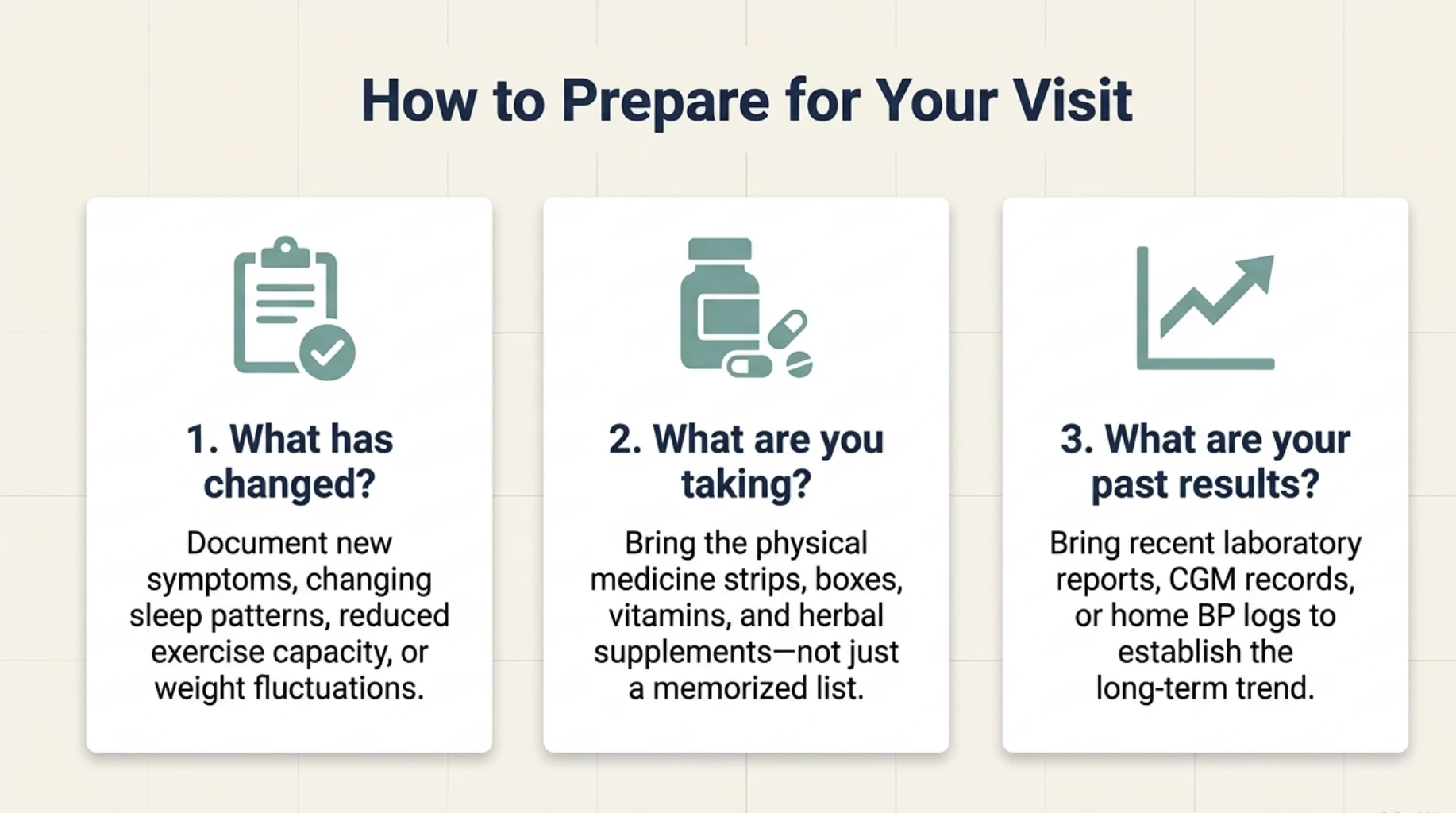
If you are visiting a family physician in Dwarka for ongoing care, it can help to prepare three simple pieces of information:
1. What has changed?
New symptoms, weight changes, sleep problems or reduced exercise capacity.
2. What are you currently taking?
Medicines, doses and supplements.
3. What were your previous results?
Bring the reports rather than trying to remember whether a value was “slightly high.”
You do not need to organize a perfect medical file.
Even a few previous reports can help establish whether something is stable, improving or gradually worsening.
What Tests Do You Actually Need at a Routine Visit?
Not every follow-up requires a full panel of blood tests.
Tests should answer a clinical question.
Depending on age, symptoms, medicines and risk factors, a physician may consider:
Blood pressure measurement
Relevant throughout adult life and particularly important when previous readings have been elevated.
HbA1c or plasma glucose
Useful for diabetes screening and follow-up when clinically indicated. Current ADA guidance recommends diabetes testing by age 35 for adults without earlier risk-based indications, with earlier screening in higher-risk groups.
Lipid profile
May be appropriate for cardiovascular-risk assessment according to age and individual risk.
Kidney function and electrolytes
Particularly relevant for certain chronic diseases or medicines.
Liver tests
Useful where metabolic liver disease, medication effects or another liver problem is suspected.
Complete blood count
Appropriate when anemia, infection, blood loss or another hematological concern is present.
TSH and thyroid testing
Useful when thyroid disease is suspected or established thyroid treatment requires monitoring.
The Government of India’s NP-NCD programme similarly bases adult screening on history, risk factors, examination, BMI, blood pressure and blood-glucose assessment, with additional investigation and referral according to findings.
Routine care should therefore be targeted rather than maximal.
Ordering more tests does not automatically produce better preventive care.
Family Physician Consultation at Diet Plus Minus in Dwarka
Adults looking for continuing general medical care can consult Dr. Pankaj Kumar at Diet Plus Minus in Dwarka.
Follow-up can include review of:
- blood pressure
- diabetes and prediabetes
- HbA1c and glucose reports
- cholesterol and cardiovascular risk
- weight and metabolic health
- thyroid concerns
- fatty-liver risk
- persistent or recurrent symptoms
- prescription medicines
- preventive-health needs
- previous specialist recommendations
- whether further investigation or referral is appropriate
The purpose of a regular primary-care relationship is not to medicalize every normal change.
It is to provide continuity so that meaningful changes are recognized, chronic conditions remain appropriately monitored and specialist care is sought when needed.
Dr. Pankaj Kumar
MBBS, DNB Family Medicine, Sir Ganga Ram Hospital
General & Lifestyle Physician
Special interest in Diabetes
Diet Plus Minus
13A, Pocket-2, Sector-6, Doctors Lane
Dwarka, New Delhi – 110075
India
Book an Appointment with Dr. Pankaj Kumar
Frequently Asked Questions
What Is a Family Physician?
A family physician is a doctor trained to provide broad first-contact and continuing medical care.
Family medicine includes prevention, assessment of common symptoms, management of chronic conditions and coordination with specialists when required.
Is a Family Physician the Same as a General Physician?
The terms overlap in everyday patient searches, but they are not necessarily identical professional labels.
Family Medicine is a defined medical discipline focused on comprehensive and continuing primary care. Dr. Pankaj Kumar holds a DNB in Family Medicine and practises as a General & Lifestyle Physician.
Why Should I See a Family Physician if I Feel Healthy?
Some important conditions can remain asymptomatic for years.
Hypertension, prediabetes, type 2 diabetes and abnormal cholesterol may be detected through appropriate risk assessment and screening before they produce obvious symptoms.
Preventive care should still be based on your age and risk rather than indiscriminate testing.
How Often Should a Healthy Adult See a Doctor?
There is no single interval that applies to every adult.
The appropriate timing depends on age, family history, previous blood pressure and laboratory results, medicines, lifestyle factors and existing medical conditions.
Someone with stable health and low risk may need less frequent visits than someone with hypertension, diabetes or several medicines.
Should Adults Have a Full Body Check-Up Every Year?
Not necessarily.
A large annual test package may include investigations that are not relevant to your age or risk.
Targeted screening based on medical history, examination and recognized preventive-care recommendations is usually more useful.
What Health Screening Is Recommended After Age 30 in India?
India’s NP-NCD programme includes population-based screening from age 30 years for hypertension and diabetes as well as programme-based screening pathways for common cancers and several other NCDs.
Individual needs can still differ according to sex, symptoms and risk factors.
When Should Diabetes Screening Start?
Current 2026 ADA guidance recommends testing adults with overweight or obesity at any age when they also have relevant diabetes risk factors.
For other adults, screening should begin by age 35. If results are normal, repeat testing at least every three years is considered reasonable, with earlier testing when risk changes.
Can a Family Physician Manage Diabetes?
A family physician can provide ongoing care for many people with type 2 diabetes, including glucose and HbA1c review, medication assessment, lifestyle management and complication-prevention planning.
More complex situations may require endocrinology or other specialist referral.
Can a Family Physician Manage High Blood Pressure?
Yes, uncomplicated hypertension is commonly managed in primary care.
Follow-up can include blood-pressure trends, home readings, medicines, kidney function and broader cardiovascular risk.
Resistant, complicated or unusual hypertension may require additional specialist assessment.
Can a Family Physician Review Thyroid Reports?
Yes.
A family physician can evaluate common thyroid symptoms and interpret tests such as TSH and free T4 in clinical context.
Complex thyroid disorders, suspicious thyroid nodules or other specialist concerns can be referred appropriately.
Should I Bring Old Medical Reports to Every Appointment?
Relevant previous reports are useful, especially when monitoring a chronic condition or investigating a recurring symptom.
They can show whether a finding is new, stable or changing.
There is usually no need to carry every report you have ever had if it has no relevance to the current medical review.
Why Is Medication Review Important?
Medicine requirements can change with age, kidney function, weight, new diagnoses and treatment from other doctors.
WHO specifically includes medication review in longitudinal primary care because it can identify adherence difficulties, side effects and other medication-related concerns.
Can a Family Physician Refer Me to a Specialist?
Yes.
Recognizing when specialist assessment is appropriate is an important part of primary care.
WHO specifically identifies coordination and referral across healthcare levels as core primary-care functions.
What Is the Advantage of Seeing the Same Doctor Regularly?
Continuity allows current symptoms and test results to be compared with earlier health information.
It can make it easier to recognize trends, review medicines, coordinate specialist recommendations and avoid repeatedly starting an evaluation from the beginning.
Do I Need Blood Tests at Every Follow-Up?
No.
The need for testing depends on the condition being monitored, medicines used, previous results and whether anything has changed.
Stable chronic conditions may not require blood tests at every consultation.
Author Box
Dr. Pankaj Kumar
MBBS, DNB Family Medicine, Sir Ganga Ram Hospital
General & Lifestyle Physician
Special interest in Diabetes
Dr. Pankaj Kumar provides general medical, family-medicine and lifestyle-based care at Diet Plus Minus in Dwarka, New Delhi. His clinical approach includes preventive health, chronic-disease follow-up, diabetes care, medication review and assessment of common adult health concerns, with specialist referral when appropriate.
Medical Disclaimer
This article provides general educational information and does not replace an individual medical consultation, examination, diagnosis or treatment plan.
Preventive screening and follow-up intervals vary according to age, sex, family history, medical conditions, medicines and individual risk.
Do not stop or change prescribed treatment solely because you feel well or because a single laboratory result has improved.
Seek urgent medical assessment for severe chest pain, significant breathlessness, loss of consciousness, sudden neurological symptoms or another major acute deterioration rather than waiting for a routine follow-up visit.
References
- World Health Organization. Primary Care Checklist. 2025. Covers the five core primary-care functions and recommends structured review of vital signs, healthcare interactions, medicines, prevention, immunizations and follow-up during longitudinal primary-care visits.
- World Health Organization. Clinical Checklists: Primary Care Checklist. Describes first-contact accessibility, continuity, coordination, comprehensiveness and person-centeredness as the five core functions incorporated into the WHO primary-care framework.
- Ministry of Health and Family Welfare, Government of India. National Program for Prevention and Control of Non-Communicable Diseases: Operational Guidelines. Current programme guidance includes population-based NCD screening from age 30 years and pathways for diagnosis, management, referral and follow-up.
- World Health Organization India. Grassroots Screening to Prevent and Control Non-Communicable Diseases. Describes India’s population-based primary-care screening programme for diabetes, hypertension and common cancers.
- American Diabetes Association Professional Practice Committee. Diagnosis and Classification of Diabetes: Standards of Care in Diabetes—2026. Provides current risk-based screening recommendations, including screening by age 35 and earlier testing in adults with overweight or obesity plus additional risk factors.
- Ministry of Health and Family Welfare, Government of India. National NCD Program. Describes the role of primary-care screening, early detection, management, referral and continuity of care in India’s NCD programme.
Related reading and care options

Written by Dr. Pankaj Kumar
General & Lifestyle Physician in Dwarka Sector 6, New Delhi · MBBS, DNB (Family Medicine), DNHE · 16 years of experience.
About the doctor →Book a consultation → Beyond Blood Sugar
 The 90-Day Prediabetes Turnaround
 The Indian Diabetes Diet Reset
 Eat to Beat Gout
 Why Is My Hair Falling?
 The 30-Day Inflammation Reset