
Waking up sore or feeling aching in your back, shoulders, arms and legs can be uncomfortable, particularly when there is no obvious illness. Body ache without fever is often related to physical overuse, muscle tension or other relatively minor factors, but persistent or severe pain can occasionally point to medication effects, thyroid disease, fibromyalgia or another medical problem.
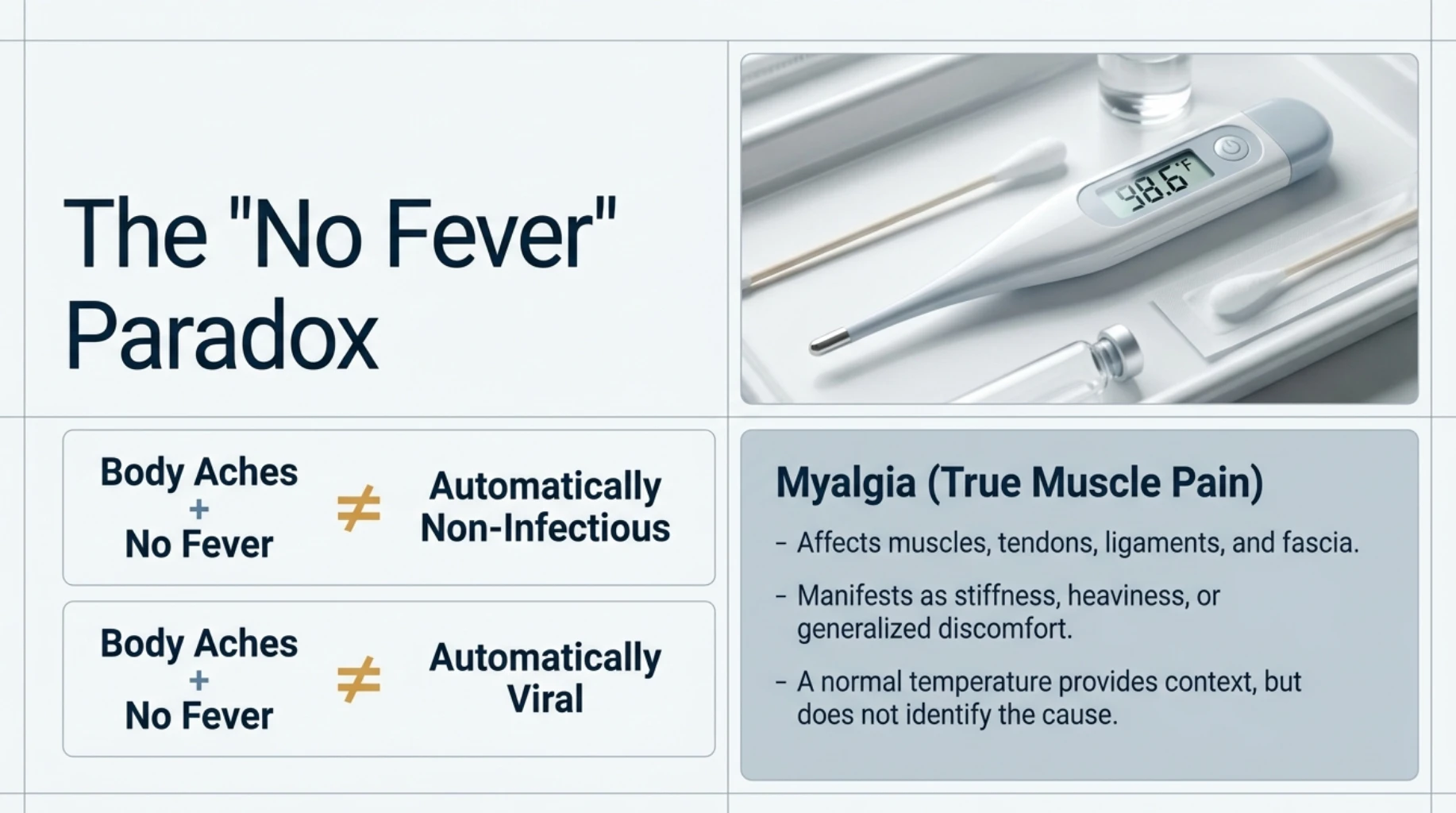
The absence of fever is useful information, but it does not identify the cause by itself. Some viral infections can produce muscle or body aches without a raised temperature, while many non-infectious conditions cause aching with no fever at all.
The pattern provides better clues. Did the pain begin after exercise? Is it mainly in muscles you used heavily? Did a new medicine recently start? Are you also unusually tired, cold, constipated or sleeping poorly?
This article explains seven common possibilities and the warning signs that should not be ignored.

What Can Cause Body Aches Without Fever?
Common explanations for body aches without fever include overuse or muscle strain, prolonged stress and muscle tension, dehydration or electrolyte imbalance, a viral illness that does not produce fever, medication side effects, hypothyroidism and fibromyalgia.
Muscle pain is most commonly related to tension, overuse or physical injury, although medicines, electrolyte abnormalities and several systemic conditions can also cause aching.
Aches that are mild, clearly related to unusual physical activity and improving over several days are usually very different from severe unexplained pain, progressive muscle weakness or pain accompanied by dark urine.
What Does Body Ache Without Fever Mean?
“Body ache” is not a precise medical diagnosis.
Different people use the phrase to describe:
- sore muscles
- stiffness
- tenderness
- aching joints
- heaviness in the limbs
- generalized discomfort
- pain in the neck, shoulders or back
True muscle pain is called myalgia.
MedlinePlus notes that muscle aches can affect more than one muscle and may also involve surrounding soft tissues such as tendons, ligaments and fascia. The most frequent causes are tension, overuse and muscle injury related to exercise or physically demanding work.
It helps to identify exactly where the discomfort is coming from.
Pain mainly in the muscles after a gym session has a different set of likely causes from painful swollen finger joints, burning nerve pain or deep bone pain.
The duration matters as well.
An ache lasting two days after unusual physical work is different from widespread pain that has continued for six months.
Body Ache Without Fever Is Not Always a Sign of Infection
People often associate body pain with “viral fever,” but fever is not necessary for either muscle pain or even some viral illnesses.
Most muscle aches are related to overuse, injury or tension rather than infection.
Conversely, the absence of fever does not completely rule out infection.
CDC guidance notes that influenza can cause muscle or body aches, headache and fatigue, and not everyone who develops influenza has a fever.
Therefore:
body aches + no fever ≠ automatically non-infectious
and
body aches + no fever ≠ automatically viral
Associated symptoms provide the context.
Cough, sore throat and nasal symptoms suggest a different explanation from aching after exercise or aching accompanied by constipation and cold intolerance.
When Body Aches Without Fever Need Prompt Medical Attention
Mild muscle soreness is usually not an emergency.
Certain accompanying symptoms deserve faster assessment even when your temperature is normal.
Seek prompt medical attention for body or muscle pain associated with:
- severe or rapidly worsening weakness
- inability to move a limb normally
- difficulty breathing
- difficulty swallowing
- markedly reduced urine output
- dark, reddish or cola-coloured urine
- significant swelling or redness of a painful area
- severe unexplained pain
- pain beginning after a new medicine or major dose change
MedlinePlus recommends medical assessment for severe unexplained muscle pain, symptoms related to a medication change, or signs such as weakness, breathing difficulty or reduced urination.
Dark urine combined with muscle pain and weakness is particularly important because it can occur with rhabdomyolysis, a condition in which damaged muscle releases substances that can injure the kidneys. Severe exertion, dehydration, trauma and some medicines can contribute.
A lack of fever should therefore not provide false reassurance when other warning signs are present.
Cause 1: Exercise, Overuse or Muscle Strain
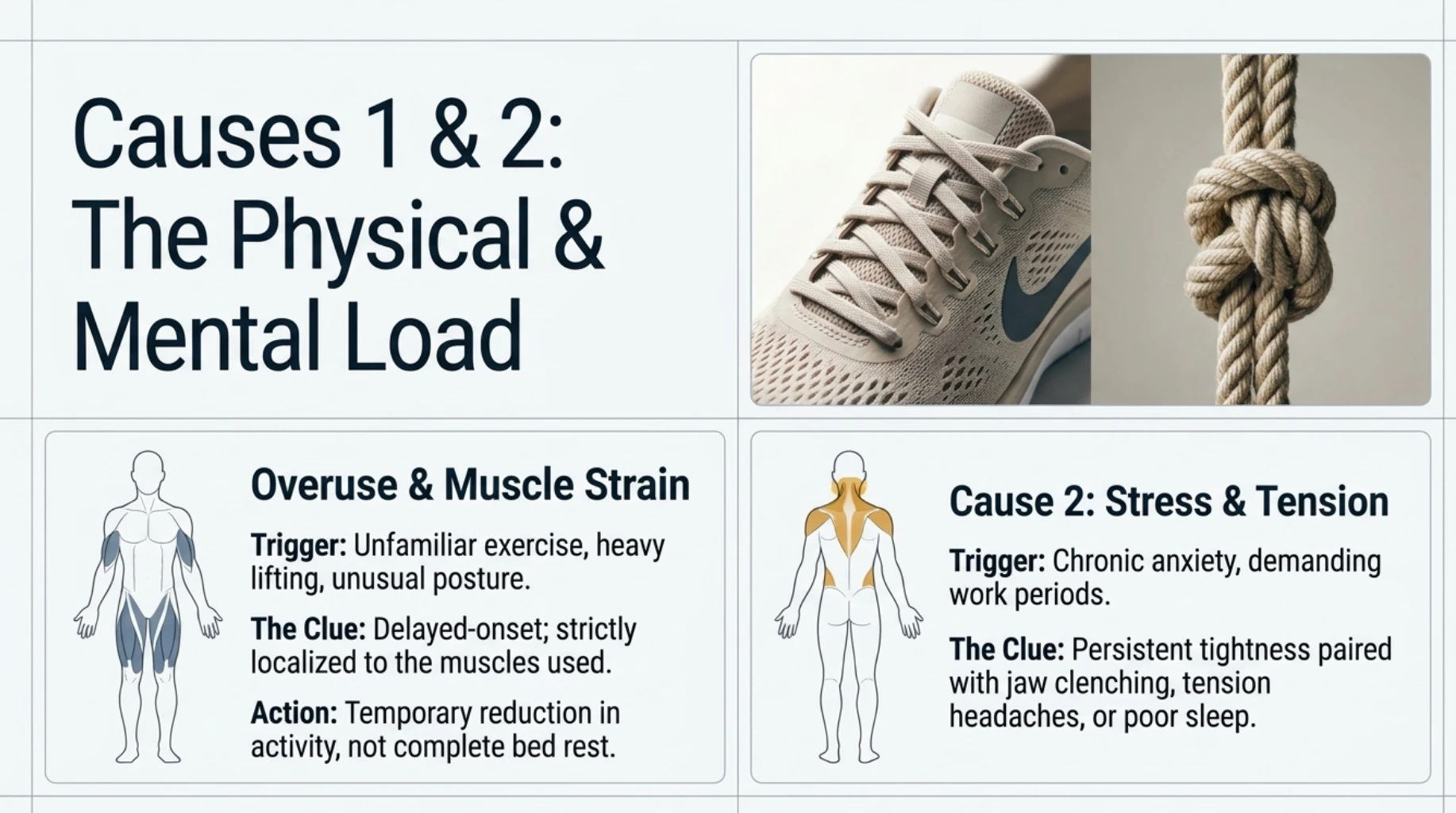
Physical overuse is one of the most common explanations for muscle pain.
You may notice it after:
- starting a new gym programme
- lifting heavier weights than usual
- returning to exercise after a long break
- moving furniture
- doing prolonged household work
- playing an unfamiliar sport
- walking or climbing far more than usual
MedlinePlus identifies overuse, injury and physical exertion among the most frequent causes of muscle aches. The pain usually affects muscles involved in the activity and starts during or after the exertion.
Sometimes the connection is obvious.
If you performed squats after several months away from the gym and your thighs ache the next day, muscle overuse is a reasonable explanation.
Other times it is less obvious. A day spent carrying luggage, repeatedly climbing stairs or sitting in an unusual posture can produce soreness that becomes noticeable only later.
Muscle Aches Without Fever After a New Workout
Delayed-onset soreness after unfamiliar exercise generally affects the muscles that were worked and improves as they recover.
The important distinction is between ordinary soreness and a more serious muscle injury.
Mild stiffness and tenderness that gradually improve are very different from:
- extreme muscle pain
- major swelling
- profound weakness
- dark urine
- reduced urination
Severe exertion can, rarely, cause rhabdomyolysis. MedlinePlus lists severe physical exertion and severe dehydration among recognized triggers.
Do not try to “train through” severe unexplained pain simply because it followed exercise.
For ordinary overuse, temporary reduction in strenuous activity and gradual return to exercise are generally more sensible than complete inactivity for weeks.
Cause 2: Stress and Persistent Muscle Tension
Stress can be felt physically.
When the body responds to stress, muscles tighten as part of the normal alert response. If stress becomes chronic, that muscular tension may persist and contribute to recurrent aches, particularly around the:
- neck
- shoulders
- upper back
- jaw
MedlinePlus notes that the body’s stress response causes muscles to tense and lists frequent aches and pains, headaches, stiff neck or jaw, tiredness and sleep disturbance among possible manifestations of excessive stress.
This does not mean that unexplained pain should automatically be dismissed as “stress.”
That label should fit the broader pattern.
Stress becomes more plausible when aching appears alongside:
- prolonged desk work
- jaw clenching
- tension headaches
- poor sleep
- periods of anxiety
- repeatedly tight shoulders
- symptoms that worsen during demanding periods
Pain and stress can also reinforce each other. Persistent discomfort interferes with sleep and mood, while stress can increase muscle tension and make pain more noticeable.
If the pain is persistent, progressive or associated with objective weakness, another explanation should still be considered.
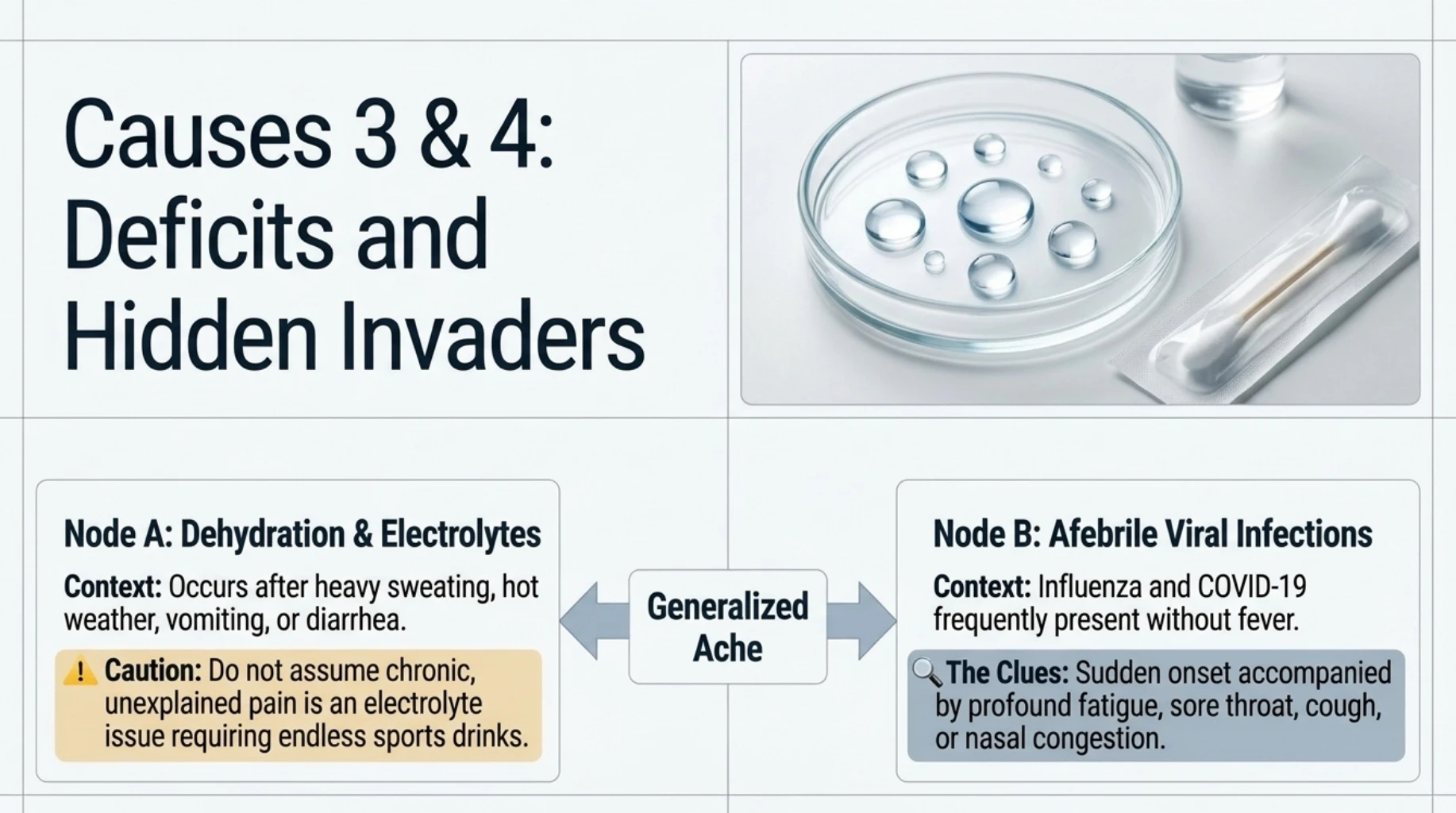
Cause 3: Dehydration or an Electrolyte Imbalance
Fluid and electrolyte balance affect normal muscle function.
Dehydration is particularly relevant when body aches or cramps appear after:
- prolonged exercise
- heavy sweating
- hot weather
- vomiting
- diarrhea
- inadequate fluid intake
Muscle symptoms can also occur when electrolytes such as potassium or calcium are abnormal. MedlinePlus lists electrolyte imbalance among potential causes of muscle aches and notes that inadequate fluid intake can contribute to muscle cramping during physical activity.
However, generalized aching should not automatically be diagnosed as an “electrolyte deficiency.”
Drinking excessive amounts of electrolyte beverages or taking potassium supplements without a reason can also be inappropriate.
The history provides useful clues.
A person who develops muscle soreness after several hours of strenuous activity in hot conditions needs a different assessment from someone with months of unexplained widespread pain despite normal hydration.
Severe dehydration together with weakness, reduced urine output or worsening illness deserves medical attention.
Cause 4: A Viral Infection Can Occur Without Fever
No fever does not completely exclude a viral illness.
Influenza is a good example.
CDC lists:
- muscle or body aches
- headache
- fatigue
- cough
- sore throat
- nasal symptoms
among common influenza symptoms and specifically notes that not everyone with influenza develops a fever.
COVID-19 can likewise include fatigue and muscle or body aches among a wide range of possible symptoms.
A viral cause becomes more plausible when body aches begin relatively suddenly alongside symptoms such as:
- sore throat
- cough
- nasal congestion
- headache
- marked fatigue
- recent contact with someone who is unwell
Symptoms alone may not reliably distinguish influenza from COVID-19 or other respiratory viruses. CDC notes that flu and COVID-19 share many clinical features and may require testing when confirming the diagnosis would affect management.
On the other hand, body pain continuing for weeks without respiratory symptoms, fever or an obvious infectious pattern should encourage consideration of non-infectious causes rather than repeatedly calling the problem “viral.”
Cause 5: Medicines May Be Causing Muscle Pain
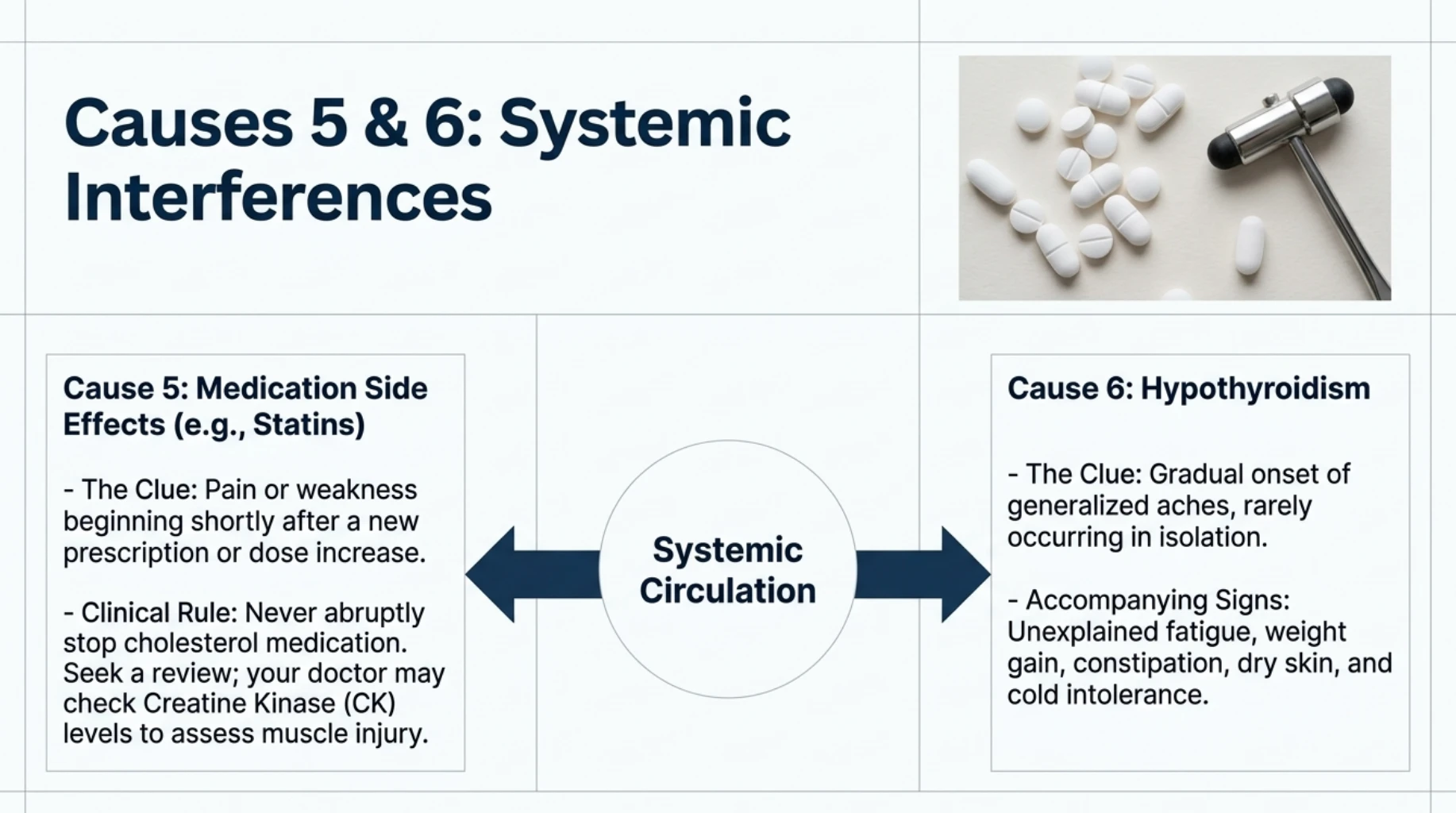
Medication side effects are worth considering when body aches begin after a new prescription or dose change.
Several medicines can cause muscle discomfort, although the likelihood varies according to the drug, dose, other medicines being taken and individual susceptibility.
One commonly discussed example is statin therapy for high cholesterol.
Muscle pain is listed among possible statin side effects, while serious muscle injury is much less common. Current FDA patient guidance advises people taking statins to seek medical advice for otherwise unexplained muscle pain, tenderness or weakness, particularly when symptoms are significant or accompanied by dark urine or changes in urination.
Medication review becomes particularly useful when:
- pain started after a new medicine
- symptoms appeared after a dose increase
- several interacting medicines are being taken
- muscle weakness accompanies the pain
- kidney or thyroid disease is also present
Do not assume that a medicine is responsible merely because muscle pain appears on its side-effect list.
Other causes may still be more likely.
Statin-Related Muscle Pain: When to Speak With Your Doctor
If you take a statin, mention new unexplained muscle symptoms rather than stopping treatment on your own.
The FDA notes that statins can occasionally cause serious muscle problems that may lead to kidney injury. Dark or brown urine, unexplained weakness and significant muscle tenderness are warning features that deserve prompt assessment.
A clinician may review:
- which statin you take
- the dose
- when symptoms began
- recent strenuous exercise
- interacting medicines
- kidney function
- thyroid function
- creatine kinase when muscle injury is suspected
A CK test measures an enzyme released from damaged muscle. It can be useful when there is significant pain, weakness, dark urine or concern about muscle damage, but it is not necessary for every mild ache.
The correct response is medication review—not automatically abandoning treatment that may be providing important cardiovascular benefit.
Cause 6: Hypothyroidism
An underactive thyroid can cause muscle and joint pain as well as fatigue.
NIDDK lists common features of hypothyroidism including:
- fatigue
- weight gain
- difficulty tolerating cold
- joint and muscle pain
- constipation
- dry skin
- thinning hair
- menstrual changes
The symptoms usually develop gradually.
That makes hypothyroidism more plausible when body aches occur alongside several compatible symptoms rather than as one isolated complaint.
For example:
body pain + cold intolerance + constipation + fatigue + weight change
raises more suspicion than:
two days of sore muscles after moving furniture.
When thyroid disease is suspected, TSH is usually the key initial blood test, often interpreted with free T4.
Do not start thyroid hormone simply because body aches are present.
NIDDK specifically notes that many hypothyroid symptoms are common in people who do not have thyroid disease, so laboratory confirmation and clinical context matter.
If you already take levothyroxine and develop muscle pain, the answer is not automatically to increase the dose. Your thyroid results, medicine timing and other possible causes should first be reviewed.
Cause 7: Fibromyalgia or Chronic Widespread Pain
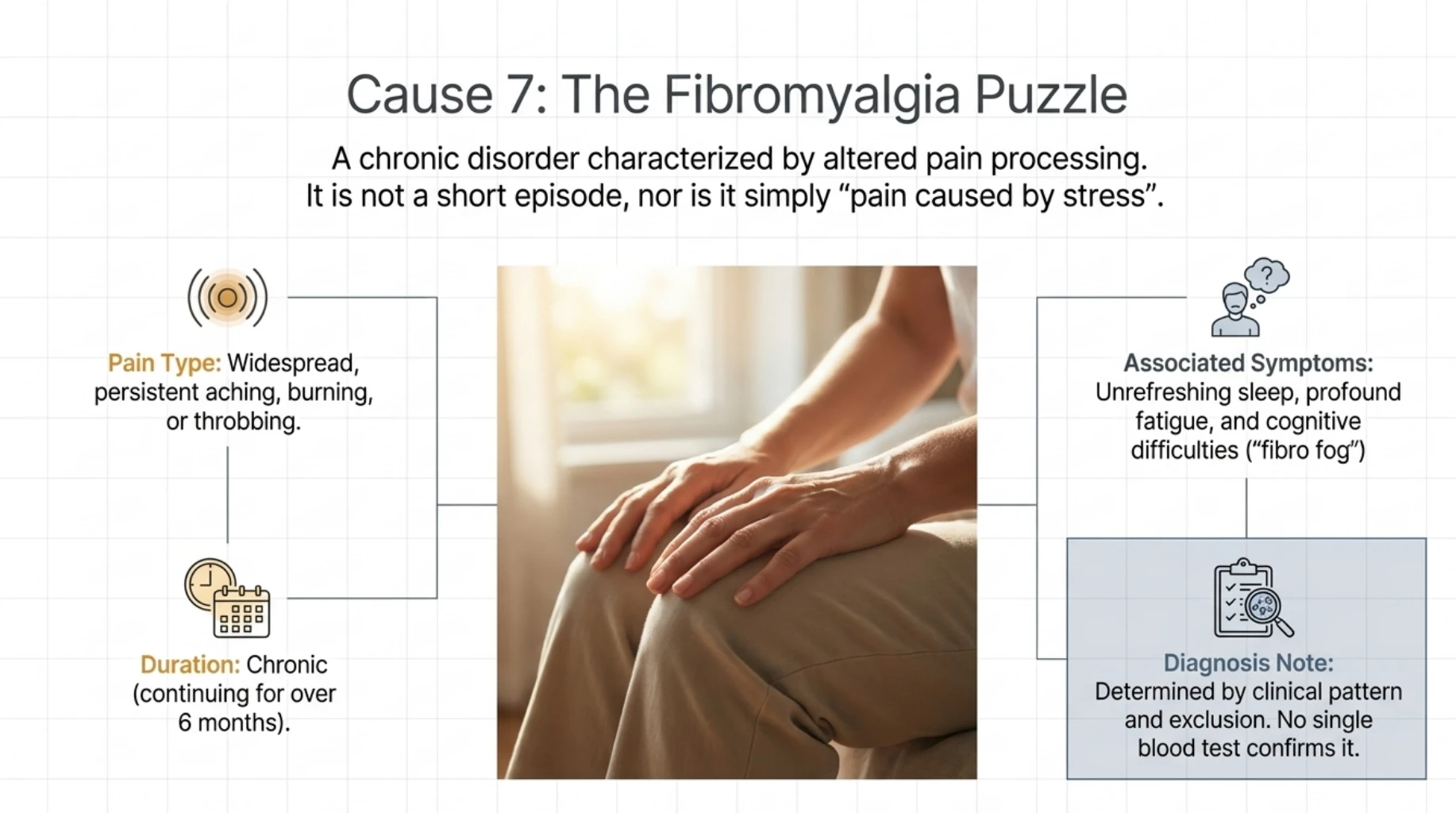
Fibromyalgia is a chronic condition characterized by widespread pain and tenderness together with symptoms such as fatigue and disturbed sleep.
NIAMS identifies its main symptoms as:
- chronic widespread pain
- tenderness
- fatigue
- sleep problems
Other possible features include stiffness, tingling, cognitive difficulties sometimes described as “fibro fog,” and digestive symptoms.
The pain may be described as:
- aching
- burning
- throbbing
- soreness
- generalized tenderness
Fibromyalgia is different from a short episode of body aches after exercise or a viral illness.
Symptoms are usually persistent and affect multiple areas of the body.
Generalized Body Pain With Poor Sleep and Fatigue
Fibromyalgia becomes more relevant when body ache without fever has continued for months and occurs together with:
- persistent fatigue
- unrefreshing sleep
- widespread tenderness
- concentration difficulties
- multiple areas of pain
There is no single blood test or scan that proves fibromyalgia.
NIAMS states that diagnosis is based mainly on the clinical pattern, while tests may be used to exclude other conditions that can produce similar symptoms.
This is why someone with widespread pain may still need assessment for conditions such as:
- hypothyroidism
- inflammatory disease
- medication effects
- significant nutritional deficiency
- muscle disease
Fibromyalgia is also not simply “pain caused by stress.”
Current NIH information describes altered pain processing and increased sensitivity to pain as important features of the condition.
Management can include appropriately graded physical activity, sleep support, psychological or behavioral approaches and medication in selected people.
Could Vitamin D or Vitamin B12 Deficiency Be Responsible?
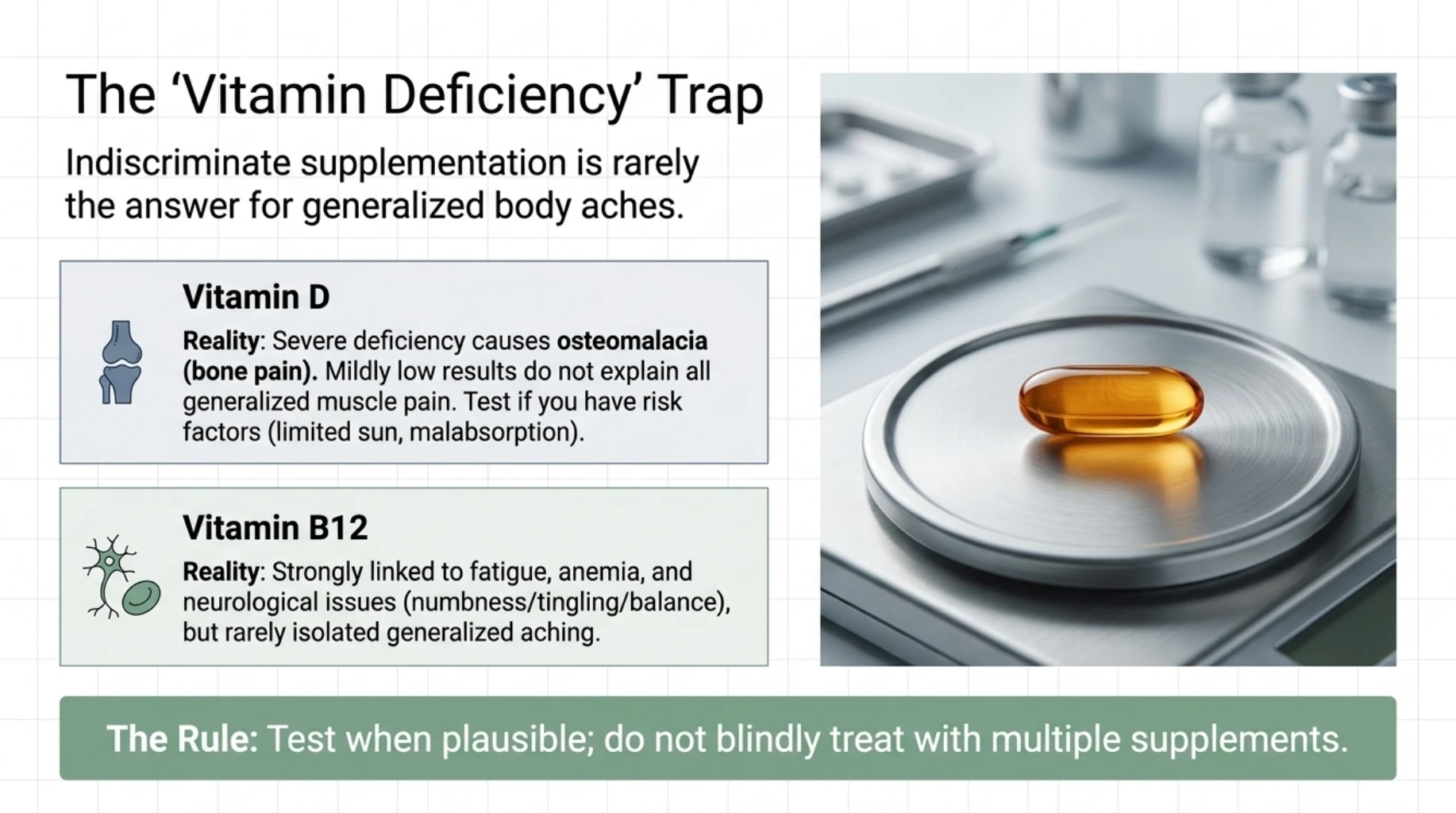
Vitamin deficiencies are frequently blamed for generalized aches, sometimes without appropriate testing.
Vitamin D
Severe vitamin D deficiency can cause osteomalacia in adults. NIH dietary-supplement guidance notes that osteomalacia can produce bone pain and muscle weakness.
Testing becomes more relevant when there are risk factors such as:
- very limited sun exposure
- malabsorption disorders
- previous bariatric surgery
- other clinical reasons to suspect deficiency
A mildly low vitamin D result should still be interpreted in context rather than assumed to explain every symptom.
Vitamin B12
Vitamin B12 deficiency more typically causes fatigue, weakness, anemia and neurological symptoms such as numbness, tingling or balance problems.
It is therefore more relevant when aching occurs alongside neurological symptoms or when there are risk factors for deficiency.
Examples include:
- strict vegan diets without adequate supplementation
- pernicious anemia
- certain gastrointestinal disorders
- previous stomach or intestinal surgery
- long-term metformin use in some patients
NIH notes that vitamin B12 supplementation does not provide extra energy in people who already have adequate B12 status.
The broader principle is useful:
test when deficiency is plausible rather than treating every body ache with multiple supplements.
Which Tests May Be Needed for Persistent Body Aches?
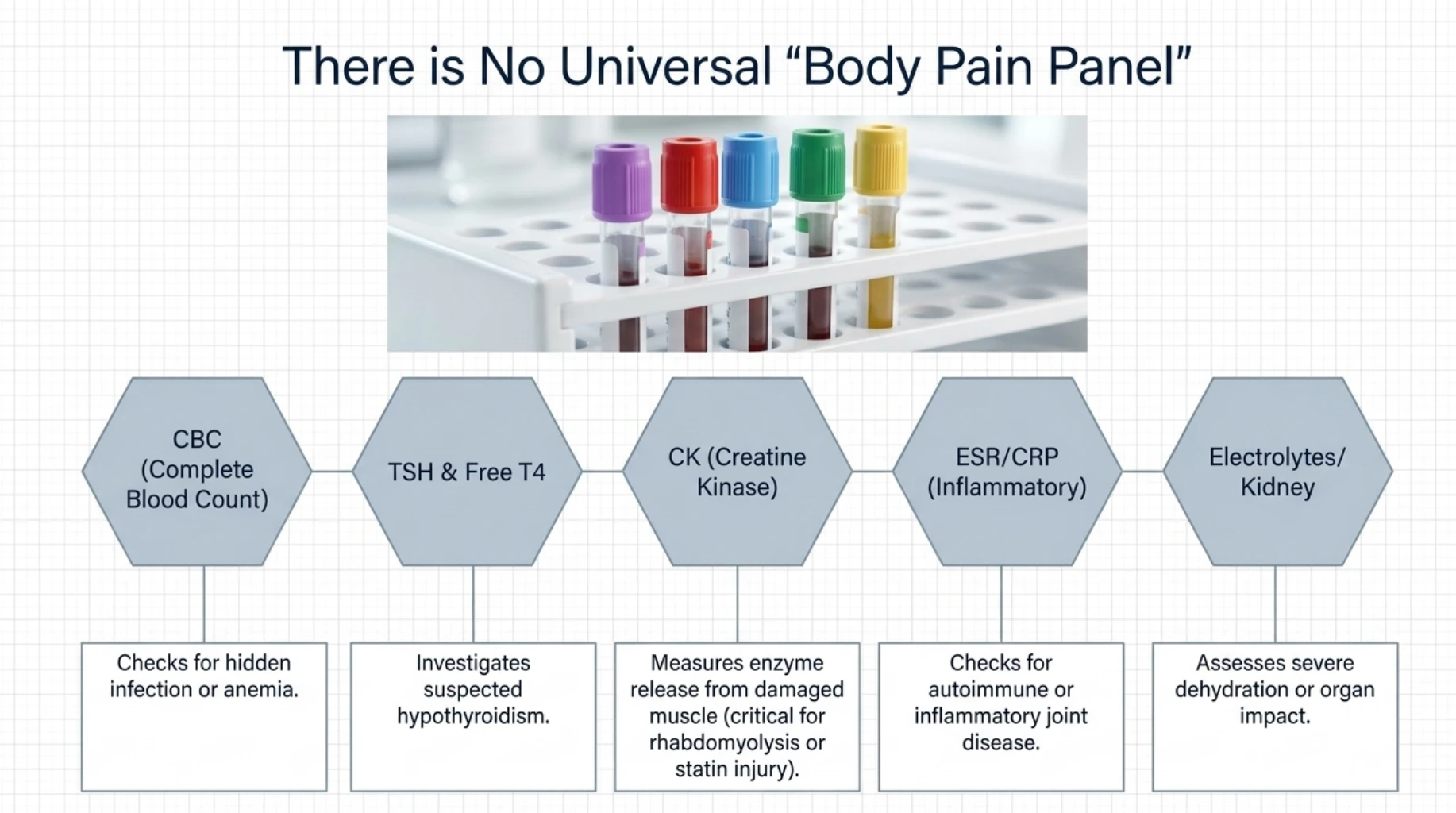
There is no universal “body pain blood panel.”
Testing should be selected according to the symptom pattern.
A clinician may consider:
Complete blood count
Useful when anemia, infection or another blood abnormality is possible.
TSH and free T4
Appropriate when symptoms suggest hypothyroidism.
Kidney function and electrolytes
Useful when dehydration, kidney disease or an electrolyte disturbance is possible.
Creatine kinase (CK)
May be helpful with significant muscle weakness, severe muscle pain, dark urine, strenuous exercise or possible medication-related muscle injury. MedlinePlus notes that CK rises when skeletal muscle tissue is damaged.
Vitamin D or vitamin B12
More useful when symptoms or risk factors make deficiency plausible.
Inflammatory testing
ESR, CRP or more specific investigations may be considered when symptoms such as swollen joints, prolonged morning stiffness, rash or systemic illness suggest inflammatory disease.
MedlinePlus notes that evaluation of muscle pain begins with the location, duration, pattern, other symptoms and medication history, with blood tests chosen according to those findings.
Not everyone with generalized body soreness needs extensive autoimmune testing, scans or a large vitamin panel.
What Can You Do at Home for Mild Body Aches?
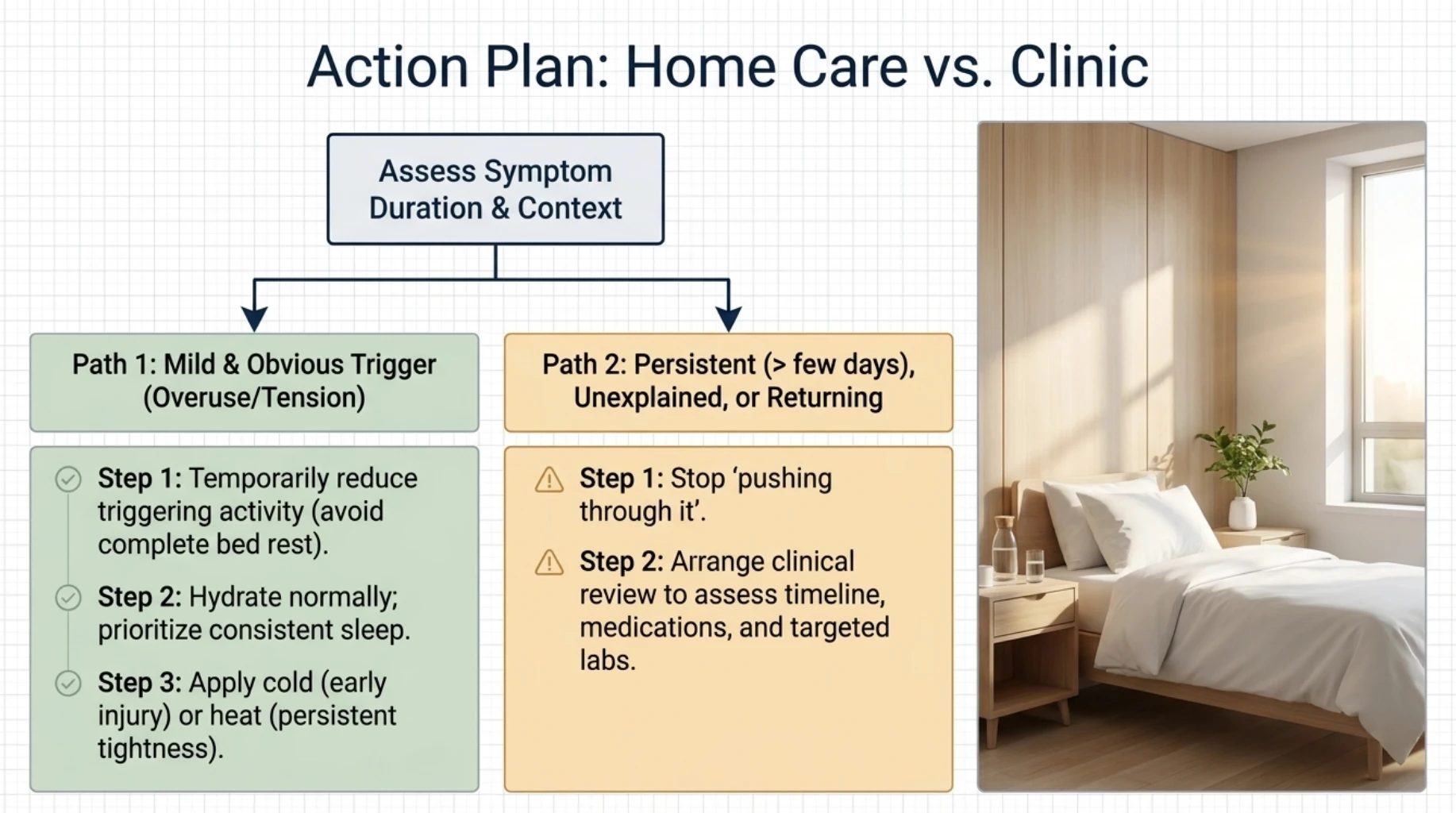
When aches are mild, short-lived and clearly related to overuse or tension, simple measures may be sufficient.
Reduce the Activity That Triggered the Pain
You do not necessarily need complete bed rest.
Temporarily reduce strenuous activity and then return gradually as symptoms improve.
Maintain Normal Hydration
This is particularly relevant after heavy exercise, sweating, vomiting or diarrhea.
Avoid assuming that every ache requires sports drinks or electrolyte supplements.
Prioritize Sleep
Poor-quality sleep can amplify pain perception and make muscle soreness harder to tolerate.
A consistent sleep routine can be particularly useful when stress and fatigue accompany the pain.
Use Heat or Cold According to the Situation
For a recent muscle injury, cold can help during the early period. Heat may feel more soothing for persistent muscular tightness after the initial injury phase. MedlinePlus describes both as common self-care approaches for overuse-related muscle pain.
Avoid Repeatedly Exercising Through Severe Pain
“Push through it” is not appropriate when pain is intense, weakness is developing or urine becomes dark.
That pattern requires assessment for significant muscle injury.
When Should You Arrange a Medical Consultation?
Arrange medical review when body ache without fever:
- lasts for more than several days without an obvious explanation
- keeps returning
- has continued for several weeks
- interferes with work or sleep
- occurs with persistent fatigue
- is associated with muscle weakness
- began after a new medicine
- occurs with numbness or tingling
- is accompanied by unexplained weight change
- occurs with swollen or painful joints
A faster review is appropriate for severe pain, progressive weakness, significant swelling or reduced urination.
Seek urgent care if muscle pain occurs with dark brown or cola-coloured urine, profound weakness or rapidly worsening illness because these can occur with rhabdomyolysis and kidney injury.
A normal temperature does not make these warning signs unimportant.
Body Ache Assessment at Diet Plus Minus in Dwarka
Persistent or unexplained body aches can usually be assessed initially in general medical care.
Dr. Pankaj Kumar can review:
- where the pain occurs
- when it began
- exercise or physical-overuse history
- sleep and stress
- hydration
- current medicines
- thyroid symptoms
- weakness or neurological symptoms
- previous laboratory reports
- whether targeted blood tests are appropriate
- whether further specialist evaluation is needed
The aim is to distinguish common muscular soreness from problems requiring additional investigation without assuming that every ache is due to vitamin deficiency.
Dr. Pankaj Kumar
MBBS, DNB Family Medicine, Sir Ganga Ram Hospital
General & Lifestyle Physician
Special interest in Diabetes
Diet Plus Minus
13A, Pocket-2, Sector-6, Doctors Lane
Dwarka, New Delhi – 110075
India
Book an Appointment with Dr. Pankaj Kumar
Frequently Asked Questions
Why Does My Whole Body Ache if I Have No Fever?
Several non-infectious causes are possible.
Exercise, physical overuse, stress, poor sleep, dehydration, medication effects, hypothyroidism and fibromyalgia can all produce aching without fever.
Some viral infections can also occur without a raised temperature.
Can a Viral Infection Cause Body Aches Without Fever?
Yes.
CDC notes that influenza commonly causes body aches and fatigue, and not everyone with influenza develops fever.
Associated respiratory symptoms and the timing of the illness help determine whether a viral infection is plausible.
Can Stress Make Your Whole Body Ache?
Stress can contribute to persistent muscle tension, particularly in the neck, shoulders, jaw and upper back.
It may also interfere with sleep, which can make pain more noticeable.
However, persistent or severe generalized pain should not automatically be attributed to stress without considering other causes.
Can Dehydration Cause Muscle Aches?
Dehydration can contribute to muscle cramps and discomfort, particularly during prolonged exercise or heavy sweating.
Severe dehydration can also cause weakness and reduced urination.
Chronic generalized pain without a clear dehydration history usually requires a broader explanation.
Can Vitamin D Deficiency Cause Body Pain?
Severe vitamin D deficiency can lead to osteomalacia in adults, which can cause bone pain and muscle weakness.
A vitamin D test is most useful when clinical risk factors or symptoms make deficiency plausible rather than as an automatic explanation for all body aches.
Does Vitamin B12 Deficiency Cause Body Aches?
Vitamin B12 deficiency is more strongly associated with fatigue, weakness, anemia and neurological symptoms such as numbness, tingling and balance problems.
It can be relevant in an evaluation, but generalized aching alone is not specific for B12 deficiency.
Can Thyroid Problems Cause Muscle Pain?
Yes.
Hypothyroidism can cause joint and muscle pain, fatigue, weight gain, constipation and cold intolerance.
A TSH test can help when the broader symptom pattern supports thyroid dysfunction.
Can Cholesterol Medicine Cause Muscle Pain?
Some statins can cause muscle pain or weakness.
Serious muscle injury is uncommon, but unexplained severe pain, weakness, dark urine or changes in urination deserve prompt assessment.
Do not stop prescribed statin treatment without discussing the symptoms with your clinician unless urgent medical care is required.
What Is Rhabdomyolysis?
Rhabdomyolysis is rapid breakdown of muscle tissue.
It can cause muscle pain, weakness and dark urine and may lead to acute kidney injury. Extreme exertion, trauma, heat, dehydration and certain medicines are among possible triggers.
It requires prompt medical assessment.
Is Fibromyalgia the Same as Ordinary Muscle Pain?
No.
Fibromyalgia is a chronic disorder characterized by widespread pain and tenderness, commonly accompanied by fatigue and sleep problems.
There is no single laboratory test that confirms it, so diagnosis depends on the clinical pattern and appropriate exclusion of other explanations.
Should I Get a Full Vitamin Panel for Body Pain?
Not automatically.
Testing should be guided by diet, symptoms, medicines, previous illnesses and other risk factors.
Large indiscriminate testing panels may identify mildly abnormal results that are unrelated to the actual cause of pain.
When Is Body Ache Without Fever Serious?
Seek medical assessment promptly when body aches are accompanied by severe weakness, breathing or swallowing difficulty, major swelling, reduced urine output or dark urine.
Persistent unexplained pain or pain beginning after a medication change should also be reviewed.
Author Box
Dr. Pankaj Kumar
MBBS, DNB Family Medicine, Sir Ganga Ram Hospital
General & Lifestyle Physician
Special interest in Diabetes
Dr. Pankaj Kumar provides general medical and lifestyle-based care at Diet Plus Minus in Dwarka, New Delhi. His approach includes assessment of unexplained body aches, fatigue, thyroid concerns, medication effects and broader metabolic-health factors, with specialist referral when appropriate.
Medical Disclaimer
This article provides general educational information and does not replace an individual medical consultation, physical examination, diagnosis or treatment plan.
Do not start thyroid hormone, high-dose vitamin supplements or other prescription treatment solely because you have generalized body aches.
Do not stop statins or other prescribed medicines without appropriate medical advice.
Seek prompt medical attention for severe muscle pain accompanied by marked weakness, dark urine, reduced urination, difficulty breathing or another significant acute change.
References
- National Library of Medicine, MedlinePlus. Muscle Aches. Updated 2025. Reviews common causes including overuse, tension, medicines, electrolyte abnormalities, infections, fibromyalgia and rhabdomyolysis, along with warning symptoms and evaluation.
- National Library of Medicine, MedlinePlus. Creatine Kinase. Current laboratory guidance explaining the role of CK testing in significant muscle injury, rhabdomyolysis and medication-associated muscle damage.
- U.S. Food and Drug Administration. Cholesterol Medicines Guide. Updated 2026. Includes current safety information on statin-associated muscle symptoms, dark urine and potential serious muscle injury.
- U.S. Food and Drug Administration. Atorvastatin Calcium Tablets: Clinical Review and Prescribing Safety Information. 2025. Describes myopathy, rhabdomyolysis, relevant risk factors and the need to assess unexplained muscle pain or weakness.
- National Institute of Diabetes and Digestive and Kidney Diseases. Hypothyroidism (Underactive Thyroid). Current NIH guidance describing muscle and joint pain, fatigue, cold intolerance, constipation and other symptoms of thyroid hormone deficiency.
- National Institute of Arthritis and Musculoskeletal and Skin Diseases. Fibromyalgia. Reviewed 2024. Describes chronic widespread pain, fatigue, sleep disturbance, tenderness and altered pain processing.
- National Institute of Arthritis and Musculoskeletal and Skin Diseases. Fibromyalgia: Diagnosis, Treatment, and Steps to Take. Reviewed 2024. Explains that there is no single laboratory or imaging test for fibromyalgia and that evaluation may include excluding other causes of widespread pain.
- NIH Office of Dietary Supplements. Vitamin D Fact Sheet for Consumers. Current NIH guidance noting that vitamin D deficiency can cause osteomalacia in adults, with bone pain and muscle weakness.
- NIH Office of Dietary Supplements. Vitamin B12 Fact Sheet for Consumers. Current NIH guidance describing fatigue, weakness, anemia and neurological symptoms associated with vitamin B12 deficiency.
Related reading and care options

Written by Dr. Pankaj Kumar
General & Lifestyle Physician in Dwarka Sector 6, New Delhi · MBBS, DNB (Family Medicine), DNHE · 16 years of experience.
About the doctor →Book a consultation → Beyond Blood Sugar
 The 90-Day Prediabetes Turnaround
 The Indian Diabetes Diet Reset
 Eat to Beat Gout
 Why Is My Hair Falling?
 The 30-Day Inflammation Reset