Most adults will experience fever during a viral infection at some point. The concern is different when the temperature settles and then keeps returning, persists longer than expected, or is accompanied by night sweats, weight loss, breathlessness, urinary symptoms, rash or other unexplained changes.
Recurrent fever in adults does not automatically mean that something serious is wrong. Back-to-back viral infections can occur, particularly when there has been repeated exposure to other people who are unwell. However, repeated documented fever can also occur with bacterial infections, tuberculosis, malaria, inflammatory diseases, medication reactions and, less commonly, malignancy or autoinflammatory disorders.
A useful evaluation therefore starts by confirming that true fever is occurring and looking at the pattern rather than repeatedly labelling each episode a “viral.”
The questions that matter include how high the temperature reaches, how long each episode lasts, whether you become completely well between episodes and what other symptoms occur at the same time.
When Should Recurrent Fever Be Checked?
Arrange a medical assessment when fever repeatedly returns without a clear explanation, persists beyond the expected course of an ordinary infection, or is accompanied by symptoms such as unexplained weight loss, night sweats, persistent cough, urinary symptoms, rash, joint swelling or significant weakness.
A measured fever is usually considered a temperature of 38°C or above in adults.
More urgent assessment is needed if fever occurs with confusion, significant breathlessness, very low urine output, severe weakness, chest symptoms or rapid deterioration, because serious infection and sepsis need to be considered.

What Counts as Recurrent Fever in Adults?
There is no single universally accepted definition for every form of recurrent fever.
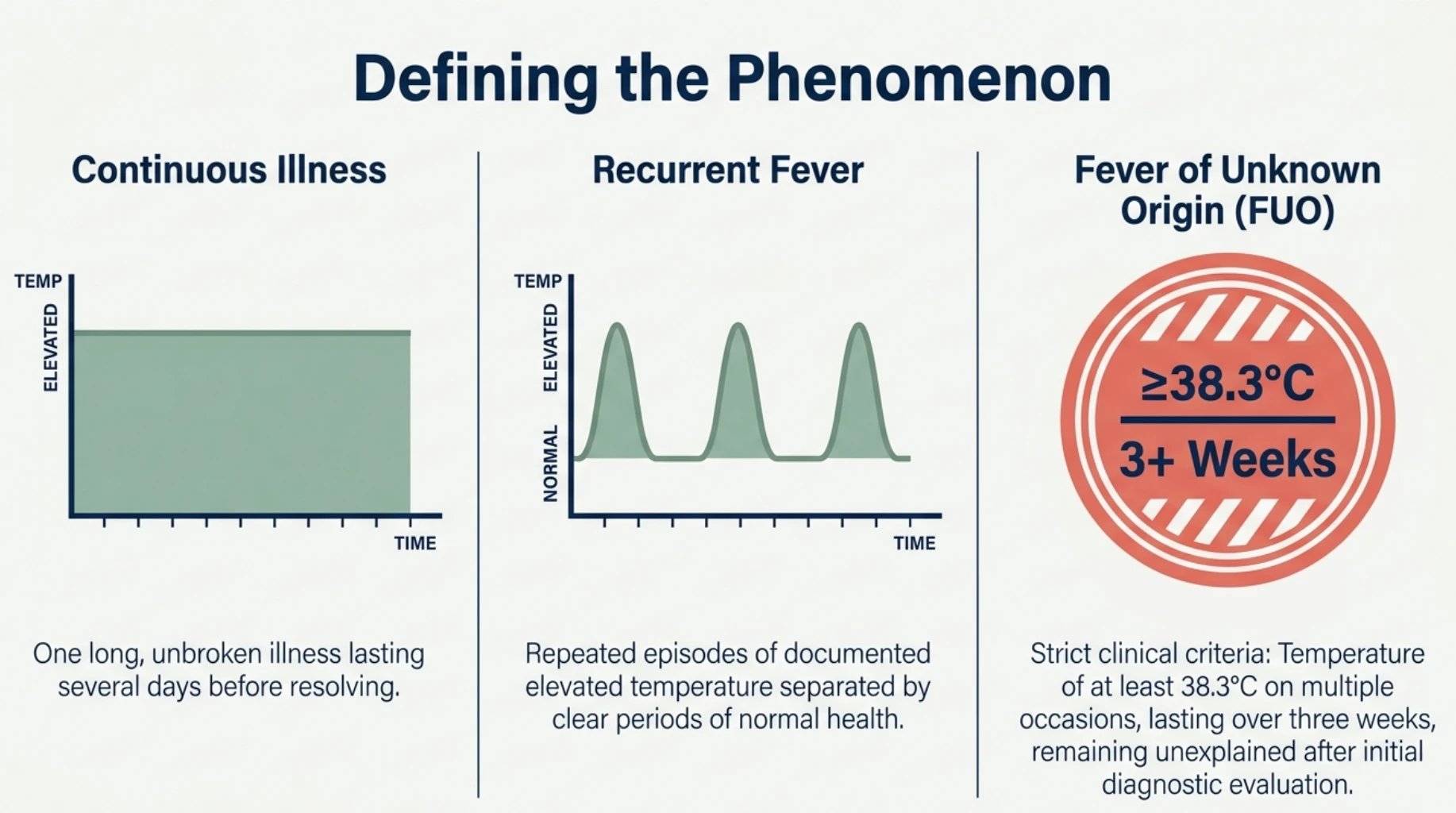
In practical terms, the phrase often describes repeated episodes of documented elevated temperature separated by periods when the fever improves or disappears.
That is different from one continuous illness lasting several days.
For example:
Pattern A:
Fever for three days with sore throat, followed by complete recovery.
Pattern B:
Fever every few weeks, with apparently normal health between episodes.
Pattern C:
Temperature repeatedly rising each evening for several weeks with fatigue and weight loss.
These patterns can have very different explanations.
Keep in mind that normal body temperature varies during the day. Feeling hot, flushed or shivery does not always mean that the core temperature is actually elevated. The NHS generally considers 38°C or above a high temperature in adults.
Recurrent Fever in Adults Should Be Measured, Not Just Felt
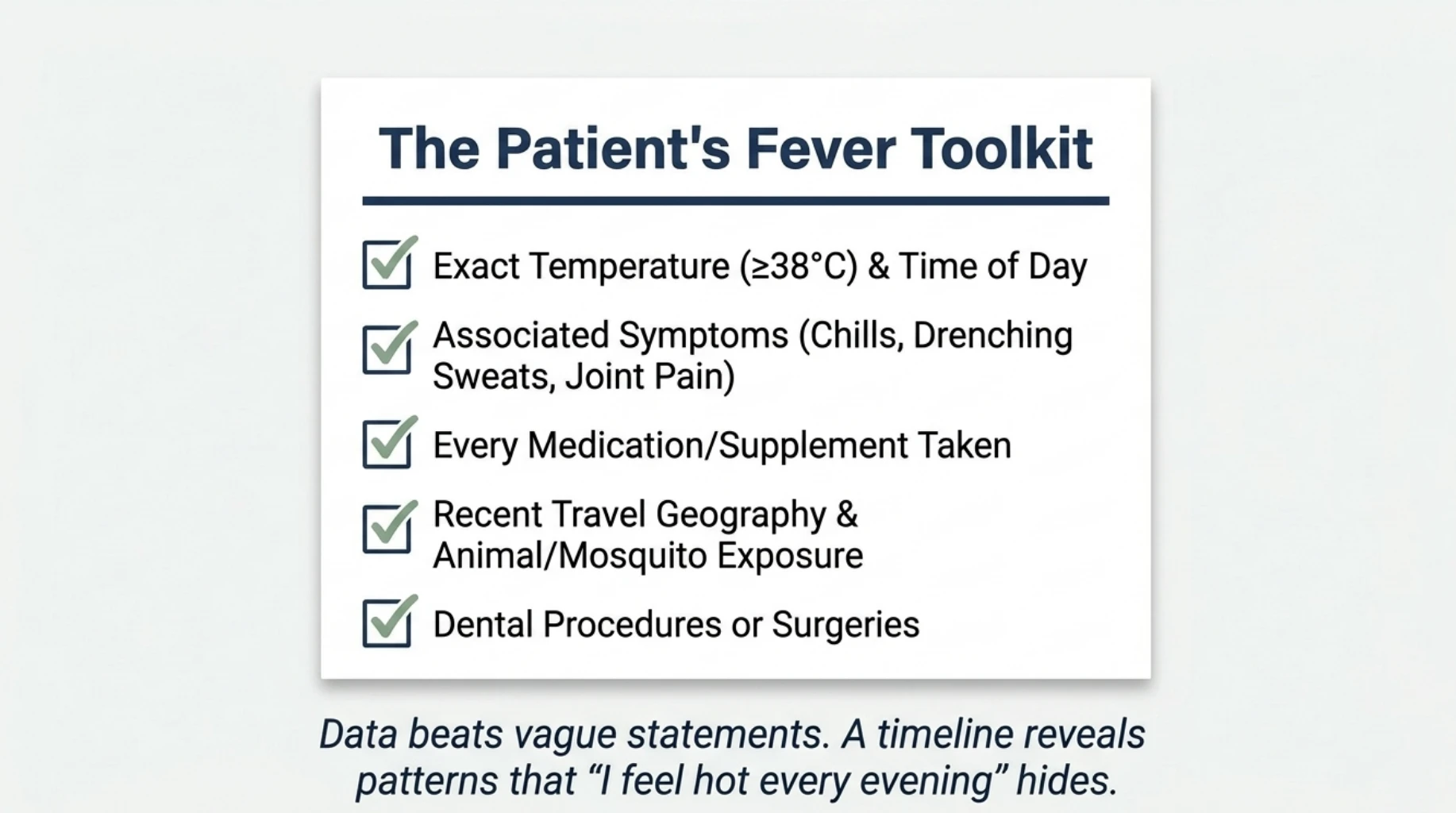
If recurrent fever in adults is being investigated, a simple temperature record can provide useful information.
Note:
- the actual thermometer reading
- date and time
- how the temperature was measured
- associated chills or sweating
- other symptoms
- medicines taken
- whether the temperature settled completely
This is more useful than saying:
“I feel feverish every evening.”
Some people experience chills, hot flushes, anxiety symptoms or sweating without a documented fever. Others genuinely develop repeated temperature elevations.
Confirming the pattern is therefore an important first step.
Recurrent Fever Is Not the Same as Fever of Unknown Origin
The term fever of unknown origin, or FUO, has a more specific medical meaning.
A widely used contemporary definition describes FUO as a clinically documented temperature of at least 38.3°C on several occasions when an appropriate diagnostic evaluation has not identified the cause.
This is different from simply having fever twice in one month.
FUO is generally considered after an initial medical work-up has failed to explain a prolonged febrile illness.
The main diagnostic categories include:
- infections
- malignancies
- non-infectious inflammatory diseases
- miscellaneous causes such as drug fever or thyroiditis
Many adults with recurrent fever will never meet the definition of FUO.
The distinction is useful because it prevents a few ordinary infections from being labelled prematurely as a complex fever syndrome while still recognizing that prolonged unexplained fever requires systematic evaluation.
When Is Recurrent Fever More Than a Viral Infection?
A typical viral respiratory illness often improves over several days. Dengue and some other viral illnesses have their own characteristic timelines, but repeatedly assuming that every new fever is viral can delay another diagnosis.
Consider a broader evaluation when fever:
- keeps returning after apparent recovery
- persists for more than a week without improvement
- repeatedly occurs over several weeks
- has no obvious respiratory or gastrointestinal explanation
- occurs with unexplained weight loss
- causes drenching night sweats
- accompanies persistent cough
- is associated with swollen lymph nodes
- occurs with joint swelling or a recurrent rash
- begins after a new medicine
- follows travel or significant mosquito exposure
The pattern is helpful, but it rarely diagnoses the cause by itself.
For example, classic descriptions sometimes associate certain fever patterns with malaria or tuberculosis, but modern evaluation relies on exposure history, examination and appropriate testing rather than diagnosing malaria from the timing of fever spikes alone.
When Recurrent Fever Needs Urgent Medical Attention
Fever should not be assessed only by the thermometer number.
How ill the person appears matters.
Seek urgent medical care if fever is accompanied by:
- confusion or unusual drowsiness
- significant shortness of breath
- a very fast heartbeat or weak pulse
- severe weakness or inability to stand safely
- persistent chest pain
- seizures
- very little or no urine
- severe abdominal pain
- significant dehydration
- uncontrolled vomiting
- rapid clinical deterioration
CDC describes sepsis as a life-threatening extreme response to infection. Warning features can include fever or shivering, confusion, shortness of breath, a high heart rate or weak pulse, clammy skin and extreme pain or discomfort.
People who are immunocompromised, receiving chemotherapy, severely unwell or known to have very low white-cell counts require a lower threshold for urgent assessment.
Similarly, fever that improves and then returns together with worsening respiratory symptoms deserves attention rather than automatically being considered a normal part of recovery.

Cause 1: Back-to-Back or Incompletely Resolved Infections
Sometimes the simplest explanation is correct.
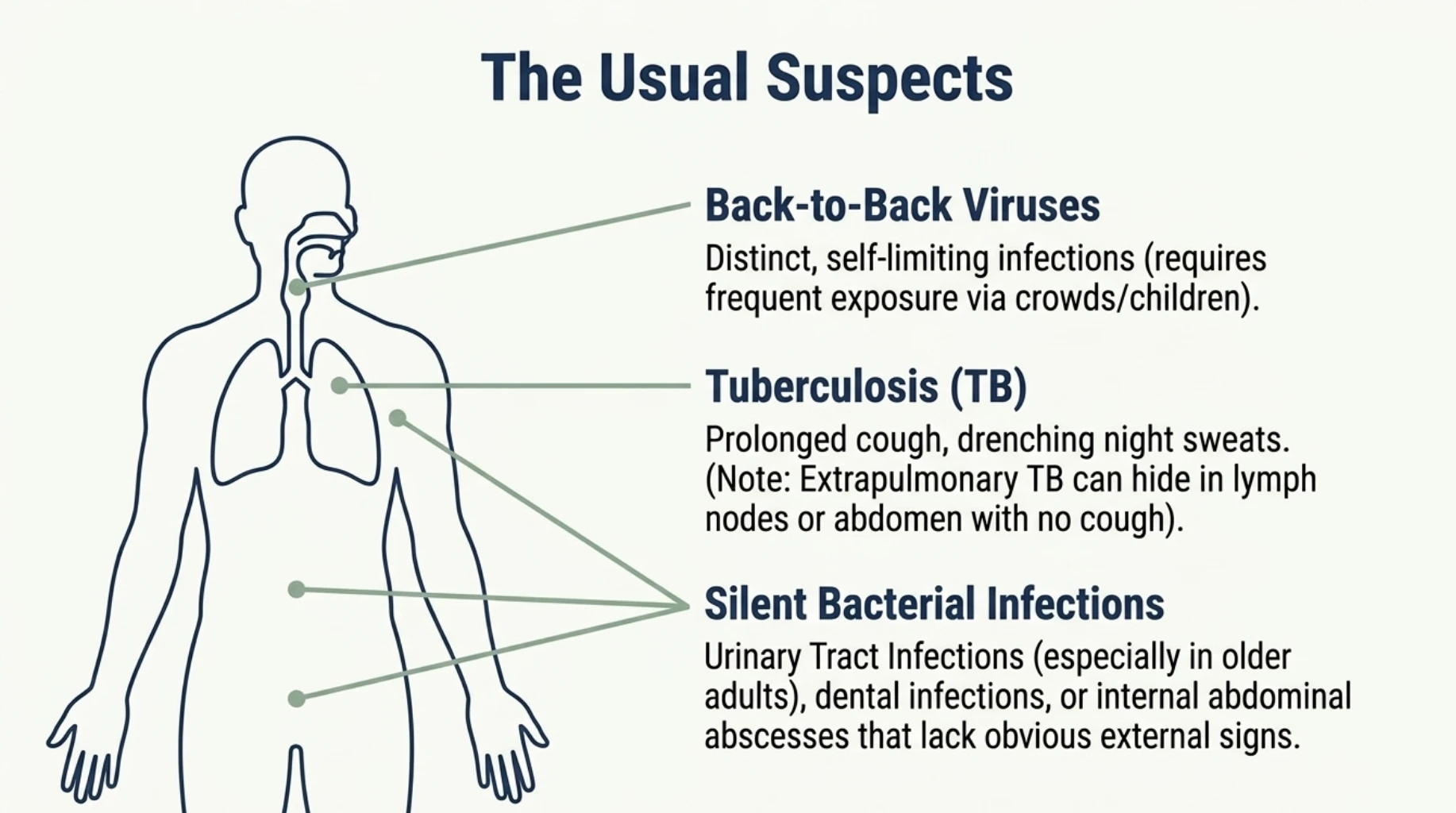
An adult may recover from one infection and then acquire another, especially when there is frequent exposure through work, travel, children at home or crowded environments.
One episode may therefore genuinely be viral and the next a separate illness.
Another possibility is that the original infection has not completely resolved.
Clues supporting repeated ordinary infections include:
- clear respiratory or gastrointestinal symptoms with each episode
- other people around you having similar illnesses
- complete recovery between episodes
- no progressive weight loss or persistent systemic symptoms
However, repeated self-diagnosis can become misleading.
If every episode is being called “viral” without examination or testing while the pattern continues for weeks, it is reasonable to reassess the diagnosis.
Also remember that bacterial infections can sometimes develop after an initial viral illness.
The important question is not simply:
“Have I had fever before?”
It is:
“Is each episode behaving like a separate, self-limited infection, or is one underlying process continuing?”
Cause 2: A Hidden Bacterial Infection
Some bacterial infections do not produce dramatic local symptoms at first.
In adults with prolonged or unexplained fever, recognized infectious causes include:
- urinary tract infection
- dental infection
- sinus infection
- abdominal or pelvic abscess
- infective endocarditis
- tuberculosis
A urinary infection, for example, may produce fever with burning urination, urgency or flank pain—but older adults and some people with diabetes may have less typical presentations.
Dental infections can also be missed when attention is focused entirely on the chest or abdomen.
An internal abscess may cause fever, reduced appetite and inflammatory-marker elevation without an obvious external sign.
This is one reason persistent unexplained fever often requires both a careful examination and targeted investigations rather than simply another course of antibiotics.
Recurrent Fever Without a Cough Can Still Be an Infection
The absence of cough does not exclude infection.
When recurrent fever is being evaluated, the history may need to cover:
- urinary symptoms
- dental pain
- abdominal discomfort
- diarrhea
- recent surgery
- skin wounds
- implanted medical devices
- recent dental procedures
- exposure to sick people or animals
In FUO evaluation, recommended initial investigations may include blood count, urinalysis and culture, blood cultures and chest imaging depending on the clinical presentation.
Tests should still be tailored to the individual rather than ordered mechanically for every short fever episode.
Cause 3: Tuberculosis
Tuberculosis deserves consideration when fever is prolonged or repeatedly returns, particularly when other compatible features are present.
Active TB may cause:
- fever
- night sweats
- fatigue
- reduced appetite
- unexplained weight loss
Pulmonary TB can also cause a cough lasting three weeks or longer, chest pain or coughing up sputum or blood.
Importantly, TB does not always remain confined to the lungs.
Extrapulmonary TB can involve lymph nodes, bones, the abdomen, kidneys, brain or other organs, and the symptom pattern may therefore be less obvious.
The World Health Organization notes that TB symptoms can remain mild for months, which is one reason diagnosis may be delayed.
Diabetes, undernutrition and weakened immunity are among factors associated with increased risk of developing active TB disease.
Fever With Night Sweats, Weight Loss or a Persistent Cough Needs Assessment
None of these symptoms proves tuberculosis.
Night sweats can occur with many conditions, and cough is extremely common.
The combination becomes more important when symptoms persist.
For example:
fever + cough for several weeks + weight loss + drenching night sweats
requires a different assessment from:
three days of fever + runny nose + sore throat
When TB is suspected, appropriate testing may include chest imaging and microbiological or molecular testing. A negative screening test for TB infection does not necessarily exclude active TB disease, so the investigation has to match the clinical situation.
Cause 4: Malaria, Dengue or Another Exposure-Related Infection
Travel, mosquito exposure and geography can completely change the differential diagnosis of fever.
Malaria
Malaria can cause:
- fever
- chills
- headache
- muscle aches
- fatigue
- nausea
- vomiting
- diarrhea
Severe malaria can cause anemia, jaundice, kidney failure, seizures, confusion, coma and death if treatment is delayed.
A history of travel or residence in an area where malaria occurs is therefore important.
Symptoms may begin relatively soon after infection, but depending on the malaria species they can sometimes appear months later.
Dengue
Dengue commonly causes fever together with headache, pain behind the eyes, muscle or joint pains, nausea, vomiting or rash. Symptoms usually last about two to seven days, and most people recover within approximately a week.
A person can be infected with dengue more than once during their lifetime because there are multiple dengue virus types.
Warning signs of severe dengue can appear as the fever begins to settle and include significant abdominal pain, repeated vomiting, bleeding and marked restlessness or tiredness.
This is particularly important because feeling temporarily less feverish does not always mean that dengue is becoming safer.
Fever Pattern Alone Cannot Diagnose Malaria
Older descriptions often emphasize regular fever cycles in malaria.
In practice, the fever pattern alone is not reliable enough to make the diagnosis.
A person with malaria may initially have nonspecific fever and flu-like symptoms. Appropriate blood testing is therefore much more important than waiting to see whether fever occurs every 48 or 72 hours.
Similarly, dengue should not be diagnosed solely because platelet counts fall, and every fever during mosquito season should not automatically be called dengue.
The exposure history, timing of illness, examination and appropriate laboratory testing need to be considered together.
Cause 5: Infective Endocarditis
Infective endocarditis is an infection involving the inner lining of the heart, usually affecting one or more heart valves.
It is uncommon, but it matters because the symptoms can sometimes develop gradually rather than as a dramatic acute illness.
The American Heart Association lists possible symptoms of subacute endocarditis including:
- persistent or recurrent low-grade fever
- fatigue
- night sweats
- unexplained weight loss
- fast heart rate
More acute disease can cause fever, chills, breathlessness, chest discomfort and rapid deterioration.
Certain circumstances increase suspicion.
These include:
- previous infective endocarditis
- some structural or congenital heart conditions
- prosthetic heart valves
- implanted cardiac devices
- intravenous drug use
- situations where bacteria may have entered the bloodstream
Poor dental health can also be clinically relevant in susceptible individuals.
Most adults with recurrent fever do not have endocarditis.
However, unexplained fever persisting for weeks in someone with relevant cardiac risk factors should not simply be treated repeatedly as a viral infection.
Blood cultures are particularly important when endocarditis is suspected, and ideally they are obtained before antibiotics are started when the person is clinically stable enough for that approach. Echocardiography may also be required depending on the clinical findings.
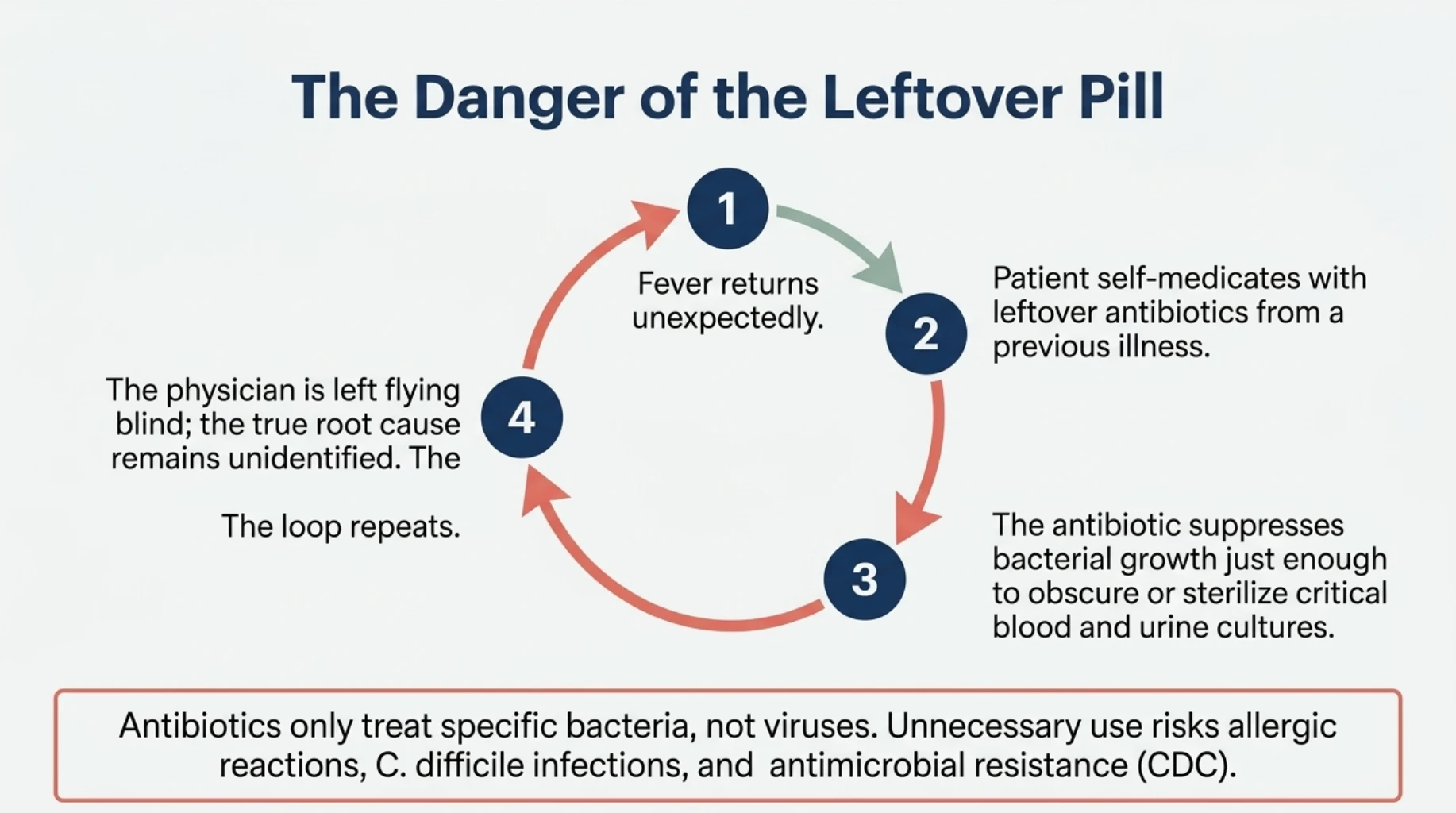
Starting leftover antibiotics before assessment can make the diagnosis more difficult by reducing the chance of identifying the responsible organism.
Cause 6: Autoimmune or Other Inflammatory Disease
Infection is not the only process capable of producing fever.
Inflammatory and autoimmune disorders can cause the immune system to generate systemic inflammation without an active infection being responsible.
In contemporary evaluations of prolonged unexplained fever, important non-infectious inflammatory causes include conditions such as:
- adult-onset Still’s disease
- giant-cell arteritis
- polymyalgia rheumatica
- systemic lupus erythematosus
- rheumatoid or other inflammatory disease
- different forms of vasculitis
The exact possibilities depend heavily on age and accompanying symptoms. Contemporary FUO guidance places non-infectious inflammatory disorders alongside infections and malignancy as one of the major diagnostic categories.
Clues can include fever together with:
- persistent joint pain or swelling
- prolonged morning stiffness
- unexplained rash
- mouth ulcers
- muscle pain
- new headache
- visual symptoms
- unexplained inflammation on blood tests
No single inflammatory marker can diagnose these disorders.
ESR and CRP may show that inflammation is present, but they do not tell you whether the cause is infection, autoimmune disease or another inflammatory process.
Similarly, ordering a large autoimmune antibody panel without a clinical reason can produce findings that are difficult to interpret.
The investigation should follow the symptom pattern.
For example, fever accompanied by swollen joints and rash raises different questions from fever accompanied by prolonged cough and weight loss.

Cause 7: Medication-Related Fever
A medicine can occasionally be the cause of recurrent or persistent fever.
This is known as drug fever.
The possibility becomes more relevant when fever begins after:
- starting a new medicine
- increasing a dose
- receiving a new antibiotic
- adding several medicines around the same time
Drug fever can be difficult to recognize because a patient may already be taking the medicine for an illness that itself causes fever.
There is also no single symptom that reliably proves a medication reaction.
Some people may develop associated:
- rash
- itching
- abnormalities in liver tests
- changes in white blood-cell counts
- other signs of hypersensitivity
But these features are not always present.
Current fever-of-unknown-origin reviews include drug reactions among recognized miscellaneous causes of unexplained fever.
Do not stop essential medicines indiscriminately because fever is present.
Instead, bring a complete medication list to the consultation, including:
- recent antibiotics
- prescription medicines
- over-the-counter products
- supplements
- medicines that were recently stopped
The timing can be especially useful.
If fever began several days after a new medicine and no infectious explanation is emerging, that information may influence further assessment.
Cause 8: Blood Cancers and Other Malignancies
Cancer is not the most likely explanation for a few episodes of fever, and recurrent fever should not automatically create fear of cancer.
However, some malignancies can produce prolonged or unexplained fever.
Classical examples in FUO evaluations include:
- lymphoma
- leukemia
- renal-cell carcinoma
- some other solid tumors
Modern FUO reviews continue to list malignancy as one of the major diagnostic categories after infections and inflammatory disease.
The broader clinical picture matters.
Features that may justify more detailed evaluation include:
- unexplained weight loss
- drenching night sweats
- persistent enlarged lymph nodes
- unusual bruising or bleeding
- marked pallor
- persistent fatigue
- abnormalities in the complete blood count
None of these symptoms is specific to cancer.
Weight loss and night sweats, for example, can also occur with tuberculosis and other chronic infections.
This is why the first step is usually not a tumor-marker panel.
A careful history, examination, complete blood count and targeted investigations generally provide more useful direction.
Routine tumor markers are poor screening tools for an adult with nonspecific recurrent fever unless there is another clinical reason to order them.
Cause 9: Periodic or Autoinflammatory Fever Syndromes
Rarely, repeated fever reflects an autoinflammatory disorder.
These conditions arise from abnormal regulation of innate inflammatory pathways rather than from an ordinary infection.
Contemporary reviews describe recurrent fever as a characteristic feature of several autoinflammatory diseases that can affect adults, including:
- familial Mediterranean fever
- TRAPS
- cryopyrin-associated syndromes
- adult-onset Still’s disease
- Schnitzler syndrome
- VEXAS syndrome
Associated symptoms can include:
- joint or muscle pain
- recurrent rash
- abdominal symptoms
- mouth ulcers
- eye inflammation
- persistently raised inflammatory markers during attacks
Some syndromes begin in childhood, while others may first appear in adulthood. VEXAS, for example, is an acquired autoinflammatory disorder recognized particularly in older men.
These conditions are rare compared with ordinary infections.
Therefore, a patient who has experienced three viral illnesses during winter should not immediately assume that they have a genetic fever syndrome.
Autoinflammatory disease becomes more plausible when episodes follow a striking recurrent pattern, common infectious explanations have been excluded and inflammatory symptoms repeatedly accompany the fever.
Specialist evaluation may be required before considering genetic or highly specialized testing.
What Tests May Be Needed for Recurrent Fever?
There is no single test panel that diagnoses every case of recurrent fever in adults.
Testing should be guided by:
- fever duration
- accompanying symptoms
- physical examination
- travel history
- medication exposure
- tuberculosis risk
- mosquito exposure
- previous medical conditions
- immune status
Depending on the situation, initial investigations may include:
Complete blood count
Can identify anemia and abnormalities in white cells or platelets.
CRP and ESR
Can demonstrate inflammation but cannot identify its cause by themselves.
Kidney and liver tests
May show organ involvement and provide clues to systemic illness.
Urinalysis and urine culture
Useful when a urinary infection is possible.
Blood cultures
Important when bloodstream infection or infective endocarditis is suspected.
Chest imaging
May be appropriate with prolonged fever, cough, breathlessness or concern about TB or another chest infection.
Malaria testing
Should be considered when exposure or travel history makes malaria plausible.
Dengue testing
The correct test depends partly on how many days have passed since symptoms began.
Tuberculosis investigations
May include chest imaging and microbiological or molecular testing according to the suspected site of disease.
For a person who meets criteria for fever of unknown origin, more extensive imaging or specialist investigations may eventually be appropriate. A 2024 international consensus cited by The BMJ defines FUO as fever of at least 38.3°C on three or more occasions lasting at least three weeks and still unexplained after a minimum standard diagnostic evaluation in an immunocompetent adult.
Why the Timing of Blood Tests Can Matter
Some tests are more informative when performed during the actual febrile episode.
For example, if bloodstream infection is suspected, blood cultures obtained while the patient is febrile and before unnecessary antibiotic exposure may improve the chance of identifying an organism.
Malaria testing may also need repetition when clinical suspicion remains high despite an initial negative result.
Other tests depend on the illness timeline.
Dengue diagnostic methods, for instance, differ between the early phase and later stages of the infection.
This is one reason repeatedly ordering the same generic blood panel after every fever episode may provide less information than choosing investigations according to the timing and suspected diagnosis.
Keep records of:
- when fever began
- temperature readings
- when blood tests were taken
- any antibiotics used before testing
Those details can become clinically useful.
Why You Should Not Keep Starting Antibiotics Yourself
Repeated fever often leads to repeated antibiotic use.
That can be a mistake.
Antibiotics treat certain bacterial infections. They do not treat viral infections such as colds and influenza. Taking antibiotics when they are not needed exposes you to potential side effects without treating the cause.
Unnecessary antibiotics can cause:
- nausea
- diarrhea
- allergic reactions
- Clostridioides difficile infection
- selection of antibiotic-resistant organisms
Self-treatment can also complicate recurrent-fever evaluation.
If a patient starts an antibiotic before blood or urine cultures are collected, identifying a bacterial organism may become more difficult.
Do not save a few tablets from one prescription and reuse them during the next fever episode.
CDC specifically advises against saving antibiotics for later, sharing them with another person or using someone else’s prescription.
When antibiotics are genuinely required, the appropriate drug depends on the likely infection, patient factors and sometimes culture results.
What Information Should You Bring to a Medical Consultation?
The fever pattern is often one of the most useful diagnostic tools.
Bring a simple record showing:
- date of each fever episode
- highest measured temperature
- duration
- morning versus evening pattern
- chills or night sweats
- associated cough
- urinary symptoms
- abdominal symptoms
- diarrhea
- joint symptoms
- rashes
- weight change
Also mention:
- recent travel
- mosquito exposure
- contact with someone with tuberculosis
- animal exposure
- recent dental treatment
- recent surgery
- new medicines
- antibiotic courses already taken
- previous blood or urine cultures
Bring relevant reports rather than relying on memory.
A timeline may reveal patterns that are difficult to recognize when each febrile episode is considered separately.
For example:
5 January: fever with sore throat for three days, complete recovery.
25 January: fever with urinary burning.
12 February: fever without local symptoms, night sweats continuing between episodes.
That history is considerably more informative than simply reporting that you “get fever again and again.”
When Should You See a Doctor for Recurrent Fever?
Arrange medical assessment when fever:
- repeatedly returns without a clear cause
- continues longer than expected
- repeatedly reaches 38°C or above
- persists over several weeks
- is associated with night sweats
- accompanies unexplained weight loss
- occurs with persistent cough
- is associated with swollen lymph nodes
- occurs with joint swelling or recurrent rash
- begins after a new medicine
- follows relevant travel or mosquito exposure
Seek faster assessment when fever occurs in someone who is:
- immunocompromised
- receiving chemotherapy or major immunosuppressive treatment
- known to have severe neutropenia
- medically frail
- rapidly becoming more unwell
Urgent or emergency evaluation is appropriate when fever occurs with confusion, severe breathlessness, persistent chest pain, seizures, very low urine output, severe dehydration or other signs of possible sepsis.
Recurrent Fever Assessment at Diet Plus Minus in Dwarka
Repeated fever can often be assessed initially in general medical care.
Dr. Pankaj Kumar can review:
- documented temperature patterns
- duration and frequency of fever
- respiratory, urinary and gastrointestinal symptoms
- recent infections
- medication and antibiotic use
- diabetes and other chronic health conditions
- tuberculosis or travel-related risk
- mosquito exposure
- available blood and urine reports
- whether targeted investigations are appropriate
- whether specialist referral is required
When the pattern suggests a complex infectious disease, inflammatory disorder, hematological condition or another problem requiring specialized assessment, referral can be recommended.
Dr. Pankaj Kumar
MBBS, DNB Family Medicine, Sir Ganga Ram Hospital
General & Lifestyle Physician
Special interest in Diabetes
Diet Plus Minus
13A, Pocket-2, Sector-6, Doctors Lane
Dwarka, New Delhi – 110075
India
Book an Appointment with Dr. Pankaj Kumar
Frequently Asked Questions
Is Recurrent Fever in Adults Always an Infection?
No.
Infections are common causes, but recurrent or prolonged fever can also occur with inflammatory diseases, medicine reactions, malignancy and rare autoinflammatory disorders.
The pattern and associated symptoms determine which possibilities deserve investigation.
What Temperature Counts as a Fever in Adults?
A temperature of 38°C or above is generally regarded as a high temperature in adults.
For the more specific diagnosis of fever of unknown origin, contemporary criteria generally use documented temperatures of at least 38.3°C on repeated occasions.
Why Does My Fever Come Back Every Few Weeks?
Several explanations are possible.
You may be experiencing separate infections, but regular recurrent episodes can also occur with chronic infection, inflammatory disease or—in uncommon cases—periodic fever syndromes.
Keeping a documented temperature and symptom diary can make the pattern clearer.
Can Tuberculosis Cause Fever Without Severe Cough?
Yes.
TB can cause fever, night sweats, fatigue and weight loss, and disease outside the lungs may produce little or no cough.
Persistent unexplained fever with compatible risk factors deserves appropriate TB assessment.
Can Dengue Fever Come Back?
A person can have dengue more than once because several dengue virus serotypes circulate.
However, fever occurring repeatedly over months should not automatically be labelled recurrent dengue. Each new episode deserves assessment according to symptoms, exposure and appropriate testing.
Can Malaria Cause Recurrent Fever?
Yes, malaria can produce repeated fever episodes, and certain malaria species can cause illness again after an apparent recovery.
However, fever timing alone cannot reliably diagnose malaria. Appropriate blood testing is required when the exposure history supports it.
What Is Fever of Unknown Origin?
Current consensus describes classic FUO in an immunocompetent adult as documented fever of at least 38.3°C on at least three occasions, lasting three weeks or longer and remaining unexplained after a recommended minimum diagnostic evaluation.
A few short fever episodes do not automatically meet this definition.
Can Autoimmune Disease Cause Recurrent Fever?
Yes.
Some inflammatory and autoimmune diseases can cause recurrent or prolonged fever, often together with features such as rash, joint symptoms, prolonged stiffness or other systemic manifestations.
Inflammatory blood tests alone cannot establish the diagnosis.
Can Medicine Cause Fever?
Yes.
Drug fever is a recognized cause of otherwise unexplained fever. The timing in relation to a newly started medicine can provide an important clue.
Do not stop essential medication without medical advice unless an acute serious reaction requires emergency care.
Is Fever With Night Sweats Serious?
Not necessarily, but the combination deserves attention when it persists.
Tuberculosis, inflammatory disease, lymphoma and several infections can cause fever with night sweats.
Drenching night sweats with weight loss or other persistent symptoms should not repeatedly be dismissed as a viral infection.
Should I Take Antibiotics Every Time Fever Returns?
No.
Antibiotics do not treat viral infections and are only appropriate for certain bacterial infections. Unnecessary use can cause side effects and contributes to antimicrobial resistance.
The cause of repeated fever should be assessed rather than automatically starting another antibiotic.
Which Blood Tests Are Useful for Recurrent Fever?
Depending on the clinical picture, tests may include a complete blood count, CRP or ESR, kidney and liver tests, urine testing, cultures and targeted investigations for conditions such as malaria, dengue or tuberculosis.
There is no single universal “fever panel.”
Is a High CRP Proof of Bacterial Infection?
No.
CRP indicates inflammation but does not identify its cause.
It can rise with bacterial or viral infections, autoimmune and inflammatory diseases and other conditions. CRP should therefore be interpreted alongside symptoms, examination and other investigations.
When Is Recurrent Fever an Emergency?
Seek emergency assessment when fever is accompanied by severe breathlessness, confusion, seizures, persistent chest pain, very low urine output, severe weakness or rapid deterioration.
These symptoms can occur with sepsis and other serious illnesses.
Author Box
Dr. Pankaj Kumar
MBBS, DNB Family Medicine, Sir Ganga Ram Hospital
General & Lifestyle Physician
Special interest in Diabetes
Dr. Pankaj Kumar provides general medical and lifestyle-based care at Diet Plus Minus in Dwarka, New Delhi. His clinical approach includes assessment of recurrent fever and common adult medical symptoms, review of previous investigations and medicines, and referral for specialized evaluation when appropriate.
Medical Disclaimer
This article provides general educational information and does not replace an individual medical consultation, examination, diagnosis or treatment plan.
Do not start leftover antibiotics, antimalarial medicines, steroids or other prescription treatment solely because fever has returned.
Fever in a person who is immunocompromised, receiving chemotherapy or rapidly deteriorating may require urgent assessment.
Seek emergency medical care for fever associated with severe breathlessness, confusion, seizures, persistent chest pain, very low urine output, severe dehydration or other signs of serious acute illness.
References
- Wright WF, Auwaerter PG. Fever of Unknown Origin. The BMJ. 2025;388:e080847. Reviews current FUO definitions, major diagnostic categories, geographic and travel considerations, minimum evaluation and indications for specialist referral.
- David A, Quinlan JD. Fever of Unknown Origin in Adults. American Family Physician. 2022;105(2):137–143. Reviews infectious, malignant, inflammatory and miscellaneous causes and a structured diagnostic approach to prolonged unexplained fever.
- European Society of Cardiology. 2023 ESC Guidelines for the Management of Endocarditis. 2023. Current European guidance on diagnosis, risk assessment and management of infective endocarditis.
- American Heart Association. Infective Endocarditis. Updated 2026. Describes risk factors and acute and subacute presentations including fever, night sweats, fatigue and weight loss.
- Pankow A, Krusche M. The Most Frequent Febrile Syndromes and Autoinflammatory Diseases in Adulthood. 2024. Reviews adult recurrent inflammatory fever syndromes including familial Mediterranean fever, TRAPS, VEXAS and adult-onset Still’s disease.
- Nigrovic PA, Lee PY, Hoffman HM. Autoinflammatory Diseases: A Review. 2024. Reviews the spectrum of autoinflammatory disorders and their presentation with recurrent sterile inflammation, including adult-onset disease.
- Centers for Disease Control and Prevention. Healthy Habits: Antibiotic Do’s and Don’ts. Updated September 2025. Explains why antibiotics do not treat viral infections and the harms associated with unnecessary antibiotic use.
- Centers for Disease Control and Prevention. Side Effects of Antibiotics. Updated March 2026. Summarizes potential harms of unnecessary antibiotic exposure, including allergic reactions and C. difficile infection.
Related reading and care options

Written by Dr. Pankaj Kumar
General & Lifestyle Physician in Dwarka Sector 6, New Delhi · MBBS, DNB (Family Medicine), DNHE · 16 years of experience.
About the doctor →Book a consultation → Beyond Blood Sugar
 The 90-Day Prediabetes Turnaround
 The Indian Diabetes Diet Reset
 Eat to Beat Gout
 Why Is My Hair Falling?
 The 30-Day Inflammation Reset