
Insulin resistance: the problem behind the problems
Insulin resistance means your body needs more and more insulin to keep blood sugar normal. It quietly drives belly fat, fatty liver, PCOS, high triglycerides and, eventually, type 2 diabetes. It can improve, often a lot.
By Dr. Pankaj Kumar · MBBS, DNB (Family Medicine) · physician and author of Beyond Blood Sugar
Signs worth noticing
A growing waist
Waist over 90 cm (35 in) in South Asian men or 80 cm (31.5 in) in women, or 102 cm (40 in) and 88 cm (35 in) in men and women of European heritage.
Dark, velvety skin patches
On the back of the neck, armpits or groin. Called acanthosis nigricans, it is a classic sign of high insulin.
High triglycerides, low HDL
Triglycerides over 150 mg/dL (1.7 mmol/L) with low 'good' cholesterol is a common blood-test clue.
Fatty liver
Fat on an ultrasound or raised ALT (SGPT), even without alcohol.
PCOS and irregular periods
Most women with PCOS have some insulin resistance, whatever their weight.
Energy crashes and cravings
Sleepiness after carbohydrate-heavy meals and strong sugar cravings are common, though not specific.
What improves insulin sensitivity
Insulin resistance is not a diagnosis you are stuck with. Each of these steps works on the cause.
Build and use muscle
Muscle is where most glucose goes after a meal. Strength training 2–3 times a week is one of the most powerful tools.
Lose waist fat, slowly
A 5–10% weight loss improves insulin sensitivity and liver fat. Slow loss with enough protein protects muscle.
Eat for steadier sugar
Protein and fibre at every meal, fewer refined carbohydrates and sugary drinks, and no grazing late at night.
Sleep and stress
Short sleep and constant stress raise cortisol and insulin resistance. Aim for 7–8 hours.
Test and track
A1C, fasting glucose, a lipid profile and liver enzymes, repeated every 3–6 months. Medicines such as metformin or GLP-1 drugs help selected people.
Frequently asked questions
How is insulin resistance tested?
There is no single routine test. Doctors combine waist size, blood pressure, fasting glucose, A1C, triglycerides, HDL and liver tests. Fasting insulin and HOMA-IR can help but are not standardised between labs.
Can insulin resistance be reversed?
It can improve a lot, sometimes back to normal, with strength training, weight loss from the waist, better sleep and fewer refined carbohydrates.
Is insulin resistance the same as prediabetes?
No. Insulin resistance usually comes first, while blood sugar is still normal because the body makes extra insulin. Prediabetes is when sugar starts to rise.
Can thin people have insulin resistance?
Yes, especially South Asian people and anyone with fat stored around the liver and abdomen. This is sometimes called 'thin outside, fat inside'.
Does a keto or very low-carb diet fix it?
It can help some people in the short term, but it isn't necessary. A sustainable plan with protein, fibre and fewer refined carbs, plus exercise, works long term.
Can I consult Dr. Pankaj Kumar online?
Yes. Online consultations are available for adults in India and abroad to review reports and plan treatment.
Read more from Dr. Pankaj Kumar
Insulin resistance: what it means for your healthWhy belly fat increases without weight gainHigh triglycerides at a normal weightPCOS symptoms and the insulin link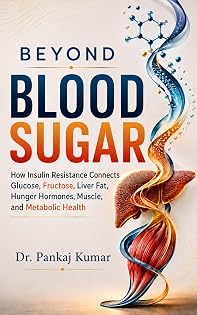
Beyond Blood Sugar
How insulin resistance links fatty liver, belly fat, cholesterol and blood sugar, and a step-by-step plan to fix the root cause.
Get it on Amazon Also: The 90-Day Prediabetes Turnaround →This page gives general information and is not a substitute for a consultation. Treatment is decided after examination and tests. Last reviewed by Dr. Pankaj Kumar, MBBS, DNB (Family Medicine), on 21 October 2026.