You finish lunch, but soon begin looking for something else to eat. On another day, hunger arrives suddenly with sweating or trembling. You may wonder whether your diabetes is uncontrolled, your medicines are responsible or your diet is simply too restrictive.
Frequent hunger in diabetes can have several explanations, and they do not all require the same response. High glucose can accompany increased hunger. Low glucose can also cause hunger, sometimes requiring immediate treatment. Hunger can additionally reflect inadequate meals, long gaps between eating or other influences unrelated to the current glucose level.
The safest starting point is to understand the pattern rather than assume that every hungry feeling means you need sugar—or that you should ignore it to improve glucose control.
This article discusses eight possible reasons in adults with diabetes, including when to check glucose and when a treatment review is appropriate.
Check the situation before choosing the response: Sudden hunger with shaking, sweating, palpitations, dizziness or confusion may indicate low glucose, especially if you use insulin or certain diabetes tablets. Check glucose promptly when possible. Severe symptoms require urgent help.

Does Frequent Hunger in Diabetes Always Mean High Blood Sugar?
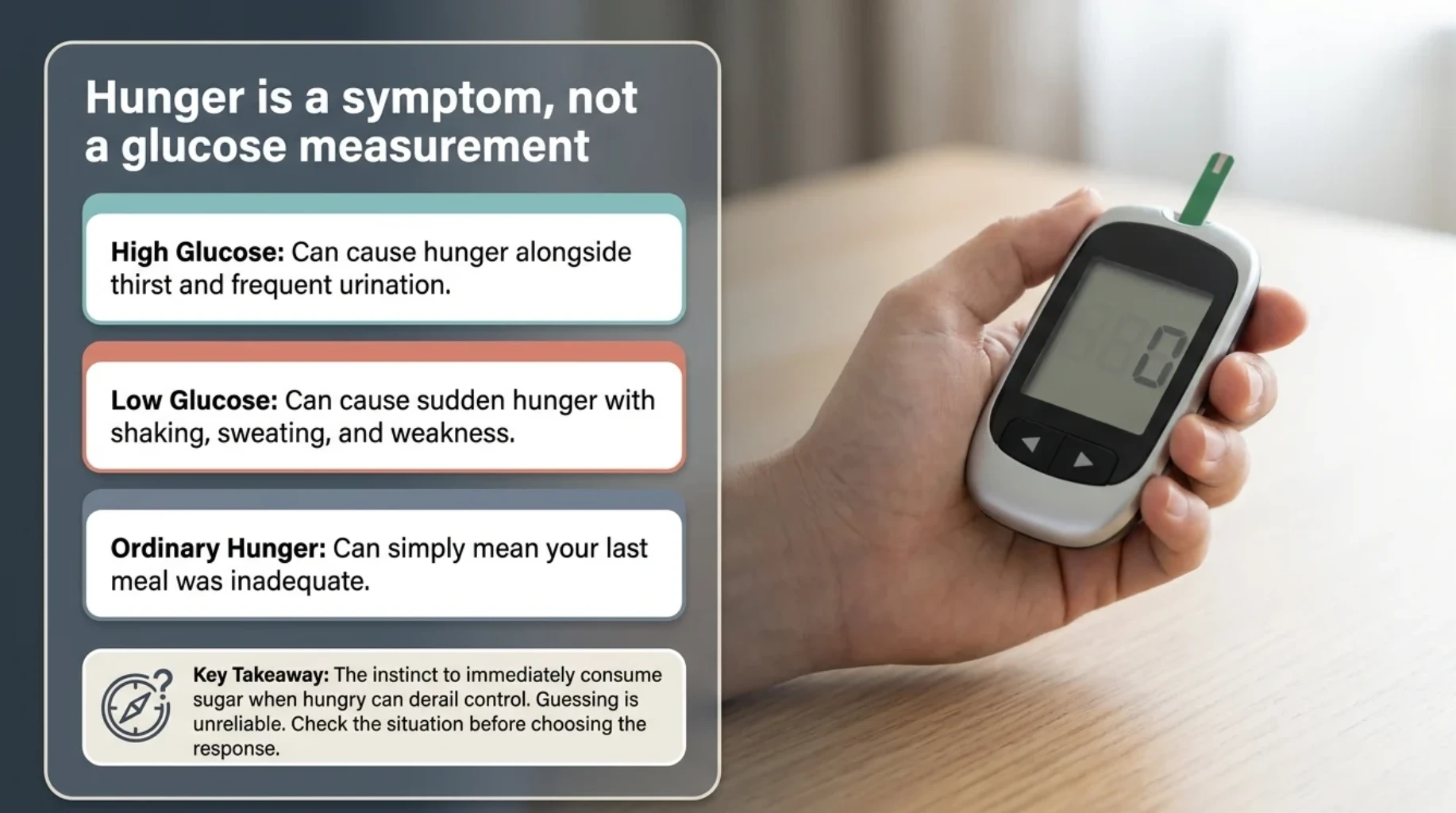
No. Hunger is a symptom, not a glucose measurement.
Someone with high glucose may experience hunger alongside thirst, frequent urination or weight loss. Someone with low glucose may become hungry abruptly and feel shaky, sweaty or weak. Another person may have an ordinary hunger response after eating too little.
These situations can feel similar enough that guessing becomes unreliable.
Frequent Hunger in Diabetes Needs Context
Useful details include when the hunger occurs, what you ate, your medicine timing, recent activity and the glucose reading during the episode.
For example, hunger before a delayed lunch after taking a medicine that can cause hypoglycemia deserves a different response from gradual hunger several hours after a small breakfast with a glucose reading in your agreed range.
Recording these details can help identify a pattern without requiring you to check glucose repeatedly for every ordinary appetite sensation.
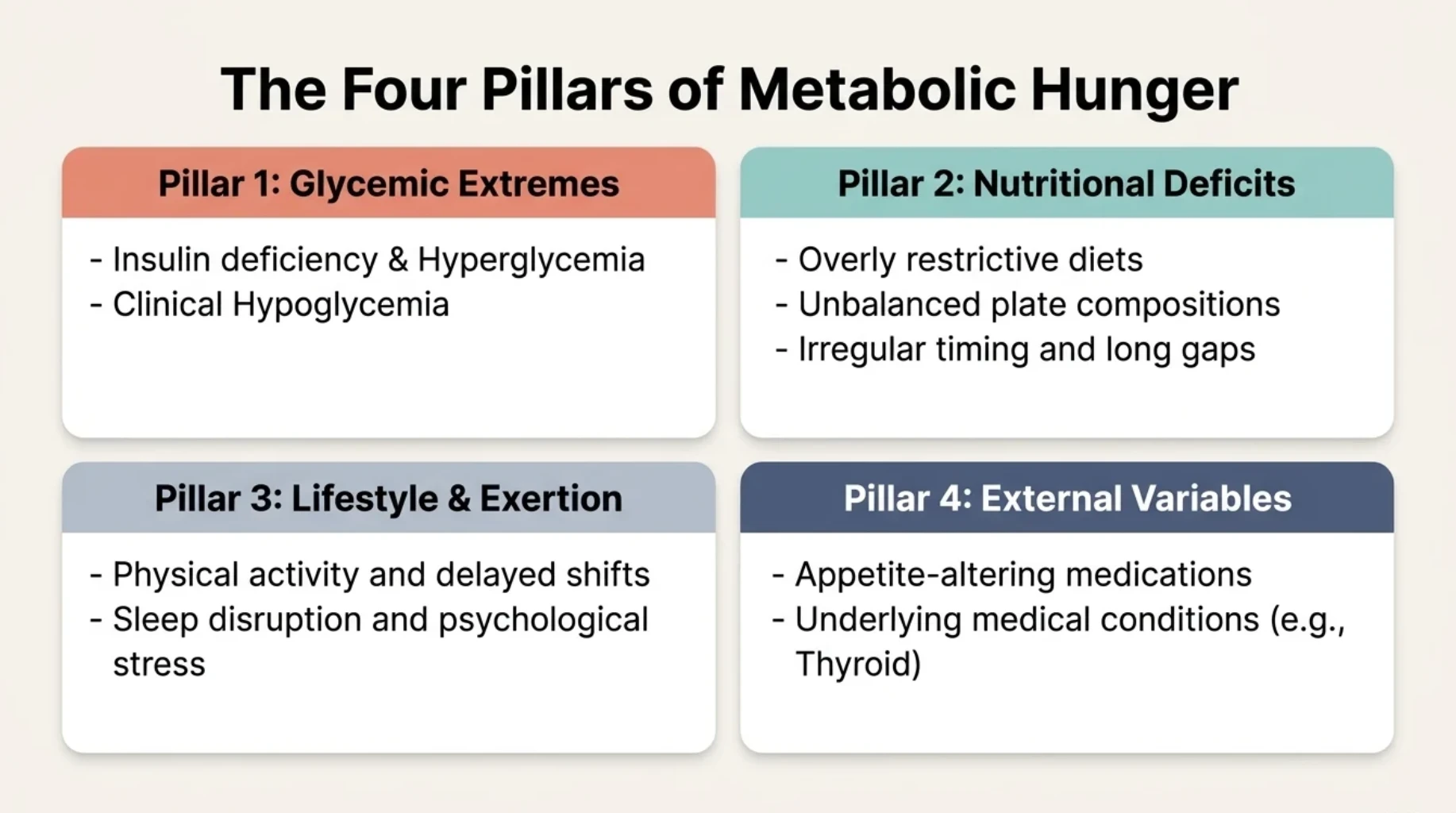
Reason 1: High Glucose With Insufficient Effective Insulin
Increased hunger can occur when diabetes is not adequately controlled. Insulin is involved in the use and storage of nutrients, and substantial insulin deficiency can disrupt how the body obtains energy from food.
Marked hyperglycemia can also lead to glucose and water being lost through urine. In some people, hunger occurs alongside thirst, frequent urination, fatigue and unintentional weight loss.
This pattern should not be managed simply by eating less or repeatedly trying to suppress appetite.
Hunger With Weight Loss Deserves Prompt Assessment
If you are eating normally or more than usual but losing weight, arrange medical review. This can be particularly important when symptoms are new or worsening.
High glucose does not always cause obvious symptoms, and hunger alone cannot establish how high glucose is. Measurements and clinical assessment are needed.
Vomiting, abdominal pain, deep or rapid breathing, marked drowsiness or dehydration alongside diabetes symptoms can indicate an emergency. Seek urgent care rather than waiting for a routine appointment.
Reason 2: Low Blood Glucose
Hunger is a recognized symptom of hypoglycemia. Other possible symptoms include shaking, sweating, palpitations, dizziness, irritability, weakness or confusion.
Some people have reduced awareness and do not experience their usual warning symptoms. Absence of hunger or trembling therefore does not rule out a low reading.
Insulin and medicines such as sulfonylureas can increase hypoglycemia risk. Delayed meals, unexpected activity or a change in routine can contribute.
What Should You Do if Glucose Is Below 70 mg/dL?
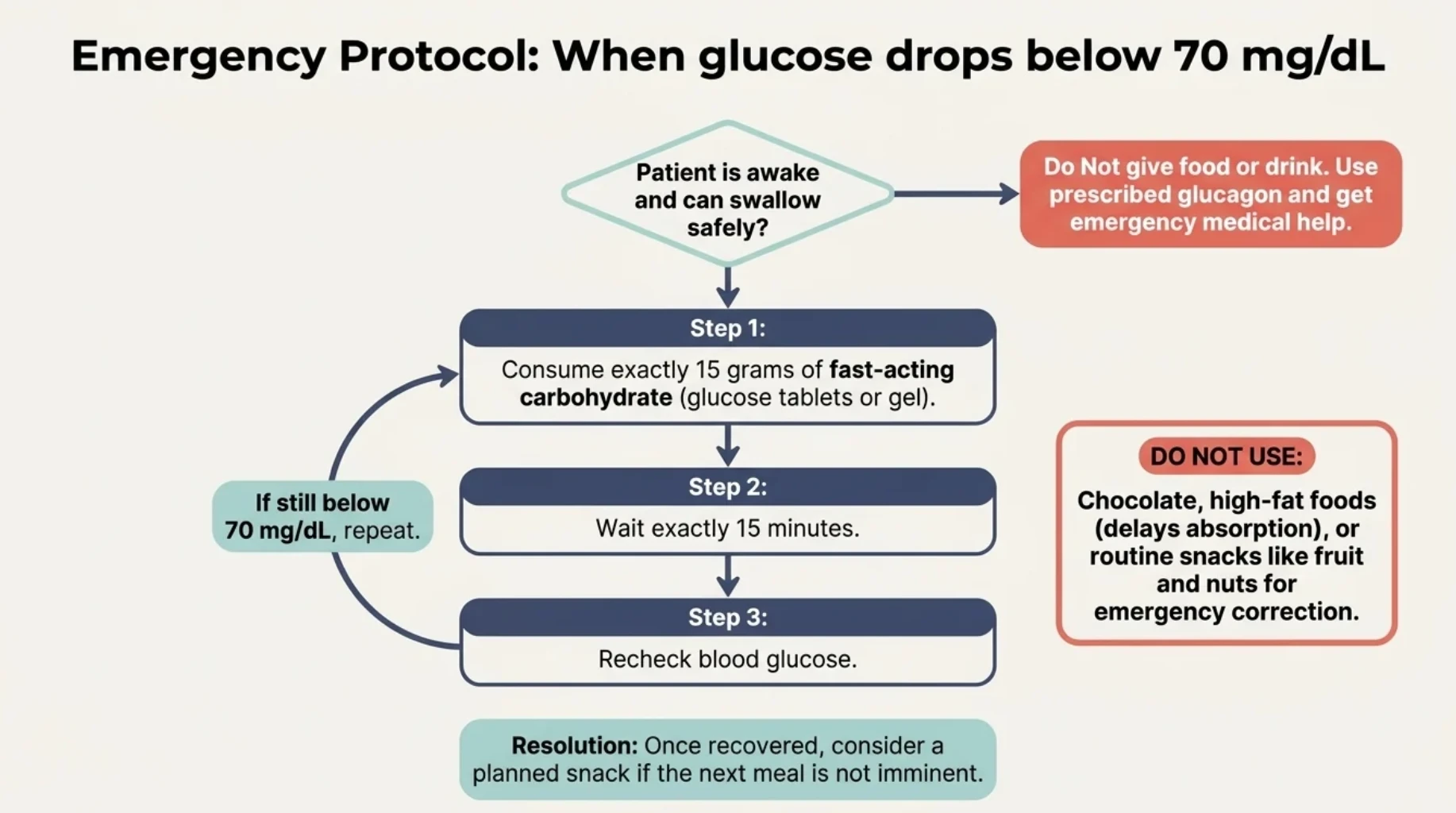
For most adults who are awake and able to swallow safely, take approximately 15 grams of fast-acting carbohydrate, wait 15 minutes and recheck. Repeat if glucose remains below 70 mg/dL, following your individual treatment instructions.
Glucose tablets or gel can provide a measured amount; check the label. Chocolate and high-fat foods are poor first choices because they can delay absorption.
Once glucose has recovered, consider the next meal and your prevention plan. A snack may be needed if the next meal is not soon.
If someone is unconscious, having a seizure or cannot swallow safely, do not give food or drink by mouth. Use prescribed glucagon if available and someone knows how to administer it, and obtain emergency medical help.
Repeated Lows Need a Treatment Review
Repeatedly eating to prevent or correct lows may make weight management difficult, but the solution is not to ignore hypoglycemia.
Bring the readings and episode details to your diabetes team. The medicine, dose, timing, meals or activity plan may need adjustment.
Do not independently stop insulin or change doses unless you are following a specific adjustment plan agreed with your clinician.
Reason 3: Meals Have Become Too Small or Too Restrictive
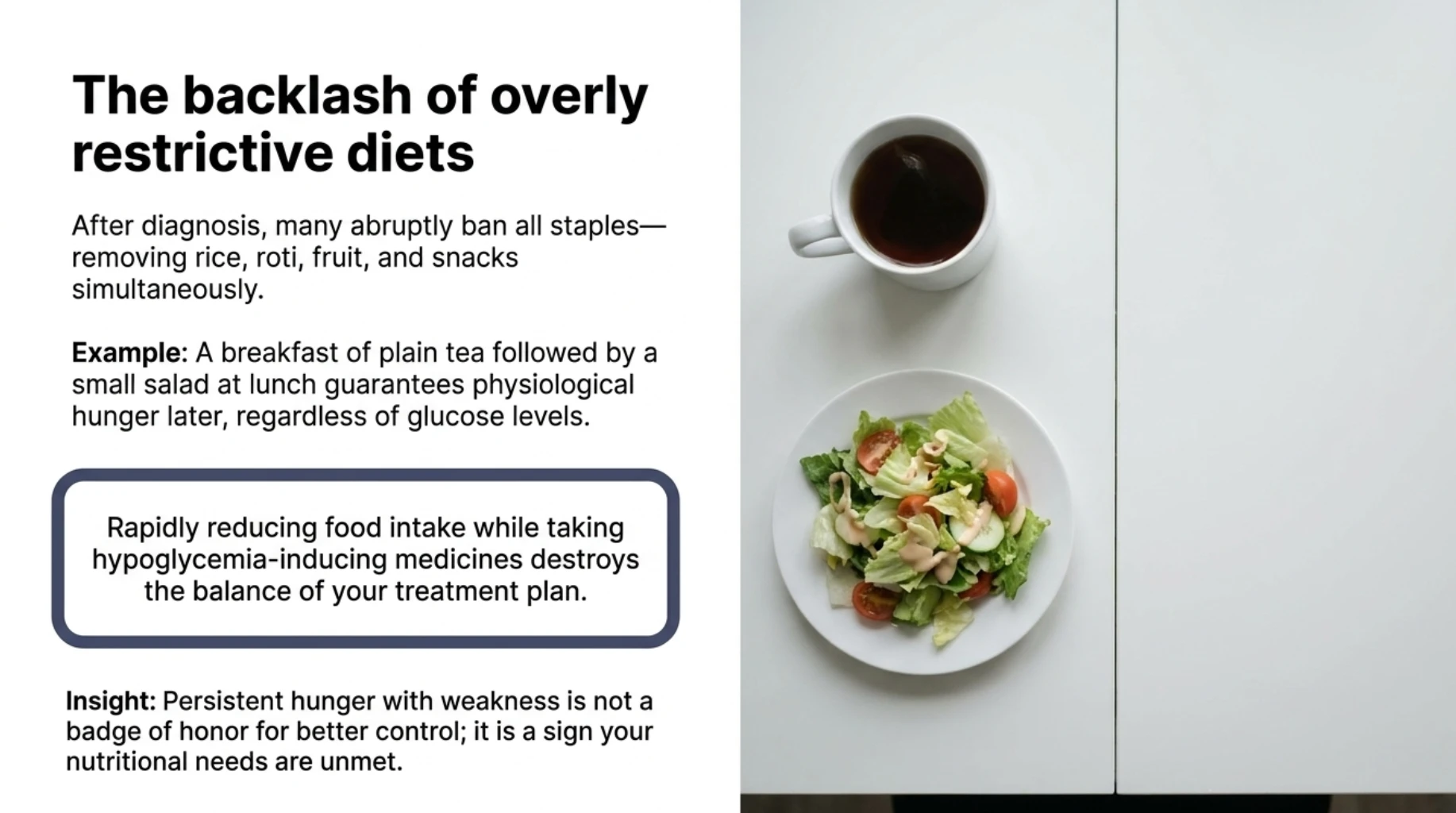
After a diabetes diagnosis, some people remove rice, roti, fruit and most snacks simultaneously. Meals may become substantially smaller without a suitable replacement.
A breakfast of plain tea followed by a small salad at lunch can leave a person hungry later, even when glucose is not low.
This does not necessarily represent a failure of appetite control. The eating plan may not be meeting the person’s needs.
A Diabetes Diet Should Still Provide Adequate Nutrition
Meal planning should account for body size, activity, treatment, preferences and medical conditions. There is no single ideal carbohydrate, protein or fat percentage for everyone with diabetes.
For an Indian household, familiar foods can often remain within an individual plan. The discussion may involve suitable portions of roti or rice alongside vegetables and protein sources rather than banning every staple.
If you have kidney disease or another condition affecting nutrition, protein and other dietary recommendations need individual adjustment.
Rapid Diet Changes May Also Affect Medicine Safety
If you sharply reduce food intake while continuing medicines that can cause hypoglycemia, the previous treatment plan may no longer fit the new routine.
Discuss major dietary changes, fasting or a weight-loss programme with your treating clinician. A change in meals may require additional monitoring or a medicine review.
Persistent hunger accompanied by weakness or dizziness should not automatically be treated as something to tolerate for better diabetes control.
Reason 4: Meals May Be Poorly Balanced for Your Needs
A meal can provide substantial carbohydrate while containing little protein or fibre-rich food. Examples might include tea with biscuits, plain toast, or a large portion of rice with very little accompaniment.
This pattern may not keep you satisfied for as long as a more balanced meal. It can also affect how quickly glucose rises after eating.
However, hunger after a meal does not prove that glucose rose sharply and then fell too low. Check the actual pattern rather than assuming every episode is “reactive hypoglycemia.”
Improve the Meal Before Automatically Adding More Snacks
Depending on your preferences, breakfast could include moong dal chilla with curd, eggs with suitable accompaniments, or another balanced option.
Lunch and dinner might combine vegetables, an appropriate portion of a staple and dal, beans, soy, paneer, eggs, fish or poultry. Pulses provide carbohydrate as well as protein, so quantities still matter.
These are examples for discussion, not a fixed prescription. Portions should fit your nutritional needs, glucose response and treatment.
Balanced Meals Are Different From Emergency Low-Glucose Treatment
Protein and fibre are useful considerations in routine meals. They should not delay fast-acting carbohydrate when a low glucose episode needs treatment.
Likewise, fruit, nuts, curd or a mixed meal should not automatically replace your prescribed hypoglycemia treatment.
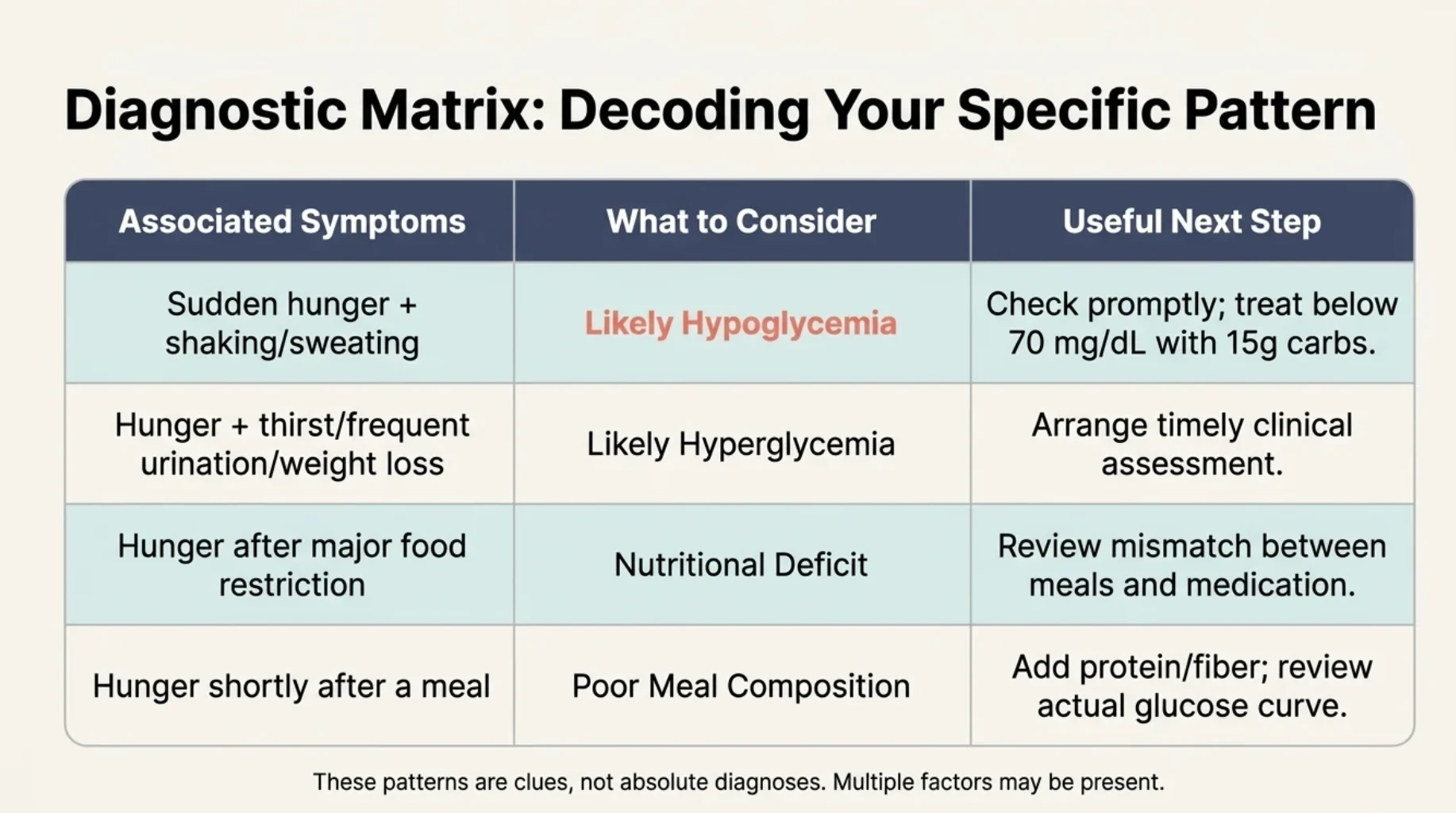
A Simple Way to Describe the Pattern
When hunger is recurrent, note the time, associated symptoms, recent meal, medicine timing and glucose reading if checked.
| Pattern | What to consider | Useful next step |
|---|---|---|
| Sudden hunger with shaking or sweating | Possible hypoglycemia, particularly with relevant medicines | Check glucose promptly and treat a low according to your plan. |
| Hunger with thirst, frequent urination or weight loss | Possible significant hyperglycemia | Check glucose and arrange timely clinical assessment. |
| Hunger after major food restriction | Inadequate intake or a mismatch between meals and treatment | Review nutrition and medicine safety. |
| Hunger after a meal containing little protein or fibre | Meal composition may be contributing | Review the meal and actual glucose pattern. |
These patterns are clues, not diagnoses. More than one factor may be present, and a reading should be interpreted alongside symptoms and the treatment plan.
Reason 5: Long Gaps Between Meals or Irregular Timing
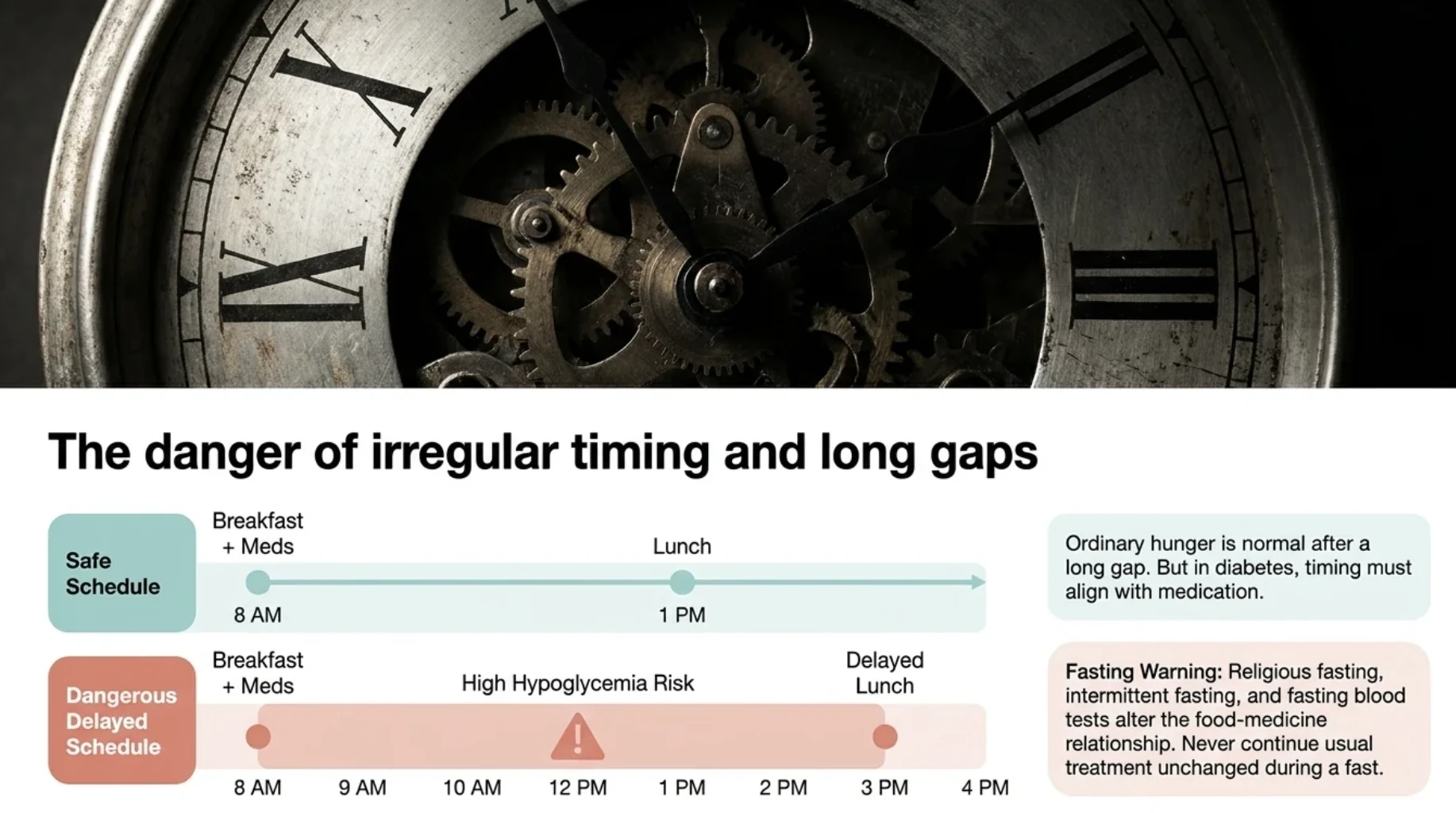
Hunger after a long interval without food can be an ordinary response. In diabetes, however, the timing also needs to fit your medicines.
For example, breakfast at 8 a.m. followed by lunch at 3 p.m. may leave you very hungry. If you have taken insulin or a medicine that stimulates insulin release, delaying food may also increase the risk of hypoglycemia.
The distinction matters: ordinary hunger may call for a more practical meal schedule, while low glucose needs prompt treatment.
Frequent Hunger in Diabetes Does Not Mean Everyone Needs Frequent Snacks
There is no universal requirement to eat every two hours. Some people manage well with regular meals; others need planned snacks because of their treatment, activity or nutritional needs.
Discuss the pattern rather than adding snacks automatically. If you repeatedly need food to prevent low glucose, your treatment may need review.
For someone with a busy clinic, office or commuting schedule, the solution may involve carrying lunch, adjusting the appointment routine or arranging an individual medicine-and-meal plan.
Plan Ahead for Fasting
Religious fasting, fasting blood tests and intermittent-fasting diets can change the relationship between food and medicines.
Ask for advice before beginning. Do not continue your usual treatment unchanged and assume that hunger or weakness is something you must tolerate.
Reason 6: Increased Physical Activity
Starting a walking programme, returning to the gym or spending a day doing unusually demanding work can change appetite and glucose patterns.
Hunger after activity does not automatically indicate low glucose. However, exercise can lower glucose during the activity and for hours afterwards, particularly in people using insulin or medicines such as sulfonylureas.
An evening episode may therefore relate to activity earlier in the day.
Match Food, Monitoring and Medicines to Activity
Tell your diabetes team when your activity changes substantially. Ask whether you need additional glucose checks, planned carbohydrate or an adjustment within an agreed treatment plan.
Do not routinely add a large snack after every short walk. Equally, do not ignore symptoms because exercise is supposed to be beneficial.
Keep your usual hypoglycemia treatment available when relevant. If you become shaky, sweaty, dizzy or unusually weak, stop and assess the situation.
Reason 7: Poor Sleep, Stress or Distress Around Diabetes
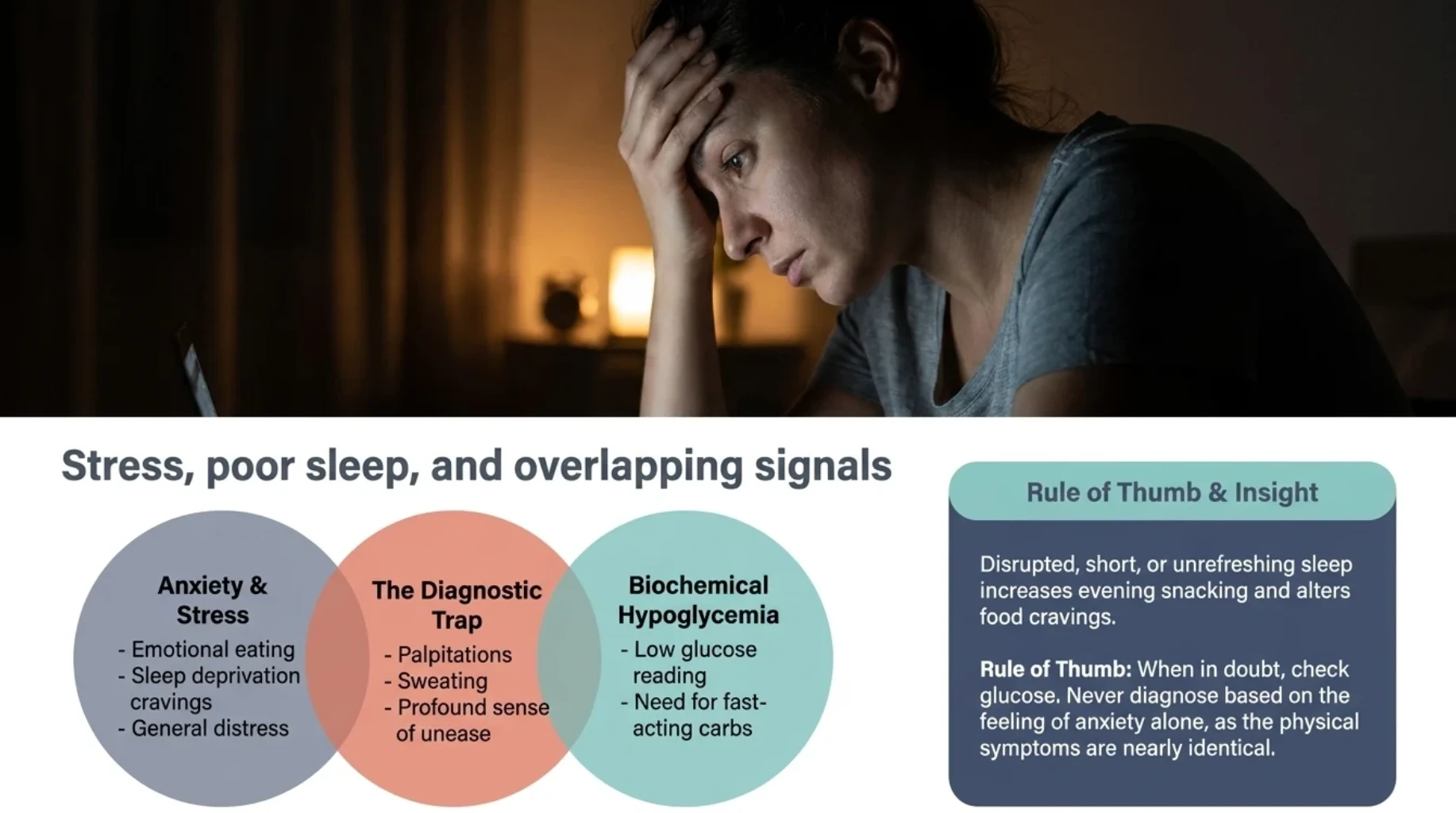
Short or disrupted sleep may make appetite and eating routines harder to manage. Some people notice more evening snacking or greater desire for particular foods after poor sleep, although responses vary.
Stress can also change meal timing, food choices and glucose patterns. Managing diabetes itself can become a source of distress, particularly when readings feel unpredictable.
These influences deserve attention without assuming that every hunger episode is emotional.
Anxiety and Low Glucose Can Feel Similar
Palpitations, sweating and a sense of unease may occur with anxiety or hypoglycemia. When low glucose is possible, checking is safer than deciding from the feeling alone.
Discuss repeated episodes with your clinician. A record linking symptoms, readings and circumstances can help clarify the pattern.
If fear of low glucose leads you to eat constantly or avoid necessary treatment, ask for help reviewing prevention, monitoring and confidence in your treatment plan.
Review Sleep Quality Alongside Hours
Tell your doctor about persistent snoring, witnessed breathing pauses, unrefreshing sleep or excessive daytime sleepiness.
These symptoms may need assessment rather than advice simply to spend longer in bed. Improving sleep can support care, but it is not a guaranteed treatment for hunger or high glucose.
Reason 8: Other Medicines or Another Medical Condition
Not every change in appetite is caused by diabetes. Corticosteroids and some other medicines can affect appetite or glucose control.
An overactive thyroid is another possible explanation when increased appetite occurs with unintentional weight loss, palpitations, sweating, heat intolerance or more frequent bowel movements.
These symptoms do not establish thyroid disease, but they provide a reason for assessment.
Look for a Change From Your Usual Pattern
Was the hunger present before a new prescription? Did it begin after a dose change, illness or major change in routine? Are you losing weight despite eating more?
Bring all prescriptions and supplements, including intermittent steroid treatment. Do not stop medicines independently, particularly steroids or insulin.
Testing should follow the clinical findings. Persistent hunger alone does not justify every hormone test or a commercial “metabolic imbalance” package.
What if Hunger Occurs but the Glucose Reading Is Not Low?
A reading of 70 mg/dL or above does not, by itself, establish biochemical hypoglycemia. Consider symptoms, the trend and your individual treatment instructions.
Some people accustomed to persistently high glucose experience low-like symptoms as glucose falls towards a healthier range. That experience needs review, but it should not become a reason to repeatedly raise glucose with sweets.
If symptoms and a CGM reading do not agree, use a finger-prick check when possible according to your device instructions. Glucose can change quickly, and sensor readings may lag behind blood glucose.
What if You Cannot Check Immediately?
If you have symptoms suggesting hypoglycemia, particularly while using insulin or another medicine that can cause lows, treat the suspected episode rather than delaying treatment while searching for a meter.
Follow your agreed hypoglycemia plan and check glucose as soon as possible. This advice applies to a person who is awake and can swallow safely.
Ordinary hunger without other warning features is different. It should not automatically trigger repeated emergency sugar treatment.
Severe symptoms need help: Confusion that prevents self-treatment, a seizure, unconsciousness or inability to swallow safely requires emergency assistance. Do not give food or drink by mouth. Use prescribed glucagon if available and someone knows how to administer it.
How Should Frequent Hunger in Diabetes Be Assessed?
The most useful starting point is a short record of actual episodes. Include the time, symptoms, recent meal, medicine timing, activity and glucose reading when available.
Your clinician can compare this with your usual glucose records, HbA1c, weight trend and treatment history. HbA1c describes average glucose exposure; it cannot identify the cause of a particular hunger episode.
A seemingly satisfactory average can coexist with low and high readings. Conversely, hunger with stable glucose may indicate that meal adequacy or another contributor needs attention.
| Information | Why it helps |
|---|---|
| Time and speed of onset | Distinguishes a sudden episode from gradual hunger before a meal. |
| Associated symptoms | Shaking, sweating, thirst or weight loss may guide assessment. |
| Glucose reading and trend, if available | Helps distinguish measured lows, high glucose and other patterns. |
| Food and drink before the episode | Shows meal gaps, restriction and meal composition. |
| Medicine name, dose and timing | Helps identify a possible mismatch between treatment and routine. |
| Recent exercise, alcohol, illness or poor sleep | Provides context that a glucose reading alone cannot supply. |
| What you did and what happened afterwards | Helps review treatment effectiveness and recurrent episodes. |
Will You Need a CGM?
Not everyone with frequent hunger needs continuous glucose monitoring. It may be useful when episodes are difficult to capture, lows recur or the treatment pattern needs closer assessment.
The decision should depend on what question monitoring will answer and how the information will change care.
Do not delay treatment of suspected hypoglycemia while waiting to obtain a sensor.
How Can You Make Meals More Satisfying?
Once urgent glucose problems have been addressed, review whether meals provide adequate nutrition and fit your day.
A useful starting point is to include vegetables, a suitable protein source and an appropriate amount of carbohydrate rather than building meals mainly around biscuits, toast or a large portion of one staple.
For example, lunch could combine sabzi, dal or another protein source, and a suitable portion of roti or rice. The quantity and combination should reflect your treatment, appetite, activity and medical needs.
Choose Snacks for a Specific Purpose
A planned snack may help when there is a genuine nutritional need or a treatment-related reason. Depending on your circumstances, options might include plain curd, a suitable portion of roasted chana, an egg or fruit paired with another appropriate food.
These are routine snack examples, not emergency treatments for low glucose. Nuts, curd and high-fibre foods should not delay fast-acting carbohydrate when a low needs correction.
If kidney disease or another condition affects food choices, ask for individual advice rather than following a generic high-protein plan.
Do Not Use Water or Distraction to Ignore Possible Hypoglycemia
For ordinary appetite or habitual snacking, reviewing thirst and routine may be useful. But symptoms suggesting low glucose require assessment and appropriate treatment.
Likewise, appetite-suppressant products should not be used to conceal unexplained hunger, weight loss or repeated lows.
When Should You Arrange a Treatment Review?
Seek a prompt review for recurrent glucose readings below 70 mg/dL, episodes during sleep, reduced warning symptoms or hunger repeatedly accompanied by shaking or sweating.
Review is also appropriate when hunger persists despite adequate meals, begins after a medicine change or occurs with unexplained weight loss, thirst or frequent urination.
Repeated low glucose should not be managed indefinitely by adding food without examining the treatment plan.
Vomiting, abdominal pain, deep or rapid breathing, severe dehydration or unusual drowsiness alongside diabetes symptoms needs urgent assessment. Severe hypoglycemia also requires emergency help.
Frequently Asked Questions About Frequent Hunger in Diabetes
Does feeling hungry mean my sugar is low?
No. Hunger can occur with low glucose, high glucose or an ordinary need for food. Sudden hunger with shaking, sweating or dizziness makes a glucose check particularly important when hypoglycemia is possible.
Why am I hungry after eating?
Possible explanations include inadequate intake, meal composition, glucose problems, recent activity or other influences. The timing, associated symptoms and glucose pattern help identify the cause.
Should I eat every two hours?
Not automatically. Meal frequency should fit your medicines, activity, preferences and nutritional needs. Repeatedly needing snacks to prevent lows is a reason to review treatment.
Should I stop rice and roti if I am frequently hungry?
No universal ban is necessary. Review portions, meal combinations and total intake. Abruptly removing carbohydrate while continuing hypoglycemia-causing medicines can create safety problems.
Can exercise cause hunger later in the day?
Yes. Appetite may change after activity. Exercise can also cause delayed low glucose in susceptible people, so symptoms and readings need interpretation alongside the activity and medicine plan.
Can I have low glucose with a reasonable HbA1c?
Yes. HbA1c is an average measure and does not show every low or high. Episode readings or appropriate monitoring may be needed.
What if I have low-glucose symptoms but no meter?
If hypoglycemia is suspected, treat promptly according to your plan and check as soon as possible. If the person cannot swallow safely, do not give anything by mouth; obtain emergency help and use prescribed glucagon when available.
Should I reduce insulin because I am eating more to prevent lows?
Arrange a timely treatment review. Do not independently stop insulin or alter doses unless following an individual adjustment plan already agreed with your diabetes team.
Is frequent hunger a reason to start a weight-loss injection?
No. Establish the cause first. Any prescription weight-management treatment requires an assessment of suitability, benefits, risks and monitoring needs.
Diabetes and Hunger Assessment in Dwarka
Dr. Pankaj Kumar, General & Lifestyle Physician, provides assessment of type 2 diabetes, glucose-related symptoms and associated metabolic concerns in Dwarka, New Delhi.
A consultation can review glucose records, medicines, meal timing, activity and weight changes. Additional investigations or specialist referral may be needed according to the findings.
Prepare for your consultation: Bring prescriptions, recent reports, your glucose record and details of hunger episodes. Mention any low readings or episodes requiring another person’s help.
About the Author
Dr. Pankaj Kumar
MBBS, DNB Family Medicine, DNHE
General & Lifestyle Physician
Dr. Pankaj Kumar is the founder of Diet Plus Minus. His clinical interests include type 2 diabetes, medical weight management, fatty liver and related metabolic disorders.
Medical Disclaimer
This article provides general education for adults and does not replace an individual diabetes treatment plan. Children, pregnancy and complex medical conditions require tailored advice. Do not independently stop insulin, alter prescribed medicines or undertake fasting. Severe hypoglycemia or symptoms of a hyperglycemic emergency require urgent medical care.
References
- American Diabetes Association Professional Practice Committee. Facilitating Positive Health Behaviors and Well-being to Improve Health Outcomes: Standards of Care in Diabetes—2026. Diabetes Care. 2026;49(Suppl 1). Read the guidance.
- Centers for Disease Control and Prevention. Treatment of Low Blood Sugar (Hypoglycemia). 2024. Read the resource.
- American Diabetes Association. Signs, Symptoms, and Treatment for Hypoglycemia. Read the resource.
- American Diabetes Association. Severe Hypoglycemia. Read the resource.
- Centers for Disease Control and Prevention. Diabetes Meal Planning. 2024. Read the resource.
- National Institute of Diabetes and Digestive and Kidney Diseases. Healthy Living with Diabetes. Read the resource.
- National Institute of Diabetes and Digestive and Kidney Diseases. Low Blood Glucose (Hypoglycemia). Read the resource.
- National Institute of Diabetes and Digestive and Kidney Diseases. Symptoms & Causes of Diabetes. Read the resource.
- Centers for Disease Control and Prevention. Diabetes and Mental Health. 2024. Read the resource.
- Tasali E, et al. Effect of Sleep Extension on Objectively Assessed Energy Intake Among Adults With Overweight in Real-life Settings: A Randomized Clinical Trial. JAMA Internal Medicine. 2022;182(4):365–374. Read the trial.
- National Institute of Diabetes and Digestive and Kidney Diseases. Hyperthyroidism (Overactive Thyroid). Read the resource.

Written by Dr. Pankaj Kumar
General & Lifestyle Physician in Dwarka Sector 6, New Delhi · MBBS, DNB (Family Medicine), DNHE · 16 years of experience.
About the doctor →Book a consultation → Beyond Blood Sugar
 The 90-Day Prediabetes Turnaround
 The Indian Diabetes Diet Reset
 Eat to Beat Gout
 Why Is My Hair Falling?
 The 30-Day Inflammation Reset