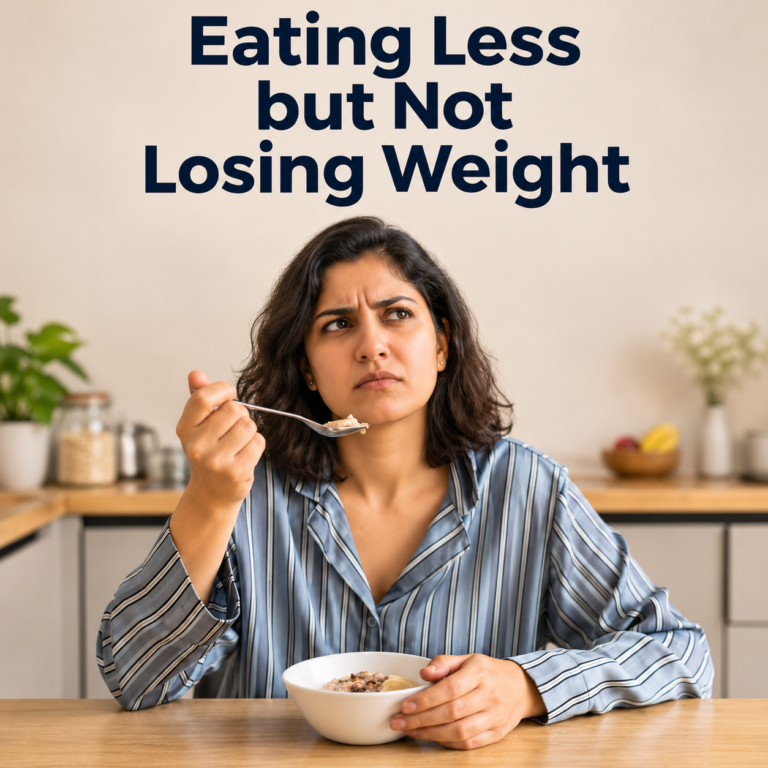

You finish dinner feeling satisfied. A few hours later, while answering messages or watching a series, you find yourself looking for biscuits, namkeen or something sweet.
The next morning, after another short night, your usual breakfast feels less satisfying and getting through work seems to require repeated cups of tea or coffee.
This pattern does not prove that sleep is the only reason for weight gain. However, obesity and sleep are connected through several pathways, including eating behaviour, appetite regulation and sleep-related breathing disorders.
Poor sleep can make weight management harder for some people. Understanding that connection can help explain why a plan focused only on food portions may leave an important barrier unaddressed.
The evidence also needs careful interpretation. Not everyone becomes hungrier after a short night, hormone changes are inconsistent, and sleeping longer is not a guaranteed weight-loss treatment.
Understanding the Connection Between Obesity and Sleep
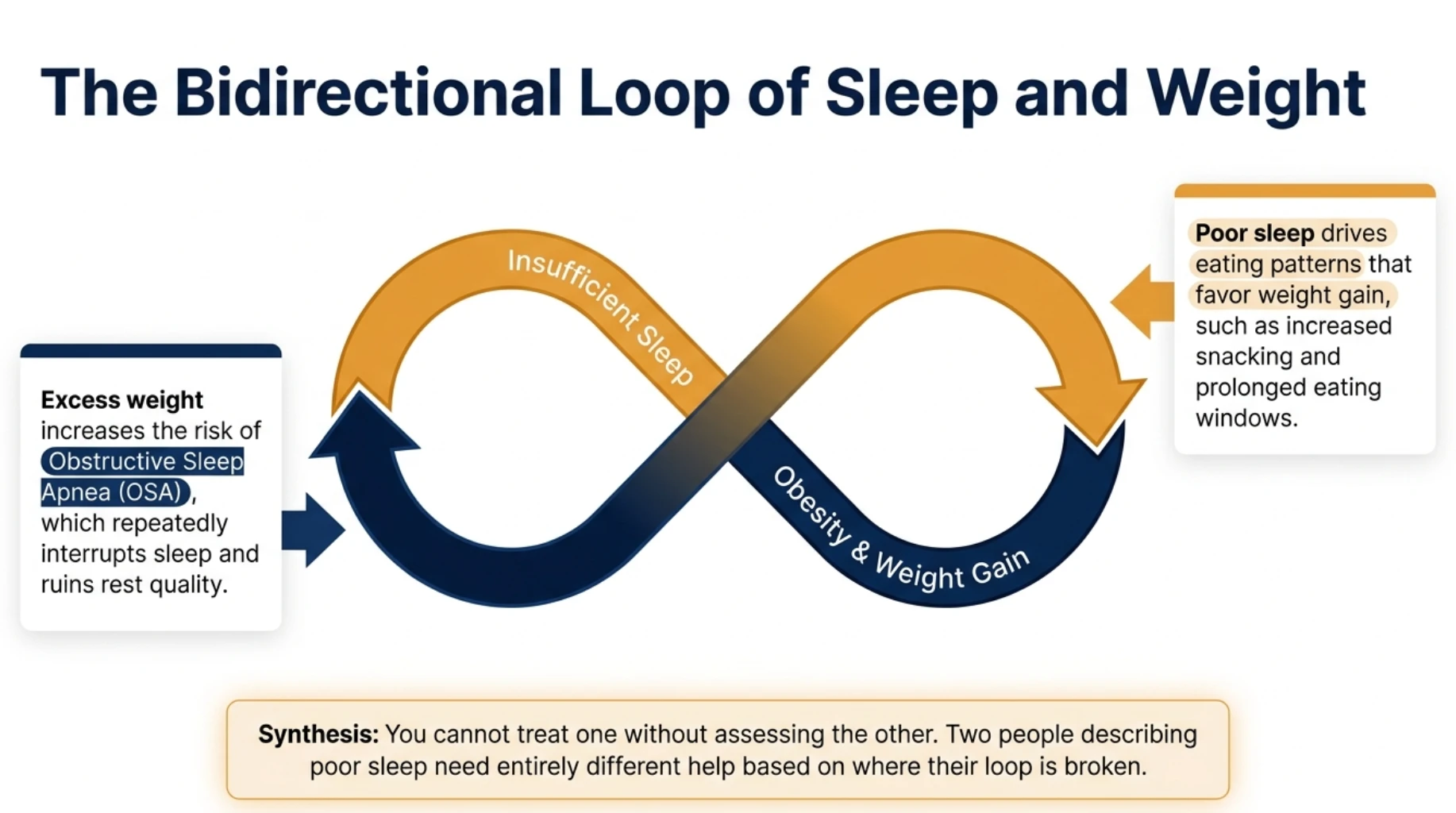
The relationship works in both directions. Insufficient sleep may contribute to eating patterns that favor weight gain. Obesity, in turn, increases the risk of obstructive sleep apnea, which can repeatedly interrupt sleep.
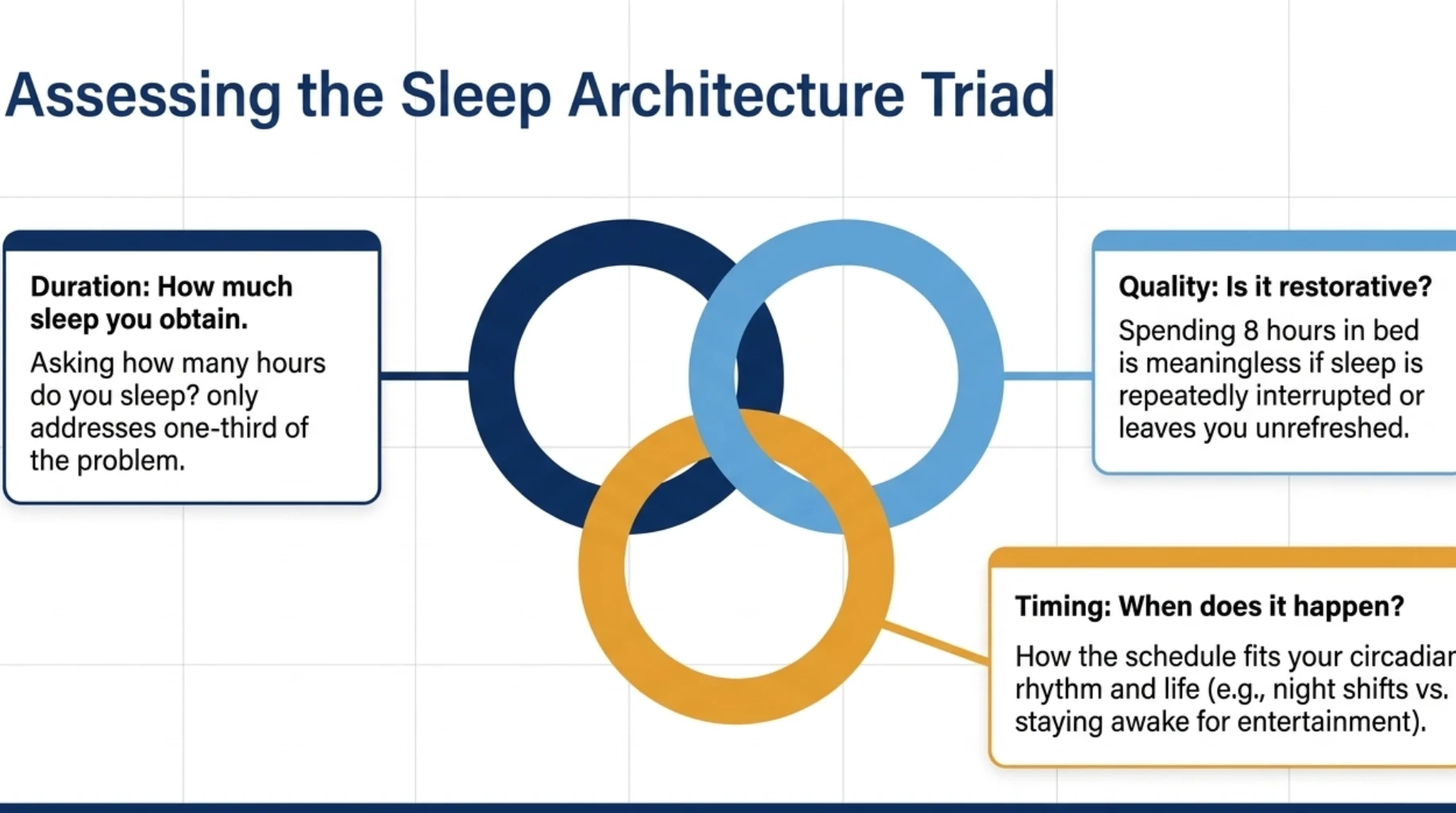
This means two people describing “poor sleep” may need different help. One may regularly allow only five hours for sleep. Another may spend eight hours in bed but wake unrefreshed because breathing is repeatedly disrupted.
Asking only “How many hours do you sleep?” can therefore miss part of the problem.
Obesity and Sleep Involve Duration, Quality and Timing
Duration describes how much sleep you obtain. Quality includes whether sleep is repeatedly interrupted or leaves you unrefreshed. Timing concerns when you sleep and how that schedule fits your daily routine.
Someone working night shifts may face different practical challenges from someone staying awake for entertainment. A parent caring for an infant may have limited control over interruptions.
A useful assessment recognizes these circumstances rather than assuming that everyone can solve the problem by choosing an earlier bedtime.
The central message: Sleep deserves attention within weight management. It can influence how difficult a routine feels, but it does not replace assessment of nutrition, activity, medicines and other health conditions.
Can Poor Sleep Actually Increase Hunger?
Yes, it can, but the response varies. Experimental studies have found changes in hunger, desire for particular foods and snacking after sleep restriction.
A small randomized crossover trial published in 2023 compared short sleep with a longer sleep opportunity. Participants reported greater hunger and desire for fatty foods during sleep restriction and consumed more energy from snacks. However, total daily intake did not differ significantly between the conditions.
This distinction matters. Feeling hungrier, eating more snacks and consuming more total calories are related outcomes, but they are not identical.
You May Eat More Without Feeling Dramatically Hungrier
A 2026 review of controlled human studies found that changes in reported appetite did not consistently explain changes in food intake.
In practical terms, you might notice more grazing or additional eating occasions without describing yourself as unusually hungry.
For example, a person staying awake until 1 a.m. may add a snack while working. The extra eating may reflect opportunity, habit and the appeal of available food as well as physical hunger.
This is why a useful review considers what was eaten and when, alongside how hungry the person felt.
Why Do Late Nights Create More Opportunities to Eat?
Being awake for longer creates additional time during which food may be available. What happens during that time depends partly on the environment.
In a Delhi NCR household, this might involve snacks beside the television, food delivery after a late commute or sweetened tea while finishing office work. None of these behaviours is inevitable, but they can become repeated parts of the routine.
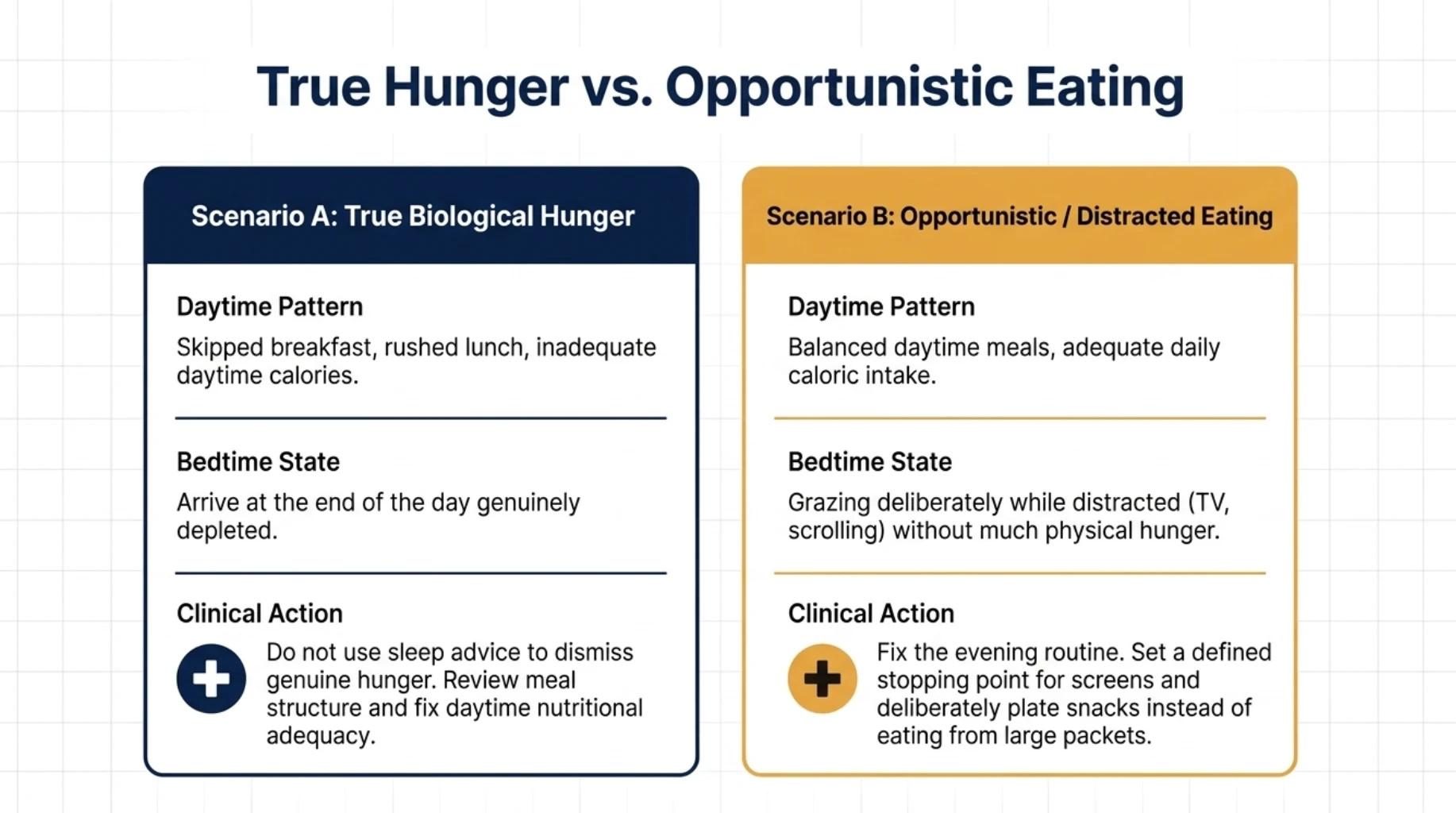
Consider someone who eats dinner at 8 p.m. but remains awake until 1 a.m. If they are genuinely hungry later, the dinner pattern may need review. If they repeatedly eat while distracted without much hunger, the evening routine may be a more useful starting point.
Do Not Treat Every Night-Time Snack as a Failure
Context matters. A night-shift worker may need a planned meal during working hours. Someone who has eaten inadequately throughout the day may arrive at bedtime hungry.
The aim is to understand whether eating supports nutritional needs or has become an unplanned addition that makes the overall plan harder to manage.
A brief record of sleep timing, meals and snacks can help distinguish these situations.
What About Ghrelin and Leptin?
Ghrelin and leptin are involved in appetite and energy regulation. Popular explanations often claim that short sleep always increases ghrelin and lowers leptin, producing unavoidable hunger.
The research is less uniform. A 2025 systematic review examining hormonal responses to sleep restriction found inconsistent results and no clear pattern across the limited studies available.
Responses may depend on study conditions, participant characteristics and energy balance. It is therefore misleading to present one hormonal sequence as the explanation for everyone.
You Do Not Need a “Hunger Hormone Panel” to Begin
For someone concerned about evening hunger, useful starting information includes sleep duration, meal adequacy, snacking, medicines and associated symptoms.
Ask what a proposed test would clarify and how it would change treatment. A commercial hormone package should not replace a practical clinical assessment.
Similarly, products advertised to “reset leptin” or “switch off ghrelin” should not be assumed effective because they use the names of real hormones.
Can Improving Sleep Reduce Food Intake?
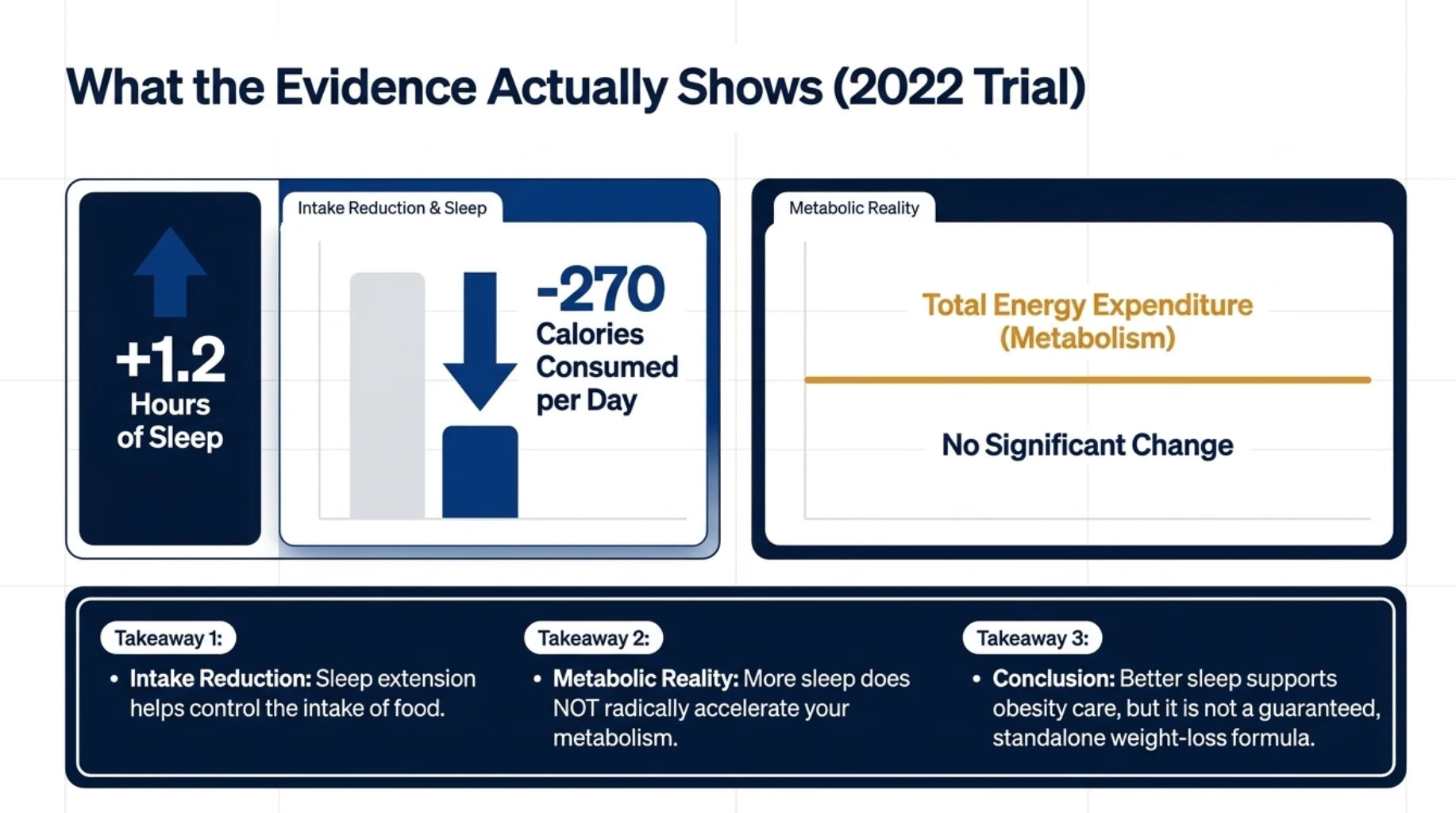
A 2022 randomized trial provides useful evidence. It enrolled 80 adults with overweight who habitually slept less than 6.5 hours per night.
The sleep-extension group increased sleep by approximately 1.2 hours per night and consumed about 270 fewer calories per day, on average, compared with the control group during the short intervention.
Total energy expenditure did not significantly increase. The finding therefore supports a possible effect on intake rather than a claim that more sleep substantially accelerates metabolism.
Why This Is Not a Guaranteed Weight-Loss Formula
The trial was short, involved adults aged 21–40 and did not establish what every person will experience over months or years.
It would be inappropriate to multiply the average calorie difference by a year and promise a particular weight reduction. Long-term responses involve adaptation and many other influences.
A 2026 systematic review also found mixed effects across different sleep interventions. Sleep improvement may support obesity care, but the evidence does not justify presenting sleep extension alone as a reliable weight-loss treatment.
Does Poor Sleep Cause Belly Fat?
A small controlled study published in 2022 examined 12 healthy adults during severe experimental sleep restriction. Compared with the control condition, participants gained more weight and accumulated more abdominal visceral fat.
This supports concern about substantial sleep restriction, but it cannot predict an individual’s fat distribution or the effect of an occasional late night.
Abdominal weight gain has multiple possible contributors. Sleep should be considered alongside eating patterns, activity, medicines and medical conditions.
How Much Sleep Should Adults Aim For?
Most adults need roughly seven to nine hours, although individual requirements vary. CDC guidance recommends at least seven hours for adults aged 18–60, with age-specific ranges for older adults.
Time in bed is not necessarily time asleep. Someone allowing seven hours in bed may obtain less sleep because of difficulty falling asleep or repeated waking.
Equally, consistently spending long periods in bed while remaining exhausted should prompt assessment rather than an instruction simply to sleep even longer.
Watch for Symptoms of Sleep Apnea
Loud habitual snoring, witnessed breathing pauses and gasping during sleep are important clues. Daytime sleepiness, fatigue and morning headaches may also occur.
These symptoms warrant discussion with a healthcare professional; a sleep study may be needed. They cannot be diagnosed from body weight or snoring alone.
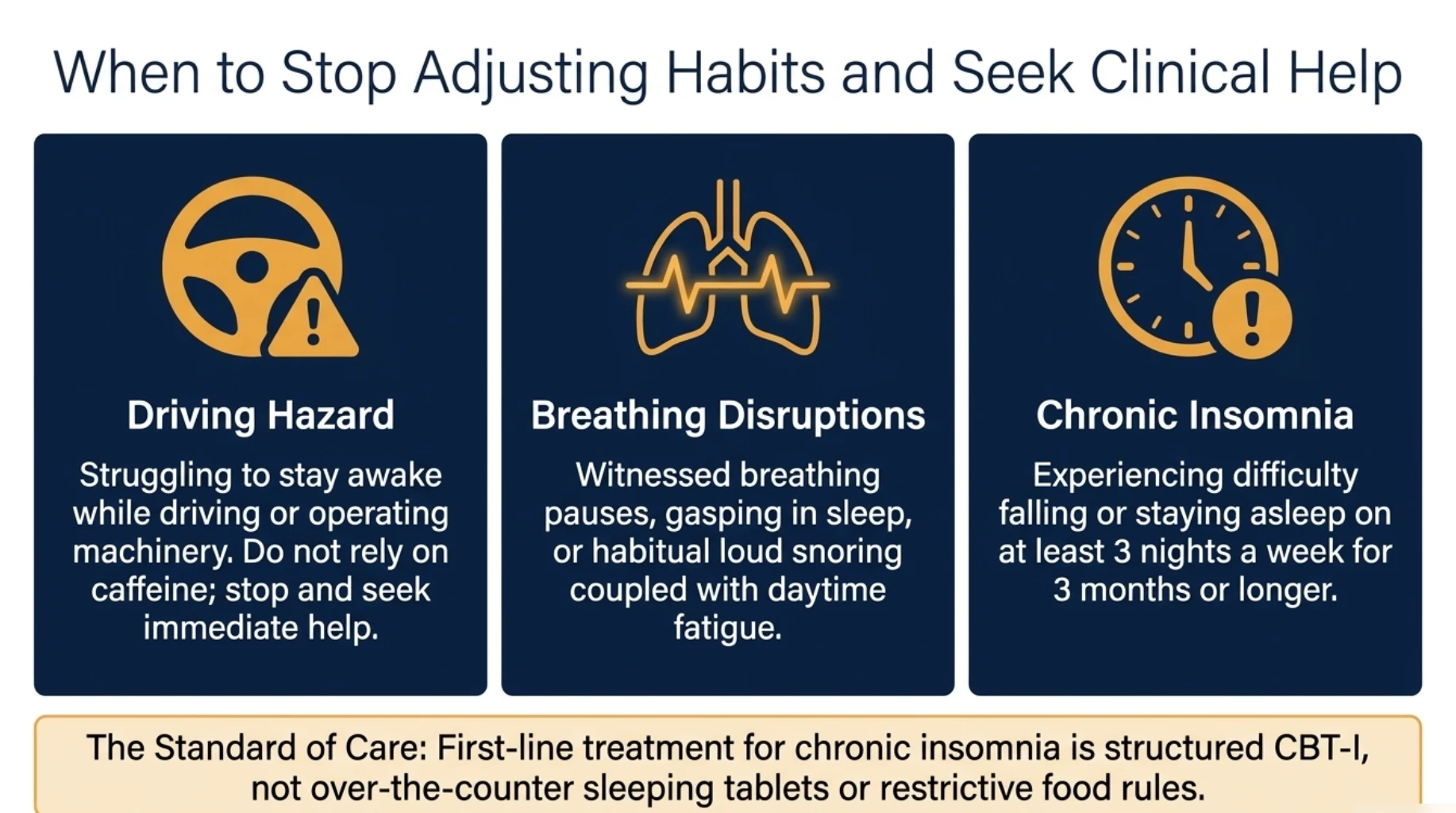
If you are becoming sleepy while driving, stop driving and seek medical assessment. Do not wait for weight loss before addressing a possible sleep disorder.
What Can You Observe Before Changing Your Routine?
For several typical days, record bedtime, waking time, estimated sleep, night-time interruptions and when hunger or snacking occurs.
Include both working days and days off. The aim is to identify patterns rather than achieve a perfect sleep score.
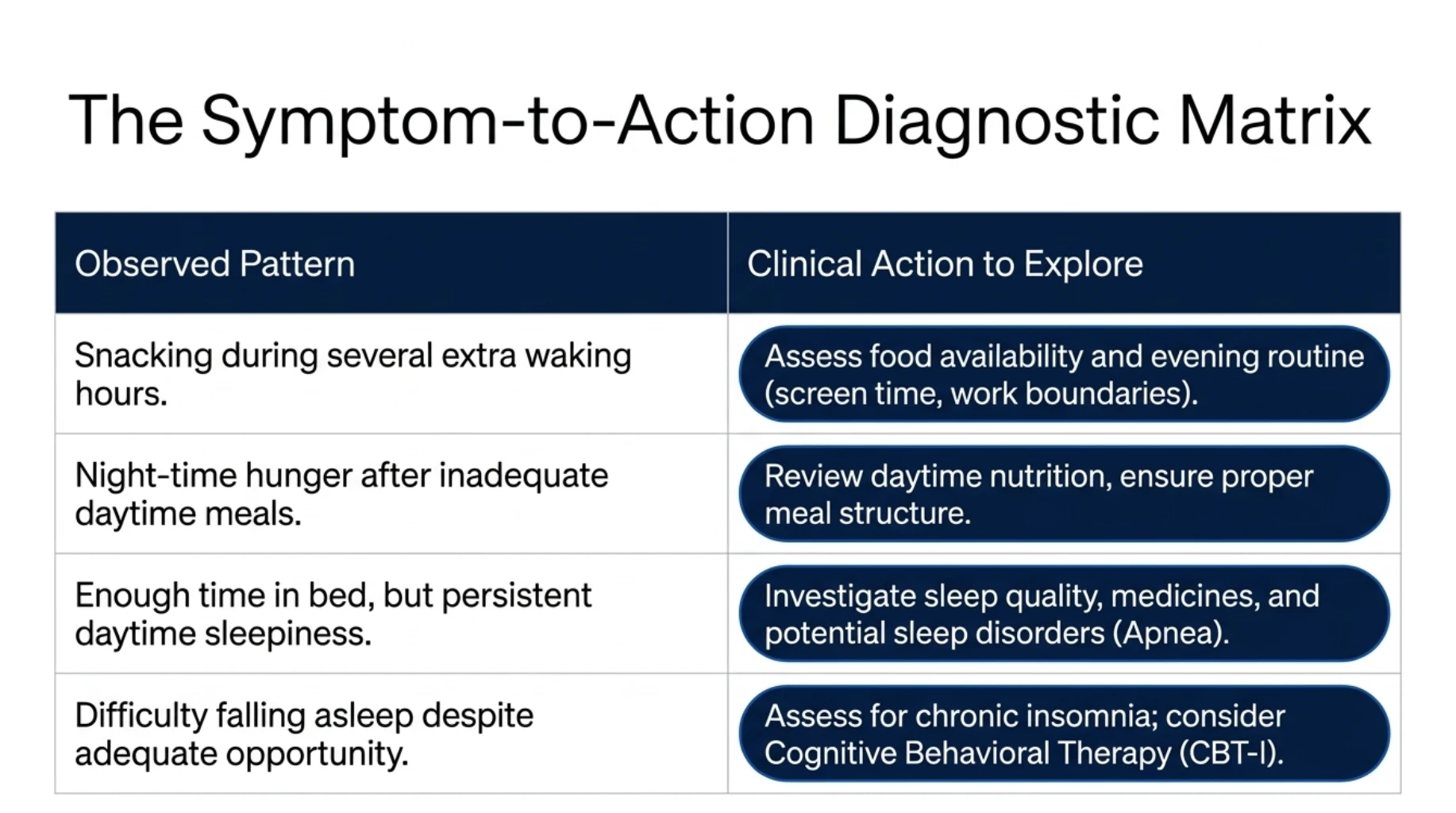
| What you notice | What to explore |
|---|---|
| Snacking during several extra waking hours | Meal adequacy, genuine hunger, food availability and the evening routine. |
| Repeated short nights followed by difficult food choices | Whether sleep opportunity and meal preparation can be improved together. |
| Enough time in bed but persistent daytime sleepiness | Sleep quality, medicines and possible sleep disorders. |
| Loud snoring, gasping or witnessed pauses | Assessment for obstructive sleep apnea. |
| Night shifts or caregiving interrupting sleep | A practical plan adapted to circumstances rather than a standard bedtime rule. |
How Can You Improve Sleep Without Making Weight Management More Complicated?
Start by identifying the main difficulty. Are you allowing too little time for sleep, struggling to sleep despite adequate opportunity, or waking repeatedly and feeling unrefreshed?
These situations need different responses. An earlier bedtime may help someone whose evenings regularly extend past midnight. It may be insufficient for someone with chronic insomnia or obstructive sleep apnea.
Choose a few practical changes and review their effect. Trying to perfect sleep, meals and exercise simultaneously can create another demanding routine that is difficult to maintain.
Give Sleep a Realistic Place in Your Schedule
Work backwards from your usual waking time and consider whether your evening leaves sufficient opportunity for sleep.
For example, if you must wake at 6:30 a.m., beginning to prepare for bed after midnight leaves little room for adequate sleep. Finishing one evening task earlier may be a more useful first step than buying a supplement.
Keep waking times reasonably consistent where circumstances allow. Shift work, childcare and caregiving may require a more flexible plan.
Reduce Activities That Keep Extending the Evening
Consider whether work messages, television or scrolling repeatedly delay bedtime. A defined stopping point can help protect the time you intended to spend sleeping.
A quieter period before bed, less screen exposure and a comfortable sleeping environment may support the transition to sleep.
These changes are supportive habits. They should not become a reason to blame yourself if an underlying sleep disorder remains untreated.
Review Caffeine and Alcohol Alongside Sleep
Caffeine can remain active for several hours. Tea, coffee, energy drinks and some soft drinks may therefore affect sleep even when consumed well before bedtime.
There is no single cut-off that suits everyone. If sleep is difficult, review afternoon and evening intake and consider reducing it gradually.
Alcohol may make you feel sleepy initially, but it can disrupt sleep later. It should not be used as a sleep treatment.
Count the Cups You Actually Drink
In an Indian working day, tea may accompany meetings, travel, breaks and evening conversation. It is easy to remember “two cups” while overlooking several smaller servings.
Record the time, serving size and whether sugar or other additions are included. This helps review both caffeine exposure and the wider eating pattern.
For example, replacing late-evening tea with a suitable caffeine-free option may be a manageable experiment. Assess whether sleep changes rather than assuming the substitution will automatically reduce weight.
How Should You Manage Evening Hunger?
First establish whether you have eaten adequately during the day. A person who skips breakfast, has a hurried lunch and eats a very small dinner may be genuinely hungry later.
Sleep advice should not be used to dismiss that hunger. Review meal structure and nutritional adequacy alongside the evening routine.
If eating mainly occurs while distracted and without much hunger, consider serving food deliberately rather than eating repeatedly from a large packet.
Plan Meals Around Your Actual Day
A practical dinner might include vegetables, a suitable protein source and an appropriate portion of familiar staples. Depending on preferences and medical needs, protein sources may include dal, beans, soy, curd, paneer, eggs, fish or poultry.
If a small evening snack is needed, plan it within the overall eating pattern. Examples for discussion include plain curd, milk if tolerated, or another suitable option that fits your preferences.
There is no universal requirement to stop eating at a particular clock time. Someone working overnight needs a different plan from someone sleeping at 10:30 p.m.
Avoid Turning One Late Night Into a Restriction Cycle
If you ate more than intended, return to your usual balanced routine. Skipping meals to compensate may leave you excessively hungry again later.
Repeated loss of control around food, significant distress or compensatory behaviours deserve professional assessment rather than increasingly strict food rules.
Does Exercise Help the Obesity and Sleep Connection?
Regular physical activity can support general health and sleep. The practical question is how to fit it into your routine without repeatedly sacrificing sleep time.
If a late workout leaves you alert and delays bedtime, consider adjusting its timing or intensity. If evening activity suits you and does not disturb sleep, there is no need to assume it is automatically unsuitable.
Walking breaks, suitable strengthening activities and movement during the day may be easier to maintain than relying on one demanding session.
Do Not Routinely Trade Sleep for Exercise
Waking much earlier for a workout while keeping the same late bedtime can create persistent sleep restriction.
Consider whether a shorter session, a different time or a revised evening schedule would better support both goals.
Exercise and sleep should fit within a sustainable plan. Neither needs to become a test of how much exhaustion you can tolerate.
When Does Insomnia Need Specific Treatment?
Difficulty sleeping despite sufficient opportunity is different from choosing or being required to stay awake.
If you repeatedly struggle to fall asleep, remain awake for long periods or find that sleep problems impair daytime functioning, arrange an assessment.
Chronic insomnia commonly involves symptoms on at least three nights a week for three months or longer. You do not need to wait three months before asking for help when symptoms are distressing.
CBT-I Is More Than General Sleep Advice
Cognitive behavioral therapy for insomnia, or CBT-I, is generally recommended as an initial treatment for chronic insomnia.
It combines structured approaches addressing sleep-related thoughts, behaviours and patterns. It can be delivered by appropriately trained professionals, including through suitable remote programmes.
Some components adjust time in bed. Do not independently undertake aggressive sleep restriction, particularly when you have significant daytime sleepiness or other medical concerns.
Medicines may be appropriate in selected circumstances, but a sleeping tablet or supplement should not replace assessment of persistent symptoms.
Why Sleep Apnea Assessment Matters in Obesity Care
Obstructive sleep apnea causes repeated upper-airway narrowing or closure during sleep. Obesity increases risk, although people without obesity can also develop it.
Important symptoms include habitual loud snoring, witnessed breathing pauses, gasping and persistent daytime sleepiness. Some people mainly describe fatigue or morning headaches.
Ask a partner or family member whether they have noticed interrupted breathing. Their observations can be useful, but a recording or questionnaire cannot establish the diagnosis by itself.
Do Not Wait for Weight Loss Before Seeking Help
A sleep study may be needed to establish whether sleep apnea is present and guide treatment.
Treatment may include positive airway pressure, an appropriate oral appliance or other approaches selected according to the findings. Weight management can form part of care, but it should not delay treatment of clinically important breathing interruptions.
Likewise, feeling better after weight loss does not establish that sleep apnea has resolved. Discuss reassessment before changing prescribed treatment.
Sleep Apnea Treatment Is Not a Guaranteed Weight-Loss Treatment
The immediate purpose of treatment is to improve breathing and address the consequences of the disorder.
Do not assume that using a CPAP device will automatically reduce appetite or produce substantial weight loss. Nutrition, activity and any indicated obesity treatment still need their own plan.
If a prescribed device is uncomfortable, discuss mask fit, side effects and practical difficulties with the treating team rather than abandoning care.
What Should a Medical Assessment Include?
A useful consultation explores sleep opportunity, timing, interruptions, daytime symptoms and how these relate to eating and activity.
Bring details of medicines, supplements, caffeine, alcohol, shift work and recent changes in health. Mention pain, reflux, nocturnal urination or mood symptoms that repeatedly disturb sleep.
Investigations should follow the clinical findings. Not everyone needs a sleep study or a large blood-test package.
| Pattern | What needs clarification | Possible next step |
|---|---|---|
| Regularly allowing too little time for sleep | Work demands, evening activities and practical constraints | Develop a realistic schedule that protects sleep opportunity. |
| Difficulty sleeping despite adequate opportunity | Insomnia symptoms, contributing conditions and daytime effects | Clinical assessment and consideration of CBT-I. |
| Snoring, gasping or witnessed breathing pauses | Likelihood of obstructive sleep apnea | Sleep assessment and diagnostic testing when indicated. |
| Night-time hunger after inadequate daytime meals | Meal adequacy and the overall eating pattern | Review nutrition alongside sleep. |
| Symptoms beginning after a medicine change | Possible treatment effects and other explanations | Review with the prescribing clinician. |
| Persistent sleepiness despite apparently sufficient sleep | Sleep quality, medicines and possible sleep disorders | Medical assessment rather than simply spending longer in bed. |
A Practical Starting Plan
For the next week, keep a brief record of bedtime, waking time, interruptions, caffeine and evening eating. Use the record to choose one sleep change and one food-related change that fit your circumstances.
For example, you might bring the last caffeinated drink earlier and prepare a balanced dinner before beginning evening work. Someone else may need help with shift scheduling or an assessment for repeated waking.
Review whether the changes improve daytime alertness, the evening routine or the manageability of hunger. A week can reveal useful patterns, but it is not enough to judge long-term weight outcomes.
Monitor More Than the Scale
Useful questions include whether you wake more refreshed, feel less sleepy during work and find unplanned snacking easier to manage.
If weight reduction is an appropriate goal, continue monitoring the longer-term trend under comparable conditions. Better sleep does not guarantee immediate weight loss.
Persistent symptoms deserve reassessment even if one part of the routine has improved.
When Should You Seek Help Promptly?
Arrange a medical review for habitual loud snoring with daytime symptoms, witnessed breathing pauses, persistent insomnia or unexplained sleepiness.
If you are struggling to stay awake while driving or operating machinery, stop the activity and seek assessment. Do not rely on caffeine or an open window to make it safe.
Severe breathing difficulty, chest pain, fainting or sudden confusion requires emergency care at the nearest hospital.
Frequently Asked Questions About Obesity and Sleep
Does poor sleep always increase hunger?
No. Responses vary. Some studies show more hunger or snacking, while others find increased intake without a matching change in reported appetite. Poor sleep is a possible contributor, not a diagnosis of the cause of every craving.
Will sleeping eight hours make me lose weight?
Not automatically. Improving insufficient sleep may support eating behaviour and health, but weight change also depends on nutrition, activity, medicines and other factors. Individual sleep needs vary.
Can I fix sleep-related hunger with a supplement?
No supplement should be assumed to correct the problem. Review sleep opportunity, meal adequacy and possible sleep disorders. Discuss products with your clinician rather than using them as a substitute for assessment.
Should I avoid food completely after dinner?
There is no universal rule. Consider whether hunger reflects inadequate earlier intake, a long waking period or habitual distracted eating. A planned snack may fit some people’s needs.
Is snoring normal if I have obesity?
Snoring is common, but repeated loud snoring with breathing pauses, gasping or daytime sleepiness needs assessment. Body weight alone cannot establish whether sleep apnea is present.
Can I have sleep apnea without obesity?
Yes. Obesity is one risk factor, but other anatomical and clinical factors can contribute. Relevant symptoms deserve assessment at any body size.
Do I need ghrelin, leptin or cortisol testing?
These tests are not a routine starting point for ordinary sleep-related appetite concerns. Testing should address a specific clinical question. A history of sleep, eating, medicines and symptoms is usually more useful initially.
What if I work night shifts?
You need a plan adapted to your work and sleep periods. Discuss protected sleep time, caffeine timing and planned meals. Advice designed for someone sleeping at night may not fit your circumstances.
Should I stop CPAP once I lose weight?
No. Discuss reassessment with the treating clinician before changing prescribed sleep-apnea treatment. Weight change or reduced snoring alone does not confirm resolution.
Sleep and Weight Management Assessment in Dwarka
Dr. Pankaj Kumar, General & Lifestyle Physician, provides assessment of weight concerns and associated metabolic symptoms in Dwarka, New Delhi.
A consultation can review sleep patterns, appetite, medicines and relevant health conditions. Suspected sleep disorders may require a sleep study or specialist referral.
Read more about the weight management programme.
Prepare for your consultation: Bring prescriptions, previous reports and a short record of sleep, caffeine and evening eating. Mention any witnessed breathing pauses or difficulty staying awake.
About the Author
Dr. Pankaj Kumar
MBBS, DNB Family Medicine, DNHE
General & Lifestyle Physician
Dr. Pankaj Kumar is the founder of Diet Plus Minus. His clinical interests include diabetes, medical weight management, fatty liver and related metabolic disorders.
Medical Disclaimer
This article provides general education for adults and does not replace individual medical assessment. Do not start sleeping medicines, undertake sleep-restriction therapy or change prescribed sleep-apnea treatment without appropriate advice. Significant daytime sleepiness and breathing-related sleep symptoms require assessment.
References
- Tasali E, et al. Effect of Sleep Extension on Objectively Assessed Energy Intake Among Adults With Overweight in Real-life Settings: A Randomized Clinical Trial. JAMA Internal Medicine. 2022;182(4):365–374. Read the trial.
- Tajiri E, et al. Effects of sleep restriction on food intake and appetite under free-living conditions: A randomized crossover trial. Appetite. 2023;189:106998. Read the trial.
- Covassin N, et al. Effects of Experimental Sleep Restriction on Energy Intake, Energy Expenditure, and Visceral Obesity. Journal of the American College of Cardiology. 2022;79(13):1254–1265. Read the trial.
- The Role of Sex in the Impact of Sleep Restriction on Appetite- and Weight-Regulating Hormones in Healthy Adults: A Systematic Review of Human Studies. 2025. Read the review.
- Does Sleep Curtailment Stimulate Appetite, Motivation to Eat and Dietary Intake in Humans? A Narrative Synthesis of Evidence and Considerations for Future Studies. 2026. Read the review.
- The Effect of Behavioral Sleep Interventions on Measures of Obesity, Dietary Intake and Physical Activity in Adults With Poor Sleep Health: A Systematic Review, Meta-Analysis and Meta-Regression Analysis. 2026. Read the review.
- Centers for Disease Control and Prevention. About Sleep. 2024. Read the resource.
- National Heart, Lung, and Blood Institute. Insomnia: Treatment. Read the resource.
- National Heart, Lung, and Blood Institute. Sleep Apnea: Symptoms. Updated 2025. Read the resource.
- National Heart, Lung, and Blood Institute. Sleep Apnea: Treatment. Read the resource.

Written by Dr. Pankaj Kumar
General & Lifestyle Physician in Dwarka Sector 6, New Delhi · MBBS, DNB (Family Medicine), DNHE · 16 years of experience.
About the doctor →Book a consultation → Beyond Blood Sugar
 The 90-Day Prediabetes Turnaround
 The Indian Diabetes Diet Reset
 Eat to Beat Gout
 Why Is My Hair Falling?
 The 30-Day Inflammation Reset