You have reduced your portions, stopped ordering dessert and started avoiding second helpings. Yet the weighing scale seems unchanged.
Eating less but not losing weight can be frustrating, especially when the effort feels substantial. It does not automatically mean you lack discipline, have a hormonal disorder or have permanently damaged your metabolism.
Sometimes the explanation is that a smaller food intake has not created the energy deficit you expected. Sometimes daily movement has fallen or your energy needs have changed after earlier weight loss. In other situations, temporary changes in body water make the scale difficult to interpret.
The useful response is a structured review of the pattern. Repeatedly cutting food without understanding what is happening can leave you hungry, tired and less able to maintain the plan.
This article explains nine possible reasons and how to decide what deserves adjustment or medical assessment.
Eating Less but Not Losing Weight: What Does “Less” Mean?
“Less” usually means less than you previously ate. It does not necessarily mean less energy than your body currently uses.
For example, reducing an intake that was causing gradual weight gain may bring you closer to weight maintenance. That is still a change, but it may not produce ongoing weight loss.
Similarly, smaller portions can contain substantial energy when foods are concentrated in oil, ghee, sugar or other calorie-dense ingredients.
Body-fat reduction requires a sustained energy deficit over time. However, estimating both intake and expenditure is difficult, and the weighing scale does not measure body fat alone.
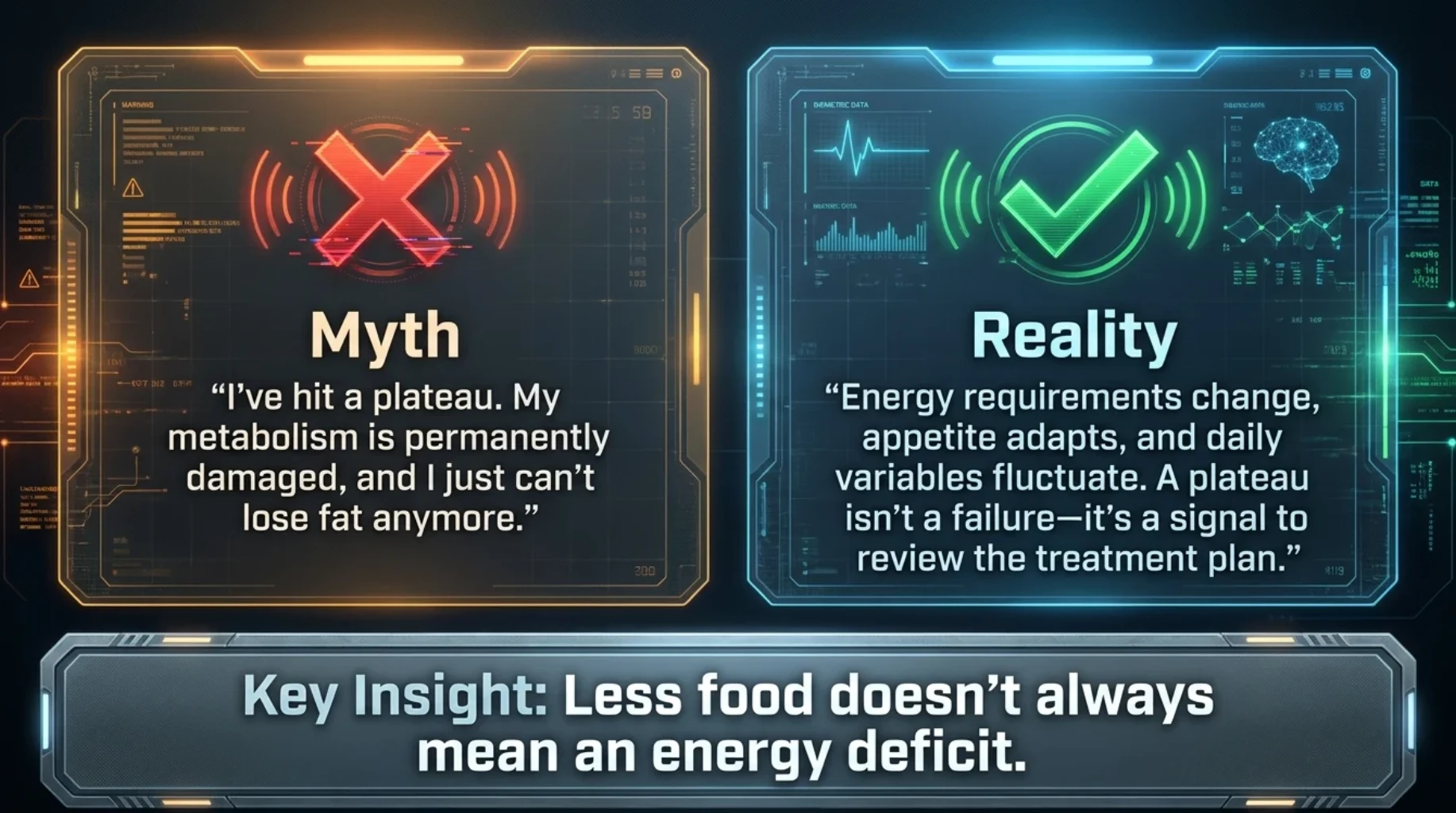
Eating Less but Not Losing Weight Does Not Prove a “Broken Metabolism”
Energy requirements differ between people and change with body size, activity and weight loss. Appetite and behaviour also respond to dieting.
These influences deserve attention, but they do not establish that your body can no longer lose fat. A plateau is a reason to review the treatment plan rather than conclude that progress is impossible.
Before reducing food further: Check how long the weight has been stable, whether measurements are comparable, what the whole week’s intake looks like and whether your daily activity has changed.
Reason 1: Smaller Meals May Still Contain More Energy Than Expected
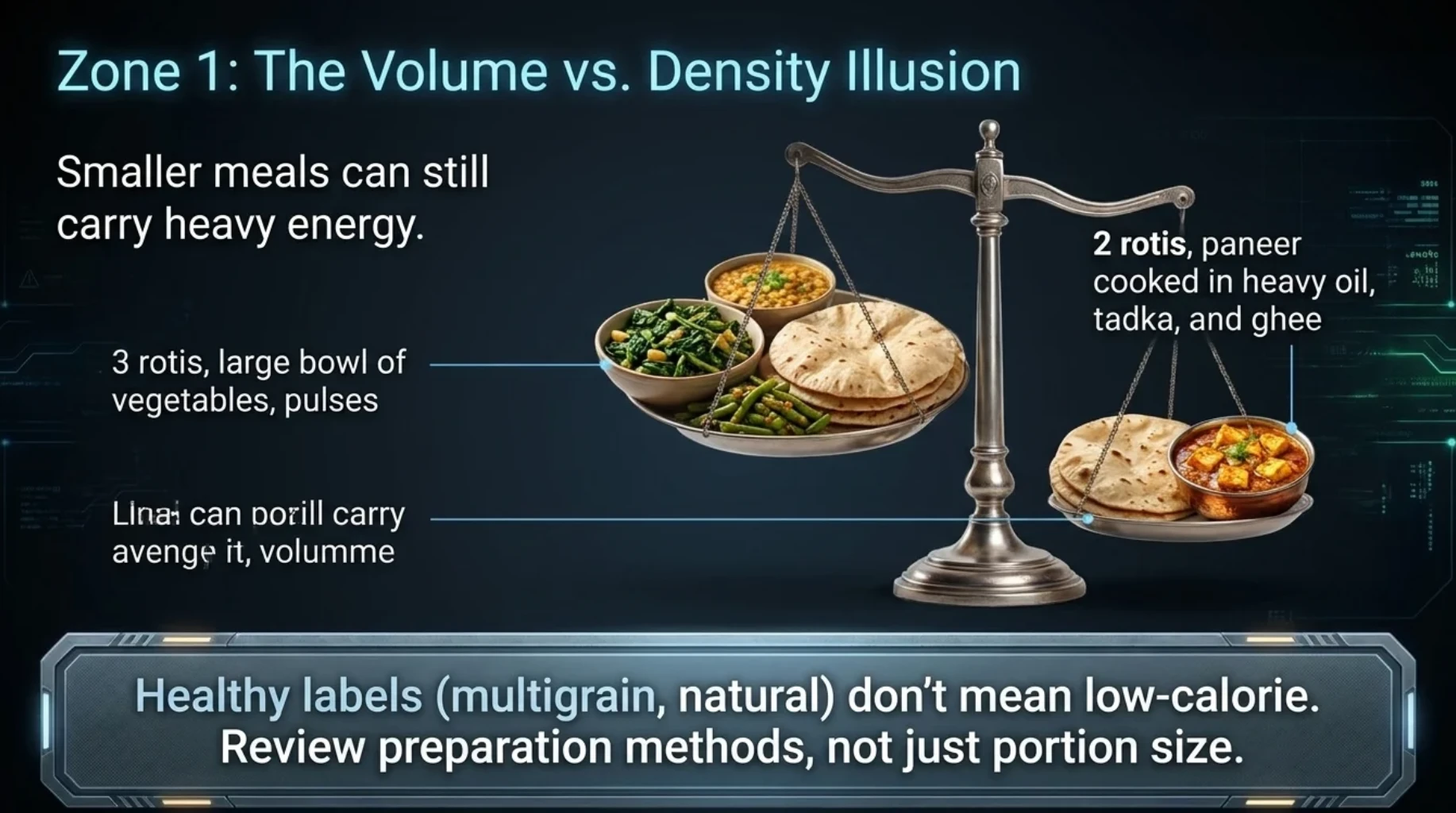
Meal size and calorie content are related, but they are not the same thing. A small serving prepared with generous oil can provide more energy than a larger meal containing vegetables, pulses and an appropriate protein source.
For an Indian household, cooking fat is a useful place to review. Oil used in tadka, ghee on roti, butter in a sandwich and fried accompaniments can contribute without making the plate appear much larger.
Nuts, seeds, peanut butter and cheese can also contribute meaningful energy. Their nutritional value does not mean portions are irrelevant.
Review Preparation Alongside Portion Size
Consider a person who reduces lunch from three roti to two but adds a larger portion of paneer cooked in oil, a sweetened beverage and an evening snack. Their eating pattern has changed, but the total energy reduction may be smaller than expected.
This is an illustration, not a reason to avoid paneer or roti. The question is how the entire meal is assembled.
For a few typical days, record what was eaten and how it was prepared. Household measures, food labels and photographs can help a clinician or dietitian identify changes worth making.
You do not need to measure every ingredient indefinitely. A short review can improve understanding without turning meals into a permanent calculation exercise.
Reason 2: Drinks and Small Extras May Be Missing From the Picture
Many people remember breakfast, lunch and dinner accurately but overlook what happens between them.
Repeated sweetened tea, coffee additions, juice, alcohol, biscuits, namkeen, sauces and small bites while cooking can add up. Because each item seems minor, the combined contribution may be underestimated.
Even a food record can miss these details if it is completed from memory at the end of a busy day.
A “Healthy” Label Does Not Establish a Low-Calorie Product
Words such as “multigrain,” “natural,” “protein” or “no added sugar” describe particular features. They do not tell you how a product fits into your overall intake.
For example, a smoothie may contain milk, fruit, oats, nut butter and honey. It can function more like a meal than a small drink, depending on the recipe and serving size.
Review the actual ingredients and portion rather than judging the product only by its name.
A useful food record includes drinks, additions and tasting portions. Its purpose is to make the pattern visible, not to assign blame.
Reason 3: The Weekly Pattern May Differ From Your Working-Day Routine
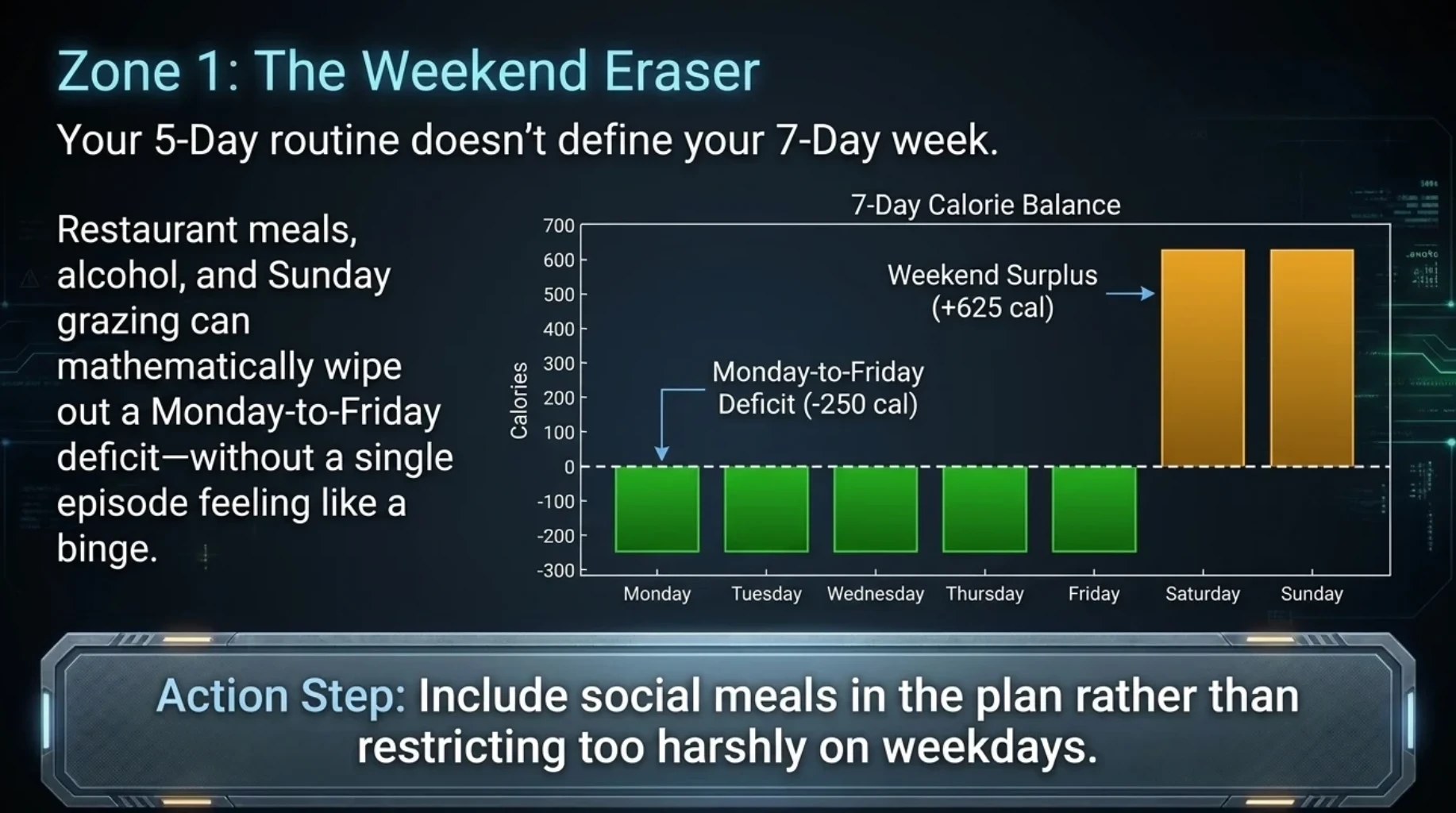
A tightly controlled Monday-to-Friday routine does not describe the entire week.
Restaurant meals, family gatherings, alcohol, takeaway food and grazing on days off may reduce the weekly energy deficit. This can happen without a single episode that feels like overeating.
Consider an illustrative calculation: eating approximately 250 calories below your needs on five days creates a 1,250-calorie deficit. Eating about 625 calories above your needs on each of the other two days would offset it.
Real energy balance is more complicated than a simple spreadsheet, and these figures are not a prediction of individual weight change. They demonstrate why the whole week matters.
Include Social Meals in the Plan
Rather than treating every celebration as a failure, discuss how to accommodate it. A realistic plan can include eating out, family meals and occasional favourite foods.
Ask which choices are easiest to repeat: a different drink, a suitable portion, fewer unplanned extras or a more satisfying meal earlier in the day.
If restriction during the week repeatedly leads to intense hunger or loss of control later, the restriction itself needs review. Making the working-day diet harsher may worsen the cycle.
Reason 4: Your Energy Requirements Have Fallen After Weight Loss
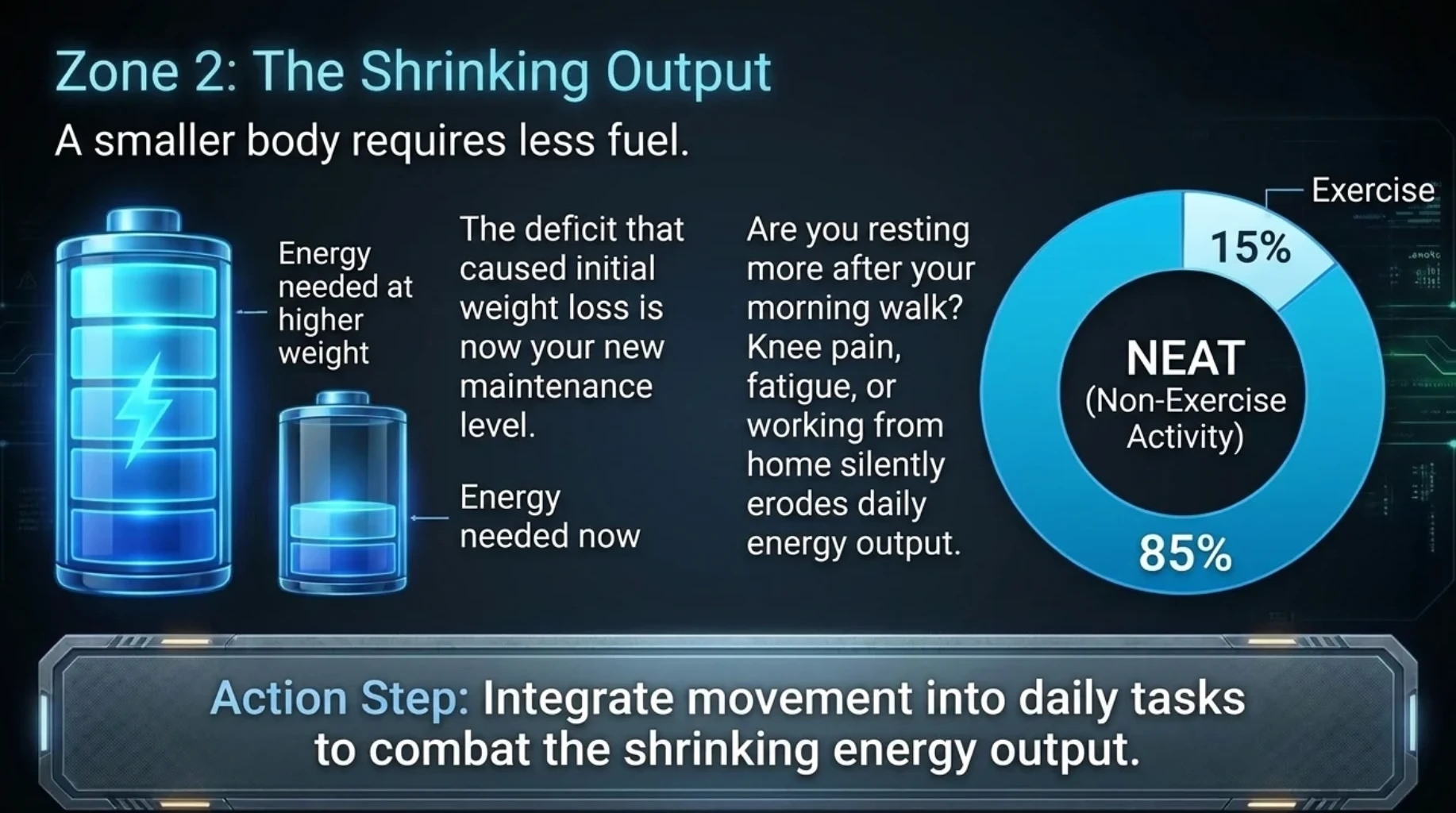
If you have already lost weight, your current body generally needs less energy than it did at a higher weight. Maintaining a smaller body and moving it through daily activities usually requires fewer calories.
A routine that previously produced a clear deficit can therefore produce a smaller deficit later. Eventually, weight may stabilize.
This is one reason weight loss does not continue at the same speed indefinitely.
Metabolic Adaptation Is Real, but Its Size Varies
Some people also experience a reduction in energy expenditure beyond what would be expected from changes in body composition alone. This is called adaptive thermogenesis.
A systematic review published in 2022 found substantial variation between studies. Better-designed studies often reported smaller or non-significant effects, and adaptation appeared less evident after weight stabilization.
It is therefore inaccurate to assume that every plateau represents a large, permanent metabolic shutdown.
Appetite responses also matter. A 2024 modelling study examined how increased appetite during weight loss can contribute to the timing of plateaus. Such models help explain average patterns but cannot diagnose the cause of an individual person’s plateau.
Reassess the Plan Without Automatically Making It Extreme
Review your current weight, activity, intake and health goals with the treating professional. The next step may involve modest adjustments, additional support or reconsideration of treatment.
If you are already persistently hungry, weak or eating a very limited range of foods, further restriction should not be the automatic response.
Reason 5: Daily Movement May Have Decreased
Exercise is only one part of daily energy expenditure. Walking between tasks, shopping, housework, standing and moving around the workplace contribute too.
You may continue the same morning walk while becoming more sedentary during the rest of the day. Working from home, long commutes, knee pain or fatigue can all change the pattern.
If eating less leaves you tired, you may also spend more time resting without consciously deciding to reduce activity.
Look Beyond the Workout
Think about an ordinary day. How much time is spent seated? Have you stopped walking to nearby shops? Are you resting more after exercise? Has pain changed what you can do?
These questions can reveal practical opportunities. Short movement breaks, suitable walking routes and activity adapted to joint symptoms may be easier to maintain than another exhausting workout.
Step counts can help compare your own routines, but they do not capture every activity. Likewise, a watch’s estimated calorie expenditure should not be treated as an exact measurement or an automatic allowance for extra food.
A Practical Review Before Changing the Plan
Start with comparable weight measurements and a short record of meals, drinks and activity. Include a weekend or a day when your routine changes.
| Area | Useful question | Practical next step |
|---|---|---|
| Food preparation | Have oil, ghee, sauces or concentrated ingredients changed? | Record preparation methods as well as portions. |
| Drinks and extras | Does the record include everything between meals? | Include beverages, additions and tasting portions. |
| Weekly routine | Are weekends and social meals represented? | Review several typical days rather than one ideal day. |
| Previous weight loss | Am I using a plan designed for a higher body weight? | Reassess current needs and treatment goals. |
| Daily movement | Has activity outside exercise decreased? | Compare usual routines and address barriers such as pain or fatigue. |
Make Weight Measurements Comparable
Use the same scale on a firm, level surface, at a consistent time of day and in similar clothing. Morning measurements are often convenient.
Look at the trend over several weeks rather than reacting to one reading. If weighing causes distress or encourages restrictive behaviour, discuss another monitoring approach with your clinician.
Reason 6: Water and Bowel Changes May Be Hiding the Trend
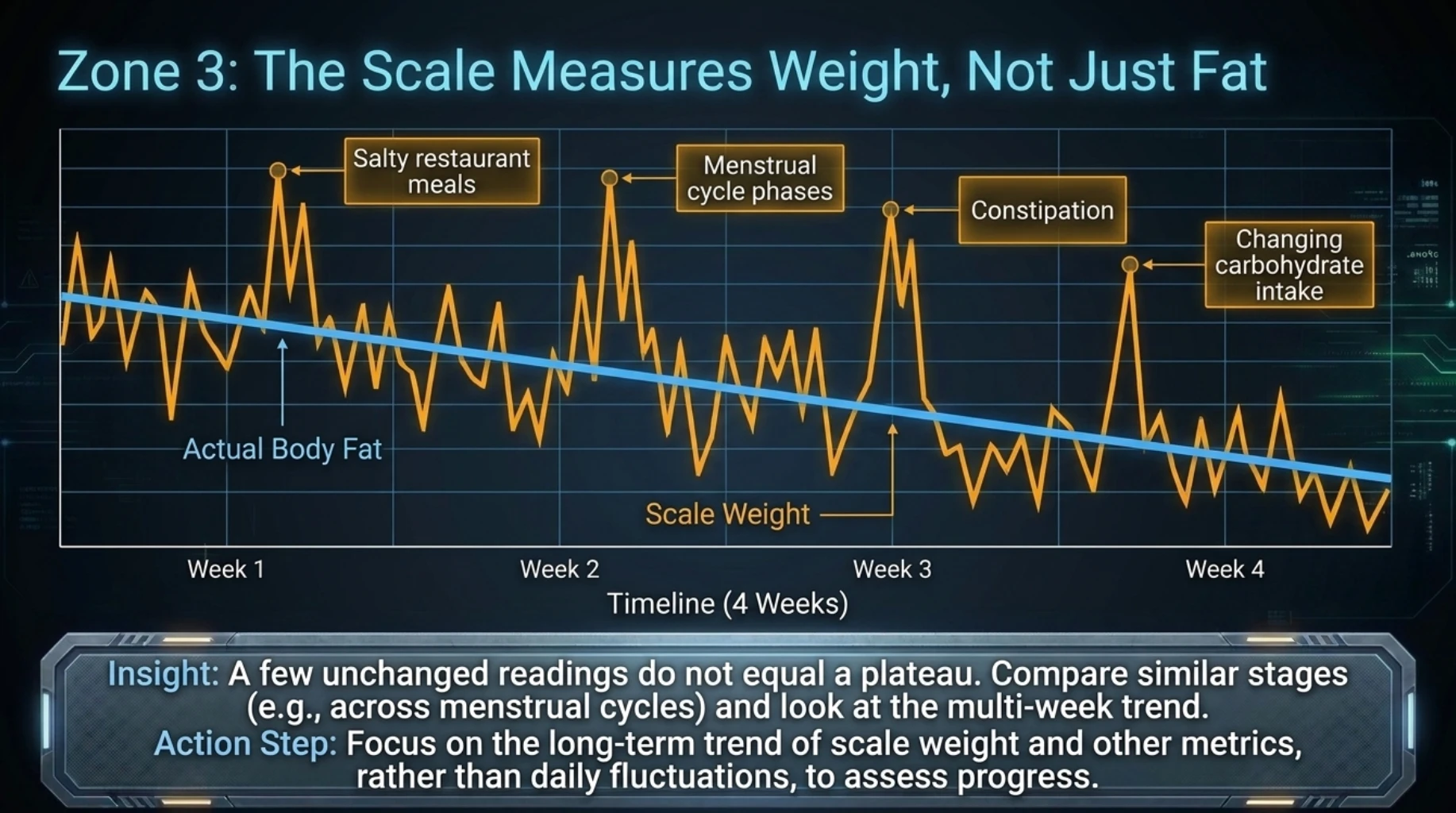
The weighing scale measures your total body weight, including body water, food within the digestive tract and stored carbohydrate. It cannot tell you how much body fat changed since yesterday.
Temporary fluctuations can therefore obscure a gradual reduction in fat. A salty restaurant meal, menstrual-cycle changes, constipation or a change in carbohydrate intake may affect the reading without representing equivalent fat gain.
This is particularly frustrating when you have followed your plan carefully and expected the next measurement to confirm progress.
Eating Less but Not Losing Weight Over a Few Days Is Not Necessarily a Plateau
A handful of measurements cannot reliably establish that treatment has stopped working. Compare readings taken under similar conditions and consider the trend over several weeks.
If you menstruate, note where measurements fall within your cycle. Comparing similar stages across successive cycles may provide more useful context than comparing two isolated days.
Likewise, if constipation began after changing your diet, review fibre, fluids, activity and medicines rather than treating the scale increase as proof of fat gain.
Temporary fluctuations cannot explain an unchanged trend indefinitely. If weight and waist measurements remain stable over time, review the broader plan rather than repeatedly assuming water is hiding progress.
Swelling Needs a Different Assessment
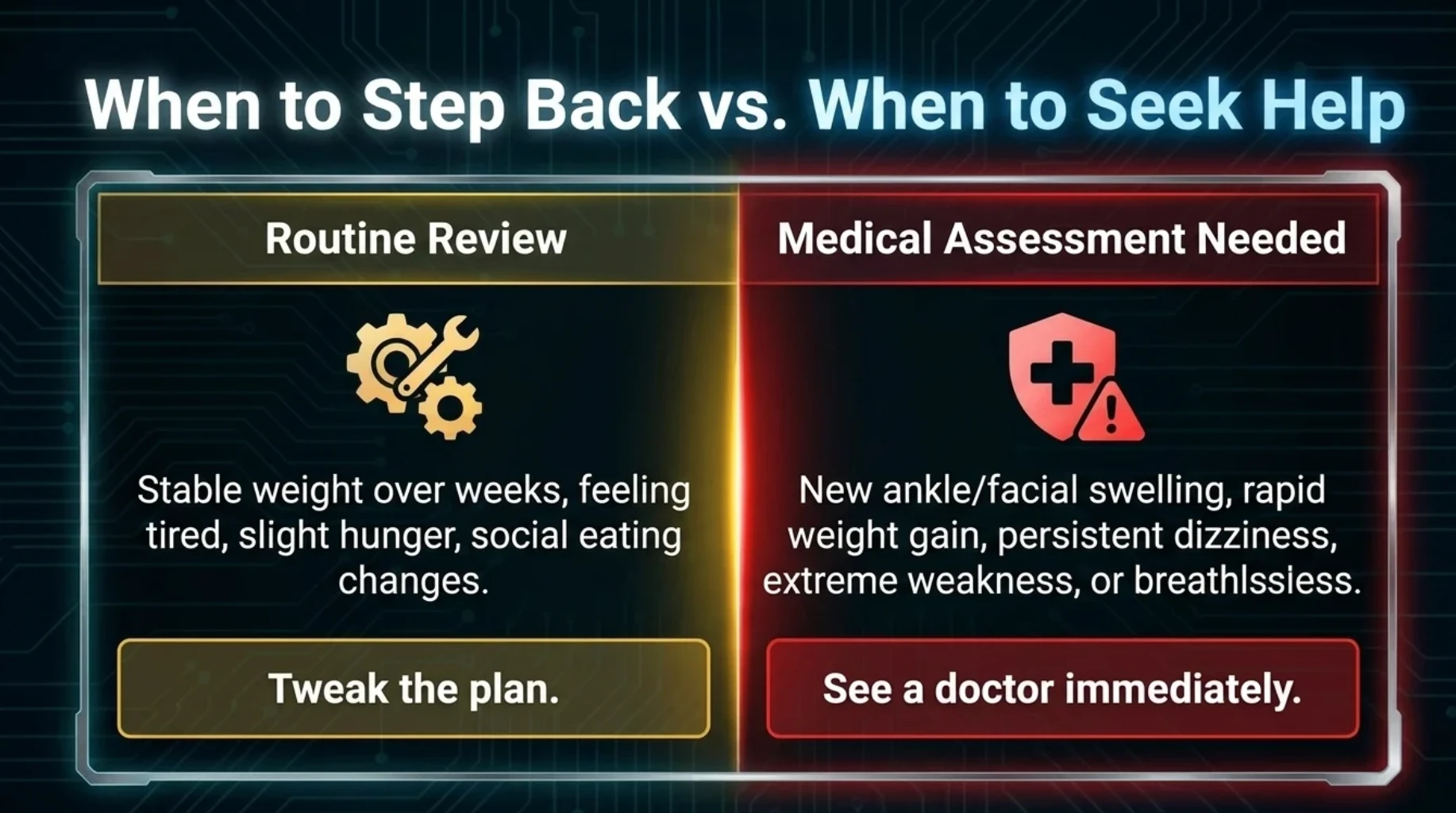
New ankle swelling, facial puffiness or increasing abdominal swelling deserves medical attention, particularly when weight rises rapidly.
Fluid retention can be associated with medicines or conditions affecting the heart, kidneys, liver or circulation. Do not respond simply by restricting food further or taking a “water tablet” without advice.
Swelling accompanied by breathlessness, chest pain, fainting or confusion requires urgent medical care.
Reason 7: Poor Sleep May Be Making the Plan Harder to Maintain
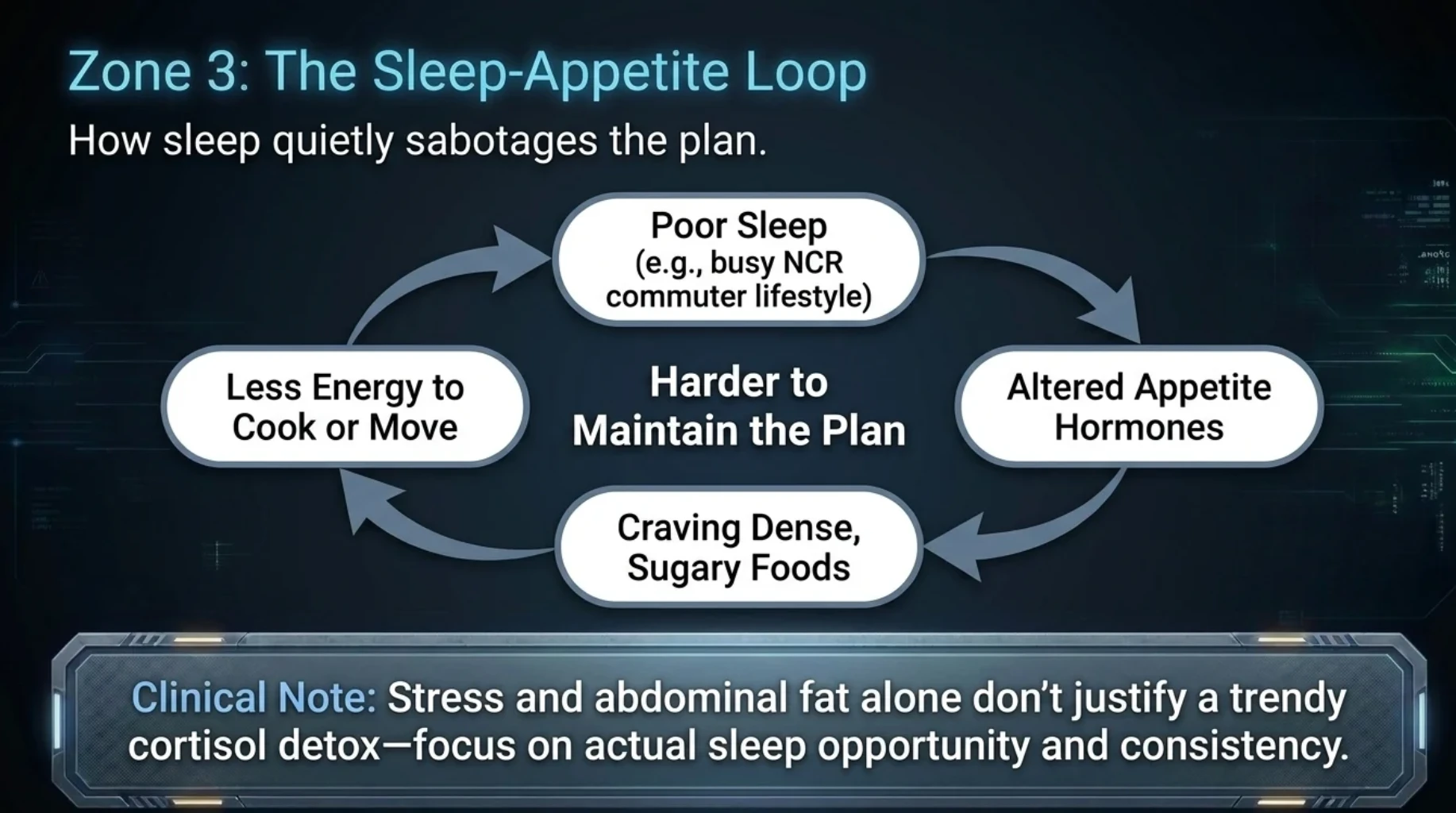
Insufficient or disrupted sleep can influence appetite, food choices and daytime functioning. You may feel hungrier, find snacks more appealing or have less energy for shopping, cooking and movement.
This does not mean one late night prevents fat loss. The concern is a repeated pattern that makes the overall treatment plan harder to follow.
For someone working long hours in Delhi NCR, late dinners, commuting and screen time may gradually compress sleep without an obvious change in routine.
Better Sleep May Help Intake Without “Speeding Up” Metabolism
A 2022 randomized trial studied 80 adults with overweight who habitually slept less than 6.5 hours per night. A sleep-extension intervention reduced average energy intake over a short period, without a significant increase in total energy expenditure.
The finding supports attention to sleep, but it does not establish a guaranteed amount of weight loss from sleeping longer. The study was short and involved a selected group.
Review your actual sleep opportunity and consistency. If you snore loudly, wake gasping or remain unusually sleepy despite enough time in bed, discuss whether a sleep disorder needs assessment.
Stress may also change eating, sleep and activity patterns. However, ordinary stress or abdominal fat alone does not establish a cortisol disorder or justify a “cortisol detox.”
Reason 8: A Medicine May Be Affecting Weight or Appetite
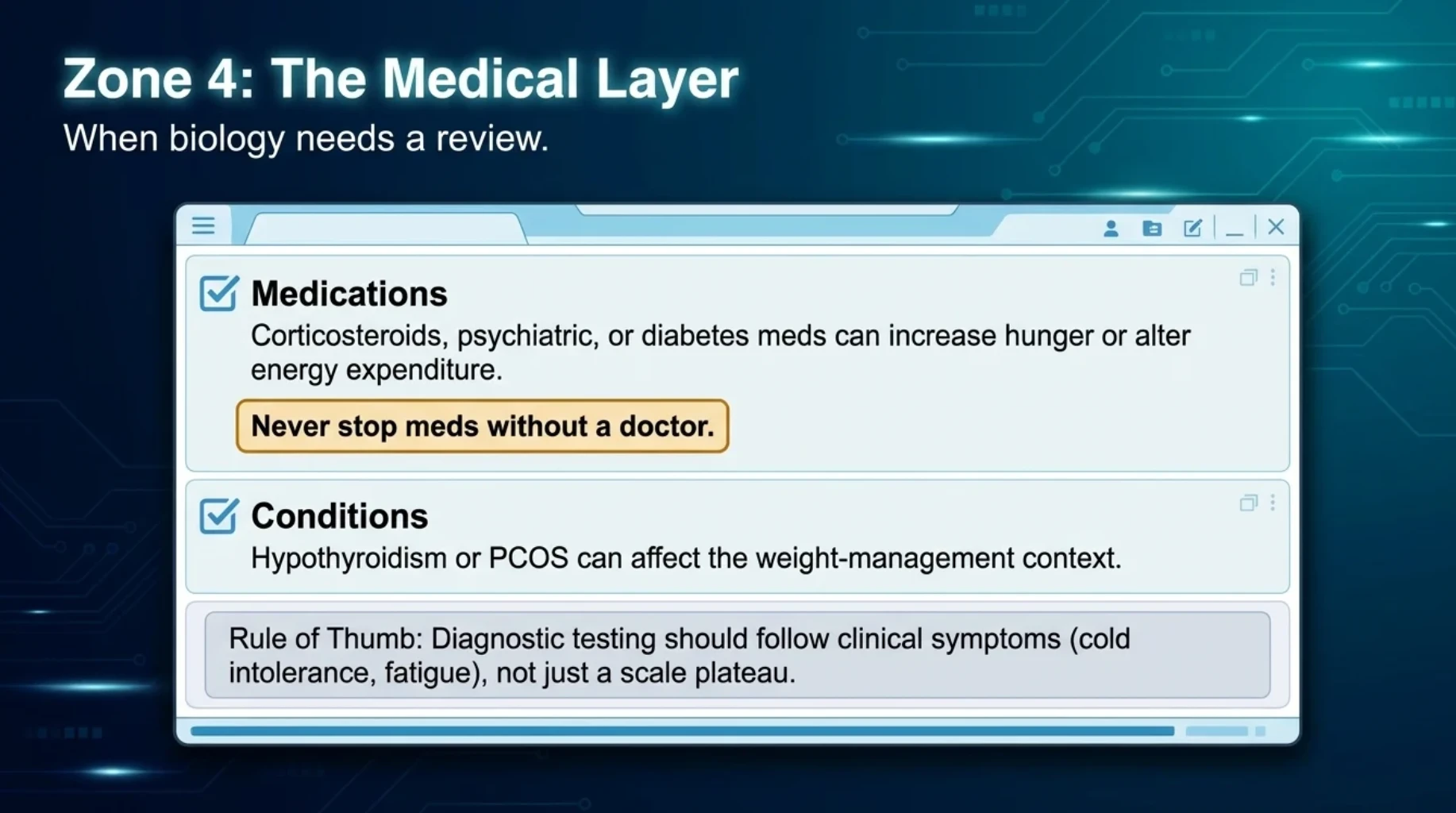
Some medicines can increase hunger, influence energy expenditure or contribute to weight gain. Examples include certain corticosteroids, psychiatric medicines, epilepsy treatments and diabetes medicines.
The effect varies between medicines and individuals. A treatment that is important for your health should not automatically be blamed or stopped because weight loss has slowed.
Look for a Timeline
Did the difficulty begin after starting a medicine or increasing its dose? Did appetite change? Did swelling develop? These details help the prescriber assess whether treatment is contributing.
Bring a complete list, including intermittent steroid tablets or injections, over-the-counter products and supplements. Include the dose and approximate starting date where possible.
Sometimes an alternative treatment or a dose adjustment is appropriate. In other cases, continuing the medicine remains the safest choice while the weight-management plan is adapted.
Do not independently stop insulin, steroids, antidepressants or other prescribed medicines.
Reason 9: A Medical Condition or an Inadequately Supported Plan Needs Review
Persistent difficulty losing weight may justify assessment for a contributing medical condition, particularly when other symptoms are present.
Hypothyroidism is one possibility. Compatible symptoms can include cold intolerance, constipation, dry skin, fatigue and menstrual changes. These symptoms are common, however, and do not diagnose thyroid disease.
PCOS, pain that limits movement, depression and other conditions may also affect the context in which weight management takes place. The assessment should establish what is actually present rather than label every plateau as “hormonal.”
Testing Should Follow the Clinical Question
If thyroid dysfunction is suspected, a doctor may request TSH and additional thyroid testing where appropriate. Other investigations depend on symptoms, examination, existing conditions and previous reports.
There is no universal hormone panel that explains every weight-loss plateau. Routine testing of multiple hormones can produce confusing results without identifying a useful treatment.
A normal thyroid result also does not mean your experience should be dismissed. Nutrition, sleep, medicines, activity and the suitability of the treatment plan still deserve review.
Some People Need More Than Repeated Diet Advice
If an appropriate lifestyle approach has been started and reviewed but progress remains insufficient, discuss whether additional treatment is suitable.
Prescription weight-management medicines or specialist referral may be appropriate for selected adults. Eligibility, benefits, risks, affordability and follow-up require an individual medical decision using the relevant Indian prescribing requirements.
A plateau alone is not a reason to start an injection, and needing additional treatment is not evidence of personal failure.
Does Eating Too Little Stop Weight Loss?
Severe restriction can reduce spontaneous movement, increase hunger and compromise nutritional intake. Weight loss itself also reduces energy requirements. Together, these changes can make a plan difficult to sustain.
However, “starvation mode” is often described inaccurately. The body does not create fat without an energy source, and eating more does not automatically restart fat loss.
Sometimes increasing intake is clinically appropriate because a person is undernourished, symptomatic or following an unsafe plan. That decision concerns health and treatment quality, not a promise that extra calories will cause weight loss.
Very Restrictive Diets Require Appropriate Supervision
NICE guidance places low-energy and very-low-energy diets within structured treatment with clinical support. They should not be used as an indefinite response to a plateau.
Before intensifying restriction, review nutritional adequacy, medicines, eating-disorder risk and the longer-term maintenance plan.
If you develop persistent dizziness, marked weakness, recurrent low glucose readings or difficulty eating adequately, seek medical advice rather than continuing to reduce food.
What Should You Do Next?
Begin with a short review of your usual routine. Include several typical days, drinks, cooking methods, weekends, sleep and activity. Review the weight trend using comparable measurements.
Then choose a small number of changes linked to what you find. The next step should address the likely barrier rather than make every part of the plan more demanding.
| What you notice | A useful response | What to clarify |
|---|---|---|
| Frequent drinks, snacks or additions missing from the record | Record the whole eating pattern for a few typical days. | Which changes would meaningfully affect intake? |
| Persistent hunger followed by overeating | Review meal adequacy, structure and the degree of restriction. | Is the plan sustainable and nutritionally appropriate? |
| Much less movement outside exercise | Identify manageable activity opportunities and address pain or fatigue. | What starting level is safe and realistic? |
| A few unchanged readings around menstruation or constipation | Monitor under comparable conditions and review the accompanying symptoms. | Is this temporary variation or a persistent trend? |
| Weight changes after a prescription or dose change | Arrange a medicine review. | Could treatment be contributing, and are adjustments appropriate? |
| Ongoing difficulty despite a structured, reviewed plan | Seek a comprehensive medical assessment. | Is additional support or treatment indicated? |
Protect Nutrition While Adjusting Portions
A practical Indian eating pattern can include vegetables, appropriate portions of roti or rice, and suitable protein sources such as dal, beans, soy, curd, paneer, eggs, fish or poultry.
Consider what is missing before removing more food. Someone skipping breakfast and eating a small lunch may need help organizing satisfying meals rather than another list of prohibited ingredients.
Food choices and portions should reflect your medical needs and preferences. Kidney disease, pregnancy, eating disorders and other circumstances require tailored advice.
How Should Progress Be Judged?
Weight remains useful when weight reduction is an appropriate goal, but it should be interpreted alongside waist measurements, physical function and relevant health markers.
For example, improved strength or glucose control can be meaningful even when scale changes are modest. These improvements do not prove that fat loss is occurring, but they help assess the wider value of treatment.
A plan that produces rapid weight loss while causing weakness, inadequate intake or repeated hypoglycemia needs review.
Agree with your clinician on what will be measured, when it will be reviewed and which findings should prompt an earlier appointment.
When Should You Seek Medical Assessment?
Arrange a consultation if the plateau persists despite a consistent, reviewed approach; symptoms suggest another condition; or the diet is becoming increasingly restrictive.
Bring weight records, prescriptions, recent reports and a brief account of meals, sleep and activity. Explain what you have already changed and how you feel while following the plan.
Seek prompt assessment for rapid weight gain with swelling or reduced urine output. Breathlessness, chest pain, fainting or confusion requires urgent care at the nearest hospital.
Frequently Asked Questions
Why am I eating less but not losing weight?
Possible explanations include an intake that remains close to current energy needs, overlooked extras, changes across the week, reduced activity, lower requirements after earlier weight loss, temporary water changes, poor sleep, medicines or a medical condition. Several factors may coexist.
How long should I wait before calling it a plateau?
There is no single duration that applies to everyone. A few days of unchanged weight is insufficient. Review comparable measurements over several weeks, along with waist changes, symptoms and how consistently the plan has been followed.
Can I lose fat while the scale stays the same?
It is possible for changes in water, digestive contents or other tissues to obscure fat loss temporarily. However, an unchanged scale does not prove that this is happening. Assess the longer trend rather than assuming either success or failure from one reading.
Should I cut out rice and roti?
Not automatically. Review portions, cooking methods, meal combinations and total intake. Removing familiar staples is not a universal requirement for weight management.
Will eating more restart my metabolism?
There is no guaranteed metabolic reset from increasing food. Intake may need to increase if the plan is unsafe or inadequate, but this should be assessed individually rather than presented as a weight-loss trick.
Does a plateau mean I have thyroid disease?
No. Thyroid testing is guided by the clinical assessment. Fatigue and weight concerns are common and can have several explanations.
Should I exercise harder to compensate?
Not necessarily. First review current activity, recovery, nutrition and symptoms. Gradual, sustainable adjustments may be more useful than adding exhausting workouts.
Do I need weight-loss medicine?
That depends on your health assessment and relevant treatment criteria. Medicines may help selected adults but require discussion of benefits, risks, monitoring and longer-term care.
Weight Management Assessment in Dwarka
If you are eating less but not losing weight, a consultation can help review the pattern and decide whether nutrition adjustments, medicine review, investigations or additional treatment are appropriate.
Dr. Pankaj Kumar, General & Lifestyle Physician, provides assessment of weight concerns, diabetes risk, thyroid-related symptoms and metabolic health in Dwarka, New Delhi.
Read more about the weight management programme.
Prepare for your review: Bring prescriptions, recent reports, weight records and a short food-and-activity record if available.
About the Author
Dr. Pankaj Kumar
MBBS, DNB Family Medicine, DNHE
General & Lifestyle Physician
Dr. Pankaj Kumar is the founder of Diet Plus Minus. His clinical interests include diabetes, medical weight management, thyroid concerns, fatty liver and related metabolic disorders.
Medical Disclaimer
This article provides general education for adults and does not replace individual assessment. Do not stop prescribed medicines, begin weight-loss treatment or undertake a highly restrictive diet based on this article. Pregnancy, eating disorders and complex medical conditions require tailored care.
References
- Nunes CL, et al. Does adaptive thermogenesis occur after weight loss in adults? A systematic review. British Journal of Nutrition. 2022;127(3):451–469. Read the review.
- Hall KD. Physiology of the weight-loss plateau in response to diet restriction, GLP-1 receptor agonism, and bariatric surgery. Obesity. 2024. Read the modelling study.
- Tasali E, et al. Effect of Sleep Extension on Objectively Assessed Energy Intake Among Adults With Overweight in Real-life Settings: A Randomized Clinical Trial. JAMA Internal Medicine. 2022;182(4):365–374. Read the trial.
- National Institute for Health and Care Excellence. Overweight and obesity management. NG246. 2025, with subsequent updates. Physical activity and diet. Read the guidance.
- National Institute for Health and Care Excellence. Overweight and obesity management. NG246. Medicines and surgery. Read the guidance.
- NHS England. How to record your weight. 2023. Read the resource.
- National Institute of Diabetes and Digestive and Kidney Diseases. Eating & Physical Activity to Lose or Maintain Weight. Read the resource.
- National Institute of Diabetes and Digestive and Kidney Diseases. Factors Affecting Weight & Health. Read the resource.
- National Institute of Diabetes and Digestive and Kidney Diseases. Hypothyroidism (Underactive Thyroid). Read the resource.
- NHS. Swollen ankles, feet and legs (oedema). Read the resource.

Written by Dr. Pankaj Kumar
General & Lifestyle Physician in Dwarka Sector 6, New Delhi · MBBS, DNB (Family Medicine), DNHE · 16 years of experience.
About the doctor →Book a consultation → Beyond Blood Sugar
 The 90-Day Prediabetes Turnaround
 The Indian Diabetes Diet Reset
 Eat to Beat Gout
 Why Is My Hair Falling?
 The 30-Day Inflammation Reset