A ten-minute walk can feel too simple to make much difference to diabetes.
Yet walking after meals for diabetes is one of the more practical lifestyle strategies for reducing the glucose rise that occurs after eating. Research suggests that even short bouts of walking performed soon after meals can lower post-meal glucose compared with remaining sedentary—and, in some studies, timing activity after meals has performed better than completing the same amount of walking at another time.
That does not mean every person with diabetes should immediately walk after every meal.
The glucose response depends on:
- what you ate
- how high glucose was beforehand
- which diabetes medicines you use
- whether you use insulin
- how intensely you walk
- your fitness and medical conditions
There is also a difference between using a ten-minute walk to blunt a post-meal glucose rise and meeting your broader physical-activity needs.
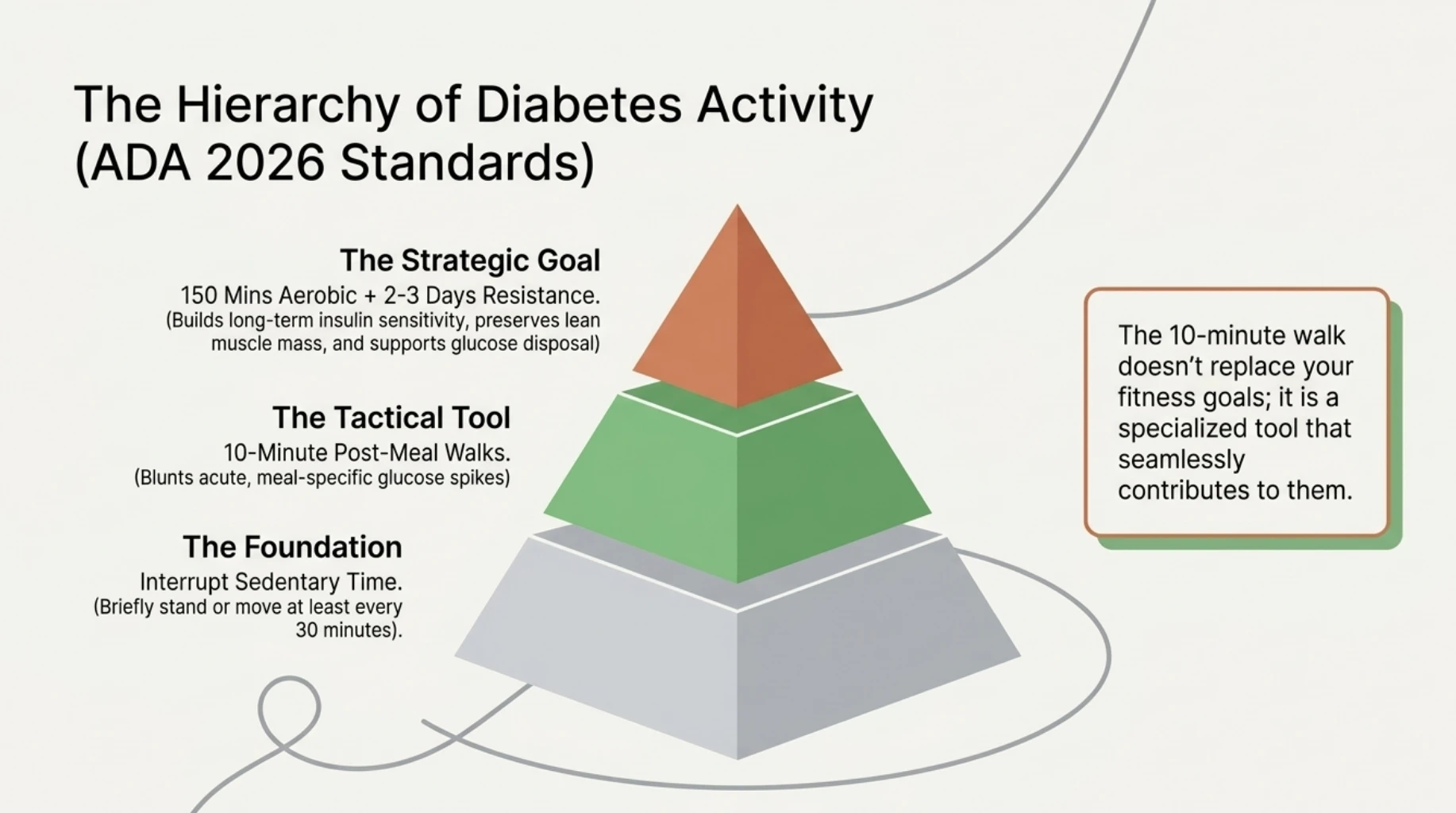
Current American Diabetes Association guidance recommends that most adults with type 1 or type 2 diabetes work toward at least 150 minutes of moderate-to-vigorous aerobic activity per week, in addition to resistance exercise. Short walks after meals can contribute to that total, but they are not intended to replace the rest of an appropriate activity programme.
Can a 10-Minute Walk After Meals Lower Blood Sugar?
Yes, it can.
A small randomized crossover trial in 41 adults with type 2 diabetes compared two approaches:
Approach 1: walk for 30 minutes once each day
Approach 2: walk for 10 minutes after each of the three main meals
The total planned walking time was the same.
Post-meal glucose exposure over the three hours following meals was about 12% lower during the period when participants walked for 10 minutes after each meal. The benefit was particularly noticeable after the evening meal.
This is encouraging, but the study was small and lasted only two weeks for each walking strategy. It does not prove that every person will experience the same percentage reduction or that three ten-minute walks are always superior to other exercise patterns.
A broader 2023 systematic review and meta-analysis also found that exercising after a meal reduced post-meal glucose excursions more effectively than exercising before the meal or remaining inactive. Importantly, the analysis suggested that beginning activity sooner after eating was associated with a greater glucose benefit. However, the included trials were small crossover studies and were assessed as having a high risk of bias.
So the practical message is promising but appropriately modest:
Ten minutes is long enough to potentially make a measurable difference, especially when walking is started soon after eating.
Why Does Blood Sugar Rise After a Meal?
Carbohydrates in food are broken down into glucose, which enters the bloodstream after digestion.
The pancreas responds by releasing insulin.
Insulin helps move glucose from the blood into tissues such as muscle and also signals the liver to reduce glucose output.
In someone without diabetes, these processes generally keep the post-meal rise within a relatively narrow range.
With type 2 diabetes, several things can interfere:
- insulin resistance makes tissues less responsive to insulin
- insulin secretion may be delayed or insufficient
- the liver may continue releasing too much glucose
- a carbohydrate-rich meal may deliver glucose faster than the body can manage it
The result is a larger or more prolonged postprandial glucose rise.
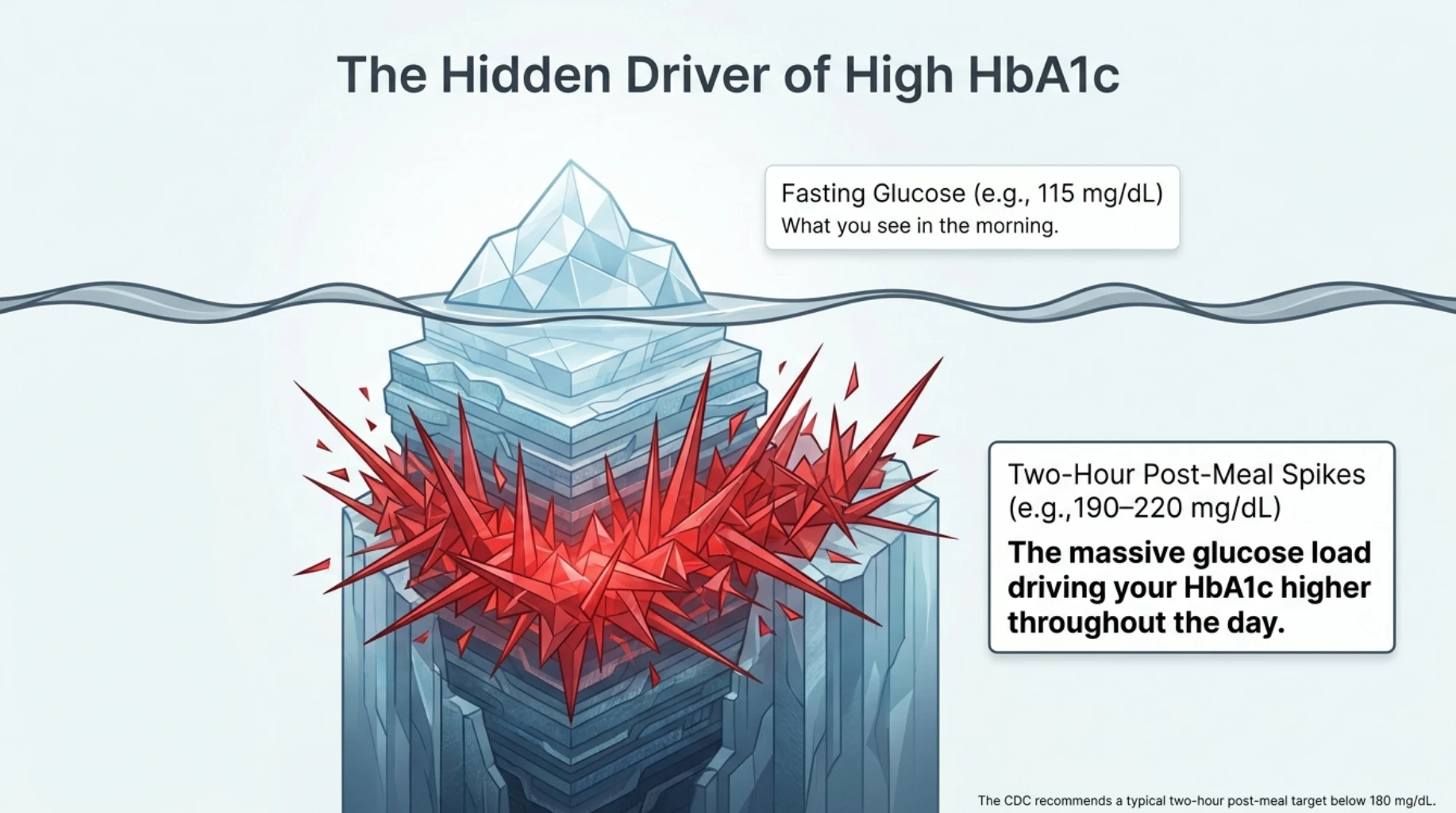
Post-meal glucose matters because HbA1c reflects glucose throughout the entire day—not just the fasting value.
Someone may therefore have:
fasting glucose: 115 mg/dL
but repeatedly reach:
two-hour post-meal glucose: 190–220 mg/dL
and end up with an HbA1c higher than their fasting readings alone would suggest.
Current CDC guidance lists a typical two-hour post-meal target below 180 mg/dL for many adults with diabetes, while noting that individual targets can differ.
How Walking After Meals for Diabetes Can Lower Post-Meal Glucose
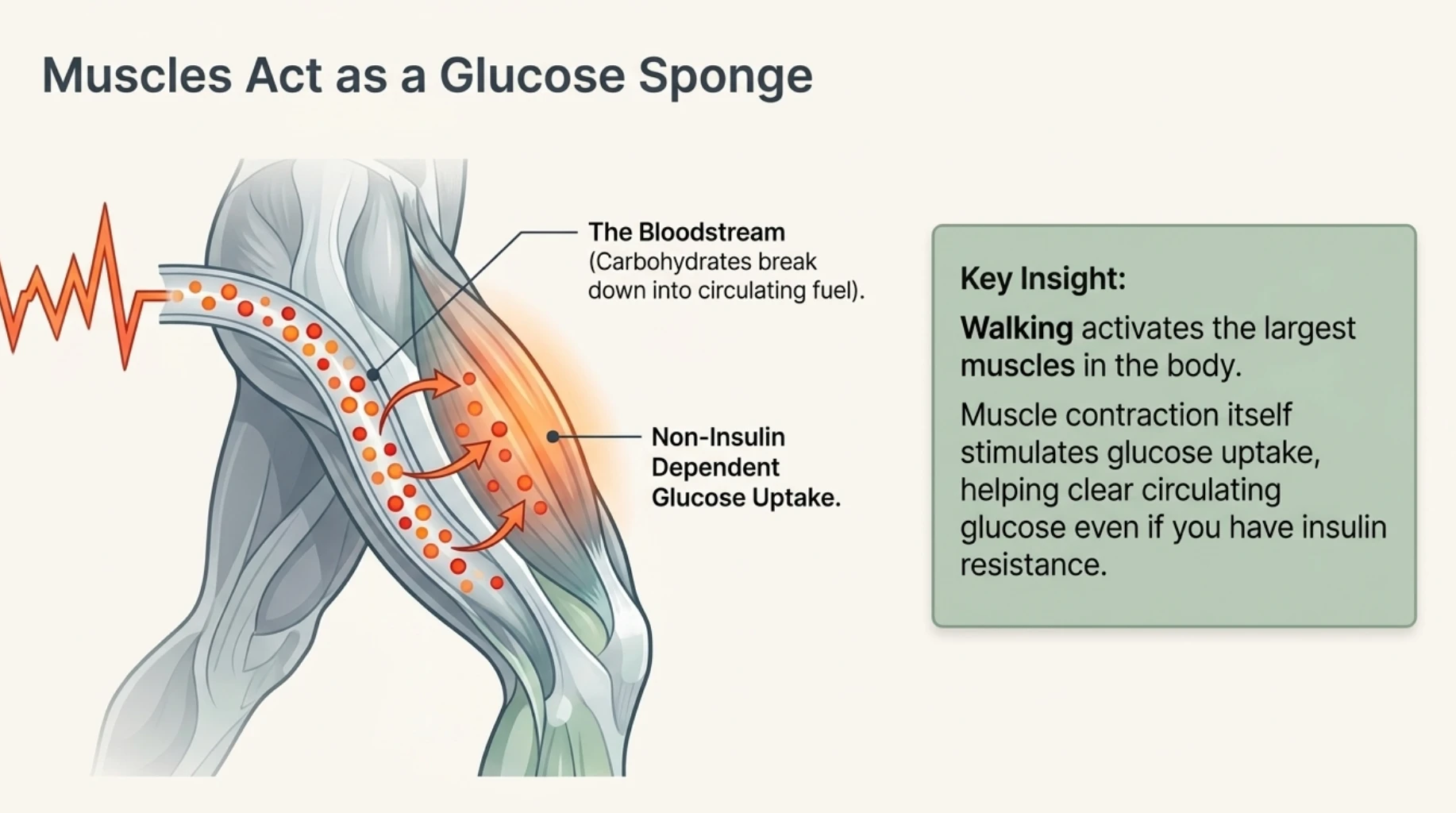
Walking activates some of the largest muscles in the body.
Those working muscles require energy.
During physical activity, muscle cells increase their uptake of glucose, helping remove some of the glucose circulating after the meal. Exercise also improves insulin sensitivity, meaning insulin can work more effectively during and after activity.
Current ADA standards describe walking as an aerobic activity with benefits for glycaemia, cardiovascular risk, fitness, body composition and overall health. Regular activity can also reduce insulin resistance.
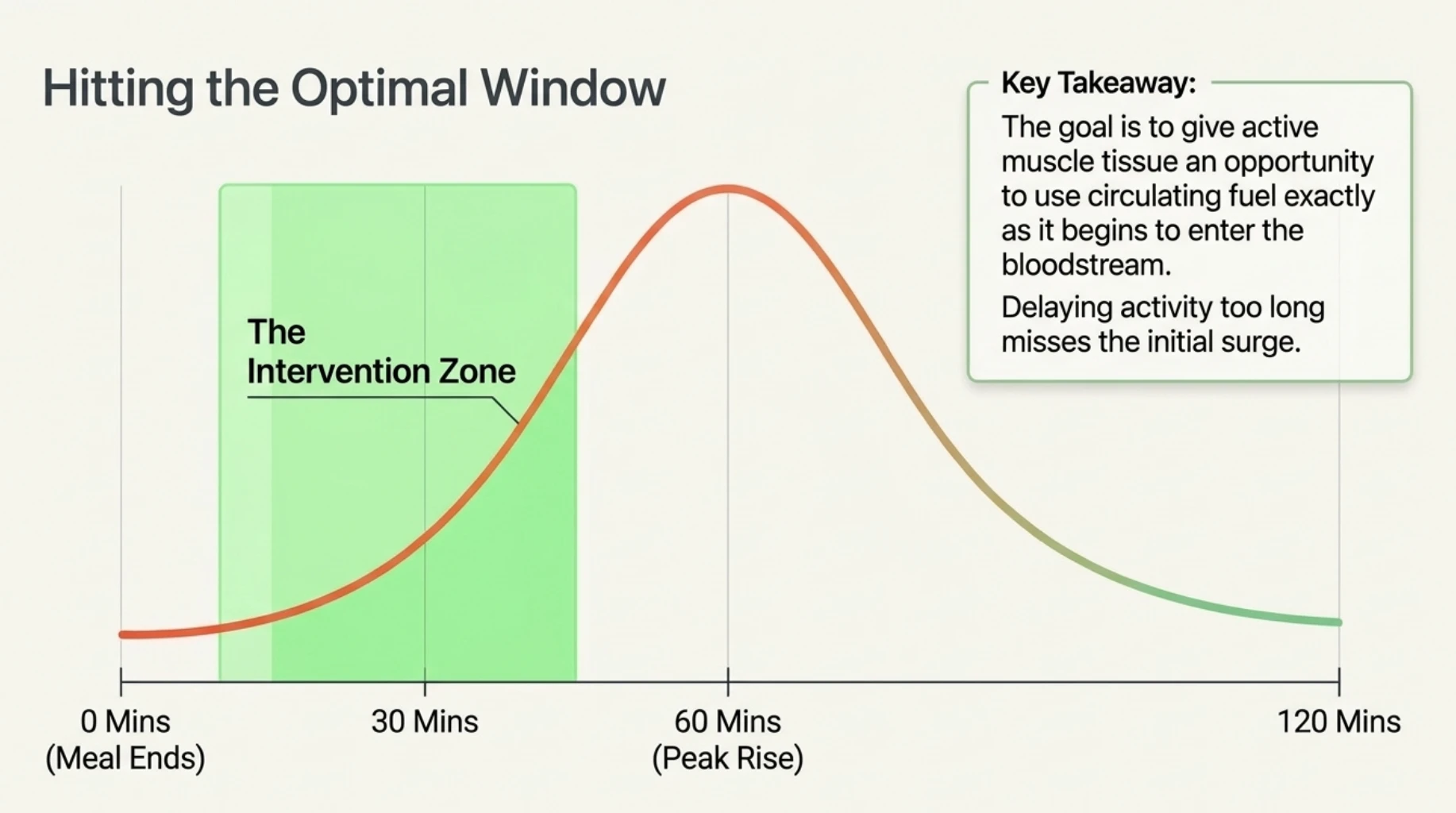
The timing is particularly useful after eating because that is when glucose is beginning to enter the bloodstream.
Instead of sitting immediately after dinner, walking gives active muscle tissue an opportunity to use some of that circulating fuel.
Contracting Muscles Can Take Up Glucose During Activity
Muscle contraction itself stimulates glucose uptake.
This is one reason physical activity can lower blood glucose even when exercise is relatively gentle.
You do not necessarily need:
- running
- HIIT
- a treadmill
- a gym membership
A brisk but comfortable walk may be enough to influence the post-meal glucose curve.
The CDC even uses a as an example of a practical starting point for increasing activity in diabetes.
This also explains why prolonged sitting after meals may be less favorable.
The 2026 ADA Standards advise people with diabetes to interrupt prolonged sitting at least every 30 minutes, noting glucose and other cardiometabolic benefits from briefly standing, walking or performing light activity.
What Does the Research Say About 10-Minute Walks?
The study most often cited for the “10-minute walk after meals” recommendation was published in Diabetology.
Researchers enrolled 41 adults with type 2 diabetes and compared two two-week activity prescriptions.
Participants were asked either to:
- walk for 30 minutes at any time each day
or
- walk for 10 minutes within 30 minutes after each main meal
Continuous glucose monitoring was used to assess glucose levels.
Post-meal glucose exposure was lower during the after-meal walking strategy. The effect was particularly marked after dinner, when carbohydrate intake was highest and participants tended to be more sedentary.
That does not establish a universal prescription.
The participants were around 60 years old on average and had established type 2 diabetes. The study was relatively small and short.
It tells us that the timing of activity can matter.
It does not prove that:
- exactly ten minutes is optimal for everyone
- every meal requires a walk
- walking alone can replace diabetes medicine
- similar results automatically apply to type 1 diabetes
Three 10-Minute Walks Versus One 30-Minute Walk
An interesting feature of the study is that both strategies prescribed the same overall amount of walking.
The difference was when the walking occurred.
That suggests there may be value in distributing activity around periods when glucose is actually rising.
This can also make exercise easier to fit into daily life.
For someone who struggles to find one uninterrupted 30-minute block, three short walks might feel more manageable:
10 minutes after breakfast
10 minutes after lunch
10 minutes after dinner
Thirty minutes of daily walking has still been accumulated, but the activity has also been positioned around three glucose challenges.
That can be particularly practical for people working from home or at a desk.
Is Walking After a Meal Better Than Walking Before It?
For controlling the immediate post-meal glucose rise, current research generally favors post-meal activity.
A 2023 systematic review and meta-analysis examined eight randomized crossover trials involving 116 participants, including 47 people with type 2 diabetes.
Exercise after eating reduced post-meal glucose excursions more than:
- exercise performed before eating
- remaining inactive
The analysis also found that the interval between eating and exercise mattered—the benefit tended to be greater when activity began sooner after the meal.
An earlier study in adults with type 2 diabetes also found that walking for 20 minutes about 15–20 minutes after dinner lowered post-meal glucose more effectively than walking immediately before dinner.
This does not make pre-meal exercise useless.
Regular exercise at almost any practical time can improve cardiovascular fitness, insulin sensitivity and overall diabetes management.
The distinction is narrower:
If your specific goal is reducing the glucose spike from a particular meal, walking after that meal may have an advantage.
How Soon After Eating Should You Walk?
There is no universally mandated starting minute.
Research generally suggests that delaying activity for too long may reduce its ability to blunt the initial post-meal glucose rise.
The 2023 meta-analysis concluded that post-meal exercise had the greatest acute effect when performed as soon as practical after eating, rather than after a longer delay.
The well-known type 2 diabetes trial instructed participants to walk for 10 minutes within 30 minutes after finishing each main meal.
In everyday life, a practical routine might therefore be:
finish eating → allow a few minutes to clear the table → begin an easy or moderate walk.
You do not need to rush out of the door the instant you swallow your last bite.
Some people also find vigorous exercise uncomfortable immediately after a large meal. A comfortable walk is different from running or performing intense intervals.
If you experience reflux, abdominal discomfort, dizziness or another symptom after meals, the timing may need individual adjustment.
Does the Walking Pace Matter?
A post-meal walk does not need to become a race.
Most research examining short post-meal walking has used light-to-moderate or self-selected walking rather than all-out exercise.
For general diabetes health, ADA guidance recommends progressing toward moderate-intensity aerobic activity where appropriate.
One simple way to think about moderate intensity is that you are:
- walking purposefully
- breathing somewhat faster
- still able to speak in sentences
Someone who is currently inactive may need to begin more gently.
Even light movement is generally preferable to remaining seated for hours, and ADA guidance specifically recommends brief standing or light walking to interrupt prolonged sedentary periods.
Higher intensity is not automatically better for post-meal glucose.
Very intense exercise can sometimes temporarily raise glucose because stress hormones stimulate glucose release from the liver, particularly when glucose is already elevated.
For a simple after-dinner habit, consistency is usually more useful than turning every walk into a strenuous workout.
Which Meal Is Most Important to Walk After?
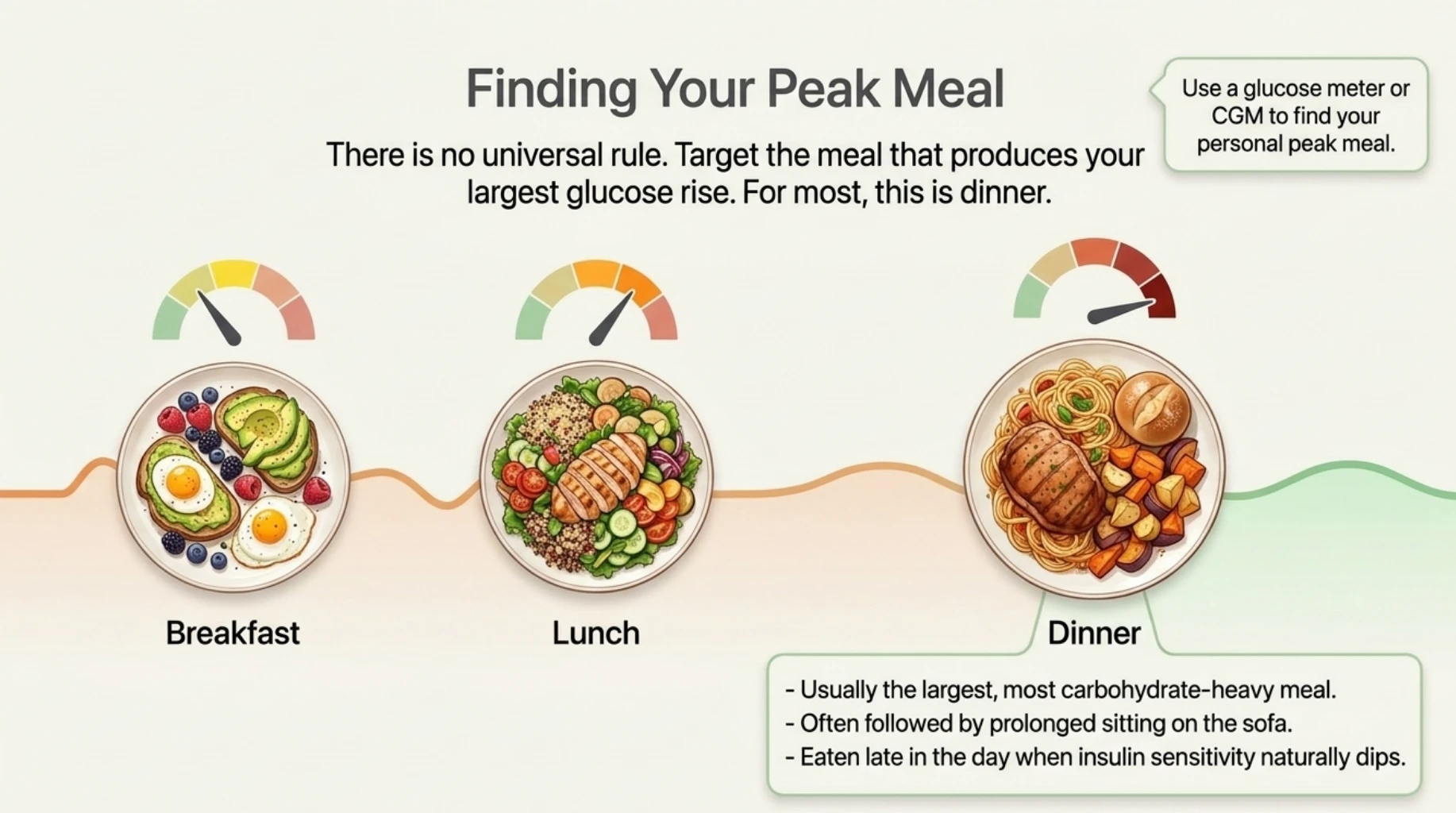
There is no universal answer because meal size and glucose response differ between people.
The most useful meal may be the one that produces your largest glucose rise.
For many people, that is dinner because it may be:
- the largest meal
- higher in carbohydrates
- followed by prolonged sitting
- eaten relatively late
In the 41-person randomized trial, the improvement from after-meal walking was greatest following the evening meal. Post-dinner glucose exposure was substantially lower when participants walked after meals than when the same total walking time was completed once daily.
But your pattern may be different.
Someone eating a light dinner but a large carbohydrate-heavy breakfast may obtain greater glucose benefit from walking in the morning.
If you use a glucose meter or CGM, compare how your body responds to different meals rather than assuming dinner is always the priority.
Is 10 Minutes Enough, or Should You Walk Longer?
Ten minutes can be meaningful.
It is also a starting point, not a maximum.
CDC guidance encourages people who are not yet active to begin gradually—for example, with a 10-minute walk after dinner—and build toward broader activity goals.
The 2026 ADA Standards recommend aerobic activity bouts of at least approximately 10 minutes while working toward a weekly total of 150 minutes or more of moderate-to-vigorous aerobic activity for most adults with diabetes. Resistance exercise is also recommended on 2–3 nonconsecutive days each week.
Therefore: 10 minutes after one meal can be useful.
10 minutes after three meals can contribute 30 minutes of daily activity.
But neither should be viewed as a substitute for muscle-strengthening exercise, reducing excessive sedentary time or the rest of a comprehensive diabetes-management plan.
The best walking routine is one you can perform safely and consistently.
Walking After Meals Does Not Replace Your Weekly Exercise Goal
A short post-meal walk can be useful, but it should not become the only physical activity in a diabetes-management plan.
Current 2026 American Diabetes Association guidance recommends that most adults with type 1 or type 2 diabetes work toward 150 minutes or more of moderate-to-vigorous aerobic activity per week, spread over at least three days, with no more than two consecutive days without activity. Adults are also advised to perform resistance exercise on 2–3 nonconsecutive days each week.
Walking after meals can contribute toward the aerobic component.
For example:
10 minutes after breakfast + 10 minutes after lunch + 10 minutes after dinner
could add up to 30 minutes of walking in a day.
But walking does not provide all the benefits of resistance training.
Strength exercise helps:
- maintain muscle
- improve physical function
- support glucose disposal
- preserve lean mass during weight loss
The ADA also recommends interrupting prolonged sitting at least every 30 minutes because even brief movement breaks may benefit glucose and cardiometabolic health.
So the broader objective is not:
“Walk for ten minutes and diabetes is taken care of.”
It is:
“Use short after-meal walks as one practical part of an active day.”
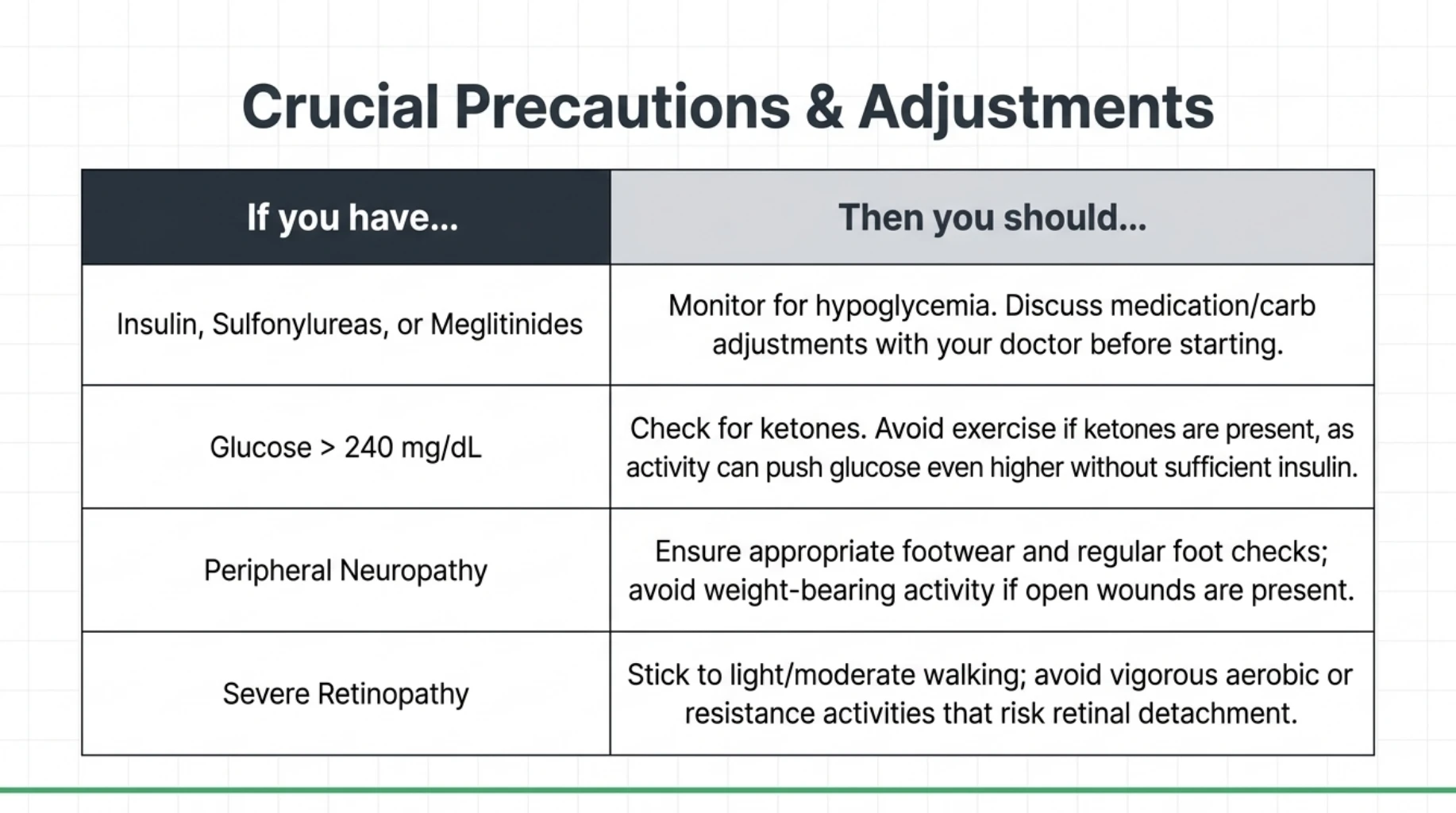
Who Needs Extra Caution With Post-Meal Walking?
Walking is safe for many people with diabetes, but individual precautions matter.
A person recently diagnosed with uncomplicated type 2 diabetes has different exercise considerations from someone with:
- recurrent hypoglycemia
- insulin treatment
- advanced peripheral neuropathy
- an active foot ulcer
- severe diabetic retinopathy
- significant cardiovascular disease
- autonomic neuropathy
- balance problems
- severe orthostatic dizziness
The 2026 ADA Standards specifically recommend considering diabetes complications that may make particular forms of exercise unsafe or require adaptation. These include proliferative retinopathy, autonomic neuropathy, peripheral neuropathy, orthostatic hypotension, balance impairment and a history of diabetic foot ulcers or Charcot foot.
This does not mean people with diabetes complications should remain inactive.
It means the type, intensity and setting of activity may need adjustment.
For example, moderate walking can often still be performed by people with peripheral neuropathy when appropriate footwear is used. However, someone with an open foot wound should generally avoid weight-bearing exercise until the problem has been appropriately treated.
Insulin and Sulfonylureas Can Increase Hypoglycemia Risk
Post-meal walking can lower glucose.
Usually, that is the reason for doing it.
But glucose can fall too far in people taking medicines capable of causing hypoglycemia.
The important examples are:
- insulin
- sulfonylureas
- meglitinides
The 2026 ADA Standards identify insulin, sulfonylureas and meglitinides as the main glucose-lowering treatments associated with clinically important hypoglycemia risk.
Physical activity can increase that risk because muscles continue taking up glucose during and after exercise.
The ADA advises people at risk of exercise-related hypoglycemia to learn their individual glucose response and discuss whether carbohydrate intake or medication adjustment is needed.
Do not routinely eat extra carbohydrate before every ten-minute walk unless you actually need it.
For someone whose goal is lowering post-meal glucose, automatically adding a sugary snack before walking could work against the purpose.
The plan should depend on:
- glucose before activity
- medicine type
- insulin timing
- previous exercise-related lows
- duration and intensity of walking
Should You Check Blood Sugar Before and After Walking?
Not everyone needs to perform several finger-stick tests every time they take a short walk.
Monitoring is particularly useful when you are trying to understand your individual response.
Consider comparing glucose on similar days:
Day 1: meal → remain seated → check glucose as advised
Day 2: similar meal → 10-minute walk → compare the glucose pattern
A continuous glucose monitor can make this particularly easy to visualize.
People using insulin or another treatment associated with hypoglycemia may need more frequent checks around activity, especially when starting a new walking routine.
The ADA notes that exercise can lower glucose during activity and for many hours afterwards because insulin sensitivity remains increased. Monitoring before and after activity can therefore help identify both immediate and delayed responses.
Do not become preoccupied with achieving a perfect number after every meal.
The useful question is whether a repeated pattern is emerging.
For example:
Without walking: glucose repeatedly rises sharply after dinner.
With a 10–15 minute walk: the rise is consistently smaller.
That information can be clinically useful.
What if Your Glucose Is Already High Before the Walk?
Light-to-moderate walking can often lower elevated glucose.
But very high glucose requires more caution—particularly in people at risk of diabetic ketoacidosis.
The American Diabetes Association advises checking for ketones when glucose is above approximately 240 mg/dL. Exercise should be avoided when ketones are present because activity can sometimes push glucose even higher when there is insufficient insulin.
The ADA’s current ketone guidance also recommends considering ketone testing when glucose remains at or above approximately 250 mg/dL for two hours, during illness or when symptoms such as nausea, vomiting or unusual fatigue occur.
This matters especially in:
- type 1 diabetes
- people who have missed insulin
- people with previous DKA
- some people taking SGLT2 inhibitors
Do not try to “walk down” severe hyperglycemia when you are unwell or ketones are elevated.
Seek medical guidance according to your sick-day or ketone-management plan.
High-intensity exercise is also different from ordinary walking. Strenuous activity can transiently raise glucose because adrenaline stimulates the liver to release additional glucose.
A comfortable post-meal walk and an all-out interval workout should therefore not be treated as interchangeable.
How to Build Post-Meal Walking Into an Indian Daily Routine
The most useful exercise routine is usually one that fits normal life well enough to continue for months.
A post-meal walking habit does not need special equipment.
After breakfast, you might walk:
- around the neighborhood
- within your apartment complex
- along an office corridor
- while completing a short errand
After lunch at work, instead of immediately sitting for the next meeting, take a short walk when practical.
After dinner, consider making a walk part of the household routine rather than moving directly from the dining table to the sofa.
If outdoor conditions are unsuitable because of heat, rain or air pollution, walking indoors can still count.
You can also begin smaller.
Someone currently sedentary might start with:
5 minutes after dinner and gradually progress toward: 10–15 minutes as fitness and confidence improve.
Consistency matters more than perfection.
And avoid thinking that the post-meal walk gives you permission to ignore the meal itself.
A very large meal followed by a ten-minute walk is not metabolically identical to an appropriately portioned meal followed by the same walk.
Walking works with nutrition and diabetes treatment—not instead of them.
What Should You Discuss With Your Doctor?
If you have diabetes and want to use post-meal walking strategically, useful questions include:
- Which meal is producing my largest glucose rise?
- Is a 10-minute walk appropriate for me?
- Should I check glucose before or after walking?
- Am I at risk of exercise-related hypoglycemia?
- Do I need to carry fast-acting carbohydrate?
- Should insulin timing be adjusted around exercise?
- Are my feet safe for regular walking?
- Does retinopathy change which activities I should perform?
- What should I do if glucose is very high before exercising?
- Would CGM help identify my post-meal pattern?
Bring your medication list and glucose information.
If you use insulin, include:
- insulin type
- dose
- meal-time dose
- injection time
- episodes of hypoglycemia
- recent CGM or glucose readings
Do not independently reduce insulin simply because you have started walking after meals.
The effect of exercise varies considerably between people, and medication changes need to account for the entire glucose pattern.
Walking and Diabetes Review at Diet Plus Minus in Dwarka
Walking after meals can be incorporated into a broader diabetes-management plan rather than treated as a stand-alone remedy.
Dr. Pankaj Kumar can review:
- fasting and post-meal glucose patterns
- HbA1c
- home glucose or CGM reports
- meal timing
- diabetes medicines
- insulin and hypoglycemia risk
- current physical-activity levels
- body weight and waist circumference
- blood pressure
- diabetic neuropathy or foot concerns
- whether exercise needs individual modification
The goal is to find an activity routine that is practical, safe and compatible with the person’s overall diabetes treatment.
Dr. Pankaj Kumar
MBBS, DNB Family Medicine, Sir Ganga Ram Hospital
General & Lifestyle Physician
Special interest in Diabetes
Diet Plus Minus
13A, Pocket-2, Sector-6, Doctors Lane
Dwarka, New Delhi – 110075
India
Book an Appointment with Dr. Pankaj Kumar
Frequently Asked Questions
Is a 10-Minute Walk After Eating Really Enough to Lower Blood Sugar?
It can be enough to produce a measurable acute effect.
In a small randomized crossover study of 41 adults with type 2 diabetes, three 10-minute walks after meals produced lower overall post-meal glucose exposure than one 30-minute daily walk, despite the same planned total walking time.
The size of the effect will vary between individuals.
How Long After Eating Should I Start Walking?
Research generally supports starting relatively soon after finishing the meal.
A 2023 meta-analysis found that post-meal exercise reduced acute glucose excursions and that shorter delays between the meal and activity tended to produce greater benefits.
A practical approach is often to begin within approximately 30 minutes when comfortable.
Is It Better to Walk Immediately After Eating or Wait an Hour?
For blunting the early glucose rise, starting relatively soon after eating appears reasonable.
However, studies vary, and there is no proven universal minute at which everybody should start. A newer 2024 meta-analysis found that evidence comparing pre- and post-meal exercise remains heterogeneous and of low-to-moderate certainty, so overly rigid timing rules are not justified.
Should I Walk for 10, 15 or 30 Minutes?
Ten minutes is a practical starting point with evidence of benefit.
Longer walks may provide additional activity and glucose-lowering effects when they are safe and practical.
The priority is to choose a duration you can perform regularly while still working toward the broader weekly physical-activity target.
Is Walking After Dinner Better Than After Breakfast?
It depends on your glucose pattern.
The 2016 study of 41 adults with type 2 diabetes found the largest benefit after dinner, when participants consumed the most carbohydrate and were most sedentary.
However, a 2026 meta-analysis of acute post-meal exercise studies found modest overall benefits and suggested the strongest average effect after breakfast in the studies it analyzed. This variation reinforces the value of using your own glucose or CGM response rather than assuming that one meal is universally most important.
Is Walking After Meals Better Than Walking Before Meals?
For the immediate post-meal glucose rise, some research favors walking after eating.
A 2023 meta-analysis found better acute postprandial glucose outcomes when exercise occurred after rather than before the meal.
However, later evidence reviews have found mixed results when comparing exercise timing across different populations and longer interventions. Regular physical activity remains important regardless of whether every session can be placed after a meal.
Can Walking After Meals Reduce HbA1c?
Regular physical activity can improve HbA1c in people with type 2 diabetes.
A ten-minute post-meal walk mainly has evidence for reducing the acute glucose rise after eating. Whether that translates into a particular HbA1c reduction depends on how consistently it is performed and on the rest of the person’s glucose pattern, medication and lifestyle.
ADA guidance supports physical activity as part of comprehensive glycemic management.
Can Walking Replace Diabetes Medicine?
No.
Walking is an important part of diabetes management, but it does not automatically replace prescribed treatment.
Some people may need less medication as weight, fitness and glucose control improve, while others continue to require medication despite excellent lifestyle habits.
Medication reduction should be based on glucose data and medical review.
Can Walking After Meals Prevent Prediabetes From Becoming Diabetes?
Physical activity is an important part of diabetes-prevention programmes.
The 2026 ADA Standards recommend moderate-intensity activity such as brisk walking for people at increased risk of type 2 diabetes and note that breaking up sedentary time can lower post-meal glucose.
Prevention usually also involves nutrition, body-weight management where appropriate and management of other metabolic risk factors.
Can walking after meals for diabetes Cause Low Blood Sugar?
Yes, particularly if you use insulin, a sulfonylurea or a meglitinides.
Exercise can lower glucose during activity and for hours afterwards.
People at risk should know how to recognize and treat hypoglycemia and discuss exercise-related medication adjustments with their clinician.
What Are the Symptoms of Low Blood Sugar During a Walk?
Possible symptoms include:
- shaking
- sweating
- sudden hunger
- dizziness
- weakness
- palpitations
- difficulty concentrating
- confusion
Do not continue walking through suspected hypoglycemia.
Stop, check glucose when possible and follow your individual hypoglycemia treatment plan.
Should I Carry Glucose Tablets When Walking?
If you use insulin or another medicine associated with hypoglycemia, carrying fast-acting carbohydrate is sensible.
ADA exercise guidance recommends being prepared to treat low glucose during physical activity.
Can I Walk if My Blood Sugar Is 250 mg/dL?
The answer depends on why glucose is high and whether ketones are present.
Current ADA patient guidance recommends checking for ketones when glucose is substantially elevated. If ketones are present, exercise should be avoided because it can worsen hyperglycemia.
People at risk of DKA should follow their individual ketone-management plan.
Can I Walk After Meals if I Have Diabetic Neuropathy?
Often yes, but foot condition matters.
The 2026 ADA Standards state that moderate walking may be possible for people with peripheral neuropathy when suitable footwear is used. Feet should be checked regularly, and weight-bearing activity should be avoided when an open wound is present.
Is Walking Safe With Diabetic Retinopathy?
Light or moderate walking may be appropriate for many people with diabetic retinopathy.
However, vigorous aerobic or resistance activity can be contraindicated in severe nonproliferative or proliferative retinopathy because of the risk of vitreous hemorrhage or retinal detachment.
The eye specialist’s advice should guide activity in advanced disease.
Is Walking Around the House After Dinner Useful?
Yes.
The muscles do not require an outdoor road or treadmill to use glucose.
Indoor walking, walking through a corridor or another safe form of light-to-moderate movement can be a practical alternative when outdoor walking is inconvenient.
Author Box
Dr. Pankaj Kumar
MBBS, DNB Family Medicine, Sir Ganga Ram Hospital
General & Lifestyle Physician
Special interest in Diabetes
Dr. Pankaj Kumar provides general medical and lifestyle-based care at Diet Plus Minus in Dwarka, New Delhi, with a special interest in diabetes. His clinical approach includes review of fasting and post-meal glucose, HbA1c, diabetes medicines, physical activity, weight and other metabolic-health factors, with specialist referral when appropriate.
Medical Disclaimer
This article provides general educational information and does not replace an individual medical consultation, diabetes treatment plan or personalized exercise prescription.
Do not reduce insulin, skip medication or routinely add extra carbohydrate around exercise without considering your glucose pattern and treatment.
People using insulin or sulfonylureas, and those with recurrent hypoglycemia, advanced diabetic complications, foot ulcers or cardiovascular symptoms, may need individual exercise guidance.
If glucose is very high and ketones are present, avoid exercise and follow your prescribed ketone or sick-day plan. Seek urgent care for significant vomiting, dehydration, breathing difficulty, confusion or another rapid deterioration.
Recommended Internal Links
| Suggested anchor text | Destination page or content type | Recommended insertion section |
|---|---|---|
| morning high blood sugar | Existing diabetes article | Where glucose patterns and timing are discussed |
| HbA1c test | Existing HbA1c article | Where post-meal glucose contributes to long-term control |
| insulin resistance | Existing metabolic-health article | Under exercise and insulin sensitivity |
| diabetes consultation in Dwarka | Existing diabetes service page | Under individual exercise and medication review |
| diabetes remission | Existing diabetes-remission article | Where lifestyle intervention is discussed |
| belly fat after 35 | Existing weight-management article | Under physical activity and sedentary behaviour |
| muscle loss during weight loss | Existing muscle-preservation article | Under resistance exercise |
| dizziness on standing | Existing dizziness article | Under exercise safety, dehydration or autonomic symptoms |
References
- Reynolds AN, Mann JI, Williams S, Venn BJ. Advice to Walk After Meals Is More Effective for Lowering Postprandial Glycaemia in Type 2 Diabetes Mellitus Than Advice That Does Not Specify Timing: A Randomized Crossover Study. Diabetologia. 2016;59:2572–2578. The study compared 10 minutes of walking after each main meal with one daily 30-minute walk in 41 adults with type 2 diabetes.
- Engeroff T, Groneberg DA, Wilke J. After Dinner Rest a While, After Supper Walk a Mile? A Systematic Review With Meta-analysis on the Acute Postprandial Glycemic Response to Exercise Before and After Meal Ingestion. Sports Medicine. 2023;53:849–869. Post-meal exercise lowered acute postprandial glucose more than pre-meal exercise or inactivity in the included crossover trials, although study quality was limited.
- The Effect of Preprandial Versus Postprandial Physical Activity on Glycaemia: Meta-analysis of Human Intervention Studies. 2024. Found heterogeneous and low-to-moderate-certainty evidence and highlights that longer-term evidence on the optimal timing of exercise remains limited.
- Effect of Acute Postprandial Exercise on Continuous Glucose Monitoring Outcomes in Type 2 Diabetes: A Systematic Review and Meta-analysis of Crossover Trials. 2026. Found modest improvements in glycemic outcomes following acute post-meal activity, with differences according to meal timing across included studies.
- American Diabetes Association Professional Practice Committee. Facilitating Positive Health Behaviors and Well-being to Improve Health Outcomes: Standards of Care in Diabetes—2026. Provides current recommendations for aerobic activity, resistance training, interruption of sedentary time and exercise precautions in diabetes.
- American Diabetes Association Professional Practice Committee. Glycemic Goals, Hypoglycemia, and Hyperglycemic Crises: Standards of Care in Diabetes—2026. Identifies insulin, sulfonylureas and meglitinides as important treatment-related risk factors for hypoglycemia.
- American Diabetes Association. Understanding Blood Glucose and Exercise. Current patient guidance on how muscle contraction and increased insulin sensitivity influence glucose and how to manage exercise-related hypoglycemia.
- American Diabetes Association. Hyperglycemia and Managing Ketones With Diabetes. Current guidance on very high glucose, ketone testing and situations in which exercise should be avoided.
- American Diabetes Association Professional Practice Committee. Retinopathy, Neuropathy, and Foot Care: Standards of Care in Diabetes—2026. Reviews physical-activity considerations for peripheral neuropathy, foot disease and advanced diabetic retinopathy.

Written by Dr. Pankaj Kumar
General & Lifestyle Physician in Dwarka Sector 6, New Delhi · MBBS, DNB (Family Medicine), DNHE · 16 years of experience.
About the doctor →Book a consultation → Beyond Blood Sugar
 The 90-Day Prediabetes Turnaround
 The Indian Diabetes Diet Reset
 Eat to Beat Gout
 Why Is My Hair Falling?
 The 30-Day Inflammation Reset