Why the Best Time to Check Blood Pressure Matters
Blood pressure is not a static number. It changes throughout the day depending on activity level, sleep patterns, stress hormones, and the body’s internal biological clock. Because of these natural variations, the best time to check blood pressure becomes extremely important when interpreting readings accurately.
Many people measure blood pressure randomly. Some check it after climbing stairs, others after drinking tea or coffee, and many do it only during doctor visits. Unfortunately, these readings often fail to reflect the true cardiovascular risk.
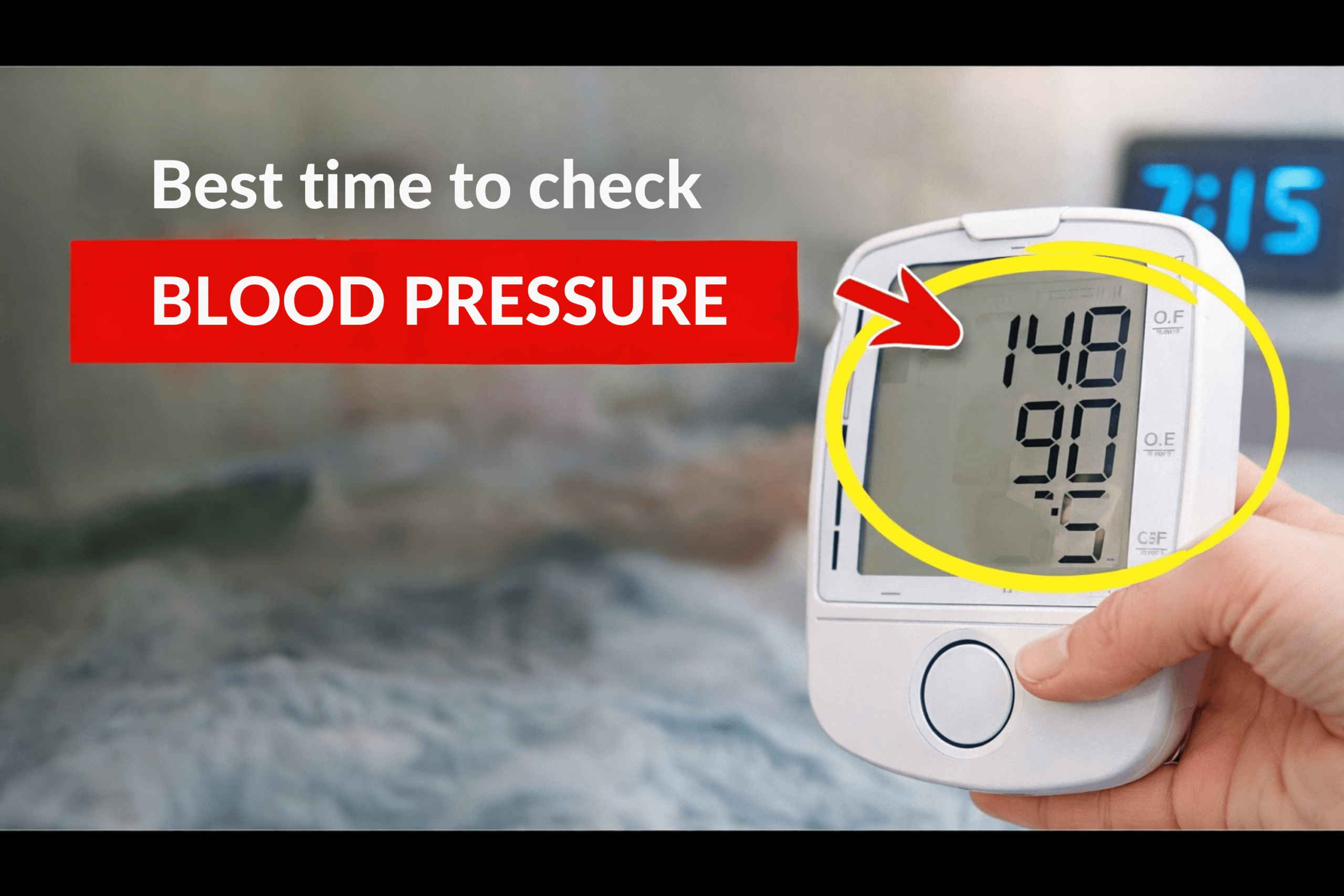
Morning blood pressure readings provide particularly valuable information. In clinical practice, I often advise patients to measure blood pressure soon after waking because the morning period reveals how the cardiovascular system responds to the transition from sleep to daily activity.
This early rise in blood pressure is known as the morning blood pressure surge. Researchers have found that the magnitude of this surge can predict cardiovascular outcomes in many patients with hypertension.
A recent clinical analysis examining circadian blood pressure patterns demonstrated that excessive morning blood pressure surge is linked with higher cardiovascular event risk. The study highlighted that monitoring early morning readings can help identify patients who appear stable during the day but remain at risk during the morning hours.
For this reason, identifying the best time to check blood pressure is not just a technical detail. It can influence diagnosis, treatment decisions, and long-term heart health.
Why Blood Pressure Rises in the Morning
If you measure blood pressure every hour for a full day, a clear pattern emerges. Blood pressure usually falls during sleep, reaches its lowest level around midnight to early morning, and then begins rising before awakening.
This predictable rhythm is called the circadian blood pressure pattern.
When we wake up, the body prepares for activity. Several physiological processes occur simultaneously:
- The sympathetic nervous system becomes more active.
- Cortisol and stress hormones increase.
- Heart rate gradually rises.
- Blood vessels become more responsive.
These changes help the body transition from rest to activity, but they also cause blood pressure to increase.
Studies examining circadian blood pressure variation confirm that the transition from sleep to wakefulness is associated with a measurable rise in systolic blood pressure. The phenomenon is well documented in clinical literature.
In most healthy individuals this morning rise remains moderate. However, in people with hypertension, diabetes, obesity, or metabolic syndrome, the increase can be exaggerated.
This exaggerated rise is referred to as the morning blood pressure spike.
Identifying this spike early allows doctors to adjust treatment strategies, including medication timing, lifestyle modification, and home blood pressure monitoring.
Morning Blood Pressure and Heart Attack Risk
One of the most interesting observations in cardiology is that heart attacks and strokes occur more frequently in the early morning hours.
Several epidemiological studies have shown that cardiovascular events peak between 6 AM and noon. The underlying reason relates closely to the morning rise in blood pressure and increased platelet activity during this period.
When blood pressure surges suddenly, several physiological changes occur simultaneously:
- Blood vessels experience increased mechanical stress
- Heart workload increases
- Platelet aggregation rises
- Blood becomes slightly more prone to clot formation
This combination creates a vulnerable window for people with underlying atherosclerosis.
Clinical evidence indicates that individuals with exaggerated morning hypertension have a higher probability of stroke and cardiovascular complications.
A clinical review discussing this relationship explains that morning blood pressure surge is a significant predictor of stroke risk in hypertensive patients.
Because of these risks, doctors often emphasize measuring blood pressure soon after waking.
Understanding the best time to check blood pressure therefore becomes an important part of cardiovascular risk assessment.
How the Body Clock Controls Blood Pressure
The human body operates according to an internal biological clock called the circadian rhythm. This rhythm regulates sleep cycles, hormone release, body temperature, and cardiovascular activity.
Blood pressure follows this circadian rhythm closely.
During sleep, most individuals experience a 10 to 20 percent reduction in blood pressure. This is known as the “nocturnal dipping pattern.” People who do not experience this reduction are called non-dippers, and they often have a higher cardiovascular risk.
When morning arrives, the body transitions from parasympathetic dominance during sleep to sympathetic activation during wakefulness.
This shift triggers:
- increased adrenaline release
- rise in cortisol
- higher vascular tone
- increase in heart rate
The result is the well-known morning blood pressure rise.
Research evaluating home blood pressure monitoring patterns shows that morning readings often provide the most consistent measurements when taken before medications or breakfast.
Because of this consistency, many hypertension guidelines recommend morning monitoring as part of routine home blood pressure tracking.
What Morning Blood Pressure Really Shows
Understanding the best time to check blood pressure becomes easier when we simplify what actually happens inside the body during early morning hours.
During sleep, the body is in a recovery phase. The parasympathetic nervous system dominates, heart rate slows, and blood vessels relax. This produces the well known drop in nighttime blood pressure called the “nocturnal dip.”
However, as the body prepares to wake up, the brain activates several hormonal signals. Cortisol, adrenaline, and other stress hormones increase. These hormones are not harmful by themselves. In fact, they help prepare the body for activity.
But these hormonal changes cause blood vessels to constrict slightly and heart rate to increase. As a result, blood pressure begins rising even before a person wakes up.
This early rise is called the morning blood pressure surge.
In healthy individuals this increase is moderate and temporary. In people with hypertension, diabetes, obesity, or metabolic syndrome, the rise may become exaggerated. This exaggerated surge can increase strain on the cardiovascular system.
Researchers studying home blood pressure monitoring have observed that morning readings often reflect the most stable and reliable baseline values when taken before food, caffeine, or medication.
Clinical guidelines discussing home monitoring emphasize the importance of measuring blood pressure early in the day.
Because morning measurements capture this physiological transition, they help doctors understand how well blood pressure is controlled over a full 24 hour cycle.
What Morning Blood Pressure Means for Real Patients
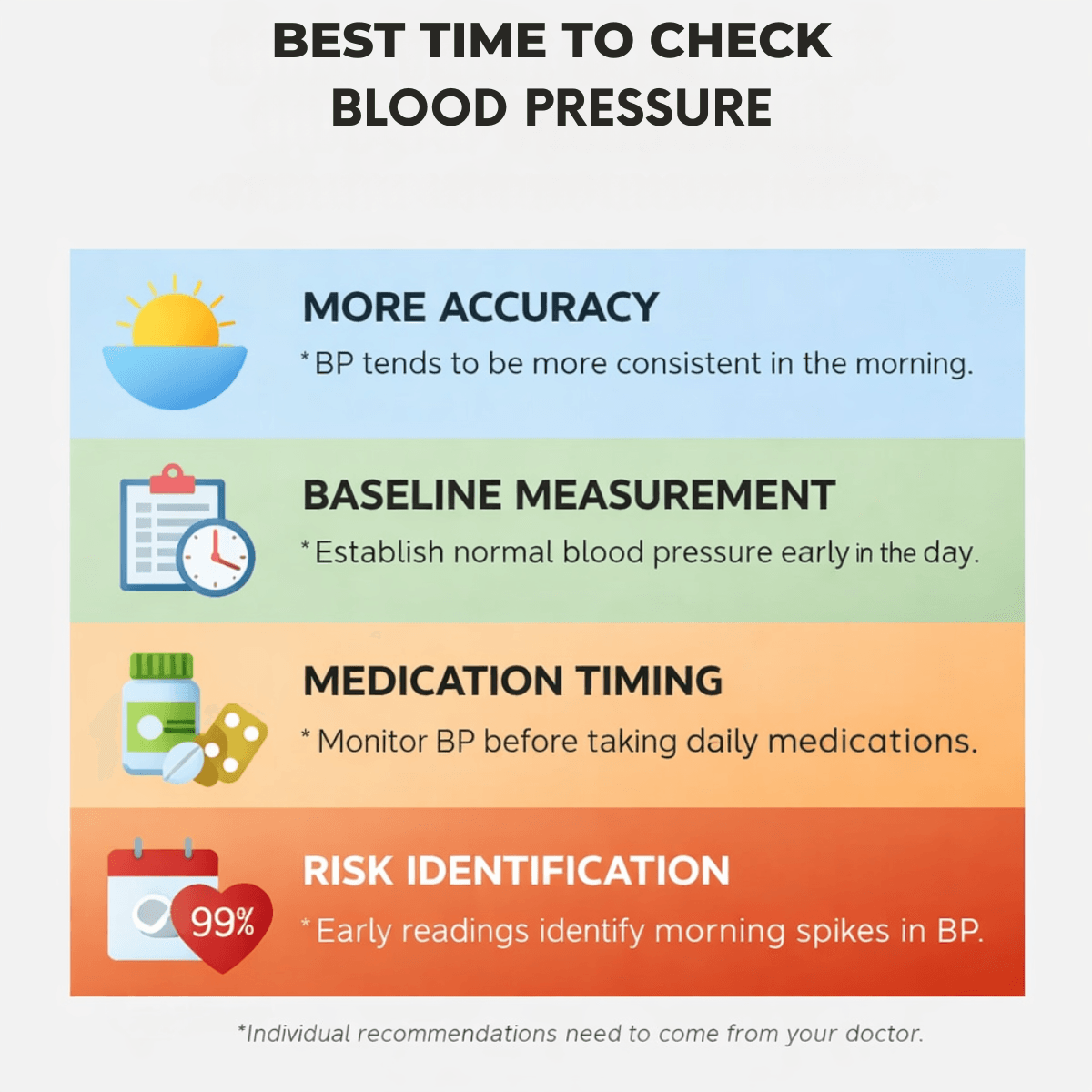
From a clinical perspective, the best time to check blood pressure is often within the first hour after waking. This period gives important clues about cardiovascular risk.
Many patients show normal readings during clinic visits but elevated readings early in the morning at home. This pattern is called morning hypertension.
Morning hypertension is important because it may indicate:
- incomplete overnight blood pressure control
- short duration of antihypertensive medication
- increased sympathetic nervous system activity
- poor sleep quality or sleep apnea
- excess salt intake
In my clinical experience, patients who only check blood pressure randomly during the day often miss these patterns.
Morning measurements can reveal hidden blood pressure elevations that routine clinic readings might not detect.
For example, a patient may record a reading of 130/80 mmHg during an afternoon clinic visit but show 150/95 mmHg early in the morning at home.
Without morning monitoring, this hidden hypertension may remain undetected.
That is why cardiologists and hypertension specialists increasingly recommend home blood pressure monitoring as part of routine cardiovascular care.
Regular morning measurements allow doctors to adjust medication timing and lifestyle interventions more precisely.
How to Measure Blood Pressure Correctly at Home
Even when people understand the best time to check blood pressure, many still make mistakes while measuring it.
Correct measurement technique is essential for reliable readings.
The recommended approach is simple but must be followed carefully.
- Measure blood pressure within one hour of waking.
- Use the bathroom before taking the reading.
- Avoid coffee, tea, or smoking beforehand.
- Sit quietly for five minutes before measuring.
- Keep your back supported and feet flat on the floor.
- Rest the arm at heart level.
- Take two readings one minute apart.
These steps help eliminate temporary influences that can artificially increase blood pressure.
It is also advisable to record readings for at least five to seven consecutive days to identify patterns rather than relying on a single measurement.
Many modern digital blood pressure monitors store readings automatically, making long term monitoring easier.
Common Mistakes People Make When Checking Blood Pressure
Incorrect measurement technique is one of the biggest reasons why home blood pressure monitoring becomes confusing.
Several common mistakes can produce inaccurate readings.
- Checking blood pressure immediately after waking without resting
- Measuring after drinking tea or coffee
- Talking during the measurement
- Using the wrong cuff size
- Measuring while standing or lying down
- Taking only one reading instead of two
Even small errors can alter readings by 5 to 15 mmHg.
Patients sometimes panic after seeing a single high reading. However, doctors usually evaluate trends rather than isolated numbers.
Recording multiple readings over several days provides a clearer picture of cardiovascular health.
Morning vs Random Blood Pressure Readings
| Measurement Time | Advantages | Limitations |
|---|---|---|
| Morning readings | Reflect baseline blood pressure before daily activities | Must follow proper measurement technique |
| Random daytime readings | Easy to measure anytime | Influenced by stress, food, caffeine, or activity |
| Clinic readings | Performed by healthcare professionals | White coat effect may elevate readings |
This comparison highlights why morning measurements are often the most useful for identifying underlying hypertension patterns.
What I Recommend in Clinic for Accurate Blood Pressure Monitoring
In clinical practice, many patients ask me about the best time to check blood pressure and how often it should be measured. The answer depends on whether someone already has hypertension, is monitoring borderline readings, or is simply performing routine health screening.
For most adults monitoring blood pressure at home, the ideal time is within the first hour after waking, before taking medications and before eating breakfast. This timing captures the early morning cardiovascular response and provides a consistent baseline reading.
Based on clinical practice and current hypertension guidelines, these are the practical recommendations I usually provide to patients.
- Measure blood pressure within 30 to 60 minutes after waking.
- Avoid tea, coffee, or smoking before checking blood pressure.
- Sit quietly for five minutes before measurement.
- Take two readings and record the average.
- Measure at the same time every day for consistency.
- Track readings for at least seven days when evaluating blood pressure control.
- Use a validated digital arm blood pressure monitor rather than wrist devices.
- Keep a simple log or digital record of readings.
These small habits significantly improve the reliability of home blood pressure monitoring.
For individuals who already have hypertension or metabolic risk factors, regular monitoring becomes even more important as part of long term lifestyle management.
Many patients working on weight reduction, metabolic health improvement, or blood pressure control follow structured lifestyle programs such as the doctor supervised lifestyle modification program, where regular blood pressure monitoring becomes an important tracking tool.
When Morning Blood Pressure Should Raise Concern
Occasional fluctuations in blood pressure are normal. However, persistent elevation in morning readings may indicate uncontrolled hypertension or underlying cardiovascular risk.
Certain warning patterns deserve medical evaluation.
- Repeated morning readings above 140/90 mmHg
- Large difference between morning and evening readings
- Headache or dizziness after waking
- Chest discomfort or shortness of breath
- Sudden spikes above 160 systolic pressure
Morning hypertension can sometimes occur even in patients who show normal readings during clinic visits. This condition is sometimes referred to as masked hypertension.
If elevated readings appear repeatedly, medical evaluation becomes important. Early detection allows doctors to adjust treatment plans and reduce long term cardiovascular risk.
Individuals who want a detailed evaluation or personalized monitoring plan can schedule a consultation here: consultation for blood pressure and metabolic health evaluation.
Key Takeaways
- The best time to check blood pressure is usually within the first hour after waking.
- Morning readings capture the natural rise in blood pressure caused by hormonal activation.
- An exaggerated morning blood pressure surge may indicate higher cardiovascular risk.
- Home blood pressure monitoring provides more reliable long term trends than occasional clinic readings.
- Consistent measurement technique improves accuracy and helps doctors evaluate treatment effectiveness.
- Persistent morning hypertension should not be ignored and requires medical assessment.
About the Author
This article is written by Dr. Pankaj Kumar, a general and lifestyle physician focusing on metabolic health, hypertension, diabetes prevention, and long term lifestyle based medical care. His clinical approach emphasizes structured lifestyle interventions along with evidence based monitoring of cardiovascular risk factors.
References
Need Help Managing Blood Pressure?
If you are monitoring blood pressure at home and noticing persistent high readings, a structured evaluation may help identify the cause and improve long term cardiovascular health.
Disclaimer: This article is for educational purposes only and should not replace personalized medical advice. If you have persistent high blood pressure or symptoms such as chest pain, dizziness, or severe headache, seek medical evaluation promptly.

Written by Dr. Pankaj Kumar
General & Lifestyle Physician in Dwarka Sector 6, New Delhi · MBBS, DNB (Family Medicine), DNHE · 16 years of experience.
About the doctor →Book a consultation → Beyond Blood Sugar
 The 90-Day Prediabetes Turnaround
 The Indian Diabetes Diet Reset
 Eat to Beat Gout
 Why Is My Hair Falling?
 The 30-Day Inflammation Reset