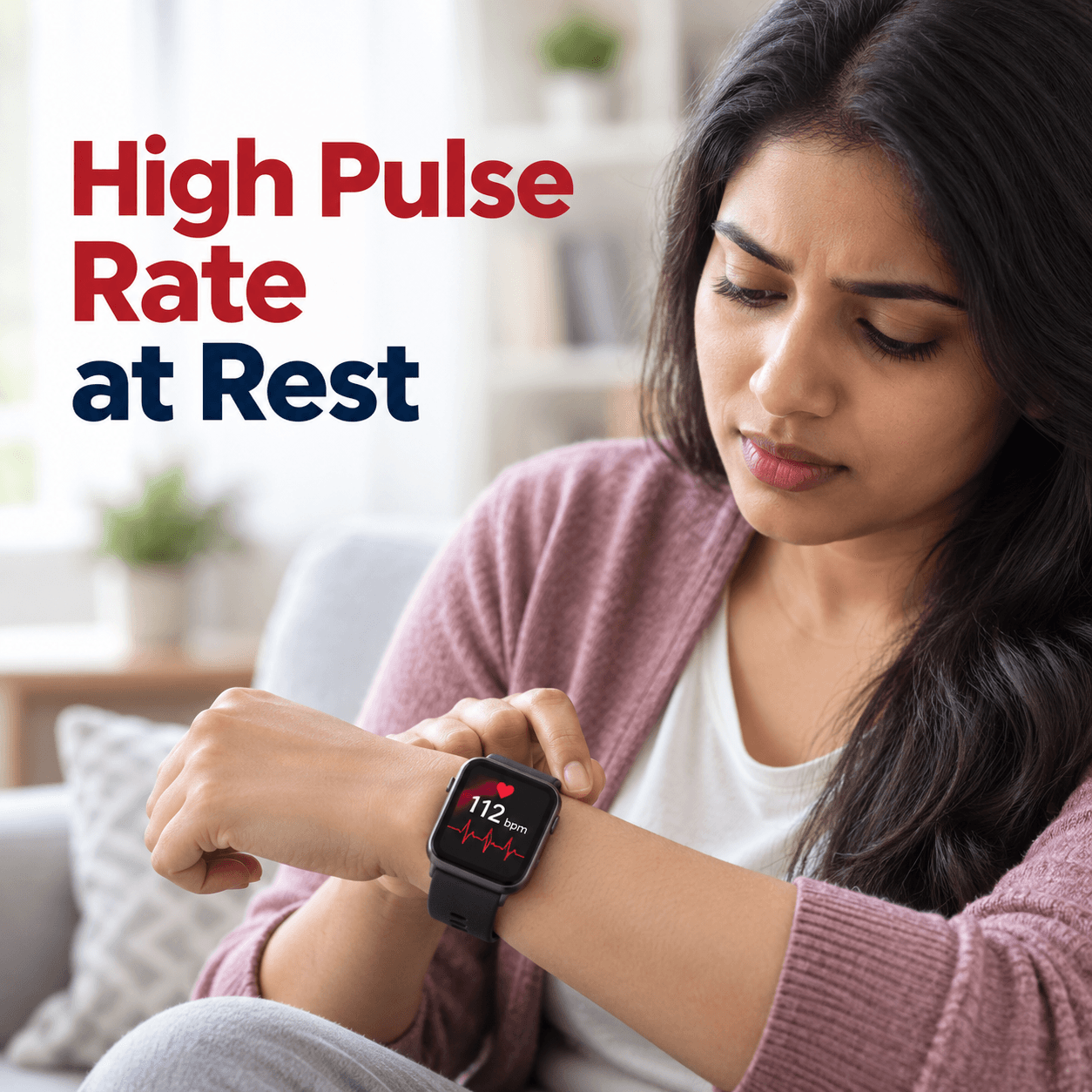
Seeing a heart rate of 105, 115 or 125 beats per minute while you are sitting quietly can understandably be concerning. A high pulse rate at rest can occur for relatively temporary reasons such as anxiety, dehydration or an infection, but it can also be associated with anemia, thyroid disease, medication effects or an abnormal heart rhythm.
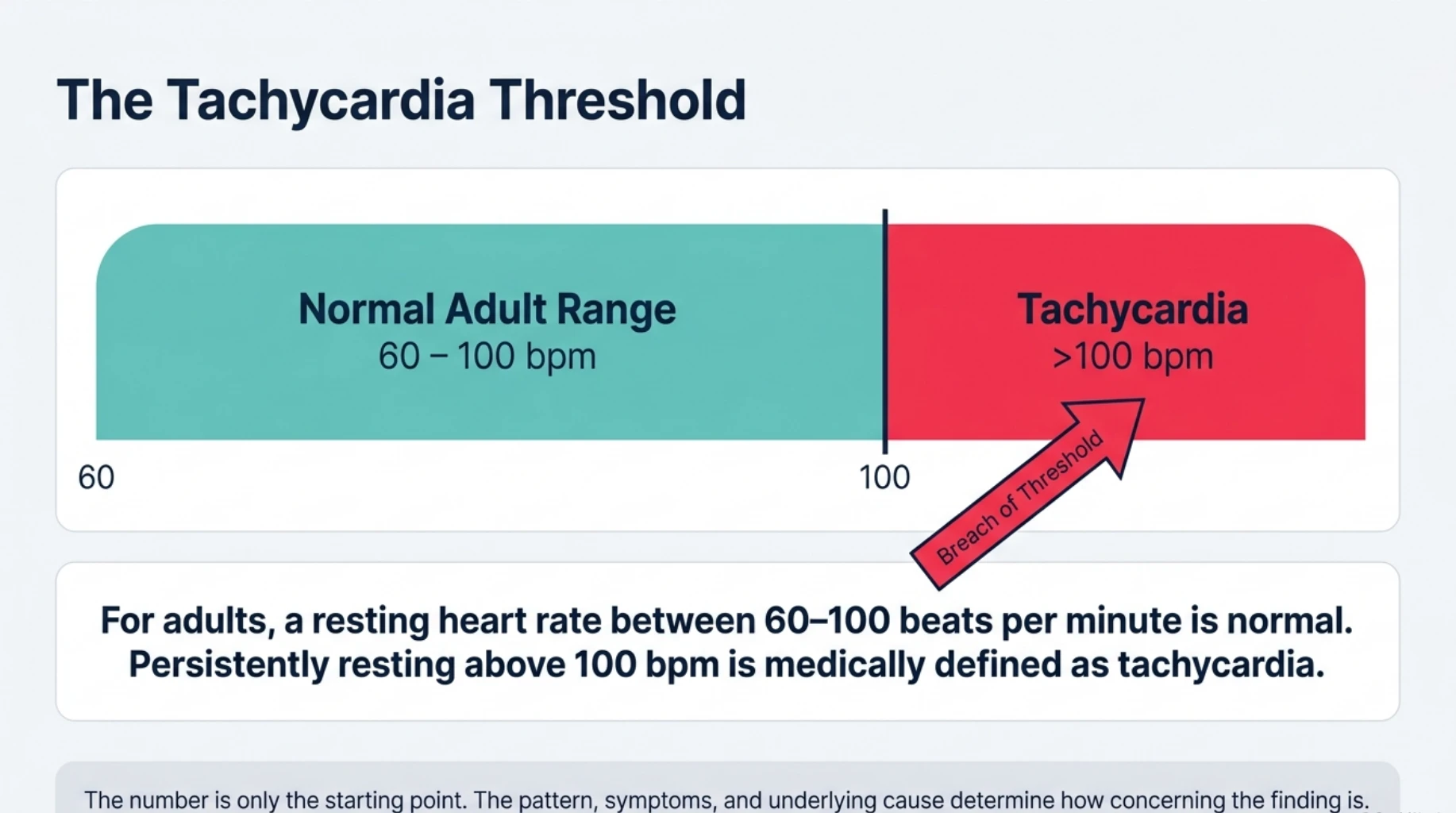
For most adults, a resting heart rate between 60 and 100 beats per minute is generally considered normal. A resting rate above 100 beats per minute is called tachycardia.
That number is only the starting point.
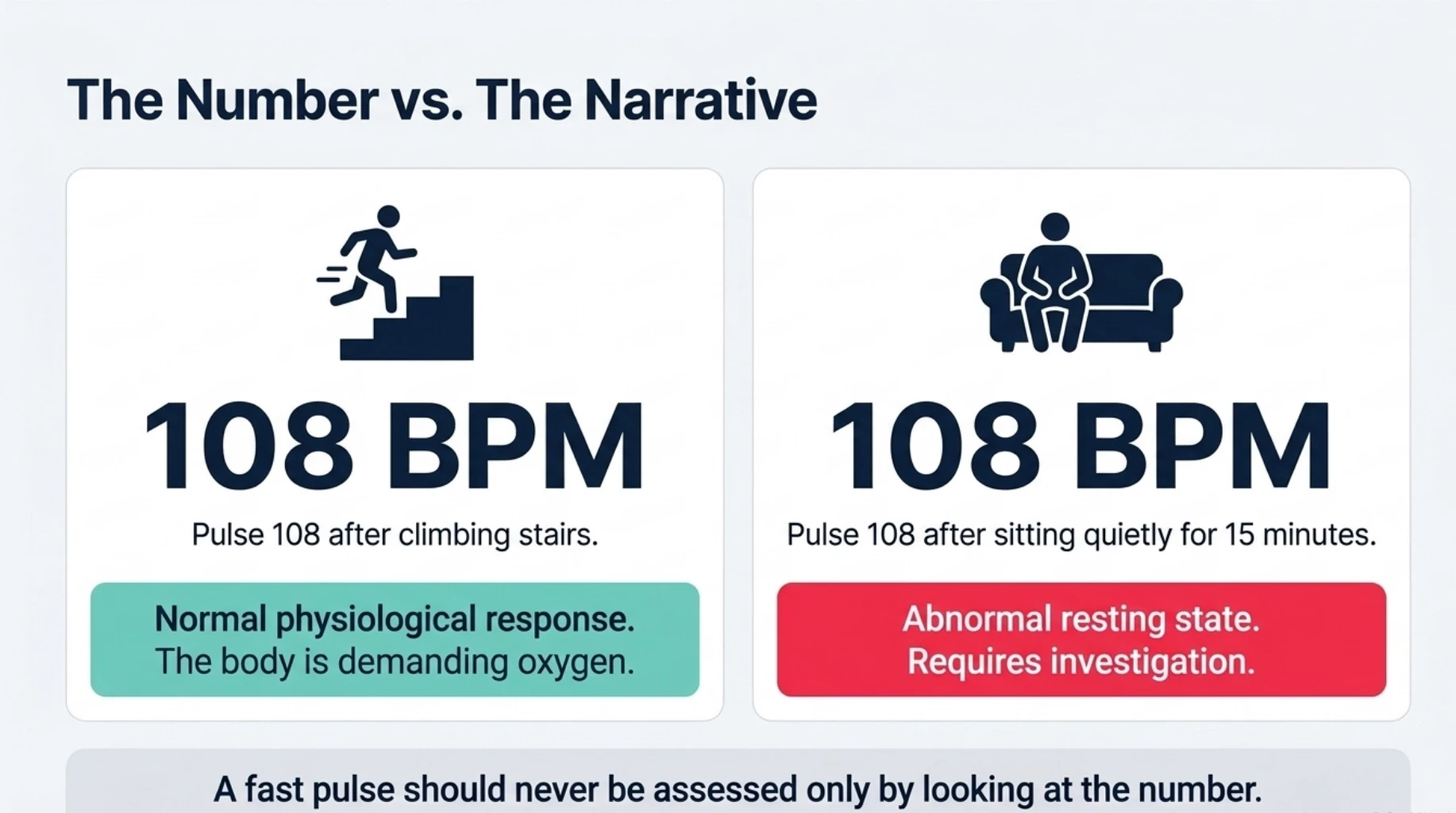
A pulse of 108 after climbing stairs is very different from a pulse of 108 after sitting quietly for ten minutes. A heart rate of 125 during a panic episode is also different from an unexplained rate of 125 associated with chest pain or fainting.
The pattern, symptoms and underlying cause determine how concerning the finding is.

Why Can Your Pulse Be High While Resting?
Eight possible reasons include:
- stress, anxiety or pain
- dehydration or reduced circulating fluid
- fever, infection or another acute illness
- anemia or blood loss
- hyperthyroidism
- caffeine, nicotine, medicines or other stimulants
- an abnormal heart rhythm such as supraventricular tachycardia
- heart, lung or other medical conditions affecting circulation or oxygen levels
MedlinePlus lists causes of tachycardia ranging from temporary triggers such as anxiety, pain, fever and infection to dehydration, anemia, hyperthyroidism, medicines, lung disease and heart conditions.
The cause cannot usually be determined from the pulse number alone.
A heart rate that is persistently high while you are genuinely resting deserves more attention than a brief increase that clearly follows exercise, emotional stress or another temporary trigger.
What Does a High Pulse Rate at Rest Mean?
Your pulse is the number of times your heart beats each minute.
The heart normally speeds up when the body needs more oxygen or circulation—for example during exercise, fever or emotional stress.
At rest, however, the usual adult range is approximately 60–100 beats per minute. A sustained resting heart rate above 100 is medically described as tachycardia.
This does not automatically mean that the electrical system of the heart is abnormal.
Doctors often distinguish between sinus tachycardia and an arrhythmia.
With sinus tachycardia, the heart’s normal pacemaker is still controlling the rhythm, but it is beating faster because the body is responding to something such as:
- dehydration
- infection
- anemia
- pain
- anxiety
- thyroid hormone excess
An abnormal rhythm, by contrast, may arise because electrical impulses are being generated or conducted abnormally within the heart.
High Pulse Rate at Rest Is Not Always an Arrhythmia
This distinction is important.
If someone has a pulse of 112 because they have a high fever and dehydration, simply trying to suppress the heart rate does not address the main problem.
The body may be increasing heart rate to maintain circulation.
On the other hand, a pulse that suddenly jumps from 70 to 170 beats per minute while sitting quietly and then suddenly returns to normal raises a different question, including the possibility of supraventricular tachycardia.
The American Heart Association distinguishes sinus tachycardia from tachycardias such as SVT and ventricular tachycardia, which arise from abnormal electrical rhythms.
That is why the cause matters as much as the number.
How to Check Your Resting Pulse Correctly
Before deciding your resting heart rate is genuinely high, make sure you are measuring it under resting conditions.
MedlinePlus recommends resting for at least 10 minutes before measuring a resting pulse.
A practical approach is to:
- sit or lie quietly
- avoid checking immediately after walking or climbing stairs
- place your index and middle fingers over the artery at the wrist
- count the beats for a full 60 seconds when possible
- notice whether the rhythm feels regular or irregular
The American Heart Association also recommends counting the pulse for 60 seconds when checking manually at the wrist.
Smartwatches and fitness trackers can be useful for showing trends, but an unexpected wearable reading should be interpreted alongside a manually checked pulse and symptoms.
Also record the circumstances.
For example:
Pulse 108 after rushing to work
has a different meaning from:
Pulse 108 every morning after sitting quietly for 15 minutes
A simple record of pulse, symptoms, blood pressure and timing can be useful when discussing the problem with a doctor.
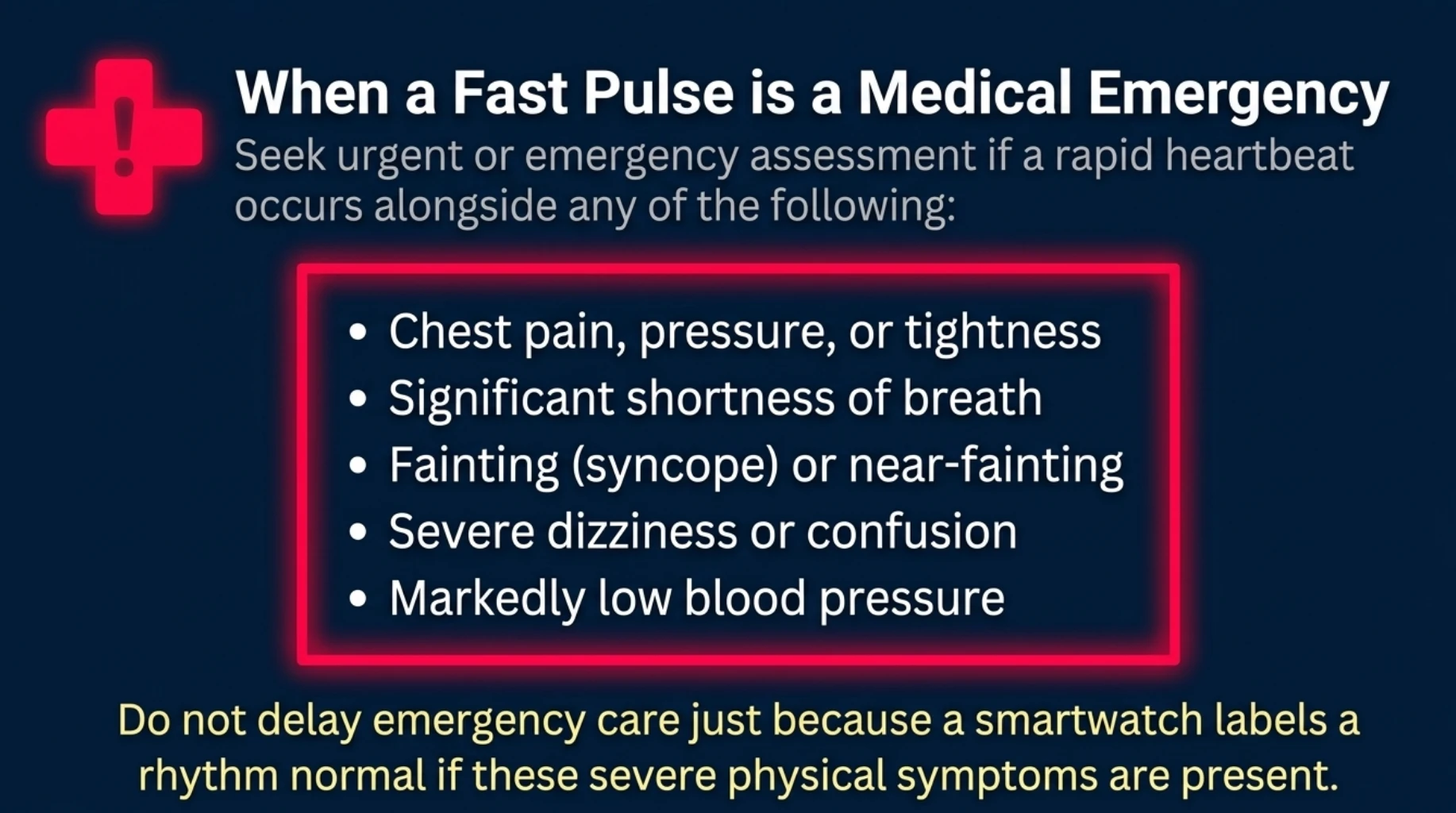
When a Fast Resting Heart Rate Needs Urgent Medical Attention
A fast pulse should never be assessed only by looking at the number.
Associated symptoms may be more important.
Seek urgent medical assessment if a rapid heartbeat occurs with:
- chest pain or pressure
- significant shortness of breath
- fainting or near-fainting
- severe dizziness
- confusion
- marked weakness
- very low blood pressure
- sudden deterioration
Mayo Clinic advises urgent medical attention when tachycardia is accompanied by symptoms such as chest discomfort, shortness of breath, weakness, dizziness or fainting.
MedlinePlus similarly advises emergency evaluation for a rapid irregular pulse associated with chest pain, breathlessness, very low blood pressure or fainting.
A resting pulse that suddenly becomes very rapid and remains elevated without an obvious explanation should also be assessed, particularly when it feels irregular.
Do not delay emergency care because a smartwatch labels the rhythm “normal” if significant symptoms are present.
Reason 1: Stress, Anxiety or Pain
The heart responds directly to the nervous system.
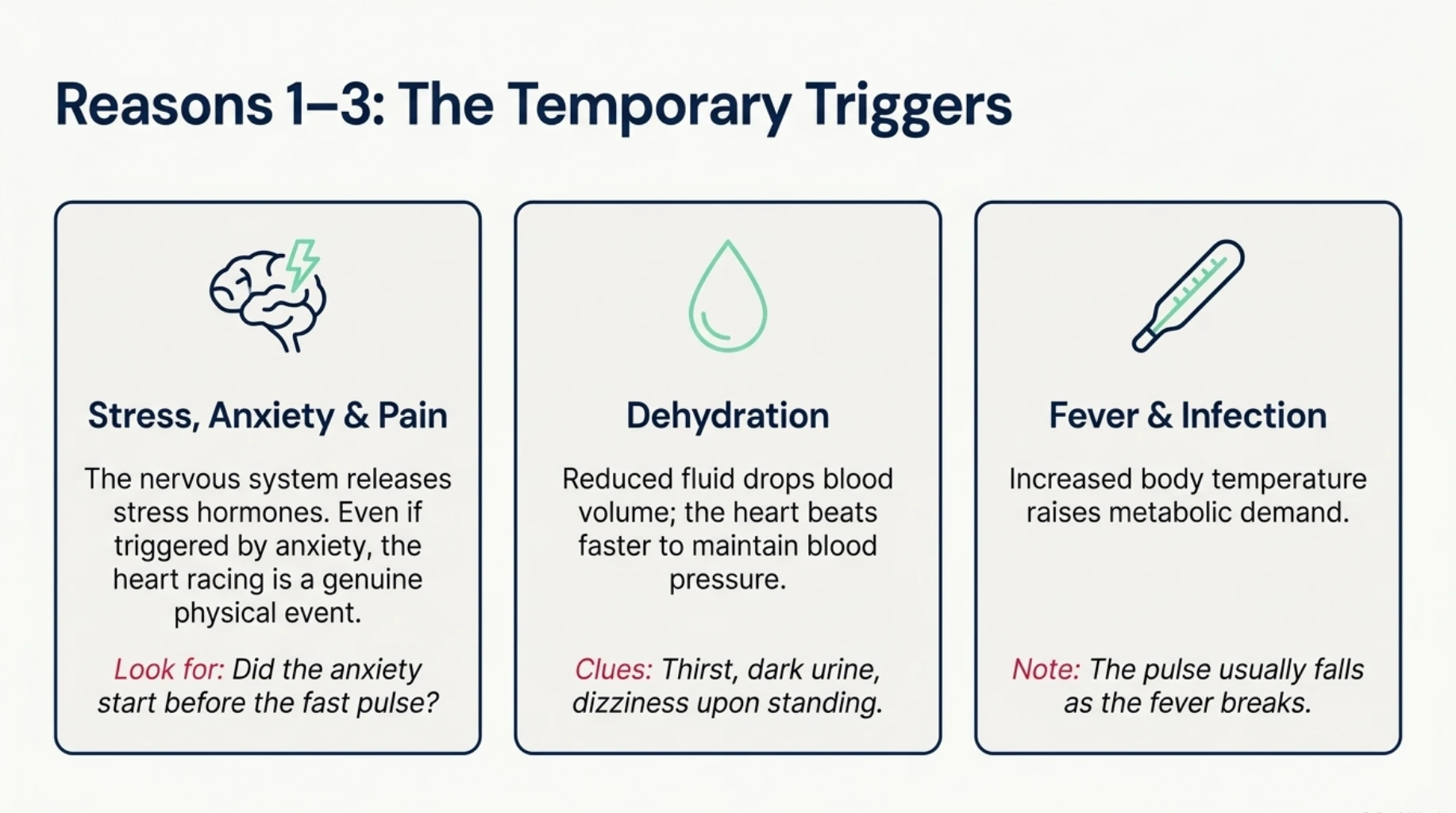
When you feel frightened, anxious, stressed or in pain, the body releases stress hormones that prepare you to respond. One effect is an increase in heart rate.
MedlinePlus lists stress, anxiety and pain among temporary causes of tachycardia.
This can happen even while you are physically sitting still.
Examples include:
- panic attacks
- severe emotional stress
- anxiety before a medical appointment
- acute pain
- sleep deprivation combined with stress
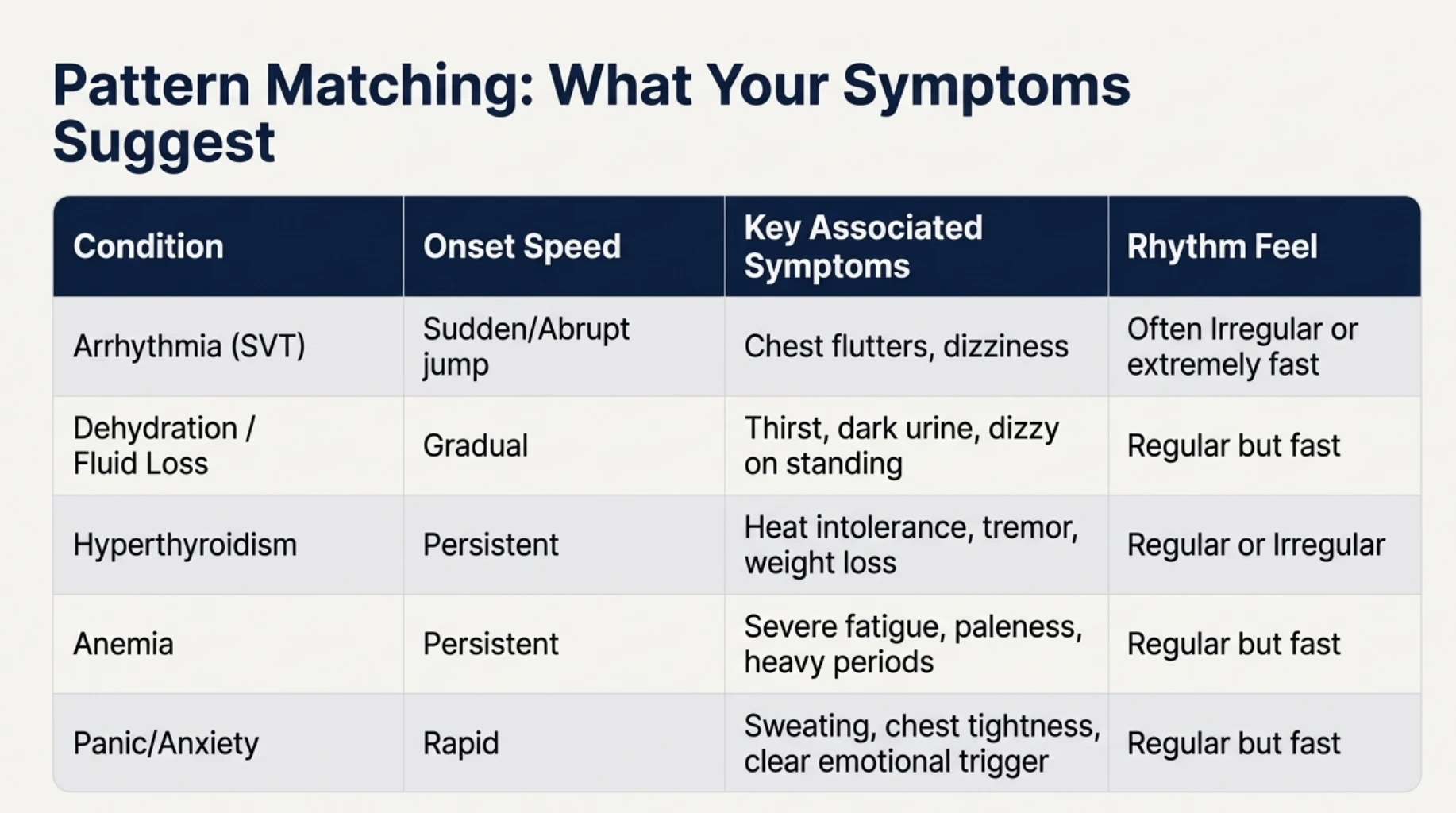
Someone experiencing a panic episode may notice a racing heartbeat, sweating, trembling, chest tightness or rapid breathing.
However, it is important not to label every fast pulse as anxiety.
A person with anemia, hyperthyroidism or an arrhythmia may also feel anxious because the heart is racing.
The sequence matters.
Did anxiety clearly begin first?
Or did an unexplained racing heartbeat appear first and then cause anxiety?
A Fast Resting Heart Rate During Anxiety Can Still Feel Very Physical
An anxiety-related heart-rate increase is a genuine physiological response.
It is not imaginary.
The pulse may rise considerably and then fall again as the stress response settles.
What makes medical review useful is a pattern such as:
- repeated unexplained episodes
- episodes occurring without obvious anxiety
- an irregular rhythm
- fainting or near-fainting
- significant chest discomfort
- a resting rate that stays high long after the emotional trigger has passed
The aim is to avoid both extremes: assuming every episode is a heart disease, or dismissing every rapid pulse as anxiety.
Reason 2: Dehydration or Reduced Blood Volume
When the body loses fluid, the circulating blood volume can fall.
The heart may compensate by beating faster to maintain blood flow and blood pressure.
Dehydration can result from:
- inadequate fluid intake
- heavy sweating
- hot weather
- vomiting
- diarrhea
- fever
- excessive urination
- some diuretic medicines
MedlinePlus specifically lists rapid heartbeat among signs of more significant dehydration.
Clues that dehydration may be contributing include:
- thirst
- dry mouth
- dark urine
- reduced urination
- dizziness when standing
- recent vomiting or diarrhea
- heavy sweating
A fast pulse accompanied by dizziness after standing can be particularly suggestive of reduced circulating volume.
However, drinking several liters of water rapidly is not automatically the correct solution.
People with heart failure, advanced kidney disease or prescribed fluid restrictions may need individualized advice.
Severe dehydration with confusion, fainting, little or no urine, rapid breathing or marked weakness requires prompt medical care.
Reason 3: Fever, Infection or Another Acute Illness
Heart rate often rises when body temperature rises.
Fever increases metabolic demand, and infection can trigger stress hormones that make the heart beat faster.
Both the American Heart Association and MedlinePlus include fever and infection among recognized causes of a rapid heart rate.
This can occur with:
- viral respiratory infections
- urinary infections
- gastrointestinal infections
- pneumonia
- other inflammatory illnesses
In many cases, the pulse falls as the fever, dehydration and underlying illness improve.
The pattern becomes more concerning when the heart rate appears disproportionately high, stays elevated despite improvement in fever, or occurs with:
- significant breathlessness
- confusion
- faintness
- very low blood pressure
- reduced urine output
- severe weakness
A fast pulse during illness can sometimes be an early clue that the body is under substantial physiological stress.
Therefore, avoid focusing only on lowering the pulse number.
The infection, hydration status, oxygen level and overall condition may be more important than the heart rate itself.
Reason 4: Anemia or Blood Loss
Anemia means the blood has a lower-than-normal amount of healthy red blood cells or hemoglobin.
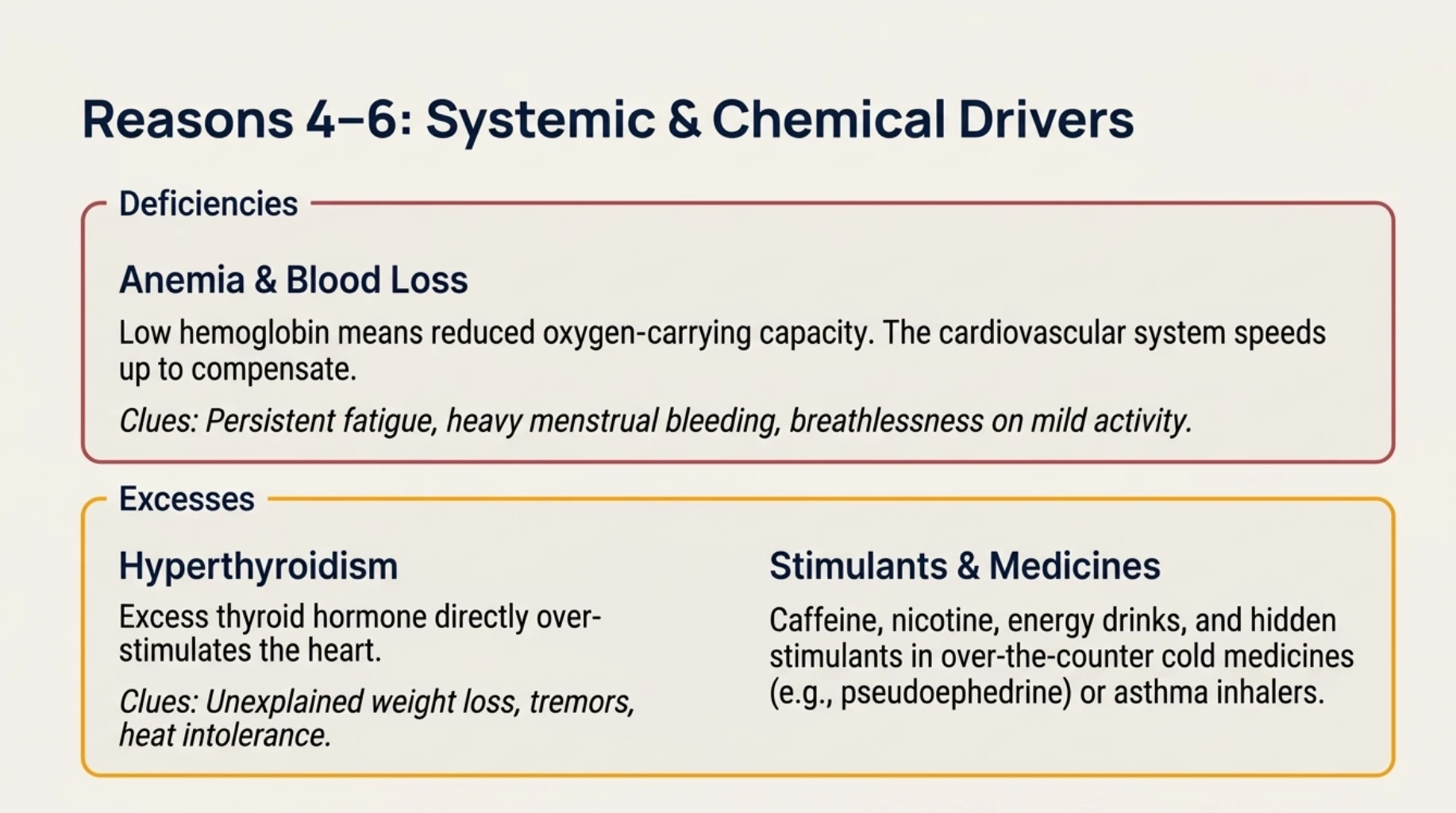
Because hemoglobin carries oxygen, the cardiovascular system may compensate by increasing heart rate when oxygen-carrying capacity falls.
NHLBI notes that anemia can cause fatigue, weakness, dizziness, shortness of breath and abnormal heart rhythm, while MedlinePlus lists rapid heart rate among examination findings in anemia.
Iron-deficiency anemia is one common example.
Possible contributing factors include:
- heavy menstrual bleeding
- gastrointestinal blood loss
- inadequate iron intake
- pregnancy
- other medical conditions affecting blood production or absorption
A complete blood count is usually the starting investigation when anemia is suspected.
Rapid Pulse With Fatigue, Breathlessness or Heavy Periods
Anemia becomes particularly relevant when a fast resting pulse occurs alongside:
- persistent fatigue
- reduced exercise tolerance
- breathlessness on mild activity
- dizziness
- paleness
- headaches
- heavy menstrual bleeding
NHLBI identifies iron deficiency from blood loss as an important cause of iron-deficiency anemia, including gastrointestinal bleeding and other forms of ongoing blood loss.
If anemia is confirmed, the next question is not simply whether to take iron.
The cause should also be identified.
Repeatedly taking iron without understanding why hemoglobin or iron stores are low can delay investigation of significant blood loss or another medical problem.
Reason 5: An Overactive Thyroid
Thyroid hormone has a direct effect on the cardiovascular system.
When the thyroid produces too much hormone—a condition called hyperthyroidism—the heart may beat faster than usual even when you are resting.
NIDDK lists a rapid or irregular heartbeat among common symptoms of hyperthyroidism. Other clues can include:
- unexplained weight loss despite normal or increased appetite
- feeling unusually hot
- increased sweating
- shaky hands
- nervousness or irritability
- difficulty sleeping
- frequent bowel movements
- muscle weakness
- enlargement of the thyroid gland
Hyperthyroidism becomes more relevant when a persistent fast pulse occurs together with several of these symptoms.
For example:
resting pulse 105–115 + heat intolerance + tremor + unexplained weight loss
deserves a different evaluation from:
pulse 105 immediately after several cups of coffee.
A blood test measuring TSH and thyroid hormones can help determine whether excess thyroid activity is contributing.
Do not start, stop or adjust thyroid medicines solely because your pulse is elevated.
Someone already taking levothyroxine can also develop excessive thyroid-hormone exposure if the prescribed dose becomes too high for their current requirement. The medication history therefore matters as much as the symptoms.
Untreated hyperthyroidism can also increase the risk of abnormal heart rhythms and other cardiovascular complications, which is another reason a persistent unexplained fast pulse deserves assessment.
Reason 6: Caffeine, Nicotine, Medicines or Other Stimulants
Sometimes a fast pulse is being driven by something consumed or prescribed rather than an underlying heart disorder.
Potential contributors include:
- large amounts of caffeine
- energy drinks
- nicotine
- some cold and allergy medicines
- certain asthma medicines
- stimulant medicines
- recreational stimulant drugs
- excessive alcohol in some situations
The American Heart Association notes that caffeine stimulates sympathetic nervous-system activity and can transiently increase heart rate and blood pressure. Individual responses vary considerably.
This is why one person may drink two cups of coffee without noticing any cardiovascular effect while another experiences palpitations after a strong coffee or energy drink.
Check Cold, Allergy and Asthma Medicines
Over-the-counter medicines are easy to overlook.
Decongestants containing substances such as pseudoephedrine or phenylephrine can cause palpitations in susceptible people. Some inhaled asthma medicines can also raise heart rate temporarily. MedlinePlus lists caffeine, nicotine, decongestants and several other medicines among potential causes of palpitations or tachycardia.
If your pulse began increasing after a medicine change, bring the actual medicine strip, bottle or inhaler to the consultation.
Do not abruptly stop an important prescribed medicine without medical advice.
The useful question is:
“Did the heart-rate change begin after I started or increased something?”
rather than simply assuming that every high pulse is cardiac disease.
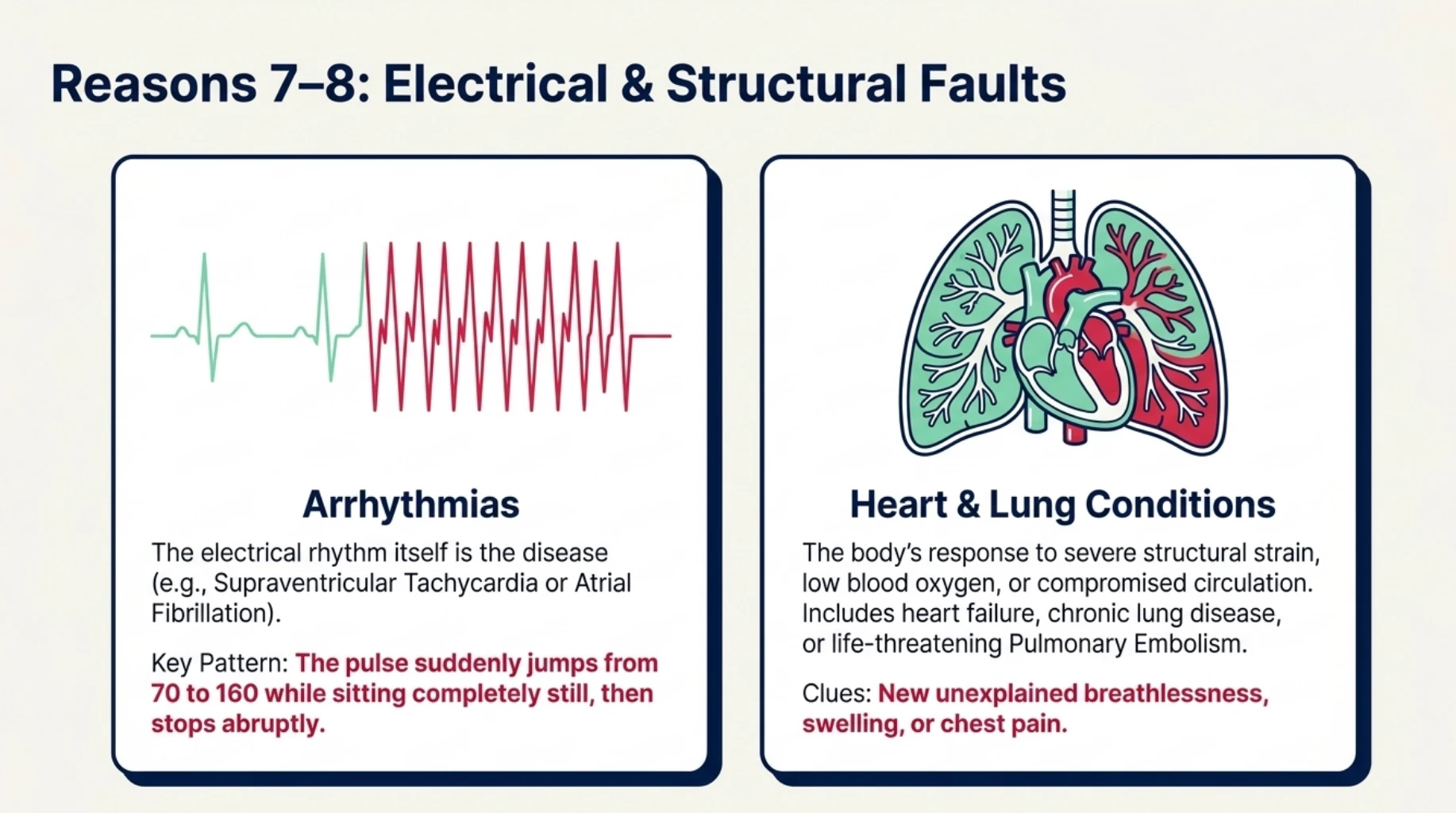
Reason 7: An Abnormal Heart Rhythm
Sometimes the problem is the rhythm itself.
An arrhythmia occurs when the normal sequence of electrical impulses controlling the heartbeat is altered.
A rapid arrhythmia can make the heart beat:
- too fast
- irregularly
- suddenly
- in repeated episodes
The American Heart Association distinguishes several forms of tachycardia, including supraventricular tachycardia (SVT) and ventricular tachycardia.
SVT often produces a very rapid heartbeat arising above the ventricles.
People may describe:
“My heart suddenly took off.”
The pulse can begin abruptly and sometimes stop just as abruptly.
Symptoms may include:
- pounding or fluttering
- dizziness
- weakness
- shortness of breath
- chest discomfort
- near-fainting or fainting
Another possible rhythm problem is atrial fibrillation, which often produces an irregular pulse. Some people experience obvious palpitations, while others may notice only fatigue, breathlessness or reduced exercise tolerance.
A Pulse That Starts and Stops Suddenly May Need an ECG
The timing pattern provides an important clue.
Compare:
Pulse slowly rises from 75 to 105 during fever
with:
Pulse suddenly changes from 70 to 160 while sitting quietly
The second pattern raises greater suspicion for a rhythm disturbance.
An electrocardiogram (ECG or EKG) is the most common initial test used to diagnose an arrhythmia.
However, the ECG may look normal if the episode has already ended.
When symptoms occur intermittently, longer rhythm monitoring may be considered. NHLBI describes Holter monitors and other longer-term recorders as options for capturing rhythms that do not appear during a standard ECG.
If your smartwatch records an ECG tracing during an episode, save it and show it to your clinician. It may provide useful information, although a consumer device does not replace formal medical assessment.
Reason 8: Heart, Lung or Other Medical Conditions
A persistent high resting pulse can sometimes be the body’s response to a more significant medical problem.
Recognized causes of sinus tachycardia include:
- heart failure
- previous heart-muscle injury
- very low blood pressure
- chronic lung disease
- severe bleeding
- low oxygen levels
The heart speeds up because circulation or oxygen delivery is under strain.
Heart Conditions
Heart failure can be accompanied by:
- breathlessness
- reduced exercise capacity
- swelling of the feet or legs
- difficulty breathing when lying flat
- fatigue
A rapid pulse in this setting is not necessarily the main disease—it may be part of the body’s response.
Lung Conditions
Chronic lung disease or low blood oxygen can increase heart rate.
A particularly important acute cause is pulmonary embolism, in which a blood clot blocks an artery in the lungs. Pulmonary embolism can be life-threatening and requires urgent assessment.
A sudden fast pulse accompanied by new unexplained breathlessness, chest pain, fainting or coughing blood requires urgent medical attention.
Risk is particularly relevant after circumstances such as:
- recent major surgery
- prolonged immobility
- a long period of bed rest
- previous deep-vein thrombosis
- pregnancy or the weeks after childbirth
- certain hormone-based medicines
Most people with a mildly elevated resting pulse do not have pulmonary embolism.
The purpose of recognizing these symptoms is to distinguish ordinary sinus tachycardia from situations requiring rapid assessment.
What Tests May Be Needed for a Persistent High Pulse?
There is no single “fast pulse blood-test package.”
Investigation should follow the history, pulse pattern and accompanying symptoms.
ECG
An ECG records the electrical activity of the heart and is usually the key first test when an abnormal rhythm is suspected.
It can help determine whether the rhythm is:
- normal sinus rhythm
- sinus tachycardia
- atrial fibrillation
- another tachyarrhythmia
Complete Blood Count
A CBC can help detect anemia or evidence suggesting another blood disorder.
If iron deficiency is suspected, ferritin or additional iron studies may also be appropriate.
Thyroid Tests
TSH and thyroid-hormone testing may be useful when hyperthyroidism is possible.
Electrolytes and Kidney Function
Potassium, magnesium and other electrolyte abnormalities can influence cardiac rhythm. NHLBI includes electrolyte testing among blood investigations used when arrhythmia is being assessed.
Longer Heart-Rhythm Monitoring
If the ECG is normal but episodes continue, a Holter monitor or another ambulatory rhythm monitor may be useful.
Other Tests
Depending on the clinical picture, assessment may include:
- blood pressure
- oxygen saturation
- blood glucose
- echocardiography
- chest imaging
- additional tests for infection or other suspected causes
Testing should answer a clinical question rather than simply generating a large number of reports.
Why the Cause Matters More Than Simply Lowering the Number
A common reaction to tachycardia is:
“How do I get my heart rate down?”
But treatment depends on why it is high.
Consider four people with the same resting pulse of 110:
Person 1: dehydrated after repeated diarrheic
Person 2: severely anemic
Person 3: has hyperthyroidism
Person 4: is experiencing an abnormal tachyarrhythmia
Their pulse numbers are identical.
Their treatment is not.
The American Heart Association specifically advises that sinus tachycardia should be managed by identifying and treating its cause rather than simply suppressing the heart rate. In some circumstances, slowing a compensatory fast pulse without treating the underlying problem could be harmful.
This is why taking a heart-rate-lowering medicine without evaluation is inappropriate.
Likewise, do not use someone else’s beta blocker simply because your smartwatch repeatedly shows a high pulse.
When Should You See a Doctor for a High Resting Pulse?
Arrange medical review when your resting pulse:
- repeatedly remains above 100 beats per minute
- is becoming progressively faster
- occurs without an obvious temporary trigger
- is associated with frequent palpitations
- feels irregular
- begins and stops suddenly
- occurs with persistent fatigue
- accompanies unexplained weight loss or tremor
- occurs with breathlessness on ordinary activity
- began after a medication change
A routine consultation can often identify whether the heart rate appears to be sinus tachycardia and whether further tests are needed.
Seek urgent or emergency care if a rapid heartbeat is accompanied by:
- chest pain or pressure
- severe shortness of breath
- fainting
- severe dizziness
- confusion
- markedly low blood pressure
- sudden significant deterioration
These symptoms are recognized warning signs of potentially serious tachycardia or another acute cardiovascular problem.
High Pulse Rate Assessment at Diet Plus Minus in Dwarka
A persistent or unexplained fast resting pulse can usually be evaluated initially in general medical care.
Dr. Pankaj Kumar can review:
- resting heart-rate readings
- whether the rhythm feels regular or irregular
- blood pressure
- associated dizziness or breathlessness
- hydration and recent illness
- anemia risk
- thyroid symptoms
- caffeine and nicotine use
- prescription and over-the-counter medicines
- previous ECG or smartwatch tracings
- relevant blood-test reports
- whether an ECG or targeted investigations are appropriate
- whether cardiology or other specialist referral is needed
Bring several pulse readings rather than relying on one measurement.
If available, note:
- time of day
- pulse
- blood pressure
- symptoms
- what you were doing immediately beforehand
Dr. Pankaj Kumar
MBBS, DNB Family Medicine, Sir Ganga Ram Hospital
General & Lifestyle Physician
Special interest in Diabetes
Diet Plus Minus
13A, Pocket-2, Sector-6, Doctors Lane
Dwarka, New Delhi – 110075
India
Book an Appointment with Dr. Pankaj Kumar
Frequently Asked Questions
Is a Resting Pulse Over 100 High?
Yes.
For most adults, a resting heart rate above 100 beats per minute meets the general definition of tachycardia.
The cause and symptoms determine how concerning it is.
Is a Resting Heart Rate of 105 Dangerous?
Not necessarily.
A pulse of 105 may occur temporarily with dehydration, stress, fever or pain.
If it repeatedly remains above 100 while you are genuinely resting, it is reasonable to have the cause assessed.
What About a Resting Pulse of 120?
A persistent resting pulse around 120 deserves medical attention, particularly if there is no obvious trigger.
Urgency increases if it is associated with chest pain, breathlessness, fainting, severe dizziness or low blood pressure.
Can Anxiety Cause a Pulse of 120?
Yes, anxiety and panic can substantially increase heart rate.
However, an unexplained recurrent pulse of 120 should not automatically be attributed to anxiety without considering anaemia, hyperthyroidism, medicines, dehydration and arrhythmias.
Can Dehydration Cause a Fast Heart Rate?
Yes.
Reduced circulating fluid volume can make the heart beat faster to maintain circulation.
Thirst, dark urine, reduced urination and dizziness on standing may provide additional clues.
Can Anemia Cause a High Pulse?
Yes.
When hemoglobin is low, the cardiovascular system may compensate for reduced oxygen-carrying capacity by increasing heart rate.
Anemia becomes more plausible when tachycardia occurs with fatigue, breathlessness, dizziness or significant blood loss.
Can Thyroid Problems Cause a Fast Pulse?
An overactive thyroid can.
Hyperthyroidism can cause rapid or irregular heartbeat along with weight loss, tremor, sweating, heat intolerance and sleep disturbance.
An underactive thyroid is more commonly associated with a slower heart rate.
Can Coffee Increase Resting Heart Rate?
Caffeine can transiently increase sympathetic nervous-system activity and may raise heart rate in some people.
Sensitivity varies.
A high pulse after several strong coffees or energy drinks should be interpreted differently from persistent tachycardia in someone consuming little caffeine.
Can Cold Medicine Increase Heart Rate?
Some decongestants, including pseudoephedrine and phenylephrine, can contribute to palpitations or a rapid pulse.
Check the active ingredients in over-the-counter products.
Can an Inhaler Increase Heart Rate?
Some bronchodilator medicines, including albuterol/salbutamol-type medicines, may temporarily increase heart rate. MedlinePlus lists albuterol among medicines associated with tachycardia.
Do not stop a prescribed inhaler solely because of this possibility. Discuss repeated or troublesome symptoms with your clinician.
What Is the Difference Between Tachycardia and Palpitations?
Tachycardia means the heart rate is objectively fast.
Palpitations are the sensation of noticing your heartbeat—such as pounding, fluttering or skipped beats.
You can experience palpitations even when the pulse rate is not above 100, and tachycardia can sometimes occur without noticeable palpitations.
Does an Irregular Fast Pulse Need an ECG?
An ECG is the standard initial test for identifying many arrhythmias.
If episodes are intermittent and the ECG between episodes is normal, longer monitoring may sometimes be required.
Can a Smartwatch Diagnose an Arrhythmia?
A smartwatch can provide useful pulse and rhythm information, and some devices can record a single-lead ECG.
However, wearable data should not replace a clinical ECG and medical interpretation when symptoms or repeated abnormalities are present.
Save unusual readings or tracings to show your clinician.
What if My Heart Rate Is Normal Sitting but Jumps When I Stand?
That is a different pattern from persistent resting tachycardia.
Dehydration, medication effects and orthostatic disorders are among possibilities. Recording lying and standing heart rate and blood pressure can help guide evaluation.
Should I Take a Beta Blocker for a High Pulse?
Not without identifying the cause and obtaining appropriate medical advice.
A beta blocker may be appropriate for certain conditions, but a fast pulse caused by dehydration, severe anemia or another compensatory process requires treatment of the underlying problem.
When Is a High Pulse Rate an Emergency?
Seek urgent medical care when a rapid pulse is accompanied by chest pain, significant breathlessness, fainting, severe dizziness, confusion or rapid clinical deterioration.
Author Box
Dr. Pankaj Kumar
MBBS, DNB Family Medicine, Sir Ganga Ram Hospital
General & Lifestyle Physician
Special interest in Diabetes
Dr. Pankaj Kumar provides general medical and lifestyle-based care at Diet Plus Minus in Dwarka, New Delhi. His clinical approach includes assessment of fast pulse, blood pressure, anemia risk, thyroid concerns, medication effects and broader cardiometabolic factors, with cardiology or other specialist referral when appropriate.
Medical Disclaimer
This article provides general educational information and does not replace an individual medical consultation, physical examination, ECG, diagnosis or treatment plan.
Do not start, stop or change beta blockers, thyroid medicines, blood-pressure medicines or other prescription treatment solely because your pulse is elevated.
Seek urgent medical attention for a rapid heart rate accompanied by persistent chest pain, significant breathlessness, fainting, severe dizziness, confusion or another major acute deterioration.
References
- American Heart Association. Tachycardia: Fast Heart Rate. Current AHA guidance defining tachycardia, distinguishing sinus tachycardia from SVT and ventricular tachycardia, and outlining common causes and symptoms.
- National Heart, Lung, and Blood Institute. Arrhythmias—Diagnosis. NIH guidance covering ECG, blood tests, electrolyte and thyroid assessment, Holter monitoring and other investigations for suspected arrhythmias.
- MedlinePlus. Fast Heart Rate—Tachycardia. Updated 2026. Reviews causes including dehydration, hyperthyroidism, lung disease, medicines and hypoglycemia, together with warning symptoms and evaluation.
- National Institute of Diabetes and Digestive and Kidney Diseases. Hyperthyroidism (Overactive Thyroid). Current NIH guidance describing rapid or irregular heartbeat, weight loss, tremor, heat intolerance and other symptoms of excess thyroid hormone.
- MedlinePlus. Heart Palpitations. Reviews caffeine, nicotine, decongestants, stimulant drugs, thyroid disease, electrolyte abnormalities and heart conditions as causes of palpitations.
- National Heart, Lung, and Blood Institute. Arrhythmias—Symptoms. NIH guidance describing palpitations, dizziness, fainting, chest discomfort, breathing difficulty and other manifestations of abnormal heart rhythms.
- American Heart Association. Caffeine and Cardiovascular Disease. Scientific statement summary updated July 2026 describing caffeine’s effects on sympathetic activity, heart rate and blood pressure and the limitations of current evidence.
- MedlinePlus. Pulmonary Embolism. Updated 2026. Reviews pulmonary embolism, risk factors and the need for urgent assessment of this potentially life-threatening condition.
Related reading and care options

Written by Dr. Pankaj Kumar
General & Lifestyle Physician in Dwarka Sector 6, New Delhi · MBBS, DNB (Family Medicine), DNHE · 16 years of experience.
About the doctor →Book a consultation → Beyond Blood Sugar
 The 90-Day Prediabetes Turnaround
 The Indian Diabetes Diet Reset
 Eat to Beat Gout
 Why Is My Hair Falling?
 The 30-Day Inflammation Reset