The idea of a “cheat day” is very common in weight loss and fitness culture. Many people follow a diet strictly during the week and then allow themselves one day to eat anything they want. For some individuals, this feels mentally relaxing and helps them stay consistent. However, for many others, cheat days quietly slow long-term health progress.
The problem is not one occasional indulgence. One meal outside the usual plan does not destroy progress. The real issue begins when a cheat day becomes a full day of uncontrolled eating, emotional reward, overeating, and repeated return to ultra-processed foods. Recent reviews suggest that cheat meals are usually defined as short pauses from restriction with relaxed intake, but their actual effect depends heavily on behavior, mindset, and total intake.
Understanding cheat days properly is important because long-term health is not built through perfection. It is built through sustainable habits. When cheat days repeatedly disturb appetite, digestion, blood sugar, cravings, sleep, and consistency, they may delay progress in weight loss, fatty liver, diabetes control, cholesterol balance, and metabolic health.

What Is a Cheat Day?
A cheat day usually means taking a planned break from a diet and eating foods that are normally restricted. This may include sweets, fried foods, fast food, bakery items, sugary drinks, desserts, or heavy restaurant meals.
Some people use the term casually for one relaxed meal. Others use it for a full day where they eat without structure. This difference is very important. A controlled flexible meal is very different from a full day of overeating.
When the concept is used carefully, occasional flexibility may help some people avoid feeling deprived. But when cheat days become a weekly cycle of restriction followed by overeating, they can create a pattern that works against long-term health.
Why Cheat Days Can Become a Problem
The biggest problem with cheat days is the mindset behind them. The word “cheat” itself creates a negative relationship with food. It suggests that healthy eating is punishment and tasty food is a reward for suffering through the week.
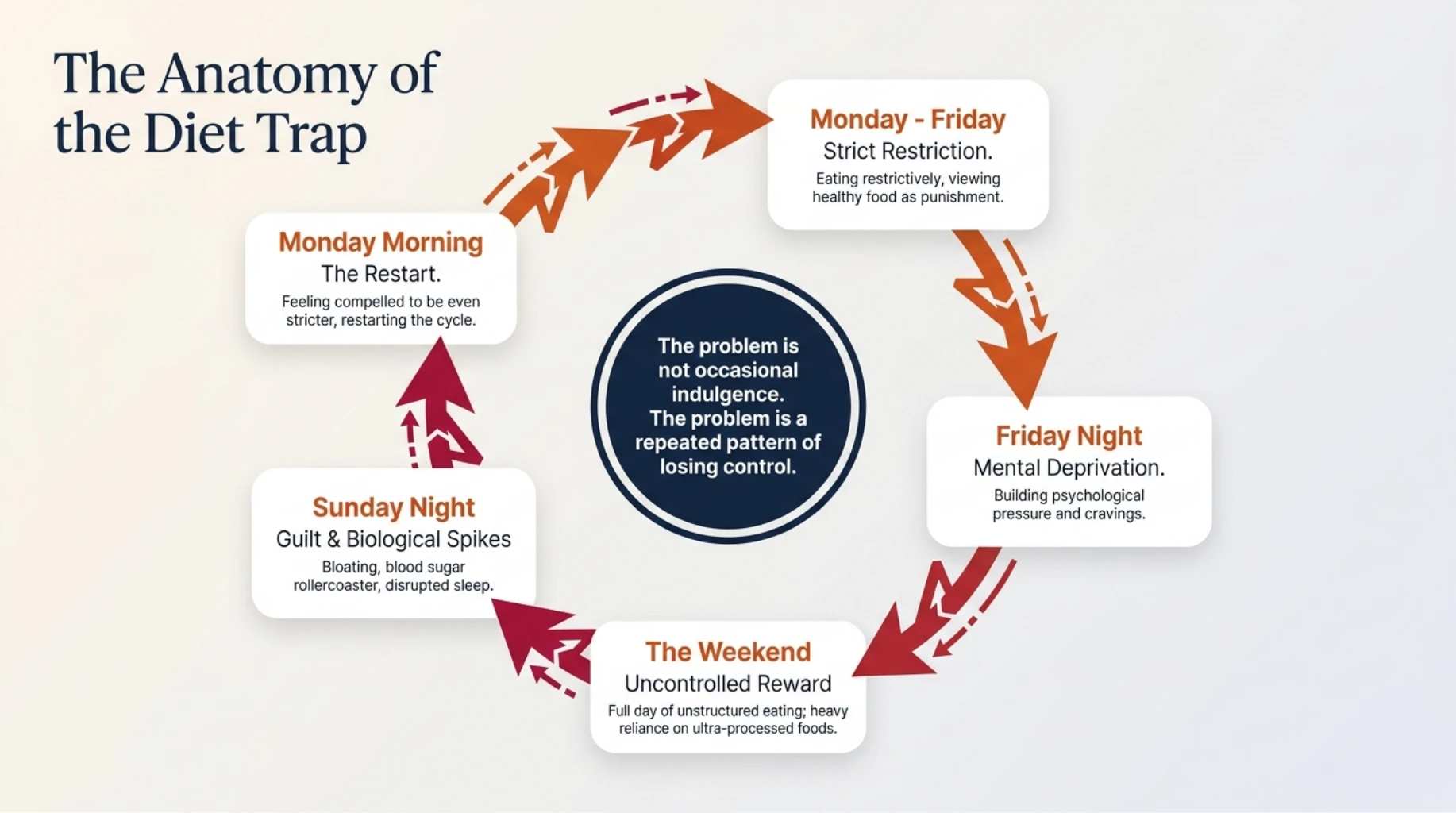
This approach often creates an unhealthy cycle. A person eats very restrictively from Monday to Friday, feels deprived, then overeats on the weekend. After that, guilt returns, and the person tries to become even stricter again. This cycle is difficult to maintain and often leads to frustration.
Long-term health progress requires a better relationship with food. Instead of “cheating,” it is usually healthier to create a flexible eating pattern where enjoyable foods are planned in reasonable portions without guilt or loss of control.
Hidden Reason 1: Cheat Days Can Erase Weekly Calorie Deficit
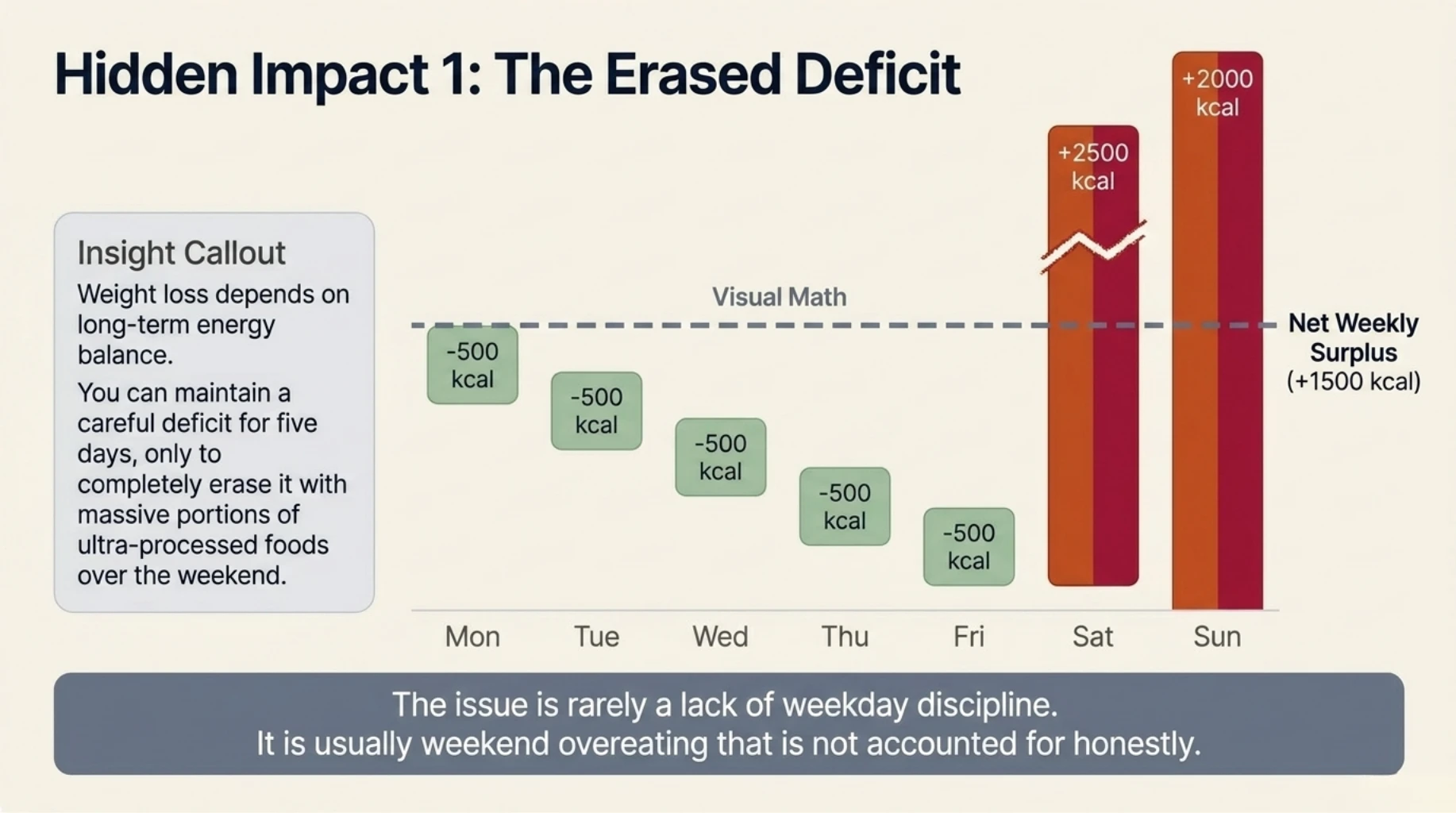
Weight loss depends partly on long-term energy balance. Many people create a moderate calorie deficit during weekdays but unintentionally erase it during one or two high-calorie cheat days.
For example, a person may reduce intake carefully for five days but consume large portions of pizza, sweets, fried snacks, sugary drinks, and desserts during the weekend. The total weekly calorie intake may then become much higher than expected.
This is why some people feel they are “dieting properly” but still do not lose weight. The issue is not always weekday discipline. Sometimes the problem is weekend overeating that is not counted honestly.
Hidden Reason 2: Cheat Days Often Increase Ultra-Processed Food Intake
Most cheat days are not built around homemade balanced meals. They usually involve ultra-processed foods such as fast food, desserts, packaged snacks, sweet beverages, and refined flour products.
This matters because ultra-processed foods are strongly associated with weight gain and metabolic disease risk. Reviews have linked higher ultra-processed food intake with obesity and cardiometabolic problems, and these foods are often energy-dense, highly palatable, and easy to overconsume.
When cheat days repeatedly bring these foods back into the routine, cravings may increase again. Appetite control becomes harder, and the transition back to healthy eating feels more difficult after every weekend.
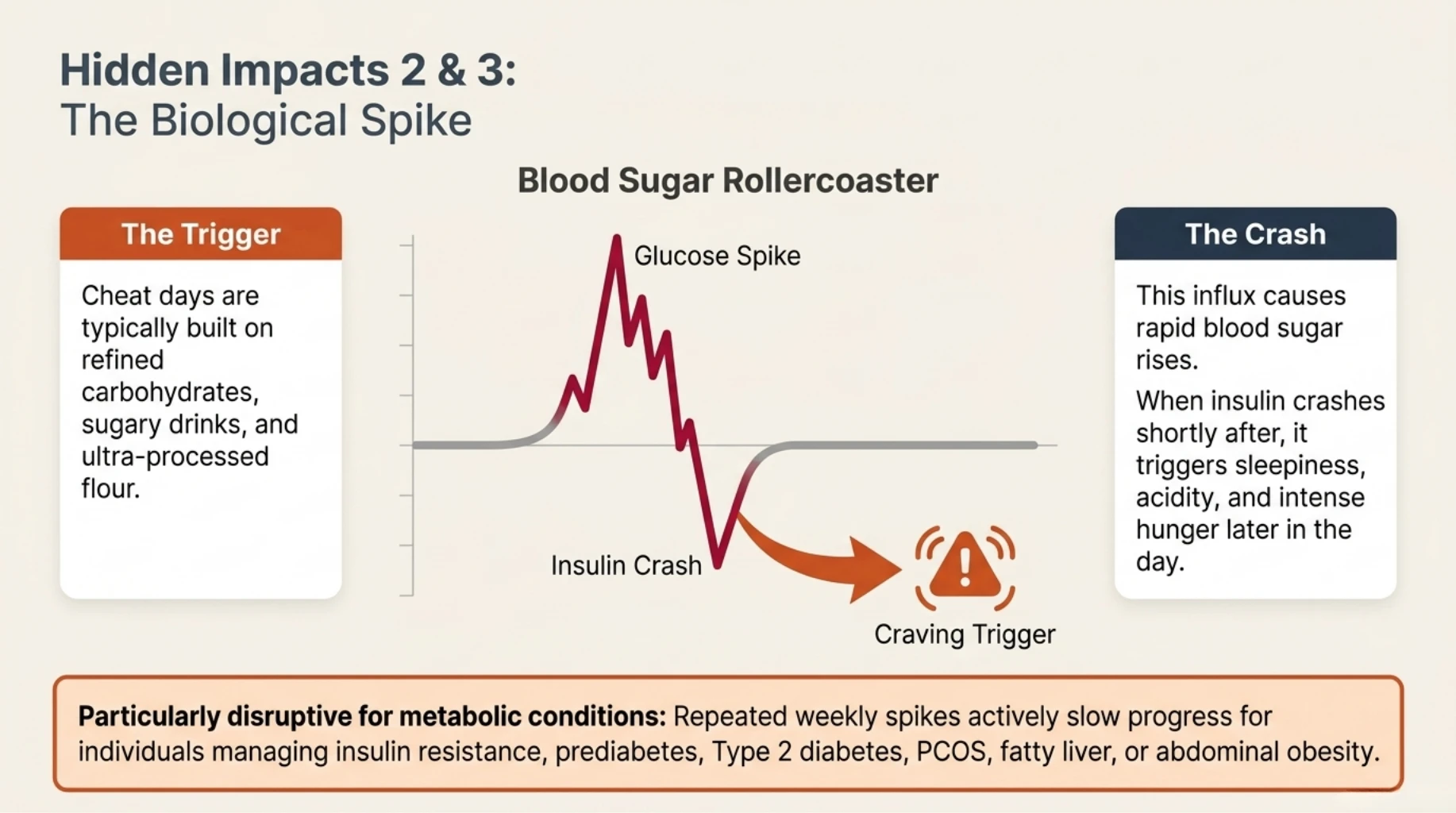
Hidden Reason 3: Cheat Days Can Trigger Blood Sugar Spikes
Cheat days commonly include refined carbohydrates and sugary foods. These foods may cause rapid blood sugar rises, especially in people with insulin resistance, prediabetes, type 2 diabetes, PCOS, fatty liver, or abdominal obesity.
A large high-carbohydrate meal may also increase sleepiness, cravings, acidity, bloating, and hunger later in the day. For individuals trying to improve metabolic health, repeated weekly spikes can slow progress.
This does not mean carbohydrates should be feared. The issue is uncontrolled intake of refined carbohydrates, sugary drinks, and ultra-processed foods in large quantities.
Why the Problem Is Usually the Pattern, Not One Meal
One birthday meal, festival meal, or family dinner does not ruin health progress. Problems develop when cheat days become a repeated pattern of losing control, overeating, guilt, and restarting.
Long-term health improves through consistency. A flexible, realistic plan is usually better than a strict plan that repeatedly breaks down every weekend.
Hidden Reason 4: Cheat Days Can Increase Cravings Throughout the Week
One of the biggest challenges with cheat days is their effect on appetite and food cravings.
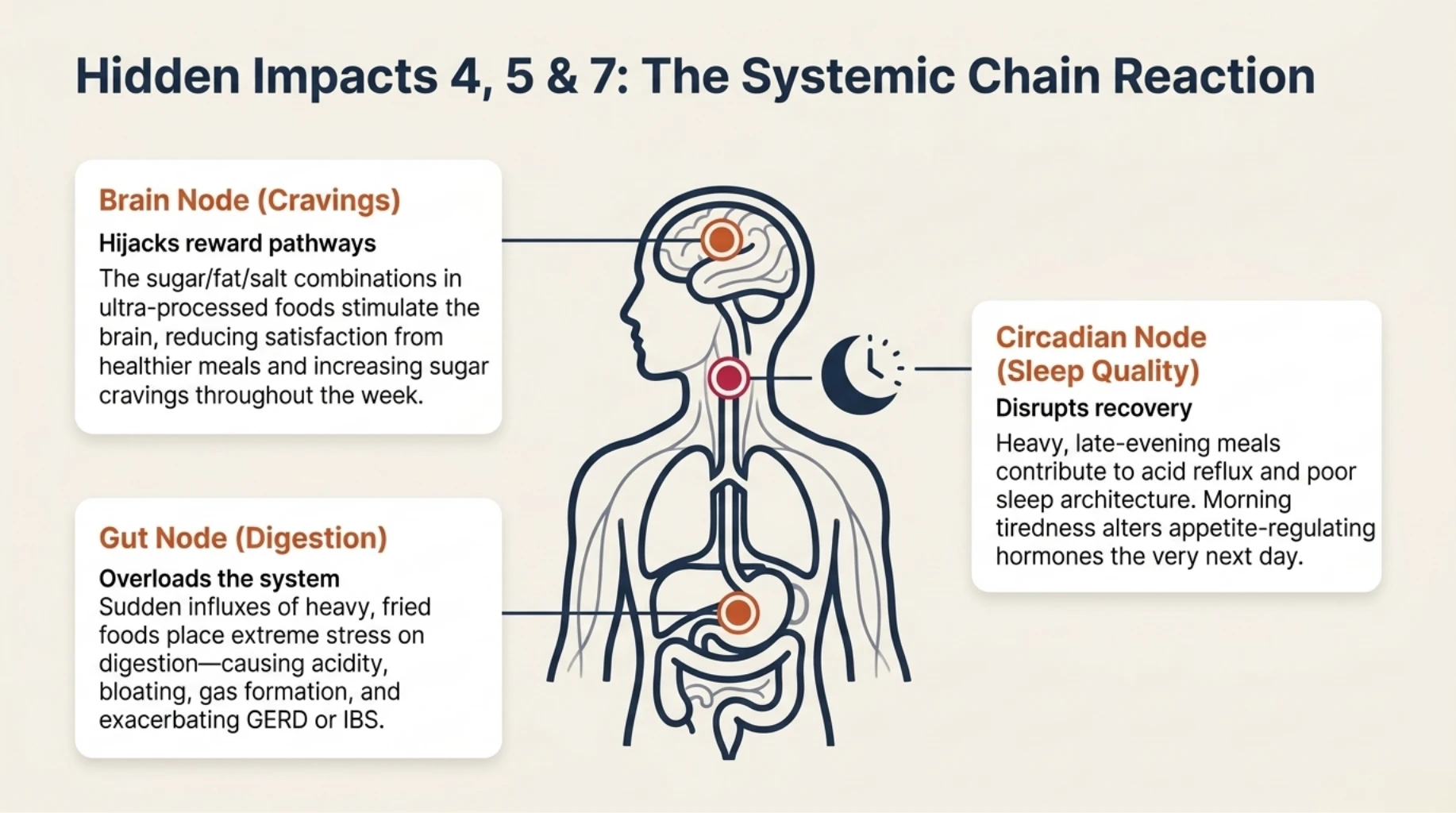
Many ultra-processed foods are designed to be highly rewarding and extremely palatable. They often contain combinations of sugar, refined carbohydrates, unhealthy fats, and salt that stimulate the brain’s reward pathways.
After a full day of eating these foods, some people find it more difficult to return to their usual healthy eating pattern.
They may experience:
- More frequent hunger
- Increased sugar cravings
- Reduced satisfaction from healthier meals
- Stronger desire for processed foods
This is one reason why cheat days can sometimes make long-term consistency harder rather than easier.
Hidden Reason 5: Large Cheat Meals Can Affect Digestion
Many individuals notice digestive discomfort after a cheat day.
Common complaints include:
- Acidity
- Bloating
- Gas formation
- Indigestion
- Constipation
- Sleep disturbances
This often happens because the digestive system suddenly receives large amounts of food that differ significantly from the usual eating pattern.
Heavy meals rich in fried foods, refined carbohydrates, sugary beverages, and desserts can place additional stress on digestion. For individuals with fatty liver, diabetes, GERD, IBS, or metabolic syndrome, these effects may be even more noticeable.
Hidden Reason 6: Cheat Days May Reduce Motivation After the Weekend
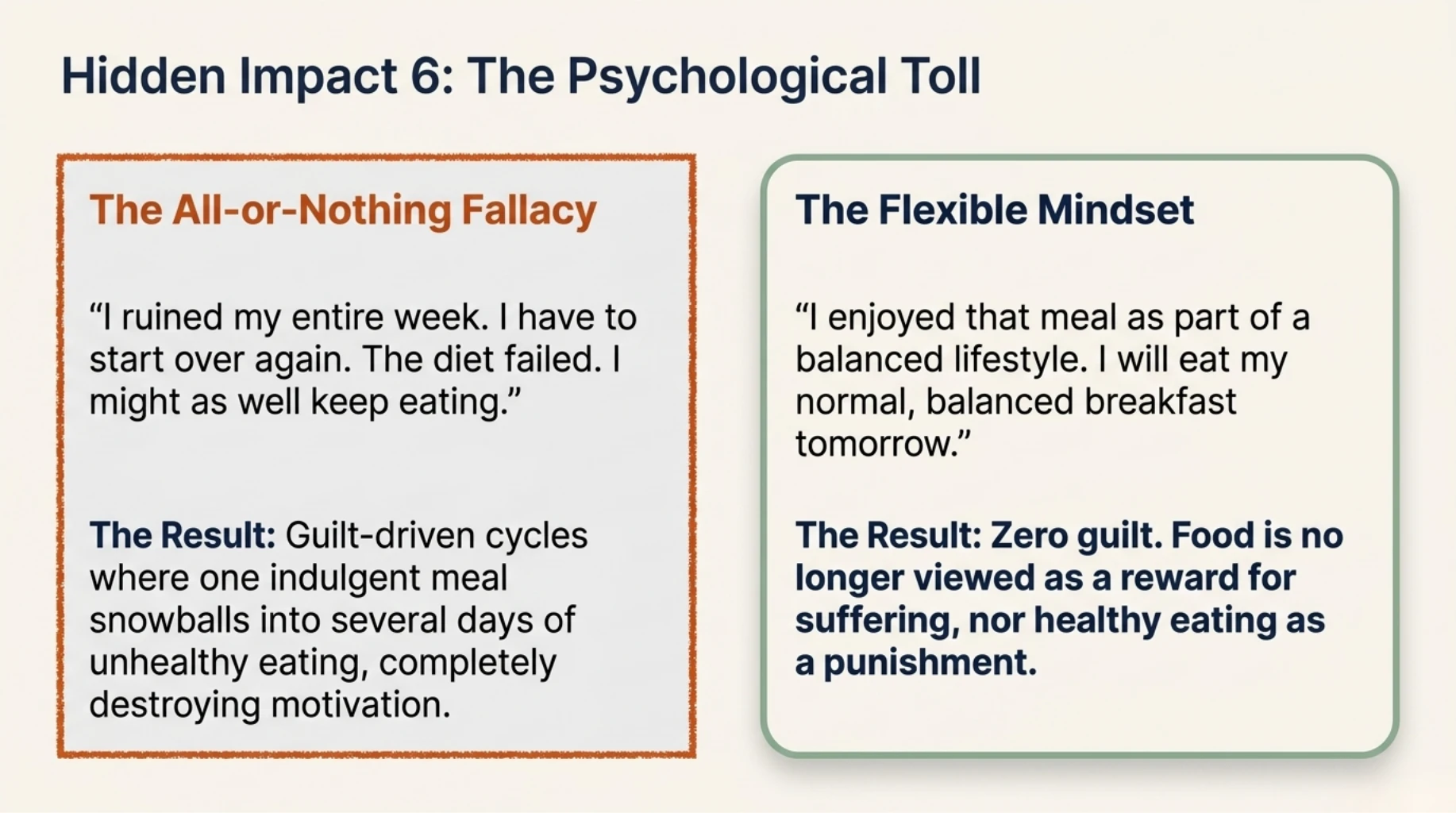
The psychological impact of cheat days is often underestimated. Many people experience guilt after overeating during a cheat day.
They may think:
- “I ruined my entire week.”
- “I have to start over again.”
- “The diet failed.”
This mindset sometimes leads to an all-or-nothing approach where one indulgent day triggers several more days of unhealthy eating.
Instead of improving motivation, cheat days may create emotional cycles that interfere with long-term adherence. A healthier approach is understanding that one meal never defines overall progress.
Hidden Reason 7: Cheat Days Can Affect Sleep Quality
Many cheat days involve eating large amounts of food late in the evening.
Heavy meals close to bedtime may contribute to:
- Poor sleep quality
- Acid reflux
- Nighttime discomfort
- Morning tiredness
Poor sleep then affects appetite-regulating hormones, energy levels, and food choices the following day.
As a result, individuals may experience stronger cravings and reduced motivation to maintain healthy habits. This creates another cycle where cheat days influence multiple aspects of metabolic health beyond calorie intake alone.
Why Flexibility Is Better Than Restriction
Strict dietary rules often create psychological pressure. When foods are completely forbidden, they sometimes become even more desirable.
A more sustainable approach involves planned flexibility rather than extreme restriction followed by extreme indulgence. For example, enjoying a favorite food occasionally in reasonable portions may work better than saving all cravings for one massive cheat day every week.
This approach helps maintain both physical health and a healthier relationship with food.
Why Lifestyle Medicine Focuses on Habits, Not Cheat Days
Long-term metabolic health depends on patterns that can be maintained for years rather than weeks.
Sustainable habits include:
- Balanced meals
- Adequate protein intake
- Regular physical activity
- Good sleep quality
- Stress management
- Reasonable dietary flexibility
When these habits become part of everyday life, the need for dramatic cheat days often disappears naturally.
People no longer feel trapped between strict dieting and uncontrolled eating because healthy eating becomes a normal routine rather than a temporary challenge.

Why Weight Loss Is Not the Only Goal
Many people judge success only by the number on the weighing scale.
However, long-term health progress also includes:
- Better blood sugar control
- Improved fatty liver
- Reduced inflammation
- Better sleep
- Improved energy levels
- Healthier eating habits
If cheat days repeatedly interfere with these improvements, they may slow progress even if body weight changes temporarily.
How to Enjoy Food Without Slowing Long-Term Health Progress
The good news is that maintaining good health does not require perfection. Most people do not need extremely restrictive diets or rigid food rules to achieve long-term success.
The key is developing eating patterns that are realistic, enjoyable, and sustainable for years rather than weeks.
Understanding cheat days helps people move away from an all-or-nothing mindset and toward a healthier relationship with food.
Think in Terms of Flexible Meals, Not Cheat Days
One practical approach is replacing the concept of cheat days with flexible meals.
A flexible meal means enjoying favorite foods occasionally without losing structure or control over the rest of the day.
For example:
- Sharing a dessert with family
- Having a favorite restaurant meal occasionally
- Enjoying festive foods during celebrations
- Eating mindfully without guilt or overeating
This approach reduces feelings of deprivation while avoiding the excessive calorie intake that often accompanies full cheat days.
Build Meals That Keep You Satisfied
Many people experience intense cravings because their everyday meals are not satisfying enough. Balanced meals that include adequate protein, fiber, and healthy fats often improve satiety and reduce the urge to overeat later.
Helpful components include:
- Protein-rich foods such as pulses, eggs, fish, paneer, or curd
- Vegetables and salads
- Whole foods with higher fiber content
- Healthy fats in moderate amounts
When meals are satisfying, the desire for large cheat days often becomes much weaker.
Avoid the Reward-and-Punishment Mindset
Food should not become a reward for suffering through a difficult week, nor should healthy eating feel like punishment. This mindset can create unhealthy emotional relationships with food.
Instead of thinking:
- “I earned this because I suffered all week,”
it may be more helpful to think:
- “I can enjoy this food occasionally as part of a balanced lifestyle.”
Removing guilt and extreme restriction often makes long-term adherence much easier.
Plan Social Occasions Without Losing Control
Birthdays, festivals, vacations, and family gatherings are important parts of life. Healthy living should accommodate these occasions rather than eliminate them.
Practical strategies include:
- Eating balanced meals earlier in the day
- Focusing on portion awareness rather than complete avoidance
- Enjoying favorite foods mindfully
- Returning to regular habits the next day without guilt
One social event does not determine long-term health outcomes. Consistency over months and years matters far more.

Regular Physical Activity Supports Flexibility
Movement plays an important role in metabolic health and overall wellbeing.
Regular physical activity helps:
- Improve insulin sensitivity
- Support appetite regulation
- Maintain muscle mass
- Promote better energy levels
- Reduce stress
When healthy movement habits become part of everyday life, occasional indulgences generally have a smaller impact on long-term progress. The emphasis should always remain on sustainable routines rather than compensating for overeating through excessive exercise.
Focus on Weekly and Monthly Patterns
Health is determined by patterns rather than isolated events. A single meal, a family celebration, or an occasional dessert does not define metabolic health.
The bigger questions are:
- What does your typical week look like?
- What habits do you repeat consistently?
- Are your everyday choices supporting your long-term goals?
These patterns have a far greater influence than occasional deviations from routine.
Why Sustainable Habits Always Win
Many restrictive diets produce short-term results but fail because they cannot be maintained. Long-term success usually comes from habits that fit naturally into everyday life.
This includes:
- Balanced nutrition
- Regular physical activity
- Adequate sleep
- Stress management
- Flexible eating patterns
When these habits become routine, there is often no need for dramatic cheat days because healthy living no longer feels restrictive.
Consistency Matters More Than Perfection
One of the most important lessons in lifestyle medicine is that consistency matters far more than perfection.
People who maintain reasonable habits most of the time often achieve better long-term results than those who repeatedly cycle between strict diets and uncontrolled eating.
Small sustainable improvements, practiced consistently, produce meaningful changes in weight, blood sugar, fatty liver, cholesterol levels, and overall wellbeing.
You can explore a structured lifestyle approach here:
Lifestyle Modification Program
Key Take-Home Messages
- Cheat days can sometimes slow progress when they involve excessive overeating and ultra-processed foods
- One occasional meal does not ruin long-term health goals
- Flexible eating patterns are usually more sustainable than strict restriction followed by indulgence
- Balanced meals with adequate protein and fiber improve satiety and reduce cravings
- Consistency over months and years matters far more than perfection on individual days
Final Thoughts
Understanding cheat days helps shift the focus from temporary dieting strategies to sustainable lifestyle habits.
The objective is not avoiding enjoyable foods forever. The goal is learning how to include them in a balanced way that supports long-term metabolic health, weight management, and overall wellbeing.
Healthy living should feel realistic and flexible. When food stops being a reward or punishment, maintaining good habits becomes much easier and far more sustainable.
If you want a personalized lifestyle and metabolic health assessment, you can book a consultation here:
Book an Appointment
Disclaimer: This article is for educational purposes only and should not replace medical advice. Individual treatment should be based on clinical evaluation.
Related reading and care options

Written by Dr. Pankaj Kumar
General & Lifestyle Physician in Dwarka Sector 6, New Delhi · MBBS, DNB (Family Medicine), DNHE · 16 years of experience.
About the doctor →Book a consultation → Beyond Blood Sugar
 The 90-Day Prediabetes Turnaround
 The Indian Diabetes Diet Reset
 Eat to Beat Gout
 Why Is My Hair Falling?
 The 30-Day Inflammation Reset