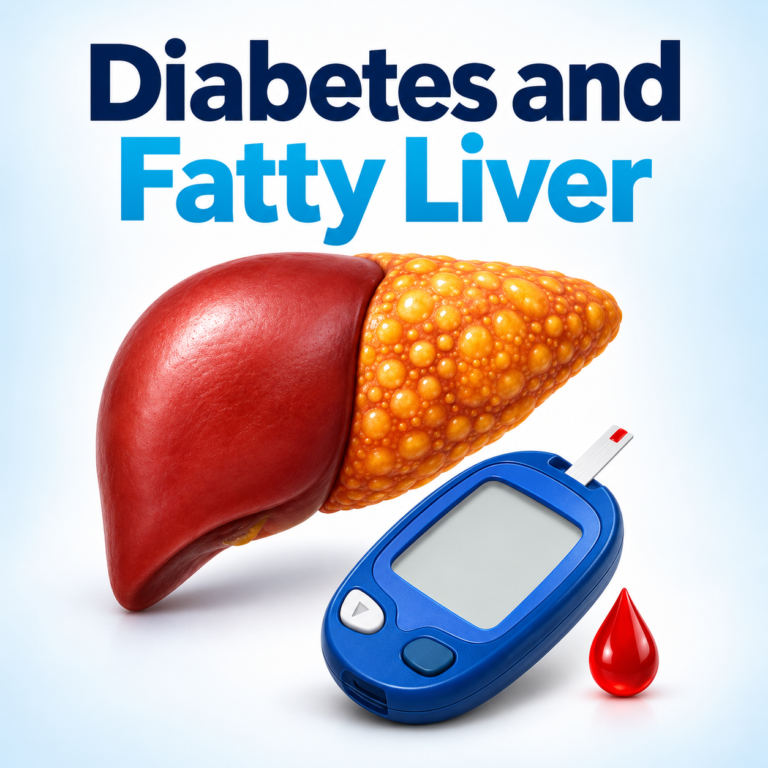
A routine check-up may reveal several findings at once: raised blood sugar, fatty liver on ultrasound, higher triglycerides and an increasing waist measurement. These results can look like unrelated problems, but they often share an underlying metabolic pattern.
Fatty liver and type 2 diabetes are closely connected through insulin resistance and other overlapping risks. Understanding the connection helps explain why managing blood sugar alone may not address every concern.
This article focuses on type 2 diabetes. Type 1 diabetes has a different underlying cause and requires a different clinical framework.
You may also see the term metabolic dysfunction-associated steatotic liver disease, or MASLD. This is the current name used for fatty liver associated with specified cardiometabolic risk factors under the relevant diagnostic criteria. Older reports commonly use NAFLD.
Eight Shared Risks Worth Understanding
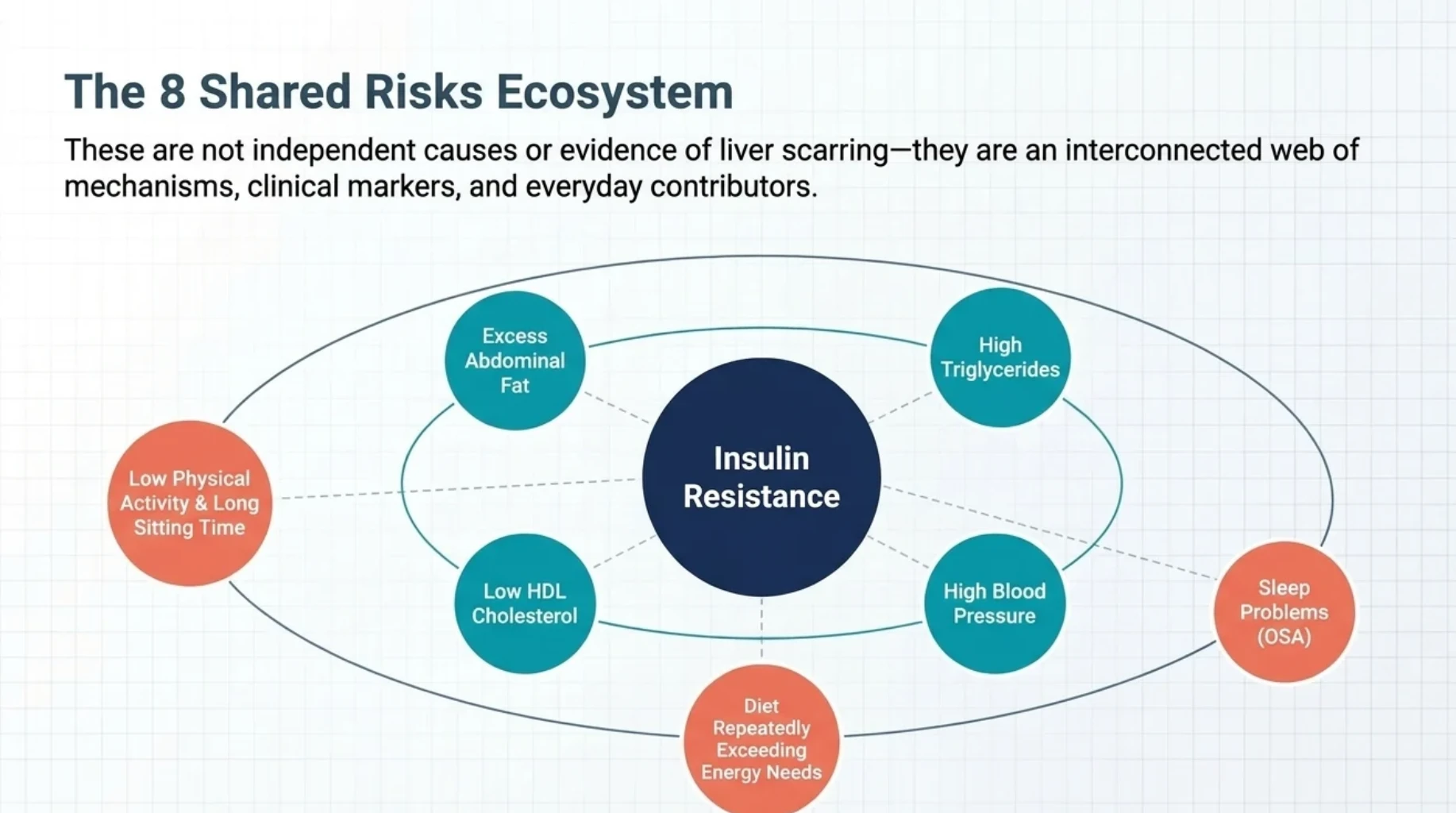
1. Insulin Resistance
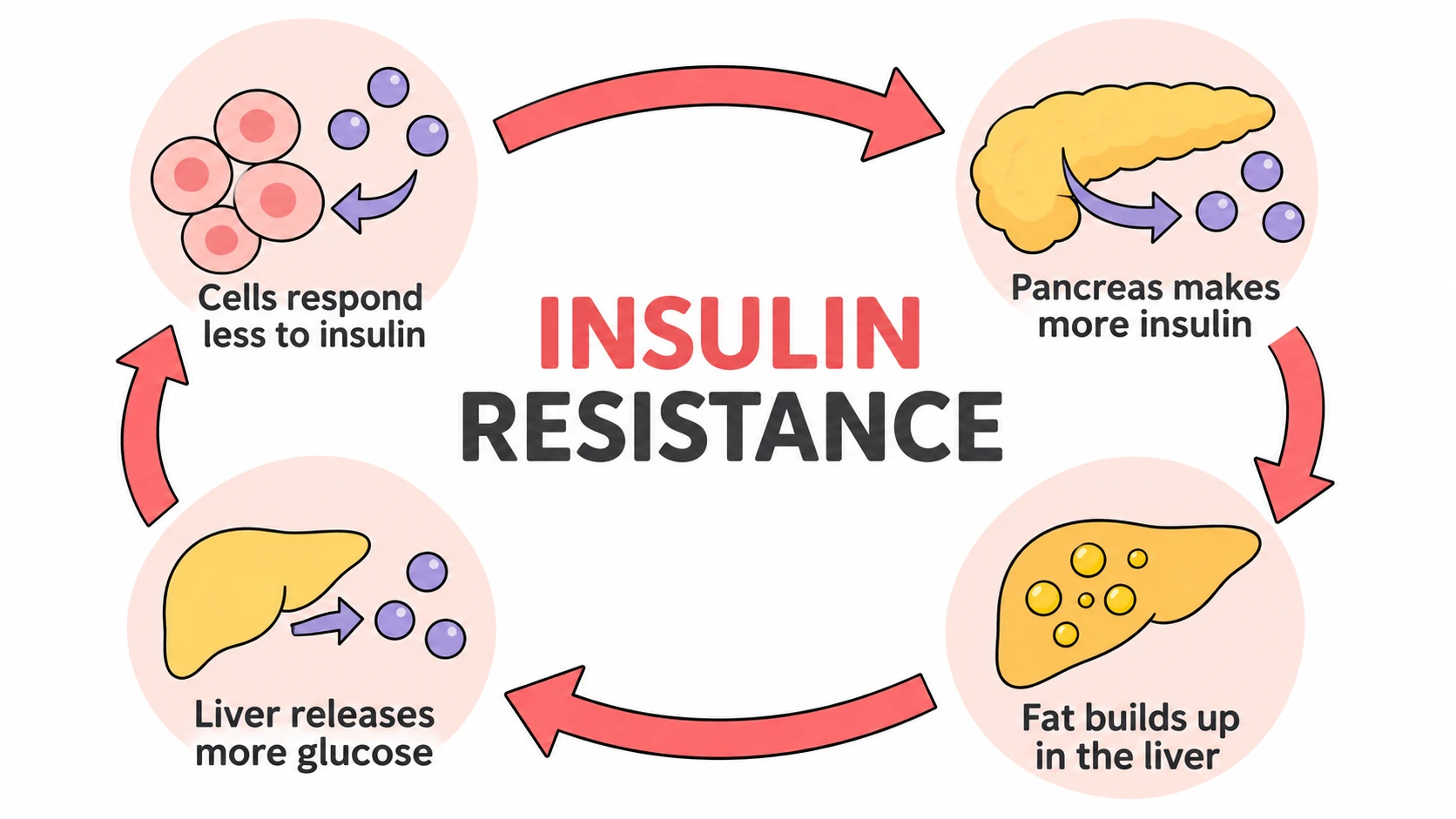
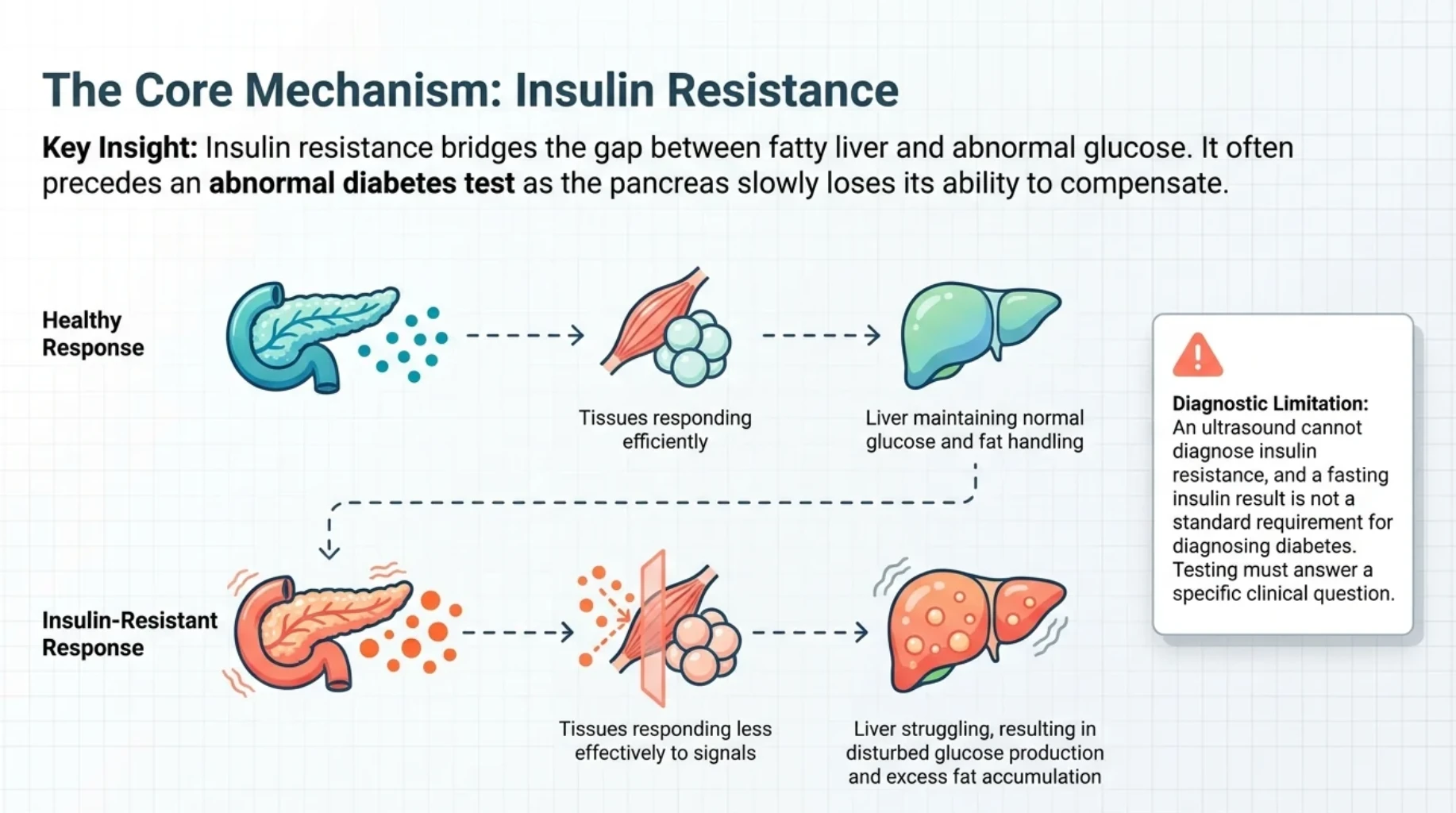
Insulin helps regulate blood glucose and the handling of nutrients. With insulin resistance, tissues respond less effectively to its signals, and the pancreas may initially compensate by producing more insulin.
This can precede an abnormal diabetes test. Over time, some people develop prediabetes or type 2 diabetes when the body can no longer compensate adequately.
The liver is involved in this process. Insulin resistance can disturb the regulation of glucose production and fat handling, helping explain why fatty liver and abnormal glucose levels frequently coexist.
However, an ultrasound cannot diagnose insulin resistance, and a fasting insulin result is not a standard requirement for diagnosing diabetes. Testing should answer a clinical question rather than simply add more numbers to a health package.
2. Excess Abdominal Fat
Where fat is stored matters as well as total body weight. Fat concentrated around the abdomen is associated with metabolic risk, including fatty liver and type 2 diabetes.
For South Asian adults, commonly used waist thresholds indicating increased metabolic risk are 90 cm in men and 80 cm in women. These are assessment thresholds, not a diagnosis or a precise boundary between healthy and unhealthy.
This is particularly relevant in India, where someone may have a modest body weight but an increasing waist measurement. A reassuring BMI should not automatically end the discussion about metabolic health.
At an appointment, bring previous weight records if available. Describing how your waist, clothing fit and activity have changed can also help establish the overall pattern.
3. High Triglycerides
Triglycerides are a form of fat carried in the bloodstream. Elevated levels commonly occur alongside insulin resistance, fatty liver and abnormal glucose regulation.
Several contributors may overlap, including diabetes control, alcohol intake, dietary habits, inherited factors and certain medicines. Therefore, high triglycerides should not automatically be blamed on one food.
For example, a patient may avoid fried snacks but regularly drink sweetened beverages and have poorly controlled diabetes. Another may have a strong inherited tendency. Their management plans will differ.
A triglyceride result also does not measure the amount of fat or scarring in the liver. It provides information about metabolic health that needs interpretation alongside other findings.
4. Low HDL Cholesterol
Low HDL cholesterol often accompanies high triglycerides and insulin resistance. Together, these findings may identify a pattern that deserves cardiovascular risk assessment.
However, the aim is not simply to raise the HDL number. A complete lipid review also considers LDL cholesterol, non-HDL cholesterol and other measurements when clinically indicated.
For a patient, this means avoiding the assumption that one favorable cholesterol result cancels an unfavorable one. Similarly, low HDL does not establish a diagnosis of diabetes or fatty liver.
Bring the complete lipid report to your consultation. A photograph showing only the total cholesterol value leaves out information that may affect treatment.
5. High Blood Pressure
High blood pressure frequently clusters with abdominal obesity, abnormal glucose and lipid changes. This overlap is one reason doctors assess metabolic health as a whole.
Blood pressure matters even when it causes no symptoms. A person may feel well while both glucose and blood pressure need treatment.
Do not assume that controlling blood sugar will automatically control blood pressure. Each requires appropriate measurement, interpretation and follow-up.
If home monitoring has been recommended, bring a record rather than relying on the highest or lowest reading you remember. This helps your doctor identify the usual pattern and make a more reliable decision.
6. Low Physical Activity and Long Sitting Time
Physical inactivity contributes to insulin resistance and type 2 diabetes risk. Exercise is also recommended in MASLD because it can reduce liver fat, including when substantial weight loss does not occur.
This makes activity a useful treatment component even if the weighing scale changes slowly.
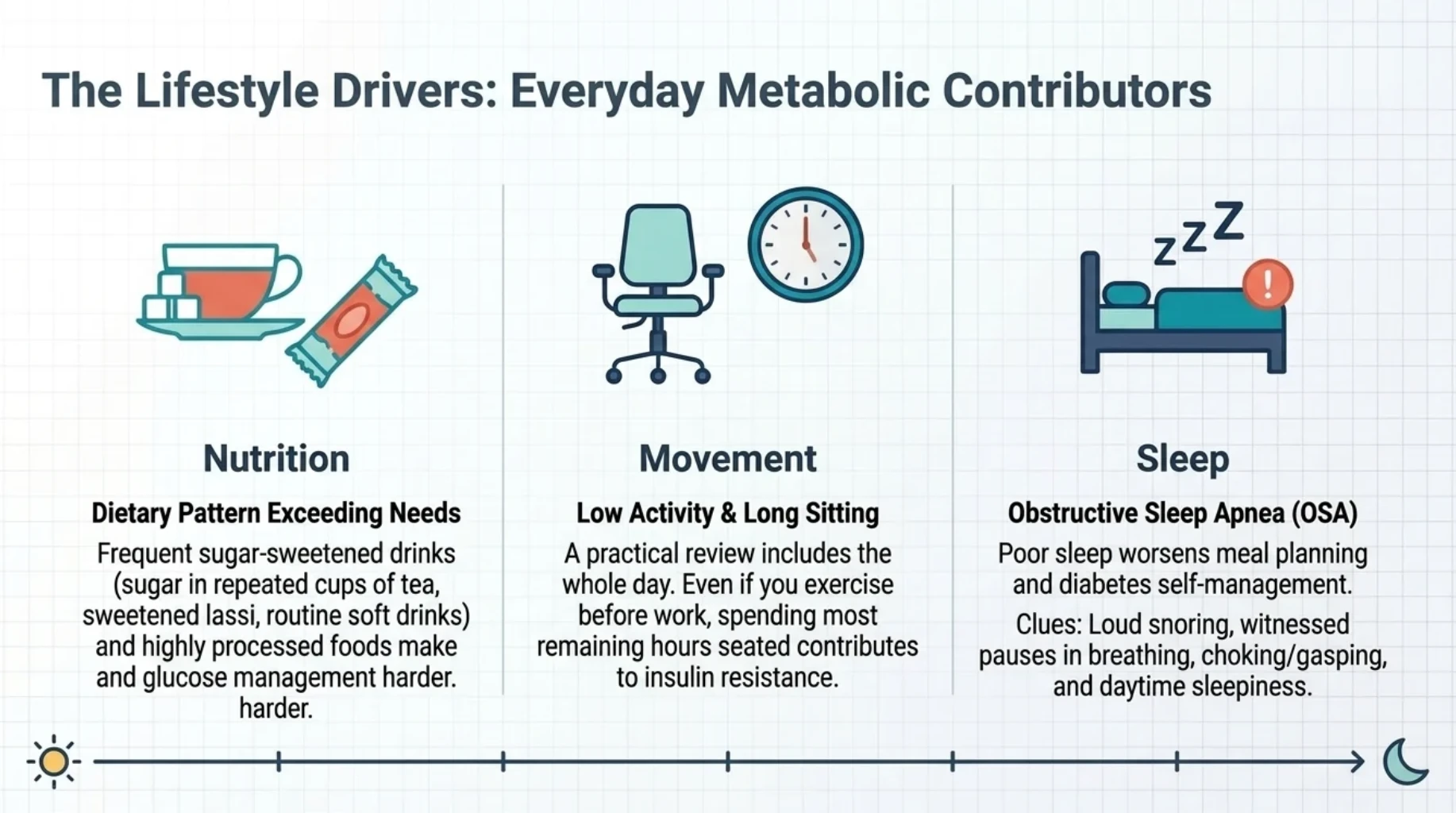
A practical review should include the whole day. Someone may exercise before work but spend most remaining hours seated. Another person may have an active job but little structured exercise. Both situations deserve an individual plan.
Start by identifying a manageable opportunity: a short walk, movement between appointments or suitable strength exercises. The first target should be something you can repeat, rather than an ambitious routine that stops after a week.
7. A Dietary Pattern That Repeatedly Exceeds Your Needs
Diet quality and overall intake influence metabolic health. Frequent sugar-sweetened drinks and diets rich in energy-dense, highly processed foods can make weight and glucose management harder.
European MASLD guidance recommends improving dietary quality and avoiding sugar-sweetened beverages. This does not mean that one ingredient explains every case or that every packaged food has the same effect.
In an Indian household, a useful starting point might be the sugar added to repeated cups of tea, large servings of sweetened lassi, routine soft drinks or frequent biscuits between meals.
Another person may need better meal balance: enough protein and vegetables alongside an appropriate portion of rice or roti. Removing familiar staple foods without considering the rest of the diet may create an unnecessarily restrictive plan.
The goal is to understand recurring habits without turning the diagnosis into a judgement about willpower.
8. Sleep Problems, Particularly Obstructive Sleep Apnea
Sleep is another part of metabolic assessment. Obstructive sleep apnea is associated with insulin resistance and is commonly considered in people with fatty liver and relevant risk factors.
Possible clues include loud snoring, witnessed pauses in breathing, waking with choking or gasping, and excessive daytime sleepiness. Snoring alone does not establish the diagnosis.
Poor sleep can also make meal planning, activity and diabetes self-management more difficult. However, it would be inaccurate to promise that improving sleep alone will reverse diabetes or remove liver fat.
If someone regularly falls asleep during daytime activities or a family member notices breathing pauses, mention this during the consultation rather than treating it as ordinary tiredness.
How These Risks Fit Together
| Finding or contributor | What it may tell you | What it does not establish |
|---|---|---|
| Increasing waist measurement | Abdominal fat and metabolic risk deserve review | That diabetes or liver fibrosis is definitely present |
| High triglycerides or low HDL | A broader lipid and cardiovascular assessment may be useful | How much fat or scar tissue the liver contains |
| Raised glucose or HbA1c | Glucose regulation needs assessment and management | The stage of liver disease |
| High blood pressure | An additional cardiovascular risk needs attention | That treating glucose alone will correct it |
| Inactivity, dietary difficulties or sleep symptoms | There may be practical opportunities for assessment and support | That a single habit caused the entire condition |
Why a Good HbA1c Does Not Complete the Liver Assessment
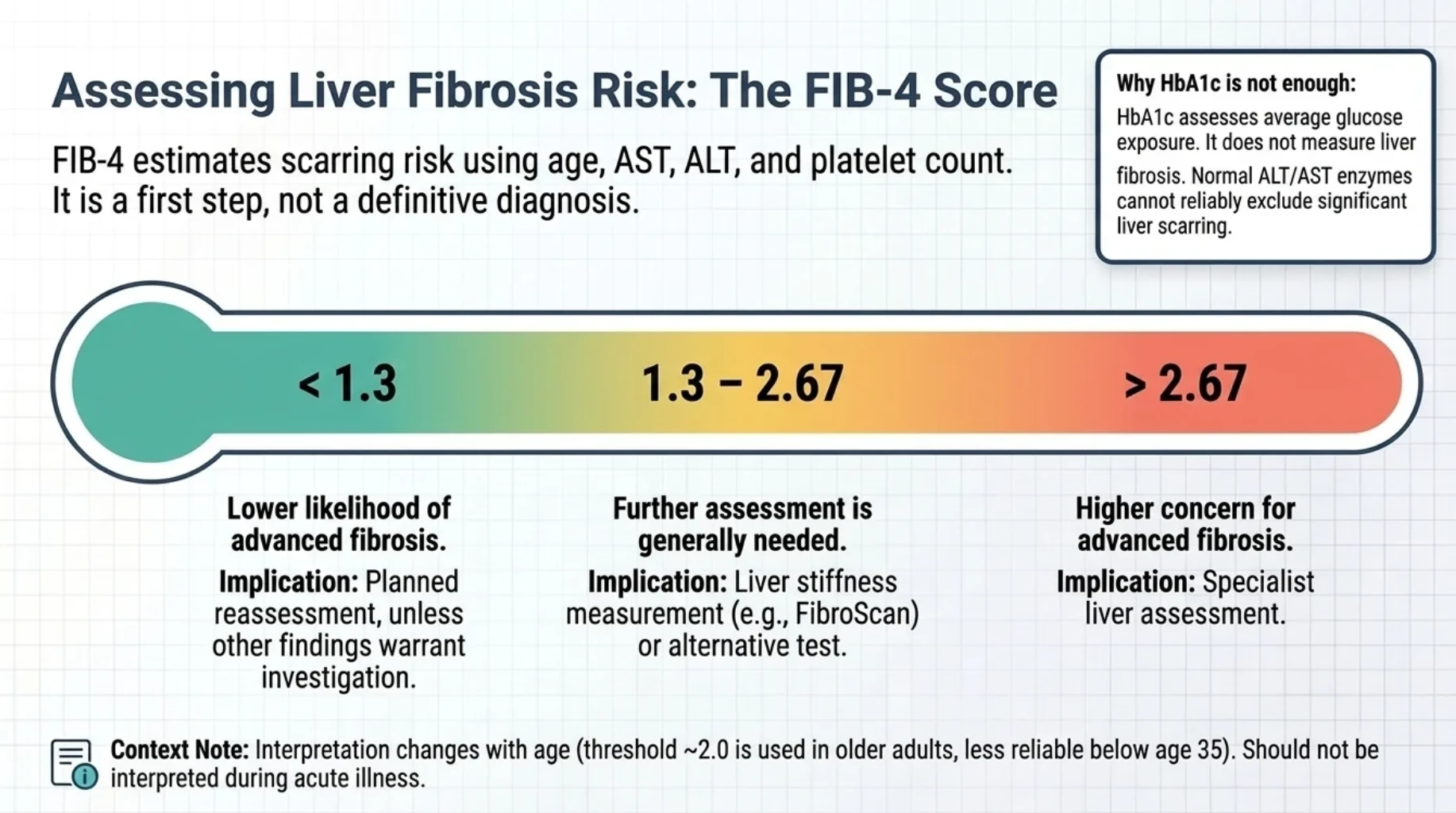
HbA1c helps assess average glucose exposure. It does not measure liver fibrosis.
Someone whose glucose has improved may still need review of blood pressure, cholesterol and liver risk. Equally, normal ALT and AST cannot reliably exclude significant liver scarring.
Current diabetes guidance recommends assessing fibrosis risk in adults with type 2 diabetes or prediabetes, particularly when obesity or other cardiometabolic risks are present, even if liver enzymes are normal.
A commonly used first step is FIB-4, calculated from age, AST, ALT and platelet count. Depending on the result and clinical context, further assessment may include liver stiffness testing. Neither an online score nor an ultrasound grade should be interpreted in isolation.
What Comes Next?
Fatty liver and diabetes often share several overlapping risks, but the pattern differs between individuals. You do not need to have all eight, and having several does not prove advanced liver disease.
Fatty Liver and Diabetes: Turning Shared Risks Into a Treatment Plan
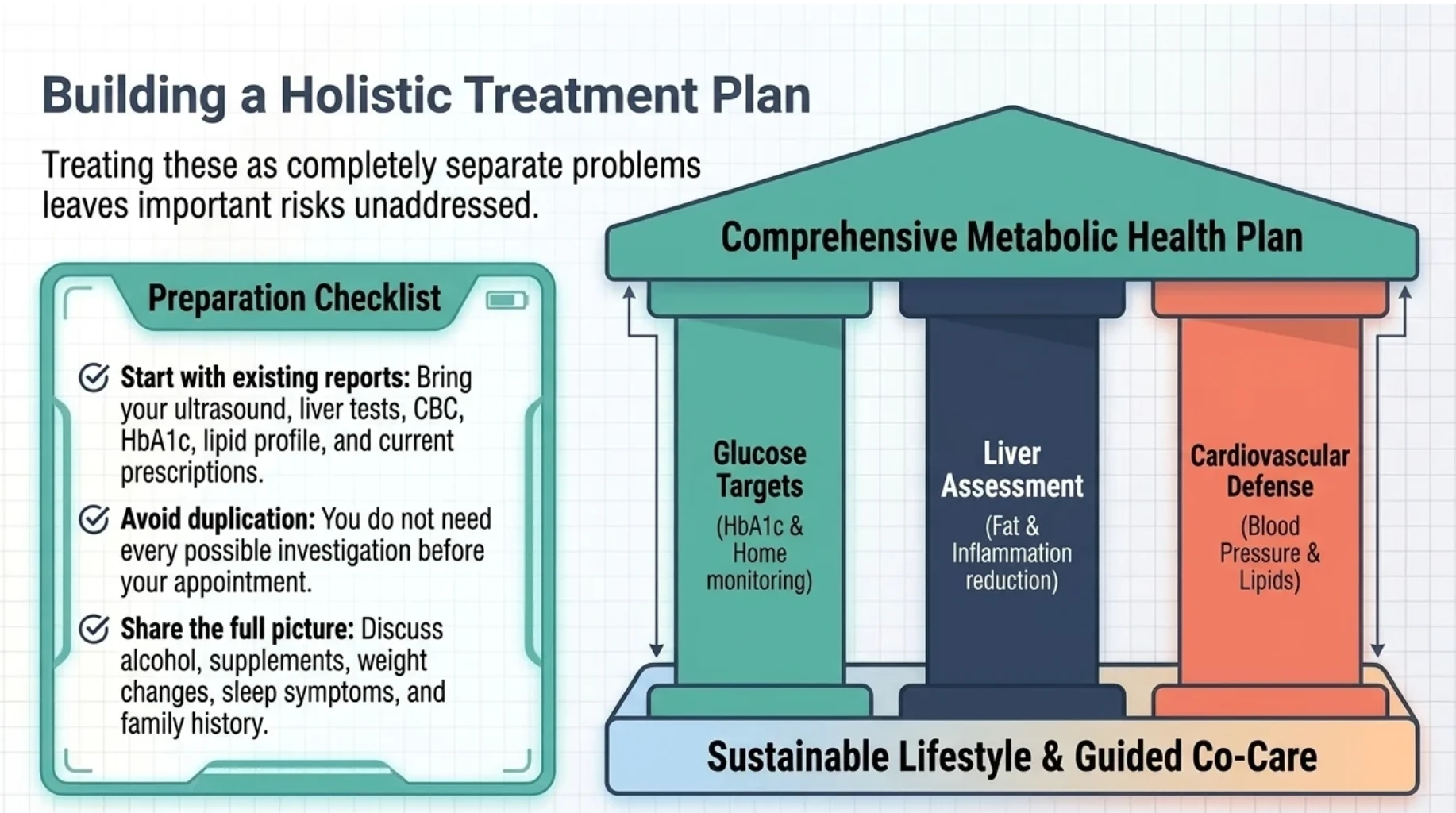
Recognizing the eight shared risks is useful, but the next step is deciding which findings need attention in your case. A person with recently diagnosed diabetes and low fibrosis risk may need a different plan from someone with longstanding diabetes and evidence of liver scarring.
The aim is to coordinate glucose management, liver assessment and cardiovascular prevention. Treating these as completely separate problems can leave important risks unaddressed.
1. Start With a Review of Existing Reports
Bring your ultrasound report, previous liver blood tests, complete blood count, HbA1c, lipid profile and current prescriptions. Kidney results and home blood pressure or glucose records are also useful when available.
You do not need to arrange every possible investigation before the appointment. Reviewing what has already been done helps your doctor identify genuine gaps and avoid unnecessary duplication.
The consultation should also cover alcohol, supplements, weight changes, sleep symptoms and family history. Diabetes does not establish that every liver abnormality is caused by metabolic fatty liver.
How Is Liver Fibrosis Risk Assessed?
Fibrosis means liver scarring. Assessing its likelihood is different from identifying fat on ultrasound.
FIB-4 is a commonly used first step. It combines age, AST, ALT and platelet count. The result estimates risk rather than confirming a diagnosis.
| FIB-4 result in adults aged approximately 35–65 years | Usual implication | Possible next step |
|---|---|---|
| Below 1.3 | Lower likelihood of advanced fibrosis | Planned reassessment, unless other findings warrant further investigation |
| 1.3–2.67 | Further assessment is generally needed | Liver stiffness measurement or an appropriate alternative test |
| Above 2.67 | Higher concern for advanced fibrosis | Specialist liver assessment |
Interpretation changes with age. A threshold around 2.0 is used in older adults, and FIB-4 is less reliable below age 35. It should not be interpreted during acute illness as though it reflects the usual baseline.
Some people with diabetes and multiple metabolic risks need additional investigation despite a result below 1.3. Clinical judgement remains important.
2. Understand What FibroScan Adds
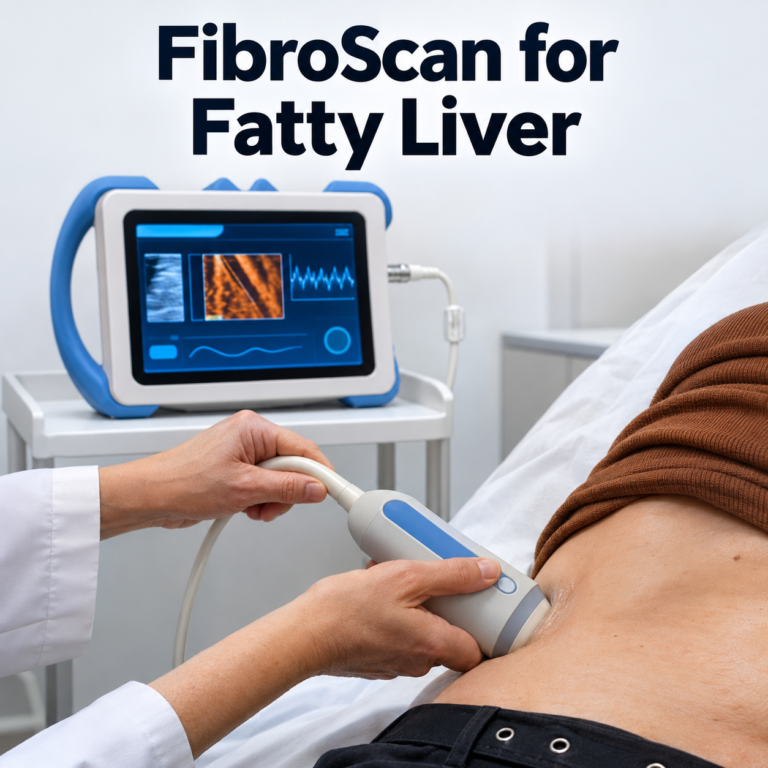
FibroScan is a commonly used form of transient elastography. It measures liver stiffness to help assess fibrosis risk. Some examinations also estimate liver fat using a separate measurement called CAP.
These measurements answer different questions. An improvement in the fat estimate should not automatically be interpreted as disappearance of scarring.
Your doctor should review the result alongside test quality, blood results and the clinical picture. A scan is most useful when it clarifies risk or changes management.
Which Treatment Changes Can Help Both Conditions?
3. Choose a Sustainable Weight Goal When Appropriate
For people with overweight and MASLD, sustained weight reduction can improve liver health. European guidance uses targets of at least 5% weight loss to reduce liver fat, 7–10% to improve inflammation and at least 10% to improve fibrosis.
These are treatment goals, not guarantees. Benefits differ between individuals, and maintaining progress matters.
For someone weighing 80 kg, a first milestone of 5% is 4 kg. That can provide a more practical starting point than immediately pursuing an ambitious final weight.
People without excess weight still need a plan, but aggressive weight loss may be inappropriate. Older adults and people with advanced liver disease require particular attention to nutrition and muscle preservation.
4. Improve Meal Balance Before Making Extreme Restrictions
Begin with the meals you eat most often. A lunch dominated by rice or roti can be adjusted by including more vegetables and an appropriate protein source, such as dal, beans, curd, tofu, eggs, fish or chicken.
Reduce recurring sources of added sugar, particularly sweetened drinks. Whole fruit and fruit juice are not interchangeable: whole fruit provides a different eating experience and fibre content.
Portions and meal timing should fit your glucose treatment, preferences and daily routine. Someone taking medicines that can cause low glucose needs a different approach from someone managing prediabetes without medication.
You do not need an expensive “liver diet.” A workable plan should explain quantities, alternatives and what to do during travel, festivals or irregular workdays.
5. Increase Activity Gradually
Exercise can reduce liver fat and support glucose management even when weight changes are modest. European guidance recommends activity suited to individual ability, preferably more than 150 minutes of moderate-intensity activity weekly.
A starting routine might include a short walk on most days and gradual progression. Suitable strength exercises can help preserve function and support long-term activity.
Someone with foot problems, significant heart disease, advanced eye complications or mobility limitations may need an adapted programme. The safest useful activity is the one matched to the person.
Can Diabetes Medicines Also Help the Liver?
Some medicines may offer benefits across glucose control, weight management and liver disease, but selection depends on the individual diagnosis.
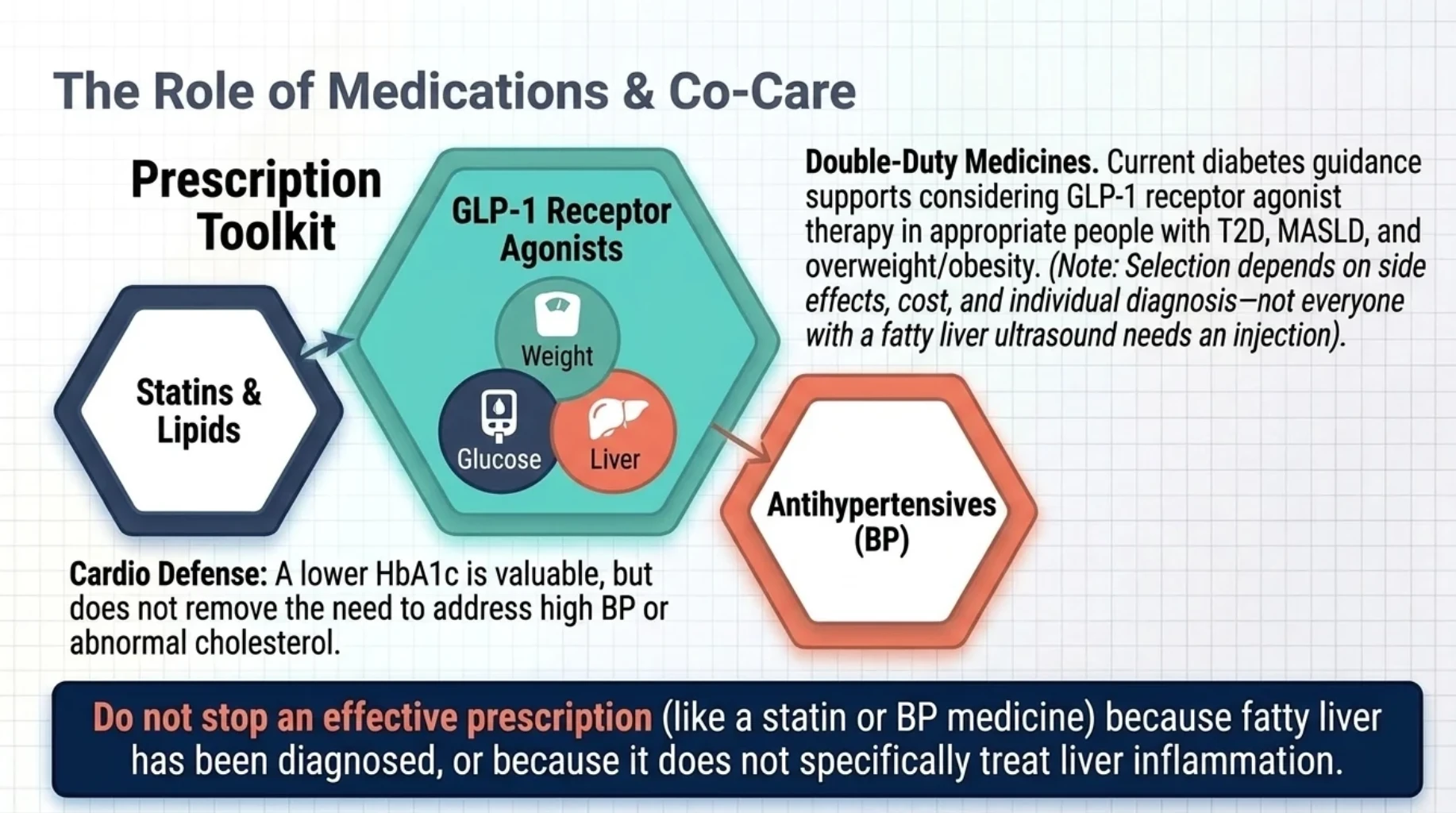
Current diabetes guidance supports considering GLP-1 receptor agonist therapy in appropriate people with type 2 diabetes, MASLD and overweight or obesity. For selected people with MASH or higher fibrosis risk, liver-related evidence may also influence medicine choice.
This does not mean that everyone with an ultrasound showing fatty liver needs an injection. Side effects, contraindications, costs, other medical conditions and local prescribing approvals must be considered.
Other diabetes medicines may remain important for glucose, heart or kidney care even when they are not established treatments for MASH. Do not stop an effective prescription because it does not specifically treat liver inflammation.
6. Treat Blood Pressure and Cholesterol Alongside Glucose
A lower HbA1c is valuable, but it does not remove the need to address high blood pressure or abnormal cholesterol.
For example, someone may achieve their glucose target while LDL remains high and blood pressure is repeatedly elevated. The treatment plan should explain how each finding will be managed.
Do not stop a prescribed statin or blood pressure medicine because fatty liver has been diagnosed. Ask your clinician to review the complete plan and discuss any symptoms or concerns.
Where Do Alcohol, Sleep and Supplements Fit?
Discuss alcohol accurately, including the amount consumed on a typical drinking occasion. Liver disease severity influences the advice; people with advanced fibrosis or cirrhosis should avoid alcohol.
If you have loud snoring, witnessed breathing pauses or marked daytime sleepiness, ask whether assessment for sleep apnea is appropriate. Treating a sleep disorder can support daily functioning, although it should not be presented as a guaranteed treatment for fatty liver.
Avoid adding liver tonics, detox powders or herbal products without a review. Some supplements can injure the liver, and “natural” is not evidence of safety or effectiveness.
What Should Follow-Up Measure?
Follow-up should answer whether the plan is helping and whether anything needs to change. The same test does not need to be repeated at every visit.
| Area | What may be reviewed | Why it matters |
|---|---|---|
| Glucose | HbA1c, relevant home readings and low-glucose episodes | Assess control and treatment safety |
| Liver | Blood results and fibrosis reassessment when due | Monitor risk beyond the ultrasound fat grade |
| Cardiovascular health | Blood pressure, lipids, smoking and medicine use | Address risks that remain despite better glucose |
| Nutrition and function | Weight, waist, appetite, strength and activity | Support progress while preserving nutrition and muscle |
| Practical barriers | Costs, work hours, sleep and treatment difficulties | Make the plan realistic enough to continue |
Ask for a clear timetable: what needs checking next, when it should happen and which result would change management.
Frequently Asked Questions
Does fatty liver mean I will definitely develop diabetes?
No. Fatty liver is associated with increased type 2 diabetes risk, but progression is not inevitable. Appropriate glucose testing and management of shared risks are useful.
Can I have fatty liver despite good diabetes control?
Yes. HbA1c does not measure liver fat or fibrosis. Good glucose control is important, but liver risk may still need assessment.
Does everyone with diabetes need FibroScan?
No. Assessment is usually stepwise, beginning with clinical review and a suitable fibrosis risk tool. Further testing depends on the results and overall picture.
Can normal ALT and AST rule out significant liver disease?
No. Normal liver enzymes cannot reliably exclude clinically important fibrosis, particularly in people with relevant metabolic risks.
Can fatty liver improve without major weight loss?
Yes. Exercise and improved metabolic management can help even when weight changes are modest. Where excess weight is present, sustained weight reduction can provide additional benefit.
Must I stop rice, roti and fruit?
Not automatically. Portions, food quality, meal balance and glucose responses matter. Whole fruit can often be included within an individual plan.
If my ultrasound improves, can I stop diabetes medicine?
No. Ultrasound improvement is not a reason to stop diabetes treatment. Medicine changes require review of glucose results, safety and your wider clinical needs.
Coordinated Assessment in Dwarka
If you have both fatty liver and diabetes, bring your reports together rather than reviewing each in isolation. A useful consultation should explain your liver risk, glucose goals, cardiovascular priorities and follow-up schedule.
To consult Dr. Pankaj Kumar in Dwarka, New Delhi, visit the appointment page.
About the author Dr. Pankaj Kumar, MBBS, DNB (Family Medicine), DNHE, is a General and Lifestyle Physician and founder of Diet Plus Minus. His clinical interests include type 2 diabetes, medical weight management, fatty liver and metabolic health.
Medical disclaimer: This article provides general patient education and does not replace an individual medical assessment. Do not start, stop or adjust diabetes or other medicines without guidance from your treating clinician.
References
- American Diabetes Association Professional Practice Committee. Comprehensive Medical Evaluation and Assessment of Comorbidities: Standards of Care in Diabetes—2026. Diabetes Care. 2026. Read the recommendations.
- American Diabetes Association Professional Practice Committee. Pharmacologic Approaches to Glycemic Treatment: Standards of Care in Diabetes—2026. Diabetes Care. 2026. Read the treatment guidance.
- EASL–EASD–EASO. Clinical Practice Guidelines on the Management of Metabolic Dysfunction-Associated Steatotic Liver Disease. 2024. Read the guideline.
- National Institute of Diabetes and Digestive and Kidney Diseases. Low Blood Glucose (Hypoglycemia). Patient information resource. Read about low-glucose prevention.
- National Institute of Diabetes and Digestive and Kidney Diseases. Treatment for NAFLD and NASH. Patient information resource. Read treatment information.

Written by Dr. Pankaj Kumar
General & Lifestyle Physician in Dwarka Sector 6, New Delhi · MBBS, DNB (Family Medicine), DNHE · 16 years of experience.
About the doctor →Book a consultation → Beyond Blood Sugar
 The 90-Day Prediabetes Turnaround
 The Indian Diabetes Diet Reset
 Eat to Beat Gout
 Why Is My Hair Falling?
 The 30-Day Inflammation Reset