An ultrasound report says “grade 1 fatty liver.” Your liver enzymes are within the laboratory range, and you feel well. Do you still need a FibroScan?
Or perhaps you have type 2 diabetes, an increasing waist measurement and fatty liver that has appeared on several reports. Should the assessment go beyond another ultrasound?
FibroScan for fatty liver can help assess the likelihood of liver scarring, but it is not automatically necessary for everyone. Its usefulness depends on your metabolic risk, blood results, previous findings and the question the doctor is trying to answer.
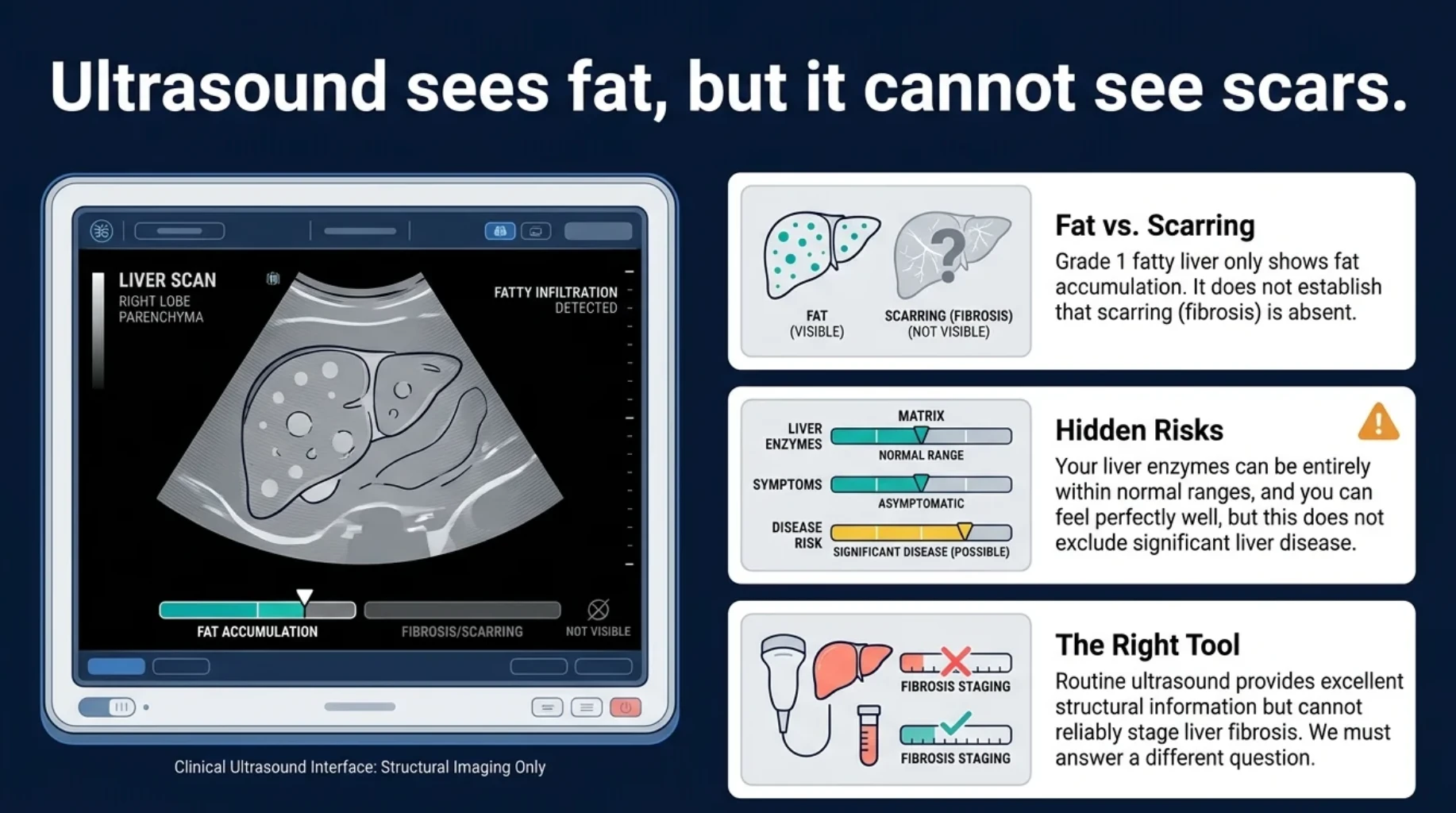
The important distinction is between fat accumulation and fibrosis. Finding fat in the liver does not tell us how much scarring is present. Similarly, feeling well does not reliably exclude significant liver disease.
This article explains what FibroScan measures, who may benefit and how doctors decide whether it is the appropriate next investigation.
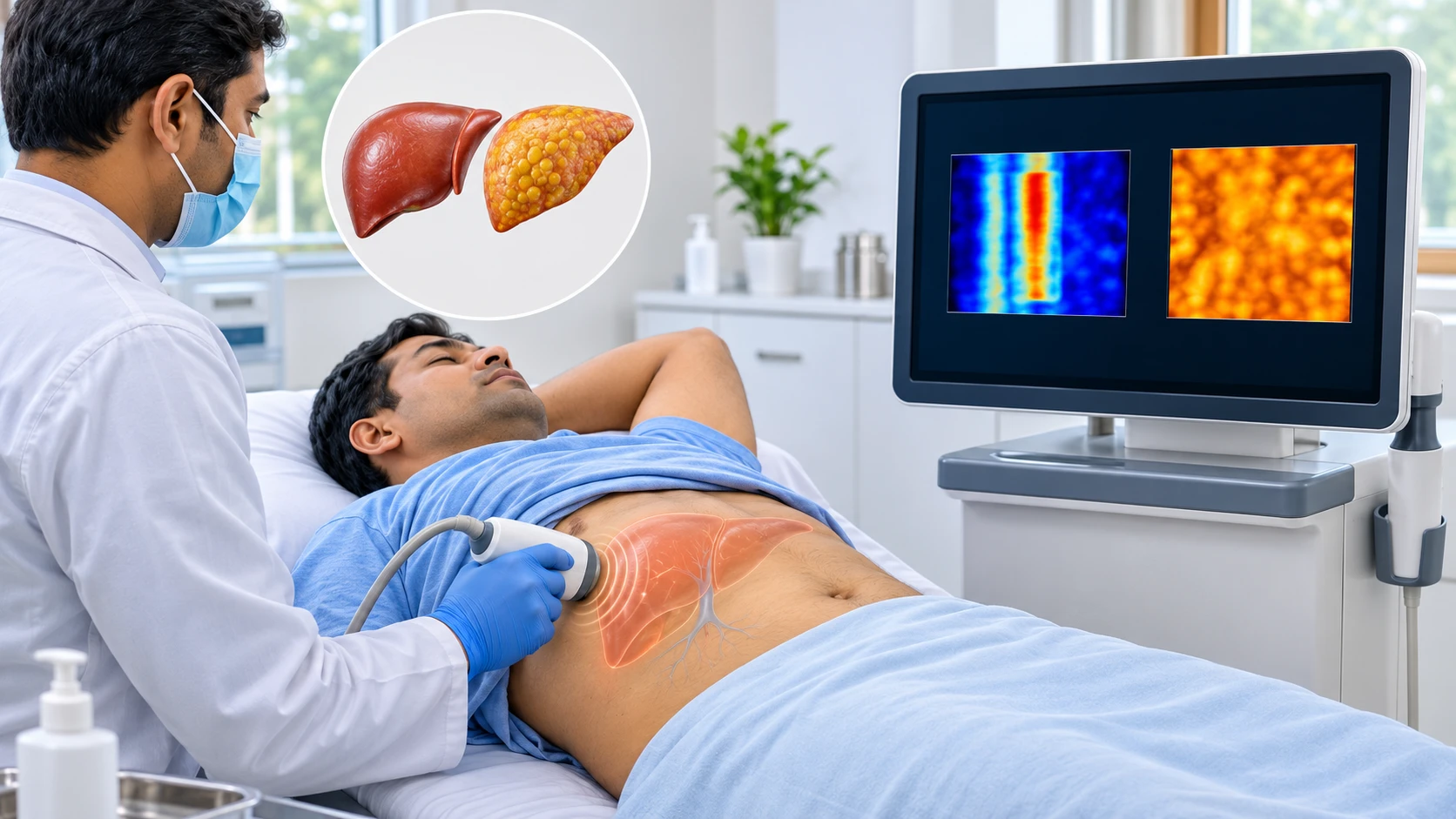
What Is FibroScan for Fatty Liver?
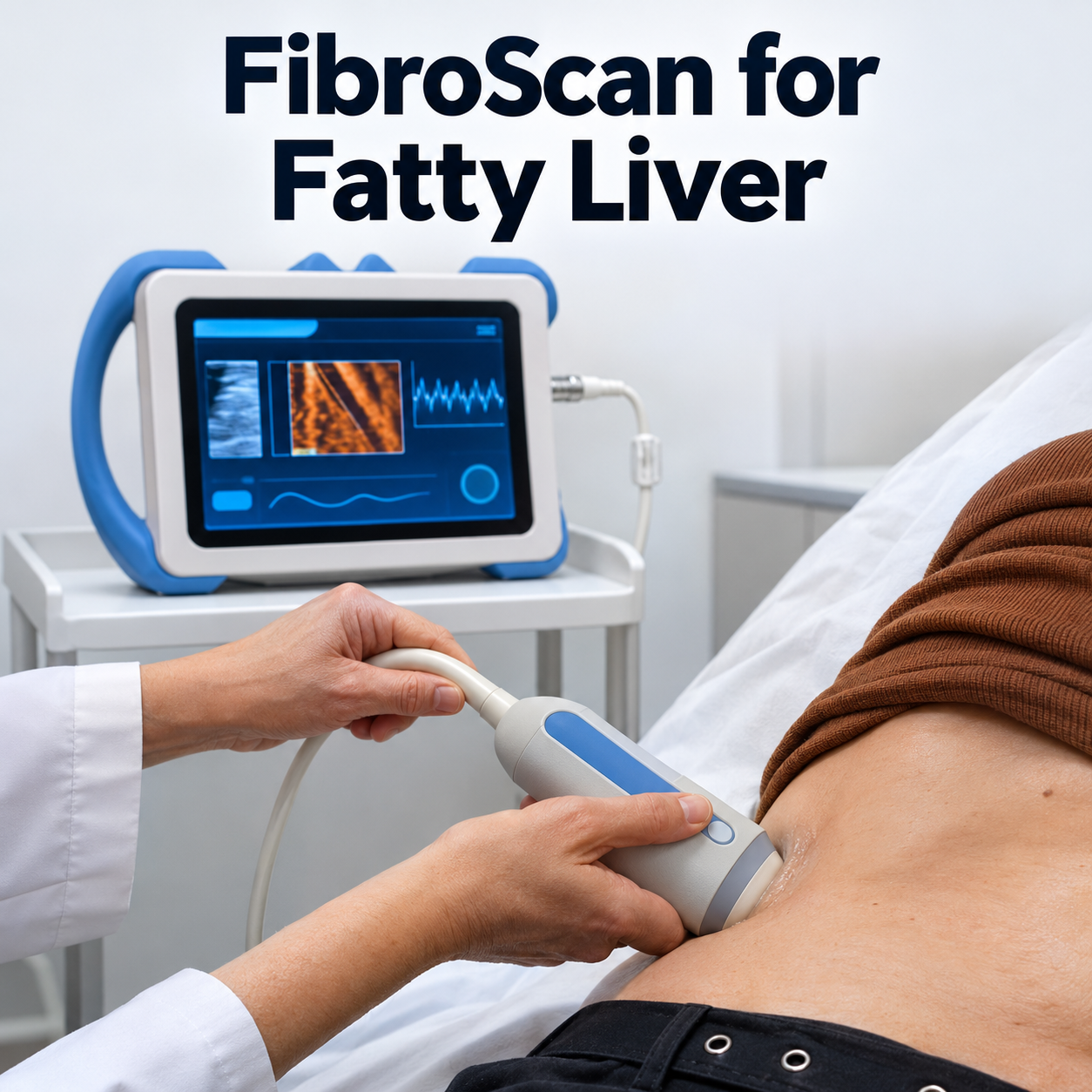
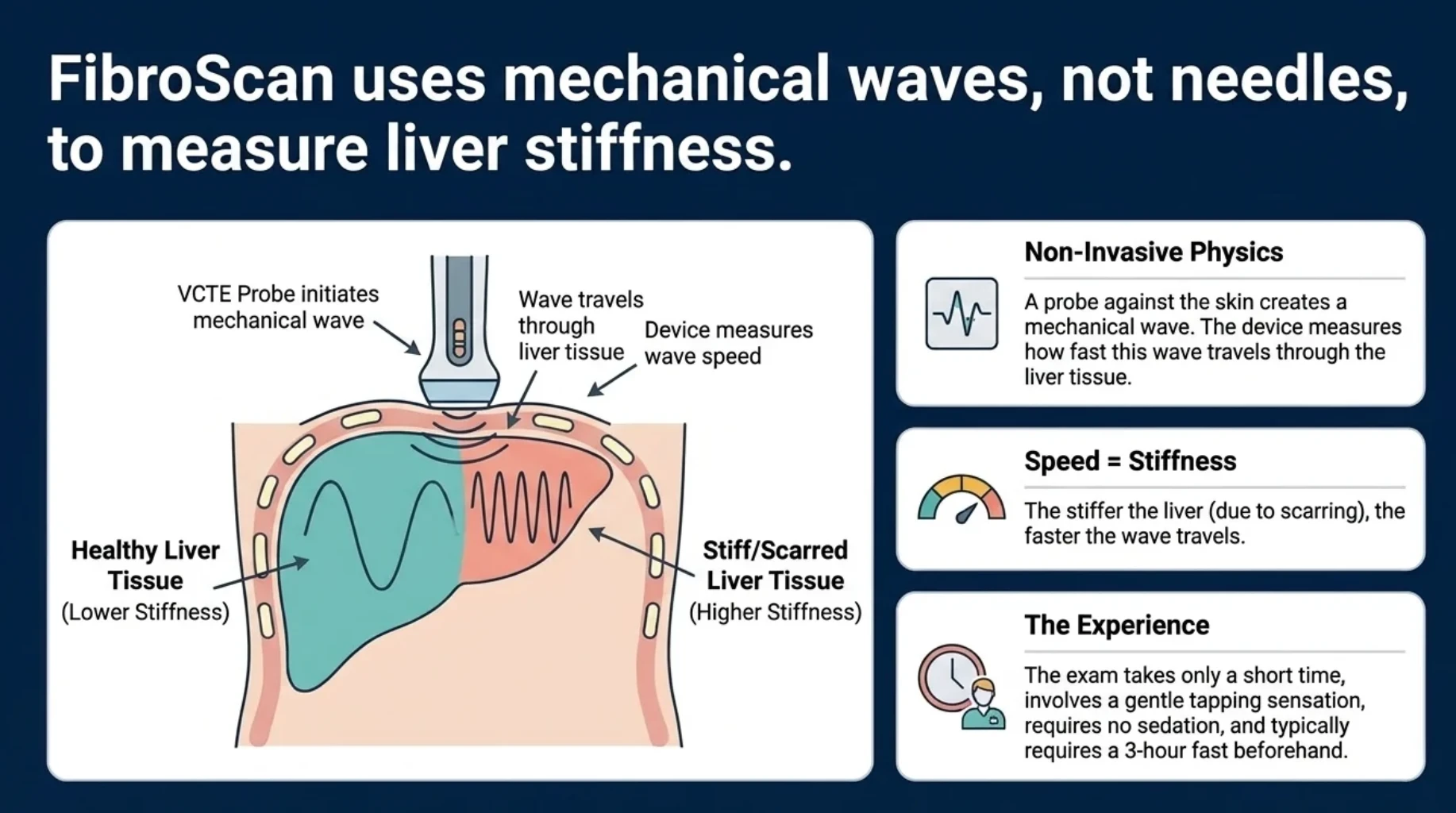
FibroScan is a device that uses vibration-controlled transient elastography, often abbreviated to VCTE. A probe placed against the skin over the liver measures how a mechanical wave travels through the tissue.
The examination is non-invasive: it does not involve inserting a needle into the liver. It provides a liver stiffness measurement, which helps estimate the likelihood of fibrosis.
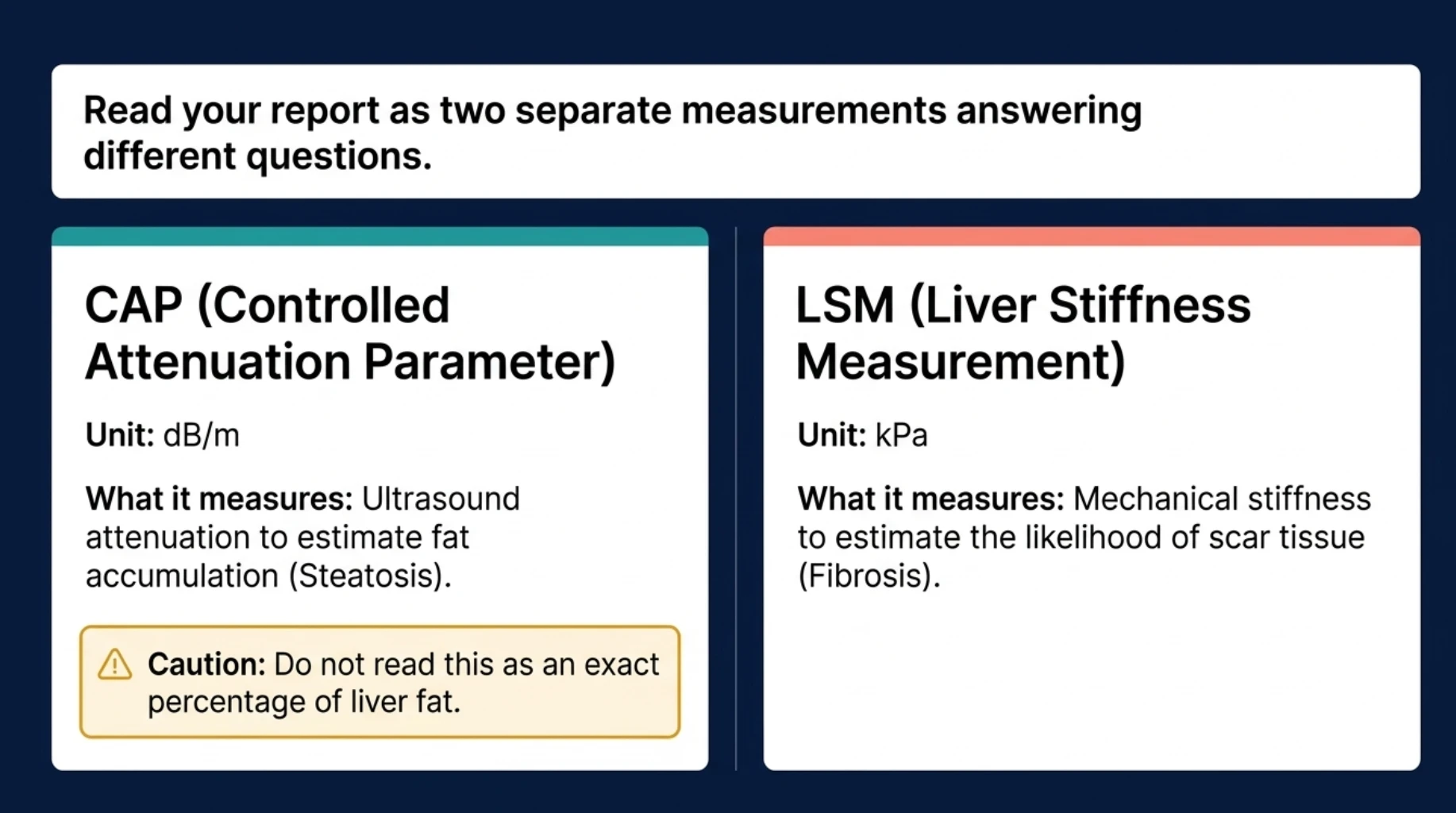
Many examinations also provide a controlled attenuation parameter, or CAP, which gives information about liver fat. These are separate measurements answering different questions.
FibroScan for Fatty Liver Measures More Than Fat
Liver stiffness is reported in kilopascals, or kPa. CAP is reported in decibels per meter, or dB/m.
A higher stiffness reading can suggest more scarring, but stiffness can also increase for reasons other than fibrosis. The result therefore needs medical interpretation rather than a direct comparison with a chart found online.
CAP helps assess steatosis, meaning fat accumulation. It should not be read as an exact percentage of the liver occupied by fat.
Three terms worth separating: Steatosis means liver fat. Fibrosis means scar tissue. Cirrhosis is an advanced form of scarring with structural changes. They are related, but they do not mean the same thing.
Why Is Fibrosis Assessment Important?
Fatty liver associated with metabolic risk factors is commonly called metabolic dysfunction-associated steatotic liver disease, or MASLD. Older reports may use the term non-alcoholic fatty liver disease, or NAFLD.
Some people mainly have fat accumulation. Others develop inflammation and progressive scarring. Identifying people at higher risk allows the doctor to plan further assessment, treatment and follow-up.
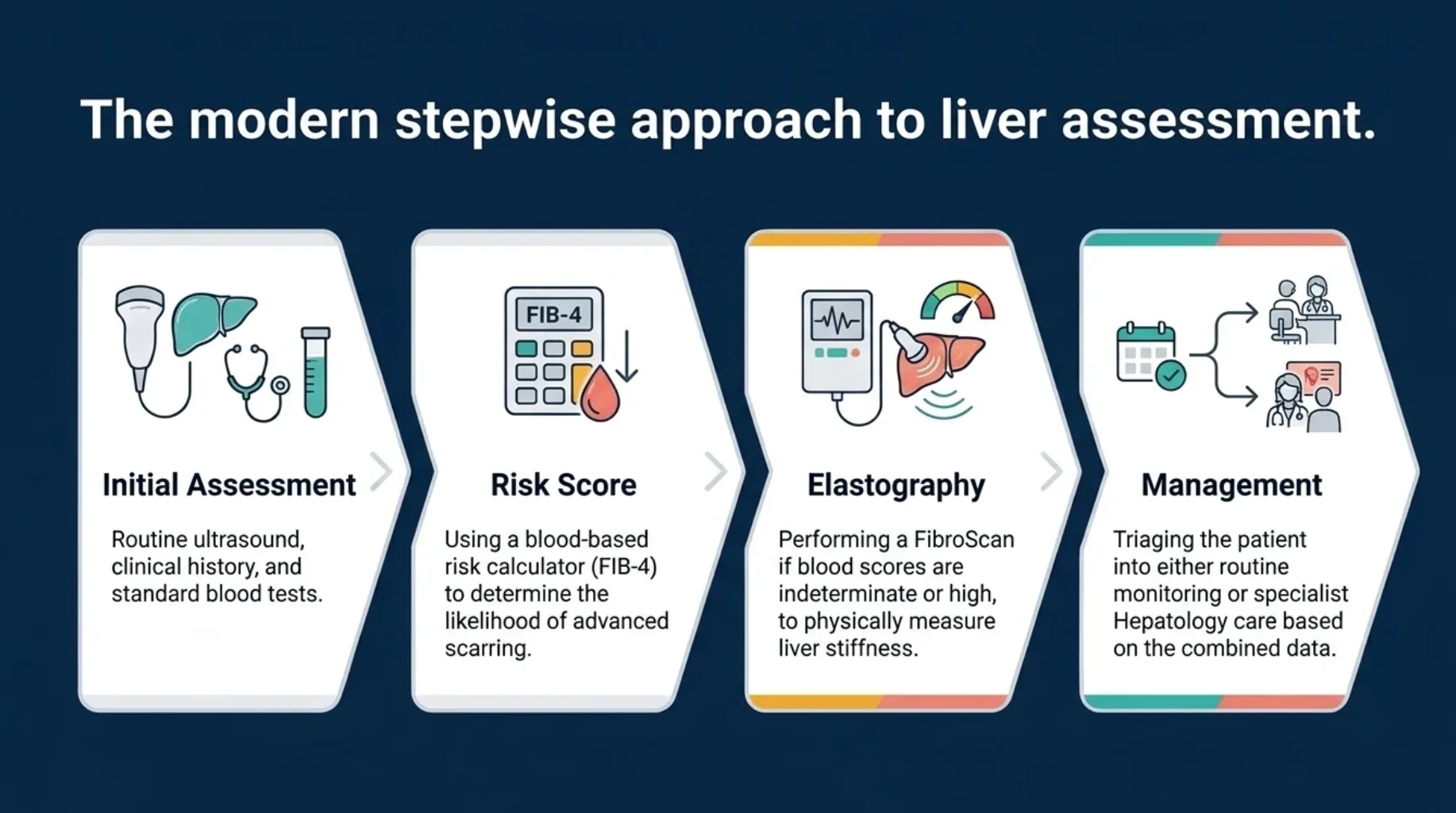
Current European guidance recommends a stepwise approach in appropriate patients: a blood-based risk score first, followed by elastography or another suitable test when needed.
This approach helps answer a practical question: who can continue routine monitoring, and who needs more detailed liver assessment?
Does Everyone With Fatty Liver Need a FibroScan?
No. A recommendation should follow an assessment rather than the presence of the words “fatty liver” alone.
A person with reassuring initial risk assessment may not need immediate elastography. Someone with type 2 diabetes, concerning blood results or other clinical findings may need it despite having no symptoms.
For example, two people may both have “grade 1 fatty liver” on ultrasound. One may have no major metabolic complications and a reassuring blood-based assessment. The other may have long-standing diabetes and findings that raise concern about fibrosis. Their next steps may differ.
An Ultrasound Grade Is Not a Fibrosis Stage
Ultrasound descriptions such as grade 1, 2 or 3 fatty liver refer to the appearance of fat accumulation. They should not be converted into fibrosis stages.
“Grade 1” does not establish that scarring is absent. Equally, “grade 3” does not automatically mean cirrhosis.
Routine ultrasound remains useful for structural information, but it does not reliably stage liver fibrosis. FibroScan answers a different question and may complement the earlier scan.
Who May Benefit From FibroScan for Fatty Liver?
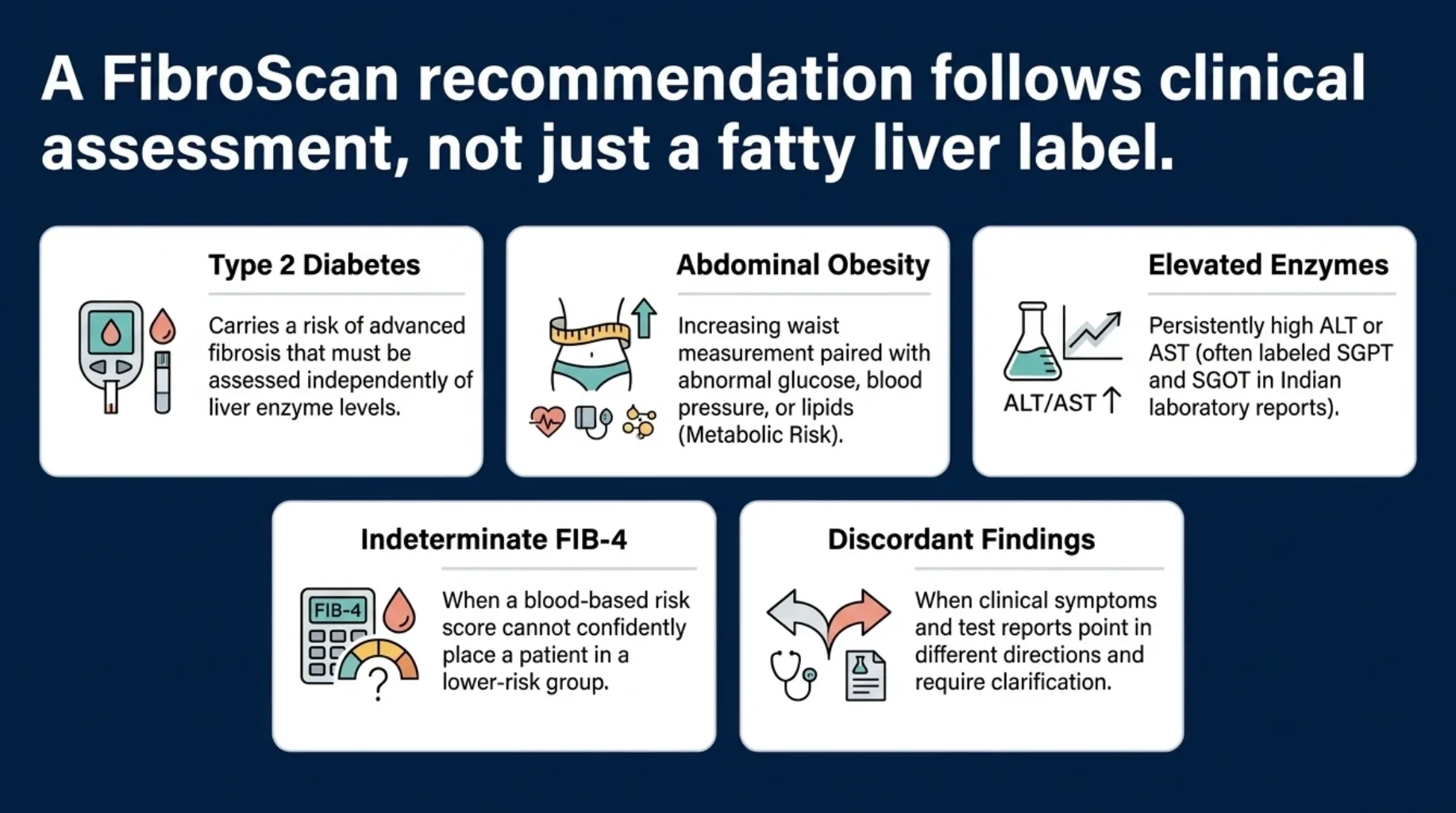
1. People With Type 2 Diabetes
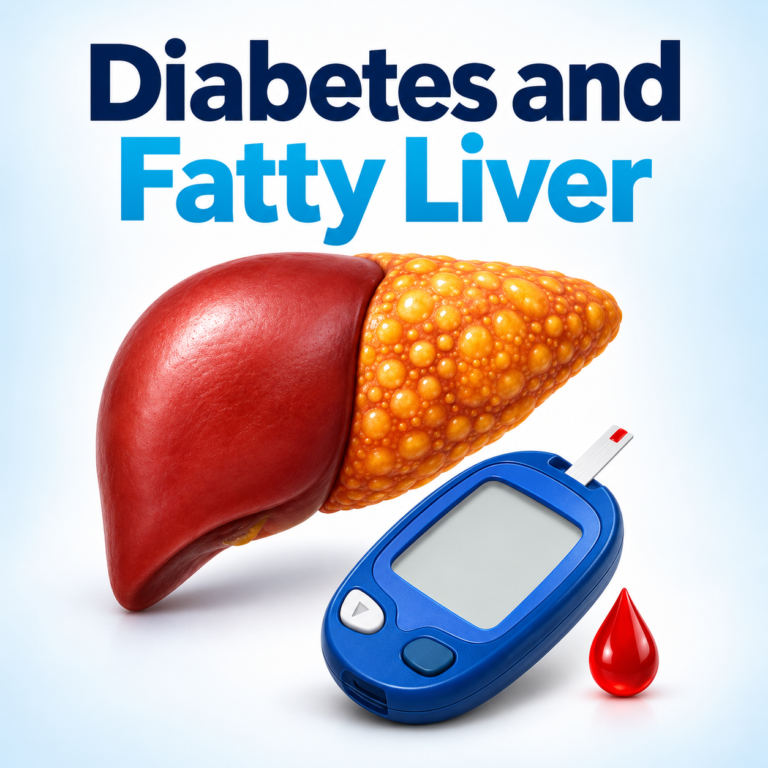
Type 2 diabetes is an important reason to assess the risk of advanced fibrosis. The decision should not depend only on whether liver enzymes are elevated.
If you have diabetes and fatty liver, ask whether fibrosis risk has been assessed and whether a second-step test is appropriate.
Bring previous HbA1c results, liver tests and a complete blood count. Existing reports may provide much of the information needed to begin the assessment.
2. People With Abdominal Obesity and Additional Metabolic Risks
An increasing waist measurement together with factors such as abnormal glucose regulation, blood pressure or lipids may justify a structured liver-risk assessment.
The aim is to consider the whole risk pattern. A single body-weight measurement cannot provide that information.
In practice, explain how your waist, weight and reports have changed over time. This can be more useful than simply reporting that you have had fatty liver “for years.”
3. People With Persistently Elevated Liver Enzymes
Repeatedly elevated ALT or AST deserves evaluation. These tests are often labelled SGPT and SGOT in Indian laboratory reports.
FibroScan may contribute to the assessment, but it does not identify every cause of raised enzymes. Alcohol exposure, medicines, viral hepatitis and other liver conditions may also need consideration.
Do not assume every abnormal liver result is explained by fatty liver. Bring the actual values and dates so the trend can be reviewed.
4. People With an Indeterminate or Raised FIB-4 Score
FIB-4 is calculated using age, AST, ALT and platelet count. It helps estimate risk; it is not a diagnosis or a direct measurement of scar tissue.
When the result does not place someone confidently in a lower-risk group, FibroScan or another non-invasive test may help clarify the next step.
A clearly concerning score or other evidence of advanced disease may warrant specialist referral rather than simply arranging repeated screening tests.
5. People Whose Reports and Clinical Findings Do Not Agree
Sometimes the information points in different directions. Liver enzymes may be normal while other findings remain concerning, or one test may suggest more risk than another.
Discordant results deserve review. The answer may involve checking test reliability, repeating an assessment under appropriate conditions or arranging a different investigation.
A single reassuring result should not automatically overrule a concerning clinical picture.
Can You Need FibroScan With Normal Liver Enzymes?
Yes. Normal ALT and AST do not reliably exclude clinically significant fibrosis. This is particularly relevant when other risk factors are present.
However, normal enzymes do not mean that everyone needs immediate scanning. They are one part of the overall assessment.
The useful question is: “Given my history and other results, has fibrosis risk been assessed adequately?”
How Does FIB-4 Help Decide the Next Step?
In many adult MASLD pathways, FIB-4 is used before elastography. It uses information that may already be available from routine blood tests.
| FIB-4 result | Usual interpretation | Possible next step |
|---|---|---|
| Below 1.3 | Lower likelihood of advanced fibrosis in many adults | Manage risk factors and arrange reassessment according to clinical risk. |
| 1.3 to 2.67 | Indeterminate range | Consider elastography or another appropriate pathway, depending on risk and clinical context. |
| Above 2.67 | Greater concern for advanced fibrosis | Specialist assessment is generally appropriate; further testing helps clarify the findings. |
These categories require qualification. In adults older than 65, a higher lower-risk threshold of 2.0 is commonly used. FIB-4 performs less reliably below age 35 and should not be interpreted in the usual way during acute illness.
A lower score reduces concern but cannot exclude every case. Symptoms, examination and other findings still matter.
Do Not Self-Diagnose From a Calculator
If you calculate FIB-4 yourself, check that the laboratory values and platelet units are entered correctly. More importantly, ask how the result applies to your age and clinical circumstances.
The score is useful when it leads to an appropriate decision. It should not become a number repeatedly checked without a follow-up plan.
What to Discuss Before Booking the Scan
Bring your ultrasound report, liver tests, platelet count and previous liver assessments. Include prescriptions, supplements and an accurate account of alcohol intake.
Ask what question FibroScan will answer, whether the result could change management and who will review it afterwards.
If you develop jaundice, increasing abdominal swelling, vomiting blood, black stools or confusion, seek urgent medical care rather than waiting for a routine scan appointment.
How Are FibroScan Results Reported?
A FibroScan report commonly contains two main measurements: liver stiffness measurement, or LSM, and controlled attenuation parameter, or CAP. Read them separately because they describe different features of liver health.
Before interpreting either number, the clinician should check whether the examination produced reliable measurements. A report needs more context than a printed fibrosis label.
Understanding Liver Stiffness in FibroScan for Fatty Liver
Liver stiffness is measured in kilopascals, written as kPa. Higher readings can raise concern about fibrosis, but they do not establish an exact fibrosis stage on their own.
The following ranges are commonly used to help assess the likelihood of advanced fibrosis in adults with metabolic fatty liver disease. They are approximate clinical decision thresholds, not universal boundaries for every liver condition.
| Liver stiffness | What it may suggest | How it should be used |
|---|---|---|
| Below 8 kPa | A lower likelihood of advanced fibrosis when the examination is reliable | Interpret with FIB-4, clinical risk and other findings. |
| 8–12 kPa | An intermediate or uncertain result | Further assessment may be needed to clarify fibrosis risk. |
| Above 12 kPa | Greater concern for advanced fibrosis | Arrange specialist interpretation and appropriate additional assessment. |
A result above 12 kPa does not automatically prove cirrhosis. Conversely, a lower result should not override concerning symptoms, unreliable measurements or other evidence of liver disease.
What Does the CAP Score Mean?
CAP measures ultrasound attenuation and helps assess fat accumulation. It is reported in dB/m.
It does not directly measure inflammation, and it should not be treated as an exact percentage of liver fat. Thresholds can vary with the population, equipment and clinical approach.
For this reason, comparing your CAP result with a stranger’s report online can be misleading. Ask how the result fits with your other findings and whether it changes your care.
Why Can Liver Stiffness Be High Without Advanced Scarring?
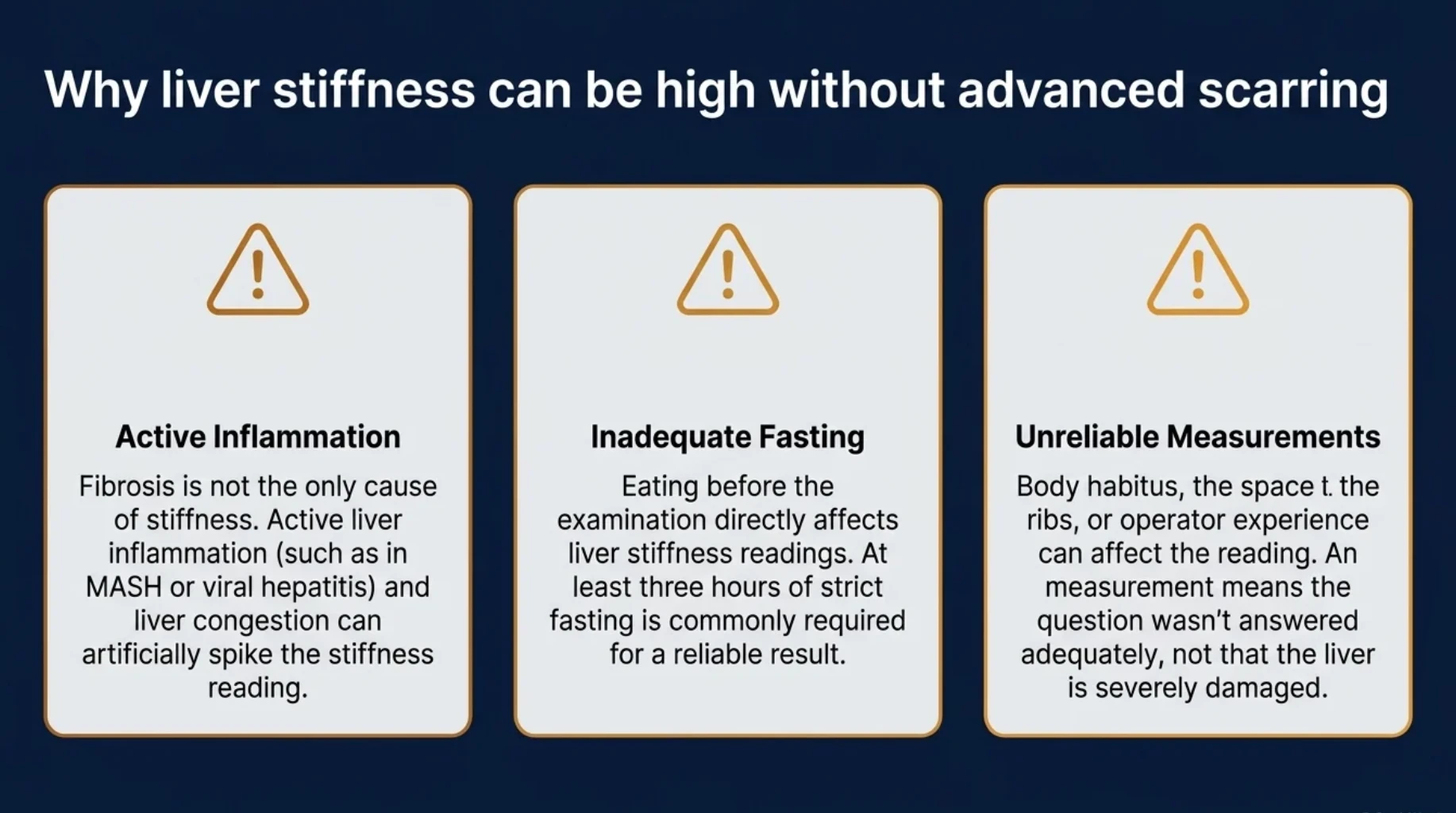
Fibrosis is an important cause of increased stiffness, but it is not the only one. Active liver inflammation and congestion can also increase the measurement.
Eating before the examination can affect stiffness readings. Other clinical or technical factors may make a result harder to interpret.
If the reading is unexpected, the appropriate response is a review of the circumstances and the wider assessment. It should not lead directly to a diagnosis based on one number.
Ask Whether the Examination Was Reliable
The report may include information about the number of valid measurements, their variability and the probe used.
Body habitus and the space between the ribs can affect measurement success. An appropriate probe and an experienced operator help obtain useful results, although some examinations remain unsuccessful.
An unreliable examination does not mean your liver is healthy or severely damaged. It means that the measurement has not answered the question adequately.
How Should You Prepare for FibroScan?
Follow the instructions supplied by the testing center. Fasting for at least three hours before the examination is commonly required, but instructions about water and other clear fluids vary.
Confirm the requirements when booking rather than assuming that every center follows the same preparation protocol.
Discuss Diabetes Medicines and Fasting in Advance
If you use insulin or another medicine that can cause hypoglycemia, ask how to coordinate the appointment, food and treatment. Do not independently skip or alter prescribed doses.
Tell the center about relevant medical conditions, pregnancy or implanted medical devices so that suitability can be checked against the equipment’s current instructions.
Wear clothing that allows access to the right side of your upper abdomen. Bring the referral, previous liver reports and your medicine list.
What Happens During the Examination?
You usually lie on your back with your right arm raised. The operator places a probe against the skin between the ribs over the liver and obtains several measurements.
You may feel gentle tapping or vibration. The examination generally takes only a short time and does not usually require sedation.
Ask when the report will be available and who will explain it. Receiving a result immediately is different from receiving a complete clinical interpretation.
Can FibroScan Diagnose MASH?
Metabolic dysfunction-associated steatohepatitis, or MASH, involves liver fat together with inflammation and liver-cell injury. Older reports may call it NASH.
FibroScan provides information about stiffness and fat, but cannot directly show the microscopic features needed to establish steatohepatitis.
Other assessments may help identify people at higher risk. A liver biopsy is reserved for selected circumstances where it is expected to resolve an important diagnostic or treatment question.
Does Everyone With an Abnormal Scan Need a Biopsy?
No. Many people can be assessed using a combination of history, blood tests and non-invasive investigations.
When findings are uncertain or disagree, a specialist may recommend additional blood testing, another elastography technique, magnetic resonance elastography or a biopsy, depending on the situation.
Ask what uncertainty remains and how the proposed investigation would change management.
What Happens After FibroScan for Fatty Liver?
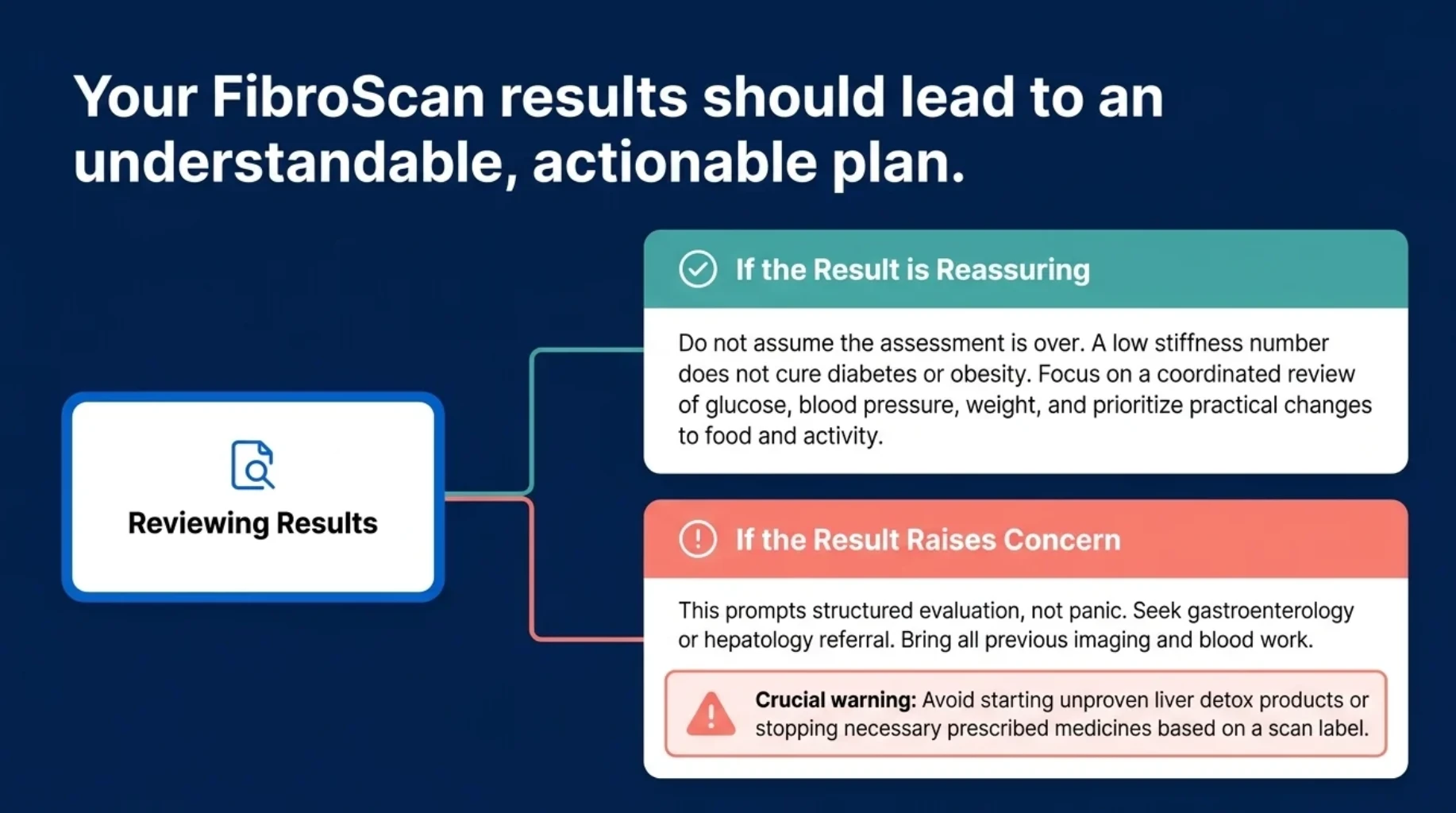
The result should lead to an understandable plan. Ask whether advanced fibrosis appears unlikely, whether further assessment is needed and when follow-up should occur.
A reassuring result does not remove the need to manage the conditions associated with fatty liver. A concerning result should prompt appropriate evaluation rather than panic or self-treatment.
If the Result Is Reassuring
Discuss what needs monitoring and which practical changes to priorities. Bring questions about food, activity, medicines and alcohol rather than assuming that a low stiffness number ends the assessment.
For example, a person with diabetes may still need coordinated review of glucose, blood pressure and weight concerns even when advanced fibrosis appears unlikely.
If the Result Raises Concern
Ask whether gastroenterology or hepatology referral is needed and whether another test should confirm or clarify the finding.
Take all reports to the referral appointment. The specialist needs the blood results, previous imaging and clinical history alongside the FibroScan report.
Avoid starting “liver detox” products or stopping necessary medicines because of a scan label.
How Often Should FibroScan Be Repeated?
There is no single repeat interval for everyone. Follow-up depends on the initial result, metabolic risk, other liver conditions and whether a new measurement would change care.
In lower-risk patients, periodic reassessment with blood-based tools may be appropriate before another scan is considered. People with concerning findings need an individual follow-up plan.
A Short-Term Change Does Not Prove That Scarring Has Disappeared
A stiffness reading can change for reasons other than fibrosis. Changes in inflammation, preparation and measurement conditions can affect comparisons.
Ask whether repeat examinations were sufficiently comparable and whether the difference is clinically meaningful. Do not interpret every reduction as proof of scar reversal or every increase as definite progression.
Questions to Ask When Reviewing Your Report
Begin with: “Was the examination reliable, and what does it suggest about my risk of advanced fibrosis?”
Then ask how it compares with your FIB-4, blood tests and ultrasound; whether another cause of liver disease needs consideration; and whether specialist assessment is appropriate.
Before leaving, clarify the next action and review date. A report is most useful when you understand what to do with it.
Frequently Asked Questions About FibroScan for Fatty Liver
Do I need FibroScan if my ultrasound shows grade 1 fatty liver?
Not automatically. Ultrasound grade does not establish fibrosis stage. Your doctor should consider metabolic risk, blood results and the initial fibrosis assessment before recommending further testing.
Can I have significant fibrosis with normal SGPT and SGOT?
Yes. Normal liver enzymes do not reliably exclude significant fibrosis. They need interpretation alongside the rest of the assessment.
Is FibroScan the same as an abdominal ultrasound?
No. A conventional ultrasound mainly provides structural images. FibroScan measures liver stiffness and, when available, ultrasound attenuation associated with fat.
Does a high CAP score mean cirrhosis?
No. CAP relates to steatosis, while cirrhosis concerns advanced scarring and structural change. A high fat-related measurement cannot be used alone to diagnose cirrhosis.
Does a stiffness result above 12 kPa prove advanced fibrosis?
It raises concern but does not establish the diagnosis by itself. Test reliability, inflammation, other clinical factors and additional findings need consideration.
Can FibroScan replace every liver biopsy?
No. It reduces the need for invasive assessment in many circumstances, but selected patients may still need biopsy when an important question remains unresolved.
Should I fast before the scan?
Usually, yes. At least three hours of fasting is commonly requested. Follow the center’s exact instructions about food, fluids and medicines.
Can I use the same interpretation chart for every liver disease?
No. Thresholds and their meaning depend on the underlying condition and clinical context. Fatty liver, viral hepatitis and other disorders should not automatically be interpreted using identical cut-offs.
Can a normal FibroScan exclude every liver problem?
No. A reassuring stiffness result can reduce concern about advanced fibrosis in the appropriate setting, but it does not exclude every liver condition or explain every abnormal blood result.
Fatty Liver Assessment in Dwarka
If you have fatty liver, diabetes or repeated abnormal liver results, a consultation can help determine whether fibrosis assessment is needed and which test is appropriate.
Dr. Pankaj Kumar, General & Lifestyle Physician, provides medical assessment of fatty liver and associated metabolic concerns in Dwarka, New Delhi. FibroScan reports are reviewed alongside symptoms, blood tests and previous imaging, with specialist referral when indicated.
Preparing for your consultation: Bring your ultrasound report, liver tests, complete blood count, previous FibroScan reports and prescriptions.
About the Author
Dr. Pankaj Kumar
MBBS, DNB Family Medicine, DNHE
General & Lifestyle Physician
Dr. Pankaj Kumar is the founder of Diet Plus Minus. His clinical interests include diabetes, medical weight management, fatty liver and related metabolic disorders.
Medical Disclaimer
This article provides general educational information for adults and does not replace individual medical assessment. FibroScan and FIB-4 results require clinical interpretation. Do not diagnose cirrhosis, change prescribed medicines or begin supplements based only on a scan result. Seek urgent medical care for vomiting blood, black stools, confusion or rapidly worsening illness.
References
- European Association for the Study of the Liver, European Association for the Study of Diabetes, European Association for the Study of Obesity. EASL–EASD–EASO Clinical Practice Guidelines on the management of metabolic dysfunction-associated steatotic liver disease. 2024. Read the guideline.
- Rinella ME, et al. AASLD Practice Guidance on the clinical assessment and management of nonalcoholic fatty liver disease. Hepatology. 2023;77(5):1797–1835. Read the guidance.
- American Gastroenterological Association. Role of noninvasive biomarkers in NAFLD/MASLD. 2023. Read the clinical guidance.
- Memorial Sloan Kettering Cancer Center. Understanding Your Liver Elastography (FibroScan) Results. Updated May 2026. Read the patient resource.
- Echosens. FibroScan procedure for users. Manufacturer instructions on examination preparation and measurement. Read the procedure information.
- National Institute of Diabetes and Digestive and Kidney Diseases. Diagnosis of NAFLD & NASH. Patient information using earlier disease terminology. Read the resource.

Written by Dr. Pankaj Kumar
General & Lifestyle Physician in Dwarka Sector 6, New Delhi · MBBS, DNB (Family Medicine), DNHE · 16 years of experience.
About the doctor →Book a consultation → Beyond Blood Sugar
 The 90-Day Prediabetes Turnaround
 The Indian Diabetes Diet Reset
 Eat to Beat Gout
 Why Is My Hair Falling?
 The 30-Day Inflammation Reset