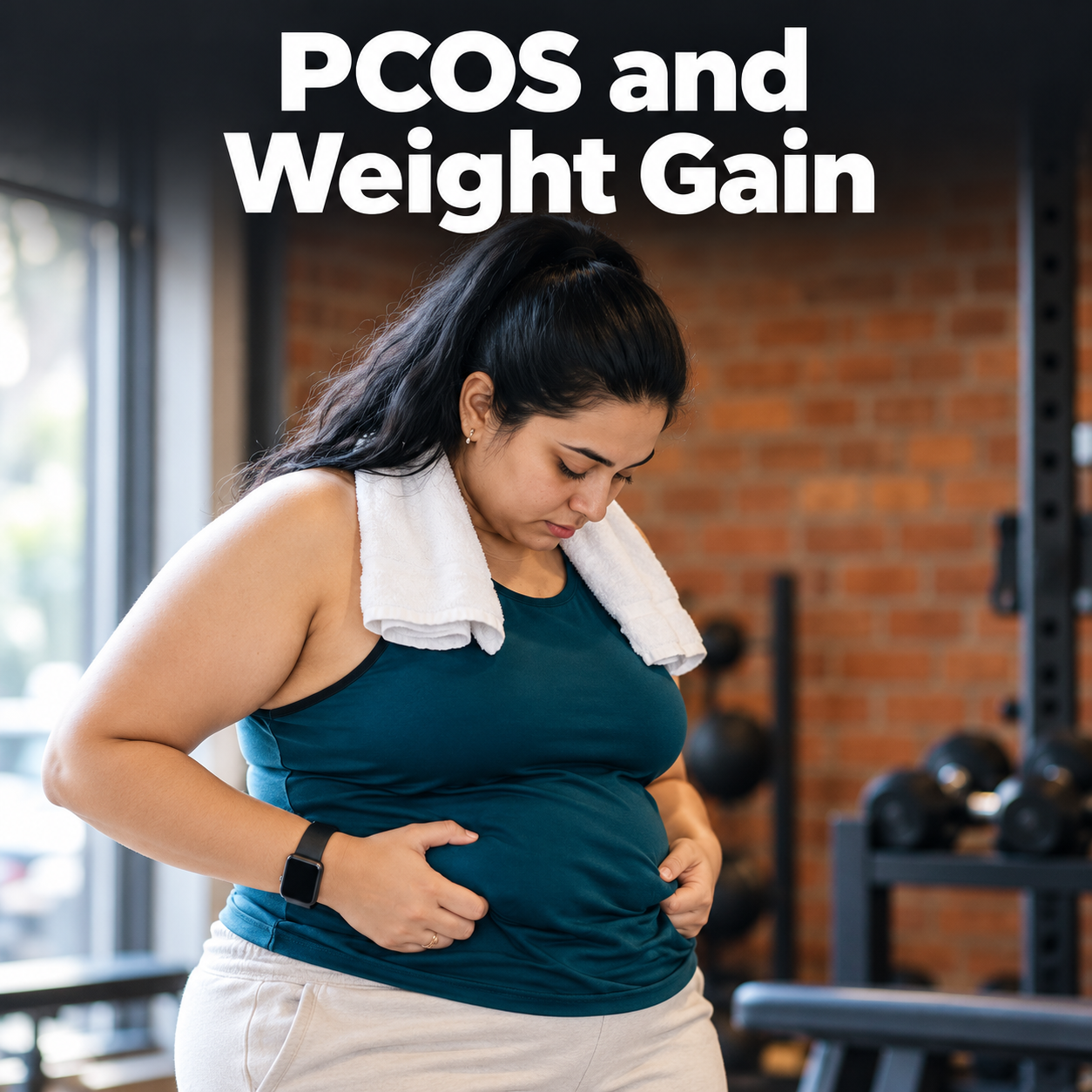
“I have reduced my portions, started walking and stopped eating sweets. Why is my weight still increasing?”
For someone living with polycystic ovary syndrome, this question can come with considerable frustration. Advice to “just lose weight” often arrives without an explanation of the condition, a review of other symptoms or a practical plan.
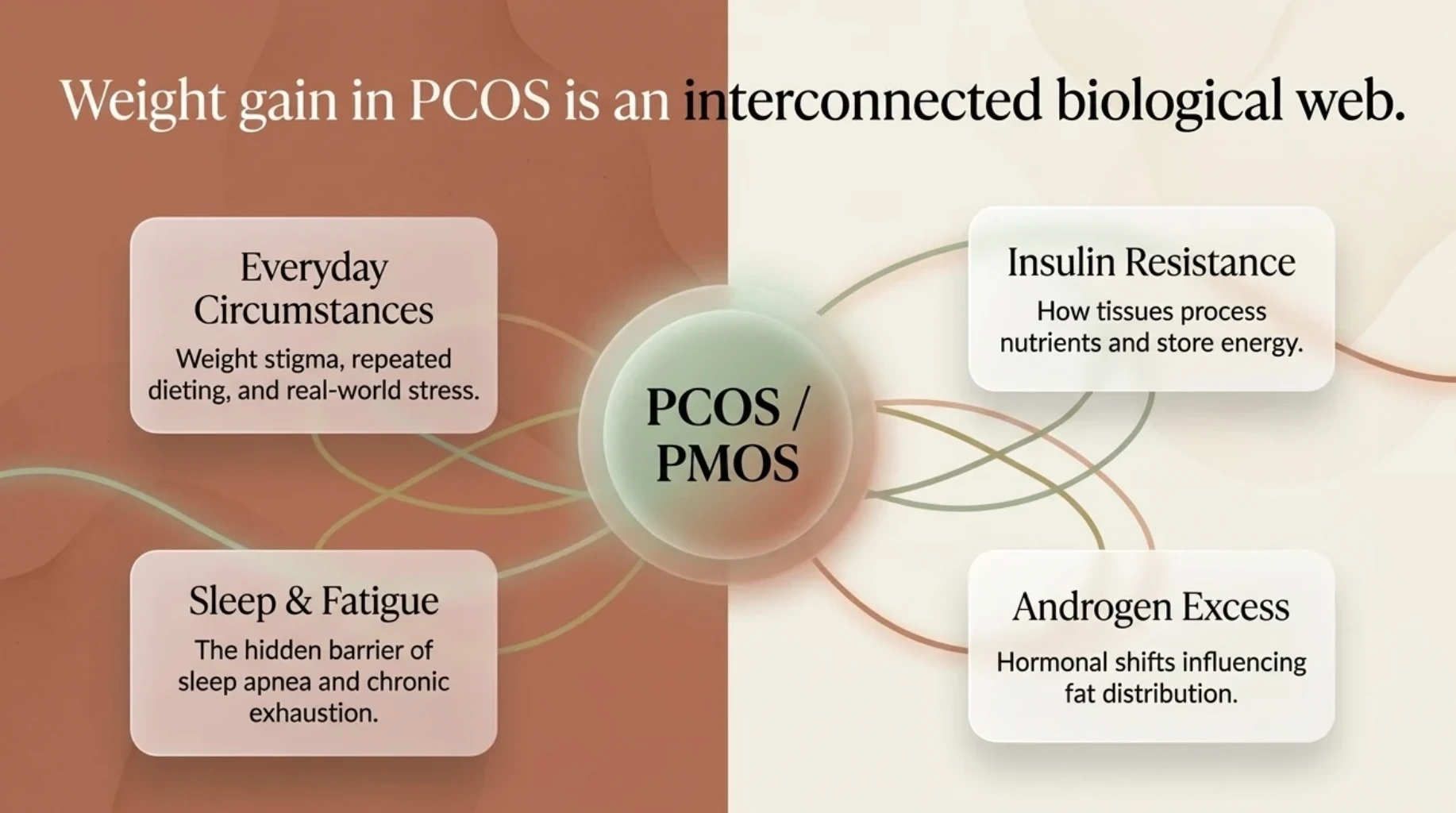
PCOS and weight gain have a complex relationship. Insulin resistance, androgen excess, sleep problems, emotional wellbeing and everyday circumstances can interact. However, PCOS does not make weight loss impossible, and it does not mean that every affected person has the same metabolic problem.
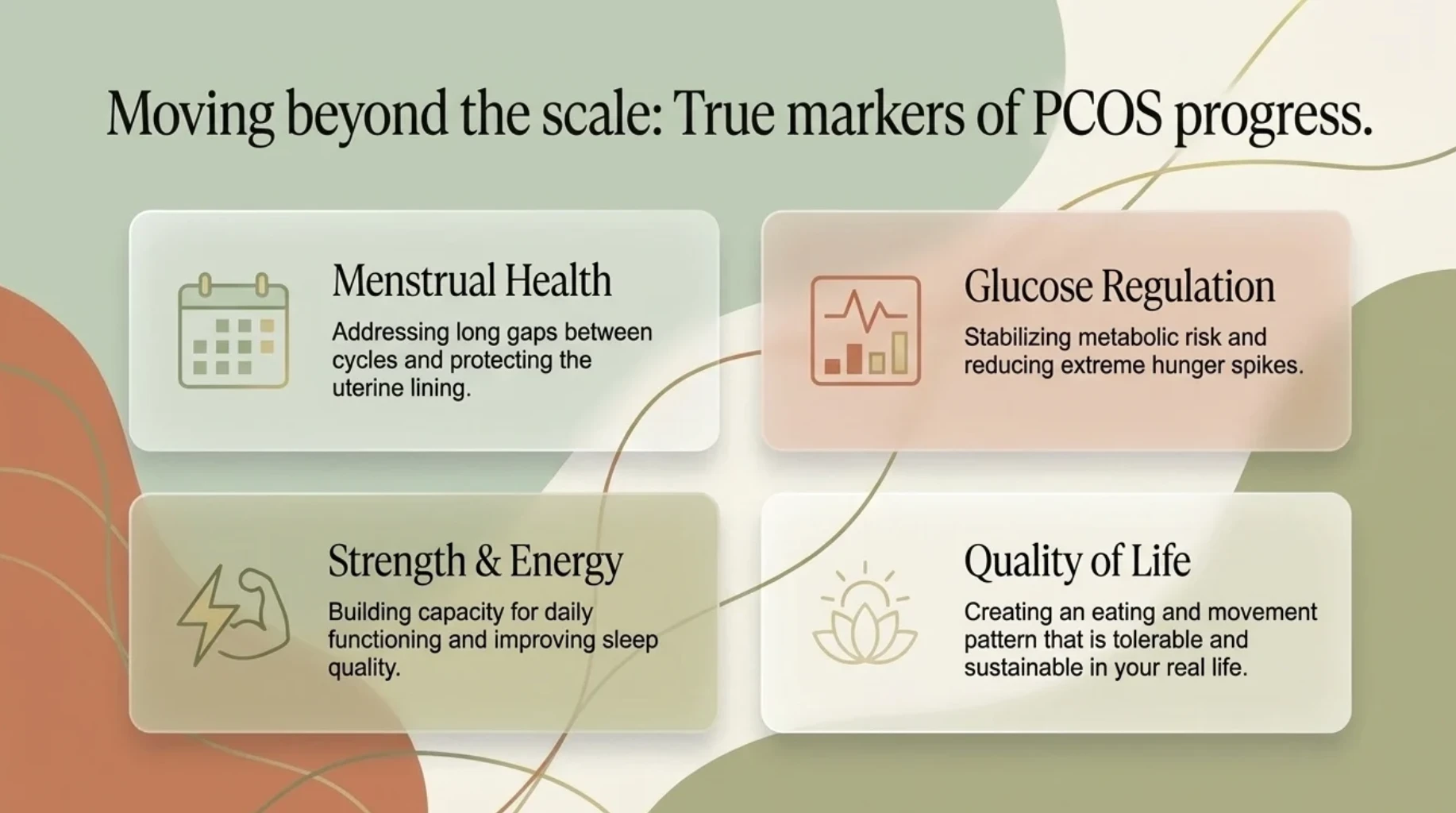
A useful approach recognizes the difficulty without assuming that your body is permanently resistant to treatment. It also looks beyond the scale to menstrual health, glucose regulation, strength, sleep and quality of life.
A note on terminology: In May 2026, an international initiative introduced the name polyendocrine metabolic ovarian syndrome, or PMOS, to better reflect the condition’s wider effects. This article uses the familiar term PCOS because it remains widely recognized by patients.

Understanding PCOS and Weight Gain
PCOS is a hormonal and metabolic condition associated with features such as irregular ovulation, androgen-related symptoms and increased risk of insulin resistance and type 2 diabetes.
It can occur across the weight spectrum. Some women have a higher body weight or increasing waist circumference, while others do not. Weight alone cannot establish or exclude the diagnosis.
Similarly, a scan reporting polycystic-looking ovaries does not, by itself, explain every menstrual or weight concern. The diagnosis needs appropriate clinical assessment.
Does PCOS Make Weight Loss Harder for Everyone?
No. Experiences vary, and the evidence does not support a universal claim that everyone with PCOS has a dramatically slower metabolism or cannot respond to lifestyle treatment.
The international guideline acknowledges that consistent physiological or behavioral explanations for weight differences have not been established. Your experience of difficulty remains important, but it should prompt an individual assessment rather than a fixed assumption about what your body can achieve.
The practical message: PCOS deserves appropriate treatment at every body size. Weight management may be one part of care, but support for menstrual symptoms, metabolic health and emotional wellbeing should not depend on reaching a target weight first.
1. Insulin Resistance Can Be Part of the Picture
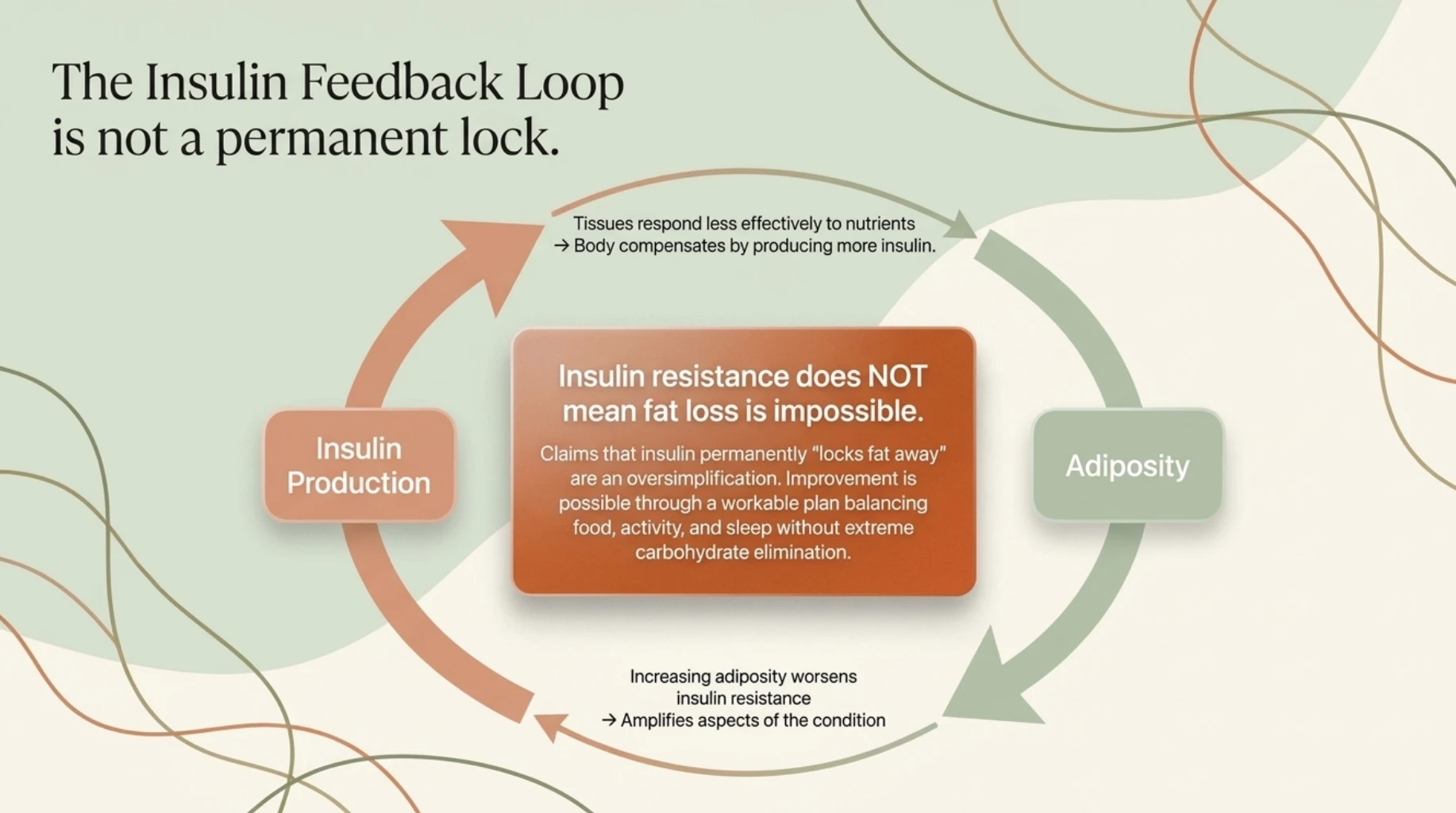
Insulin helps regulate the movement and storage of nutrients. With insulin resistance, some tissues respond less effectively, and the body may compensate by producing more insulin.
In PCOS, these metabolic changes can interact with ovarian hormone production. The relationship also works in the other direction: increasing adiposity can worsen insulin resistance and amplify aspects of the condition.
This creates a more complicated situation than a simple choice between “hormones” and “lifestyle.” Both biology and daily circumstances deserve attention.
Insulin Resistance Does Not Mean Fat Loss Is Impossible
Claims that insulin permanently “locks fat away” can leave people feeling that ordinary treatment is pointless. That is an oversimplification.
A workable plan can address food intake, activity, sleep and medical treatment together. There is no requirement to eliminate all carbohydrate or repeatedly fast for long periods before improvement becomes possible.
If your current plan produces persistent hunger, fatigue or repeated overeating after restriction, the plan needs review. This experience should not automatically be attributed to a single hormone.
2. Androgen Excess and Body-Fat Distribution May Interact
Androgens are present in everyone, but their levels or effects may be increased in PCOS. Alongside acne or excess facial and body hair, androgen-related changes may interact with insulin action and fat distribution.
Recent research describes links between androgen excess, visceral adiposity and metabolic dysfunction. These mechanisms help explain why PCOS care extends beyond ovarian symptoms.
However, mechanistic research cannot tell an individual exactly why their weight changed. Nor does it establish that treating an androgen result alone will produce substantial weight loss.
Increasing Waist Size Deserves Context
If your waist is increasing, discuss the trend alongside blood pressure, glucose risk, medicines and other symptoms.
Bring previous measurements if available. “My waist has increased over six months” provides different information from temporary bloating that changes during the day.
The aim is to understand the pattern rather than label every abdominal change as “PCOS belly.”
3. Sleep Problems Can Add Another Barrier
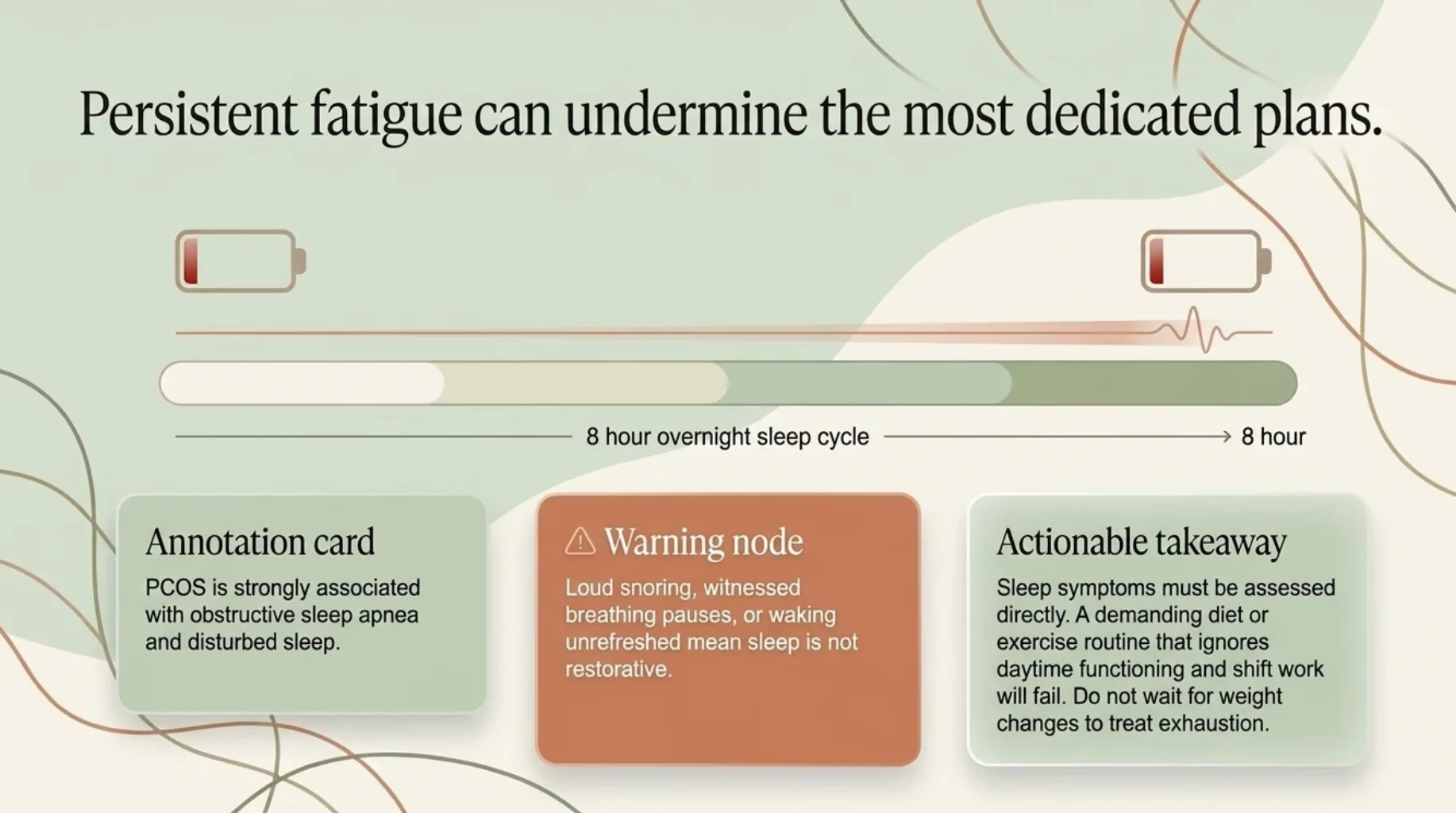
PCOS is associated with obstructive sleep apnea and disturbed sleep. These problems may coexist with tiredness and make daily routines harder to maintain.
Loud snoring, witnessed breathing pauses, gasping during sleep or persistent daytime sleepiness deserve discussion. Spending enough hours in bed does not necessarily mean sleep is restorative.
Sleep symptoms should be assessed directly rather than leaving them untreated until weight changes.
Fatigue Can Affect What a Plan Requires of You
Someone who wakes unrefreshed may struggle with shopping, cooking or exercise after work. A demanding plan that ignores this can be difficult to sustain.
Tell the doctor about your actual sleep schedule, shift work and daytime functioning. If a sleep disorder is suspected, further assessment may be appropriate.
4. Repeated Dieting and Weight Stigma Can Undermine Care
Some women receive repeated instructions to lose weight without being offered specific help. Others encounter conflicting rules about rice, dairy, fruit, gluten or meal timing.
A 2025 systematic review of barriers to lifestyle management identified a need for individual advice and better coordinated care. Weight stigma affected people in both larger and smaller bodies and could harm self-perception and the quality of care.
This matters because a plan must be possible to follow in your real circumstances. Knowing that exercise is beneficial is different from knowing how to begin when you feel exhausted, embarrassed or unsure what is safe.
Ask for Advice You Can Put Into Practice
Instead of leaving with “eat less,” ask which two or three changes to begin with and how progress will be reviewed.
For example, a Delhi NCR working professional may need help organizing breakfast before commuting and managing late dinners. Someone caring for a family may need a plan based on shared meals rather than separate cooking.
These practical questions deserve as much attention as calorie calculations.
5. Other Conditions May Be Contributing
Having PCOS does not mean every new symptom comes from it. Weight changes may also relate to medicines, thyroid disease, pregnancy, depression, reduced activity or another medical condition.
Describe when the change began and what else happened around that time. Bring prescriptions and supplements, including products marketed for “hormone balance.”
Rapid weight gain with swelling or breathlessness needs prompt medical assessment. It should not be managed simply by making a PCOS diet more restrictive.
Do Not Ignore Long Gaps Between Periods
Menstrual care remains important even when your main concern is weight. Discuss prolonged gaps, unusual bleeding and pregnancy possibility with your clinician.
Do not wait for weight loss before seeking advice about absent periods. The assessment should address menstrual health and appropriate protection of the uterine lining where needed.
“I have reduced my portions, started walking and stopped eating sweets. Why is my weight still increasing?”
For someone living with polycystic ovary syndrome, this question can come with considerable frustration. Advice to “just lose weight” often arrives without an explanation of the condition, a review of other symptoms or a practical plan.
PCOS and weight gain have a complex relationship. Insulin resistance, androgen excess, sleep problems, emotional wellbeing and everyday circumstances can interact. However, PCOS does not make weight loss impossible, and it does not mean that every affected person has the same metabolic problem.
A useful approach recognizes the difficulty without assuming that your body is permanently resistant to treatment. It also looks beyond the scale to menstrual health, glucose regulation, strength, sleep and quality of life.
A note on terminology: In May 2026, an international initiative introduced the name polyendocrine metabolic ovarian syndrome, or PMOS, to better reflect the condition’s wider effects. This article uses the familiar term PCOS because it remains widely recognized by patients.
What Helps With PCOS and Weight Gain?
A useful treatment plan begins with your priorities. These may include preventing further gain, improving glucose results, managing menstrual symptoms, increasing strength or reducing excess weight.
Choose changes that you can repeat over time. A demanding routine followed for ten days may be less useful than a modest improvement that fits your working hours and household.
Build a Practical Eating Pattern
Start by reviewing the meals you already eat. Consider protein sources, vegetables, fibre-rich foods, beverages, snacks and portions rather than searching for a special PCOS food.
For example, if breakfast is usually tea and biscuits, discuss an alternative such as moong dal chilla with curd or eggs with a suitable accompaniment. If lunch is mainly rice or roti, consider how dal, beans, soy, paneer, eggs, fish or chicken could fit according to your preferences.
These are examples for discussion, not a fixed prescription. Portions and food choices need to reflect your nutritional needs, medical conditions and treatment goals.
A short food record can help reveal practical difficulties. Include weekends and drinks, and use it to identify changes rather than criticize yourself.
Choose Movement That Fits Your Starting Point
Walking, strength training, cycling, swimming or other enjoyable activities can all form part of a plan. The most useful starting point is one you can perform safely and regularly.
If you currently do little activity, short walks may be more realistic than immediately committing to lengthy workouts. Ask how to introduce strengthening exercises and progress gradually.
Discuss pain, dizziness, marked breathlessness or substantial post-exercise symptom worsening before increasing activity. A plan should account for these barriers.
Make Follow-Up Part of the Plan
Agree on when the plan will be reviewed and what will be assessed. Bring questions about hunger, energy, meals, activity and treatment tolerability.
If progress slows, review what has changed. A plateau should lead to reassessment of the approach rather than an automatic demand to eat less.
Do You Need a Special PCOS Diet?
The international guideline does not identify one diet composition as superior for all PCOS outcomes. Healthy eating should be adapted to individual preferences and goals.
This means that a label such as “PCOS keto,” “hormone detox” or “fertility diet” does not establish that a plan is appropriate for you.
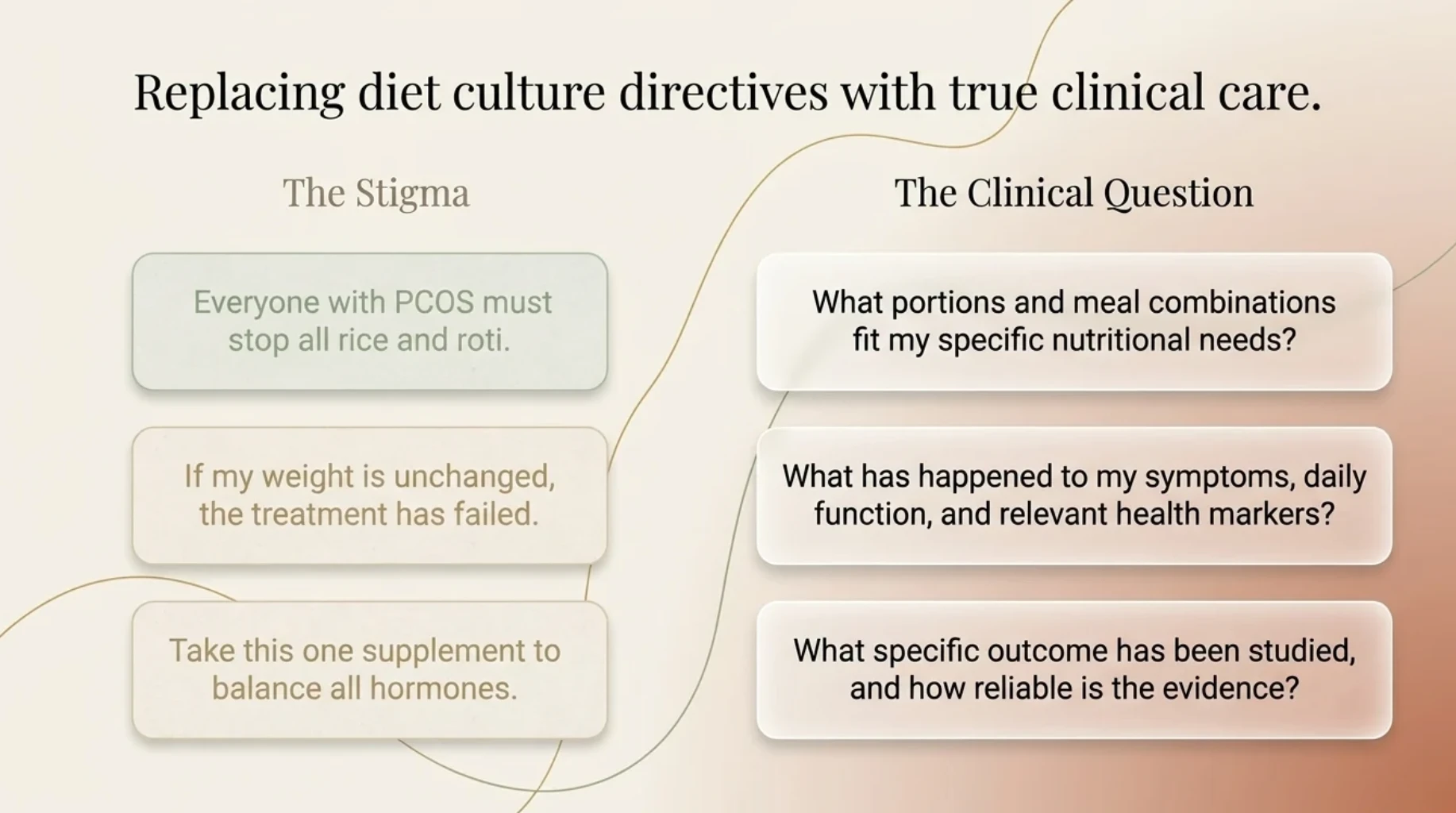
| Claim | A more useful question |
|---|---|
| Everyone with PCOS must stop rice and roti. | What portions and meal combinations fit my needs and preferences? |
| A more restrictive plan will always work better. | Can I maintain this approach while meeting my nutritional needs? |
| One supplement will balance all my hormones. | What outcome has been studied, and how reliable is the evidence? |
| If my weight is unchanged, treatment has failed. | What has happened to symptoms, function and relevant health markers? |
| My friend’s PCOS diet should work identically for me. | How do our health conditions, routines and treatment goals differ? |
Which Medical Assessments May Be Useful?
Bring your menstrual history, previous reports, prescriptions and a description of your weight trend. Mention acne, excess hair growth, sleep symptoms and your pregnancy plans.
The assessment should establish what has already been diagnosed, which symptoms need further evaluation and whether additional support is required.
Assess Glucose Risk Rather Than Relying on Fasting Insulin
The international guideline identifies a 75-g oral glucose tolerance test as the most accurate assessment of glycemic status in PCOS, regardless of BMI. Fasting glucose or HbA1c may be used when an OGTT cannot be performed, with limitations.
Routine insulin assays are not recommended for usual clinical care because their clinical usefulness is limited. A fasting insulin number should not become the sole target of treatment.
Your clinician can explain which assessment is appropriate and how the result will change care.
Ask What Each Additional Test Will Clarify
Some investigations assess metabolic risk; others investigate a specific symptom or help exclude another diagnosis.
Ask why a test is being suggested and whether an existing result is recent enough to use. A large hormone package is not automatically more informative than selected tests linked to clinical questions.
Can Metformin Help With PCOS Weight Management?
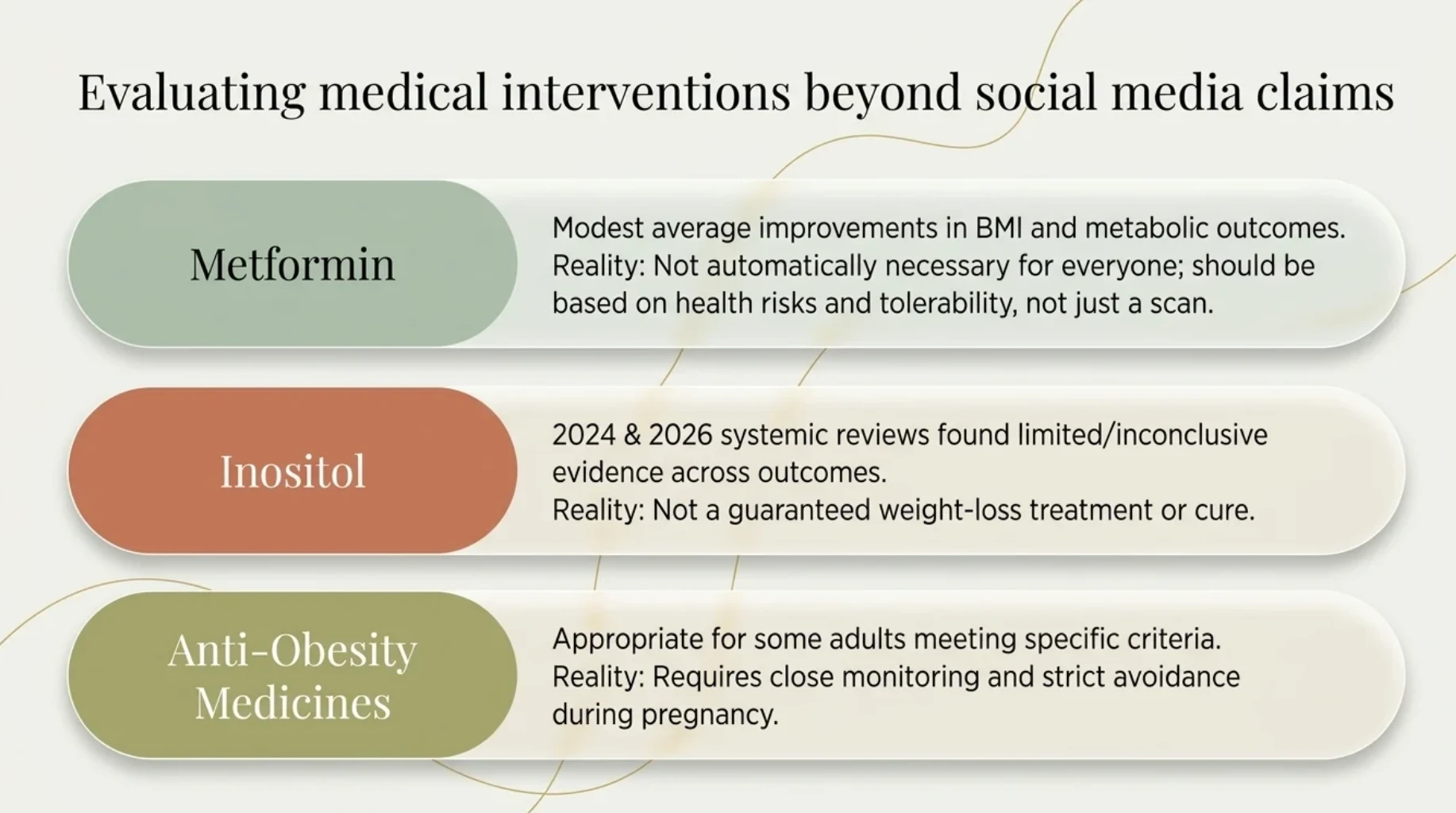
Metformin may be considered for selected metabolic features of PCOS. It is not a guaranteed weight-loss treatment, and it is not automatically necessary for everyone with the condition.
A systematic review informing the 2023 guideline found modest average improvements in BMI and some metabolic outcomes compared with placebo. Mild gastrointestinal adverse effects were more common.
The decision should consider your health risks, treatment goals, tolerability and other medicines. Do not start or change metformin based only on a social-media recommendation or a fasting insulin result.
What About Weight-Loss Medicines?
Prescription obesity treatment may be appropriate for some adults with PCOS who meet the relevant criteria. A PCOS diagnosis alone does not establish eligibility.
The discussion should include expected benefits, adverse effects, cost, monitoring and longer-term treatment needs. Pregnancy plans and contraception require particular attention.
Anti-obesity medicines should not be used during pregnancy. If pregnancy is possible or planned, discuss treatment and the required stopping interval with the prescriber before starting or changing a medicine.
These treatments should form part of an individual medical plan, not be obtained as a substitute for assessment.
Does Inositol Reliably Cause Weight Loss?
Inositol is widely marketed for PCOS, but evidence needs careful interpretation.
A 2024 systematic review found limited and inconclusive evidence overall. A 2026 umbrella review reported potential benefits for several hormonal, metabolic and reproductive outcomes, but found no high-quality evidence across the outcomes it assessed.
These findings do not justify a promise that inositol will reliably produce substantial weight loss or “cure” PCOS. Discuss the intended outcome, uncertainty, cost and product quality before using it.
What If You Have PCOS at a Normal Weight?
Care still matters. PCOS-associated metabolic risk cannot be excluded by appearance or BMI alone.
If weight loss is not indicated, the plan may focus on adequate nutrition, activity, sleep, menstrual symptoms and appropriate health monitoring.
Unnecessary restriction is not a requirement for receiving treatment. Your goals should be based on your assessment rather than on the assumption that everyone with PCOS needs to become lighter.
How Should Progress Be Reviewed?
Agree on a small set of meaningful outcomes. If weight reduction is an appropriate goal, use trends rather than reacting to each daily measurement.
You may also want to record changes in energy, strength, sleep, eating patterns or menstrual symptoms. Relevant laboratory results can be reviewed at intervals selected by your doctor.
For example, being able to follow a balanced meal routine, walk more comfortably and tolerate treatment may represent useful progress even before a large change appears on the scale.
Continuing symptoms still deserve attention. Improvements in one area should not be used to dismiss another unresolved concern.
Frequently Asked Questions About PCOS and Weight Gain
Does PCOS always cause weight gain?
No. PCOS occurs across the weight spectrum. Some people develop increasing weight or waist size, while others remain at a lower or stable weight.
Is my metabolism permanently damaged?
PCOS does not establish permanent metabolic damage. If weight management feels difficult, review sleep, nutrition, medicines, symptoms and treatment options rather than assuming improvement is impossible.
Do I need to avoid every carbohydrate?
No. There is no universal requirement to eliminate carbohydrate. Discuss food quality, portions, meal combinations and the overall eating pattern with your clinician or dietitian.
Will losing weight cure PCOS?
Weight management may improve some features for some people, but it should not be presented as a guaranteed cure. Care needs to address the symptoms and health risks relevant to the individual.
Can I receive treatment before losing weight?
Yes. Assessment and treatment of menstrual symptoms, metabolic risk, sleep problems and emotional wellbeing should not be delayed until you reach a target weight.
Does everyone with PCOS need metformin?
No. Metformin is considered according to metabolic needs and individual circumstances. It is not automatically prescribed solely because PCOS appears on a scan or medical record.
Should absent periods be ignored while I work on weight loss?
No. Discuss prolonged gaps between periods, pregnancy possibility and unusual bleeding with your clinician. Menstrual care should proceed alongside any weight-management plan.
When should I arrange an assessment?
Arrange a review for persistent menstrual irregularity, progressive weight concerns, symptoms suggesting high blood glucose, significant snoring or sleepiness, or difficulty managing the condition. Rapid deterioration, severe pain, fainting or significant bleeding needs urgent assessment.
PCOS and Weight Management Support in Dwarka
Dr. Pankaj Kumar, General & Lifestyle Physician, provides assessment of weight concerns and metabolic health at Kalpataru Multispeciality Clinic, Sector 6, Dwarka, New Delhi.
A consultation can review weight history, eating patterns, sleep, medicines and relevant reports. Genecology, endocrinology, fertility or other specialist care may be needed according to symptoms and treatment goals.
Read more about the weight management programme in Dwarka.
Discuss PCOS, weight changes and metabolic health.
Bring previous reports, prescriptions and a record of your menstrual pattern.
Book an Appointment
WhatsApp for Appointment
In front of Dhanwantari Labs, Doctors Lane, Pocket 2, Sector 6, Dwarka, New Delhi.
About the Author
Dr. Pankaj Kumar
MBBS, DNB Family Medicine, DNHE
General & Lifestyle Physician
Dr. Pankaj Kumar is the founder of Diet Plus Minus and leads the Lifestyle Modification Program at Kalpataru Multispeciality Clinic, Dwarka. His clinical interests include diabetes, obesity, thyroid concerns, PCOS-related metabolic health and fatty liver.
Medical Disclaimer
This article provides general education for adults and does not replace individual medical assessment. PCOS diagnosis and treatment require consideration of other possible causes of symptoms. Adolescents and people who are pregnant, breastfeeding or planning pregnancy need tailored care. Do not start or alter medicines or supplements based on this article.
References
- Teede HJ, et al. Recommendations From the 2023 International Evidence-based Guideline for the Assessment and Management of Polycystic Ovary Syndrome. Journal of Clinical Endocrinology & Metabolism. 2023;108(10):2447–2469. Read the guideline.
- World Health Organization. Polycystic ovary syndrome. Updated 2026. Read the resource.
- Polyendocrine metabolic ovarian syndrome, the new name for polycystic ovary syndrome. The Lancet. 2026. View the publication.
- McGowan M, et al. Understanding barriers and facilitators to lifestyle management in people with polycystic ovary syndrome: A mixed method systematic review. Obesity Reviews. 2025;26(2):e13854. Read the review.
- The impact of metformin with or without lifestyle modification versus placebo on polycystic ovary syndrome: a systematic review and meta-analysis of randomized controlled trials. 2023. Read the review.
- Fitz V, et al. Inositol for Polycystic Ovary Syndrome: A Systematic Review and Meta-analysis to Inform the 2023 Update of the International Evidence-based PCOS Guidelines. 2024. Read the review.
- Duan M, et al. Effects of inositol in women with polycystic ovary syndrome: an umbrella review of meta-analyses from randomized controlled trials. 2026. Read the review.
- Obstructive sleep apnea syndrome in polycystic ovary syndrome: a systematic review and meta-analysis. 2025. Read the review.
- Polycystic ovary syndrome: the impact of androgen excess on metabolic health. 2025. Read the review.

Written by Dr. Pankaj Kumar
General & Lifestyle Physician in Dwarka Sector 6, New Delhi · MBBS, DNB (Family Medicine), DNHE · 16 years of experience.
About the doctor →Book a consultation → Beyond Blood Sugar
 The 90-Day Prediabetes Turnaround
 The Indian Diabetes Diet Reset
 Eat to Beat Gout
 Why Is My Hair Falling?
 The 30-Day Inflammation Reset