
Needing the toilet repeatedly can interrupt work, disturb sleep and make even a short journey uncomfortable. Many people assume they have simply been drinking too much water. Others immediately worry about diabetes or kidney disease.
Frequent urination has several possible explanations. Some involve the bladder becoming irritated or signaling urgency before it is full. Others cause the kidneys to produce more urine. Occasionally, frequent small trips occur because the bladder is not emptying properly.
These patterns require different assessments. Repeatedly passing a few drops with burning is different from passing large amounts while feeling unusually thirsty.
This article explains eight reasons beyond increased water intake, the symptoms that help distinguish them, and when medical assessment is needed.
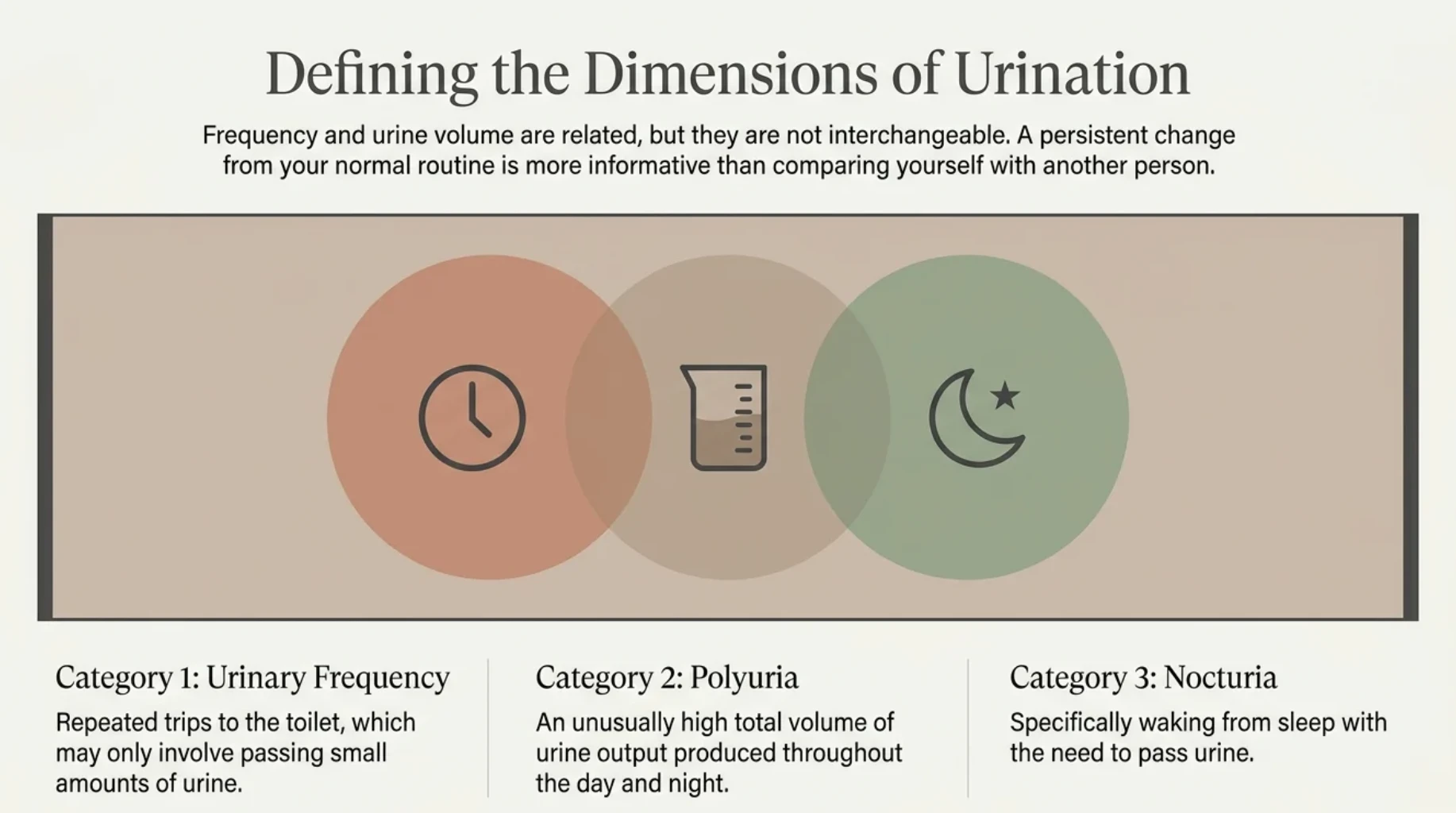
The first useful question: Are you passing urine more often, producing much more urine overall, or experiencing both? Frequency and urine volume are related, but they are not interchangeable.
What Does Frequent Urination Mean?
Urinary frequency means needing to pass urine more often than is usual or comfortable for you. There is no single daily number that diagnoses a problem in everyone.
Fluid intake, waking hours, medicines and medical conditions affect the pattern. A persistent change from your normal routine is more informative than comparing yourself with another person.
Frequent Urination, Polyuria and Nocturia Are Different
Urinary frequency describes repeated trips, which may involve small amounts. Polyuria describes unusually high total urine output. Nocturia means waking from sleep to pass urine.
These can overlap. Someone may produce large amounts throughout the day and night, while another person repeatedly feels urgency but passes little.
When discussing symptoms, describe the approximate amount each time, whether the urge is difficult to delay and whether urination wakes you from sleep.
Reason 1: A Urinary Tract Infection
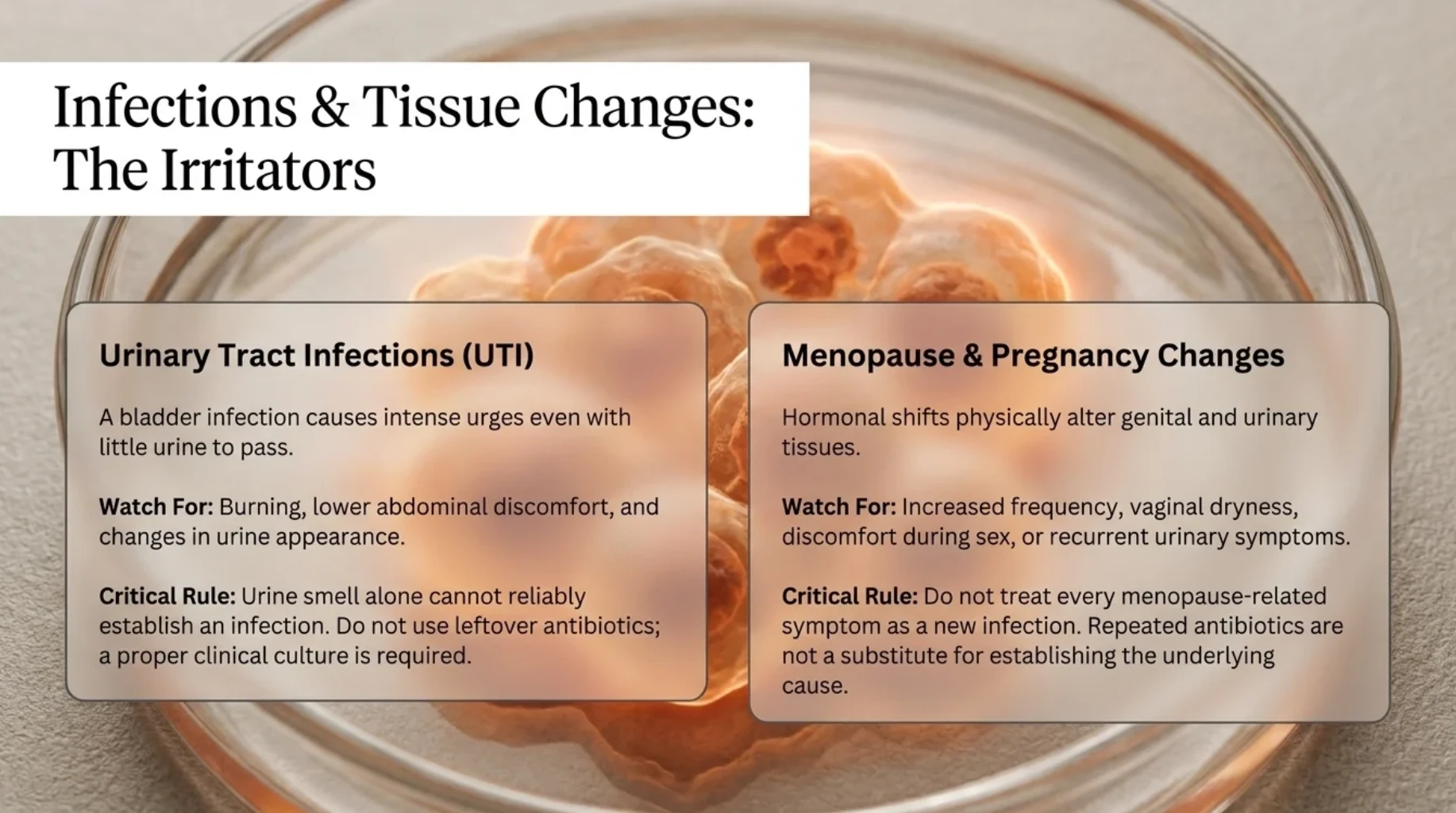
A bladder infection can cause frequent or intense urges even when there is little urine to pass. Burning, lower abdominal discomfort and changes in urine appearance may accompany it.
Urine smell alone cannot reliably establish an infection. The combination of symptoms and, where appropriate, urine testing helps guide the diagnosis.
Frequent Urination With Fever or Side Pain Needs Prompt Assessment
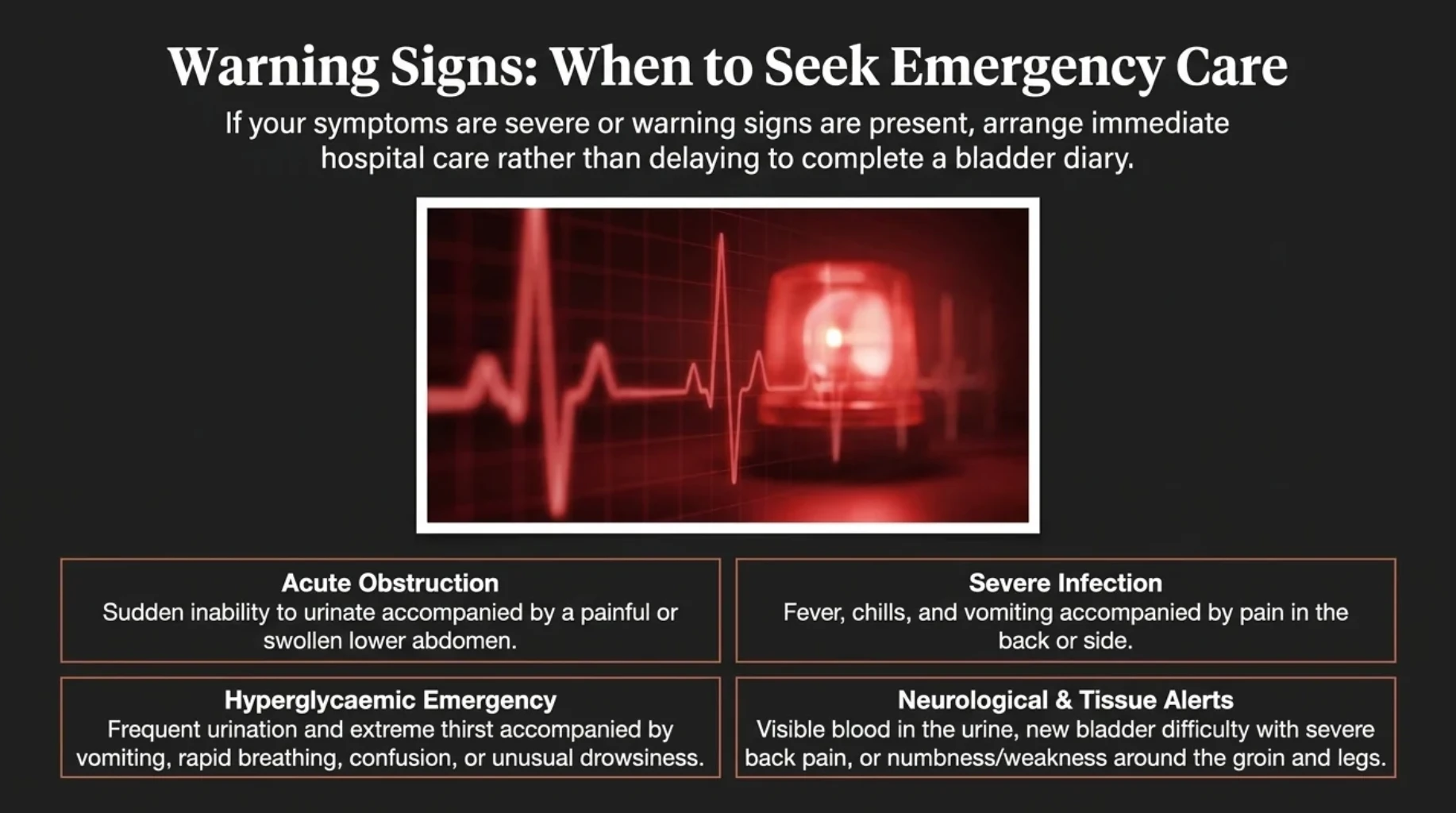
Fever, chills, vomiting or pain in the back or side can suggest infection involving the kidneys. Seek prompt medical care, particularly if you feel generally unwell.
Urinary symptoms during pregnancy also need timely assessment. Do not assume burning or blood in the urine is an ordinary pregnancy symptom.
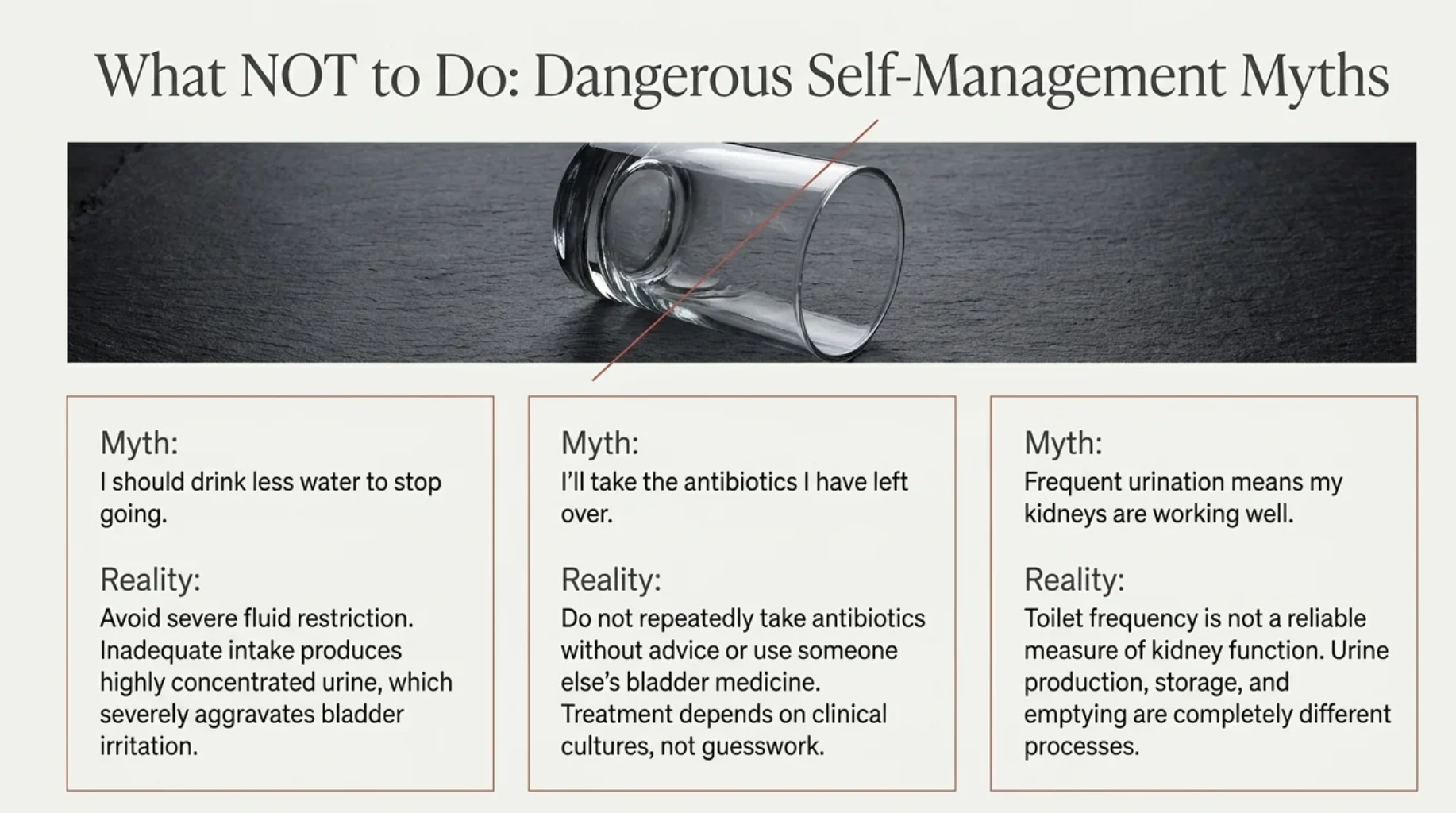
Avoid using leftover antibiotics. The appropriate treatment depends on the clinical situation, and a urine culture may be needed.
Reason 2: High Blood Glucose or Diabetes
Markedly elevated blood glucose can cause glucose to spill into the urine, drawing water with it. This can increase urine volume and lead to repeated urination.
Increased thirst, tiredness, blurred vision or unintentional weight loss make glucose assessment particularly important. Symptoms can develop before diabetes is diagnosed.
Do Not Wait for a Fasting Appointment If You Are Unwell
A doctor can arrange appropriate glucose testing according to your symptoms. An acutely unwell person needs assessment without waiting for a routine fasting checkup.
Frequent urination and thirst accompanied by vomiting, abdominal pain, deep or rapid breathing, confusion or unusual drowsiness can indicate a hyperglycemic emergency. Seek emergency care.
Diabetes is one possible explanation, but urinary frequency alone does not diagnose it.
Reason 3: An Overactive Bladder
An overactive bladder typically involves a sudden, compelling urge that is difficult to postpone. It may occur with frequent urination, waking at night and sometimes leakage before reaching the toilet.
The diagnosis requires consideration of infection and other explanations. Repeated urgency should not automatically be labelled overactive bladder without an assessment.
A Normal Urine Culture Does Not Explain Every Bladder Symptom
If cultures are repeatedly negative but symptoms continue, discuss the full pattern rather than repeatedly taking antibiotics.
Record whether urgency comes suddenly, whether leakage occurs and whether there are problems starting or completing urination. These details help determine the next step.
Treatment can include bladder-focused behavioral strategies and medicines when appropriate, chosen through discussion of symptoms, benefits and possible adverse effects.
Reason 4: An Enlarged Prostate or Incomplete Bladder Emptying
In men, benign prostate enlargement can contribute to frequent urination, particularly when it affects urine flow. Possible clues include difficulty starting, a weak stream, dribbling or feeling that the bladder remains partly full.
Passing urine often does not necessarily mean that the bladder is emptying well.
Incomplete Emptying Can Also Occur Without Prostate Enlargement
Other causes include narrowing of the urinary passage, pelvic organ prolapse, nerve-related bladder problems and effects of certain medicines.
If you repeatedly pass small amounts and soon feel the need to return, mention this specifically. A doctor may assess how much urine remains after you pass urine.
Sudden inability to urinate, especially with lower abdominal pain or swelling, requires emergency assessment.
Reason 5: Caffeine and Alcohol
Water is not the only drink worth reviewing. Caffeine can aggravate urgency and bladder symptoms in some people, while alcohol can increase urine production.
In an Indian working day, repeated cups of tea may be easy to overlook. Coffee, energy drinks and some soft drinks also contribute caffeine.
This does not mean everyone needs to avoid these drinks completely. A gradual reduction can help establish whether they are contributing to your symptoms.
Review Timing as Well as Quantity
Write down drinks across the whole day, including those consumed during meetings, commuting and after dinner.
If symptoms mainly occur at night, consider whether caffeinated or alcoholic drinks close to bedtime coincide with the problem. Change one factor at a time so that the result is easier to interpret.
Avoid responding by severely restricting all fluids. Inadequate intake can produce concentrated urine and worsen irritation in some people.
Reason 6: Medicines That Change Urine Production or Bladder Function
Diuretic medicines increase the removal of salt and water and can make urination more frequent. The timing of symptoms may follow the timing of the dose.
Some diabetes medicines, including SGLT2 inhibitors, increase glucose excretion in urine and may increase urination. This effect needs interpretation alongside symptoms and glucose control.
Other medicines can interfere with bladder emptying, producing frequent small trips rather than simply increasing urine volume.
Bring the Actual Medicine List
Include prescription medicines, cold remedies, sleep products and supplements. Tell the doctor whether symptoms began after a new treatment or dose change.
Do not stop necessary medicines independently. The prescriber can review timing, dose, adverse effects and whether another cause needs investigation.
If you take an SGLT2 inhibitor and develop vomiting, abdominal pain, rapid breathing or marked illness, seek urgent assessment even if your glucose reading is not very high.
Reason 7: Pregnancy and Menopause-Related Changes
Urinary frequency is common during pregnancy. However, associated burning, blood, fever or significant discomfort needs assessment for infection or another problem.
A pregnancy test may be appropriate when pregnancy is possible and the timing or other symptoms suggest it.
During and after the menopause transition, changes in genital and urinary tissues can contribute to urgency, discomfort and recurrent urinary symptoms. Vaginal dryness or irritation may coexist.
Do Not Treat Every Menopause-Related Symptom as an Infection
Repeated symptoms deserve a review of possible infection, bladder conditions and genitourinary changes associated with menopause.
Discuss dryness, discomfort during sex and previous culture results, even if they seem unrelated to urination. These details can help guide treatment.
Appropriate treatment is individual; repeated antibiotics are not a substitute for establishing the cause.
Reason 8: Less Common Disorders of Water Balance
Occasionally, unusually large urine volumes reflect a problem with the body’s water-regulating system rather than diabetes mellitus.
Diabetes insipidus is a rare example. It affects the regulation or action of vasopressin, a hormone involved in water balance. It is different from diabetes caused by high blood glucose.
Persistent thirst and large quantities of pale urine during both day and night warrant assessment. Relevant history can include certain medicines, head injury, brain surgery or electrolyte abnormalities.
Do Not Attempt a Water-Deprivation Test at Home
Investigations may involve blood and urine measurements and, in selected cases, specialist testing.
Deliberately withholding water when someone is losing excessive fluid can cause dangerous dehydration. Seek medical advice rather than trying to establish the diagnosis yourself.
This is a less common explanation and should not be the first assumption for ordinary urinary frequency.
Other Causes May Need Consideration
These eight categories do not cover every possibility. Stones, urethral inflammation, sexually transmitted infections, bladder pain conditions and neurological disorders can also produce urinary symptoms.
Persistent frequency accompanied by pain, blood or unusual examination findings may require additional investigation or urology referral.
Visible blood in urine should be assessed even if it occurs once or there is no pain. It should not automatically be attributed to infection.
What If Frequent Urination Mainly Happens at Night?
Night-time symptoms need a review of both urine production and sleep. Sometimes the bladder wakes the person; sometimes the person wakes for another reason and then decides to pass urine.
Discuss snoring, disturbed sleep, evening fluid intake, medicines and leg swelling. These can provide information beyond the bladder symptoms themselves.
Ask yourself whether each night-time trip produces a large amount or only a small amount. A diary is often more useful than trying to remember after several interrupted nights.
How Does a Doctor Assess Frequent Urination?
The assessment begins with the symptom pattern, its duration and its effect on daily life. A doctor will ask about urgency, pain, leakage, stream strength, thirst, night-time symptoms, medicines and relevant medical history.
Examination and initial testing are selected according to the findings. Urinalysis can help identify infection-related changes, blood or other clues. A urine culture may be needed in particular circumstances.
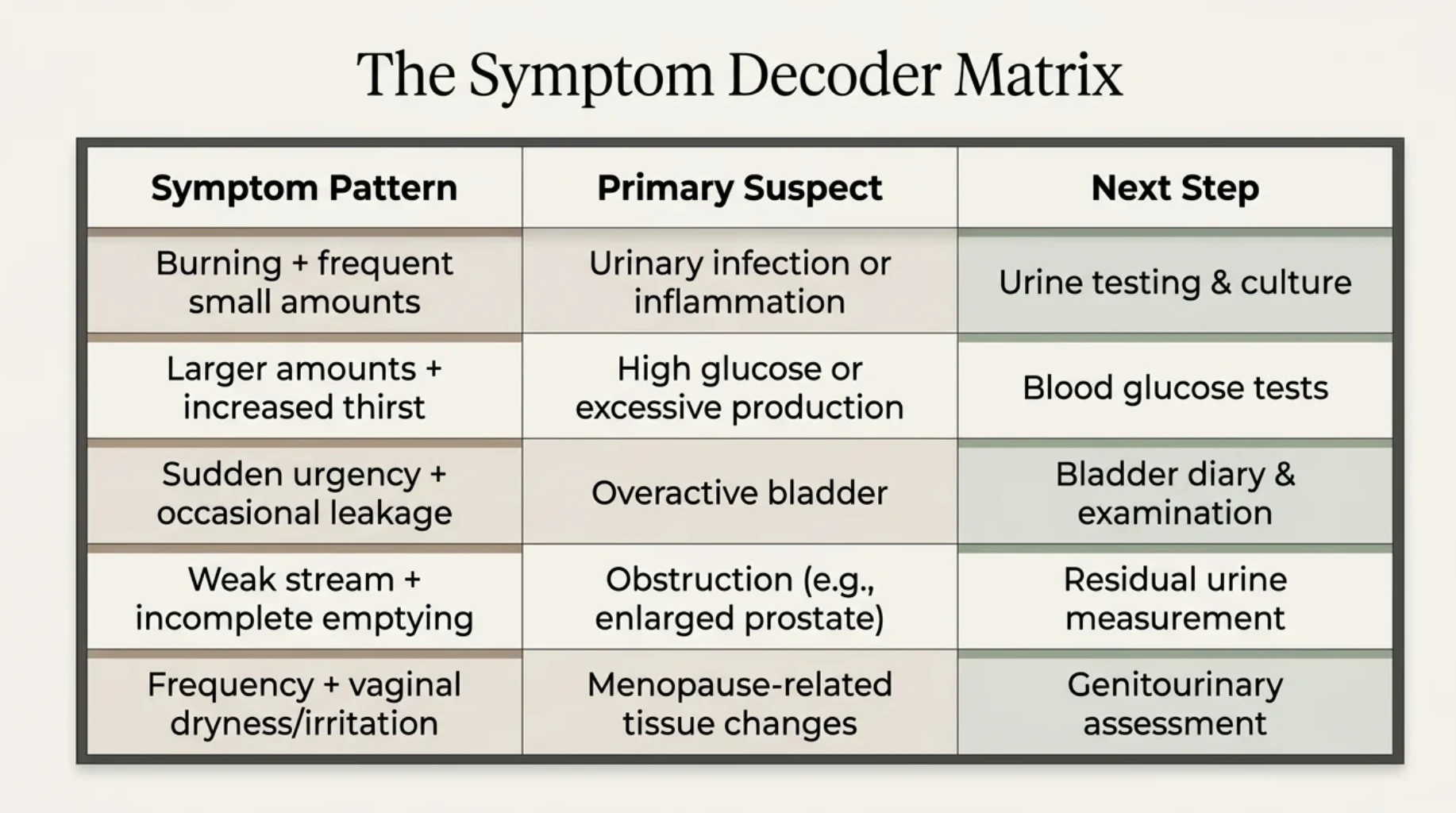
| Symptom pattern | Possible explanation | Assessment that may be appropriate |
|---|---|---|
| Burning and frequent small amounts | Urinary infection or inflammation | Clinical assessment, urine testing and culture when indicated |
| Larger amounts with increased thirst | High glucose or another cause of excessive urine production | Blood glucose and additional blood or urine tests as needed |
| Sudden urgency, sometimes with leakage | Overactive bladder or another bladder disorder | History, examination, urinalysis and a bladder diary |
| Weak stream and incomplete-emptying sensation | Obstruction or impaired bladder emptying | Targeted examination and residual urine measurement when indicated |
| Symptoms beginning after a medicine change | Medication effect | Review of prescriptions, timing and other possible causes |
| Frequency with vaginal dryness or irritation | Menopause-related changes or another local condition | Assessment for infection and genitourinary symptoms |
Do You Need an Ultrasound or Cystoscopy?
Not everyone needs advanced testing at the first appointment. The decision depends on the initial findings, whether emptying problems are suspected and whether symptoms persist or include warning features.
Ask what the proposed investigation is intended to clarify and how the result would change treatment.
Keep a Three-Day Bladder Diary
If you are otherwise well, a diary covering about three typical days can help. Record the time and approximate amount of each drink, the time of each toilet visit and the amount passed if practical.
Also note urgency, leakage, burning, bedtime and waking time. Include medicine timing where relevant.
A diary should describe your usual routine. Do not deliberately drink excessive water or restrict fluids to produce a particular result.
If symptoms are severe or warning signs are present, arrange care rather than delaying the appointment to complete the diary.
What Can You Do While Waiting for Assessment?
Maintain appropriate hydration without forcing extra water. Follow any fluid advice already given for heart, kidney or other medical conditions.
Consider reducing caffeine gradually and review alcohol intake. Avoid large drinks immediately before bed while maintaining adequate intake during the day.
Do not repeatedly take antibiotics without advice, use someone else’s bladder medicine or independently alter a diuretic. Avoid practicing prolonged urine-holding when infection, pain or emptying difficulty may be present.
Bring previous urine results and prescriptions to the consultation. A description of what has changed is often more helpful than the statement that you “always go too much.”
When Should You Seek Urgent Help?
Seek emergency care for inability to urinate with a painful or swollen lower abdomen, severe illness or confusion, or urinary symptoms accompanied by signs of a hyperglycemic emergency.
New bladder difficulty with severe back pain, leg weakness or numbness around the groin also needs emergency assessment.
Arrange prompt medical review for fever with back or side pain, vomiting, visible blood, urinary symptoms in pregnancy or persistent thirst with unexplained weight loss.
Ongoing symptoms that disturb sleep, work or travel deserve assessment even when there is no pain.
Frequently Asked Questions About Frequent Urination
Does frequent urination always mean diabetes?
No. Infection, overactive bladder, medicines, caffeine, pregnancy and incomplete emptying are among other explanations. Glucose testing is particularly relevant when frequency occurs with thirst, larger urine volumes or weight loss.
How many times a day is too often?
There is no single diagnostic number for everyone. Your usual pattern, fluid intake, amounts passed, associated symptoms and effect on daily life matter more than a rigid cut-off.
Can I have a bladder problem without burning?
Yes. Urgency, incomplete emptying and several other causes can occur without burning. Absence of pain does not explain the cause or remove the need for assessment when symptoms persist.
Should I drink less water to stop frequent urination?
Avoid severe restriction. Review total intake and timing with your doctor, particularly if you pass large amounts or feel very thirsty. Concentrated urine can aggravate symptoms in some people.
Does passing urine frequently mean my kidneys are working well?
No. Toilet frequency is not a reliable measure of kidney function. Urine production, bladder storage and bladder emptying are different processes.
Can tea contribute to urinary frequency?
Yes. Caffeine can aggravate urgency or frequency in some people. Record the number, size and timing of cups, then consider a gradual reduction rather than assuming plain water is the only contributor.
Why do I need to return to the toilet immediately?
Possible explanations include urgency, inflammation or incomplete bladder emptying. Mention whether the first amount was small, the stream was weak or you still felt full afterwards.
Which doctor should I see first?
A general physician can assess the initial symptom pattern, review medicines and arrange relevant tests. Urology or another specialist referral may be needed according to the findings. Emergency symptoms require hospital care.
Frequent Urination Assessment in Dwarka
Dr. Pankaj Kumar, General & Lifestyle Physician, provides assessment of urinary symptoms and associated medical concerns at Kalpataru Multispeciality Clinic, Sector 6, Dwarka, New Delhi.
A consultation can review symptoms, glucose risk, medicines and previous reports. Investigations and specialist referral are selected according to clinical need.
Discuss persistent urinary symptoms.
Bring prescriptions, previous urine reports and a bladder diary if available.
Book an Appointment
WhatsApp for Appointment
In front of Dhanwantari Labs, Doctors Lane, Pocket 2, Sector 6, Dwarka, New Delhi.
About the Author
Dr. Pankaj Kumar
MBBS, DNB Family Medicine, DNHE
General & Lifestyle Physician
Dr. Pankaj Kumar is the founder of Diet Plus Minus and leads the Lifestyle Modification Program at Kalpataru Multispeciality Clinic, Dwarka. His clinical interests include general medical care, diabetes, obesity and related metabolic disorders.
Medical Disclaimer
This article provides general education for adults and does not replace an individual consultation. Children, pregnancy and complex medical conditions require tailored assessment. Do not self-prescribe antibiotics or bladder medicines, restrict fluids excessively or stop prescribed treatment based on this article. Seek urgent care at the nearest hospital for severe or rapidly worsening symptoms.
References
- American Urological Association/Society of Urodynamics, Female Pelvic Medicine & Urogenital Reconstruction. Guideline on the Diagnosis and Treatment of Idiopathic Overactive Bladder. 2024. Read the guideline.
- National Institute of Diabetes and Digestive and Kidney Diseases. Symptoms & Causes of Bladder Infection in Adults. Reviewed 2024. Read the resource.
- Centers for Disease Control and Prevention. Symptoms of Diabetes. 2024. Read the resource.
- Centers for Disease Control and Prevention. Diabetic Ketoacidosis. 2024. Read the resource.
- National Institute of Diabetes and Digestive and Kidney Diseases. Symptoms & Causes of Urinary Retention. Read the resource.
- National Cancer Institute. Understanding Prostate Changes. Read the resource.
- Office on Women’s Health. Body Changes and Discomforts During Pregnancy. Read the resource.
- Office on Women’s Health. Menopause Symptoms and Relief. Read the resource.
- National Institute of Diabetes and Digestive and Kidney Diseases. Diabetes Insipidus. Read the resource.
- Guy’s and St Thomas’ NHS Foundation Trust. Nocturia: Getting Up at Night to Pee. Read the resource.

Written by Dr. Pankaj Kumar
General & Lifestyle Physician in Dwarka Sector 6, New Delhi · MBBS, DNB (Family Medicine), DNHE · 16 years of experience.
About the doctor →Book a consultation → Beyond Blood Sugar
 The 90-Day Prediabetes Turnaround
 The Indian Diabetes Diet Reset
 Eat to Beat Gout
 Why Is My Hair Falling?
 The 30-Day Inflammation Reset