
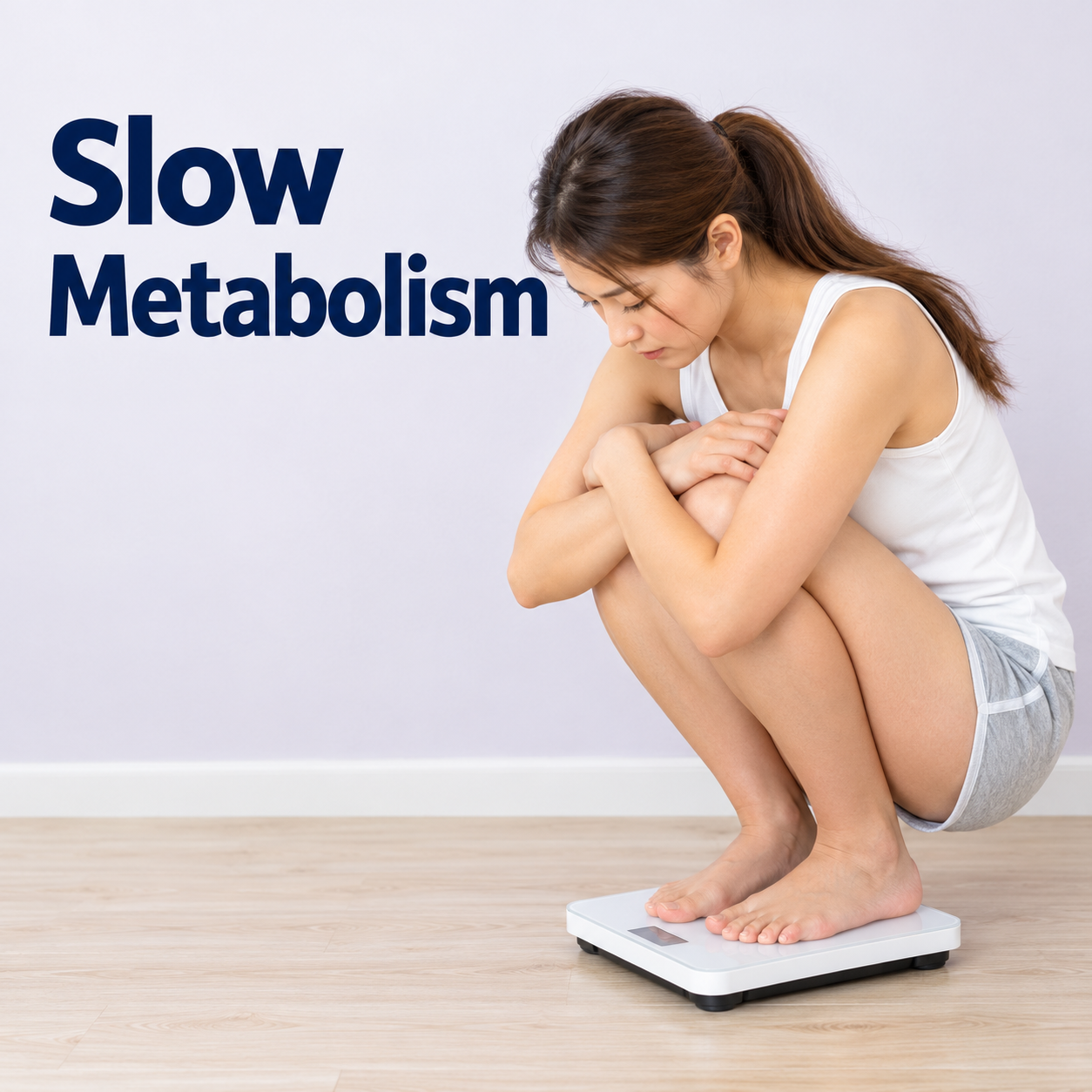
“I hardly eat anything, but my weight keeps increasing.” “I am tired all the time.” “My digestion feels slow.” These experiences often lead people to the same conclusion: “I must have a slow metabolism.”
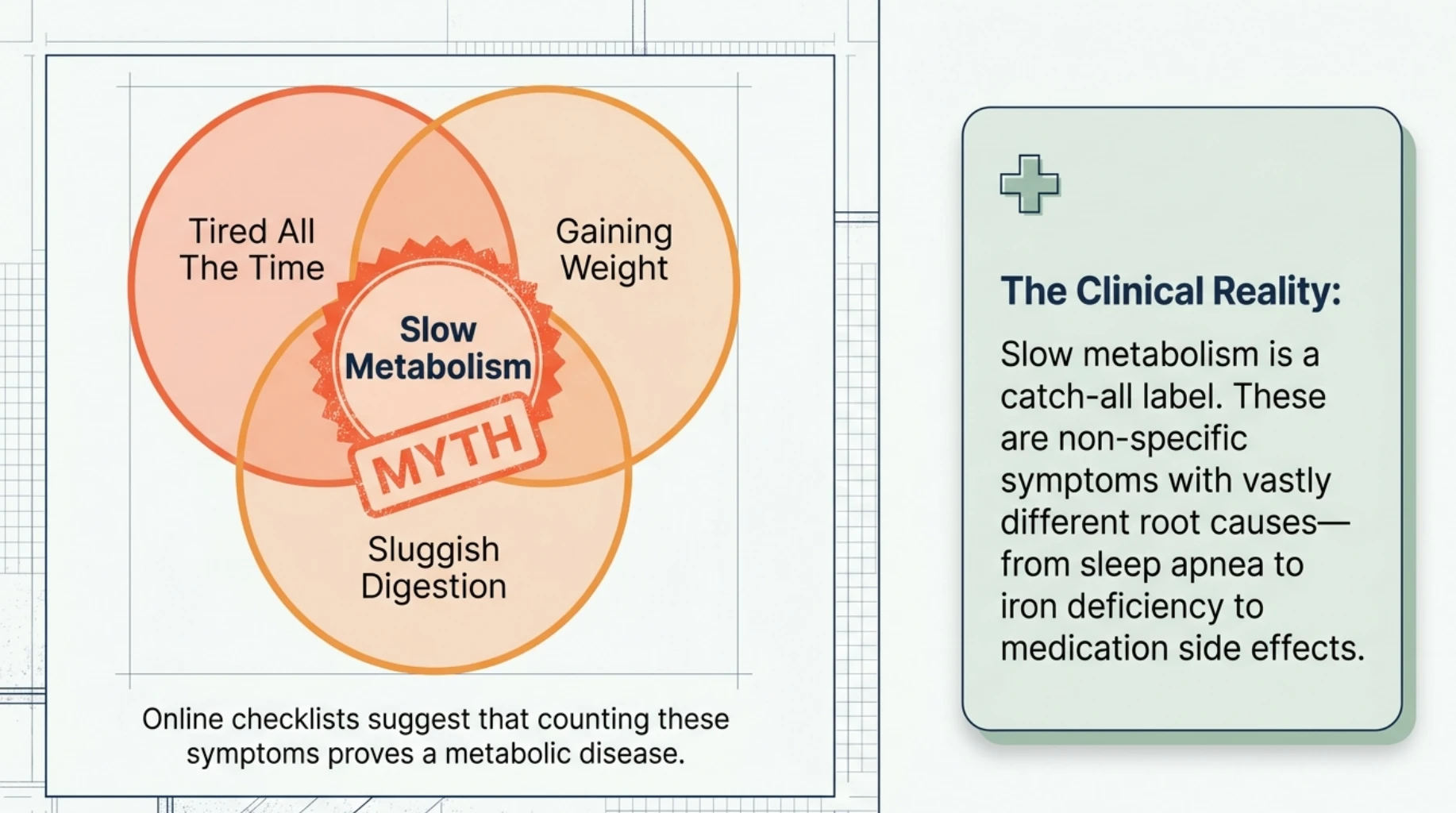
The frustration is understandable. When your energy, weight or appetite changes, you want an explanation. However, slow metabolism is frequently used as a catch-all label for symptoms that may have very different causes.
An underactive thyroid can reduce energy expenditure. But poor sleep, iron deficiency, constipation, medicines, reduced daily movement and restrictive dieting can produce overlapping complaints. Some affect how much energy the body uses; others affect appetite, bowel function, fluid balance or how energetic you feel.
Understanding the difference matters. A person with sleep apnea needs a different assessment from someone with iron deficiency. Neither problem is solved by buying a “metabolism booster.”
This article explains seven commonly reported signs of slow metabolism, the alternative explanations worth considering, and how to decide when a medical review is appropriate.
The central point: Fatigue, weight gain, constipation, feeling cold and difficulty losing weight cannot establish that your metabolism is abnormally slow. The pattern, duration, accompanying symptoms and clinical assessment are more useful than counting symptoms.

What Does Slow Metabolism Actually Mean?
Metabolism describes the chemical processes that keep the body functioning. Your body continuously uses energy to maintain circulation, breathing, temperature regulation, tissue repair and other essential activities.
Your total daily energy expenditure includes the energy used at rest, the energy required to digest and process food, and the energy used during movement. Movement includes both planned exercise and ordinary activities such as walking around the house, shopping, climbing stairs and standing.
Two people can therefore have different daily energy requirements because of differences in body size, body composition, activity, health and other factors. A smaller person generally needs less energy than a larger person. Someone who walks throughout the working day may use more energy than someone with a predominantly seated routine.
A lower calorie requirement is not automatically a disease. Similarly, feeling physically sluggish does not tell us how many calories your body is burning.
Slow Metabolism Is Not a Diagnosis You Can Make From Symptoms
Online checklists sometimes suggest that having three or four symptoms proves a metabolic problem. These checklists overlook how common and nonspecific the symptoms are.
For example, tiredness and constipation can occur during a restrictive diet. Feeling cold and hair shedding may occur with inadequate nutrition or thyroid disease. Weight gain can follow a change in medicine, while a rising waist measurement may accompany changes in activity or body composition.
The useful question is: “What has changed, and what could explain this particular combination?”
Sign 1: Weight Gain Despite Feeling That You Eat Very Little
Weight gain is perhaps the most common reason people suspect slow metabolism. It can feel especially confusing when meals appear small or when you have already reduced rice, roti or sweets.
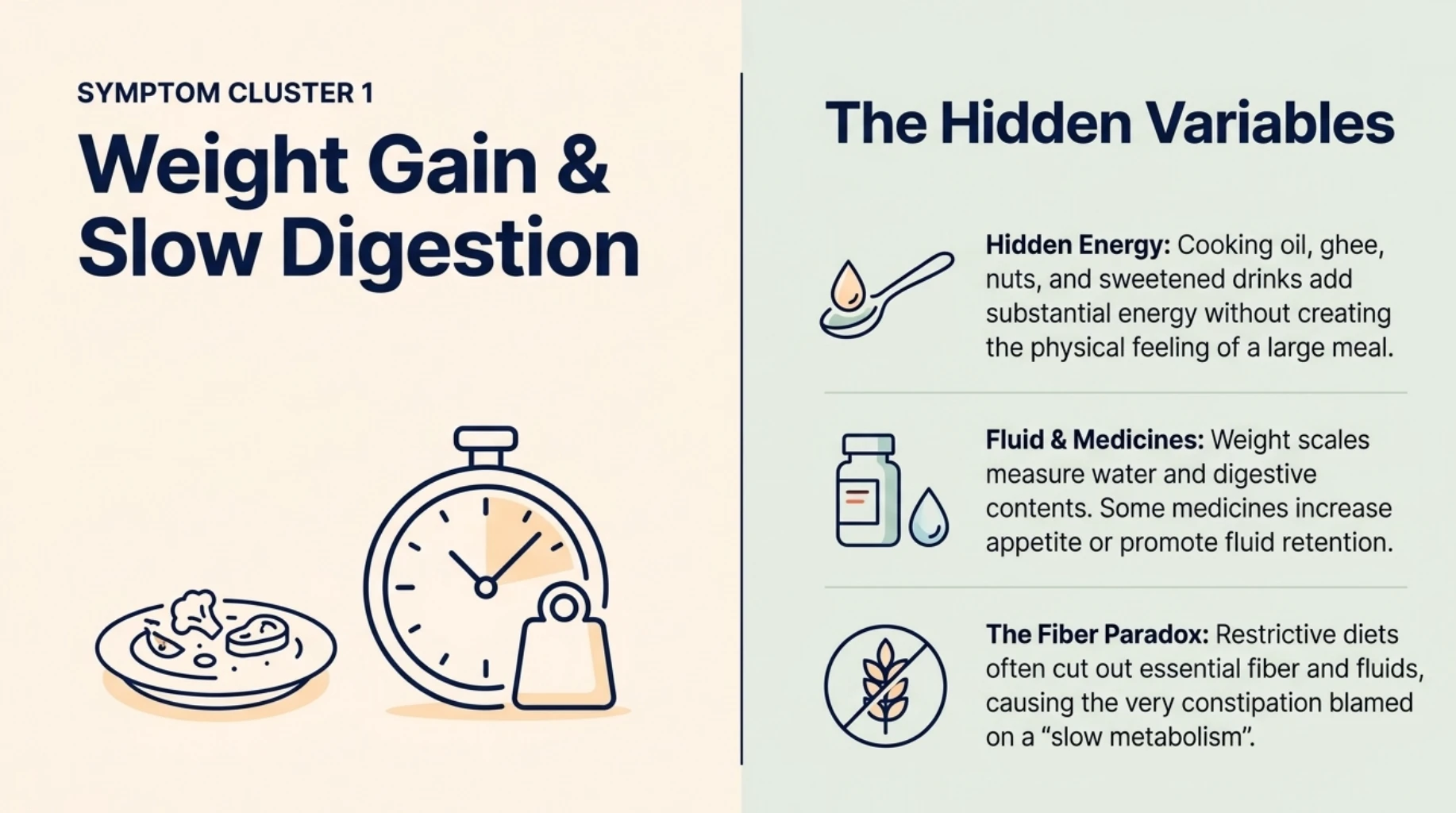
However, perceived food quantity and total energy intake are different things. Cooking oil, ghee, nuts, biscuits with tea, sweetened drinks, alcohol and frequent small snacks can contribute substantial energy without creating the impression of eating a large meal.
This is not a judgement about honesty or discipline. Estimating intake from memory is difficult, particularly when eating patterns vary between working days, weekends, social events and restaurant meals.
Daily movement may also have changed. A person who starts working from home may continue the same morning walk but lose the walking previously involved in commuting, shopping or moving around an office. Their total daily requirement can decrease even though they still consider themselves active.
Other Explanations Include Medicines and Fluid Retention
Some medicines can increase appetite, promote fluid retention or otherwise contribute to weight gain. The timing matters: a change that begins after starting or increasing a medicine deserves discussion with the prescribing doctor.
The weighing scale also measures water, digestive contents and other tissues. A sudden increase after salty restaurant food or around menstruation does not establish fat gain.
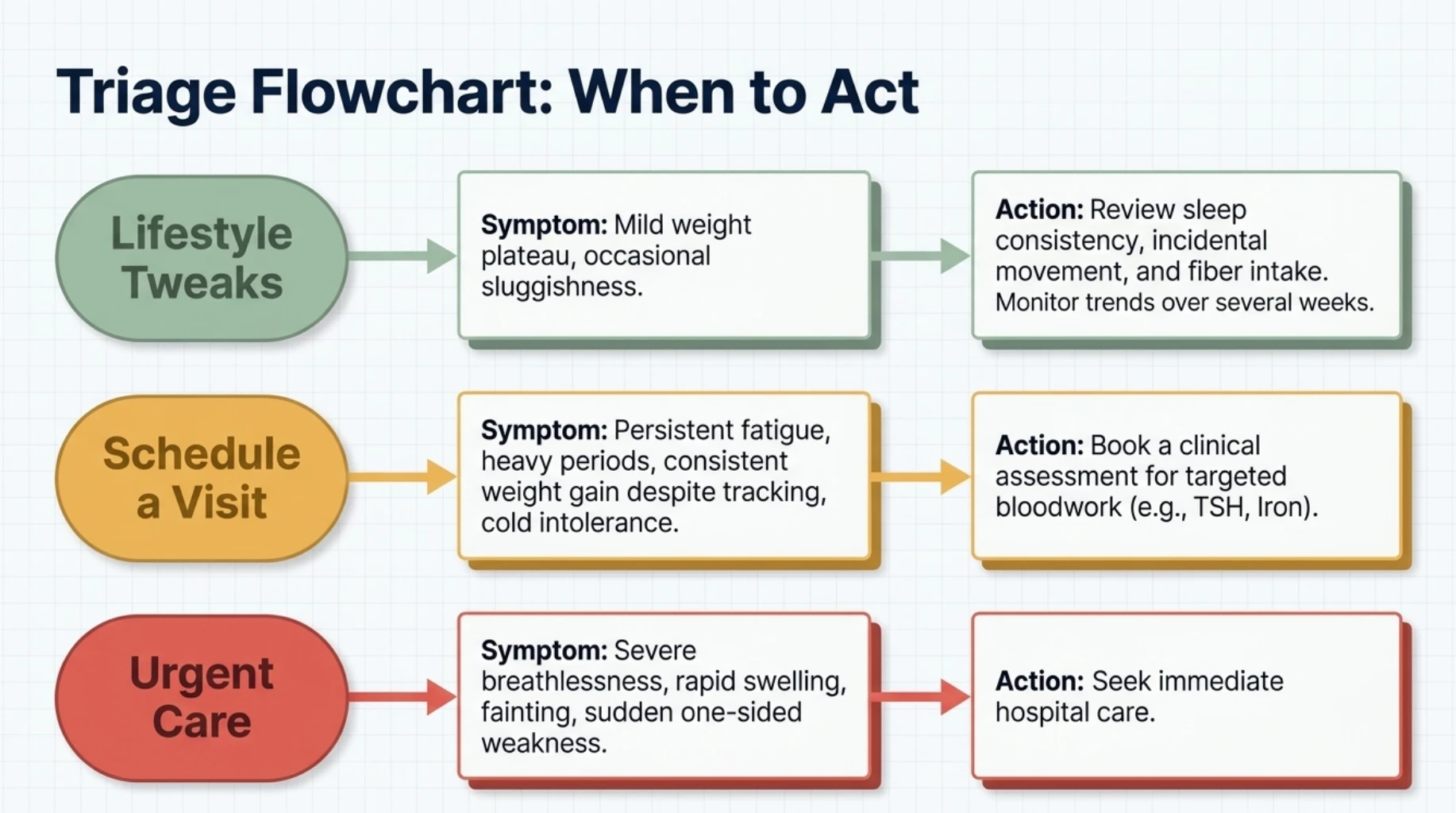
Rapid weight gain accompanied by swollen feet, facial swelling, breathlessness or reduced urine output needs medical assessment. It should not be managed simply by cutting food further.
Sign 2: Persistent Tiredness or Low Energy
Low energy often gets described as “my metabolism has become slow,” but fatigue is a symptom with many possible explanations.
Insufficient sleep, irregular working hours, prolonged stress, anemia, thyroid disease, depression, chronic illness and medication effects can all contribute. A diet that repeatedly leaves you underfed may also make work, household activities and exercise feel harder.
A useful distinction is whether you feel sleepy, physically weak, breathless during activity or mentally exhausted. These experiences can overlap, but they guide the assessment in different directions.
Consider Sleep Quality, Not Just Hours in Bed
Spending eight hours in bed does not guarantee restorative sleep. Loud snoring, witnessed pauses in breathing, waking with gasping, morning headaches and daytime sleepiness can suggest obstructive sleep apnea.
Someone with fragmented sleep may feel exhausted, move less during the day and find appetite harder to manage. Describing the entire problem as slow metabolism can delay recognition of the sleep disorder.
Persistent fatigue that affects normal activities deserves a review, especially when it occurs with breathlessness, heavy menstrual bleeding, unexplained weight change or significant mood symptoms.
Sign 3: Feeling Colder Than Other People
Cold intolerance is a recognized symptom of hypothyroidism. It becomes more relevant when it develops alongside constipation, dry skin, tiredness, menstrual changes or gradual weight gain.
However, feeling cold does not confirm thyroid disease. Low food intake, low body weight, anemia and environmental conditions can also contribute. Cold fingers with marked color changes may point towards a circulation-related problem such as Raynaud’s phenomenon.
The change from your usual pattern matters. Always preferring a warmer room is different from developing persistent cold intolerance over several months.
When Thyroid Testing May Help
If the history suggests thyroid dysfunction, a doctor may request thyroid-stimulating hormone, usually called TSH, with free T4 where appropriate. Results need interpretation alongside symptoms, medicines, pregnancy status and other clinical circumstances.
Do not start thyroid hormone, iodine drops or “thyroid support” products because you feel cold. Increasing thyroid hormone when it is not needed can cause harm.
Sign 4: Constipation or a Feeling That Digestion Has Slowed
Constipation is often interpreted as evidence that the whole body is burning energy slowly. Bowel movement frequency, however, is not a measure of metabolic rate.
Constipation may involve hard stools, straining, difficulty passing stool or a feeling of incomplete emptying. Some people pass stool daily and still have constipation because evacuation is consistently difficult.
Common contributors include inadequate fibre, insufficient fluid intake, reduced activity, ignoring the urge to pass stool and changes in routine. Medicines and supplements—including some iron preparations, opioid painkillers and certain other treatments—can also contribute.
A Restrictive Weight-Loss Diet Can Make Constipation Worse
A person who removes fruit, pulses, whole grains and much of their usual food may reduce both fibre and stool volume. If fluid intake and daily movement also fall, constipation can develop during the very diet intended to improve weight.
For many Indian households, the solution involves reviewing the whole eating pattern: vegetables, appropriate portions of fruit, dal or other pulses, suitable whole grains and adequate fluids. Fiber should generally increase gradually because a sudden large increase may worsen bloating.
Persistent constipation, blood in the stool, unexplained weight loss or a substantial new change in bowel habits needs assessment. Severe abdominal pain with vomiting, abdominal swelling or inability to pass gas requires urgent medical attention.
Sign 5: Hair Shedding, Dry Skin or Brittle Nails
Changes in hair, skin and nails can occur with thyroid disease, but they are not reliable indicators of slow metabolism on their own.
Hair shedding may follow illness, childbirth, significant stress or substantial weight loss. Inadequate nutrition and iron deficiency may also be relevant. Dry skin can reflect weather, frequent washing, eczema or other skin conditions.
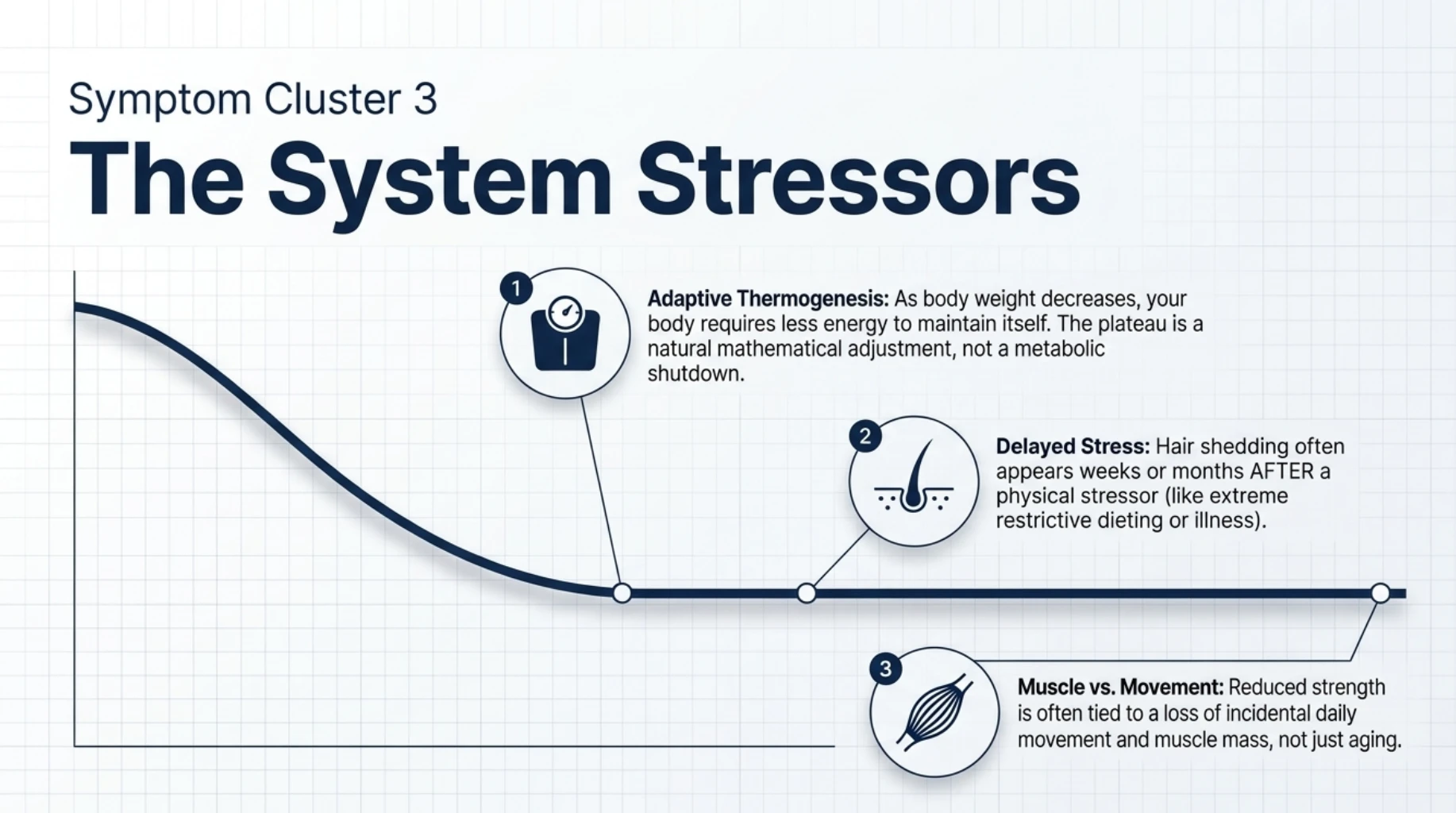
The timing can provide useful clues. Hair shedding may appear weeks or months after a physical stressor, so the relevant event may have occurred well before the hair change became noticeable.
Review Restrictive Dieting Before Adding Supplements
If hair shedding develops during weight loss, review the pace of weight change, total food intake, protein sources and overall dietary variety. Skipping meals or relying mainly on tea, fruit and a light dinner can leave important nutritional gaps.
Protein can come from foods such as dal, beans, soy, dairy, eggs, fish or poultry according to your preferences and medical needs. Supplements cannot compensate for a consistently inadequate eating pattern.
Do not assume every hair problem requires iron, zinc or high-dose biotin. Examination and selected investigations may be more useful. Tell your doctor about biotin supplements because they can interfere with some laboratory tests, including certain thyroid tests.
Sign 6: Your Weight Loss Has Reached a Plateau
A weight-loss plateau can be discouraging, especially when the same routine worked initially. It does not automatically mean you have permanently damaged your metabolism.
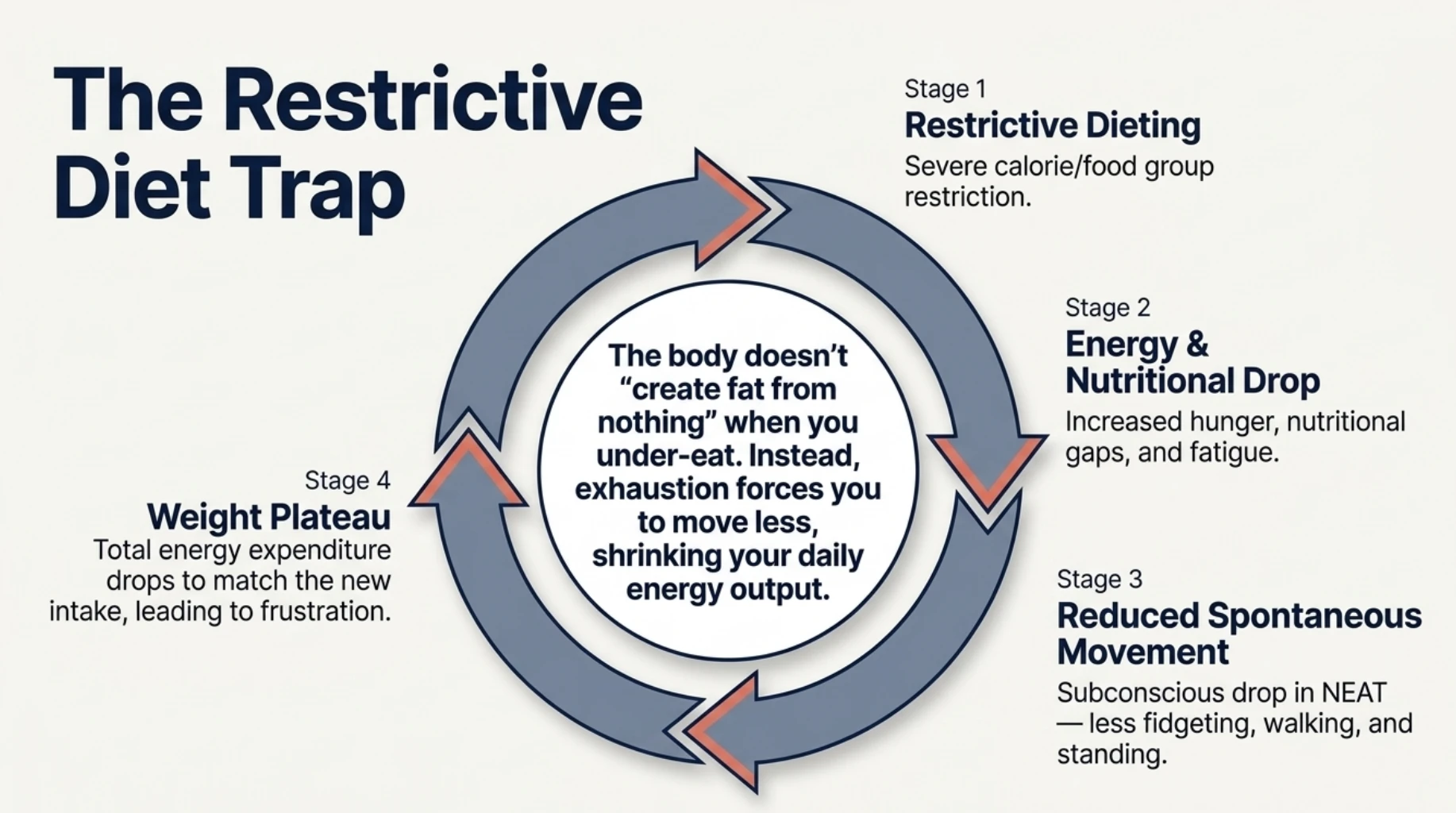
As body weight decreases, the body generally requires less energy to maintain itself and to perform weight-bearing activity. The eating pattern that produced an energy deficit at a higher weight may create a smaller deficit later.
There can also be additional changes in energy expenditure after weight loss, often called adaptive thermogenesis. Its size varies between people and studies. Research does not support assuming that every plateau represents a large, permanent metabolic shutdown.
Other contributors include increased hunger, small changes in portions, reduced spontaneous movement and temporary water retention. Constipation and menstrual changes can also obscure short-term changes on the scale.
Review the Trend Before Cutting Food Further
A few days without weight loss is not enough to establish a plateau. Compare measurements taken under similar conditions and look at the trend over several weeks.
If weight has genuinely stabilized, review food patterns, activity, sleep, medicines and the sustainability of the plan. Further restriction may be inappropriate when someone is already eating inadequately or developing weakness.
Waist measurements, strength and relevant health markers can provide additional context. They do not replace weight measurements, but they help assess whether the broader treatment plan is improving health.
Sign 7: Reduced Strength and Less Day-to-Day Movement
Some people notice that stairs feel harder, carrying groceries is more tiring or getting up from a low chair requires greater effort. They may describe this as their body “slowing down.”
Reduced activity, pain, recovery from illness, inadequate nutrition and loss of muscle can contribute. Lower muscle mass can affect resting energy needs, but the relationship should not be exaggerated: building a small amount of muscle does not create a dramatic increase in daily calorie burning.
The more useful benefits include better strength, physical function and support for long-term metabolic health.
Exercise and Everyday Movement Both Matter
A planned workout is one part of the day. Long periods of sitting can still leave total daily movement low.
Practical changes may include short walking breaks during desk work, walking for nearby errands, household activity and a brief walk after meals. Strength training can be introduced gradually according to your fitness, joint health and medical circumstances.
However, new or progressive weakness should not automatically be blamed on inactivity. Rapid deterioration, repeated falls, difficulty swallowing or breathing, or sudden one-sided weakness needs prompt medical assessment.
Can Age Explain a Slow Metabolism?
There is no sudden metabolic switch at age 30, 35 or 40.
A large study published in 2021 found that daily energy expenditure adjusted for body size and composition was broadly stable between approximately 20 and 60 years, followed by a decline in older adulthood.
This is a population finding, not a promise that every person’s calorie requirement remains unchanged. Your actual needs can change if your weight, body composition, activity or health changes.
For someone who has become less active during midlife, reviewing movement and strength may be more useful than assuming age has made weight management impossible.
How Are Slow Metabolism Symptoms Assessed?
A useful consultation begins with the history rather than a large “metabolism test package.” The doctor needs to understand when symptoms began, whether they occurred together and what changed around that time.
Relevant information includes weight records, sleep quality, snoring, bowel habits, menstrual history, dietary restriction, recent illness, daily movement and medicines or supplements. Examination may assess blood pressure, pulse, swelling, pallor, thyroid findings or other clues.
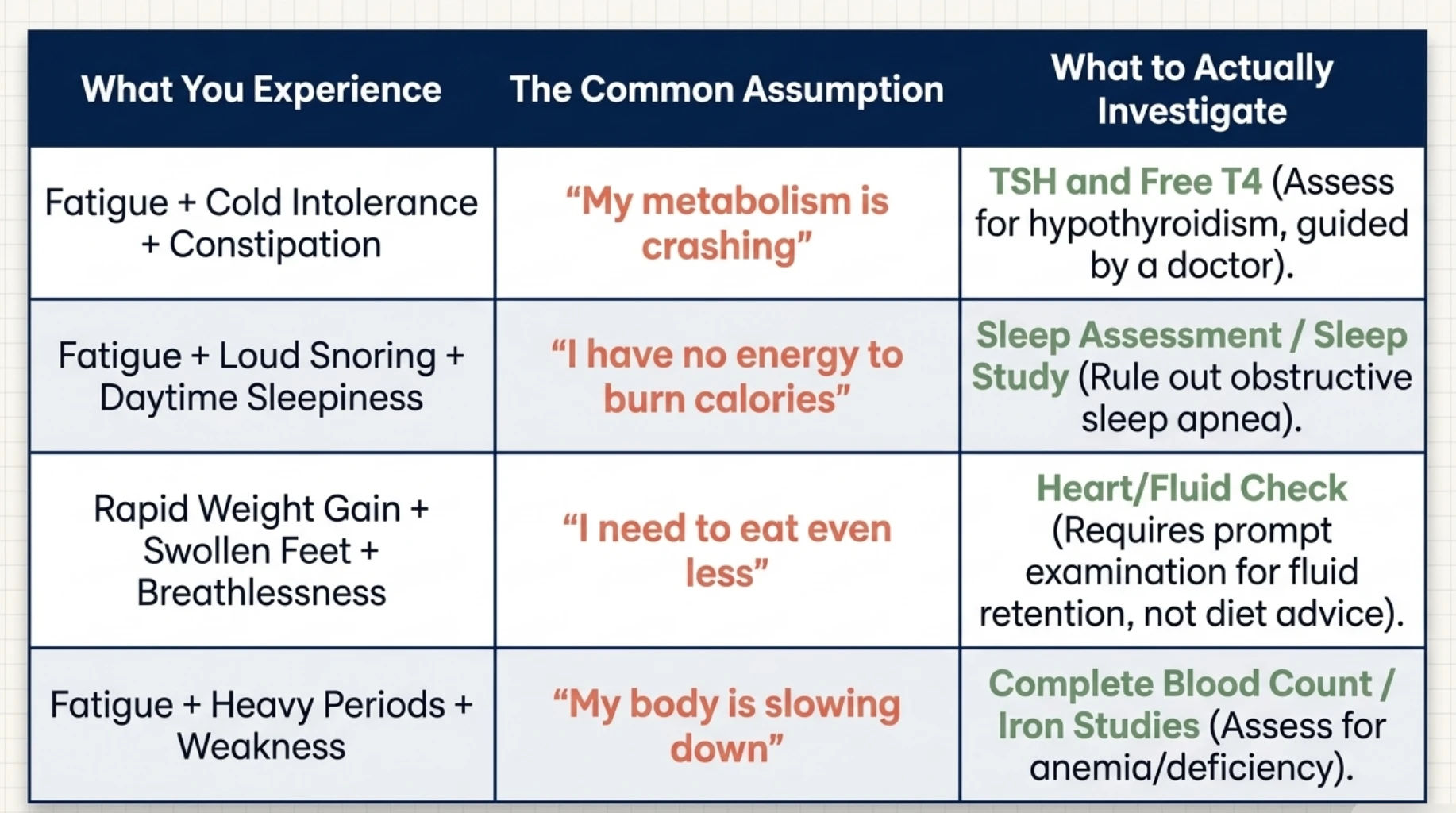
Testing should answer a clinical question. The following examples show how symptoms may guide that decision; they are not a standard panel for everyone.
| Symptom pattern | Possible assessment | What to remember |
|---|---|---|
| Fatigue with cold intolerance, constipation or other thyroid clues | TSH, with free T4 where appropriate | Symptoms alone cannot confirm hypothyroidism. |
| Fatigue with heavy periods, pallor or reduced exercise tolerance | Complete blood count and selected iron studies | If deficiency is identified, its cause also needs consideration. |
| Loud snoring, witnessed breathing pauses and daytime sleepiness | Sleep assessment, with a sleep study if indicated | A routine blood-test package cannot rule out sleep apnoea. |
| Central weight gain or other diabetes risk factors | Blood pressure, waist assessment and appropriate glucose testing | These assess health risk rather than directly measuring metabolic rate. |
| Rapid weight gain with swelling or breathlessness | Prompt examination and targeted investigations | Fluid retention requires assessment before weight-loss advice. |
Do You Need a Resting Metabolic Rate Test?
Indirect calorimetry can estimate resting energy expenditure by measuring respiratory gases under controlled conditions. It can be useful in selected settings, but most people with fatigue or weight concerns do not need it as their first investigation.
The test does not identify every cause of low energy, diagnose sleep apnea or replace thyroid assessment. Similarly, the “BMR” number displayed by many weighing scales is a calculated estimate rather than a direct measurement of your metabolism.
What Can You Do Before Buying a Metabolism Booster?
Begin by identifying a few changes you can maintain consistently. The aim is to improve nutrition, sleep, movement and symptom awareness while checking whether a medical cause needs treatment.
Build Meals Around Adequate Nutrition
A sustainable eating pattern should provide suitable portions, protein sources, fibre-rich foods and enough overall nutrition. It should also fit your working hours, preferences and medical conditions.
For example, a breakfast of tea and biscuits could be replaced with moong dal chilla and curd, eggs with an appropriate whole-grain accompaniment, or another balanced option. Lunch and dinner can combine vegetables, dal or another protein source and suitable portions of roti, rice or other staples.
These changes can improve dietary quality and fullness. No particular food needs to be described as a metabolic accelerator.
Protect Sleep and Assess Persistent Snoring
Maintain a reasonably consistent sleep schedule and allow adequate time for sleep. If you remain sleepy despite sufficient time in bed, consider whether sleep quality needs assessment.
In a 2022 randomized trial involving 80 adults with overweight who habitually slept too little, a sleep-extension intervention reduced energy intake over a short period. It did not significantly increase total energy expenditure. This supports attention to sleep without claiming that extra sleep directly “speeds up” metabolism.
The trial was short and involved a selected group, so its average result should not be treated as a guaranteed outcome for every individual.
Increase Movement Gradually and Preserve Strength
Choose activity that fits your current ability. Short, regular walks and gradual strength training are often easier to sustain than an abrupt, exhausting programme.
If joint pain, breathlessness, dizziness or significant fatigue limits movement, address the cause rather than repeatedly forcing activity. Exercise plans may need modification during illness or when symptoms worsen substantially after exertion.
Review Medicines Without Stopping Them Yourself
Bring a list of prescription medicines, supplements and non-prescription products to the consultation. Include recent dose changes and intermittent treatments.
If treatment is contributing to weight change or tiredness, the prescribing doctor can consider suitable adjustments. Abruptly stopping medicines may create greater risks than the side effect you are trying to address.
Frequently Asked Questions About Slow Metabolism
How do I know whether I really have a slow metabolism?
You cannot determine this reliably from symptoms alone. Assessment considers body size, weight trend, activity, nutrition, sleep, medicines and possible medical conditions. Direct measurement of resting energy expenditure is useful only in selected circumstances.
Does normal thyroid function mean my symptoms should be ignored?
No. Normal thyroid results make thyroid dysfunction less likely in the appropriate clinical context, but fatigue, constipation or weight change may have other explanations. Persistent symptoms still deserve an assessment guided by their pattern.
Can eating too little make weight loss harder?
Restrictive dieting can increase hunger, reduce spontaneous movement, compromise nutrition and contribute to changes in energy expenditure. This can make a plan difficult to maintain. It does not mean that the body creates fat without an energy source or that eating less always prevents weight loss.
Do green tea, lemon water or detox drinks fix slow metabolism?
No drink reliably treats an underlying cause of fatigue or produces substantial, sustained fat loss by increasing metabolism. Unsweetened drinks may be helpful replacements for sugary beverages, but that is different from treating a metabolic disorder.
Should I have fasting insulin or cortisol tested?
These are not routine tests for everyone with weight gain or tiredness. Glucose testing may be appropriate according to diabetes risk. Cortisol testing is generally reserved for a clinical suspicion of a specific disorder, rather than ordinary stress or abdominal weight gain alone.
Can someone with a normal BMI have symptoms attributed to slow metabolism?
Yes. Thyroid disease, anemia, sleep problems, constipation and inadequate nutrition can occur at a normal BMI. Assessment should follow the symptoms and risk factors rather than assuming body weight rules out illness.
When should I see a doctor?
Arrange a review when symptoms persist, worsen, interfere with normal activity or occur with unexplained weight change. Seek urgent care for severe breathlessness, chest pain, fainting, confusion, rapidly progressive weakness or rapid weight gain with significant swelling.
Assessment of Weight Changes and Fatigue in Dwarka
If you are concerned about slow metabolism, a medical consultation can help distinguish changes in energy requirements from thyroid disease, sleep problems, nutrition concerns, medicine effects or other conditions.
Dr. Pankaj Kumar, General & Lifestyle Physician, provides assessment of weight concerns, fatigue, thyroid-related symptoms and metabolic health at Kalpataru Multispeciality Clinic, Sector 6, Dwarka, New Delhi. Investigations and treatment are selected according to the individual clinical assessment.
Discuss persistent symptoms and unexplained weight changes.
Bring previous reports, your medicine list and any recent weight records.
Book an Appointment
WhatsApp for Appointment
In front of Dhanwantari Labs, Doctors Lane, Pocket 2, Sector 6, Dwarka, New Delhi.
About the Author
Dr. Pankaj Kumar
MBBS, DNB Family Medicine, DNHE
General & Lifestyle Physician
Dr. Pankaj Kumar is the founder of Diet Plus Minus and leads the Lifestyle Modification Program at Kalpataru Multispeciality Clinic, Dwarka. His clinical interests include diabetes, obesity, thyroid concerns, fatty liver and related metabolic disorders.
Medical Disclaimer
This article provides general education and does not replace an individual medical consultation, examination or treatment plan. Do not start thyroid hormone, iron, high-dose supplements or weight-loss medicines based only on symptoms. Do not stop prescribed treatment without discussing it with your doctor. For severe or rapidly worsening symptoms, seek urgent care at the nearest hospital.
References
The research papers below provide evidence on energy expenditure, sleep and adaptation after weight loss. The clinical guidance and patient resources support assessment of the alternative explanations discussed in this article.
- Nunes CL, et al. Does adaptive thermogenesis occur after weight loss in adults? A systematic review. British Journal of Nutrition. 2022;127(3):451–469. Read the review.
- Tasali E, et al. Effect of Sleep Extension on Objectively Assessed Energy Intake Among Adults With Overweight in Real-life Settings: A Randomized Clinical Trial. JAMA Internal Medicine. 2022;182(4):365–374. Read the trial.
- National Institute for Health and Care Excellence. Overweight and obesity management. NICE guideline NG246. 2025, with subsequent updates. Read the guideline.
- Pontzer H, et al. Daily energy expenditure through the human life course. Science. 2021;373(6556):808–812. This foundational study falls slightly outside a strict five-year publication window as of October 2026. Read the study.
- National Institute of Diabetes and Digestive and Kidney Diseases. Hypothyroidism (Underactive Thyroid). Read the clinical information.
- National Institute of Diabetes and Digestive and Kidney Diseases. Factors Affecting Weight & Health. Read the resource.
- National Heart, Lung, and Blood Institute. Sleep Apnea: Symptoms. Read the resource.
- National Institute of Diabetes and Digestive and Kidney Diseases. Symptoms & Causes of Constipation. Read the resource.

Written by Dr. Pankaj Kumar
General & Lifestyle Physician in Dwarka Sector 6, New Delhi · MBBS, DNB (Family Medicine), DNHE · 16 years of experience.
About the doctor →Book a consultation → Beyond Blood Sugar
 The 90-Day Prediabetes Turnaround
 The Indian Diabetes Diet Reset
 Eat to Beat Gout
 Why Is My Hair Falling?
 The 30-Day Inflammation Reset