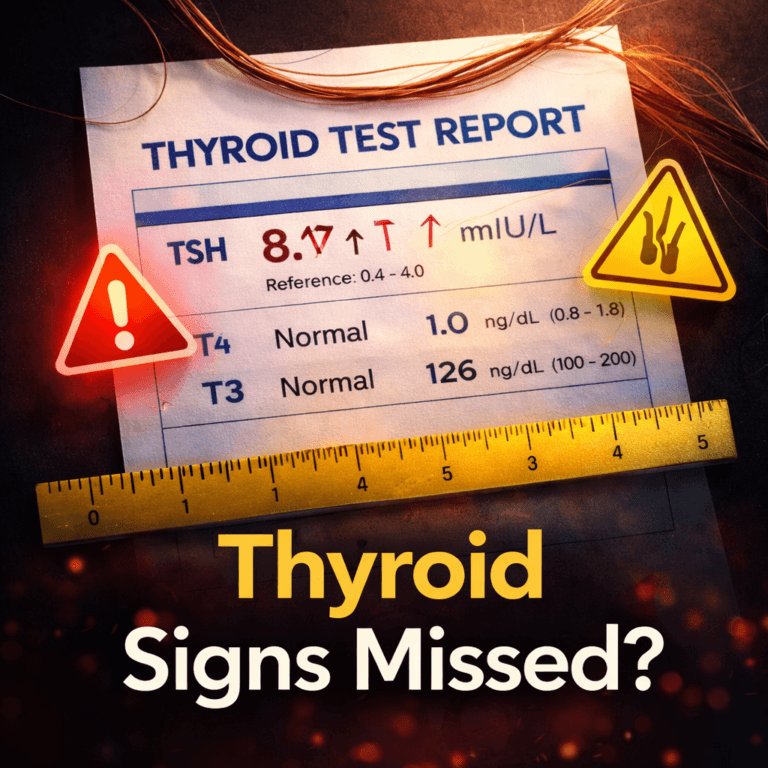
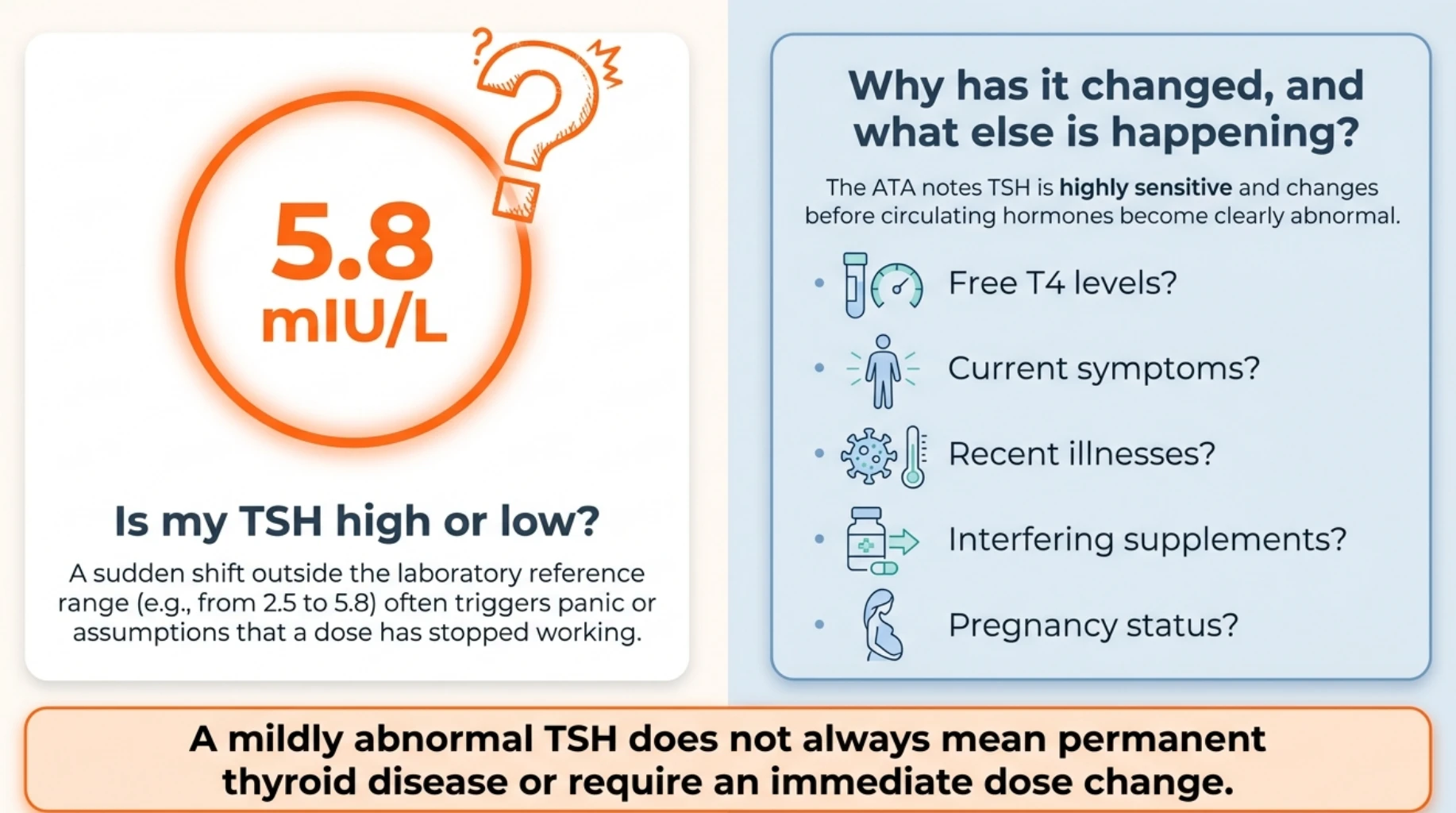
A TSH result can create unnecessary anxiety when it suddenly moves outside the laboratory reference range. Someone whose TSH was previously 2.5 may see a result of 5.8 and assume that thyroid medicine must be started immediately. Another person already taking levothyroxine may see TSH rise and conclude that their dose has stopped working.
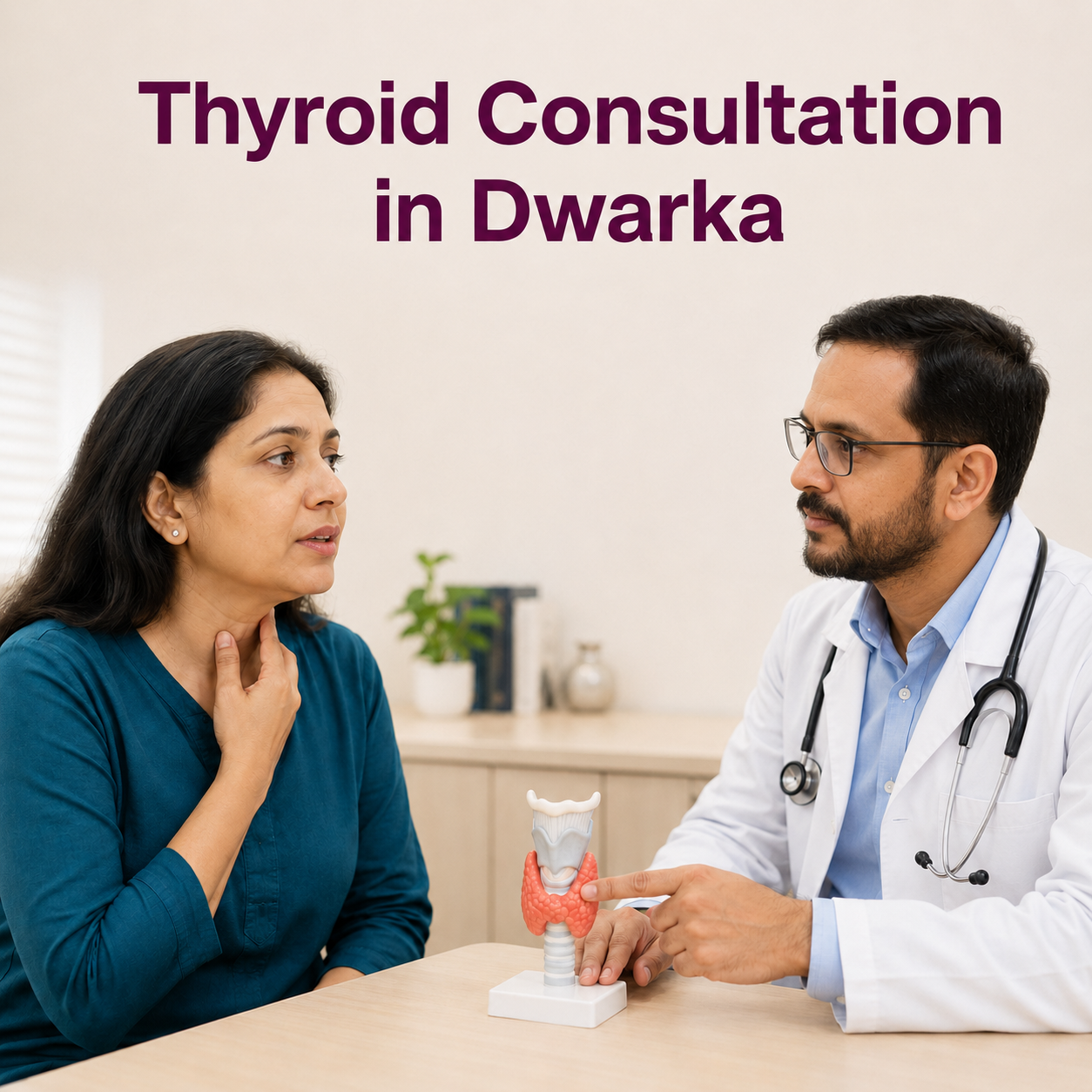
A thyroid consultation in Dwarka can help interpret these changes in context rather than treating one laboratory number in isolation.
TSH is a sensitive marker of thyroid function, but the result needs to be considered alongside free T4, symptoms, previous reports, current thyroid medication, pregnancy status, recent illness and medicines or supplements that can affect testing. The American Thyroid Association describes TSH as the usual first test for thyroid function because it can change before circulating thyroid hormone concentrations become clearly abnormal.
A mildly abnormal TSH does not always mean permanent thyroid disease, and it does not always require an immediate dose change. On the other hand, a clearly abnormal or repeatedly changing TSH should not be ignored simply because you feel well.
The useful question is not only, “Is my TSH high or low?”
It is:
“Why has it changed, what does free T4 show, and does this result require monitoring, treatment or further evaluation?”

When Does a TSH Change Need Medical Review?
A thyroid-function result is worth discussing when TSH is outside the laboratory reference range, has changed substantially from previous results, remains abnormal on repeat testing or occurs together with symptoms suggesting thyroid dysfunction.
Medical review is particularly useful when:
- TSH remains elevated on repeat testing
- TSH is significantly suppressed
- free T4 is also abnormal
- you are already taking levothyroxine
- the thyroid-medicine dose was recently changed
- symptoms are new or worsening
- pregnancy is planned or confirmed
- you have undergone thyroid surgery or radioactive iodine treatment
- medicines or supplements may be interfering with thyroid function or testing
TSH generally provides the starting point, but an abnormal result often needs interpretation with free T4. When TSH is low, free T3 may also be useful in selected cases.
Repeat testing also needs appropriate timing. NICE advises that when thyroid tests are repeated because symptoms have worsened or new symptoms have developed, testing sooner than six weeks after the previous measurement is unlikely to provide useful new information in most routine situations.
When Does a Thyroid Consultation in Dwarka Make Sense?
A thyroid consultation in Dwarka is useful when the report and the clinical picture do not seem to match.
You might feel completely well but have a raised TSH. Alternatively, you may have fatigue, hair loss, constipation and difficulty losing weight while your thyroid tests remain within the reference range.
These situations should not automatically lead to more thyroid medicine.
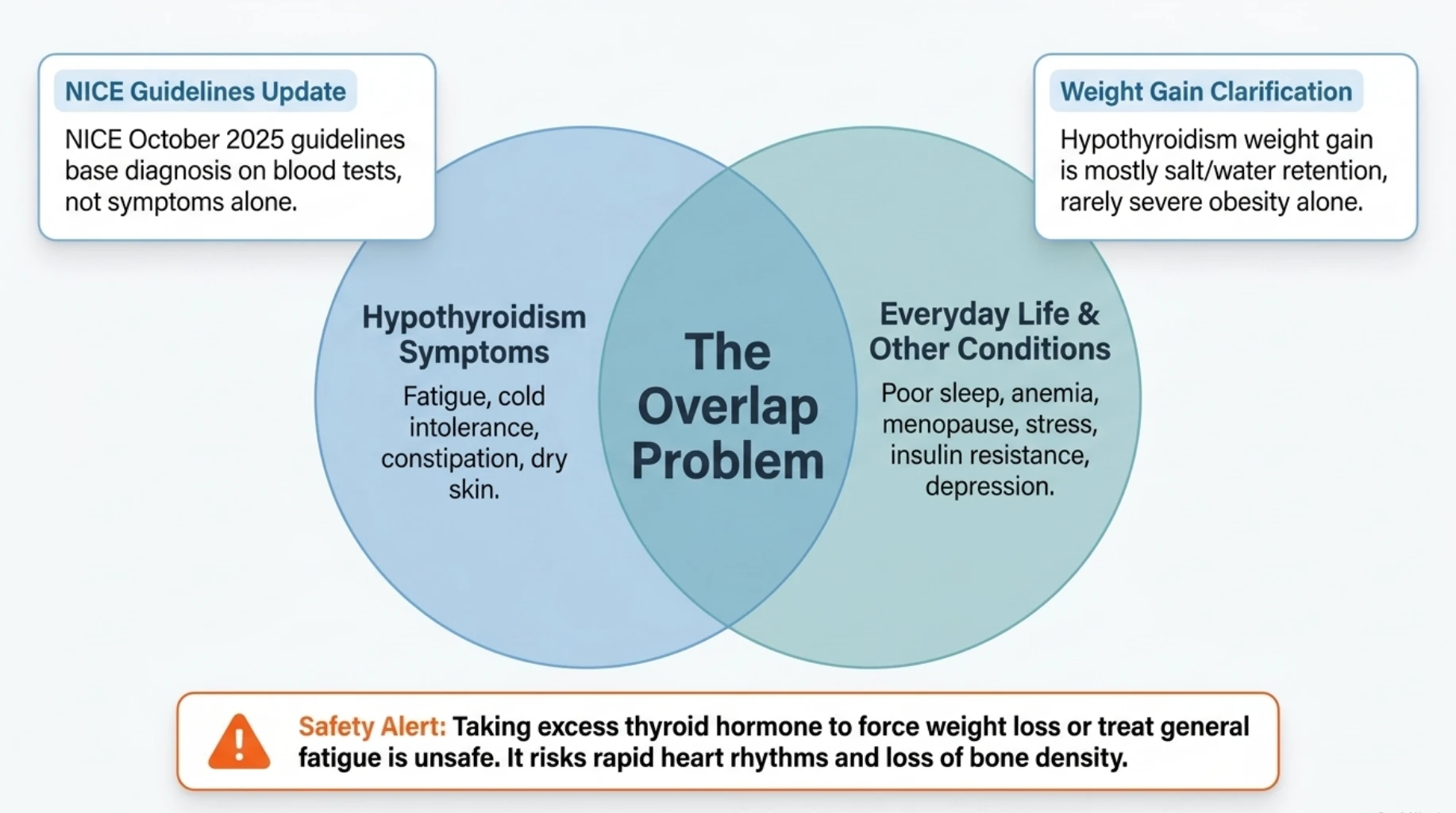
Symptoms commonly associated with hypothyroidism—such as fatigue, weight gain, cold intolerance, constipation, dry skin and poor concentration—are nonspecific and can occur with anemia, poor sleep, depression, nutritional problems, menopause and several other conditions. The American Thyroid Association notes that people with normal thyroid blood tests generally do not obtain proven benefit from taking thyroid hormone simply because they have symptoms that resemble hypothyroidism.
A consultation can therefore help answer several different questions:
- Is the TSH change persistent?
- Does free T4 confirm thyroid dysfunction?
- Does the pattern suggest hypothyroidism or hyperthyroidism?
- Is the thyroid medicine being absorbed consistently?
- Could another medicine or supplement affect the result?
- Are the symptoms actually likely to be thyroid-related?
- Is further investigation needed?
The goal is not to force every TSH into a particular number without understanding why it has changed.
What Does TSH Actually Tell You?
TSH stands for thyroid-stimulating hormone. It is produced by the pituitary gland and acts as a signal telling the thyroid gland how much thyroid hormone to produce.
In ordinary primary thyroid disease, the relationship works roughly in opposite directions.
When the thyroid is not producing enough hormone, the pituitary increases TSH in an effort to stimulate it. A high TSH therefore usually points toward an underactive thyroid.
When the thyroid is producing excessive hormone, the pituitary reduces its TSH signal. A low TSH therefore usually raises the possibility of an overactive thyroid.
However, TSH is not the entire diagnosis.
Interpretation changes when pituitary disease is present, during pregnancy, after certain treatments and in some acute illnesses. Medicines and laboratory interference can also produce confusing patterns.
This is why comparing only the TSH number with an internet chart can be misleading.
Why TSH and Free T4 Should Be Interpreted Together
Free T4 measures the fraction of thyroxine circulating in the blood that is available to tissues.
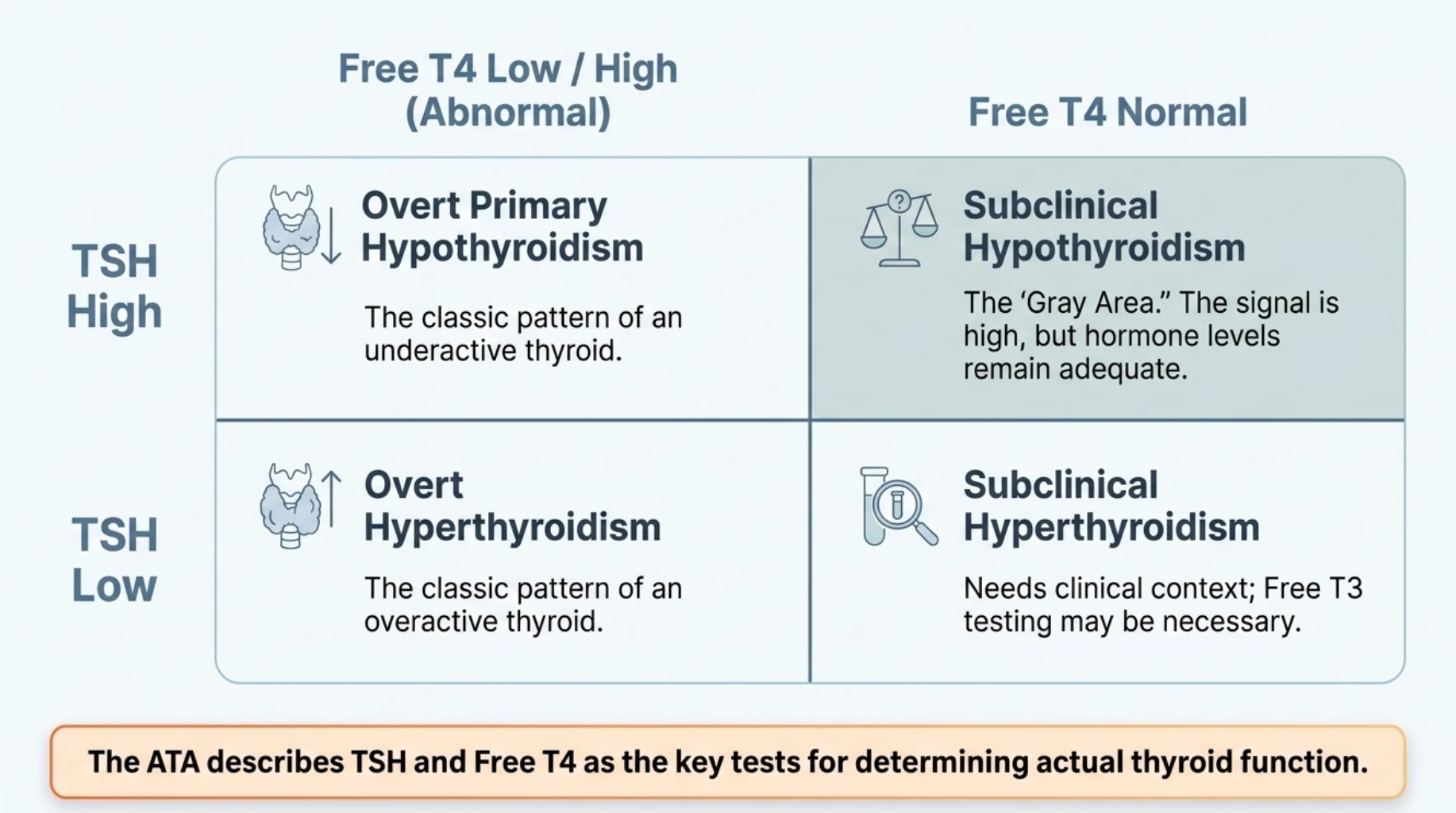
The combination of TSH and free T4 helps clarify what an abnormal TSH means.
A typical pattern is:
- High TSH + low free T4: consistent with overt primary hypothyroidism
- High TSH + normal free T4: commonly described as subclinical hypothyroidism
- Low TSH + high free T4: suggests overt hyperthyroidism
- Low TSH + normal free T4: may represent subclinical hyperthyroidism, although free T3 and clinical context can be important
The ATA describes TSH and free T4 as the key tests for determining actual thyroid function, while T3 testing is generally much less useful when evaluating hypothyroidism.
This distinction prevents someone with a small isolated TSH change from being treated in the same way as a person whose thyroid hormone level is clearly abnormal.
Does One Abnormal TSH Result Mean Thyroid Disease?
Not always.
TSH can change temporarily, particularly when the abnormality is mild. This is why treatment decisions for mild subclinical hypothyroidism are often based on repeat measurements rather than one isolated result.
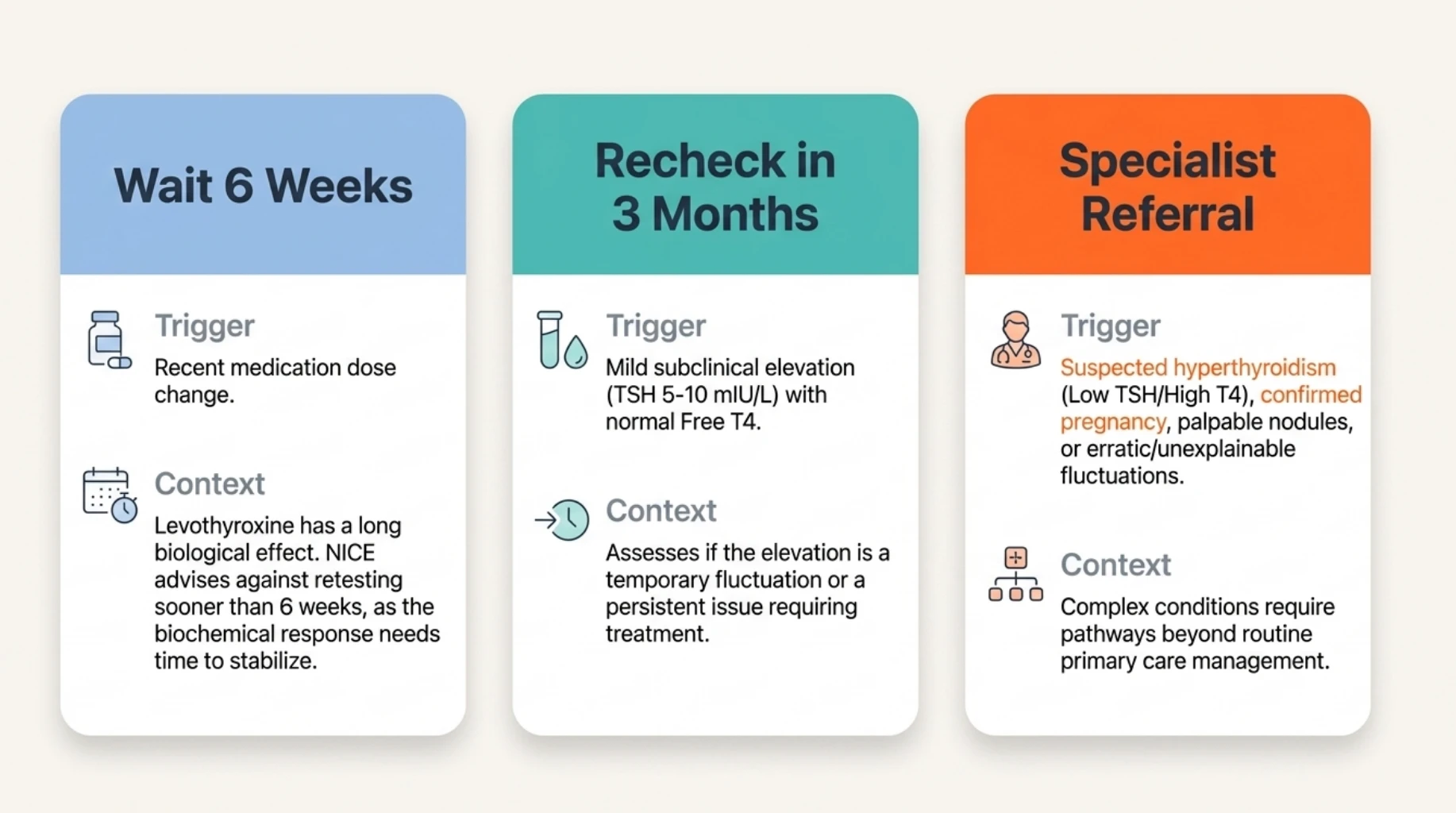
NICE recommends confirming persistent subclinical hypothyroidism over time before using certain treatment thresholds. For example, its recommendation concerning a TSH of 10 mIU/L or higher specifies two separate measurements approximately three months apart.
Possible reasons why one result may differ from another include:
- recovery from illness
- changes in thyroid medication use
- inconsistent levothyroxine absorption
- interfering medicines
- supplements such as biotin affecting the laboratory assay
- pregnancy-related physiological changes
- progression or fluctuation of autoimmune thyroid disease
This does not mean that every abnormal result should simply be ignored for three months. A markedly abnormal TSH together with an abnormal free T4, pregnancy, significant symptoms or suspected hyperthyroidism may require earlier action.
The point is that the degree of abnormality and the clinical context matter.
What Does a High TSH Mean?
A high TSH usually means the pituitary is asking the thyroid gland to work harder.
When free T4 is also below the laboratory reference range, the pattern usually indicates overt primary hypothyroidism. The ATA describes primary hypothyroidism as the typical situation in which TSH rises because the thyroid gland is not producing enough thyroid hormone.
Possible causes can include autoimmune thyroid disease such as Hashimoto’s thyroiditis, previous thyroid surgery, radioactive iodine treatment and certain medicines.
Symptoms may include:
- fatigue
- cold intolerance
- constipation
- dry skin
- reduced energy
- menstrual changes
- difficulty concentrating
- modest weight gain
However, these symptoms are not sufficiently specific to diagnose hypothyroidism without blood tests.
Treatment decisions also differ depending on whether free T4 is actually low or remains normal.
High TSH With Normal Free T4: Subclinical Hypothyroidism
When TSH is above the reference range but free T4 remains normal, the biochemical pattern is called subclinical hypothyroidism.
The word “subclinical” can be confusing. It does not mean the test should be dismissed, but it also does not mean that everyone needs lifelong levothyroxine immediately.
Management depends on factors such as:
- how high the TSH is
- whether the elevation persists
- age
- symptoms
- thyroid-peroxidase antibody status
- previous thyroid surgery or radioactive iodine
- pregnancy or pregnancy planning
- cardiovascular and other clinical considerations
NICE recommends considering thyroid-peroxidase antibodies in adults whose TSH is above the reference range, while advising that TPO antibody measurements do not need to be repeatedly followed once obtained.
The thyroid’s current function is followed primarily using TSH and free T4 rather than repeatedly checking whether antibody concentrations have increased or decreased. The ATA similarly notes that thyroid antibodies can help establish an autoimmune cause but repeated antibody measurements are not useful for monitoring thyroid function or treatment response.
When Does a Mildly High TSH Need Treatment?
This is one of the common reasons patients seek a thyroid report review.
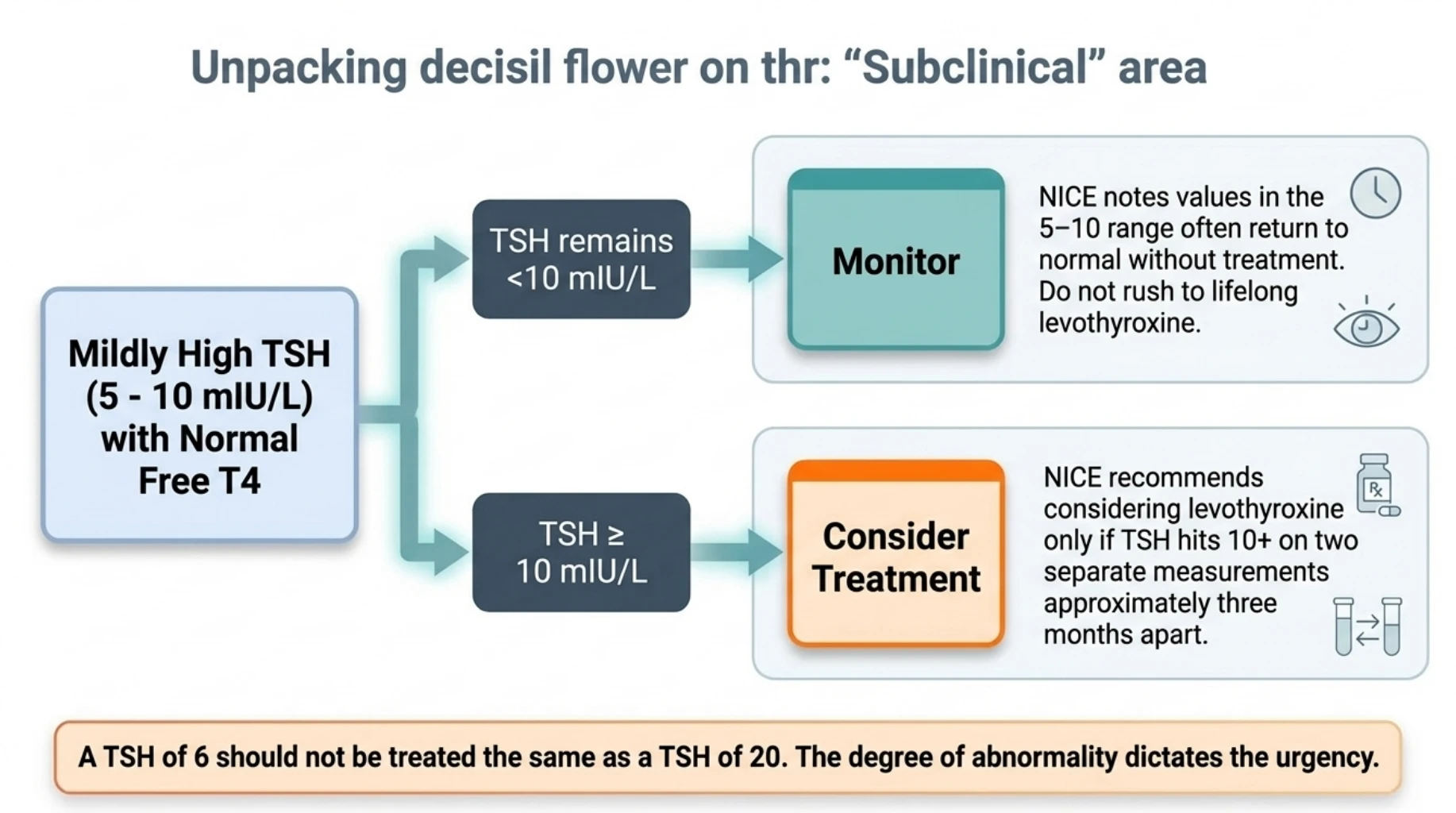
A TSH of 5 or 6 mIU/L should not automatically be treated in exactly the same way as a TSH of 15 or 20 mIU/L.
For adults with subclinical hypothyroidism, NICE recommends considering levothyroxine when TSH is 10 mIU/L or higher on two separate occasions approximately three months apart.
For adults under 65 whose TSH remains above the reference range but below 10 mIU/L on two measurements three months apart, NICE says a six-month levothyroxine trial may be considered when symptoms of hypothyroidism are present. If symptoms persist even after TSH has normalized, other causes should be considered rather than continually escalating thyroid hormone.
These thresholds should not be interpreted as a do-it-yourself prescription rule.
Pregnancy has different considerations, and individual decisions may change with age, symptoms, thyroid antibodies, previous thyroid treatment and other medical factors.
A result just above the laboratory range therefore often needs interpretation and follow-up, not panic.
What Does a Low TSH Mean?
A low TSH usually means that the pituitary is reducing its signal to the thyroid because circulating thyroid hormone is relatively high.
When TSH is low and free T4 is elevated, hyperthyroidism becomes an important possibility. Free T3 may also be needed because some patients have a rise in T3 before free T4 becomes clearly elevated. The ATA notes that T3 testing is particularly useful in evaluating hyperthyroidism rather than routine hypothyroidism.
Causes of a suppressed TSH can include overactive thyroid conditions as well as excessive thyroid-hormone replacement in someone already taking levothyroxine.
Possible symptoms of excessive thyroid hormone can include palpitations, tremor, heat intolerance, sweating, anxiety, unintentional weight loss or difficulty sleeping. The clinical pattern and thyroid-hormone results determine what should happen next.
Low TSH Does Not Always Mean the Same Thing
A suppressed TSH with high thyroid hormone levels is different from a mildly low TSH with normal free T4 and free T3.
It is also different from low TSH in someone deliberately receiving thyroid-hormone suppression following treatment for certain thyroid cancers.
This is why changing levothyroxine solely because the laboratory report marks TSH in red can occasionally be inappropriate. The medical reason for treatment must be understood first.
For routine hypothyroidism replacement, however, excessive thyroid hormone should be avoided. The ATA notes that excessive thyroid-hormone exposure can contribute to rapid heart rhythms and loss of bone density.
Why TSH Can Change While Taking Levothyroxine
One of the most frustrating situations is a TSH that was previously stable and then rises or falls even though the prescription appears unchanged.
Sometimes the dose genuinely needs adjustment. At other times, the issue is how consistently levothyroxine reaches the bloodstream.
The ATA advises taking levothyroxine consistently because food can alter absorption. It is commonly taken on an empty stomach in the morning, while bedtime administration can also be used consistently in suitable patients.
Several medicines and supplements can affect absorption or thyroid-hormone requirements.
These include:
- iron supplements
- calcium supplements
- certain antacids
- some cholesterol-lowering medicines
- soy
- estrogen-containing medicines
- amiodarone
- lithium
- some anti-seizure medicines
The ATA specifically advises discussing medication timing because iron, calcium, soy and certain antacids can interfere with levothyroxine absorption, while other medicines can change the required dose.
Food, Calcium, Iron and Medication Timing Matter
Before increasing a levothyroxine dose because TSH has risen, it can be useful to review how the tablet is actually being taken.
For example, ask:
- Is it taken consistently at the same time?
- Is it taken with breakfast?
- Has calcium or iron recently been added?
- Is an antacid being taken around the same time?
- Have doses been missed?
- Has the brand or manufacturer changed?
- Has another medicine recently been started?
The ATA recommends keeping the same levothyroxine brand or manufacturer where practical and informing the treating clinician when a formulation changes so thyroid levels can be reassessed if necessary.
The solution is therefore not always “increase the dose.”
Sometimes the first step is correcting inconsistent administration and then repeating thyroid testing at an appropriate interval.
Can Symptoms Tell You Whether Your TSH Is Abnormal?
Not reliably.
Symptoms can raise suspicion of thyroid dysfunction, but they cannot tell you what your TSH is or whether thyroid medicine needs changing.
Possible symptoms of hypothyroidism include:
- fatigue
- feeling unusually cold
- constipation
- dry skin
- difficulty concentrating
- menstrual changes
- some weight gain
Possible symptoms of hyperthyroidism include:
- palpitations
- tremor
- heat intolerance
- sweating
- anxiety or restlessness
- sleep difficulty
- unexplained weight loss
The problem is that these symptoms overlap with many other conditions. Fatigue can occur with anemia, sleep apnea, depression, diabetes and chronic illness. Weight gain can reflect calorie intake, reduced activity, menopause, medicines, sleep disturbance and metabolic changes.
Someone can also have clear biochemical hypothyroidism while reporting relatively few symptoms.
This is why thyroid treatment should not be adjusted solely according to whether you “feel hypothyroid.” TSH and free T4 provide objective information that needs to be interpreted alongside symptoms. NICE’s thyroid guideline, which was reviewed again in October 2025, continues to base diagnosis and monitoring on appropriate thyroid-function testing rather than symptoms alone.
Likewise, persistent symptoms after TSH has returned to the appropriate range should prompt consideration of other causes rather than repeatedly increasing levothyroxine.
Pregnancy and TSH Changes Need Special Attention
Pregnancy is an important exception to many routine thyroid-testing rules.
Thyroid-hormone requirements change during pregnancy, and thyroid dysfunction can affect both maternal health and fetal development. The American Thyroid Association released updated guidelines for thyroid disease before, during and after pregnancy in 2026, reflecting newer evidence and emphasising individualized management.
If you already take levothyroxine and become pregnant, thyroid-function testing should be arranged promptly rather than waiting for the next routine annual check. ATA patient guidance advises women with established hypothyroidism to have TSH checked as soon as pregnancy is confirmed because levothyroxine requirements commonly increase during pregnancy.
Pregnancy also has different thyroid reference considerations from those used for a non-pregnant adult.
For this reason, do not interpret a pregnancy TSH result using a general internet chart or make your own dose adjustment based only on a previous non-pregnancy target.
Medical review is especially important when:
- hypothyroidism is already being treated
- pregnancy has just been confirmed
- pregnancy is being planned
- TSH is newly abnormal
- thyroid antibodies are known to be positive
- there is a history of Graves’ disease
- thyroid surgery or radioactive iodine treatment has occurred
Pregnancy-associated thyroid disease may also require closer monitoring or specialist input depending on the specific diagnosis.
Can Biotin and Supplements Distort a Thyroid Test?
Yes.
Biotin is found in many supplements marketed for hair, skin or nail health. It may also be included in multivitamins without the person realizing they are taking it.
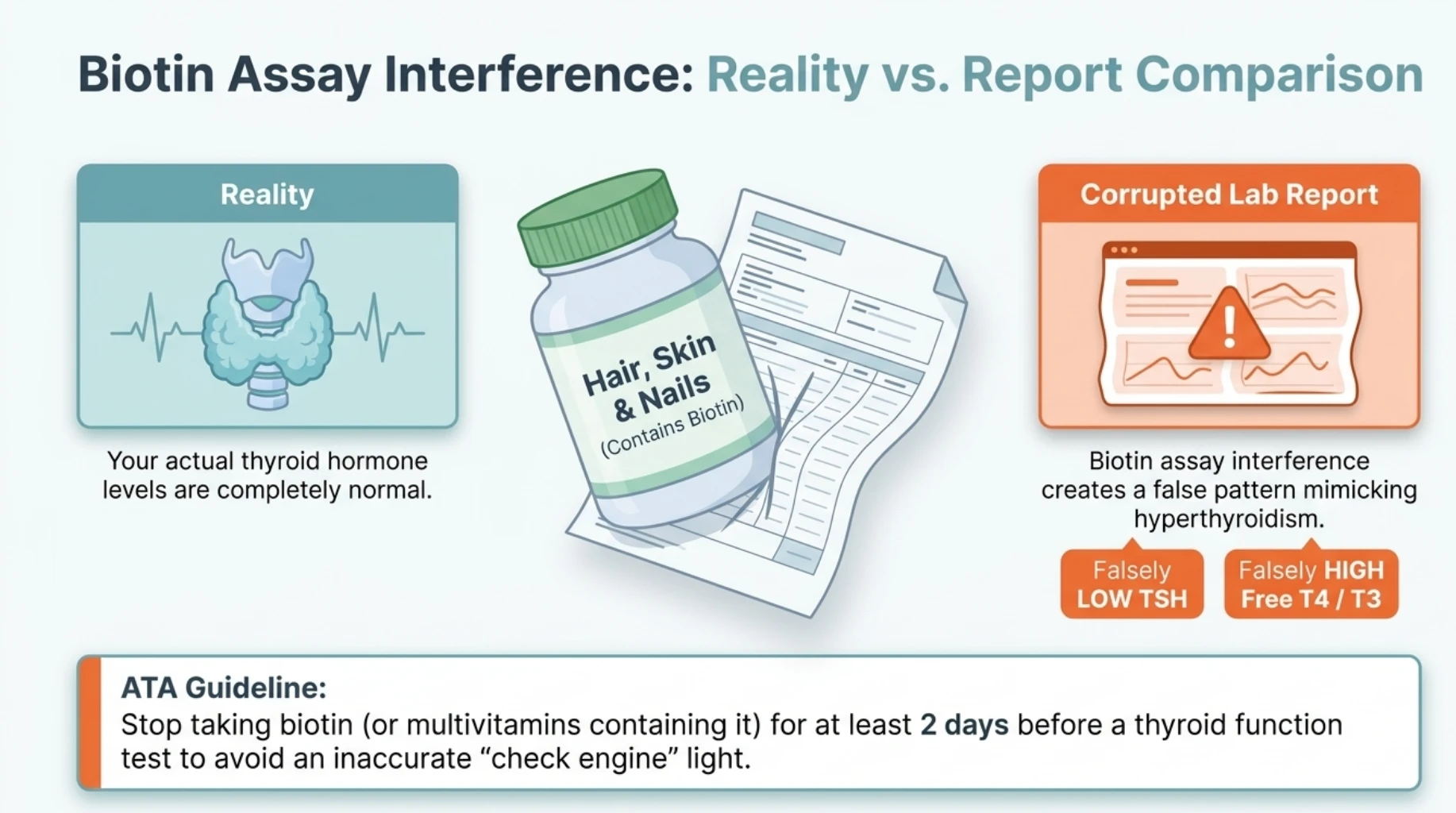
Biotin can interfere with certain laboratory assays and create thyroid results that appear abnormal even though the actual thyroid-hormone concentrations in the body are different.
The American Thyroid Association notes that biotin interference can affect TSH, free T4 and T3 testing. Depending on the assay, it can produce a pattern that resembles excessive thyroid hormone, including falsely low TSH and falsely elevated thyroid-hormone measurements.
ATA patient guidance recommends withholding biotin for at least two days before thyroid-function testing to reduce this interference.
Tell the doctor or laboratory if you are taking:
- biotin
- hair or nail supplements
- multivitamins
- calcium
- iron
- antacids
- herbal products
- other prescription medicines
Do not assume that every unexpected TSH change reflects a true deterioration in thyroid function.
When the laboratory result appears inconsistent with the symptoms, previous results or medication dose, assay interference is one possibility worth considering.
Does Weight Gain Mean Your Thyroid Dose Is Too Low?
Not necessarily.
Hypothyroidism can contribute to weight gain, but the effect is usually more modest than many people expect. The American Thyroid Association notes that weight gain associated with hypothyroidism often includes salt and water retention and that weight change varies with the severity of thyroid dysfunction.
Once hypothyroidism is appropriately treated and thyroid-function tests are within the intended range, persistent excess weight should not automatically be treated by increasing levothyroxine.
Weight can also be influenced by:
- calorie intake
- declining physical activity
- sleep deprivation
- menopause
- insulin resistance
- medicines
- loss of muscle mass
- stress and eating behaviour
Taking excess thyroid hormone in an attempt to lose weight is unsafe. Excessive replacement can cause palpitations, anxiety, loss of bone and muscle, and abnormal heart rhythms.
If weight has changed substantially while you take levothyroxine, a repeat TSH may be appropriate because body-weight changes can sometimes alter hormone requirements. ATA patient guidance advises discussing major weight changes with the treating clinician rather than changing the dose independently.
The objective is normal thyroid replacement, not using thyroid hormone as a weight-loss medicine.
Which Thyroid Tests May Be Needed?
Not every person needs a large “thyroid profile.”
The appropriate tests depend on the clinical question.
TSH
TSH is usually the starting test for suspected primary thyroid dysfunction. It is sensitive to relatively small changes in circulating thyroid hormone.
Free T4
Free T4 helps determine the significance of an abnormal TSH.
For example:
- high TSH plus low free T4 supports overt hypothyroidism
- high TSH plus normal free T4 suggests subclinical hypothyroidism
- low TSH plus elevated free T4 supports hyperthyroidism
Free or Total T3
T3 testing is more useful when hyperthyroidism is suspected. It is generally much less helpful for diagnosing routine hypothyroidism because T3 can remain normal even when a person is clearly hypothyroid.
Thyroid Peroxidase Antibodies
TPO antibodies may help identify autoimmune thyroid disease such as Hashimoto’s thyroiditis when TSH is elevated.
Once an autoimmune cause has been established, repeatedly measuring the antibody level generally does not help monitor thyroid function or determine the levothyroxine dose. ATA guidance specifically notes that following thyroid-antibody concentrations over time does not usually alter treatment.
TSH-Receptor Antibodies
TRAb or TSI testing may be useful when Graves’ disease is suspected and in particular specialist situations.
Testing should therefore answer a specific question rather than adding every possible thyroid marker to every blood sample.
Do You Need Thyroid Antibody Tests or an Ultrasound?
Not everyone with an abnormal TSH needs a thyroid ultrasound.
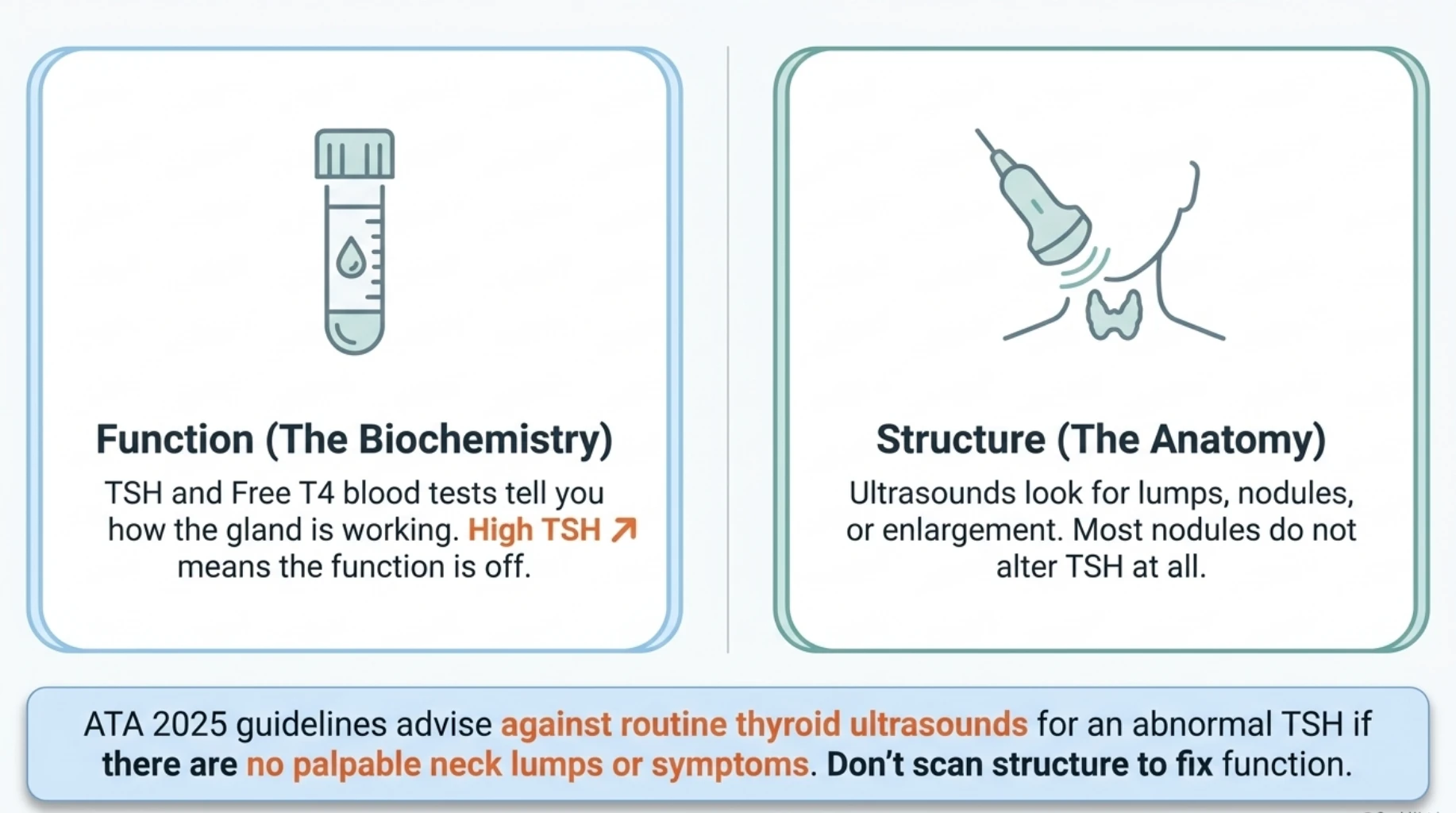
This is an important distinction because blood tests assess thyroid function, while ultrasound mainly examines thyroid structure.
An ultrasound may be useful when there is:
- a palpable thyroid nodule
- visible or palpable thyroid enlargement
- asymmetry of the thyroid
- selected neck symptoms
- another structural thyroid concern
An isolated abnormal TSH, with no thyroid lump or abnormal neck examination, is not automatically an indication for ultrasound.
The American Thyroid Association highlighted this issue in 2025, noting that professional organizations advise against routine thyroid ultrasound in asymptomatic people without abnormal thyroid examination findings. Unnecessary ultrasound can detect small incidental nodules that may lead to further investigations without improving outcomes.
Similarly, a normal ultrasound does not prove that thyroid function is normal. Someone can have hypothyroidism despite a structurally unremarkable thyroid gland.
Conversely, most thyroid nodules do not alter TSH at all. ATA information on thyroid nodules notes that thyroid-function tests are often normal even when a nodule is present.
What to Bring to a Thyroid Consultation in Dwarka
For a thyroid consultation in Dwarka, bring enough information to show the pattern rather than only the latest TSH result.
Useful items include:
- current thyroid-function report
- older TSH and free T4 reports
- current levothyroxine strip or prescription
- details of the exact dose taken each day
- information about missed doses
- calcium and iron supplements
- biotin or hair supplements
- other prescription medicines
- previous thyroid ultrasound, if already performed
- thyroid antibody reports, if available
- pregnancy status or pregnancy plans where relevant
Also note whether the levothyroxine dose or brand changed before the TSH changed.
A sequence such as:
TSH 8.2 → dose adjusted → TSH 3.4 → medication timing changed → TSH 6.5
provides more useful clinical information than simply seeing the latest number of 6.5.
How Often Should TSH Be Rechecked After a Dose Change?
Levothyroxine has a long biological effect, so thyroid testing immediately after a dose change can be misleading.
NICE advises that thyroid-function tests should generally not be repeated within six weeks simply because symptoms have changed, because there may not have been enough time for the biochemical response to stabilize.
For adults taking levothyroxine for primary hypothyroidism, ongoing TSH monitoring is used to guide treatment. Once thyroid levels are stable, testing can usually become less frequent rather than being repeated every few weeks indefinitely. NICE’s current guideline continues to provide structured recommendations for monitoring established hypothyroidism.
The appropriate interval may differ during:
- pregnancy
- significant dose changes
- major weight changes
- interacting medication changes
- unstable thyroid disease
- specialist-managed conditions
Avoid making several dose changes within a short period based on repeated tests performed too close together unless there is a specific clinical reason.
When Is Specialist Referral Appropriate?
Many cases of straightforward primary hypothyroidism can be assessed and monitored in primary care.
Specialist evaluation may be appropriate when the diagnosis or treatment is more complex, including situations such as:
- suspected or confirmed hyperthyroidism
- persistent suppressed TSH
- an unusual combination of TSH and free T4 results
- suspected pituitary or central thyroid disease
- significant thyroid enlargement
- a thyroid nodule requiring further assessment
- difficult-to-control thyroid function despite apparently appropriate treatment
- selected pregnancy-related thyroid disorders
- suspected Graves’ disease
- recurrent thyroid dysfunction after previous treatment
- concern about thyroid eye disease
- structural abnormalities requiring biopsy or surgical consideration
NICE guidance includes specialist assessment pathways for hyperthyroidism and more complex thyroid disorders rather than treating all abnormal thyroid results as routine hypothyroidism.
The purpose of a primary-care thyroid review is therefore not to manage every thyroid disorder indefinitely. It is to identify the pattern, manage appropriate uncomplicated disease and recognize when specialist input is needed.
Thyroid Consultation at Diet Plus Minus in Dwarka
A thyroid consultation in Dwarka can be useful when your TSH has changed, symptoms do not match the report or you are uncertain whether your levothyroxine dose needs adjustment.
Dr. Pankaj Kumar can review:
- current and previous TSH values
- free T4 and other relevant thyroid tests
- symptoms
- levothyroxine dose
- medication timing and adherence
- calcium, iron and supplement use
- weight changes
- pregnancy considerations
- need for thyroid antibodies
- need for ultrasound when clinically indicated
- whether specialist referral is appropriate
The aim is to interpret thyroid results in context rather than treating a laboratory number alone.
Dr. Pankaj Kumar
MBBS, DNB Family Medicine, Sir Ganga Ram Hospital
General & Lifestyle Physician
Special interest in Diabetes
Diet Plus Minus
13A, Pocket-2, Sector-6, Doctors Lane
Dwarka, New Delhi – 110075
India
Book an Appointment with Dr. Pankaj Kumar
Frequently Asked Questions
Is a TSH of 5 or 6 Very High?
It is usually considered a mild elevation when the laboratory upper reference limit is around 4–5 mIU/L, but the interpretation depends on free T4, age, symptoms, pregnancy status, previous results and whether the abnormality persists.
NICE notes that TSH values in the approximately 5–10 mIU/L range can return to the reference range without treatment in a substantial proportion of people.
One mildly elevated result therefore does not automatically mean lifelong levothyroxine is required.
Does a TSH Above 10 Need Treatment?
Persistent TSH elevation at or above 10 mIU/L is more likely to lead to consideration of levothyroxine.
For non-pregnant adults with subclinical hypothyroidism, NICE recommends considering levothyroxine when TSH is at least 10 mIU/L on two measurements approximately three months apart.
Pregnancy and overt hypothyroidism require different assessment.
Can TSH Change Even if My Thyroid Dose Has Not Changed?
Yes.
Possible reasons include missed tablets, changes in tablet timing, interactions with food or supplements, substantial weight change, switching formulations, pregnancy, illness and progression of underlying thyroid disease.
Calcium and iron can reduce levothyroxine absorption, while inconsistent administration can make results fluctuate.
Should Levothyroxine Be Taken Before Breakfast?
It is commonly taken on an empty stomach before breakfast.
Current NHS guidance advises taking levothyroxine 30–60 minutes before the first meal, caffeinated drink or other medicine of the day and taking it consistently at the same time.
Consistency is particularly important when comparing one TSH result with another.
Can I Take Calcium or Iron With My Thyroid Tablet?
They should generally not be taken together because calcium and iron can reduce levothyroxine absorption.
If you require these supplements, discuss an appropriate timing interval with your clinician or pharmacist.
Can Biotin Make TSH Look Low?
Yes.
Biotin can interfere with certain thyroid laboratory methods and may produce falsely low TSH with falsely high thyroid-hormone results. ATA guidance recommends avoiding biotin for at least two days before thyroid-function testing.
Should I Check T3 If My TSH Is High?
Usually not as the first priority in ordinary hypothyroidism.
TSH and free T4 are generally more useful. T3 can remain normal even in significant hypothyroidism and is more useful in selected cases of suspected hyperthyroidism.
Should Thyroid Antibodies Be Repeated Every Few Months?
Usually no.
TPO antibodies may help establish an autoimmune cause such as Hashimoto’s thyroiditis, but repeatedly monitoring the antibody concentration generally does not guide levothyroxine dosing. TSH is more useful for ongoing thyroid-function monitoring.
Does Everyone With Hashimoto’s Need Thyroid Medicine?
No.
Someone can have positive thyroid antibodies while TSH and free T4 remain normal. ATA guidance notes that thyroid hormone treatment is not required solely because antibody levels are high when thyroid function remains normal, although TSH should be monitored over time.
Do I Need an Ultrasound Because My TSH Is High?
Not necessarily.
Ultrasound looks for structural abnormalities such as nodules or thyroid enlargement. An abnormal TSH by itself does not automatically require an ultrasound.
ATA educational guidance in 2025 specifically highlighted the importance of avoiding thyroid ultrasound in asymptomatic patients without abnormal neck findings.
Can Thyroid Problems Cause Weight Gain?
Hypothyroidism can contribute to some weight gain, but it rarely explains severe obesity by itself. ATA guidance notes that part of hypothyroidism-associated weight gain reflects salt and water retention.
If TSH is adequately controlled, persistent weight concerns should be assessed more broadly rather than increasing thyroid hormone solely for weight loss.
What Should I Do if I Become Pregnant While Taking Levothyroxine?
Contact your treating clinician promptly and arrange thyroid-function testing.
The ATA’s current pregnancy guidance emphasizes early assessment because levothyroxine requirements frequently change during pregnancy. The ATA published updated pregnancy and postpartum thyroid guidelines in 2026.
Do not wait for a routine annual TSH review.
Can I Stop Thyroid Medicine if My TSH Is Normal?
Do not stop it independently.
A normal TSH while taking levothyroxine may simply mean that the current dose is successfully replacing the hormone your thyroid cannot produce.
Whether treatment can ever be withdrawn depends on why it was started. Some people treated for temporary or uncertain indications may be suitable for supervised reassessment, while established overt hypothyroidism commonly requires long-term replacement.
Author Box
Dr. Pankaj Kumar
MBBS, DNB Family Medicine, Sir Ganga Ram Hospital
General & Lifestyle Physician
Special interest in Diabetes
Dr. Pankaj Kumar provides general medical and lifestyle-based care at Diet Plus Minus in Dwarka, New Delhi. His clinical approach includes assessment of thyroid reports, TSH changes, medication use, weight and associated metabolic-health concerns, with specialist referral when appropriate.
Medical Disclaimer
This article provides general educational information and does not replace an individual medical consultation, examination, diagnosis or treatment plan.
Do not start, stop or change levothyroxine or anti-thyroid medicines based only on a TSH result or information from this page.
Pregnancy, suspected hyperthyroidism, thyroid nodules, significant neck swelling and unusual thyroid-function patterns may require more specific assessment.
Seek urgent medical care for severe palpitations with fainting or chest pain, marked breathing difficulty, severe confusion or another acute medical deterioration.
References
- National Institute for Health and Care Excellence. Thyroid Disease: Assessment and Management (NG145). NICE guideline; last reviewed October 2025. Covers investigation, treatment and monitoring of primary thyroid disease.
- Van Uytfanghe K, et al. Thyroid-Stimulating Hormone and Thyroid Hormones: An American Thyroid Association-Commissioned Review of Current Clinical and Laboratory Status. Thyroid. 2023;33(9):1013–1028. Includes interpretation and laboratory-interference considerations.
- American Thyroid Association. Thyroid Function Tests. Current patient and clinical educational guidance on TSH, free T4, T3, thyroid antibodies and biotin interference.
- Korevaar TIM, Leung AM, Alexander EK, et al. American Thyroid Association 2026 Guidelines for Thyroid Disease in Preconception, Pregnancy, and Postpartum. Thyroid. 2026;36(5):481–544.
- American Thyroid Association. Are All Thyroid Ultrasounds Necessary? Clinical Thyroidology for the Public. 2025. Highlights the problem of ultrasound use without an appropriate structural thyroid indication.
- American Thyroid Association. Hashimoto’s Thyroiditis. Current clinical educational guidance covering TPO antibodies, thyroid-function monitoring and treatment.
- NHS. Levothyroxine: How and When to Take It. Current guidance on administration, food timing and interacting medicines.
- American Thyroid Association. Thyroid and Weight. Current patient guidance explaining the relationship between hypothyroidism, weight change and inappropriate thyroid-hormone use for weight loss.

Written by Dr. Pankaj Kumar
General & Lifestyle Physician in Dwarka Sector 6, New Delhi · MBBS, DNB (Family Medicine), DNHE · 16 years of experience.
About the doctor →Book a consultation → Beyond Blood Sugar
 The 90-Day Prediabetes Turnaround
 The Indian Diabetes Diet Reset
 Eat to Beat Gout
 Why Is My Hair Falling?
 The 30-Day Inflammation Reset