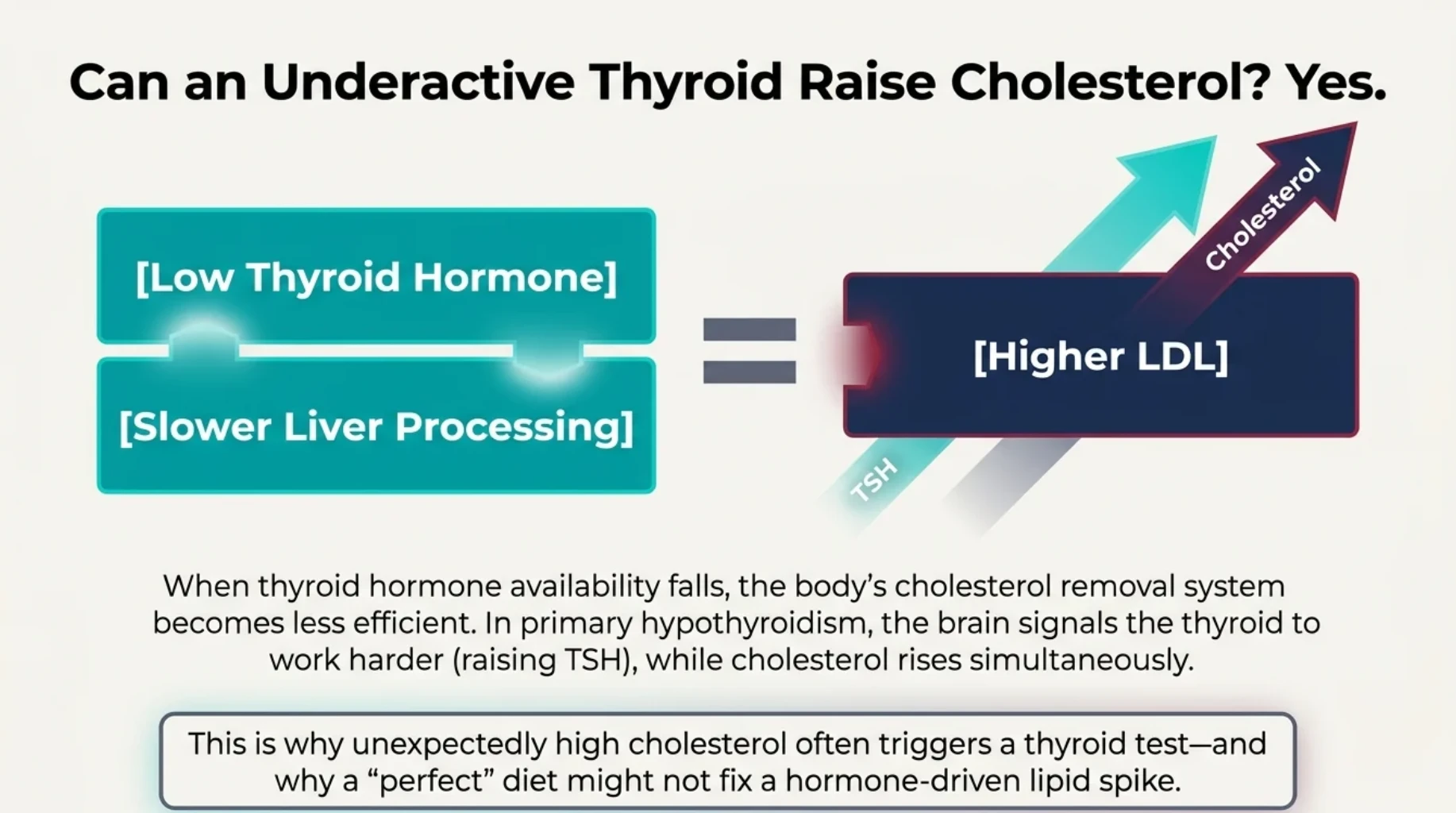
Yes. Hypothyroidism can raise cholesterol, particularly LDL cholesterol. Thyroid hormones help regulate how the body processes and clears cholesterol. When thyroid hormone availability falls, cholesterol removal can become less efficient.
This is why a doctor may request thyroid tests after finding unexpectedly high cholesterol. The connection also matters when someone already taking thyroid medicine develops a worsening lipid profile.
However, the title needs one clarification: when an underactive thyroid and cholesterol “rise together,” it is usually TSH and cholesterol that rise. In primary hypothyroidism, the thyroid hormone level may be low while TSH increases as the brain signals the thyroid gland to work harder.

How Are Hypothyroidism and Cholesterol Connected?
1. Thyroid Hormones Help the Liver Clear LDL
LDL particles carry cholesterol through the bloodstream. The liver removes these particles using specialized receptors on its cells.
Thyroid hormones help regulate this clearance system. With insufficient thyroid hormone, the liver may remove LDL less efficiently, allowing more LDL cholesterol to remain in circulation.
This explains why an elevated LDL result is not always a direct reflection of how much oily food someone eats. Food choices matter, but hormone status, inherited factors and other medical conditions also influence the result.
For a patient who has already reduced fried snacks and sweets, finding a thyroid problem can help explain why the cholesterol result remains higher than expected.
2. Triglycerides May Also Be Affected
Hypothyroidism can also interfere with the processing of triglyceride-rich particles. Some people therefore develop elevated triglycerides alongside high LDL, although this pattern is not universal.
HDL cholesterol can behave differently between individuals. An HDL value within range does not cancel the importance of elevated LDL or make an abnormal lipid profile harmless.
The practical lesson is to review the full lipid profile rather than judging the report from total cholesterol alone.
What Does a High TSH Result Actually Mean?
TSH stands for thyroid-stimulating hormone. It is produced by the pituitary gland and helps regulate thyroid hormone production.
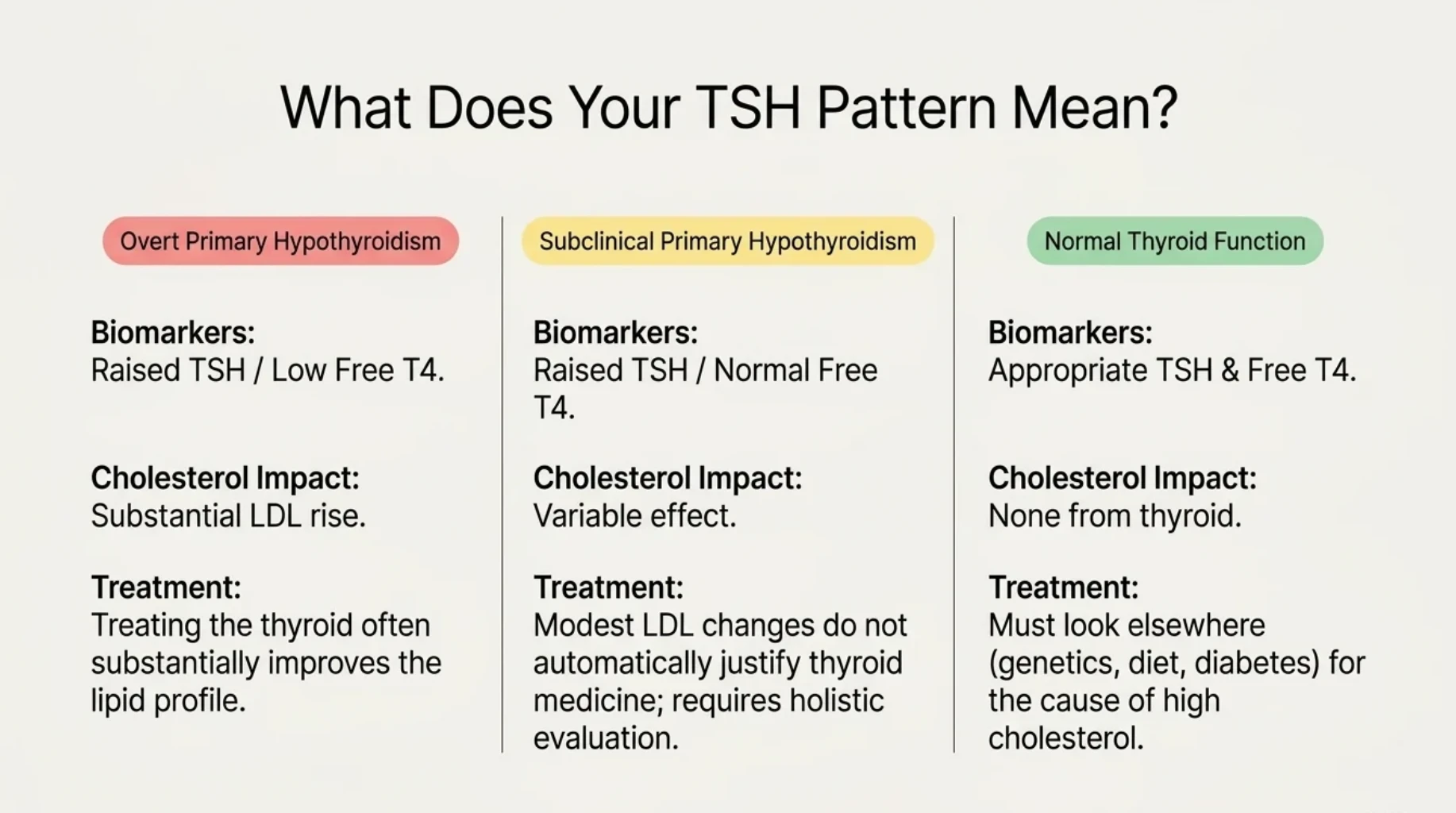
In primary hypothyroidism, TSH generally rises when the thyroid gland is not supplying enough hormone. Free T4 helps establish whether there is a clear hormone deficiency or a milder biochemical pattern.
| Thyroid pattern | Typical blood results | How it relates to cholesterol |
|---|---|---|
| Overt primary hypothyroidism | Raised TSH with low free T4 | Can cause a substantial rise in LDL; appropriate thyroid treatment often improves the lipid profile |
| Subclinical primary hypothyroidism | Raised TSH with free T4 within range | The effect is more variable; cholesterol alone does not determine whether thyroid medicine is needed |
| Normal thyroid function | TSH and free T4 appropriate for the clinical situation | Other explanations for high cholesterol need consideration |
These are common patterns, not a guide to diagnosing every thyroid condition. Pregnancy, pituitary disease, acute illness and some medicines can require a different approach to interpretation.
3. One Mildly Raised TSH Does Not Always Establish Persistent Disease
A slightly raised TSH result may need confirmation before a long-term treatment decision. Your doctor will consider the degree of elevation, free T4, symptoms, previous results and the circumstances of testing.
Thyroid peroxidase antibodies may help identify an autoimmune cause when indicated. They do not replace thyroid function tests, and repeatedly measuring antibody levels is generally not how treatment is adjusted.
Avoid comparing your result with a friend’s prescription. Two people with a similar TSH may need different management because their age, symptoms, medical history and reproductive circumstances differ.
Does Treating Hypothyroidism Lower Cholesterol?
Often, yes—particularly when overt hypothyroidism is contributing to the abnormal result.
A 2024 clinical study found improvements in total cholesterol, LDL and triglycerides after levothyroxine treatment in people with overt hypothyroidism. However, the amount of improvement varies, and an individual patient should not expect a fixed reduction.
A useful approach is to establish appropriate thyroid replacement, confirm that thyroid function has stabilized and then reassess the lipid profile at a clinician-directed interval.
This helps distinguish the cholesterol elevation associated with untreated hypothyroidism from cholesterol that remains high for other reasons.
Why Might Cholesterol Stay High After Thyroid Levels Improve?
4. More Than One Contributor May Be Present
Thyroid dysfunction can be one part of the explanation without being the whole explanation.
A person may also have an inherited tendency towards high LDL, diabetes, kidney disease or dietary factors affecting cholesterol. Age, smoking, blood pressure and a history of cardiovascular disease influence how the result should be managed.
For example, a patient’s LDL may improve after thyroid treatment but remain above the level appropriate for someone who has already had a heart attack. The improvement matters, but it does not remove the need for cardiovascular prevention.
Similarly, a strong family history of premature heart disease should not be dismissed because hypothyroidism has been found. Both issues may require attention.
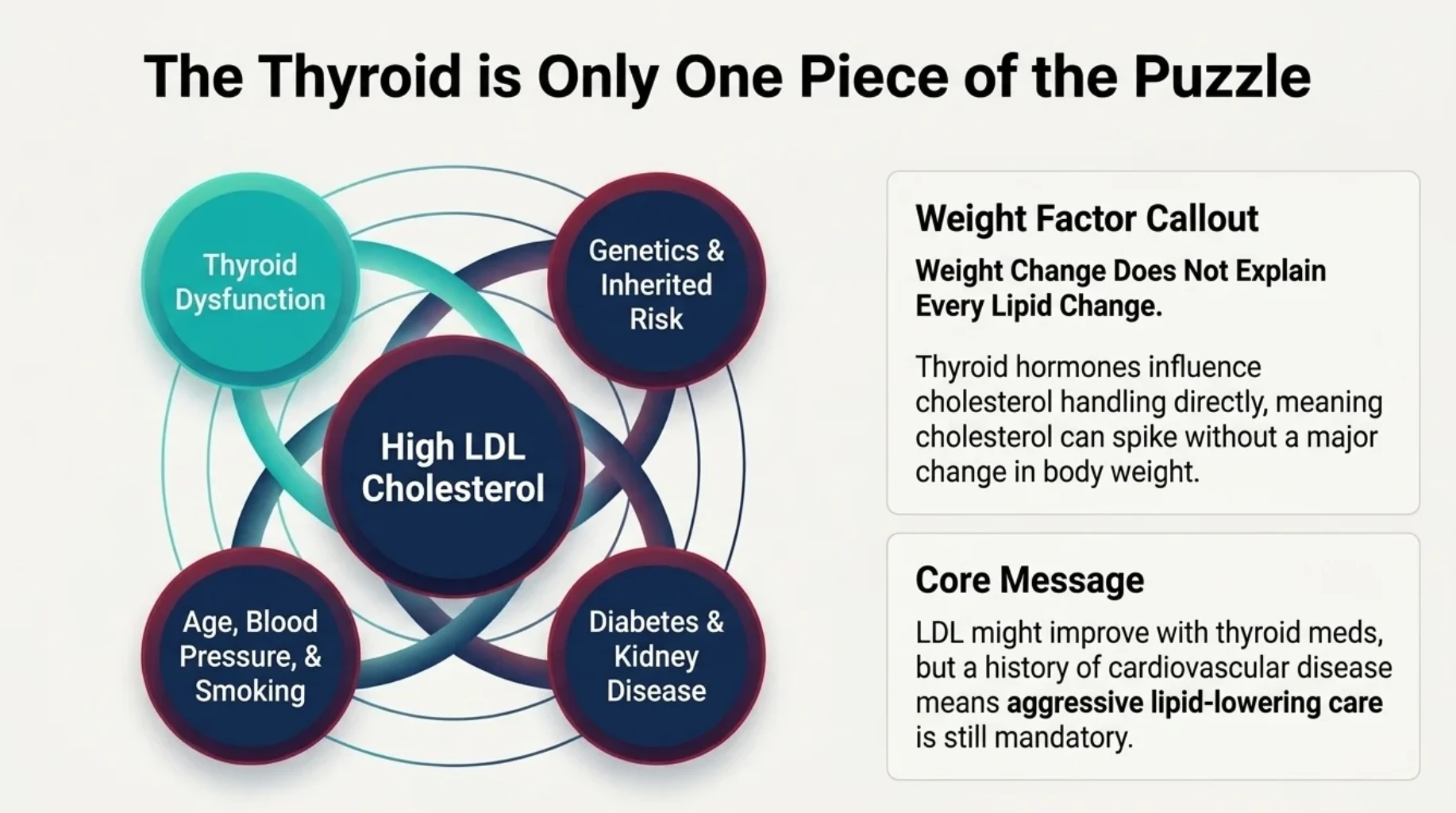
5. Weight Change Does Not Explain Every Lipid Change
It is common to associate hypothyroidism, weight gain and cholesterol as though they are one problem. They overlap, but the relationship is more complicated.
Thyroid hormones influence cholesterol handling directly. Therefore, cholesterol can change even without a major change in body weight.
When reviewing progress, compare the thyroid results and lipid profile alongside weight, waist measurements and other relevant findings. Looking only at the weighing scale may miss an important improvement—or a remaining risk.
Does Mild or Subclinical Hypothyroidism Always Need Treatment?
No. A mildly raised TSH with normal free T4 does not automatically mean that levothyroxine is necessary.
NICE recommends considering treatment when TSH is at least 10 mIU/L on two separate occasions three months apart. For selected symptomatic adults under 65 with persistent smaller elevations, a monitored treatment trial may be considered.
These recommendations are applied in context. Pregnancy or pregnancy planning requires separate assessment, and treatment decisions in older adults need particular care.
High cholesterol is relevant to the discussion, but it should not be used as a shortcut to prescribing thyroid hormone. A modest change in LDL also does not, by itself, prove that treatment will prevent heart attacks or strokes in someone with mild subclinical disease.
Should Cholesterol Medicine Be Delayed Until the Thyroid Is Treated?
This decision needs an individual assessment.
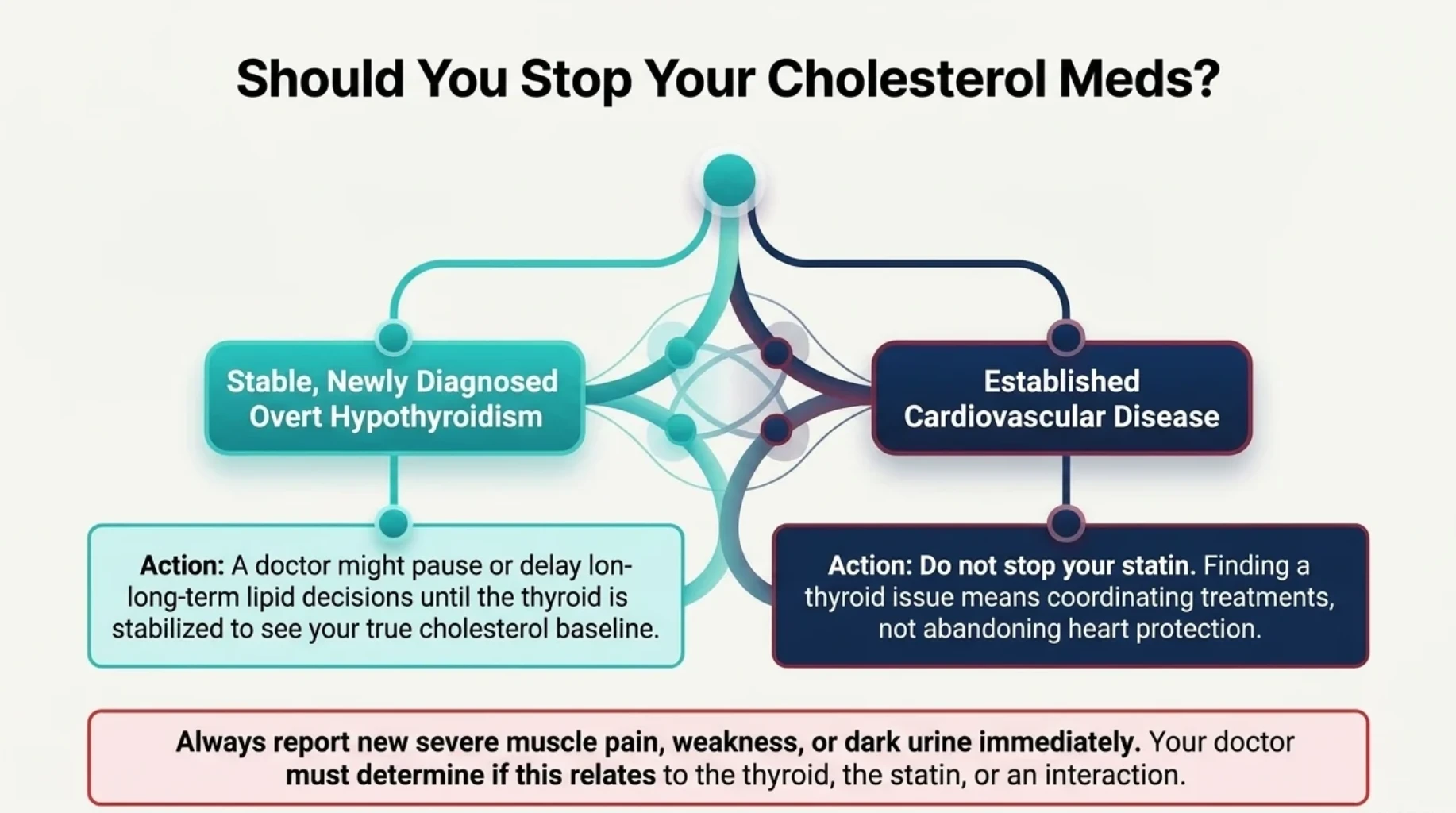
In a stable person with newly diagnosed overt hypothyroidism, correcting the thyroid disorder before making a final long-term lipid treatment decision can help clarify the underlying cholesterol level.
However, someone with established cardiovascular disease or another strong indication for lipid-lowering treatment needs a coordinated plan. They should not independently stop a statin or postpone recommended care while waiting for thyroid results to improve.
If you already take cholesterol medicine, tell your doctor about the thyroid diagnosis. Bring any history of muscle pain, weakness or previous medication intolerance to the discussion.
What Should You Bring to Your Consultation?
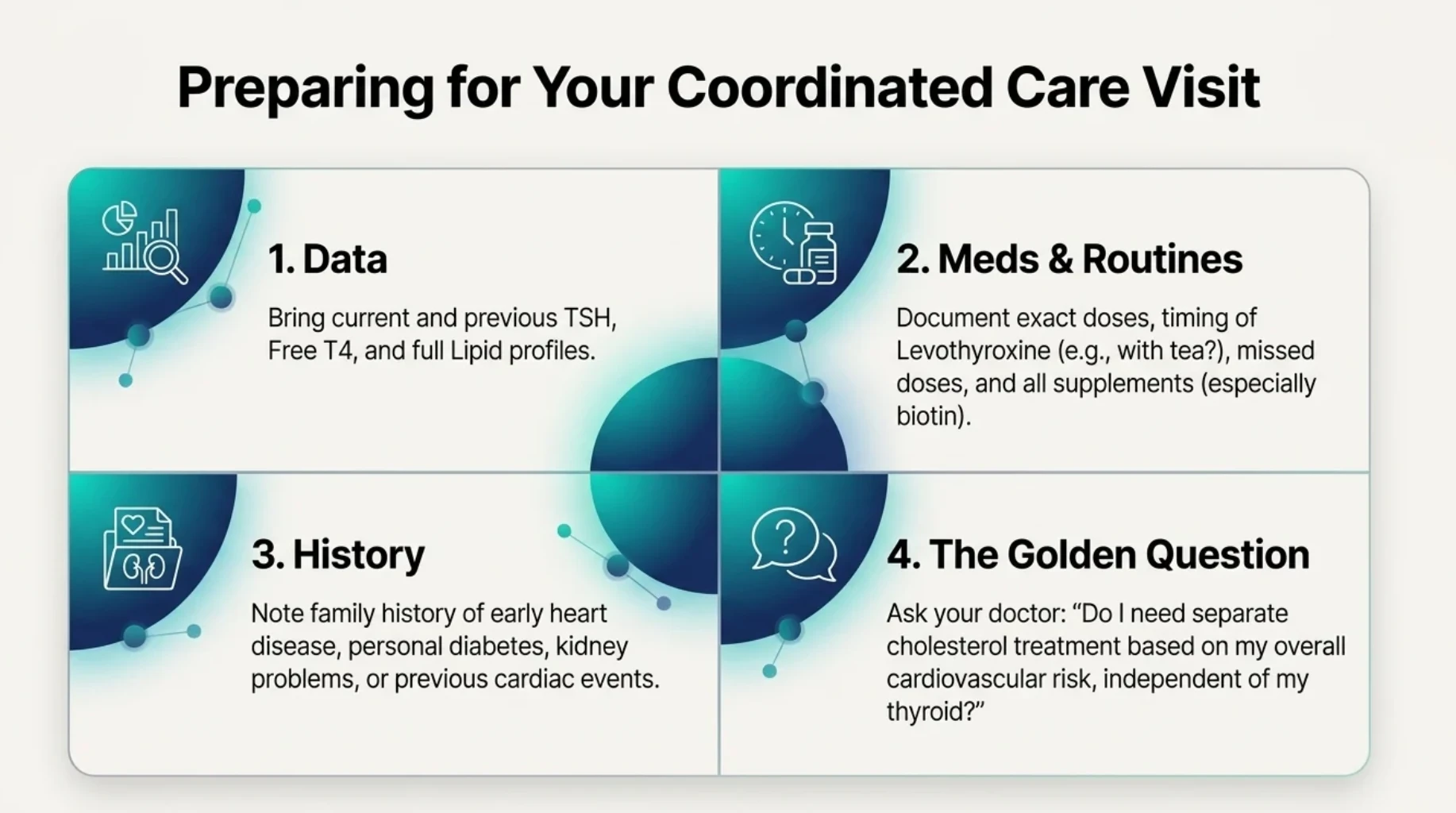
Bring your current and previous TSH and free T4 results, lipid profiles and a complete medicine list. If you take levothyroxine, note the dose, when you take it and whether doses are sometimes missed.
Also mention supplements, family history of early heart disease, diabetes, kidney problems and any previous heart attack or stroke.
Useful questions include: Is my thyroid disorder contributing to the cholesterol result? Does my thyroid treatment need review? When should we repeat the lipid profile? Do I need cholesterol treatment based on my overall cardiovascular risk?
The aim is to create one coordinated plan for both conditions, with clear reasons for each treatment and follow-up test.
What Comes Next?
Hypothyroidism and cholesterol are connected, but finding the connection is only the first step. Appropriate thyroid treatment, repeat assessment and cardiovascular risk review help determine what still needs attention.
Managing Hypothyroidism and Cholesterol Together
When hypothyroidism and high cholesterol occur together, treatment should address both thyroid function and cardiovascular risk. Improving one does not automatically resolve the other.
A practical plan begins with taking thyroid medicine correctly, checking whether thyroid levels have stabilized and reassessing the lipid profile. Food choices, activity, blood pressure, diabetes and smoking history also influence the next steps.
1. Check How You Take Your Thyroid Medicine
Levothyroxine replaces the thyroid hormone your body needs. However, food, drinks and some medicines can interfere with its absorption.
For standard tablets, a common recommendation is to take the prescribed dose with plain water on an empty stomach, 30–60 minutes before breakfast or tea and coffee. Follow the instructions for your particular preparation.
Calcium and iron supplements generally need to be separated from levothyroxine by at least four hours. Some antacids and other medicines also require separation or monitoring. Ask your doctor or pharmacist to review your complete medicine schedule.
For example, taking the thyroid tablet with morning tea and swallowing calcium immediately afterwards can make treatment less predictable. Before assuming that a higher dose is necessary, your doctor may first review this routine.
2. Review Missed Doses and Supplements Without Blame
If you sometimes miss tablets, say so. An accurate account helps your doctor interpret a raised TSH and avoids unnecessary dose escalation.
Bring all supplements to the discussion, including products marketed for hair, weight loss or thyroid support. Biotin can interfere with some thyroid blood tests. Your clinician or laboratory can advise whether it needs to be paused before testing and for how long.
Do not add iodine, kelp or “thyroid booster” products simply because TSH is high. The cause of hypothyroidism and the contents of the product matter; these products do not replace prescribed treatment.
When Should Thyroid Tests and Cholesterol Be Rechecked?
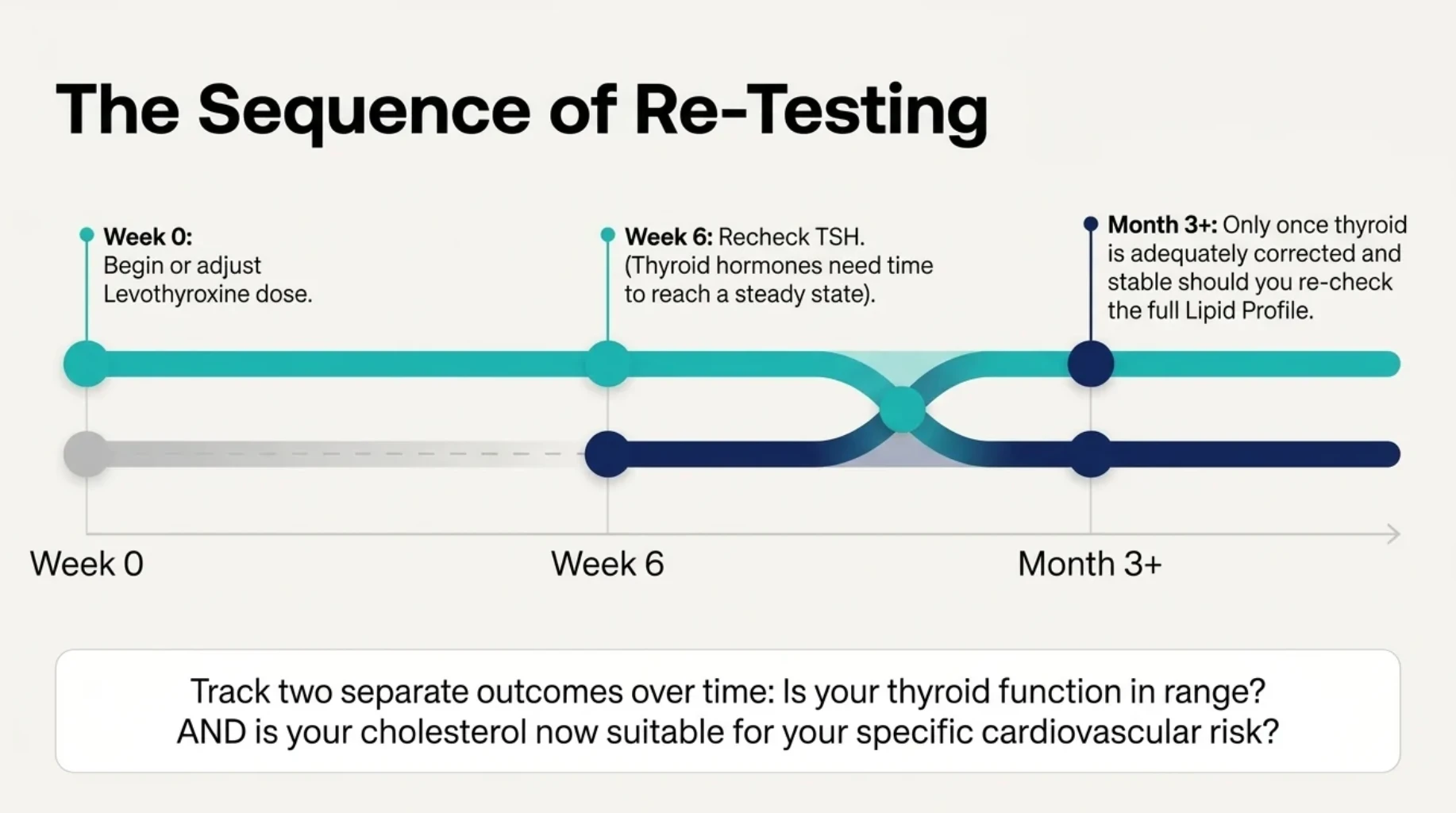
Thyroid hormone treatment needs time to reach a new steady state. Repeating tests after only a few days usually cannot show the full effect of a dose change.
TSH is commonly reassessed from approximately six weeks after starting or changing levothyroxine, with subsequent testing guided by the result and clinical situation. NICE recommends monitoring approximately every three months until stable, then annually for adults with treated primary hypothyroidism.
More frequent or different monitoring may be needed during pregnancy, after relevant medicine changes or when symptoms and results do not agree.
The lipid profile can then be reassessed once thyroid function is adequately corrected and stable. Agree on the timing with your doctor rather than waiting indefinitely for cholesterol to improve.
What If Cholesterol Improves but Remains High?
An improvement suggests that hypothyroidism may have contributed, but the remaining cholesterol still deserves assessment.
Consider a hypothetical patient whose LDL falls after thyroid treatment but remains elevated. That patient may also have an inherited tendency, diabetes, kidney disease or dietary contributors. The treatment decision depends on these factors and any history of cardiovascular disease.
There is no single LDL target appropriate for everyone. Someone who has already had a heart attack generally needs more intensive cholesterol management than someone with a much lower overall risk.
An LDL of 190 mg/dL or higher warrants prompt clinical review, including assessment of secondary causes and possible inherited high cholesterol. It should not be managed through repeated dietary experiments alone.
3. Do Not Stop a Statin Because Thyroid Treatment Has Started
If you already take a statin or another cholesterol medicine, continue the agreed prescription unless your clinician advises a change. Finding hypothyroidism is a reason to coordinate treatment, not to stop cardiovascular prevention independently.
Tell your doctor about new muscle pain, weakness or previous medication intolerance. Severe muscle symptoms, especially with dark urine, need urgent assessment.
Your doctor can decide whether symptoms relate to hypothyroidism, the medicine, exercise or another cause, and whether testing or a treatment adjustment is necessary.
Food Changes That Help When Thyroid and Cholesterol Problems Coexist
There is no special food that reliably corrects hypothyroidism and lowers cholesterol at the same time. A sustainable eating pattern supports cholesterol management while prescribed treatment addresses hormone deficiency.
4. Replace Some Saturated Fat With Unsaturated Fat
For LDL reduction, the type of fat matters. Regular large amounts of ghee, butter, cream, fatty meat and some bakery products can increase saturated fat intake.
Useful changes include measuring cooking oil, using modest amounts of unsaturated vegetable oils, choosing lower-fat dairy where suitable and replacing some fatty meat with beans, lentils, fish or other appropriate proteins.
The benefit comes from replacement. Adding nuts or olive oil to an unchanged high-calorie diet is different from using them in place of foods rich in saturated fat.
5. Include Fiber Through Familiar Foods
Oats, barley, beans, lentils, vegetables and whole fruit can help improve dietary fibre intake. Soluble fibre is particularly useful for modest LDL reduction.
An Indian meal pattern might include oats or vegetable dalia for breakfast, rajma or chana at lunch, and vegetables with dal and an appropriate portion of roti at dinner. Portions should reflect your appetite, glucose management and nutritional needs.
You do not need to eliminate rice or roti simply because cholesterol is high. Review the overall meal, including accompanying fats, protein, vegetables and portion size.
If you use a concentrated fibre supplement, ask about its timing relative to levothyroxine rather than taking both together.
6. Give Triglycerides Their Own Attention
If triglycerides are elevated, discuss sugary drinks, frequent sweets, excess alcohol and poorly controlled diabetes as well as thyroid function.
For someone who drinks several cups of sweetened tea daily, reducing the added sugar may be a practical starting point. Another person may need help with alcohol intake, glucose control or frequent large evening meals.
Dietary advice should match the actual lipid pattern. “Avoid oily food” is too vague to provide a useful treatment plan.
Do You Need to Avoid Soy, Cabbage or Cauliflower?
Most people with hypothyroidism do not need to remove ordinary portions of these foods from their diet.
Food-related absorption issues should be managed through an appropriate medicine routine and monitoring, rather than unnecessary food bans. If you regularly consume soy products or make a major change in fibre intake, mention it when reviewing your thyroid treatment.
A varied diet is generally more useful than a restrictive “thyroid diet” that makes adequate protein, fibre or micronutrient intake difficult.
How Do Activity and Weight Management Fit In?
Activity supports cardiovascular health even when it does not produce a large fall in LDL. It can also help with fitness, blood pressure, glucose control and weight maintenance.
Choose a manageable starting point: a daily walk, movement breaks during desk work or suitable strength exercises. Increase activity gradually, particularly if untreated hypothyroidism has caused marked fatigue or muscle weakness.
If excess weight is present, a realistic weight-management plan can help. However, thyroid medicine should never be increased to accelerate weight loss or force cholesterol lower.
A Practical Follow-Up Framework
| Area to review | Useful question | Purpose |
|---|---|---|
| Medicine routine | Am I taking levothyroxine consistently and separating interacting products? | Improve reliability of treatment |
| Thyroid results | Has thyroid function stabilized on the current dose? | Avoid under-treatment and over-treatment |
| Lipid profile | What remains elevated after thyroid correction? | Identify the need for further lipid management |
| Cardiovascular risk | How do diabetes, blood pressure, smoking and family history affect my plan? | Choose appropriate prevention and treatment |
| Daily habits | Which two changes can I maintain until the next review? | Make progress practical and measurable |
Frequently Asked Questions
Can hypothyroidism cause high cholesterol even if I eat well?
Yes. Thyroid hormone deficiency can reduce cholesterol clearance. A healthy diet remains helpful, but it cannot always overcome an untreated hormonal contributor.
Will levothyroxine replace my cholesterol medicine?
Sometimes cholesterol improves enough to change the treatment plan, but this is not guaranteed. The decision depends on the repeat lipid profile and your overall cardiovascular risk.
Does a higher TSH always mean higher LDL?
No. The relationship varies. Thyroid disease severity, genetics, other conditions and medicines can influence the lipid profile.
Should mild subclinical hypothyroidism be treated just to lower LDL?
Not automatically. Treatment decisions consider persistent TSH elevation, symptoms, age, reproductive circumstances and other clinical factors. Cholesterol requires its own assessment.
Can I take my thyroid tablet with tea?
Standard levothyroxine tablets are usually taken with plain water, followed by a 30–60-minute gap before tea, coffee or breakfast. Follow the instructions for your preparation.
Should I increase the thyroid dose if cholesterol is still high?
No. The dose should achieve appropriate thyroid replacement. Persistent high cholesterol should be assessed and treated directly rather than by causing excess thyroid hormone levels.
What if I am pregnant or planning pregnancy?
Arrange an early medication review. Thyroid targets, monitoring and cholesterol medicine decisions require a pregnancy-specific plan. Do not stop levothyroxine independently.
Getting Thyroid and Cholesterol Results Reviewed in Dwarka
Bring current and previous thyroid tests, lipid profiles and your medicine list. A useful consultation should explain how much thyroid dysfunction may be contributing, when to repeat testing and whether separate cholesterol treatment is needed.
To consult Dr. Pankaj Kumar in Dwarka, New Delhi, visit the appointment page.
Medical disclaimer: This article provides general patient education and does not replace an individual consultation. Do not start, stop or change thyroid or cholesterol medicines without guidance from your treating clinician.
References
- European Thyroid Association. ETA guidelines for the use of levothyroxine sodium preparations in monotherapy to optimize the treatment of hypothyroidism. 2025. Read the guideline.
- NHS Specialist Pharmacy Service. Levothyroxine monitoring. 2024. Read monitoring advice.
- NHS. Levothyroxine: a medicine for an underactive thyroid. Reviewed July 2026. Read patient information.
- ACC/AHA and collaborating organizations. Guideline on the Management of Dyslipidemia. 2026. Read the guideline.
- American College of Cardiology. Dietary Approaches for Elevated LDL-C. 2025. Read the dietary review.
- Investigating the effect of levothyroxine replacement on cholesterol levels in hypothyroid patients. 2024. Read the study.

Written by Dr. Pankaj Kumar
General & Lifestyle Physician in Dwarka Sector 6, New Delhi · MBBS, DNB (Family Medicine), DNHE · 16 years of experience.
About the doctor →Book a consultation → Beyond Blood Sugar
 The 90-Day Prediabetes Turnaround
 The Indian Diabetes Diet Reset
 Eat to Beat Gout
 Why Is My Hair Falling?
 The 30-Day Inflammation Reset