Feeling tired after a late night, a stressful week or a demanding day is normal. The situation is different when fatigue keeps returning, persists despite reasonable rest or begins to interfere with work, exercise, concentration and ordinary daily activities.
If you are looking for a doctor for persistent fatigue in Dwarka, the useful first step is not to assume that you need a particular vitamin, hormone test or supplement. Fatigue has many possible explanations, ranging from inadequate sleep and anemia to thyroid disease, diabetes, medication effects, depression, post-viral illness and chronic medical conditions.
Primary-care guidance recommends approaching fatigue through a detailed history, medication review, assessment for sleep and mood disorders, examination and targeted testing based on the clinical picture. Broad laboratory testing without a specific indication often has a relatively low diagnostic yield.
The pattern matters.
Are you sleepy enough to doze during the day, or physically exhausted without being sleepy? Do you become breathless with mild activity? Are you snoring loudly? Have your periods become heavy? Are you unusually thirsty? Did the fatigue begin after an infection or a medication change?
Those details often guide the evaluation more effectively than simply ordering every available blood test.

What Can Cause Persistent Fatigue?
Persistent fatigue can arise from many different conditions.
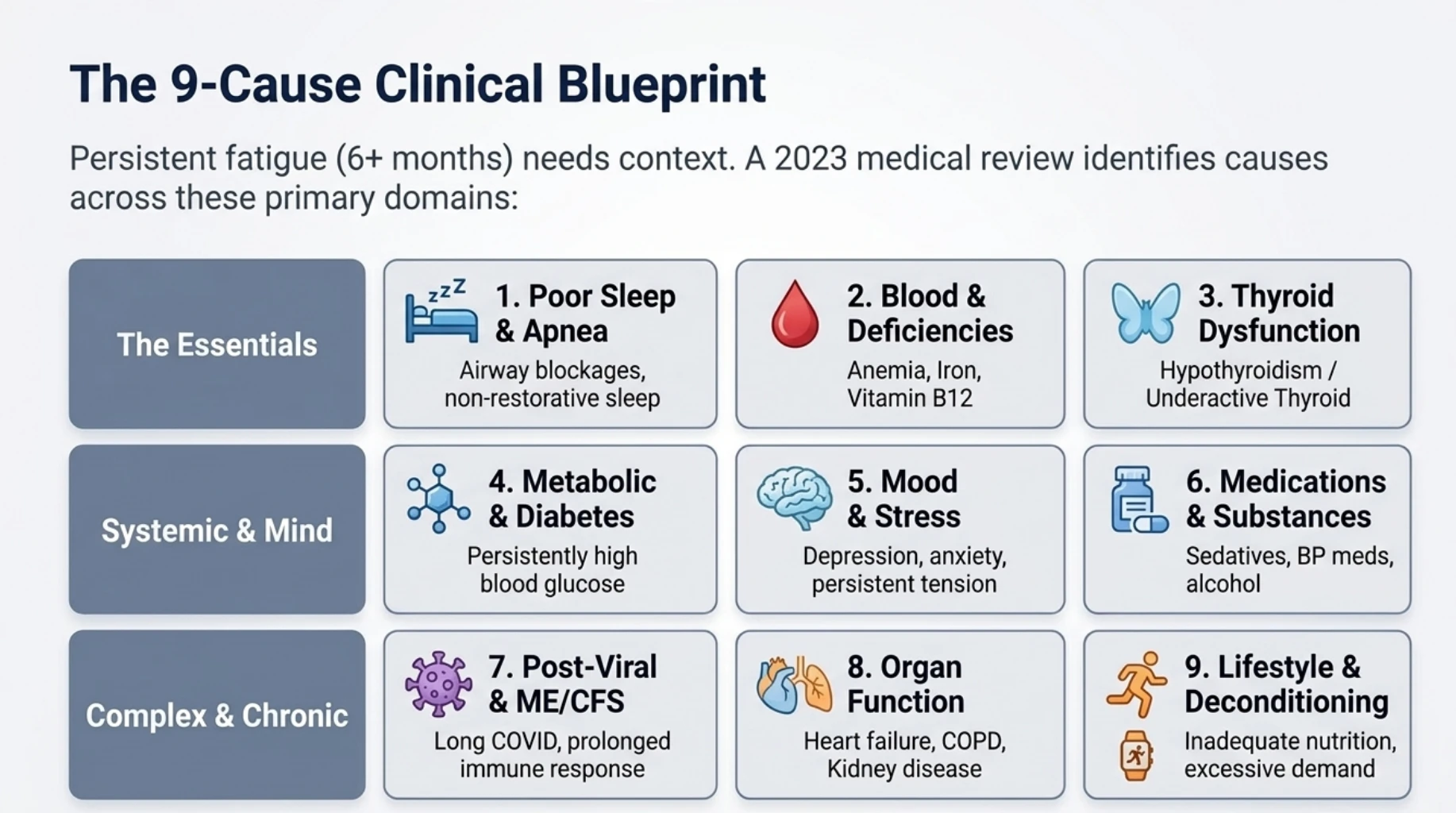
Nine possibilities worth considering are:
- poor-quality sleep or obstructive sleep apnea
- anemia, iron deficiency or vitamin B12 deficiency
- hypothyroidism
- diabetes or persistently high blood glucose
- depression, anxiety or persistent stress
- medicines, alcohol or other substances
- post-viral fatigue, Long COVID or ME/CFS
- heart, lung or kidney disease
- inadequate nutrition, reduced activity or physical deconditioning
This list is not exhaustive.
A 2023 American Family Physician review describes possible causes across sleep, cardiovascular, respiratory, endocrine, metabolic, neurological, psychiatric, nutritional, medication-related and inflammatory conditions. It also emphasizes that fatigue can sometimes be physiological rather than the result of a specific disease.
That is why persistent fatigue is best treated as a symptom that needs context, not as a diagnosis by itself.
What Does Persistent Fatigue Actually Mean?
Patients use the word “tired” to describe several different experiences.
One person means:
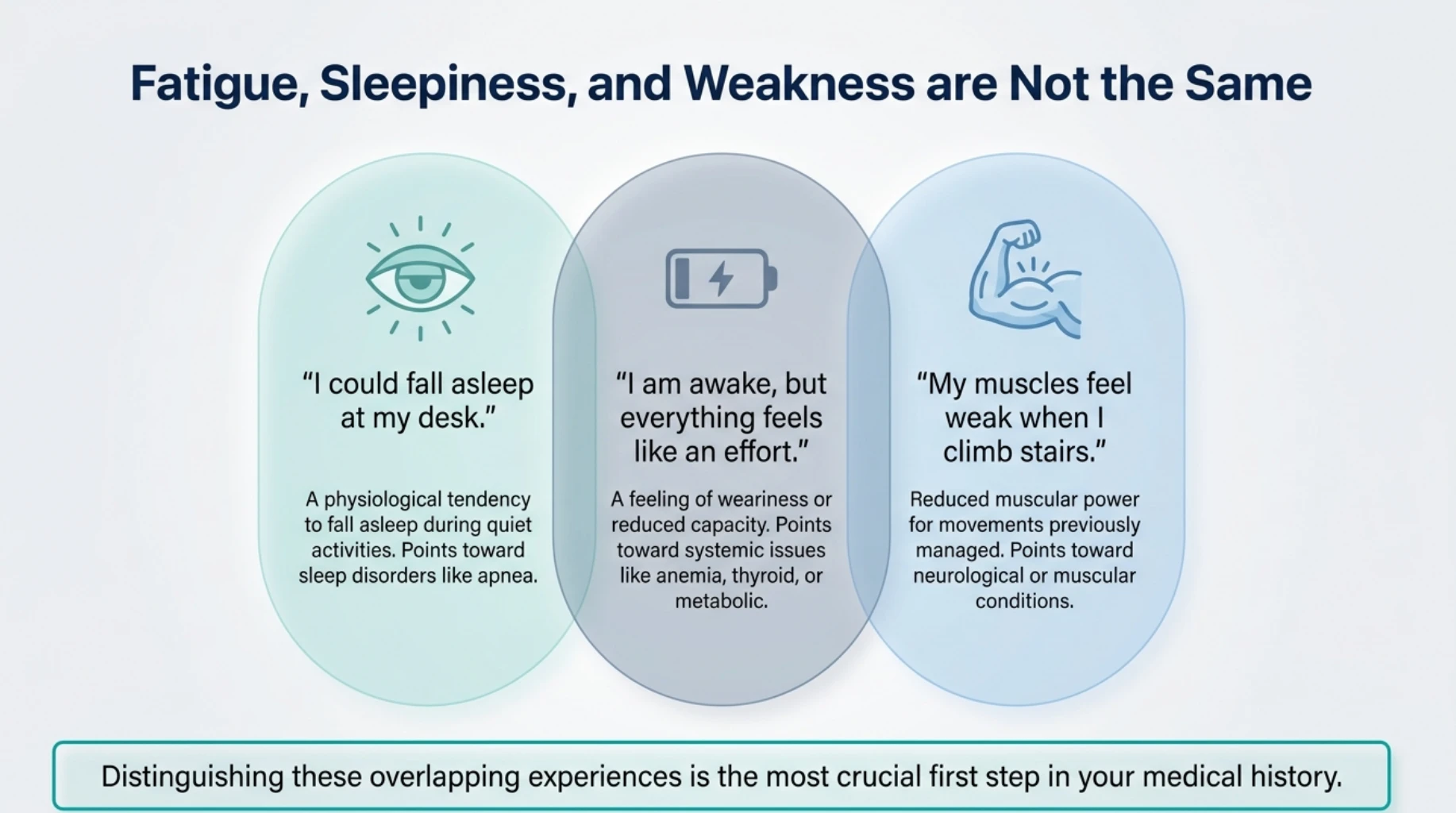
“I could fall asleep at my desk.”
Another means:
“I am awake, but everything feels like an effort.”
A third means:
“My muscles feel weak when I climb stairs.”
Those descriptions point in different directions.
Fatigue is generally a feeling of weariness, exhaustion or reduced capacity. Sleepiness refers more specifically to a tendency to fall asleep, while true muscle weakness means reduced muscular power. These experiences can overlap, but distinguishing them can make the medical history much more useful.
There is also a difference between short-term tiredness and chronic fatigue.
American Family Physician defines chronic fatigue as fatigue lasting six months or longer. However, you do not have to wait six months before discussing a persistent or unexplained change with a doctor.
Fatigue, Sleepiness and Muscle Weakness Are Not the Same
If you repeatedly fall asleep while reading, watching television or sitting quietly, a sleep disorder may be particularly relevant.
If you remain fully awake but feel drained throughout the day, possibilities such as anemia, thyroid disease, infection, metabolic problems, depression or medication effects may deserve attention.
True weakness—such as being unable to perform movements you could previously manage—raises a somewhat different set of neurological and muscular questions.
Before your appointment, try to describe what fatigue feels like rather than simply how severe it is.
When Persistent Fatigue Needs Prompt Medical Attention
Most persistent fatigue can be assessed in a routine medical consultation, but fatigue accompanied by certain symptoms deserves faster attention.
Seek prompt medical assessment when tiredness occurs with:
- new or worsening breathlessness
- fainting or repeated near-fainting
- chest pain
- black stools or significant bleeding
- persistent high fever
- severe dehydration
- marked confusion
- rapidly worsening weakness
- major unexplained weight loss
- significant new swelling of the legs
Severe breathlessness, persistent chest pain, loss of consciousness or another major acute deterioration may require emergency assessment.
These warning signs matter because fatigue can occasionally accompany significant anemia, heart or lung disease, serious infection or another systemic illness.
For example, heart failure can cause marked fatigue together with breathlessness, exercise intolerance and swelling, while advanced kidney disease may cause tiredness, difficulty concentrating, appetite changes, swelling and shortness of breath.
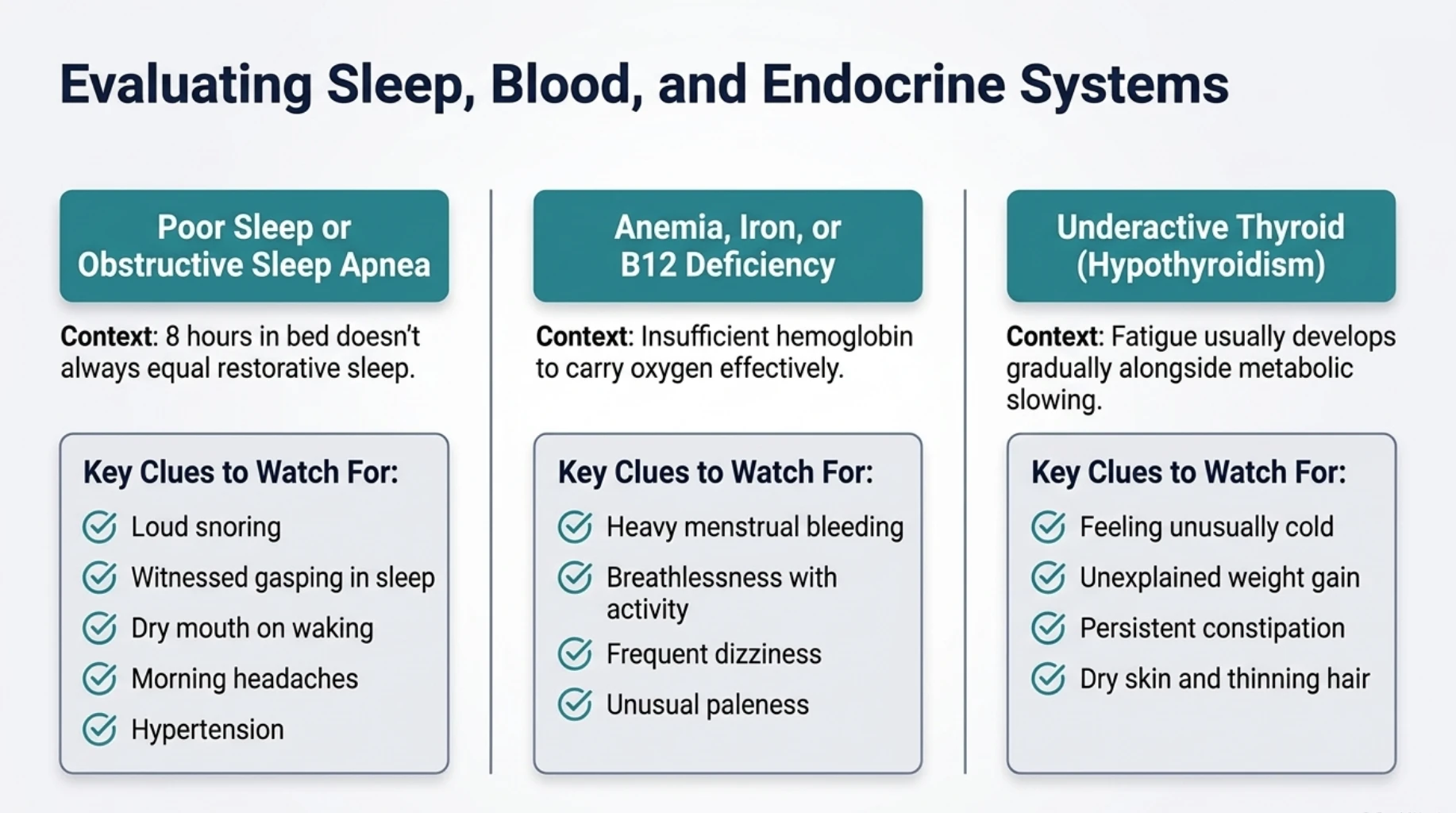
Cause 1: Poor Sleep or Obstructive Sleep Apnea
One of the first questions in persistent fatigue should be:
Are you actually getting restorative sleep?
Sleeping for seven or eight hours does not necessarily mean sleep quality is good.
Obstructive sleep apnea causes repeated narrowing or blockage of the upper airway during sleep. Breathing may repeatedly stop and restart, disrupting sleep and sometimes lowering oxygen levels.
NHLBI lists symptoms including:
- loud snoring
- witnessed pauses in breathing
- gasping during sleep
- daytime sleepiness
- tiredness or fatigue
- morning headache
- difficulty concentrating
- waking frequently to urinate
You may not know that your breathing is abnormal unless a partner notices it.
Sleep apnea becomes especially worth considering when persistent fatigue occurs alongside loud snoring, witnessed apneas, obesity, hypertension or pronounced daytime sleepiness.
That does not mean every tired person needs a sleep study.
Primary-care guidance recommends assessing sleep history and using appropriate screening tools when sleep apnea is suspected rather than automatically ordering polysomnography for anyone reporting fatigue.
Snoring and Morning Tiredness Can Be Important Clues
The combination of loud snoring and waking unrefreshed despite spending enough hours in bed is worth mentioning specifically.
Other useful clues include:
- dry mouth on waking
- morning headache
- falling asleep during quiet activities
- impaired concentration
- excessive sleepiness while driving
- someone noticing gasping or breathing pauses
Do not dismiss these symptoms as simply being “a bad sleeper.”
Untreated sleep apnea can affect more than energy levels, so identifying it may have implications for blood pressure and broader cardiovascular health as well.
Cause 2: Anemia, Iron Deficiency or Vitamin B12 Deficiency
Anemia means there are too few healthy red blood cells or insufficient hemoglobin to carry oxygen effectively.
Fatigue is one of its common symptoms.
NHLBI lists tiredness, weakness, shortness of breath, dizziness, headache and sometimes fainting among symptoms of anemia.
Iron deficiency is a particularly important cause.
Possible clues include:
- heavy menstrual bleeding
- gastrointestinal blood loss
- inadequate iron intake
- pregnancy
- recent surgery
- repeated blood donation
NHLBI notes that blood loss is a major cause of iron-deficiency anemia and specifically states that excessive menstrual bleeding causing anemia is not normal.
Vitamin B12 deficiency can also contribute to anemia and fatigue. When more advanced, it may produce neurological symptoms such as tingling, numbness, problems with balance or cognitive changes.
This is why simply taking iron or vitamin B12 without confirming a deficiency is not always the best approach.
If iron deficiency is found, the next question is often:
Why is iron low?
Fatigue With Breathlessness, Dizziness or Heavy Periods Deserves Attention
Fatigue becomes more suggestive of anemia when it occurs with symptoms such as:
- breathlessness during ordinary activity
- dizziness
- paleness
- headaches
- reduced exercise tolerance
- palpitations
A complete blood count is usually the starting investigation. Depending on the result and clinical history, ferritin, iron studies, vitamin B12 or folate may also be considered.
Heavy periods deserve specific discussion rather than being assumed to be normal.
Likewise, unexplained gastrointestinal blood loss needs medical evaluation rather than repeated iron supplementation without identifying the source.
Cause 3: An Underactive Thyroid
Hypothyroidism is commonly blamed for fatigue, but the symptom by itself is not enough to diagnose a thyroid problem.
An underactive thyroid means the body is not producing enough thyroid hormone.
Possible symptoms include:
- fatigue
- weight gain
- feeling unusually cold
- constipation
- dry skin
- thinning hair
- muscle or joint discomfort
- menstrual changes
- low mood
NIDDK notes that hypothyroidism usually develops gradually and that fatigue and weight gain are common symptoms in the general population, so their presence does not automatically mean thyroid disease is present.
When the clinical pattern suggests hypothyroidism, TSH is generally the key initial blood test, often interpreted together with free T4.
Fatigue Alone Does Not Mean You Have a Thyroid Problem
Thyroid testing becomes more informative when fatigue occurs with other compatible features.
For example, persistent tiredness plus constipation, cold intolerance and a previously abnormal TSH creates a stronger thyroid signal than tiredness alone.
Similarly, if you already take levothyroxine, ongoing fatigue does not automatically mean that the dose should be increased.
Other causes still need consideration, including:
- anemia
- poor sleep
- diabetes
- depression
- medication effects
- nutritional problems
Taking unnecessary thyroid hormone can cause harm.
The aim is therefore to confirm whether thyroid dysfunction is actually present rather than using thyroid medicine as a general treatment for low energy.
Cause 4: Diabetes or Persistently High Blood Sugar
Diabetes can cause fatigue, particularly when glucose remains substantially elevated.
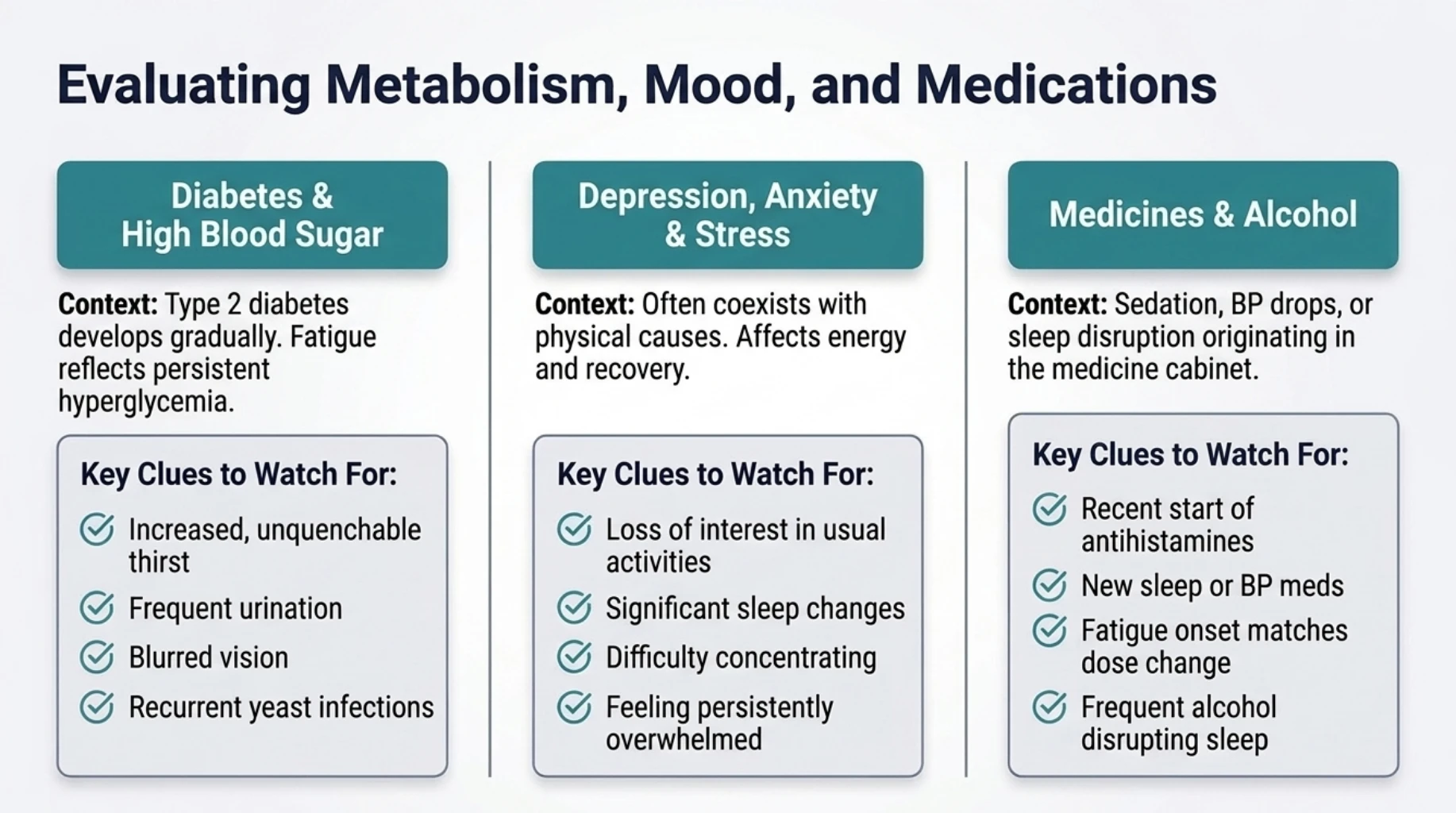
CDC lists fatigue among recognized symptoms of diabetes alongside:
- frequent urination
- increased thirst
- increased hunger
- blurred vision
- unexplained weight loss
- recurrent urinary or yeast infections
Type 2 diabetes can also develop gradually and may initially cause few or no obvious symptoms.
Fatigue alone cannot tell you whether blood glucose is high.
However, glucose testing becomes more relevant when tiredness occurs alongside increased thirst, frequent urination, blurred vision or metabolic risk factors.
HbA1c and plasma glucose are generally much more useful than trying to diagnose diabetes from symptoms.
Someone who already has diabetes should also consider whether fatigue could reflect:
- persistent hyperglycemia
- episodes of hypoglycemia
- dehydration
- kidney disease
- medication effects
- poor sleep
- another unrelated medical condition
In other words, diabetes may be part of the explanation without necessarily being the only explanation.
This is particularly important when fatigue is new despite glucose readings that have not changed substantially.
Cause 5: Depression, Anxiety or Persistent Stress
Fatigue is not always caused by a blood-test abnormality.
Depression can produce genuine physical symptoms, including low energy, slowed thinking, disturbed sleep, appetite changes and difficulty concentrating. The National Institute of Mental Health includes fatigue or lack of energy among common symptoms of depression.
Anxiety and persistent stress can also affect:
- sleep quality
- concentration
- appetite
- muscle tension
- physical activity
- recovery from daily demands
This does not mean that persistent fatigue should automatically be labelled psychological.
A person can have depression and iron deficiency at the same time. Someone experiencing significant stress may also have hypothyroidism, diabetes or sleep apnea.
That is why primary-care assessment should consider mood disorders alongside physical causes rather than treating them as competing explanations. AAFP guidance specifically recommends screening for mood, sleep and substance-use disorders as part of fatigue evaluation.
Useful questions include:
- Have you lost interest in activities you usually enjoy?
- Has your sleep changed?
- Are you struggling to concentrate?
- Do you feel persistently low, anxious or overwhelmed?
- Has your appetite changed?
- Is fatigue preventing you from functioning normally?
Persistent low mood, loss of interest and reduced function deserve medical attention.
Thoughts of self-harm or suicide require urgent mental-health assessment rather than waiting for a routine fatigue appointment.
Cause 6: Medicines, Alcohol or Other Substances
Sometimes the cause of fatigue is sitting in the medicine cabinet.
A medication review is an important part of evaluating persistent tiredness because medicines can contribute through sedation, reduced blood pressure, sleep disruption or other effects.
Examples can include some:
- antihistamines
- sleep medicines
- sedative or anti-anxiety medicines
- opioid pain medicines
- psychiatric medicines
- blood-pressure medicines
- anticonvulsants
The effect depends on the specific drug, dose, timing and individual response.
Alcohol can also worsen fatigue even when it seems to help with falling asleep. Sleep after alcohol may be less restorative, and larger amounts can contribute to dehydration, mood changes and daytime impairment.
AAFP guidance recommends specifically checking for adverse medication effects and substance use during the assessment of fatigue.
If fatigue began after a new medicine or a dose increase, mention the timing.
Do not stop important prescription medicines simply because fatigue appears on a side-effect list.
Instead, bring:
- the prescription
- medicine strips or photographs
- over-the-counter products
- supplements
- approximate dose timing
Sometimes changing the timing or selecting an appropriate alternative may help, but those decisions depend on why the medicine was prescribed.
Cause 7: Post-Viral Fatigue, Long COVID or ME/CFS
Some people develop prolonged fatigue after an infection.
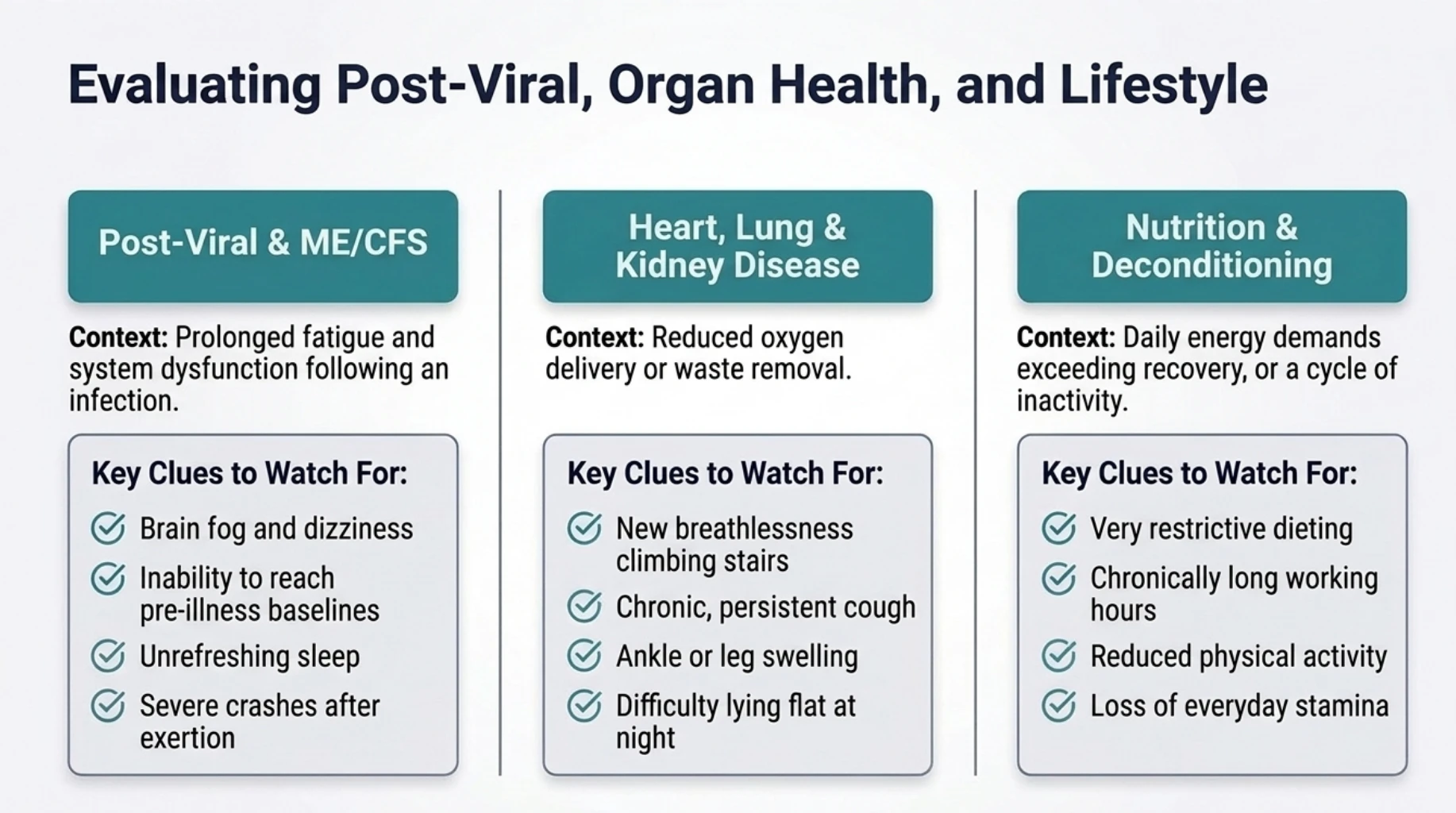
Long COVID is one example. CDC guidance updated in 2026 lists fatigue that interferes with daily life, difficulty thinking, sleep problems, dizziness and symptoms that worsen following physical or mental effort among commonly reported Long COVID symptoms.
A previous infection can therefore be an important part of the timeline.
Ask:
“Was I functioning normally before this illness?”
and
“What happens when I try to push through the fatigue?”
Those questions become particularly important when considering myalgia encephalomyelitis/chronic fatigue syndrome (ME/CFS).
ME/CFS is not simply another name for being tired for a long time.
Current CDC diagnostic guidance describes a characteristic combination that includes a substantial reduction in previous activity lasting more than six months, profound fatigue, unrefreshing sleep and post-exertional malaise, together with cognitive impairment or orthostatic intolerance.
Most people with prolonged fatigue do not have ME/CFS, so the diagnosis should not be made from one symptom.
Post-Exertional Malaise Is Different From Ordinary Tiredness
Post-exertional malaise, often shortened to PEM, means symptoms become significantly worse after physical or mental activity that would previously have been tolerated.
The worsening may be delayed.
CDC guidance notes that symptoms commonly worsen 12–48 hours after activity and may last for days or even weeks.
Someone may describe:
“I managed the family function on Sunday, but I could barely function on Monday and Tuesday.”
That pattern is different from ordinary tiredness after exercise.
This distinction also matters for advice.
People with uncomplicated physical deconditioning often benefit from progressively increasing activity. By contrast, repeatedly pushing beyond limits can worsen PEM in ME/CFS. CDC recommends activity management or pacing to help affected patients remain within their individual energy limits.
Persistent post-viral fatigue therefore deserves a history that includes what happens after exertion, not merely whether exercise feels difficult during the activity.
Cause 8: Heart, Lung or Kidney Disease
Fatigue can sometimes reflect a chronic problem affecting oxygen delivery, circulation or the body’s ability to remove waste and excess fluid.
Heart Conditions
Heart failure can cause:
- fatigue
- reduced exercise tolerance
- breathlessness
- difficulty lying flat
- ankle or leg swelling
- weight gain from fluid retention
NHLBI notes that some people first notice breathlessness during ordinary activities such as climbing stairs, while fatigue can become prominent as heart failure progresses.
Persistent fatigue with new breathlessness or swelling should therefore not automatically be attributed to poor fitness.
Lung Disease
Chronic lung diseases can also reduce exercise capacity.
For example, COPD can produce breathlessness with activity, chronic cough, wheezing, chest tightness and significant fatigue.
A smoking history, persistent cough or increasing breathlessness may alter the direction of the evaluation.
Kidney Disease
Early chronic kidney disease often causes no symptoms.
When kidney disease becomes more advanced, possible symptoms include fatigue, poor concentration, appetite changes, nausea, swelling and shortness of breath.
Kidney disease may also contribute to anemia, which can further worsen tiredness and exercise tolerance.
These conditions are not the most likely explanation for every tired adult, but associated symptoms can make them important to investigate.
Cause 9: Lifestyle, Nutrition or Physical Deconditioning
Not all persistent fatigue comes from a specific disease.
Sometimes daily energy demands have gradually exceeded recovery.
Potential contributors include:
- chronically inadequate sleep
- highly irregular sleep timing
- very restrictive dieting
- inadequate calorie or protein intake
- prolonged sedentary behaviour
- recent reduction in activity
- excessive exercise without recovery
- long working hours
- frequent alcohol use
AAFP guidance recommends assessing sleep, daily activity and nutritional status before assuming that unexplained fatigue requires extensive medical investigation. It also cautions against excessively restrictive or fad dietary patterns.
Physical deconditioning can create a cycle.
Activity falls because you feel tired. Fitness then declines, which makes ordinary activity feel more demanding. That can encourage even less movement.
However, this explanation should be used carefully.
Someone experiencing marked post-exertional malaise, significant breathlessness, anemia or another underlying illness should not simply be told to exercise harder.
The pattern determines what is appropriate.
Nutrition also deserves context. A person following a severe calorie-restricted diet may be exhausted even with normal blood tests, while someone with a balanced diet does not automatically need a collection of vitamin supplements because of fatigue.
What a Doctor for Persistent Fatigue in Dwarka May Check
When you see a doctor for persistent fatigue in Dwarka, the evaluation usually starts with the story rather than the laboratory form.
Useful questions include:
- When did the fatigue begin?
- Was the onset sudden or gradual?
- Is it constant or intermittent?
- Do you wake refreshed?
- Do you snore?
- Does activity make you feel better or substantially worse afterwards?
- Are you becoming breathless?
- Have you lost or gained weight?
- Are periods unusually heavy?
- Have you had a recent infection?
- Are you unusually thirsty or urinating frequently?
- Did symptoms begin after a medicine change?
- Has mood or stress changed?
The examination may then focus on findings suggested by the history, such as blood pressure, pulse, pallor, thyroid findings, heart and lung examination, swelling or neurological abnormalities.
This targeted approach matters because fatigue has a very broad differential diagnosis.
AAFP guidance recommends a comprehensive history and physical examination, medication review, screening for sleep and mood problems, and laboratory investigations selected according to the likely causes.
Which Blood Tests May Be Useful for Persistent Fatigue?
There is no universal blood-test list that every tired person needs.
Depending on the history and examination, investigations may include:
Complete blood count
Useful for identifying anemia and some other hematological abnormalities.
Ferritin or iron studies
May be appropriate when iron deficiency is possible, especially with heavy periods, blood loss or dietary risk.
Vitamin B12 or folate
More useful when the history, blood count or neurological symptoms suggest deficiency.
TSH, sometimes with free T4
Used when thyroid dysfunction is clinically relevant.
HbA1c or plasma glucose
Useful when diabetes or abnormal glucose is possible.
Kidney function and electrolytes
May help identify kidney disease, dehydration or electrolyte disturbance.
Liver tests
Can be considered when liver disease or another metabolic problem is suspected.
Other investigations may be selected according to the context—for example pregnancy testing, inflammatory markers or testing for particular infections.
The correct approach is targeted testing, not ordering every available marker.
Why a Large “Fatigue Test Package” Is Not Always the Answer
Fatigue can lead people to purchase increasingly broad laboratory packages hoping that one abnormal result will finally explain everything.
More testing is not always more informative.
The 2023 AAFP review notes that laboratory testing without specific clinical indications has a relatively low yield and changed treatment in only about 5% of patients in cited primary-care evidence.
This does not mean blood tests are unnecessary.
It means the tests should answer a clinical question.
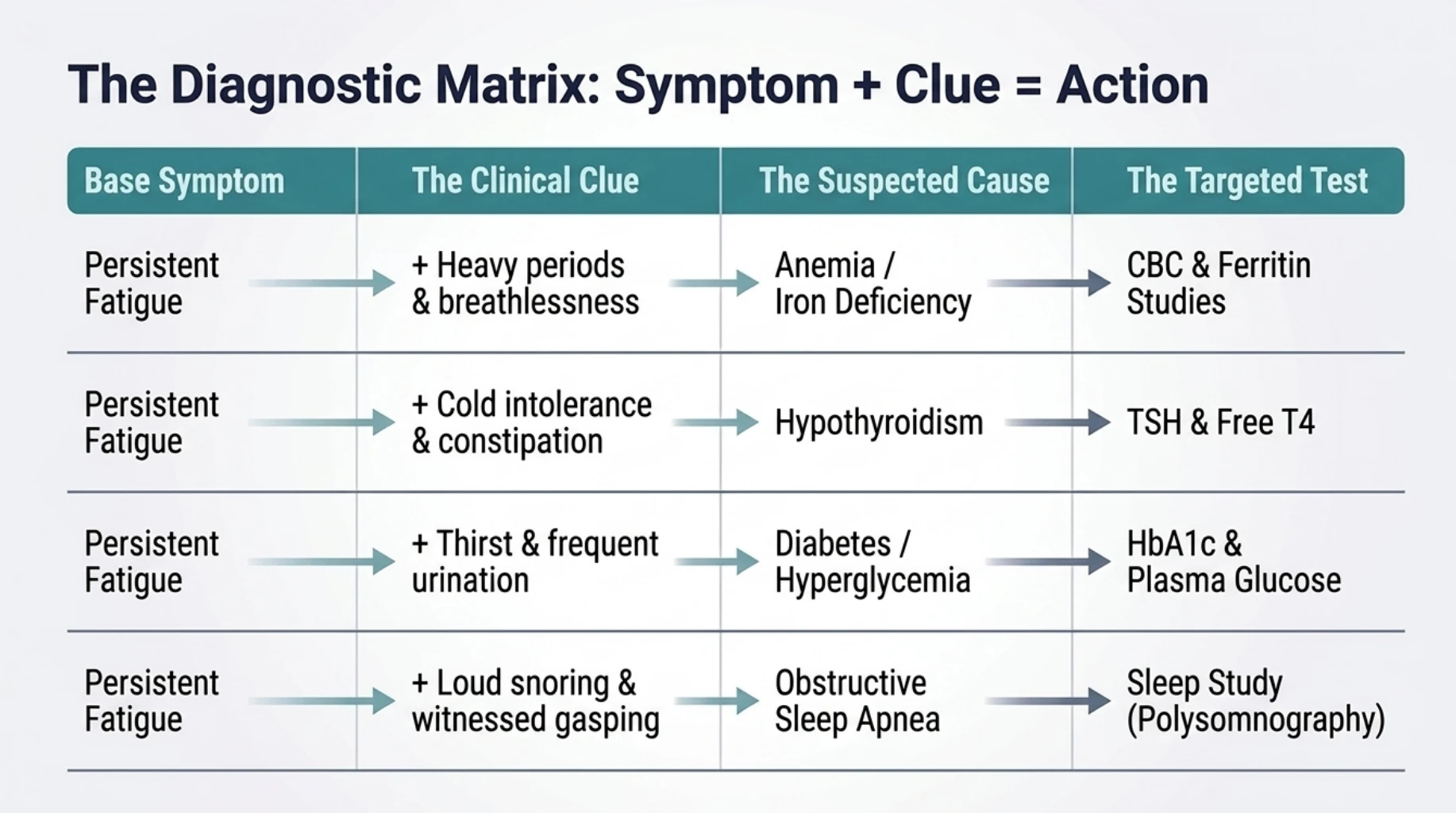
For example:
Heavy periods + breathlessness + fatigue
→ CBC and iron assessment become particularly relevant.
Cold intolerance + constipation + fatigue
→ thyroid testing becomes more relevant.
Thirst + frequent urination + fatigue
→ glucose assessment becomes more relevant.
Snoring + witnessed breathing pauses + daytime sleepiness
→ sleep-apnea assessment may matter more than adding ten more blood tests.
Similarly, routine cortisol, extensive autoimmune panels or repeated vitamin testing are not automatically required for nonspecific tiredness.
Abnormal results discovered through indiscriminate testing can sometimes create additional investigations without identifying the true cause of symptoms.
What Information Should You Bring to Your Appointment?
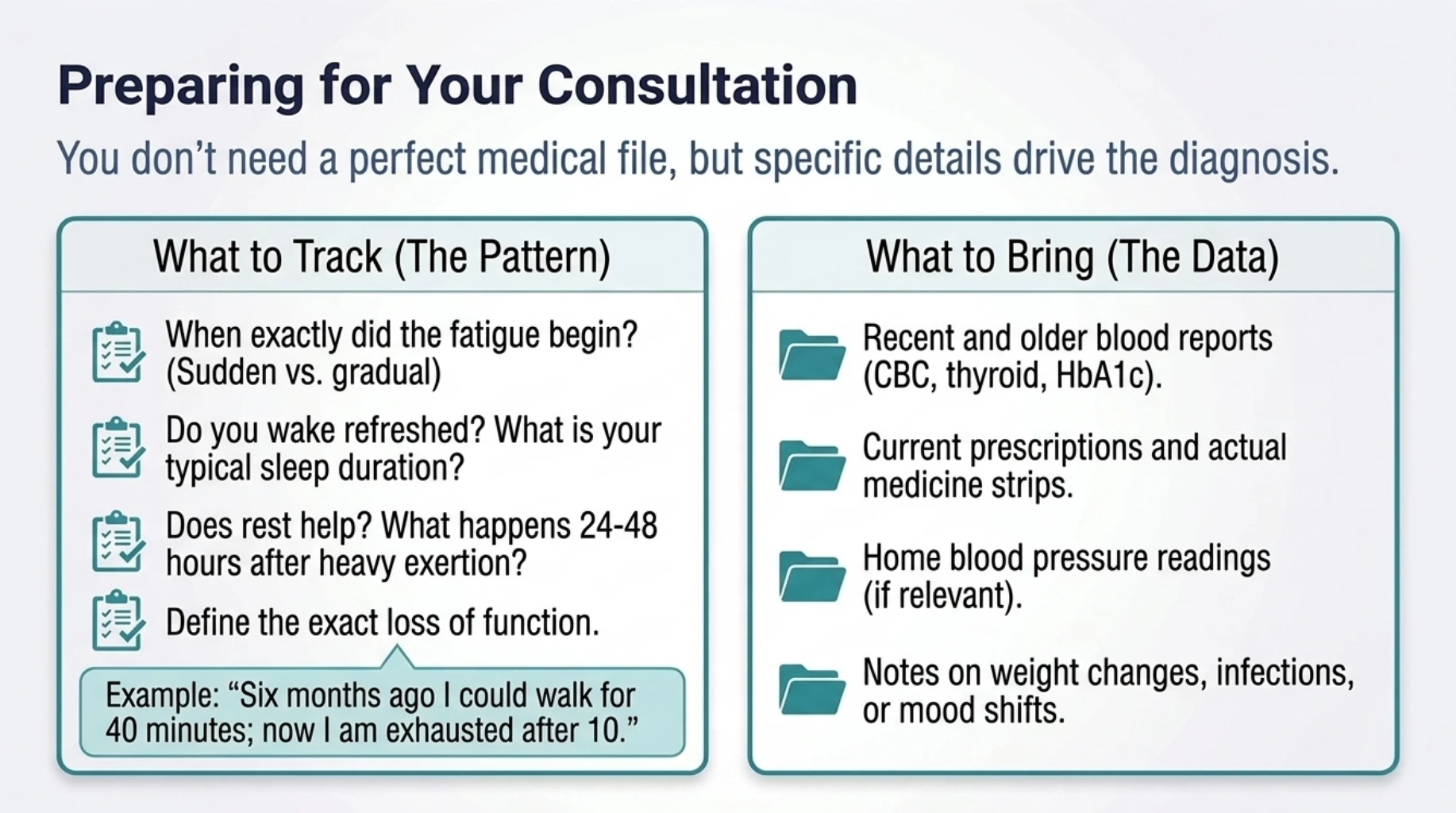
You do not need to arrive with a perfect medical file.
Bring whatever information is already available that helps establish the timeline.
Useful items include:
- recent blood reports
- older CBC, ferritin or thyroid results
- glucose or HbA1c reports
- kidney and liver reports
- current prescriptions
- actual medicine strips when names are unclear
- home blood-pressure readings if relevant
- discharge summaries from recent illness
- information about menstrual blood loss where relevant
- previous sleep-study reports
It also helps to write down:
- when the fatigue began
- typical sleep duration
- snoring or witnessed breathing pauses
- whether rest helps
- what happens after exertion
- recent infections
- weight changes
- associated dizziness or breathlessness
- mood or stress changes
Try to identify what you can no longer do comfortably.
For example:
“Six months ago I could walk for 40 minutes; now I become exhausted after 10 minutes.”
That gives considerably more clinical information than simply saying:
“I feel tired all the time.”
Persistent Fatigue Assessment at Diet Plus Minus in Dwarka
Persistent fatigue can often be evaluated initially in general medical care.
Dr. Pankaj Kumar can review:
- the pattern and duration of fatigue
- sleep and possible sleep-apnea symptoms
- anemia and nutritional-risk factors
- thyroid reports
- glucose and diabetes risk
- current medicines
- blood pressure
- recent infections
- post-viral symptoms
- weight and activity changes
- kidney or metabolic-health concerns
- whether targeted blood tests are appropriate
- whether specialist referral is required
When the clinical pattern suggests significant heart or lung disease, a complex sleep disorder, ME/CFS, another neurological condition or another problem requiring specialized evaluation, appropriate referral can be considered.
Dr. Pankaj Kumar
MBBS, DNB Family Medicine, Sir Ganga Ram Hospital
General & Lifestyle Physician
Special interest in Diabetes
Diet Plus Minus
13A, Pocket-2, Sector-6, Doctors Lane
Dwarka, New Delhi – 110075
India
Book an Appointment with Dr. Pankaj Kumar
Frequently Asked Questions
Which Doctor Should I See for Persistent Fatigue?
A general or family physician is a reasonable starting point for persistent unexplained fatigue.
The initial assessment can look for common causes such as poor sleep, anemia, thyroid disease, diabetes, medication effects and mood disorders before deciding whether specialist evaluation is needed.
How Long Should Fatigue Last Before I See a Doctor?
There is no requirement to wait a specific number of months.
Arrange assessment sooner when fatigue persists, is getting worse, interferes with daily activities or is accompanied by other symptoms such as breathlessness, dizziness, weight loss, heavy bleeding or abnormal thirst.
Fatigue lasting six months or longer is considered chronic, but medical evaluation can be appropriate much earlier.
What Blood Tests Should I Get for Constant Tiredness?
There is no single standard “fatigue panel.”
Depending on your symptoms, tests may include a blood count, ferritin, vitamin B12, thyroid testing, glucose or HbA1c, kidney function and other targeted investigations.
History and examination should guide the choice rather than ordering every possible test.
Can Low Iron Cause Fatigue Even Before Severe Anemia?
Iron deficiency can be clinically relevant, particularly when there is heavy menstrual bleeding, dietary risk or other blood loss.
Whether symptoms are being caused by iron deficiency requires interpretation of the blood count, ferritin and clinical context rather than assuming that any low-normal result explains fatigue.
Can Vitamin B12 Deficiency Cause Fatigue?
Yes.
Vitamin B12 deficiency can contribute to anemia and fatigue. It may also cause neurological symptoms such as numbness, tingling, balance problems or cognitive changes.
Testing is most useful when the history or laboratory findings suggest increased risk.
Can Thyroid Problems Cause Constant Fatigue?
Yes, hypothyroidism can cause fatigue.
However, fatigue is extremely common and does not by itself diagnose thyroid disease. Symptoms such as cold intolerance, constipation, dry skin, menstrual changes and weight gain may increase suspicion.
Can Diabetes Make You Feel Tired All Day?
Yes.
Persistently high glucose can contribute to fatigue, particularly when it occurs with thirst, frequent urination, blurred vision or unexplained weight loss.
Fatigue in someone with diabetes can also have unrelated causes such as anemia, poor sleep, kidney disease or medication effects.
Can Sleep Apnea Cause Fatigue Even if I Sleep Eight Hours?
Yes.
Sleep apnea repeatedly disrupts sleep, so the number of hours spent in bed may not reflect sleep quality.
Loud snoring, witnessed breathing pauses, morning headaches and significant daytime sleepiness increase suspicion.
Can Depression Cause Physical Fatigue?
Yes.
Fatigue and reduced energy are recognized symptoms of depression and may occur alongside sleep disturbance, low mood, loss of interest and concentration difficulties.
Physical causes should still be considered according to the clinical picture.
Can Long COVID Cause Persistent Fatigue?
Yes.
CDC lists fatigue that interferes with daily life, brain fog and post-exertional malaise among commonly reported Long COVID symptoms.
Long COVID can involve multiple symptom patterns, so assessment should be individualized.
What Is Post-Exertional Malaise?
Post-exertional malaise is a worsening of symptoms after physical or mental activity that previously would have been tolerated.
In ME/CFS and some people with Long COVID, symptoms may worsen 12–48 hours later and last for days or longer.
It is different from normal tiredness after exercise.
Should I Exercise if I Have Persistent Fatigue?
It depends on the cause.
Gradual activity can benefit people whose fatigue is related to inactivity or physical deconditioning.
However, people with ME/CFS or significant post-exertional malaise may worsen when repeatedly pushed beyond their energy limits. CDC recommends pacing for ME/CFS-related PEM.
This is why the pattern should be understood before giving blanket advice to “exercise more.”
When Is Fatigue an Emergency?
Fatigue alone is rarely an emergency.
Seek urgent or emergency assessment when it occurs with severe breathlessness, persistent chest pain, fainting, major bleeding, confusion, rapidly worsening weakness or another significant acute deterioration.
Author Box
Dr. Pankaj Kumar
MBBS, DNB Family Medicine, Sir Ganga Ram Hospital
General & Lifestyle Physician
Special interest in Diabetes
Dr. Pankaj Kumar provides general medical and lifestyle-based care at Diet Plus Minus in Dwarka, New Delhi. His clinical approach includes assessment of persistent fatigue, sleep, anemia risk, thyroid concerns, diabetes and medication effects, with further investigation or specialist referral when appropriate.
Medical Disclaimer
This article provides general educational information and does not replace an individual medical consultation, examination, diagnosis or treatment plan.
Persistent fatigue has many possible causes. Do not begin iron, vitamin B12, thyroid hormone, steroid treatment or other prescription medicines solely on the basis of symptoms without appropriate assessment.
Seek urgent medical care for severe breathlessness, persistent chest pain, fainting, significant bleeding, confusion, rapidly worsening weakness or another acute deterioration.
References
- Latimer KM, Gunther A, Kopec M. Fatigue in Adults: Evaluation and Management. American Family Physician. 2023;108(1):58–69. Reviews differential diagnosis, medication assessment, sleep and mood screening, targeted laboratory evaluation and ME/CFS.
- Centers for Disease Control and Prevention. Long COVID Signs and Symptoms. Updated 2026. Lists fatigue, cognitive symptoms, orthostatic symptoms and post-exertional malaise among commonly reported Long COVID manifestations.
- Centers for Disease Control and Prevention. Long COVID Clinical Guidance. Updated March 2026. Provides clinical guidance on symptom-based evaluation and management of post-exertional malaise.
- Centers for Disease Control and Prevention. Symptoms of ME/CFS and IOM 2015 Diagnostic Criteria. Current CDC guidance covering post-exertional malaise, unrefreshing sleep, functional impairment, cognitive difficulties and orthostatic intolerance.
- National Institute of Mental Health. Depression. Current patient and clinician information describing fatigue, reduced energy, sleep changes, impaired concentration and other symptoms of depression.
- National Heart, Lung, and Blood Institute. Anemia Symptoms. NIH guidance describing tiredness, weakness, breathlessness, headache, dizziness and fainting among symptoms of anemia.
- National Heart, Lung, and Blood Institute. Heart Failure Symptoms. NIH guidance describing fatigue, breathlessness, reduced activity tolerance and fluid-related swelling.
- National Institute of Diabetes and Digestive and Kidney Diseases. What Is Chronic Kidney Disease in Adults? Current guidance explaining that early CKD can be asymptomatic while advanced disease may cause fatigue, poor concentration, swelling and breathlessness.
- National Institute of Diabetes and Digestive and Kidney Diseases. Hypothyroidism (Underactive Thyroid). Current guidance describing fatigue, weight gain and other symptoms while emphasising that these common symptoms do not alone establish thyroid disease.

Written by Dr. Pankaj Kumar
General & Lifestyle Physician in Dwarka Sector 6, New Delhi · MBBS, DNB (Family Medicine), DNHE · 16 years of experience.
About the doctor →Book a consultation → Beyond Blood Sugar
 The 90-Day Prediabetes Turnaround
 The Indian Diabetes Diet Reset
 Eat to Beat Gout
 Why Is My Hair Falling?
 The 30-Day Inflammation Reset