An ultrasound report saying fatty liver grade 1 can sound more alarming than it often is.
In most reports, grade 1 means that the radiologist has seen mild accumulation of fat in the liver. It does not automatically mean liver failure, cirrhosis or even significant liver scarring.
But it should not simply be ignored either.
Current liver guidelines recommend that an incidental finding of liver fat should prompt two questions:
Why is fat accumulating in the liver?
and
Is there any meaningful liver fibrosis or metabolic risk that also needs attention?
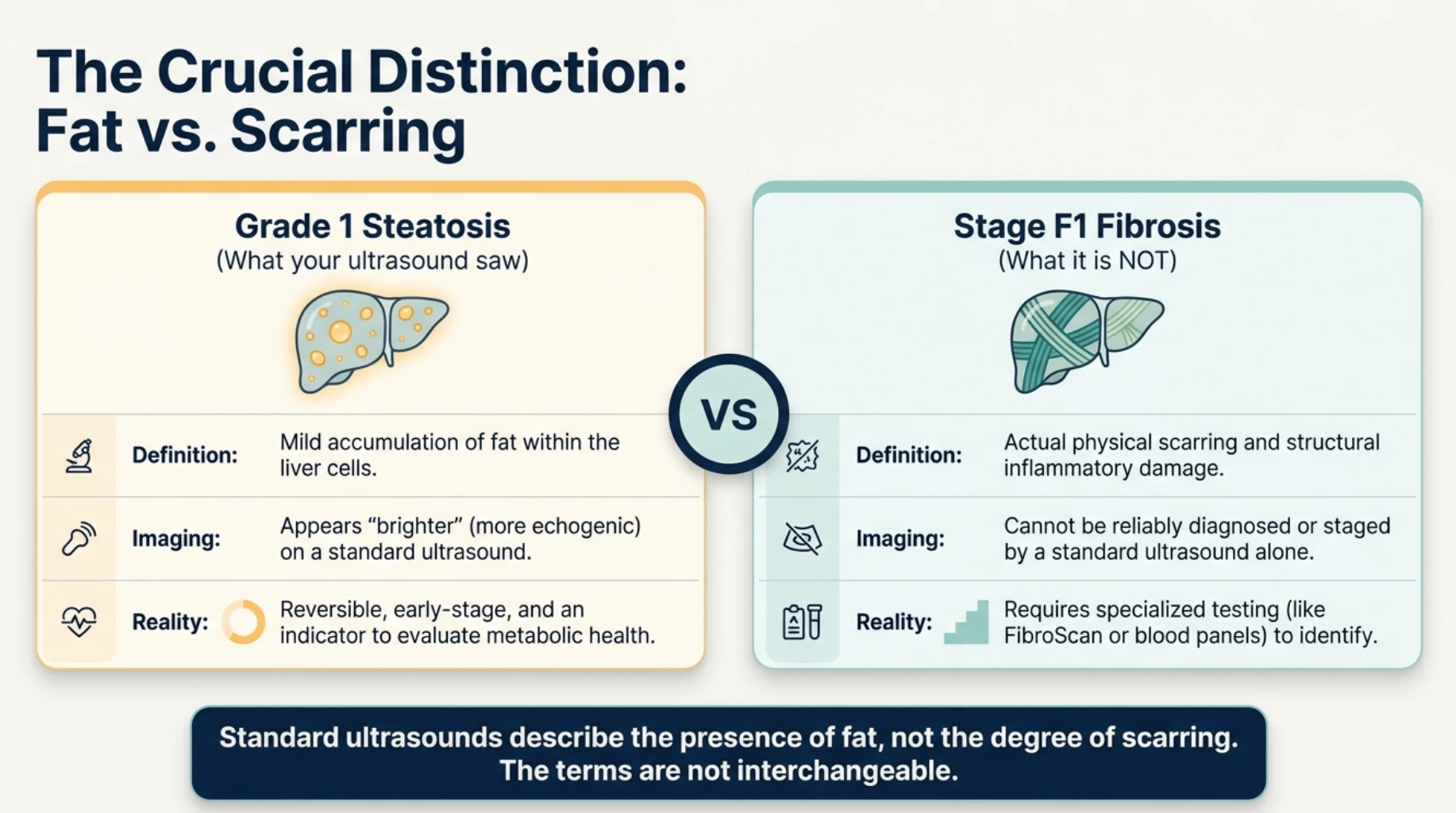
This distinction is important because an ultrasound describes liver fat only approximately. It cannot reliably tell you whether inflammatory liver injury is present, and “grade 1” on ultrasound is not the same thing as fibrosis stage F1.
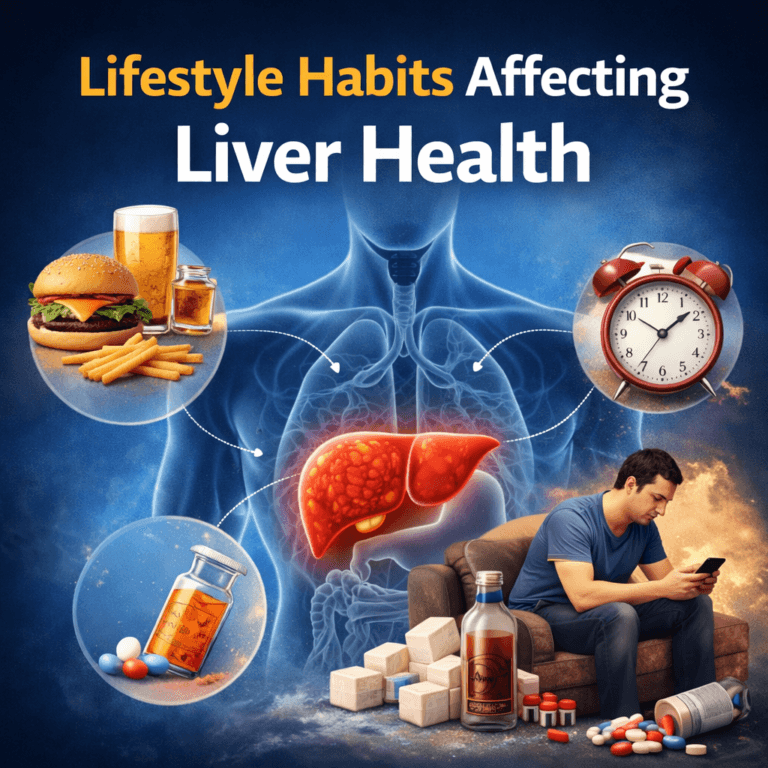
For many adults, the finding is connected with metabolic factors such as abdominal weight gain, insulin resistance, prediabetes, type 2 diabetes, high triglycerides or high blood pressure.
That means the next step is usually not a “liver detox.”
It is a structured assessment of the liver and the metabolic health surrounding it.
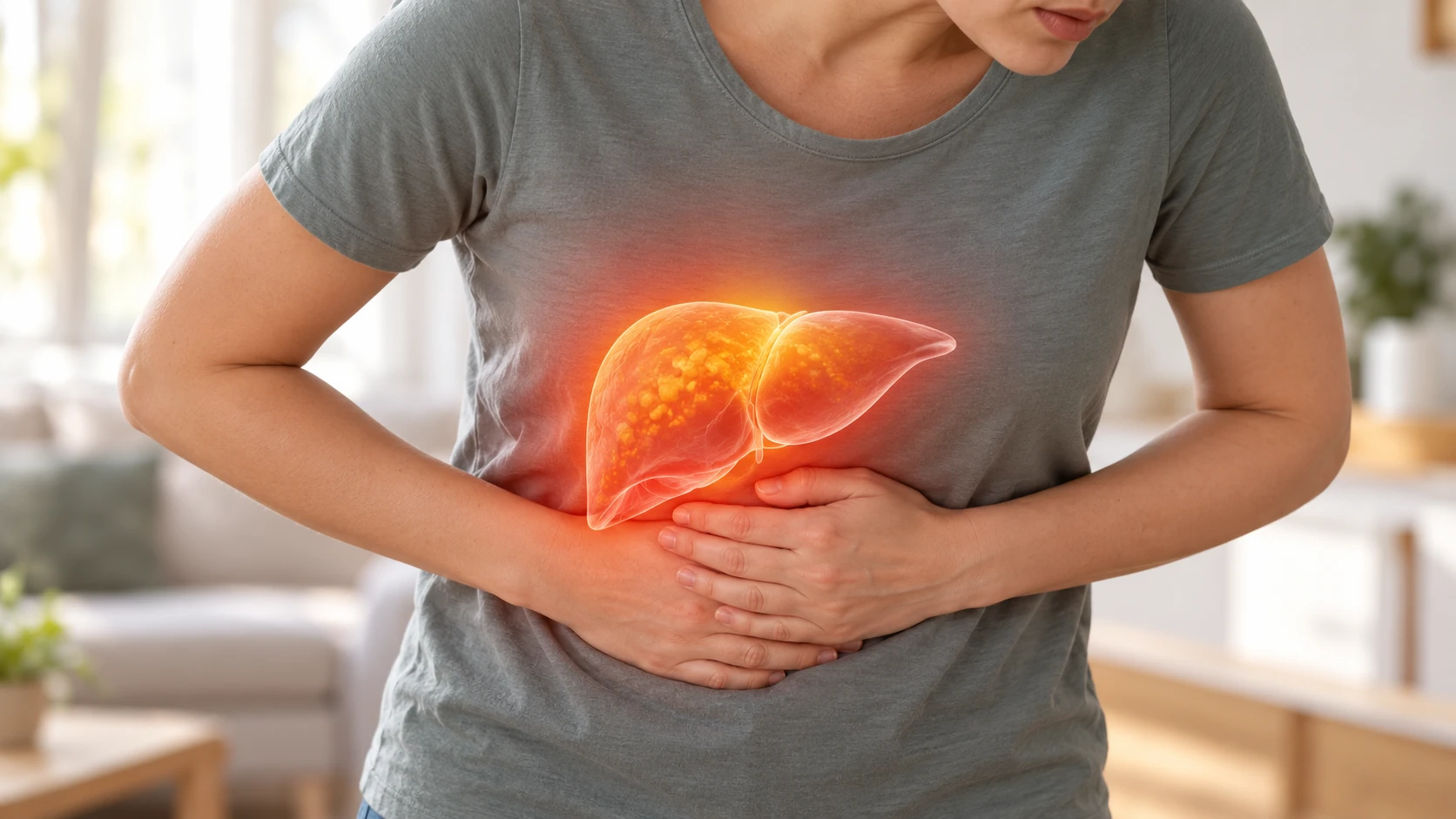
What Does Grade 1 Fatty Liver Mean?
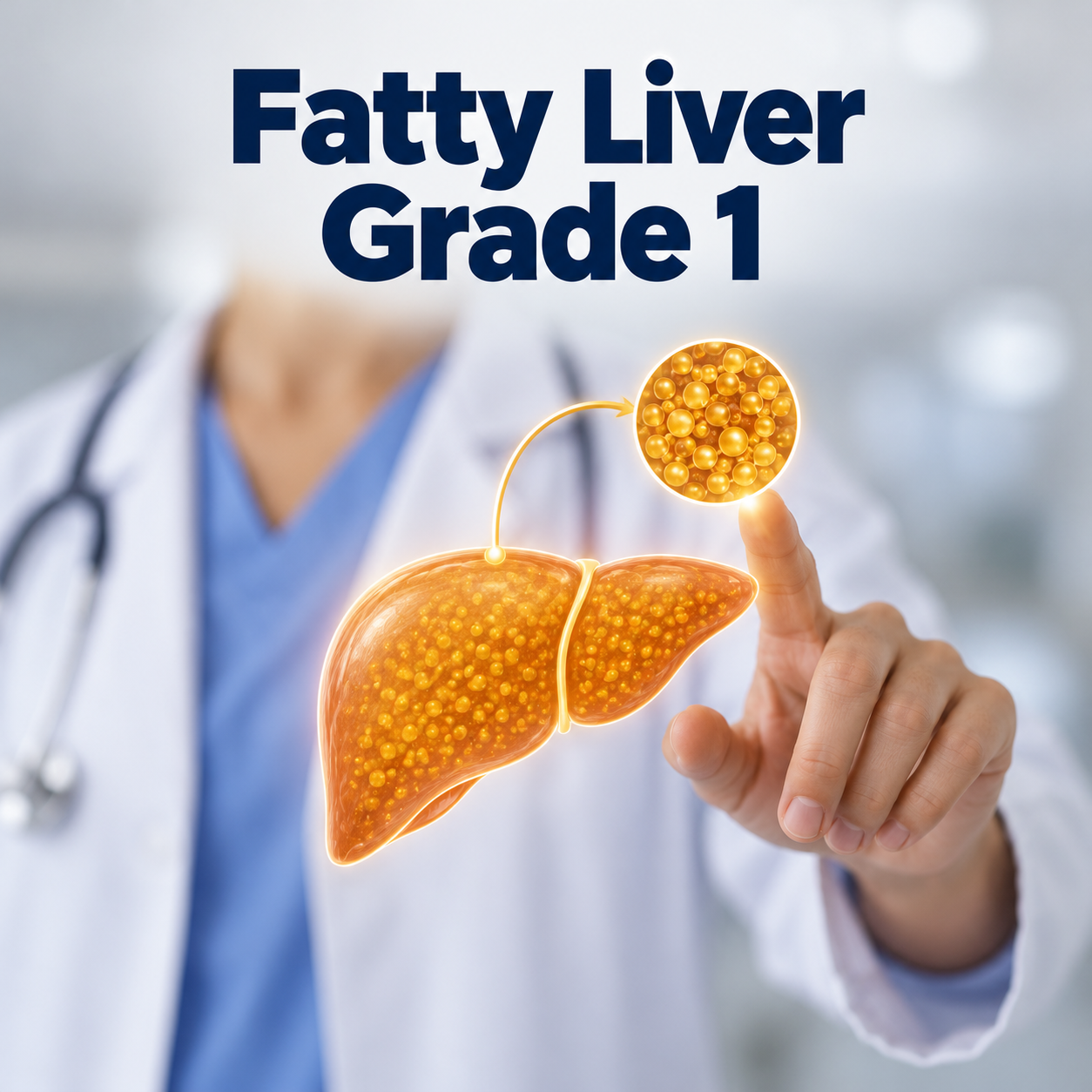
Grade 1 fatty liver usually means mild hepatic steatosis—fat is visible within the liver on ultrasound, but the imaging changes are relatively mild.
It does not tell you:
- whether inflammation is present
- whether significant fibrosis is present
- whether the liver will progress to cirrhosis
- what caused the liver fat
Standard ultrasound can describe steatosis semi quantitatively as mild, moderate or severe, but it has limited sensitivity for mild fat and is not a reliable fibrosis-staging test.
So if your report says:
“Grade I fatty changes in liver”
the practical response is not:
“My liver is permanently damaged.”
A more accurate interpretation is:
“Mild liver fat has been detected. Now I need to understand the cause and whether I have any risk of fibrosis.”
What Does Fatty Liver Grade 1 Mean on an Ultrasound?
Ultrasound detects fatty liver by looking at changes in how the liver reflects sound waves.
When fat accumulates, the liver may appear brighter—or more echogenic—than expected.
Radiologists may describe the appearance as:
- mild or grade 1
- moderate or grade 2
- severe or grade 3
depending on the reporting system used.
But this is a semiquantitative visual assessment, not a precise measurement of how many grams of fat are in the liver.
AASLD guidance notes that conventional ultrasound has relatively low sensitivity when steatosis is mild and that ultrasound appearances of steatosis can overlap with those seen in advanced fibrosis.
More specialized techniques can provide different information.
For example:
FibroScan or vibration-controlled transient elastography can estimate liver stiffness and also provide a controlled attenuation parameter related to steatosis.
MRI-PDFF can quantify liver fat more precisely and is considered the non-invasive reference method for measuring liver lipid content, although most people with uncomplicated mild fatty liver do not automatically need an MRI.
Grade 1 Fatty Liver Is Not the Same as F1 Fibrosis
This distinction is one of the most important things to understand.
Grade 1 fatty liver usually refers to the amount or appearance of fat on imaging.
F1 fibrosis refers to an early stage of actual liver scarring, usually defined histologically or estimated using appropriate fibrosis assessment.
They are not interchangeable.
Someone can have visible fatty liver with little or no fibrosis.
Another person can have clinically important fibrosis even when liver enzymes are not dramatically abnormal.
The 2024 EASL-EASD-EASO guideline emphasizes that the stage of fibrosis, rather than simply the presence of steatosis, is strongly related to liver-related outcomes.
That is why a report saying “grade 1 fatty liver” should not create either false reassurance or unnecessary panic.
The key question is whether there are reasons to look for fibrosis.
Is Grade 1 Fatty Liver Dangerous?
Grade 1 fatty liver is generally an early and relatively mild imaging finding.
Many people have no symptoms and discover it incidentally during an ultrasound performed for another reason.
NIDDK notes that metabolic fatty liver disease is often a silent condition, with few or no symptoms. When symptoms occur, fatigue or discomfort in the right upper abdomen may occur, but neither symptom is specific.
The long-term risk depends less on the word grade 1 and more on factors such as:
- whether fibrosis is present
- type 2 diabetes
- obesity or abdominal obesity
- persistently abnormal liver enzymes
- triglycerides and other metabolic risk factors
- alcohol intake
- other causes of liver disease
EASL specifically recommends assessment for advanced fibrosis when hepatic steatosis is found in people with cardiometabolic risk factors, abnormal liver enzymes or radiological evidence of fatty liver.
This means two people with the same ultrasound wording can have very different clinical risk.
A 32-year-old with mild liver fat, normal metabolic markers and low fibrosis risk is different from a 55-year-old with the same ultrasound report plus type 2 diabetes, central obesity, high triglycerides and persistently elevated liver enzymes.
The ultrasound grade alone cannot make that distinction.
Why Does Mild Fatty Liver Develop?
Fat can accumulate in the liver for several reasons.
The most common modern pattern is related to metabolic dysfunction.
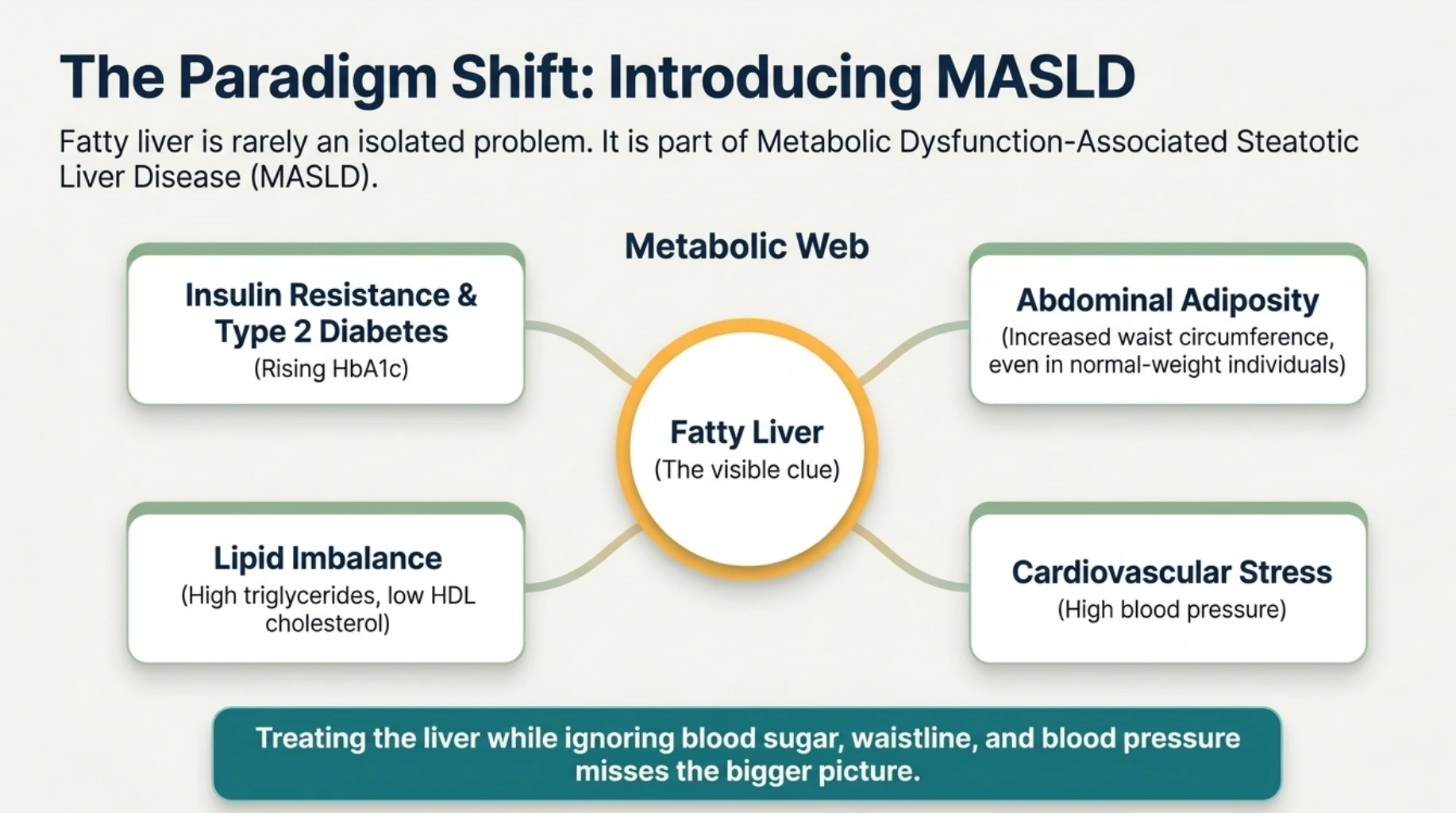
The newer term metabolic dysfunction-associated steatotic liver disease, or MASLD, has replaced the older term NAFLD in current international liver and diabetes guidance.
MASLD refers to hepatic steatosis occurring in someone with at least one relevant cardiometabolic risk factor, when the overall clinical context fits the diagnosis.
Common associated factors include:
- overweight or obesity
- increased waist circumference
- insulin resistance
- prediabetes
- type 2 diabetes
- high triglycerides
- low HDL cholesterol
- high blood pressure
EASL uses lower BMI thresholds for cardiometabolic risk in Asian populations, recognizing that metabolic risk can occur at lower BMI in people of Asian ethnicity.
This is particularly relevant in India.
Someone may not appear to have severe obesity yet can still have:
- abdominal fat
- insulin resistance
- rising HbA1c
- high triglycerides
- fatty liver
Fatty liver can therefore be a visible clue that metabolic health deserves closer attention.
It can also have other causes, which is why the diagnosis should not be made from weight alone.
Step 1: Review Why Fat Has Accumulated in the Liver
The first step after an ultrasound finding should be to understand the likely cause.
A useful review includes:
- body-weight and waist trend
- glucose or HbA1c
- cholesterol and triglycerides
- blood pressure
- alcohol intake
- current medicines
- previous liver reports
- medical history
Alcohol deserves a specific history.
Current MASLD terminology does not mean alcohol has become irrelevant. The amount and pattern of alcohol consumption should be reviewed whenever steatotic liver disease is identified because alcohol-related liver disease and metabolic fatty liver can overlap.
Medicines can matter as well.
Some drugs can contribute to hepatic steatosis or liver injury, so current prescriptions, supplements and non-prescription products should be reviewed rather than automatically assuming every fatty liver is metabolic.
The EASL guideline specifically recommends considering alternative causes such as drug-induced and less common liver diseases according to the clinical context.
This does not mean every person with grade 1 fatty liver needs testing for every rare liver disease.
The evaluation should be targeted.
When Fatty Liver Is Part of MASLD
MASLD becomes particularly likely when imaging evidence of liver fat occurs alongside cardiometabolic risk factors.
For example:
fatty liver + elevated waist circumference + prediabetes
or:
fatty liver + type 2 diabetes
or:
fatty liver + hypertension + high triglycerides
The newer terminology matters because it reflects how closely liver fat is connected with metabolic health.
This also means fatty liver should not be treated as an isolated organ problem.
Someone who focuses exclusively on reducing ALT while ignoring diabetes, blood pressure and cardiovascular risk may miss the bigger health issue.
Step 2: Review Liver Enzymes and Relevant Blood Tests
After fatty liver is found, blood tests can help establish context.
Depending on the individual, this may include:
- ALT
- AST
- platelet count
- bilirubin
- alkaline phosphatase
- albumin
- fasting glucose or HbA1c
- lipid profile
Other investigations may be considered when the history or liver tests suggest another cause.
One important misconception is:
“My ALT and AST are normal, so fatty liver cannot be serious.”
Normal liver enzymes do not reliably exclude important fibrosis.
The 2026 ADA Standards specifically recommend fibrosis-risk assessment in adults with type 2 diabetes or selected people with prediabetes and metabolic risk even when liver enzymes are normal.
EASL likewise recommends non-invasive fibrosis tools because combinations of blood tests and elastography are more useful for fibrosis assessment than liver enzymes alone.
The opposite mistake is also common:
“ALT is mildly high, therefore fatty liver must be the cause.”
Elevated liver enzymes can have multiple explanations.
If enzymes remain persistently elevated, other liver conditions may need to be considered rather than automatically attributing every abnormal result to liver fat.
Step 3: Estimate Fibrosis Risk, Not Just the Fatty-Liver Grade
Once fatty liver has been identified, the most clinically important question is often:
Is there significant scarring?
International guidelines increasingly recommend a stepwise approach.
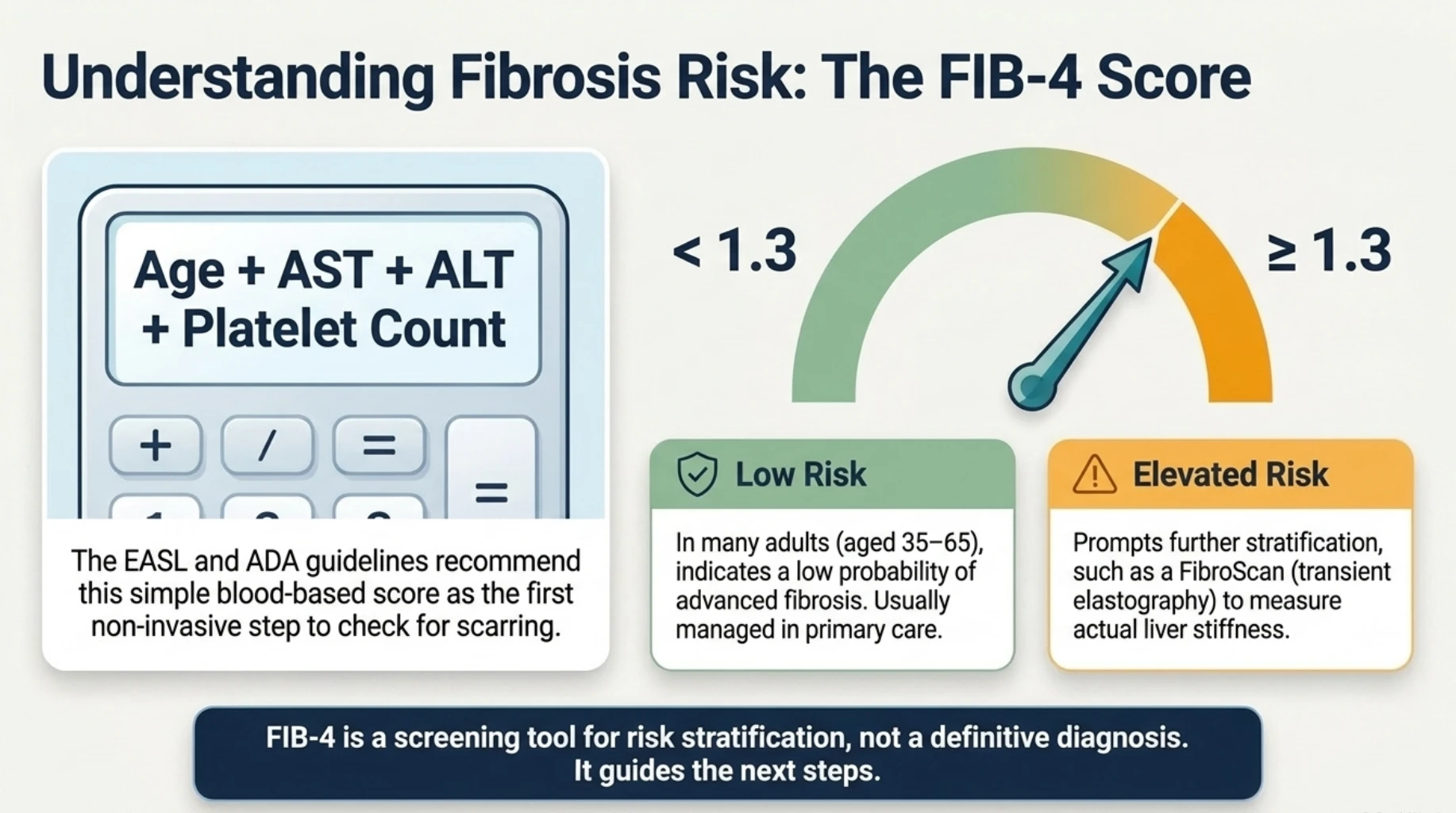
The first stage can use a simple blood-based score such as FIB-4.
FIB-4 is calculated using:
- age
- AST
- ALT
- platelet count
EASL recommends FIB-4 as an initial non-invasive fibrosis assessment, followed by liver elastography when fibrosis remains possible or the patient belongs to a higher-risk group.
The 2026 ADA Standards provide similar guidance for adults with type 2 diabetes or relevant prediabetes risk.
This approach is important because it separates two different questions:
How much fat can be seen?
from
Is there clinically meaningful fibrosis?
When FIB-4 or FibroScan May Be Useful
In many adults, a FIB-4 below approximately 1.3 indicates relatively low risk of advanced fibrosis.
A value at or above approximately 1.3 often prompts further risk stratification with transient elastography or another validated fibrosis test rather than being treated as proof of fibrosis.
Interpretation has important limitations.
FIB-4:
- is less useful in adults younger than about 35
- requires different interpretation in older adults
- is a screening/risk-stratification tool, not a definitive fibrosis diagnosis
If further assessment is appropriate, FibroScan can measure liver stiffness.
The 2026 ADA Standards note that liver stiffness below about 8 kPa has a good negative predictive value for excluding advanced fibrosis in the diabetes risk pathway, while higher values may justify specialist assessment depending on the overall clinical context.
Not everyone with grade 1 fatty liver automatically needs FibroScan.
It becomes more relevant when there is:
- type 2 diabetes
- obesity with additional metabolic risk
- abnormal FIB-4
- persistently elevated liver enzymes
- another reason to suspect fibrosis
The purpose is risk stratification—not accumulating investigations for reassurance.
Step 4: Check Glucose, Weight, Waist, Blood Pressure and Cholesterol
Finding fatty liver should trigger a broader metabolic-health review.
Do not stop at:
“My liver enzymes are okay.”
Important measurements can include:
- body weight
- waist circumference
- blood pressure
- HbA1c or fasting glucose
- triglycerides
- HDL and LDL cholesterol
MASLD is closely associated with cardiometabolic disease. EASL specifically defines relevant metabolic risk using factors such as excess weight or waist circumference, dysglycemia, raised triglycerides, low HDL and elevated blood pressure.
For someone with fatty liver, this may reveal a broader pattern.
For example:
Ultrasound: grade 1 fatty liver
HbA1c: 6.1%
Triglycerides: elevated
Waist circumference: increasing
Blood pressure: 138/86 mmHg
The liver finding is then not an isolated radiology observation.
It may be one visible component of a larger metabolic pattern.
Type 2 diabetes deserves particular attention because it substantially increases the risk of clinically important MASH and fibrosis. The 2026 ADA Standards therefore recommend systematic FIB-4-based fibrosis-risk assessment in adults with type 2 diabetes, even when aminotransferase levels are normal.
This is also why the next steps for fatty liver often involve far more than repeating the ultrasound.
The real treatment targets may include:
liver fat + abdominal obesity + glucose + triglycerides + blood pressure + physical fitness.
Step 5: Improve the Eating Pattern Rather Than Searching for a Liver Detox
There is no special juice, tea or detox programme required to “clean” fat out of the liver.
The more useful approach is to improve the overall eating pattern.
The 2024 EASL-EASD-EASO MASLD guideline recommends a diet similar to a Mediterranean eating pattern, together with reducing ultra-processed foods rich in sugar and saturated fat and avoiding sugar-sweetened beverages.
In practical Indian terms, that can mean eating more:
- vegetables
- dal and other pulses
- chana and rajma
- whole or minimally processed grains
- whole fruit rather than juice
- nuts and seeds in appropriate portions
- curd or other suitable dairy
- fish where part of the diet
- other appropriate protein sources
while reducing frequent intake of:
- sugary soft drinks
- packaged fruit drinks
- sweets
- bakery products
- refined snacks
- heavily fried foods
- large portions of refined cereal foods
- foods high in saturated fat
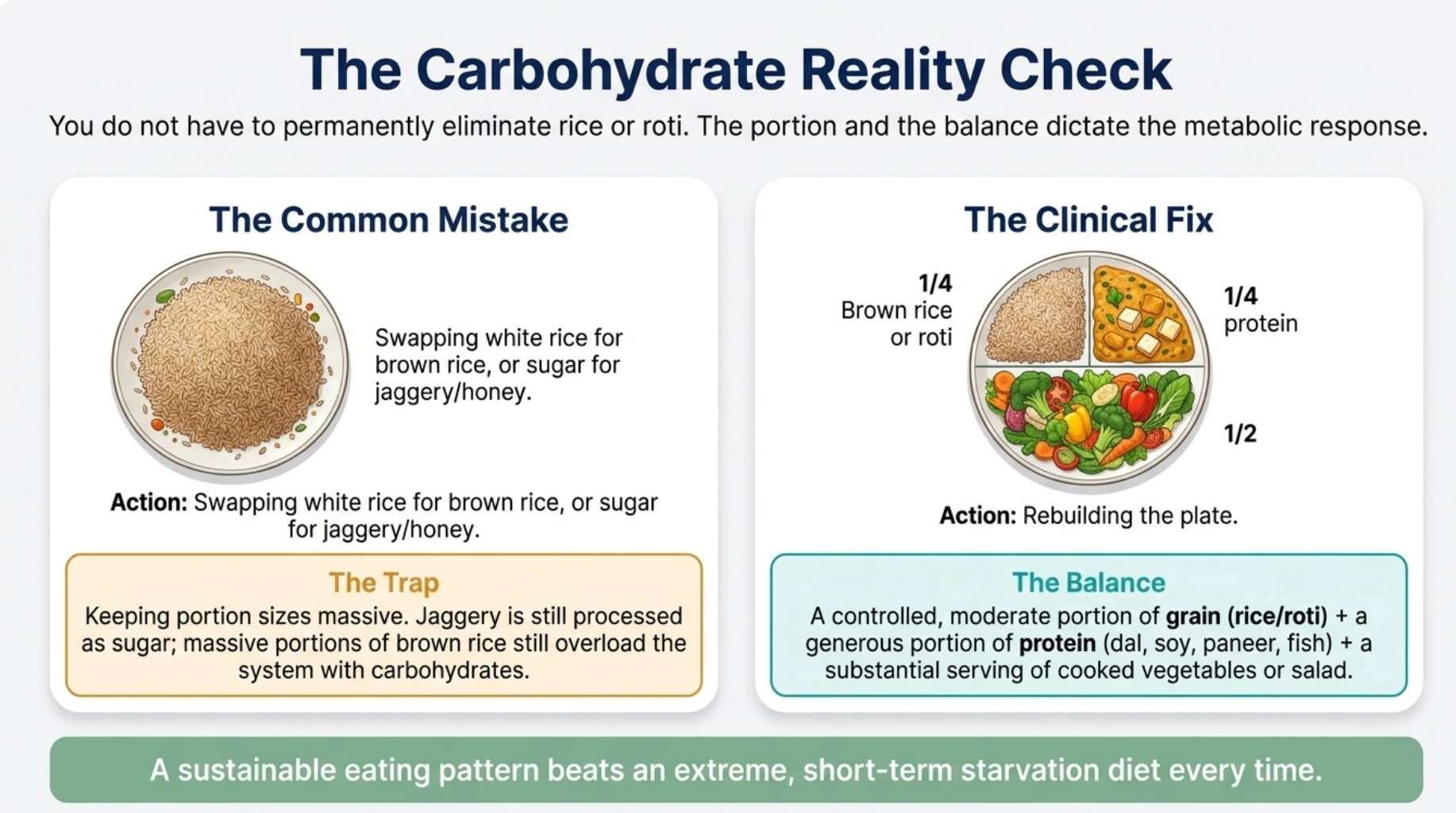
This does not mean rice or roti must be permanently eliminated.
The amount and overall meal matter.
For example:
large rice portion + potato + little protein + sweet drink
is very different metabolically from:
moderate rice portion + dal or another protein source + generous vegetables + unsweetened beverage.
NIDDK similarly advises limiting portion size, replacing saturated fats with healthier unsaturated fats, choosing more lower-glycemic whole foods and reducing beverages and foods containing large amounts of simple sugars.
What an Indian Fatty-Liver Diet Can Look Like
A practical lunch or dinner might contain:
Vegetables: a substantial portion of cooked vegetables or salad
Protein: dal, chana, rajma, soy, paneer in an appropriate portion, eggs, fish or lean meat according to preference
Cereal: a controlled portion of rice, roti or another grain
Additional food: plain curd or whole fruit where appropriate
The objective is not a perfect “liver diet.”
It is to reduce excess calorie intake where needed while improving food quality.
One common mistake is replacing familiar staples with apparently healthy alternatives while keeping portions very large.
For example:
white rice → brown rice
or
wheat roti → millet roti
may improve some aspects of food quality, but neither change makes unlimited portions appropriate.
Likewise, jaggery and honey remain sources of sugar simply because they are perceived as natural.
A sustainable eating pattern is usually more valuable than a short extreme diet that cannot be maintained.
Step 6: Increase Physical Activity and Lose Excess Weight When Appropriate
Exercise can reduce liver fat even when the weighing scale does not change dramatically.
EASL recommends physical activity for adults with MASLD, preferably more than 150 minutes per week of moderate-intensity activity or 75 minutes per week of vigorous activity, adjusted to the person’s ability and preferences.
Moderate activity might include:
- brisk walking
- cycling
- swimming
- other sustained aerobic activity
Resistance exercise is also useful as part of a broader metabolic-health programme, particularly because preserving muscle is important during weight loss.
The important point is consistency.
A person who walks vigorously for 40 minutes once on Sunday but remains almost completely inactive for the rest of the week is unlikely to obtain the same benefit as someone who has built regular movement into daily life.
For people who sit for long periods, adding brief movement throughout the day can also help reduce overall sedentary time.
How Much Weight Loss Can Help Fatty Liver?
If someone has overweight or obesity, modest weight loss can already reduce liver fat.
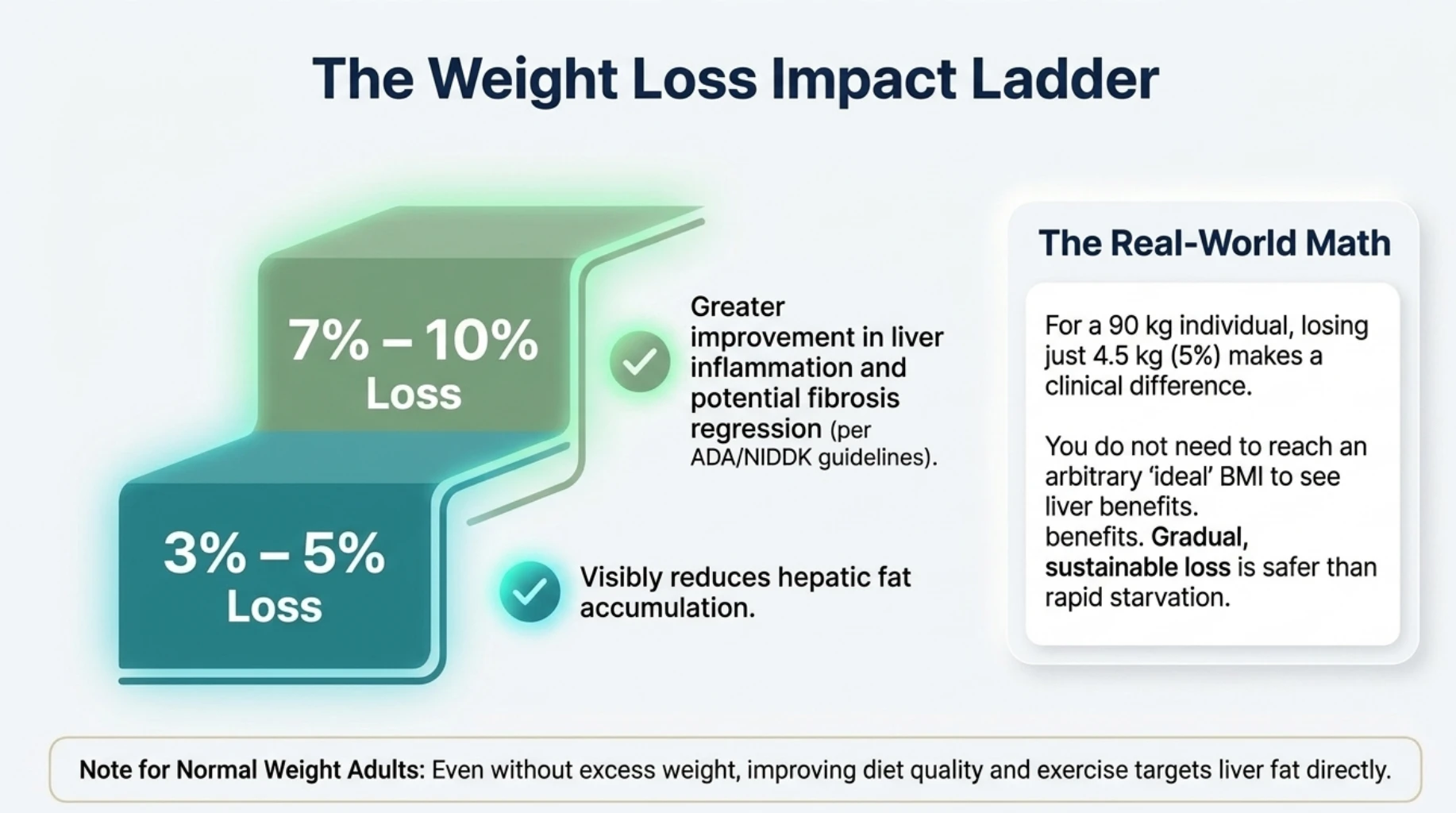
NIDDK notes that losing approximately 3–5% of body weight can reduce hepatic fat, while approximately 7–10% may be needed for greater improvement in liver inflammation and fibrosis.
More recent guidance generally supports aiming for at least about 5% weight loss, with 10% or more providing greater potential histological benefit when this is safe and achievable. The 2026 ADA Standards similarly state that at least 5% and preferably 10% or more may be needed for liver-histology improvement in MASLD, with fibrosis generally requiring the larger degree of weight reduction.
For someone weighing 90 kg:
- 5% is 4.5 kg
- 7% is 6.3 kg
- 10% is 9 kg
These numbers illustrate why meaningful liver improvement does not necessarily require reaching an arbitrary “ideal” body weight first.
Weight loss should generally be gradual.
Rapid weight loss and malnutrition can themselves be harmful in liver disease.
And people who do not have excess weight should not be advised to pursue unnecessary major weight loss. EASL still recommends healthy diet and exercise in normal-weight adults with MASLD because these measures can reduce liver fat even without obesity.
Step 7: Plan Follow-Up Based on Metabolic and Fibrosis Risk
There is no single rule stating that everyone with grade 1 fatty liver needs an ultrasound every six months or every year.
Follow-up should depend on the risk profile.
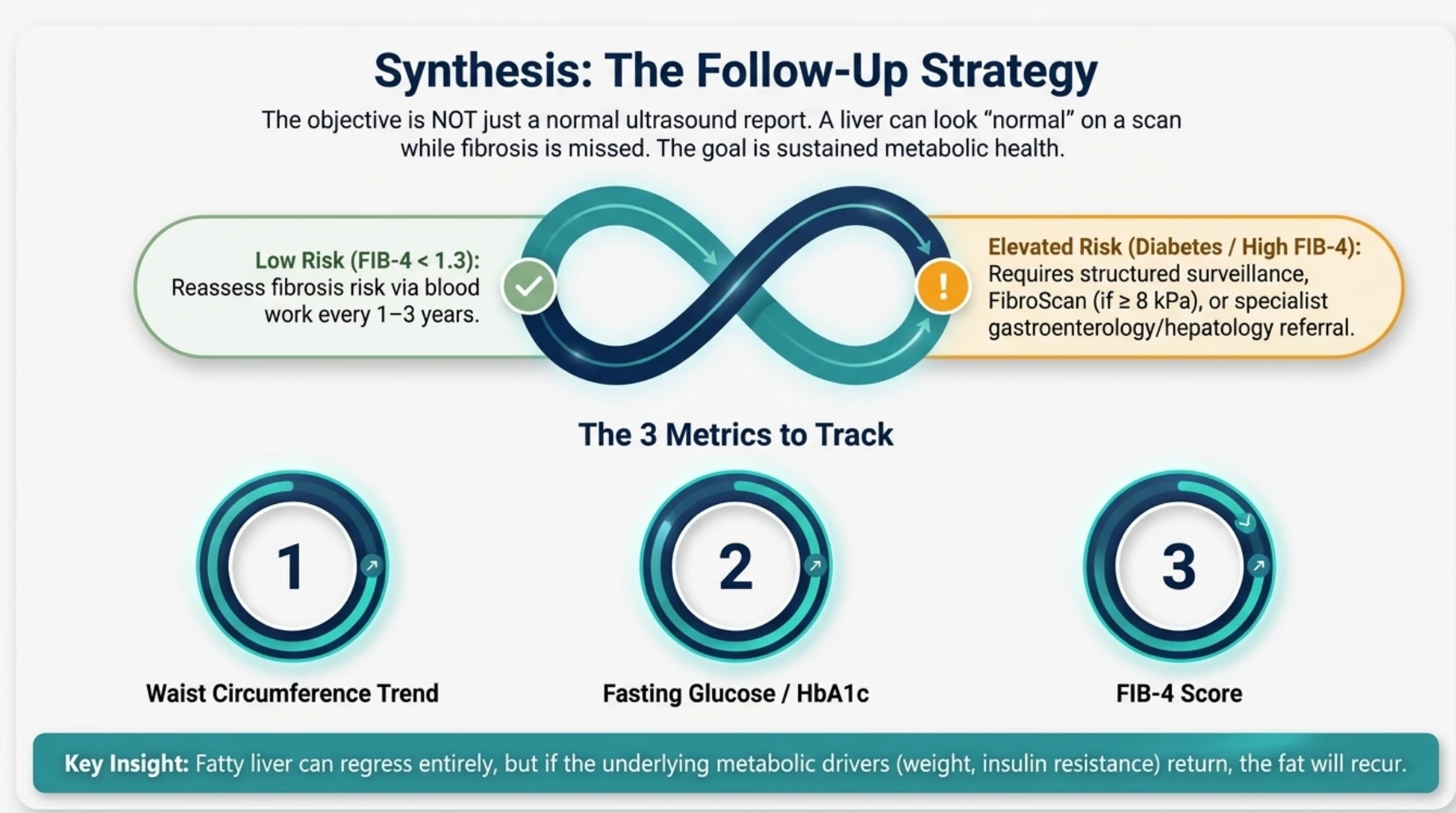
For an adult with MASLD and low FIB-4 risk, EASL suggests that fibrosis risk can generally be reassessed at intervals of approximately 1–3 years, depending on the person’s metabolic risk and clinical context.
People with type 2 diabetes often need closer structured surveillance because diabetes is an important risk factor for fibrosis progression.
The 2026 ADA pathway recommends further liver-stiffness assessment when FIB-4 is at least 1.3. If transient elastography shows liver stiffness below 8 kPa, people with prediabetes or type 2 diabetes can generally continue follow-up in non-specialist care, with repeat fibrosis surveillance at intervals of at least about two years.
Follow-up may therefore include some combination of:
- weight and waist trend
- blood pressure
- HbA1c or fasting glucose
- lipid profile
- AST and ALT
- platelet count
- repeat FIB-4 when appropriate
- FibroScan or another fibrosis test when indicated
Repeated ultrasound alone may not answer the most important question.
A liver may continue to look “fatty” while metabolic health improves, or the ultrasound grade may appear better without providing reliable information about fibrosis.
The objective is therefore not simply:
“Make the ultrasound report say normal.”
It is:
reduce liver fat, control metabolic risk and make sure clinically important fibrosis is not being missed.
Do You Need Medicine for Grade 1 Fatty Liver?
Usually, an ultrasound report showing fatty liver grade 1 by itself is not an indication for a liver-specific prescription medicine.
Treatment depends on the underlying problem.
For example, someone may need treatment for:
- type 2 diabetes
- obesity
- high cholesterol
- hypertension
- high triglycerides
Managing those conditions appropriately can also improve overall MASLD risk.
The 2026 ADA Standards recommend considering GLP-1 receptor agonists with demonstrated MASH benefit, or dual GIP/GLP-1 therapy with potential MASH benefits, when treating obesity in appropriately selected adults with type 2 diabetes and MASLD.
This does not mean every person with mild ultrasound fatty liver needs semaglutide or tirzepatide.
Those medicines have their own indications, contraindications, side effects and long-term treatment considerations.
There are also now liver-directed medicines for carefully selected patients with more advanced disease.
In the United States, resmetirom is approved for adults with noncirrhotic MASH and moderate-to-advanced fibrosis, consistent with F2–F3 fibrosis.
The U.S. FDA also approved semaglutide in 2025 for adults with noncirrhotic MASH and moderate-to-advanced F2–F3 fibrosis under the accelerated approval pathway.
That population is very different from someone whose only finding is:
“Grade I fatty liver” on ultrasound.
Ultrasound grade 1 does not prove MASH and does not establish F2 or F3 fibrosis.
Medication decisions also depend on the product’s approval and prescribing information in the patient’s country. Patients in India should not assume that a U.S. indication automatically applies locally.
Do Liver Supplements or Detox Products Help?
Products marketed for fatty liver commonly include:
- herbal liver tonics
- milk thistle preparations
- detox powders
- high-dose vitamins
- proprietary “liver cleanses”
There is currently insufficient evidence to recommend nutraceuticals routinely for MASLD.
EASL specifically states that supplements and herbal products cannot be recommended for treating liver injury or fibrosis because evidence for both effectiveness and safety is inadequate.
This is not merely an issue of wasted money.
Some herbal and dietary supplements can themselves cause liver injury. NIDDK’s Liver Tox programme documents liver toxicity associated with prescription medicines, over-the-counter products, herbals and dietary supplements.
So a product being described as:
natural
does not mean:
safe for the liver.
Do not stop prescribed medicines because fatty liver is discovered, either.
Instead, review all prescription medicines, non-prescription products and supplements with a clinician when liver tests are abnormal or the cause is uncertain.
Can Grade 1 Fatty Liver Return to Normal?
Yes, mild liver fat can decrease substantially, and an ultrasound may later no longer show fatty change.
That possibility is one reason fatty liver grade 1 is worth acting on early.
Weight reduction can lower liver fat, while regular physical activity can provide benefit even without major weight loss.
Improvement becomes more likely when the factors contributing to liver fat also improve, such as:
- abdominal obesity
- insulin resistance
- high glucose
- high triglycerides
- poor diet quality
- physical inactivity
But it is better to say fatty liver can improve or regress than to promise permanent reversal.
If a person’s ultrasound becomes normal but they later regain substantial abdominal weight, develop type 2 diabetes or return to previous lifestyle patterns, liver fat can recur.
Likewise, a normal-looking ultrasound does not always provide perfect reassurance about fibrosis because conventional ultrasound is not designed to stage liver scarring.
The long-term goal is therefore not one normal scan.
It is sustained metabolic and liver health.
When Fatty Liver Needs Specialist Assessment
Many adults with low-risk metabolic fatty liver can initially be managed in primary care with lifestyle intervention and cardiometabolic risk management.
Referral to a gastroenterologist or hepatologist becomes more important when there is evidence suggesting clinically significant fibrosis or another liver disease.
Examples include:
- elevated or concerning FIB-4
- increased liver stiffness on FibroScan
- persistently abnormal liver enzymes without a clear explanation
- abnormal bilirubin or other evidence of impaired liver function
- suspected viral, autoimmune or another non-metabolic liver disorder
- clinical signs suggesting advanced chronic liver disease
The 2026 ADA pathway recommends specialist referral when transient elastography shows liver stiffness of 8 kPa or higher in adults being risk-stratified for MASLD because the probability of advanced fibrosis is higher.
The 2026 cardiovascular-kidney-metabolic guideline similarly recommends additional fibrosis testing for FIB-4 values in the intermediate range and hepatology referral when FIB-4 exceeds 2.67.
Seek prompt medical care rather than routine follow-up if symptoms such as:
- yellowing of the eyes or skin
- vomiting blood
- black stools
- new abdominal swelling
- confusion
- marked drowsiness
develop.
Those are not expected consequences of uncomplicated grade 1 fatty liver and require assessment for a more serious condition.
Fatty Liver Review at Diet Plus Minus in Dwarka
Adults with an ultrasound showing mild or grade 1 fatty liver can discuss the finding with Dr. Pankaj Kumar at Diet Plus Minus in Dwarka.
A review may include:
- the ultrasound report
- AST and ALT
- platelet count
- glucose and HbA1c
- cholesterol and triglycerides
- body weight and waist trend
- blood pressure
- alcohol history
- medicines and supplements
- calculation of FIB-4 when appropriate
- whether FibroScan or additional testing is useful
- nutrition and physical-activity planning
- whether gastroenterology or hepatology referral is appropriate
The aim is not simply to prescribe a “liver medicine.”
It is to determine whether the finding represents uncomplicated mild steatosis or part of a broader metabolic or liver-risk pattern that deserves closer assessment.
Dr. Pankaj Kumar
MBBS, DNB Family Medicine, Sir Ganga Ram Hospital
General & Lifestyle Physician
Special interest in Diabetes
Diet Plus Minus
13A, Pocket-2, Sector-6, Doctors Lane
Dwarka, New Delhi – 110075
India
Book an Appointment with Dr. Pankaj Kumar
Frequently Asked Questions
Is Fatty Liver Grade 1 Serious?
Grade 1 usually describes mild liver fat on ultrasound.
It does not automatically mean serious liver damage or fibrosis.
The more important assessment is whether metabolic risk factors or clinically significant liver fibrosis are present.
Is Grade 1 Fatty Liver the Same as Stage 1 Fibrosis?
No.
Grade 1 fatty liver describes the degree of steatosis seen on imaging.
F1 fibrosis refers to early liver scarring.
They are different findings and should not be used interchangeably.
Can Grade 1 Fatty Liver Be Reversed?
Liver fat can decrease substantially and may no longer be visible on later imaging, particularly when excess weight and metabolic risk factors improve.
A permanent cure should not be assumed because fatty liver can recur if the underlying risk factors return.
How Long Does Grade 1 Fatty Liver Take to Improve?
There is no fixed timeline.
Improvement depends on the amount of liver fat, weight change, glucose control, diet, activity and other metabolic factors.
Judge progress over months rather than expecting a detox programme to change the liver in a few days.
Do I Need a FibroScan for Grade 1 Fatty Liver?
Not automatically.
FibroScan is more useful when fibrosis risk is increased—for example, because of type 2 diabetes, an elevated FIB-4, persistent liver-enzyme elevation or other clinical risk factors.
Can Liver Enzymes Be Normal With Fatty Liver?
Yes.
Normal ALT and AST do not rule out MASLD and do not reliably exclude fibrosis.
This is why fibrosis-risk assessment may still be appropriate in people with type 2 diabetes or other high-risk features.
What Is FIB-4?
FIB-4 is a non-invasive fibrosis-risk score calculated from:
- age
- AST
- ALT
- platelet count
It is used to help identify people at low versus increased risk of advanced liver fibrosis.
It does not directly diagnose fibrosis.
Is a FIB-4 Below 1.3 Normal?
In many adults aged 35–65, a FIB-4 below 1.3 generally indicates a low probability of advanced fibrosis.
Different interpretation is required in older adults, and FIB-4 performs poorly in people younger than approximately 35.
Can a Thin Person Have Fatty Liver?
Yes.
MASLD can occur in people who do not have obesity.
Genetics, abdominal fat distribution, insulin resistance, diabetes, diet and other factors can contribute.
Normal-weight adults with MASLD are still advised to improve diet quality and remain physically active.
Does Fatty Liver Mean I Have Diabetes?
No.
But fatty liver and type 2 diabetes frequently occur together because both can be associated with insulin resistance and metabolic dysfunction.
An HbA1c or fasting glucose is therefore often useful as part of metabolic assessment.
Can Fatty Liver Cause High Blood Sugar?
Fatty liver and insulin resistance are closely connected.
Rather than thinking of one as always directly causing the other, they are often components of the same underlying metabolic process.
Should I Stop Rice if I Have Grade 1 Fatty Liver?
Not necessarily.
Portion size and overall calorie intake matter more than automatically banning rice.
A balanced meal containing an appropriate cereal portion, vegetables and protein can fit into a fatty-liver eating pattern.
Is Roti Allowed in Fatty Liver?
Yes.
Roti does not need to be universally eliminated.
The number and size of roti, flour used, total calorie intake and accompanying foods all matter.
Which Fruits Are Good for Fatty Liver?
Whole fruit can be part of a healthy eating pattern.
The more important distinction is often whole fruit versus sugary drinks or fruit juice.
Current MASLD guidance recommends avoiding sugar-sweetened beverages and improving overall diet quality.
Should I Avoid All Fat?
No.
Dietary fat quality matters.
Replacing foods high in saturated and trans fats with appropriate unsaturated-fat sources can support cardiovascular and metabolic health.
Should I Stop Alcohol if I Have Fatty Liver?
Alcohol intake should be specifically reviewed.
EASL recommends discouraging alcohol in people with steatotic liver disease, particularly moderate or high consumption, and recommends complete abstinence in advanced fibrosis or cirrhosis.
If you drink alcohol, discuss the amount and pattern with your clinician rather than assuming that “social drinking” is automatically harmless.
Can Exercise Improve Fatty Liver Without Weight Loss?
Yes.
Physical activity can reduce hepatic steatosis even in the absence of substantial weight loss.
EASL recommends regular activity, preferably more than 150 minutes of moderate-intensity exercise weekly when appropriate.
How Much Weight Should I Lose for Fatty Liver?
If you have overweight or obesity, losing about 3–5% of body weight can reduce liver fat, while approximately 7–10% or more may provide greater benefit for inflammation and fibrosis.
The target should be individualized and achieved gradually.
Do I Need Medicine for Grade 1 Fatty Liver?
Not simply because the ultrasound says grade 1.
Treatment usually focuses first on metabolic risk factors and lifestyle.
Specific MASH medicines are intended for selected people with considerably more advanced disease, not uncomplicated mild steatosis based on ultrasound alone.
Is Semaglutide Used for Fatty Liver?
Semaglutide may be appropriate for people who meet indications for obesity or type 2 diabetes, and it now has a U.S. indication for selected adults with noncirrhotic MASH and F2–F3 fibrosis.
That does not mean it should be prescribed solely because an ultrasound says grade 1 fatty liver.
Are Liver Detox Supplements Useful?
There is insufficient evidence to recommend liver-detox supplements or nutraceuticals for MASLD.
Some supplements can themselves injure the liver.
How Often Should I Repeat an Ultrasound?
There is no universal interval.
Follow-up should be based on metabolic and fibrosis risk rather than repeatedly scanning every person on the same schedule.
Blood tests, FIB-4 and FibroScan may sometimes provide more clinically useful information than another routine ultrasound.
Author Box
Dr. Pankaj Kumar
MBBS, DNB Family Medicine, Sir Ganga Ram Hospital
General & Lifestyle Physician
Special interest in Diabetes
Dr. Pankaj Kumar provides general medical and lifestyle-based care at Diet Plus Minus in Dwarka, New Delhi. His clinical approach includes assessment of fatty liver in the context of glucose, weight, blood pressure, lipids, nutrition and physical activity, with further investigation or gastroenterology/hepatology referral when appropriate.
Medical Disclaimer
This article provides general educational information and does not replace an individual medical consultation, examination or personalized treatment plan.
An ultrasound description of grade 1 fatty liver does not establish the presence or absence of liver inflammation or fibrosis.
Do not start prescription medicines, high-dose vitamins, herbal liver products or weight-loss medication solely on the basis of an ultrasound report.
Seek prompt medical assessment if liver-related symptoms such as jaundice, confusion, vomiting blood, black stools or new abdominal swelling develop.
References
- EASL-EASD-EASO Clinical Practice Guidelines on the Management of Metabolic Dysfunction-Associated Steatosis Liver Disease (MASLD). 2024. Covers MASLD diagnosis, fibrosis risk stratification, lifestyle management, weight loss, diet, physical activity and specialist referral.
- American Diabetes Association Professional Practice Committee. Comprehensive Medical Evaluation and Assessment of Comorbidities: Standards of Care in Diabetes—2026. Provides current recommendations for MASLD screening and fibrosis-risk assessment in people with diabetes and prediabetes and outlines FIB-4 and transient-elastography pathways.
- National Institute of Diabetes and Digestive and Kidney Diseases. Treatment for NAFLD/MASLD and NASH/MASH. Reviews gradual weight loss, physical activity and the approximate amounts of weight reduction associated with improvements in liver fat, inflammation and fibrosis.
- National Institute of Diabetes and Digestive and Kidney Diseases. Eating, Diet and Nutrition for NAFLD/MASLD. Reviews portion control, dietary-fat quality, lower-glycemic foods, simple sugars and alcohol.
- U.S. Food and Drug Administration. FDA Approves First Treatment for Patients With Liver Scarring Due to Fatty Liver Disease. 2024. Resmetirom was approved in the U.S. for selected adults with noncirrhotic MASH and F2–F3 fibrosis, alongside diet and exercise.
- U.S. Food and Drug Administration. FDA Approves Treatment for Serious Liver Disease Known as MASH. 2025. Semaglutide received an accelerated U.S. approval for selected adults with noncirrhotic MASH and moderate-to-advanced fibrosis.
- EASL-EASD-EASO MASLD Guidelines: Nutraceuticals and Supplements. Current guidance concludes that nutraceuticals cannot routinely be recommended because evidence for effectiveness and safety remains insufficient.
- NIDDK Liver Tox. Provides evidence on liver injury associated with medicines, herbal products and dietary supplements and reinforces the need to review non-prescription products when evaluating abnormal liver tests.

Written by Dr. Pankaj Kumar
General & Lifestyle Physician in Dwarka Sector 6, New Delhi · MBBS, DNB (Family Medicine), DNHE · 16 years of experience.
About the doctor →Book a consultation → Beyond Blood Sugar
 The 90-Day Prediabetes Turnaround
 The Indian Diabetes Diet Reset
 Eat to Beat Gout
 Why Is My Hair Falling?
 The 30-Day Inflammation Reset