
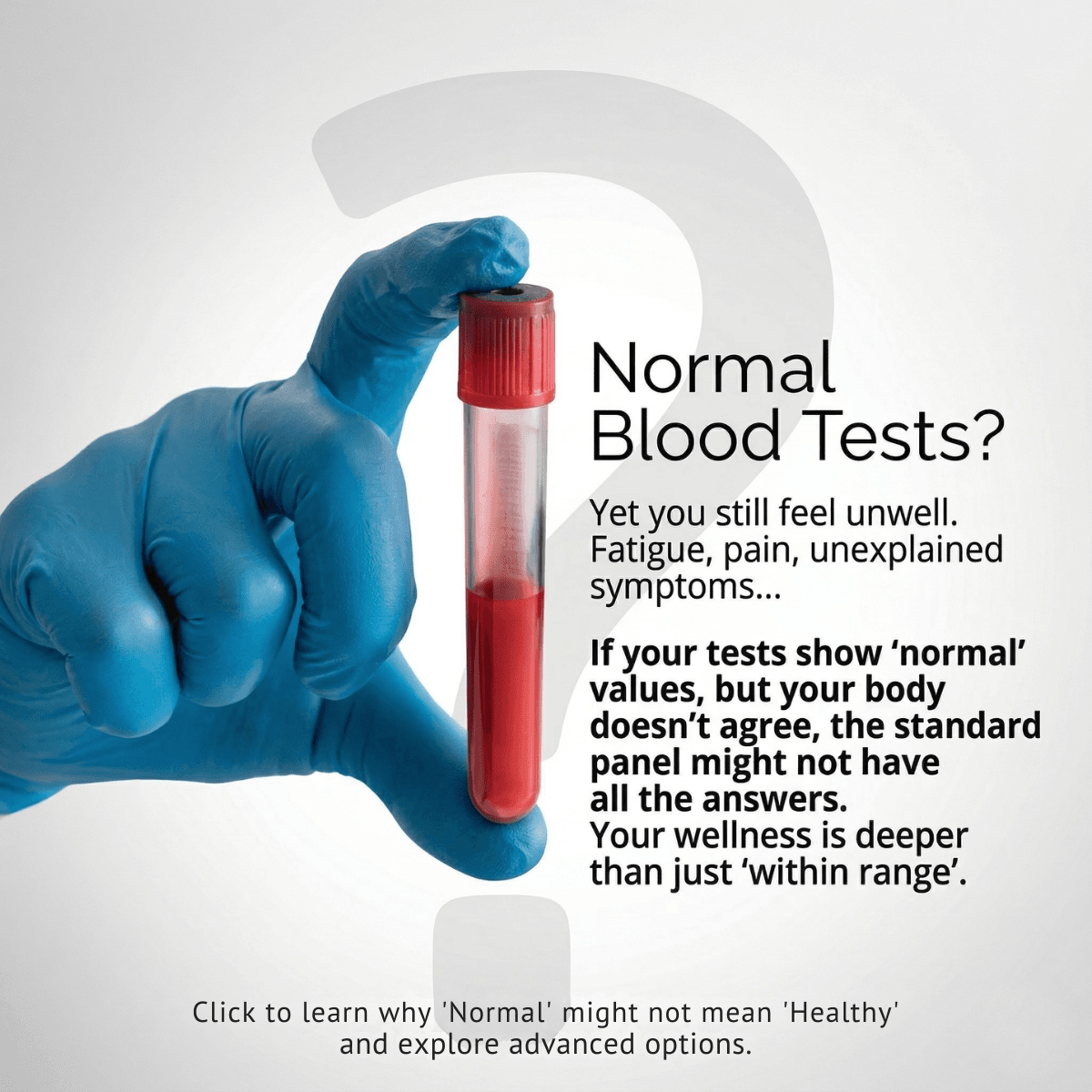
Why You May Feel Unwell Despite Normal Blood Tests
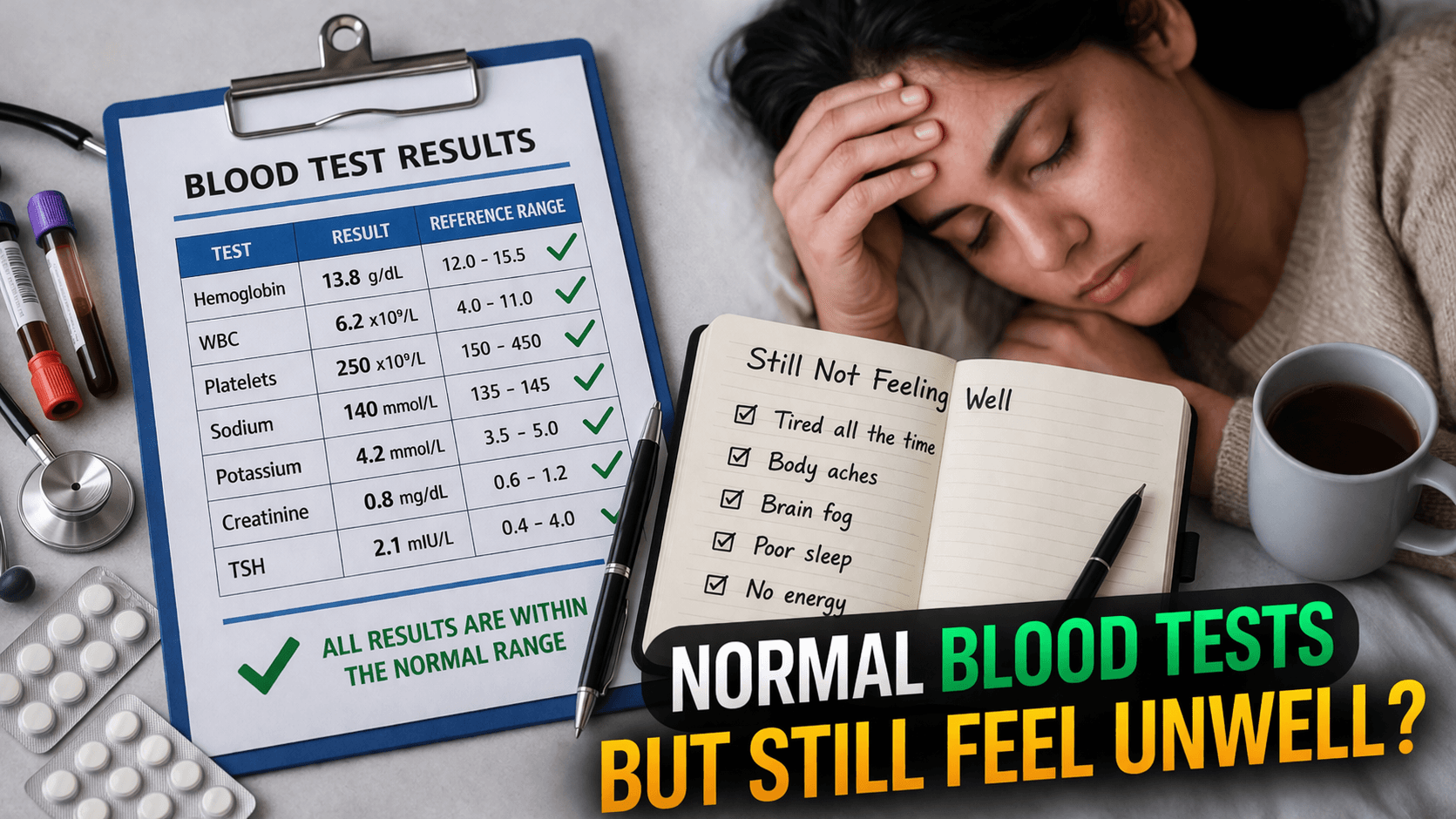
Many patients face a confusing situation where normal blood tests but still feel unwell becomes a reality. Reports appear normal, yet symptoms like fatigue, low energy, mood changes, or weight fluctuations continue. This often leads to frustration. Patients are told that everything is fine, but they know something does not feel right.
The key point to understand is that blood tests are tools, not complete answers. They provide snapshots of certain parameters but do not always capture early or subtle changes happening in the body.
If you want to understand how symptoms are interpreted clinically, you can read here: About Dr. Pankaj Kumar.
Why Blood Tests Can Look Normal Even When Something Is Wrong
To understand why normal blood tests but still feel unwell happens, you need to know how blood tests work. Most routine tests are designed to detect clear abnormalities, not early or subtle changes.
The body has strong compensatory mechanisms. In early stages of disease, it tries to maintain balance. Because of this, lab values often remain within the “normal range” despite underlying dysfunction.
For example, thyroid hormone levels may still appear normal while symptoms have already started. Similarly, blood sugar levels may remain within limits even when insulin resistance is developing. A clinical study highlights that subclinical conditions can exist long before standard tests show abnormalities.
The Concept of Subclinical Disease
One of the most important reasons behind normal blood tests but still feel unwell is what we call “subclinical disease.”
This means that the disease process has started, but it has not yet reached a level where it shows up clearly in standard tests.
In this stage:
- Symptoms may be present
- Lab values may still be within range
- The body is compensating for imbalance
Research shows that many conditions, including thyroid disorders and metabolic diseases, have a prolonged subclinical phase.
Common Conditions That Are Often Missed Early
Several health conditions commonly explain why normal blood tests but still feel unwell.
- Early thyroid dysfunction
- Insulin resistance before diabetes develops
- Vitamin deficiencies in borderline range
- Chronic stress-related hormonal imbalance
- Early metabolic syndrome
These conditions do not always show clear abnormalities in standard reports, especially in the initial stages. A study emphasizes that early recognition of subtle symptoms is crucial for timely diagnosis (clinical evidence).
Common Real-Life Patterns Seen in Patients
In clinical practice, certain patterns strongly suggest normal blood tests but still feel unwell situations.
- Persistent fatigue despite normal reports
- Difficulty losing weight with normal lab values
- Low mood or lack of motivation without clear cause
- Symptoms that do not improve with routine changes
| Symptom | Report Finding | Possible Explanation |
|---|---|---|
| Fatigue | Normal blood tests | Early metabolic imbalance |
| Weight gain | Normal thyroid levels | Subclinical dysfunction |
| Low mood | Normal reports | Hormonal or stress-related changes |
Another study shows that thyroid-related symptoms can appear even before significant lab abnormalities. This highlights the importance of not relying only on reports but also considering symptoms and patterns.
What I Recommend When Reports Are Normal but Symptoms Persist
If you are experiencing normal blood tests but still feel unwell, the most important step is to shift the focus from isolated lab values to a more comprehensive clinical approach.
In practice, I do not rely only on whether a test is “normal” or “abnormal.” I look at trends, symptom patterns, and lifestyle factors together.
Here is a structured approach that works:
- Review symptoms in detail: Duration, pattern, and triggers matter
- Repeat tests when needed: Early changes may not appear in one report
- Look beyond basic panels: Consider expanded testing if symptoms persist
- Track trends, not just values: Small shifts over time are important
- Assess lifestyle factors: Sleep, stress, and nutrition play a key role
- Do not ignore borderline results: These may indicate early imbalance
- Integrate clinical judgment: Symptoms should guide decisions
For a personalized evaluation: Consultation Link.
Warning Signs That Should Not Be Ignored
Even when reports are normal, certain symptoms should prompt further evaluation.
- Persistent fatigue affecting daily life
- Unexplained weight changes
- Ongoing low mood or mental fog
- Hair fall along with energy decline
- Symptoms lasting for several weeks without improvement
A clinical reference highlights that early recognition of underlying conditions improves outcomes and prevents progression (clinical reference).
Key Takeaway
Normal blood tests but still feel unwell is not uncommon. Lab reports reflect measurable changes, but symptoms often begin earlier. Listening to your body, recognizing patterns, and taking a structured approach can help identify issues at an early stage.
References
- Subclinical dysfunction evidence
- Underdiagnosis insights
- Early recognition importance
- Thyroid symptom correlation
- Clinical overview reference
Take the Next Step
This information is for educational purposes only and should not replace professional medical advice. Always consult a qualified doctor for personalized care.

Written by Dr. Pankaj Kumar
General & Lifestyle Physician in Dwarka Sector 6, New Delhi · MBBS, DNB (Family Medicine), DNHE · 16 years of experience.
About the doctor →Book a consultation → Beyond Blood Sugar
 The 90-Day Prediabetes Turnaround
 The Indian Diabetes Diet Reset
 Eat to Beat Gout
 Why Is My Hair Falling?
 The 30-Day Inflammation Reset