
Why Prediabetes Is Rising in Dwarka Families
Over the past decade, I have seen a steady rise in metabolic imbalance among working adults and even younger individuals in Dwarka. Long work hours, reduced physical activity, high refined carbohydrate intake, stress, and irregular sleep patterns are contributing factors.
Many families search for a prediabetes doctor in Dwarka only after diabetes is already diagnosed. But the stage before diabetes – prediabetes – is where the real opportunity lies. Prediabetes is a laboratory-defined condition associated with increased diabetes and cardiovascular risk. Glucose levels may return to normal, but this is not guaranteed.
Understanding early warning signs can help families act before permanent damage occurs.
What Exactly Is Prediabetes?
Prediabetes is a condition in which blood glucose levels are higher than normal but not high enough to meet diagnostic criteria for type 2 diabetes. It reflects early insulin resistance.
Insulin is the hormone that helps move glucose from blood into cells. When cells become resistant to insulin, glucose remains elevated. Over time, this can progress to type 2 diabetes.
A 2021 global analysis published in The Lancet Diabetes & Endocrinology highlighted the rapid increase in prediabetes prevalence worldwide, especially in urban populations.
https://pubmed.ncbi.nlm.nih.gov/33992573/ Prediabetes often produces no dramatic symptoms. That is why awareness matters.
Blood Sugar Ranges Explained
Understanding numbers removes confusion.
| Test | Normal | Prediabetes | Diabetes |
|---|---|---|---|
| Fasting Glucose (mg/dL) | Below 100 | 100-125 | 126 or above |
| HbA1c (%) | Below 5.7 | 5.7-6.4 | 6.5 or above |
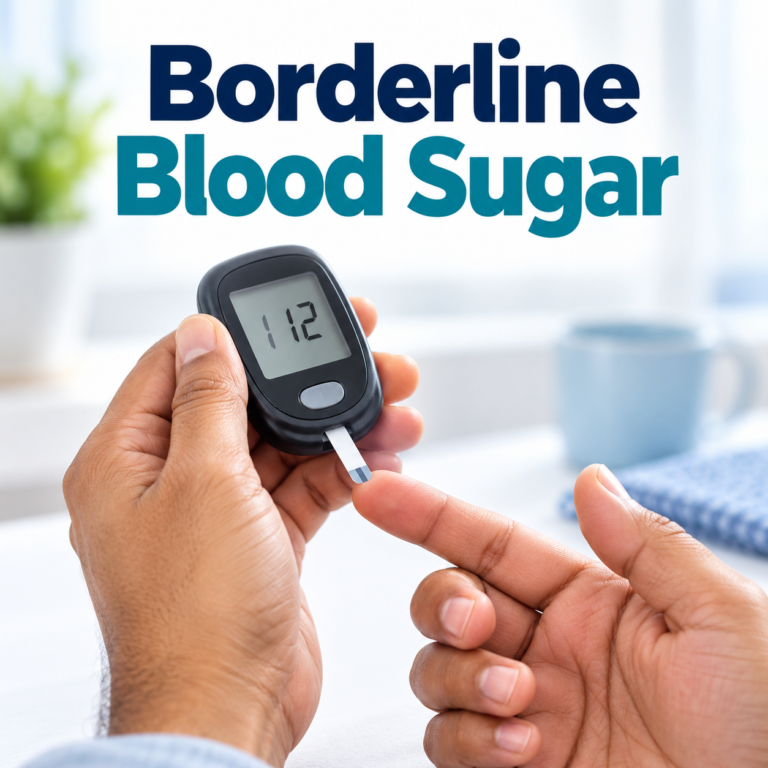
Many patients with fasting glucose around 108 or HbA1c 5.9 assume it is almost normal.
It is not.
It warrants interpretation and follow-up; symptoms alone do not establish insulin resistance.
1. Persistent Fatigue Needs Context
Fatigue has many possible explanations, including sleep problems, anaemia, medicines and thyroid disease. It is not a reliable early diagnostic sign of prediabetes. A review can establish whether glucose testing or other investigations are appropriate.
2. Increasing Abdominal Fat
Many Dwarka families notice gradual weight gain, especially around the waist. Even when overall weight does not rise dramatically, abdominal fat often increases. Central obesity is strongly associated with insulin resistance. Visceral fat releases inflammatory markers that worsen glucose metabolism.
A 2020 review in Nature Reviews Endocrinology described how abdominal adiposity directly drives metabolic dysfunction and increases diabetes risk.
https://pubmed.ncbi.nlm.nih.gov/32165568/. If waist circumference is increasing despite no major lifestyle change, it deserves attention.
For Indian adults, waist circumference above 90 cm in men and 80 cm in women significantly increases diabetes risk.
3. Hunger and Cravings Are Nonspecific
Hunger after meals can reflect meal size, food composition, sleep, medicines or other factors. It does not demonstrate a glucose spike, hypoglycaemia or prediabetes. Persistent excessive hunger with thirst, frequent urination or unexplained weight loss needs medical review.
4. Mild but Rising Blood Sugar
Many people discover prediabetes incidentally during routine tests. A fasting glucose of 104 or 110 mg/dL often feels not serious. But repeated borderline readings indicate progressive insulin resistance.
According to the American Diabetes Association, individuals with prediabetes have significantly increased risk of developing type 2 diabetes within 5 years if no lifestyle modification occurs.
https://pubmed.ncbi.nlm.nih.gov/31862745/
The encouraging part is that timely lifestyle intervention reduces this risk substantially.
5. Family History Plus Lifestyle Risk
If one or both parents have diabetes, your genetic risk increases. But genetics is not destiny.
Prediabetes in families often develops due to:
- Sedentary lifestyle
- High refined carbohydrate intake
- Irregular meal timing
- Stress
- Poor sleep
When genetic risk combines with lifestyle factors, insulin resistance accelerates. Early identification is especially important for families with strong diabetes history.
Family Risk Self-Check
Take this simple screening seriously. Do you or your family member have:
- Parent or sibling with diabetes
- Waist circumference above recommended range
- Sedentary work routine
- High refined carbohydrate diet
- Persistent fatigue
- Elevated fasting glucose above 100
- HbA1c above 5.7
This is not a validated diagnostic score. A single important risk factor or an abnormal blood test may justify evaluation; do not wait to accumulate three.
Prediabetes does not cause pain. It progresses quietly. Regular screening above age 30, especially with family history, can prevent long-term complications.
Why Early Action Works
Prediabetes is highly responsive to lifestyle intervention. A landmark clinical trial showed that structured lifestyle changes reduced progression to type 2 diabetes by nearly 58 percent compared to no intervention.
https://pubmed.ncbi.nlm.nih.gov/11832527/
Even 5 to 7 percent weight reduction significantly improves insulin sensitivity. This is why consultation with a prediabetes doctor in Dwarka during early stages can change long-term outcomes dramatically.
What I Recommend to Dwarka Families
If you are searching for a prediabetes doctor in Dwarka, the most important thing to understand is this: medication is not always the first step. Early-stage prediabetes is primarily managed through structured lifestyle correction.
Here is the practical framework I advise:
1) Regular monitoring.
Follow-up is individualized. People with prediabetes generally need at least annual diabetes testing; earlier review may be appropriate depending on results and treatment.
2) Structured meal timing.
Avoid late dinners. Maintain a consistent eating window. Stable meal timing improves insulin response.
3) Reduce refined carbohydrates.
Limit white rice portions, bakery items, sugary beverages, and frequent snacking.
4) Increase protein and fiber intake.
Adequate protein stabilizes blood sugar. Vegetables and whole foods improve insulin sensitivity.
5) Daily physical activity.
At least 30 minutes of brisk walking. Resistance training twice weekly improves glucose metabolism.
6) Stress correction.
Chronic stress worsens insulin resistance. Keep a consistent sleep schedule with adequate sleep. Limit excessive screen exposure.
7) Family involvement.
When the whole household adopts healthier habits, long-term success improves significantly.
Prediabetes is easier to reverse than diabetes.
When Medication May Be Considered
In certain cases, medication like metformin may be recommended:
- HbA1c approaching 6.4
- Strong family history
- Rapid progression
- Obesity with multiple risk factors
Medication supports lifestyle correction but does not replace it. Timely consultation allows individualized decision-making instead of guesswork.
Final Thought for Dwarka Families
Prediabetes is not a failure. It is a warning phase. Ignoring it allows gradual progression toward diabetes, cardiovascular disease, and metabolic complications.
Addressing it early allows reversal. If you or your family member has borderline blood sugar, unexplained fatigue, or increasing abdominal fat, early evaluation matters.
Consulting a prediabetes doctor in Dwarka during this stage can help you assess risk and choose an appropriate prevention plan.
References
ADA Standards of Care 2026: Diagnosis and Classification; ADA Standards of Care 2026: Prevention or Delay of Diabetes.
Book a Consultation
Disclaimer: This article is for educational purposes only and does not replace individualized medical advice.

Written by Dr. Pankaj Kumar
General & Lifestyle Physician in Dwarka Sector 6, New Delhi · MBBS, DNB (Family Medicine), DNHE · 16 years of experience.
About the doctor →Book a consultation → Beyond Blood Sugar
 The 90-Day Prediabetes Turnaround
 The Indian Diabetes Diet Reset
 Eat to Beat Gout
 Why Is My Hair Falling?
 The 30-Day Inflammation Reset