A diet that helped you lose weight in your twenties or thirties may produce little change after your fortieth birthday. This can make weight loss after 40 feel unfair, especially when you believe you are eating the same food and following the same routine that previously worked.
However, the explanation is rarely that your metabolism suddenly became “damaged” at 40. Research measuring daily energy expenditure across the human lifespan found that metabolism adjusted for body size and composition remains broadly stable from approximately age 20 to 60. What often changes is muscle mass, daily movement, sleep, hormones, work pressure, medication use and the number of calories needed by a body that may now be smaller or less active.

The solution is not necessarily to eat much less. It is to update the plan. This article explains why old diet strategies may stop working and how to approach weight loss after 40 without crash dieting, unnecessary food bans or muscle loss.
Why Does Weight Loss Become Harder After 40?
Weight loss may feel harder after 40 because daily activity often decreases, muscle mass may gradually decline, sleep becomes less consistent and previous dieting may have reduced both body weight and energy needs. Women may also experience changes in fat distribution during the menopause transition.
The answer is usually not another extreme diet. A more effective plan combines appropriate portions, adequate protein, strength training, regular movement, sleep improvement and assessment of medical factors that may be interfering with progress. Current obesity guidance also emphasizes preserving lean mass through suitable protein intake and resistance exercise during weight reduction.
Why Weight Loss After 40 Can Feel Different
Your body does not recognize a birthday and immediately reduce its metabolic rate. The changes usually develop gradually over several years.
A desk-based job may involve fewer steps than your earlier routine. Family and professional responsibilities may reduce time for exercise. Sleep may become shorter, restaurant meals more frequent and weekends less active. Even when breakfast and dinner appear unchanged, small additions such as sweetened tea, biscuits, alcohol, cooking oil, snacks and larger portions can alter total energy intake.
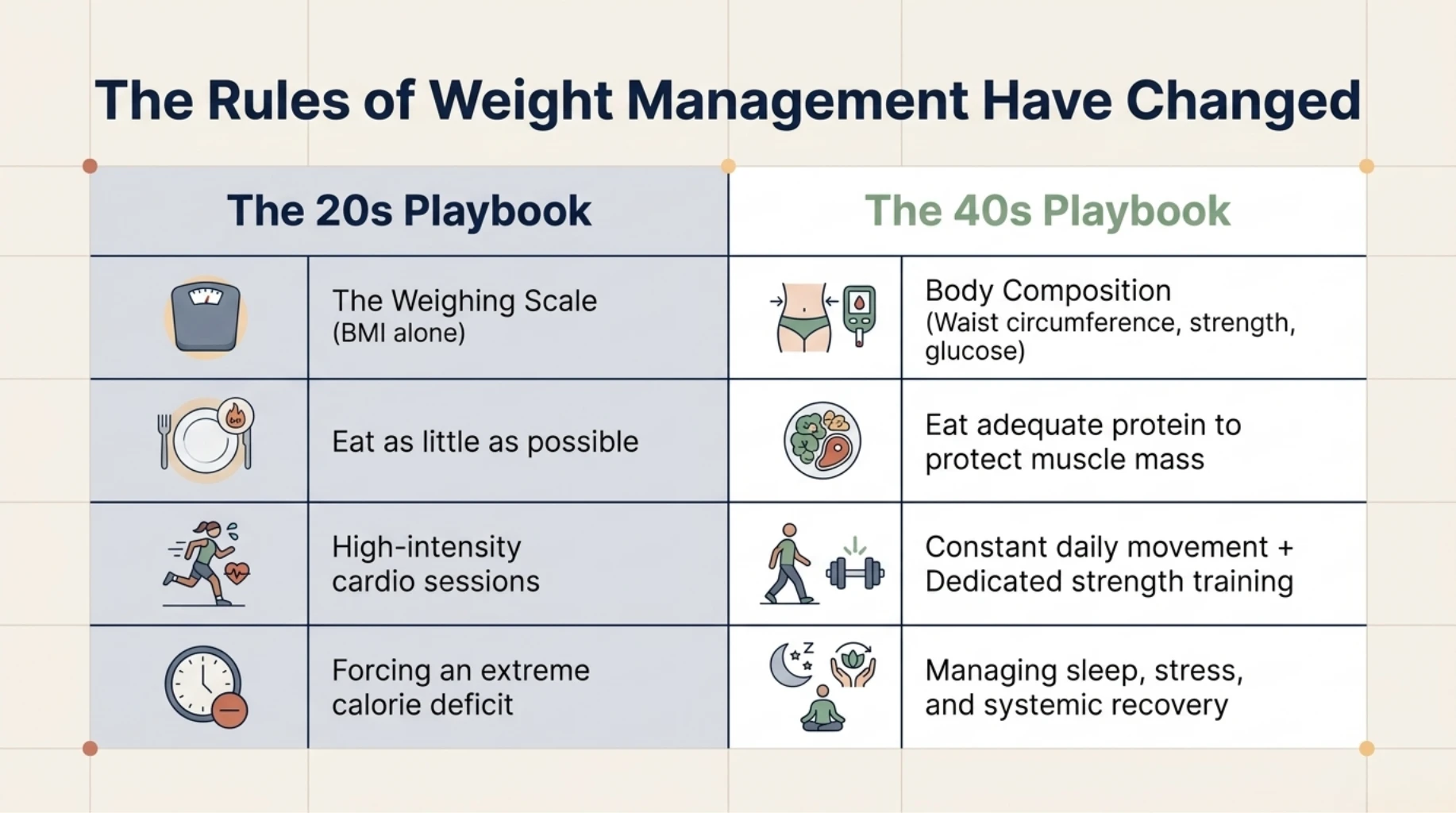
The weighing scale also tells only part of the story. Two people with the same weight may have different amounts of muscle, abdominal fat and metabolic risk. This is why a useful assessment after 40 should consider waist circumference, strength, physical activity, blood pressure, glucose and cholesterol—not BMI alone.
Weight Loss After 40 and the Role of Muscle Mass
Muscle is metabolically active tissue and supports glucose use, physical function and long-term independence. When muscle mass declines, the body may expend less energy during rest and movement. Everyday tasks also become less demanding once the body becomes more efficient or activity decreases.
Muscle loss is not caused solely by ageing. Inadequate protein, repeated low-calorie diets, inactivity, illness and lack of resistance exercise can accelerate the problem. Losing weight through severe restriction may further reduce lean mass, particularly when the plan provides little protein and no strength training.
The 2026 American Diabetes Association weight-management standards specifically advise combining adequate protein with resistance training to help preserve lean mass during weight loss. This principle is relevant beyond diabetes, particularly for adults entering midlife with low strength or a history of repeated dieting.
A lower number on the scale is not automatically a better result if the person also loses strength, feels weak and regains the weight quickly.
Why Your Daily Movement May Have Quietly Decreased
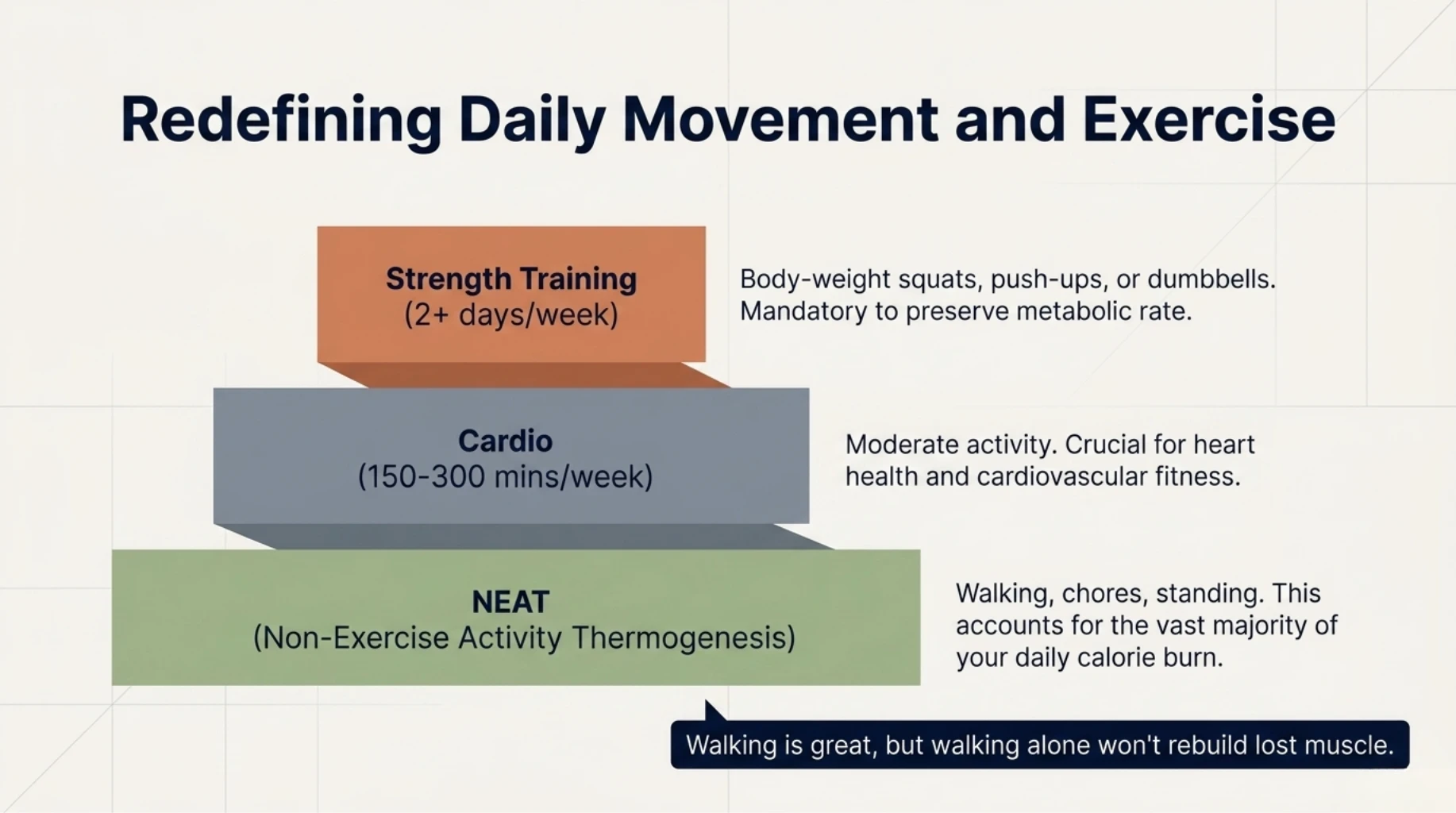
Exercise is only one component of activity. Daily energy use also includes walking to shops, climbing stairs, standing, household work and other movement performed outside a planned workout.
A person may complete a 30-minute morning walk but remain seated for most of the following ten hours. Another person may not formally exercise but accumulate more movement through commuting and physical work.
This distinction becomes important when comparing your current routine with the diet that worked years ago. The food may be similar, but your total movement may not be.
Adults are advised to complete at least 150 minutes of moderate-intensity physical activity each week and include muscle-strengthening activity on two or more days. More activity may provide additional health benefits, but the plan should progress according to fitness, joint health and medical conditions.
Does Metabolism Really Slow Down After 40?
The statement that metabolism “collapses” after 40 is misleading. A large study using doubly labelled water found that fat-free-mass-adjusted daily energy expenditure remained stable through adulthood from approximately 20 to 60 years of age. A clearer decline became evident later in life.
This does not mean that everyone burns the same number of calories at 25 and 50. Total energy needs can still decrease when:
- Muscle mass falls
- Body weight becomes lower
- Daily movement decreases
- Work becomes more sedentary
- Illness limits activity
- Repeated dieting reduces energy expenditure
- Sleep and fatigue reduce spontaneous movement
Metabolism is influenced strongly by body size and lean mass. Therefore, what feels like an age-related metabolic slowdown may partly reflect a change in body composition and lifestyle.
This distinction matters because it changes the solution. Trying to “boost metabolism” with detox drinks, fat burners or extreme fasting does not rebuild muscle or increase daily movement. Strength training, adequate nutrition and a realistic activity plan are more useful.
Why the Same Diet May Stop Producing Results
A diet works when it creates a sustained energy deficit that the person can follow without unacceptable hunger, weakness or nutritional compromise. The same written meal plan may stop creating that deficit when body weight, activity, appetite or adherence changes.
This does not always mean that the patient is being dishonest. Portion sizes can gradually increase without being noticed. A “small” snack may become daily, cooking oil may not be measured and weekend meals may offset the deficit created during weekdays.
The body also adapts during weight loss. A smaller body needs less energy to move and maintain. Hunger may increase, while spontaneous activity may decrease. Research on adaptive thermogenesis suggests that energy expenditure can sometimes fall more than expected after weight loss, although its magnitude varies and may lessen after weight stabilization.
A Smaller Body Requires Less Energy
Suppose a diet initially helped someone lose 8–10 kg. The new, lighter body generally requires fewer calories than the starting body. Continuing the original plan may therefore maintain the lower weight rather than produce further loss.
This is not evidence that the diet has failed. It may mean that the original deficit has become smaller.
The response should not automatically be to remove another meal. A better review asks:
- Has activity decreased?
- Are portions still being followed accurately?
- Has protein intake become too low?
- Is strength training included?
- Are weekend meals cancelling weekday progress?
- Is sleep affecting hunger?
- Is the goal realistic for the current body composition?
Sometimes the appropriate outcome is weight maintenance, improved waist circumference or better fitness rather than continually pushing the scale lower.
Repeated Dieting Can Create a Weight-Loss Plateau
A weight-loss plateau is common after an initial period of progress. It may reflect a combination of reduced energy requirements, increased appetite, lower spontaneous movement, inconsistent adherence and metabolic adaptation.
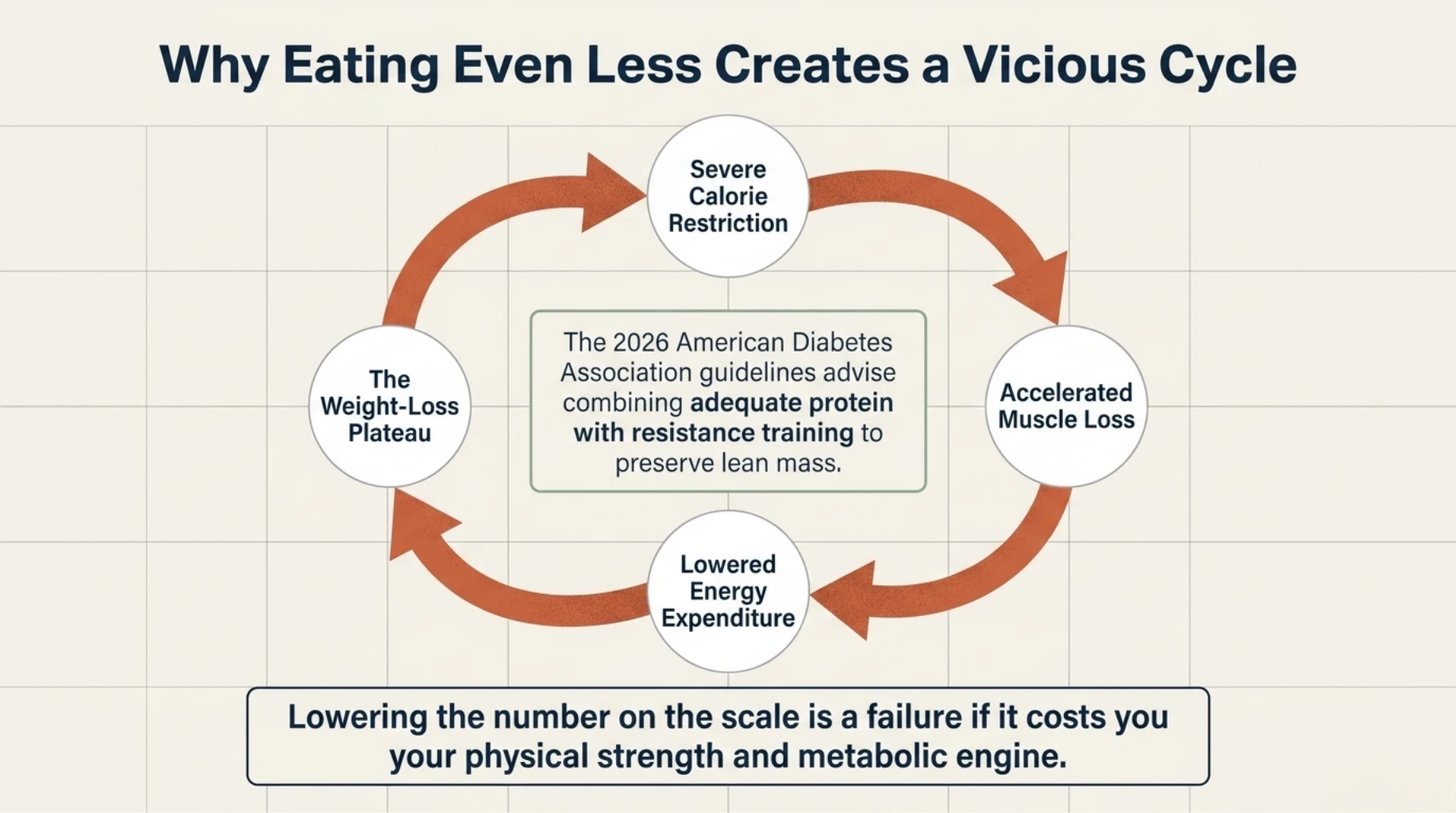
Repeated crash diets can make this more difficult by encouraging a cycle of rapid restriction, muscle loss, hunger and weight regain. Each new attempt may begin with a lower level of confidence and less lean mass than before.
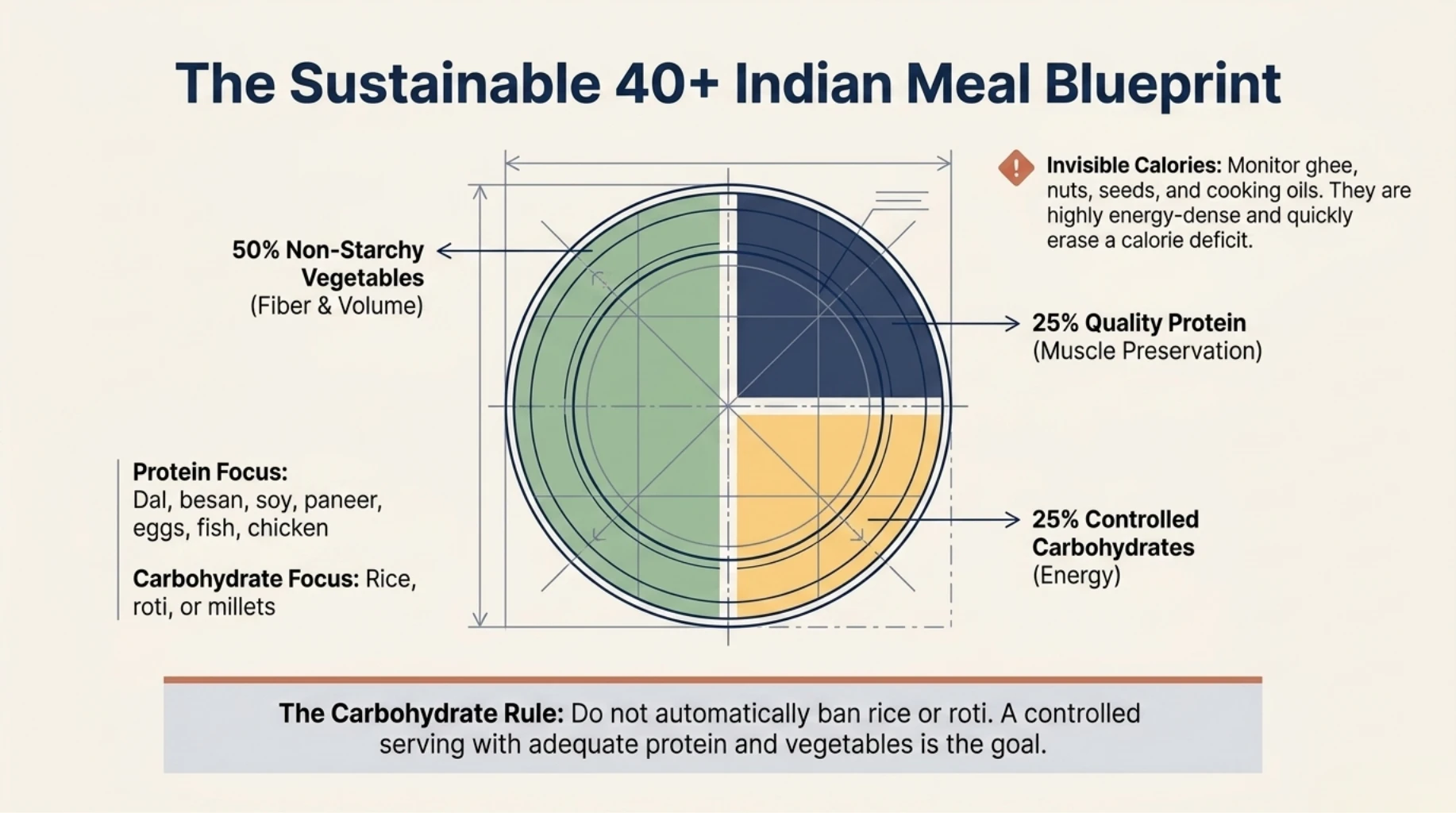
The practical solution is to reassess the entire pattern rather than switching from one fashionable diet to another. The updated plan may need better protein distribution, more vegetables, controlled cereal portions, resistance exercise, improved sleep and a smaller—but sustainable—energy deficit.
Hormones and Midlife Weight Gain
Hormones can influence body composition, appetite and fat distribution, but they should not be used as a universal explanation for every weight plateau.
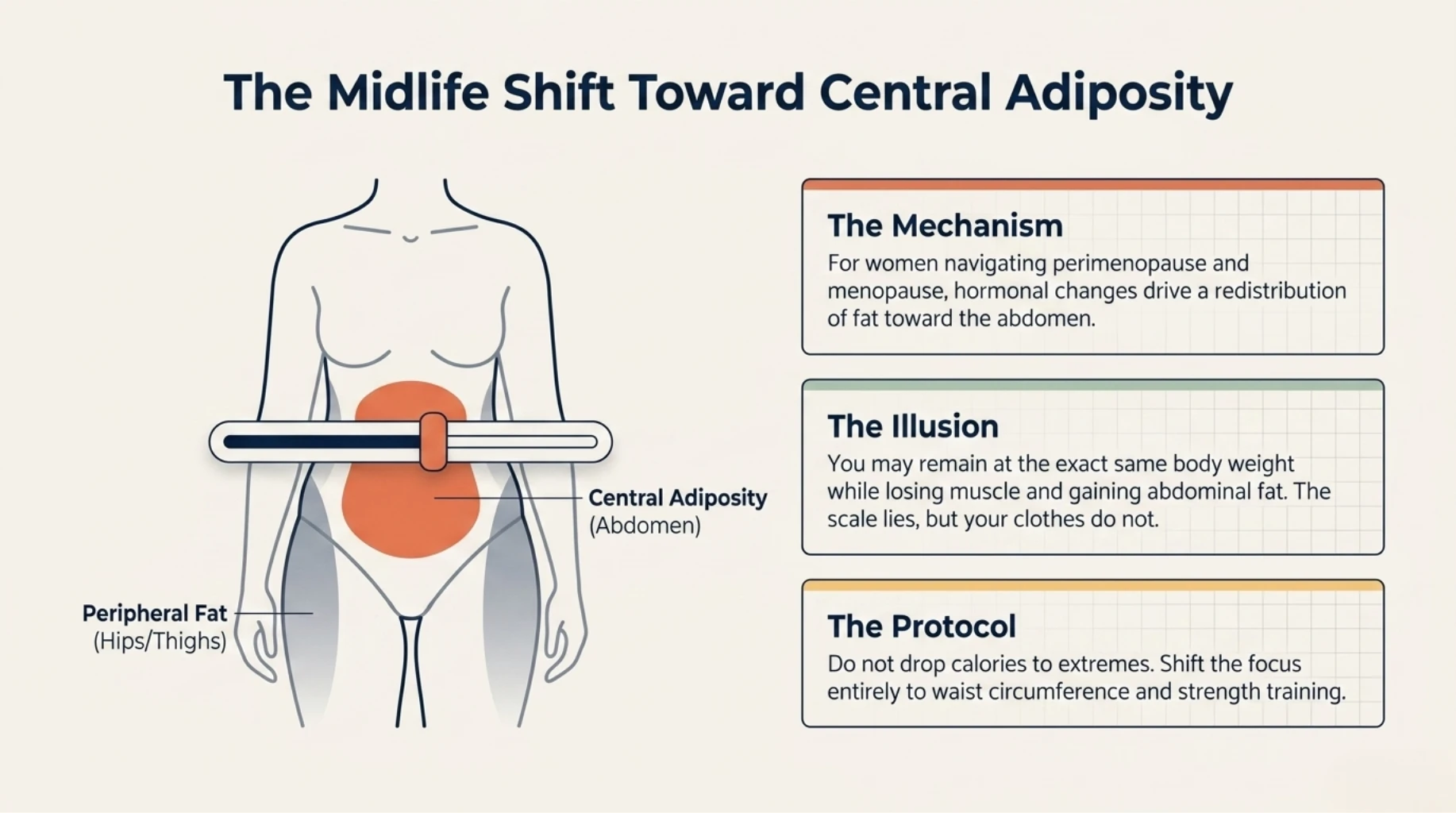
For women, the years after 40 may overlap with perimenopause or menopause. Ageing remains an important contributor to midlife weight gain, while menopause can promote redistribution of fat towards the abdomen. The Menopause Society notes that midlife commonly involves both age-related weight change and a shift towards greater central fat accumulation.
Symptoms such as hot flushes, night sweats, disturbed sleep and mood changes may indirectly make weight management harder by reducing activity and increasing fatigue. Hormone therapy may be appropriate for selected menopausal symptoms, but it should not be presented as a stand-alone weight-loss treatment.
Menopause, Abdominal Fat and Weight Loss After 40
For women, weight loss after 40 should focus not only on scale weight but also on waist circumference, strength, blood pressure, glucose and cholesterol.
A woman may remain at approximately the same body weight while losing muscle and gaining abdominal fat. This can explain why clothes fit differently even when the scale changes little. Research on menopause and body composition supports an association between the menopause transition, greater central adiposity and worsening cardiometabolic risk.
The response should not be an extremely low-calorie diet. Protecting muscle becomes especially important through adequate protein, resistance training and regular movement.
For men, weight gain after 40 is also commonly influenced by reduced activity, poor sleep, alcohol, abdominal fat and medication use. Testosterone testing is not required simply because weight loss is slow. It is more appropriate when compatible symptoms and clinical findings are present.
How Sleep and Stress Affect Losing Weight After 40
Poor sleep does not make weight loss mathematically impossible, but it can make a plan considerably harder to follow. Short or disrupted sleep may increase hunger, reduce motivation for exercise and encourage reliance on convenient, energy-dense food.
After 40, sleep problems may arise from work stress, caregiving, menopause symptoms, late-night screen use, alcohol or obstructive sleep apnea. Loud snoring, witnessed pauses in breathing, morning headaches and excessive daytime sleepiness deserve medical evaluation rather than being treated as a lack of discipline.
Stress can have a similar indirect effect. It may shorten sleep, increase emotional eating and reduce time available for meal preparation or exercise. The solution is not to tell patients to “avoid stress,” but to identify specific patterns that can be changed.
A successful plan for losing weight after 40 therefore needs to fit the person’s real schedule. A diet that requires separate cooking, constant hunger or two hours of daily exercise is unlikely to survive a demanding working week.
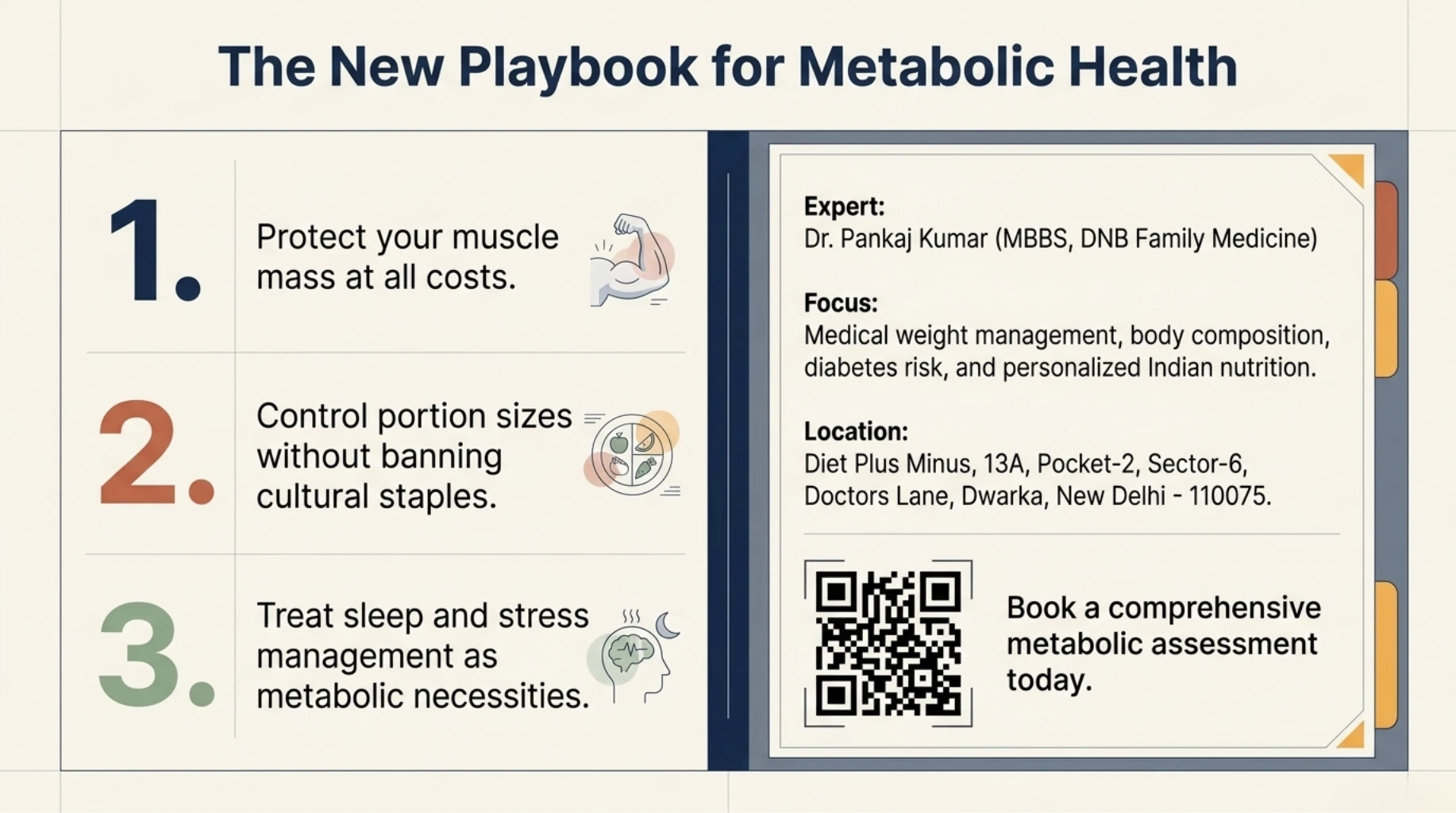

Written by Dr. Pankaj Kumar
General & Lifestyle Physician in Dwarka Sector 6, New Delhi · MBBS, DNB (Family Medicine), DNHE · 16 years of experience.
About the doctor →Book a consultation → Beyond Blood Sugar
 The 90-Day Prediabetes Turnaround
 The Indian Diabetes Diet Reset
 Eat to Beat Gout
 Why Is My Hair Falling?
 The 30-Day Inflammation Reset