One of the most common concerns I see in my clinic is related to cholesterol reports.
A patient walks in, slightly anxious, holding a lab report and saying, “Doctor, my total cholesterol is high. Do I need medication?”
This concern is understandable, but it is also based on an incomplete understanding of how cholesterol actually works in the body.
In reality, focusing only on a single number can be misleading. What matters far more is why cholesterol balance matters more than total cholesterol and how different components interact with each other.
Two individuals may have the same total cholesterol value, yet their actual risk for heart disease can be completely different.
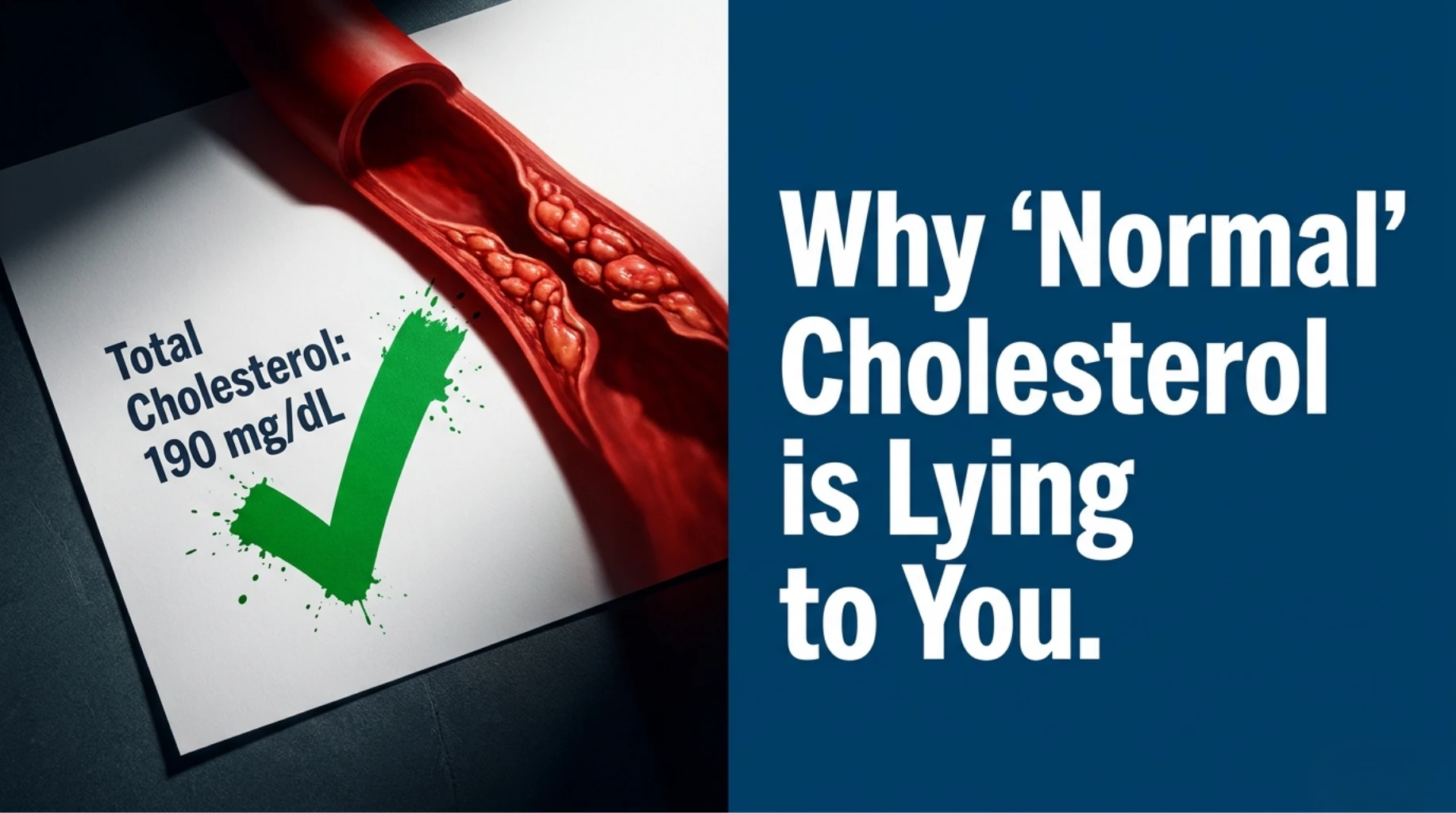
What Your Cholesterol Report Is Really Telling You
When you look at a standard lipid profile, you will usually see several values — total cholesterol, LDL, HDL, and triglycerides.
Most people focus only on total cholesterol because it is highlighted or seems easier to understand. However, this number is simply a combined value. It does not tell you how cholesterol is distributed in your body.
Think of it like looking at a total score without knowing individual subject marks. You may miss where the real problem lies.
This is exactly why understanding why cholesterol balance matters more than total cholesterol becomes clinically important.
Why Total Cholesterol Alone Can Mislead You
Let me explain this with a simple clinical scenario.
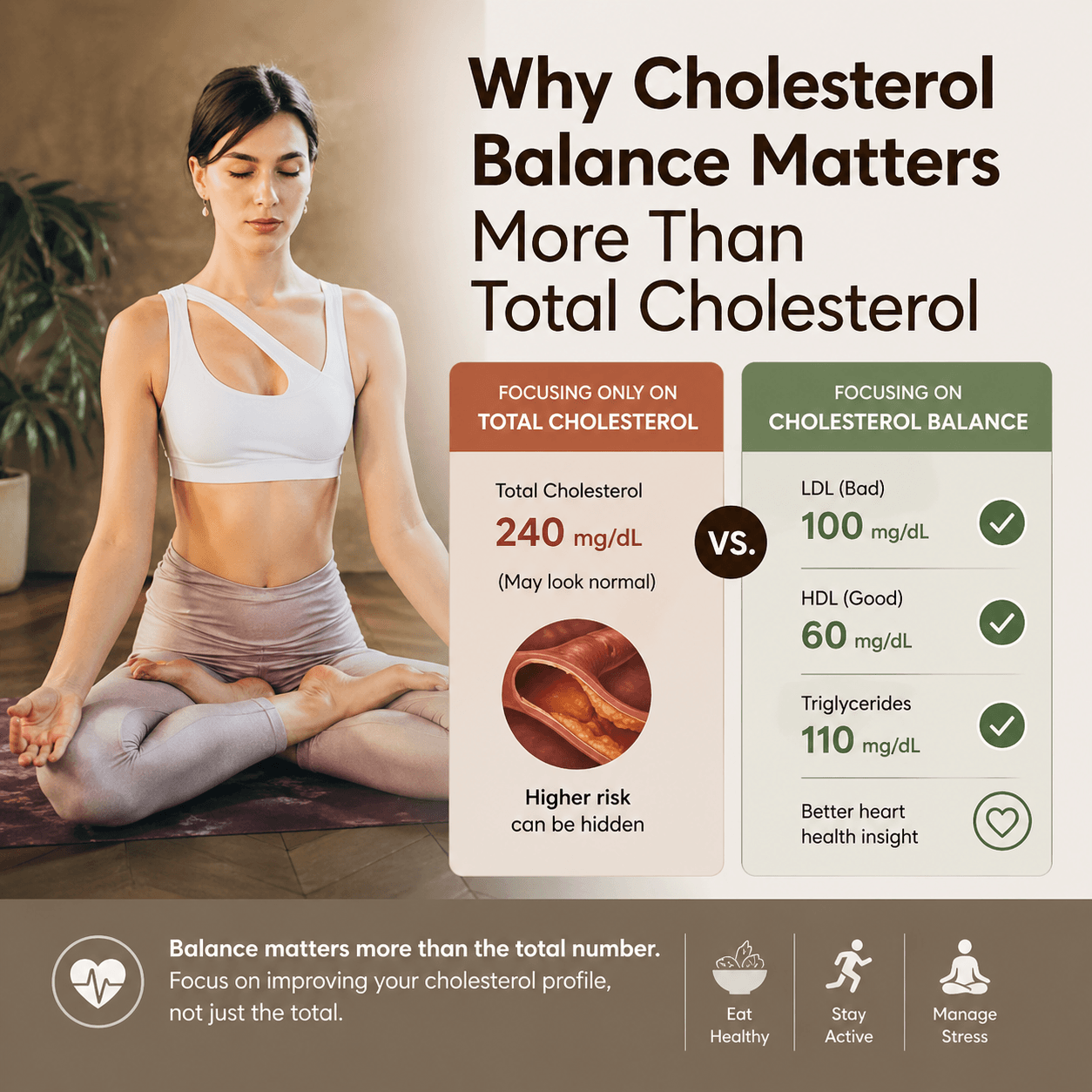
A patient may have slightly elevated total cholesterol but also have high HDL levels. HDL is considered protective, so this patient may actually have a lower cardiovascular risk.
On the other hand, another patient may have “normal” total cholesterol but low HDL and relatively higher LDL. This pattern is far more concerning.
If we look only at total cholesterol, both patients may appear similar. But their actual risk is very different.
This is the core reason why cholesterol balance matters more than just the total value.
Understanding Cholesterol Balance in Simple Terms
Cholesterol balance refers to how different types of cholesterol behave in relation to each other.
LDL (low-density lipoprotein) is often called “bad cholesterol” because it contributes to plaque formation inside blood vessels.
HDL (high-density lipoprotein) is considered “good cholesterol” because it helps remove excess cholesterol from circulation.
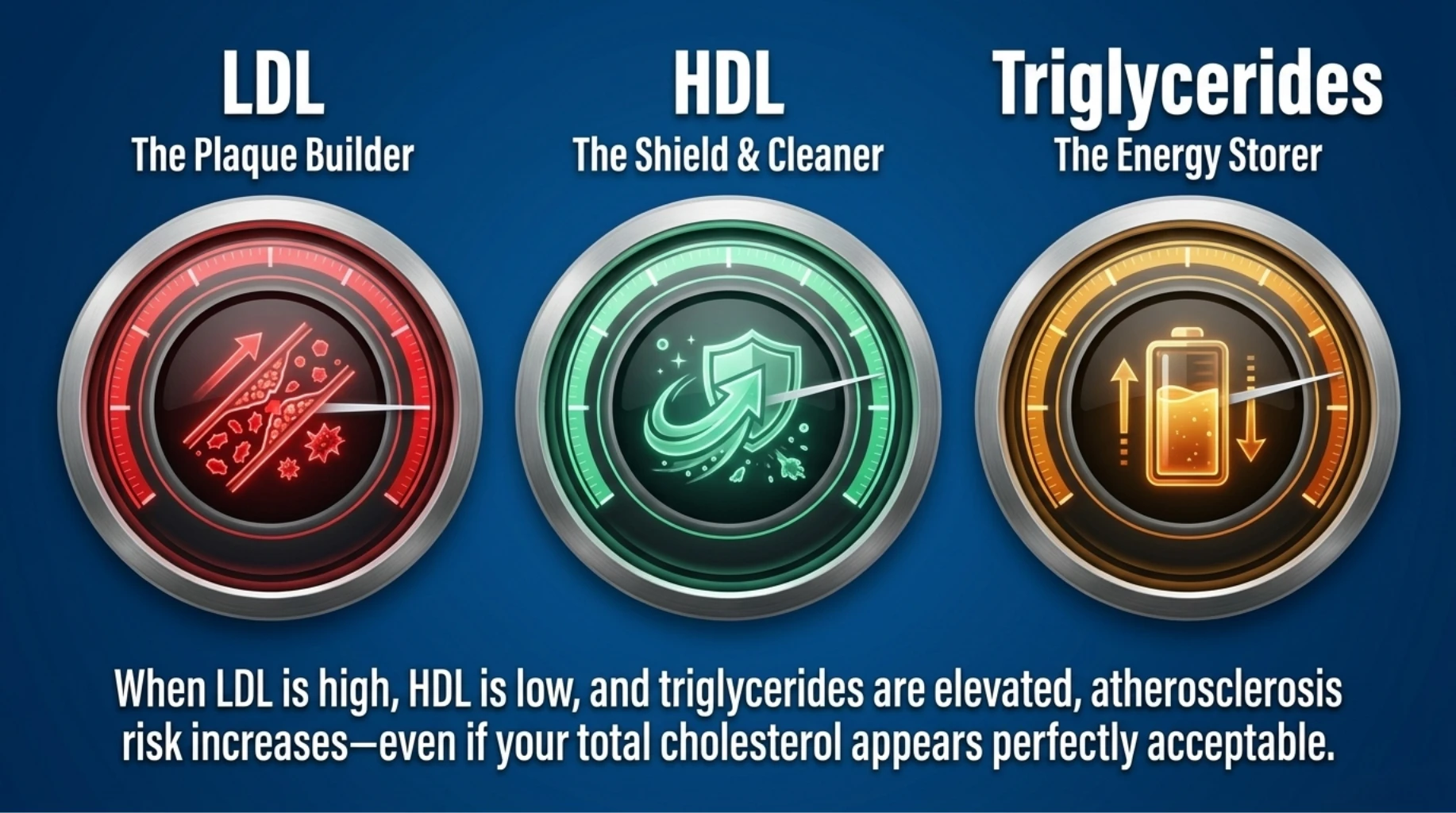
Triglycerides reflect how the body handles excess energy and are closely linked to metabolic health.
When LDL is high, HDL is low, and triglycerides are elevated, the balance is disturbed. This increases the risk of atherosclerosis, even if total cholesterol appears acceptable.
That is why understanding why cholesterol balance matters more than total cholesterol gives a clearer picture of cardiovascular health.
What Happens When This Balance Is Disturbed
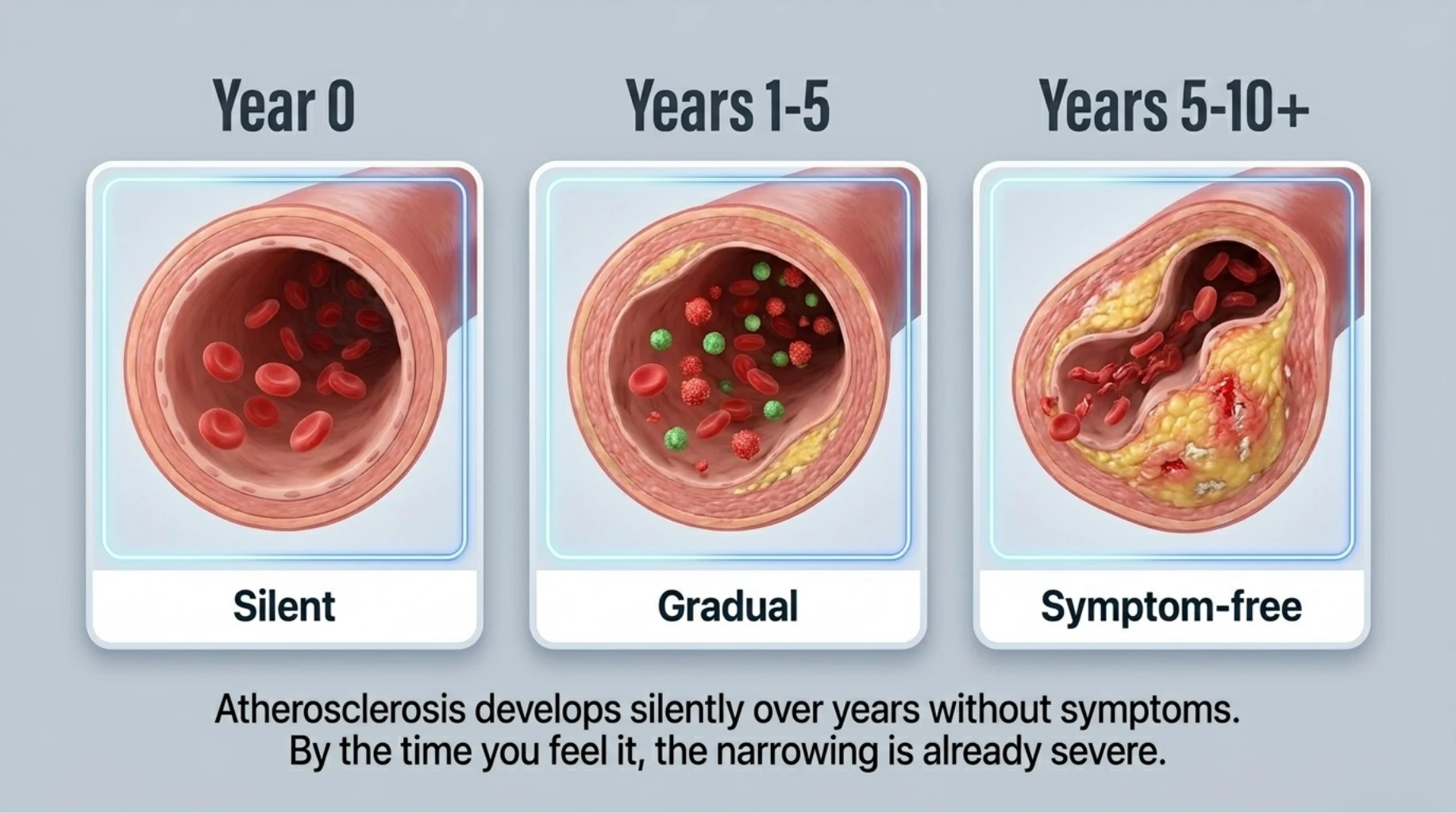
When cholesterol balance is not optimal, the body gradually starts accumulating fatty deposits inside blood vessels.
This process does not happen overnight. It develops silently over years, often without symptoms.
Patients may feel completely normal while these changes are slowly progressing.
Eventually, this can lead to narrowing of arteries, reduced blood flow, and increased risk of heart attack or stroke.
The key point here is that these risks are more closely related to cholesterol balance than to total cholesterol alone.
Why Many Patients Are Misled by “Normal Reports”
A common situation I see is patients being reassured because their total cholesterol is within the normal range.
However, when we look deeper, we often find:
LDL slightly elevated, HDL lower than ideal, and triglycerides borderline high.
Individually, these may not look alarming. But together, they indicate an underlying metabolic issue.
This is why a deeper understanding of why cholesterol balance matters more than total cholesterol helps in early detection and prevention.
The Role of Triglycerides in Cholesterol Balance
One of the most underestimated components in a lipid profile is triglycerides.
While most attention goes to cholesterol numbers, triglycerides often provide a clearer picture of underlying metabolic health.
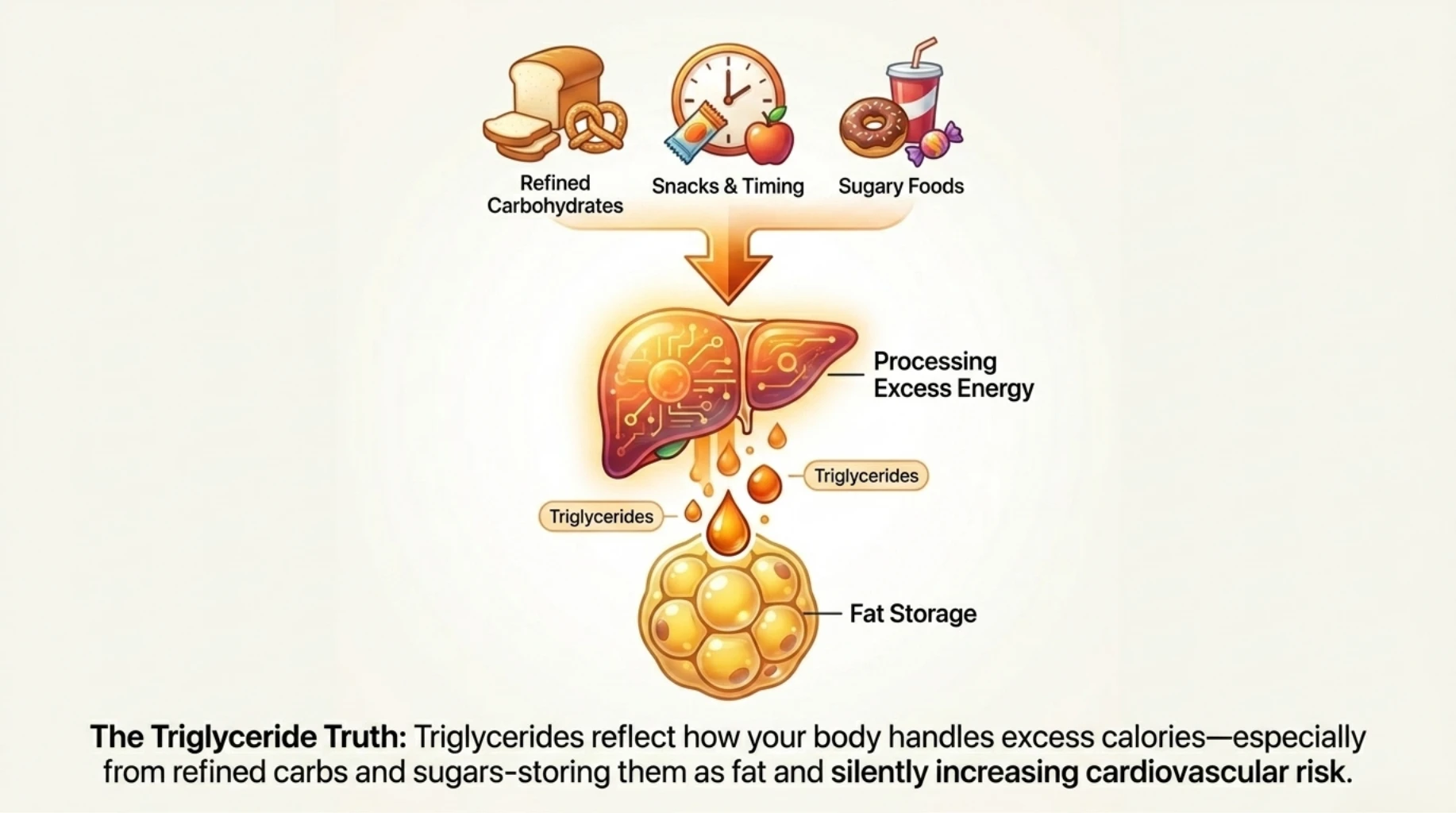
In simple terms, triglycerides reflect how your body is handling excess calories, especially from refined carbohydrates and sugars.
When triglyceride levels are elevated, it usually indicates that the body is storing excess energy as fat. This often happens in individuals who consume frequent snacks, sugary foods, or processed carbohydrates.
Even if total cholesterol appears acceptable, high triglycerides can silently increase cardiovascular risk.
This is another reason why why cholesterol balance matters more than total cholesterol becomes clinically relevant.
Low HDL: A Common but Ignored Problem
In Indian patients, one of the most common patterns I observe is low HDL levels.
HDL plays a protective role by helping remove excess cholesterol from blood vessels and transporting it back to the liver.
When HDL is low, this protective mechanism becomes weaker. As a result, cholesterol is more likely to remain in circulation and deposit within blood vessel walls.
Interestingly, many patients with low HDL still have “normal” total cholesterol levels. This creates a false sense of reassurance.
Understanding why cholesterol balance matters more than total cholesterol helps identify this hidden risk early.
The Link Between Insulin Resistance and Cholesterol Pattern
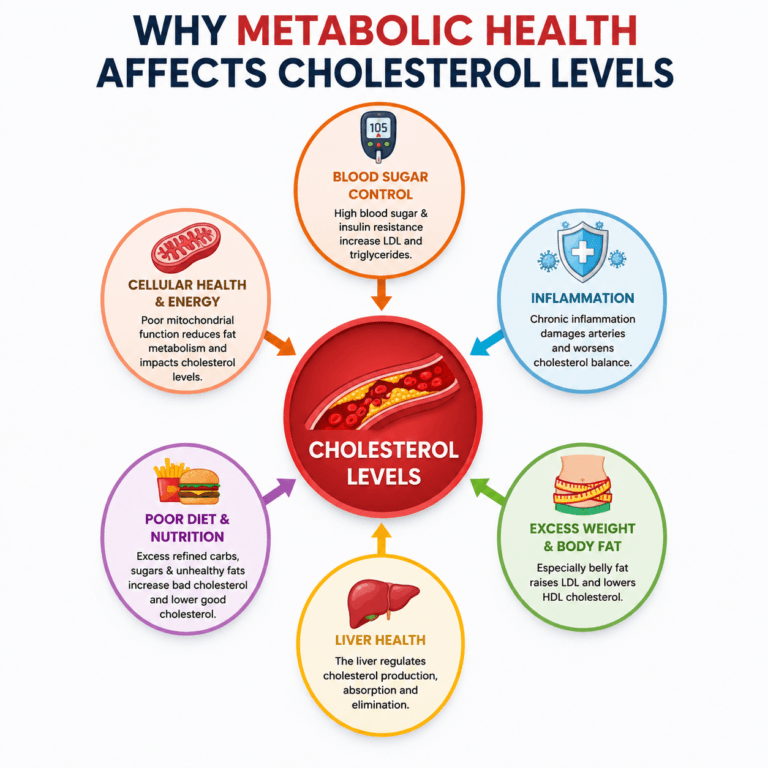
One of the most important factors influencing cholesterol balance is insulin resistance.
Insulin resistance is a condition where the body’s cells do not respond effectively to insulin, leading to higher circulating insulin levels.
This condition affects cholesterol in a very specific way: Triglycerides increase, HDL decreases, and LDL particles become smaller and more harmful.
This pattern is commonly seen in individuals with:
- Abdominal obesity
- Prediabetes
- Type 2 diabetes
- Fatty liver
Even if total cholesterol remains within range, this altered pattern significantly increases cardiovascular risk.
This again reinforces why why cholesterol balance matters more than total cholesterol in clinical decision-making.
Why “Normal” Reports Can Still Hide Risk
One of the biggest challenges in preventive cardiology is that many patients appear “normal” on routine reports.
Total cholesterol may be within range, and no immediate red flags are raised. However, when we analyze the detailed profile, we often find subtle imbalances: Triglycerides slightly elevated, HDL slightly low, and LDL borderline.
Individually, these values may not seem alarming. But together, they indicate an early metabolic disturbance.
This is particularly important because these early changes are reversible. Ignoring them allows the condition to progress silently over time.
This is why patients should understand why cholesterol balance matters more than total cholesterol instead of relying only on a single number.
How Lifestyle Patterns Influence Cholesterol Balance
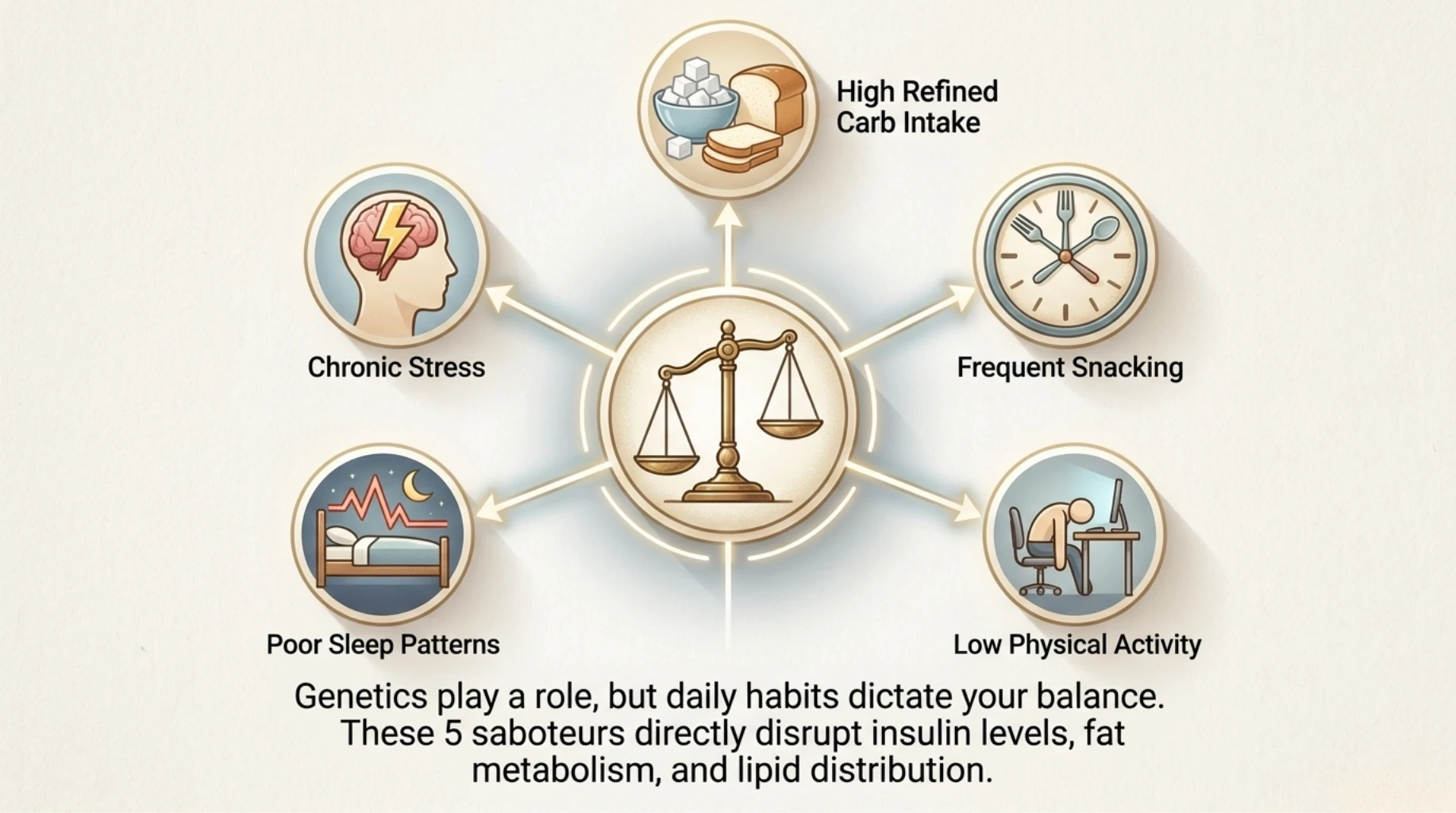
Cholesterol balance is not determined only by genetics. Daily habits play a major role.
Common lifestyle factors that disturb this balance include:
- High intake of refined carbohydrates
- Frequent snacking
- Low physical activity
- Poor sleep patterns
- Chronic stress
These factors collectively affect insulin levels, fat metabolism, and lipid distribution.
Over time, this leads to an unfavorable cholesterol pattern, even if total cholesterol does not change significantly.
This is the practical, real-life explanation behind why cholesterol balance matters more than total cholesterol.
A Simple Way to Look at Your Report
Instead of focusing on a single value, it is helpful to look at the overall pattern.
Ask simple questions:
Is HDL adequate? Are triglycerides controlled? Is LDL within a safe range?
Looking at these relationships gives a clearer picture than just checking whether total cholesterol is “normal.”
How to Interpret Your Cholesterol Report Like a Doctor
Once you understand why cholesterol balance matters, the next step is learning how to read your report correctly.
Instead of focusing only on total cholesterol, look at the pattern. A balanced profile usually means LDL is controlled, HDL is reasonably high, and triglycerides are within range.
For example, a person with moderately elevated total cholesterol but high HDL and low triglycerides may have a better risk profile than someone with “normal” total cholesterol but poor balance.
This is why understanding why cholesterol balance matters more than total cholesterol helps in making better health decisions.
Which Numbers Actually Matter More
From a practical perspective, some values are more important than others. LDL remains a key risk factor, especially when elevated over time.
HDL provides protection, and lower levels are often associated with higher risk. Triglycerides reflect metabolic health and are closely linked to insulin resistance.
Rather than isolating each number, the relationship between them gives the real picture. This balanced approach is far more useful than relying only on total cholesterol.
How to Improve Cholesterol Balance Naturally
The encouraging part is that cholesterol balance responds well to lifestyle changes.
In most early and moderate cases, correction does not require extreme measures. Instead, small consistent changes can significantly improve lipid patterns.
Focus on Meal Quality, Not Just Quantity
One of the most effective ways to improve cholesterol balance is to reduce refined carbohydrate intake.
Frequent consumption of sugar, packaged foods, and processed snacks increases triglycerides and lowers HDL.
Replacing these with whole foods, vegetables, and balanced meals improves lipid metabolism over time.
Increase Protein Intake for Better Metabolic Control
Adequate protein intake helps improve satiety and stabilizes blood sugar levels.
This indirectly improves cholesterol balance by reducing excess calorie intake and improving fat metabolism.
Including protein in each meal supports long-term metabolic health.
Improve Physical Activity and Reduce Sedentary Time
Regular physical activity has a direct positive effect on cholesterol balance. Exercise helps increase HDL levels and reduce triglycerides.
Even simple activities like daily walking can make a noticeable difference when done consistently. Avoiding prolonged sitting is equally important.
Address Underlying Metabolic Conditions
Conditions such as insulin resistance, fatty liver, and abdominal obesity often drive cholesterol imbalance.
Treating these conditions through structured lifestyle changes improves lipid profile naturally.
You can explore a structured approach here:
Lifestyle Modification Program
When Should You Consider Medical Treatment?
While lifestyle correction is the foundation, medication may be required in certain situations.
This includes:
- Persistently high LDL levels
- History of heart disease
- Presence of diabetes or multiple risk factors
- Failure of lifestyle changes to improve lipid profile
The decision should always be individualized based on overall risk, not just total cholesterol.
Key Take-Home Messages
- Total cholesterol alone does not reflect true cardiovascular risk
- Cholesterol balance gives a clearer and more accurate picture
- High triglycerides and low HDL are often early warning signs
- Insulin resistance plays a major role in lipid imbalance
- Consistent lifestyle changes can significantly improve cholesterol profile
Final Thoughts
Cholesterol management is not about chasing a single number. It is about understanding the overall pattern and what it represents.
Recognizing why cholesterol balance matters more than total cholesterol helps you move from reactive treatment to preventive care.
Instead of waiting for complications, early correction of lifestyle and metabolic factors can significantly reduce long-term risk.
If you want a personalized plan based on your reports and lifestyle, you can book a consultation here:
Book an Appointment
Disclaimer: This article is for educational purposes only and should not replace medical advice. Individual treatment should be based on clinical evaluation.

Written by Dr. Pankaj Kumar
General & Lifestyle Physician in Dwarka Sector 6, New Delhi · MBBS, DNB (Family Medicine), DNHE · 16 years of experience.
About the doctor →Book a consultation → Beyond Blood Sugar
 The 90-Day Prediabetes Turnaround
 The Indian Diabetes Diet Reset
 Eat to Beat Gout
 Why Is My Hair Falling?
 The 30-Day Inflammation Reset