

Why Body Fat Distribution Matters for Health More Than You Think
If you are trying to understand why body fat distribution matters for health, it is important to know that not all body fat behaves the same way.
Two people may have the same body weight, but their health risks can be completely different depending on where fat is stored.
This is why focusing only on weight can be misleading.
The location of fat in the body plays a major role in determining metabolic health, insulin sensitivity, and long-term disease risk.
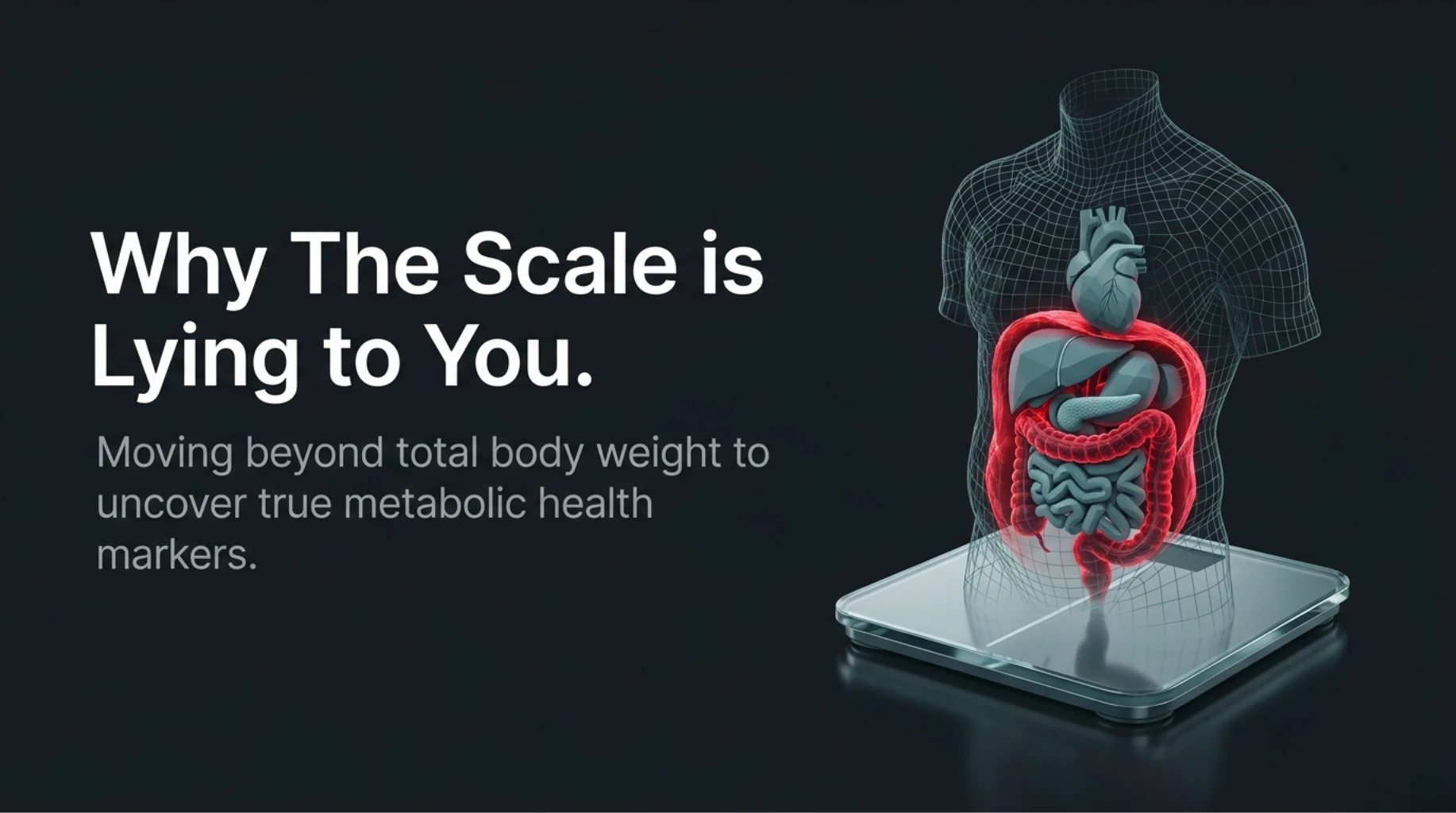
Weight vs Fat Distribution: Why They Are Not the Same
To fully understand why body fat distribution matters for health, you need to separate two concepts: total body weight and fat distribution.
Body weight includes:
- Fat mass
- Muscle mass
- Water content
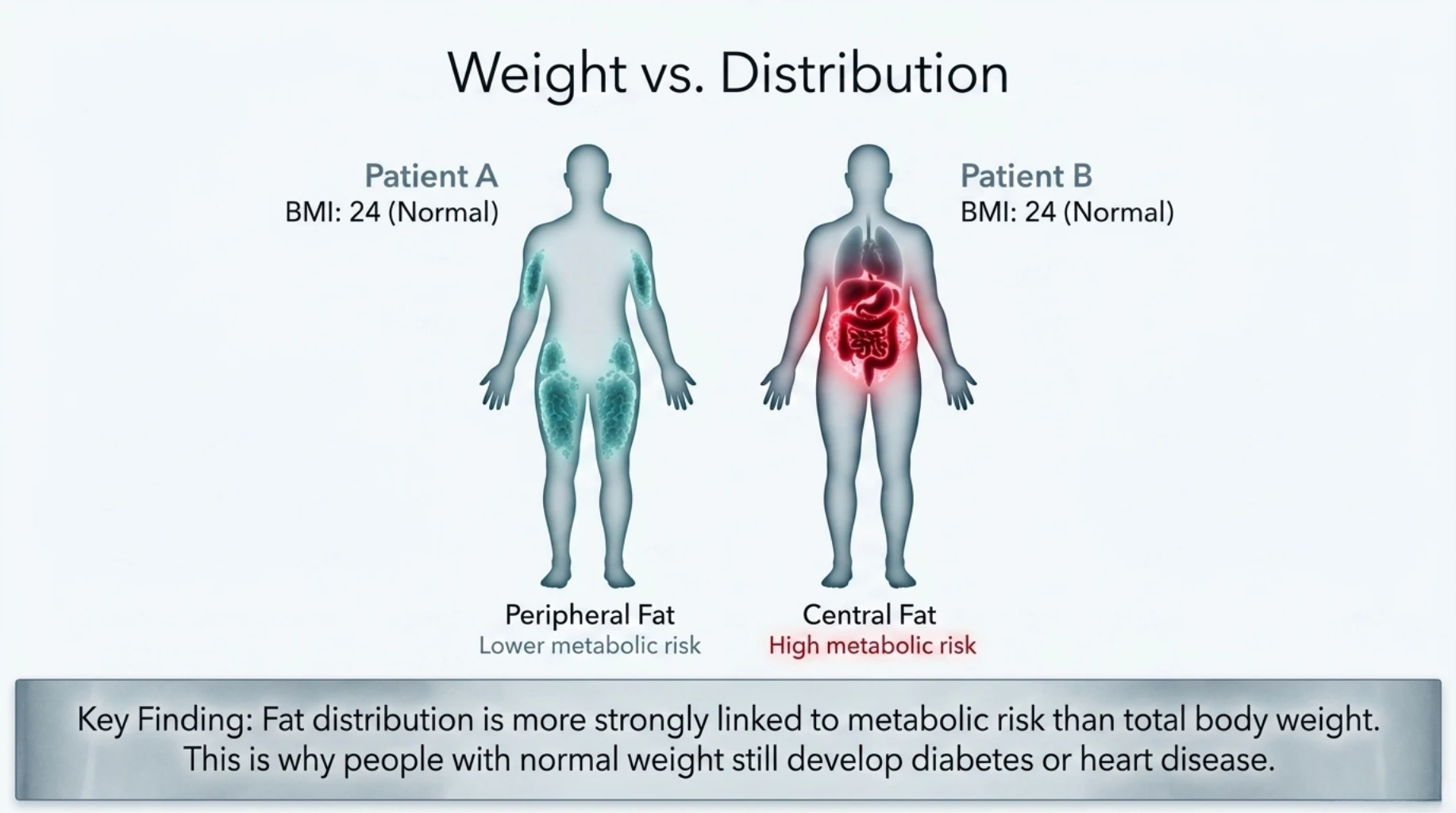
You can have a normal weight but still carry excess fat in risky areas such as the abdomen.
A study highlights that fat distribution is more strongly linked to metabolic risk than total body weight.
This is why some people with normal weight may still develop conditions like diabetes or heart disease.
Types of Body Fat: Not All Fat Is the Same
To truly understand why body fat distribution matters for health, it is important to know that there are different types of fat in the body, and each behaves differently.
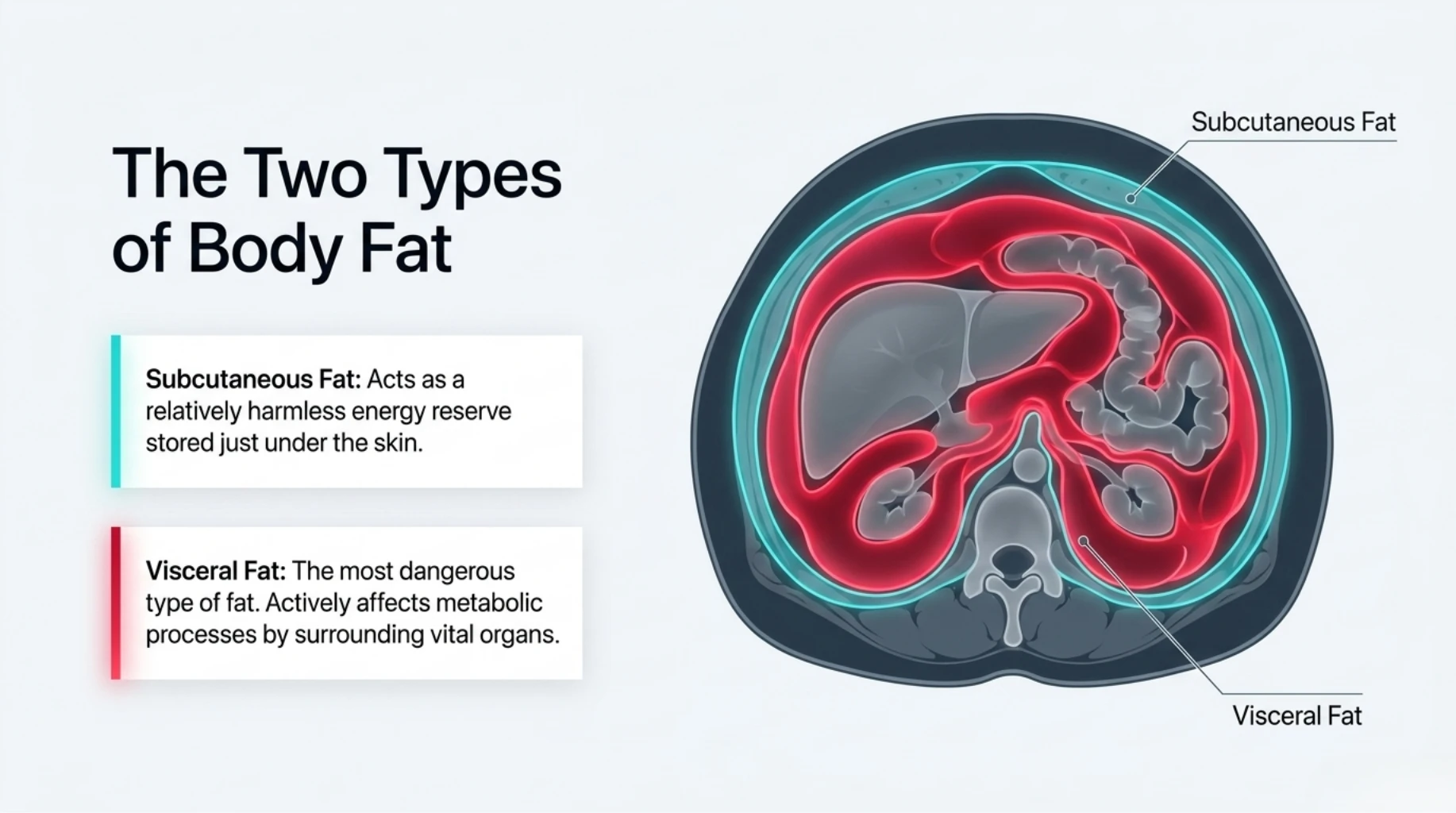
1. Subcutaneous Fat
Subcutaneous fat is the fat stored just under the skin. It is commonly found around the hips, thighs, and arms.
This type of fat is relatively less harmful and acts as an energy reserve.
2. Visceral Fat
Visceral fat is stored deep inside the abdomen, surrounding vital organs like the liver and intestines.
This is the most dangerous type of fat because it actively affects metabolic processes.
A study highlights that visceral fat is strongly associated with metabolic disorders and cardiovascular risk.
Why Belly Fat Is More Dangerous Than Hip Fat
One of the key reasons why body fat distribution matters for health is the difference between central fat (around the abdomen) and peripheral fat (around hips and thighs).
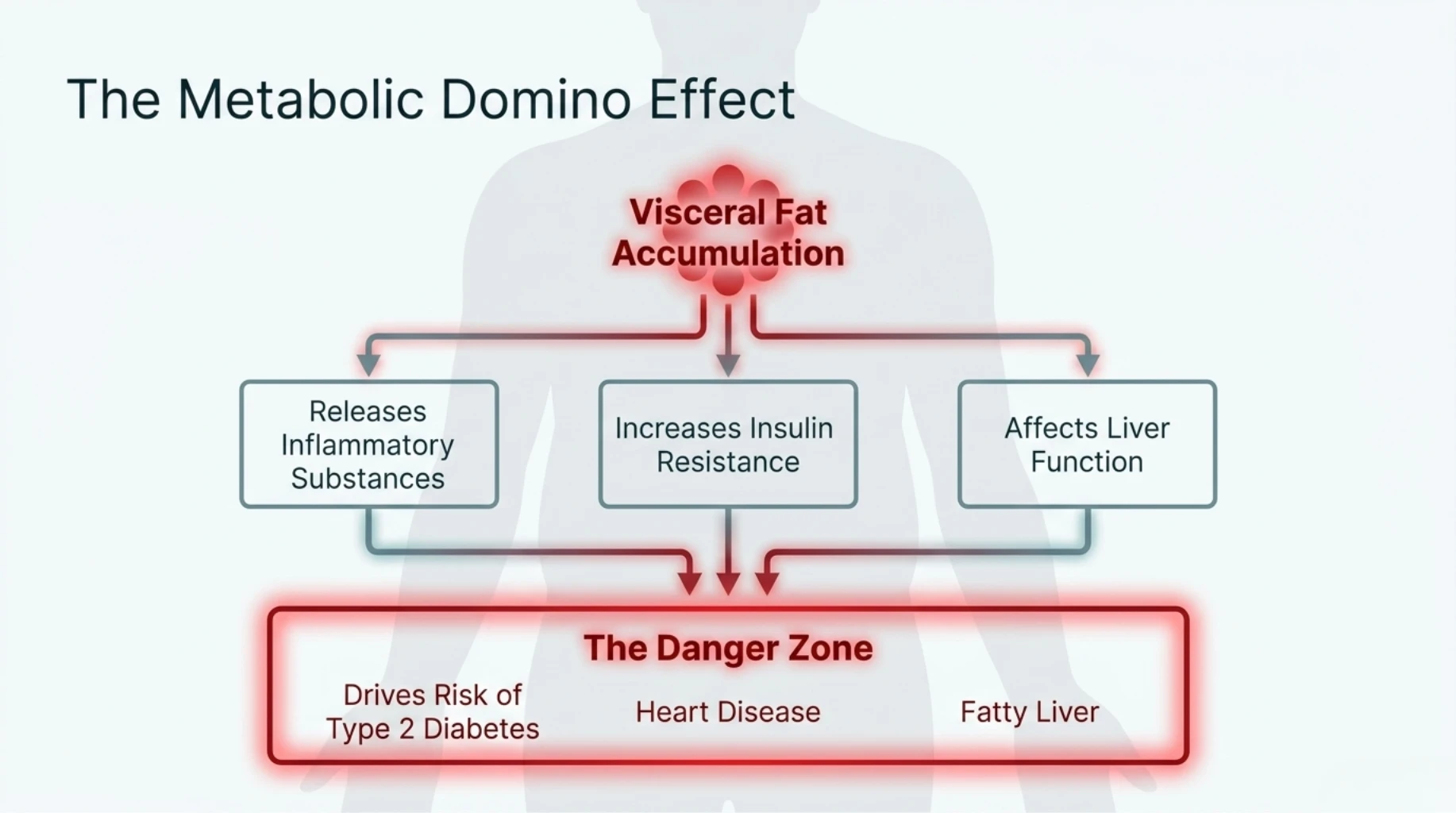
Abdominal fat, especially visceral fat:
- Releases inflammatory substances
- Increases insulin resistance
- Affects liver function
In contrast, fat stored in the hips and thighs is less metabolically active and may even have some protective effects.
A study shows that central obesity is strongly linked to metabolic risk compared to peripheral fat distribution.
How Fat Distribution Affects Metabolism
The reason why body fat distribution matters for health goes deeper into how fat interacts with your body.
Visceral fat influences:
- Hormone production
- Inflammation levels
- Insulin sensitivity
These effects increase the risk of:
- Type 2 diabetes
- Heart disease
- Fatty liver
Real-Life Patterns You May Notice
In real life, the impact of fat distribution appears as:
- Increasing waist circumference despite stable weight
- Normal BMI but abnormal blood tests
- Fat accumulation mainly around the abdomen
- Difficulty losing belly fat compared to other areas
These patterns show why focusing only on weight is not enough.
Fat Distribution and Health Risk Comparison
| Fat Type | Location | Health Impact |
|---|---|---|
| Subcutaneous Fat | Under skin | Lower risk |
| Visceral Fat | Around organs | High risk |
This comparison clearly explains why fat location is more important than total fat quantity alone.
What I Recommend in Clinical Practice
Understanding why body fat distribution matters for health helps you focus on the right goal. The aim is not just weight loss, but improving where and how fat is stored in the body.
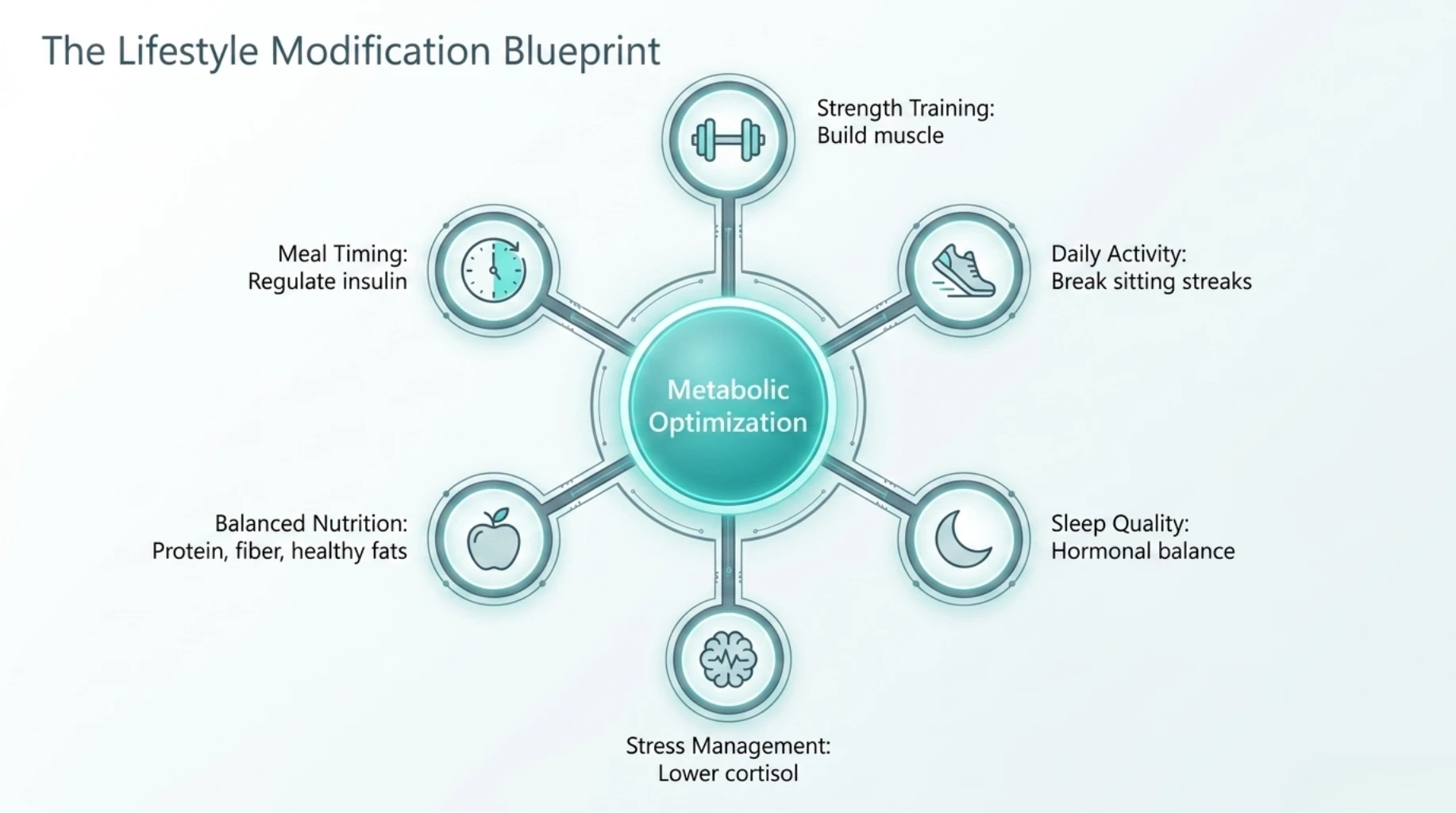
In clinical practice, correcting fat distribution requires a structured and consistent lifestyle approach.
- Focus on strength training: Helps build muscle and reduce visceral fat
- Increase daily activity: Avoid long periods of sitting
- Improve sleep quality: Supports hormonal balance
- Manage stress: Reduces cortisol-driven abdominal fat
- Maintain balanced nutrition: Include protein, fiber, and healthy fats
- Follow regular meal timing: Helps regulate insulin
- Track waist circumference: More meaningful than weight alone
For structured metabolic care: Lifestyle Modification Program.
For personalized consultation: Consultation Link.
Warning Signs That Should Not Be Ignored
Certain signs may indicate unhealthy fat distribution even if your weight is normal:
- Increasing waist circumference
- Normal weight but abnormal blood reports
- Fat concentrated around the abdomen
- Family history of metabolic diseases
- Difficulty reducing belly fat
Key Takeaway
Why body fat distribution matters for health is because fat stored around the abdomen has a much higher impact on metabolism and disease risk than fat stored elsewhere. Focusing on improving fat distribution is essential for long-term health.
References
- Fat distribution and health risk study
- Visceral fat research
- Central obesity study
- Metabolic risk research
- Clinical overview
Take the Next Step

Written by Dr. Pankaj Kumar
General & Lifestyle Physician in Dwarka Sector 6, New Delhi · MBBS, DNB (Family Medicine), DNHE · 16 years of experience.
About the doctor →Book a consultation → Beyond Blood Sugar
 The 90-Day Prediabetes Turnaround
 The Indian Diabetes Diet Reset
 Eat to Beat Gout
 Why Is My Hair Falling?
 The 30-Day Inflammation Reset