In clinical practice, one of the most common scenarios I see is patients coming with routine blood reports and saying, “Doctor, my liver test is abnormal, but I feel completely fine.”
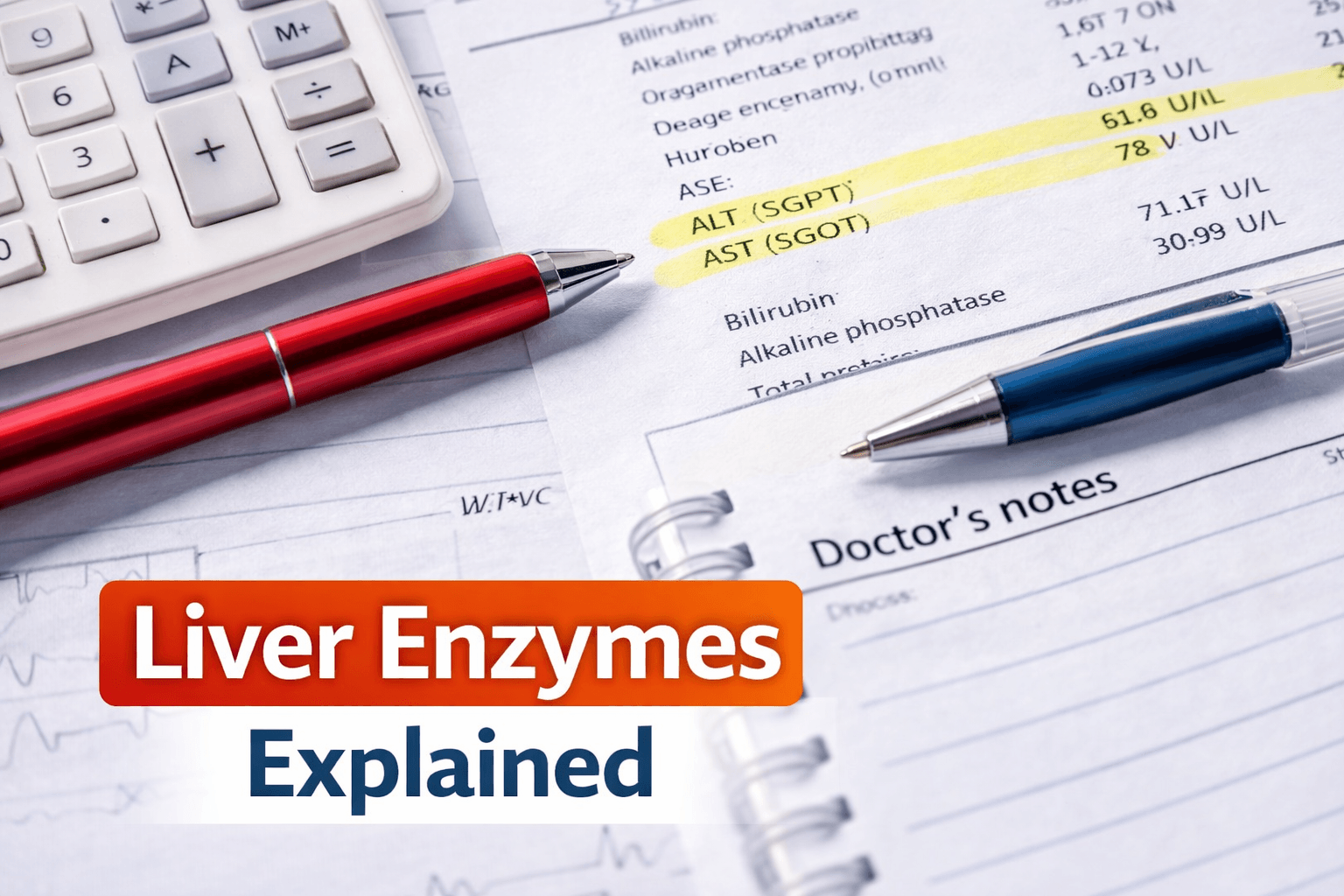
Most people do not experience pain, digestive issues, or visible changes when fat begins accumulating in the liver. Because of this, fatty liver often remains undiagnosed until routine investigations are done.
Research on non-alcoholic fatty liver disease (NAFLD) confirms that the majority of individuals remain asymptomatic in early stages.
This silent nature explains why fatty liver detected in blood test situations are so common in preventive health checkups.
The Role of Liver Enzymes (SGPT and SGOT)
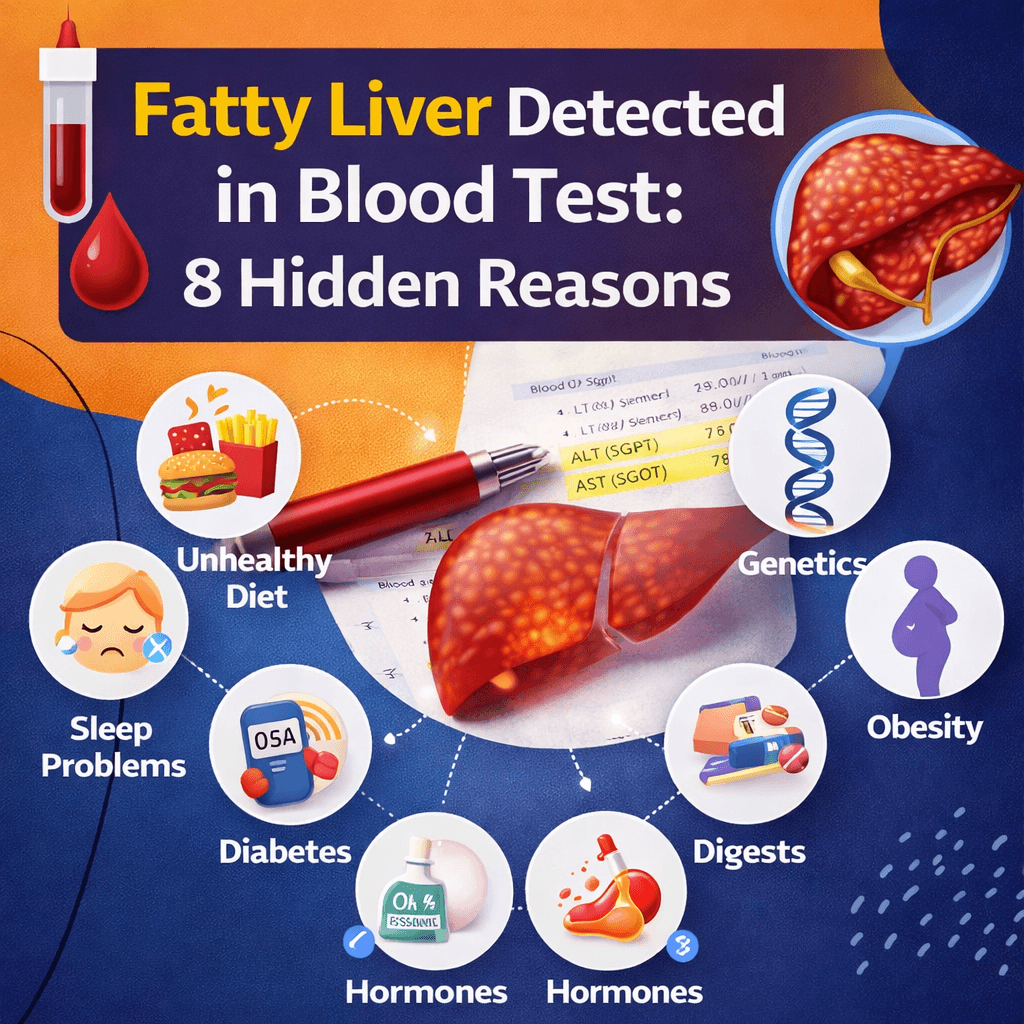
The most common reason fatty liver is suspected during routine tests is elevated liver enzymes.
SGPT (Alanine aminotransferase) and SGOT (Aspartate aminotransferase) are enzymes present inside liver cells.
When liver cells are stressed or damaged, these enzymes leak into the bloodstream, leading to elevated levels in blood reports.
In early fatty liver, mild elevation of SGPT is often the first abnormal finding.
Scientific studies show that liver enzyme elevation is a common early indicator of fatty liver disease.
This is why many patients first learn about their condition when they see fatty liver detected in blood test results.
Why Symptoms Are Usually Absent
The liver is a highly resilient organ with a large functional reserve. Even when fat accumulates in a significant portion of liver cells, the remaining healthy cells continue to perform essential functions.
Unlike organs such as the heart or stomach, the liver does not produce strong early warning signals like pain.
Because of this, individuals rarely notice symptoms until the disease progresses to advanced stages. This explains why fatty liver detected in blood test situations often surprise patients who feel completely normal.
Insulin Resistance Is the Hidden Driver
In most cases, fatty liver is not an isolated condition. It is part of a larger metabolic problem. The key underlying issue is insulin resistance.
When the body becomes resistant to insulin, fat metabolism is altered, and excess fat starts accumulating in the liver. Scientific research shows a strong link between insulin resistance and fatty liver development.
This metabolic disturbance develops silently, which is why fatty liver detected in blood test findings often appear unexpectedly.
Why Ultrasound Confirms Fatty Liver
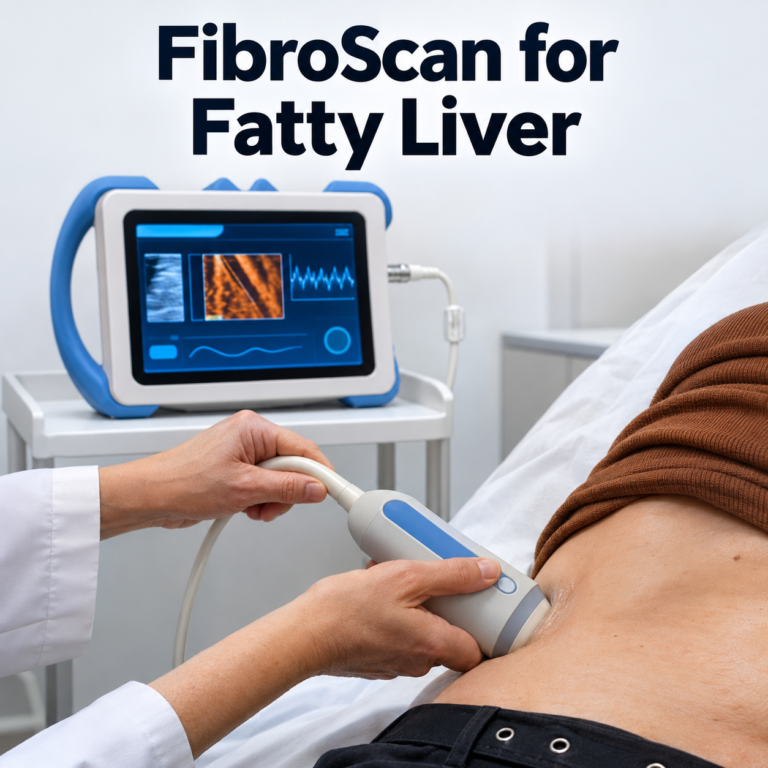
After abnormal liver enzymes are detected, the next step in most cases is an ultrasound of the abdomen. Ultrasound helps visualize the liver and detect fat accumulation within liver tissue.
In fatty liver, the liver appears brighter (increased echogenicity) compared to normal liver tissue. This is a characteristic finding that helps confirm the diagnosis.
In many patients, fatty liver detected in blood test is later confirmed through ultrasound imaging. This combination of abnormal blood reports and imaging findings provides a clearer picture of liver health.
The Link With Metabolic Syndrome
Fatty liver is rarely an isolated condition. It is often part of a broader metabolic problem known as metabolic syndrome.
Metabolic syndrome includes a cluster of conditions such as abdominal obesity, high blood sugar, high triglycerides, and high blood pressure. These conditions share a common underlying mechanism: insulin resistance.
Research shows that fatty liver is closely associated with metabolic syndrome and can be an early marker of metabolic dysfunction.
This is why fatty liver detected in blood test often indicates a deeper metabolic issue that requires attention.
Common Patient Mistakes After Diagnosis
Many patients feel confused or anxious when they see abnormal liver reports. However, the response to diagnosis often determines long-term outcomes.
Some common mistakes include:
- Ignoring the report because there are no symptoms
- Focusing only on medications without lifestyle changes
- Following extreme or crash diets
- Stopping exercise after initial improvement
- Assuming fatty liver is not serious
Because fatty liver detected in blood test often occurs without symptoms, patients may underestimate its importance. Early intervention is crucial to prevent progression to more serious stages.
Non-Obvious Signs That May Be Present
Even though fatty liver is considered asymptomatic, some subtle signs may be present but often overlooked.
- Mild fatigue or low energy
- Difficulty losing weight
- Increase in abdominal fat
- Borderline abnormal blood sugar levels
- Elevated triglycerides
- Occasional heaviness after meals
These signs are not specific, but they may indicate underlying metabolic issues associated with fatty liver detected in blood test.
Understanding Blood Test Findings
| Test | What It Indicates | Relevance in Fatty Liver |
|---|---|---|
| SGPT (ALT) | Liver cell injury | Often elevated in early fatty liver |
| SGOT (AST) | Liver and muscle enzyme | May increase in later stages |
| Triglycerides | Blood fat levels | Often elevated in metabolic syndrome |
| Fasting blood sugar | Glucose metabolism | May indicate insulin resistance |
| Ultrasound | Imaging of liver | Confirms fat accumulation |
This table helps patients understand how fatty liver detected in blood test findings correlate with metabolic health.
Why Early Detection Is Actually an Opportunity
Although unexpected diagnosis can be stressful, early detection of fatty liver is actually beneficial. When identified early, the condition is often reversible with lifestyle changes.
Scientific evidence supports the role of lifestyle modification in improving liver health and reversing early fatty liver changes.
This means that fatty liver detected in blood test should not be seen as a problem alone, but also as an opportunity to correct metabolic health early.
What To Do After Fatty Liver Is Detected
If you have a report showing fatty liver detected in blood test, the next step is not panic but proper evaluation and structured action.
The focus should be on identifying underlying metabolic causes and correcting them early.
- Assess metabolic health. Check blood sugar, HbA1c, lipid profile, and waist circumference.
- Start regular physical activity. Both walking and strength training help improve liver fat.
- Improve dietary quality. Reduce refined carbohydrates, sugary foods, and processed items.
- Target abdominal fat. Waist reduction is more important than overall weight.
- Ensure good sleep. Poor sleep worsens insulin resistance.
- Manage stress. Chronic stress contributes to metabolic imbalance.
- Avoid unnecessary medications or supplements. Focus on evidence-based lifestyle changes.
These steps address the root causes behind fatty liver detected in blood test rather than just managing lab values.
When You Should Be More Concerned
Although early fatty liver is often silent and reversible, certain findings may indicate progression and require closer medical attention.
- Persistently high liver enzymes
- Rapid increase in SGPT or SGOT
- Presence of diabetes or prediabetes
- Severe abdominal obesity
- Fatty liver with fibrosis on imaging
- Symptoms such as fatigue or abdominal discomfort
If these features are present along with fatty liver detected in blood test, a detailed clinical evaluation is important to prevent long-term liver damage.
Key Takeaway
Fatty liver detected in blood test is common because the condition develops silently without symptoms in early stages.
It is often identified through elevated liver enzymes such as SGPT and confirmed by ultrasound.
The underlying cause is usually metabolic, especially insulin resistance and abdominal fat.
The good news is that early fatty liver is usually reversible with timely lifestyle changes.
About the Doctor
This article reflects real clinical scenarios frequently seen in practice. You can learn more about my approach to metabolic and lifestyle health here: About Dr. Pankaj Kumar.
Consultation and Next Steps
If your reports show fatty liver or abnormal liver enzymes, early evaluation can help prevent long-term complications.
For personalized consultation, you can book an appointment here:
Disclaimer: This content is for educational purposes and should not replace professional medical advice.

Written by Dr. Pankaj Kumar
General & Lifestyle Physician in Dwarka Sector 6, New Delhi · MBBS, DNB (Family Medicine), DNHE · 16 years of experience.
About the doctor →Book a consultation → Beyond Blood Sugar
 The 90-Day Prediabetes Turnaround
 The Indian Diabetes Diet Reset
 Eat to Beat Gout
 Why Is My Hair Falling?
 The 30-Day Inflammation Reset