
An occasional headache after poor sleep, dehydration or a long working day may settle with rest and simple measures. Repeated headaches, however, should not be managed indefinitely by taking another painkiller and returning to the same routine.
Recurring headaches may be caused by migraine, tension-type headache, sleep disturbance, vision problems, medicine overuse or other treatable conditions. Less commonly, a changing or unusually severe headache may signal an underlying neurological, vascular, infectious or systemic problem.
The warning is not that every headache requires a brain scan. Most headaches are primary headache disorders rather than symptoms of a dangerous disease. The concern arises when the pattern changes, medication use keeps increasing, neurological symptoms appear or the headache occurs in a higher-risk clinical situation. The American College of Radiology and American Headache Society identify sudden onset, neurological deficits, fever, increasing severity, new onset after age 50 and certain medical conditions among the important red flags requiring further assessment.
This article explains seven signs that mean self-treatment is no longer enough.

When Should Repeated Headaches Be Checked?
Arrange a medical consultation when headaches are becoming more frequent, changing in character, requiring regular painkillers or interfering with sleep, work or daily activity.
Seek urgent assessment for a sudden “worst-ever” headache, or a headache accompanied by weakness, confusion, fainting, seizure, fever with neck stiffness, persistent visual disturbance or difficulty speaking. These features may point to a secondary cause rather than an uncomplicated migraine or tension-type headache.
Why Repeated Headaches Should Not Always Be Self-Treated
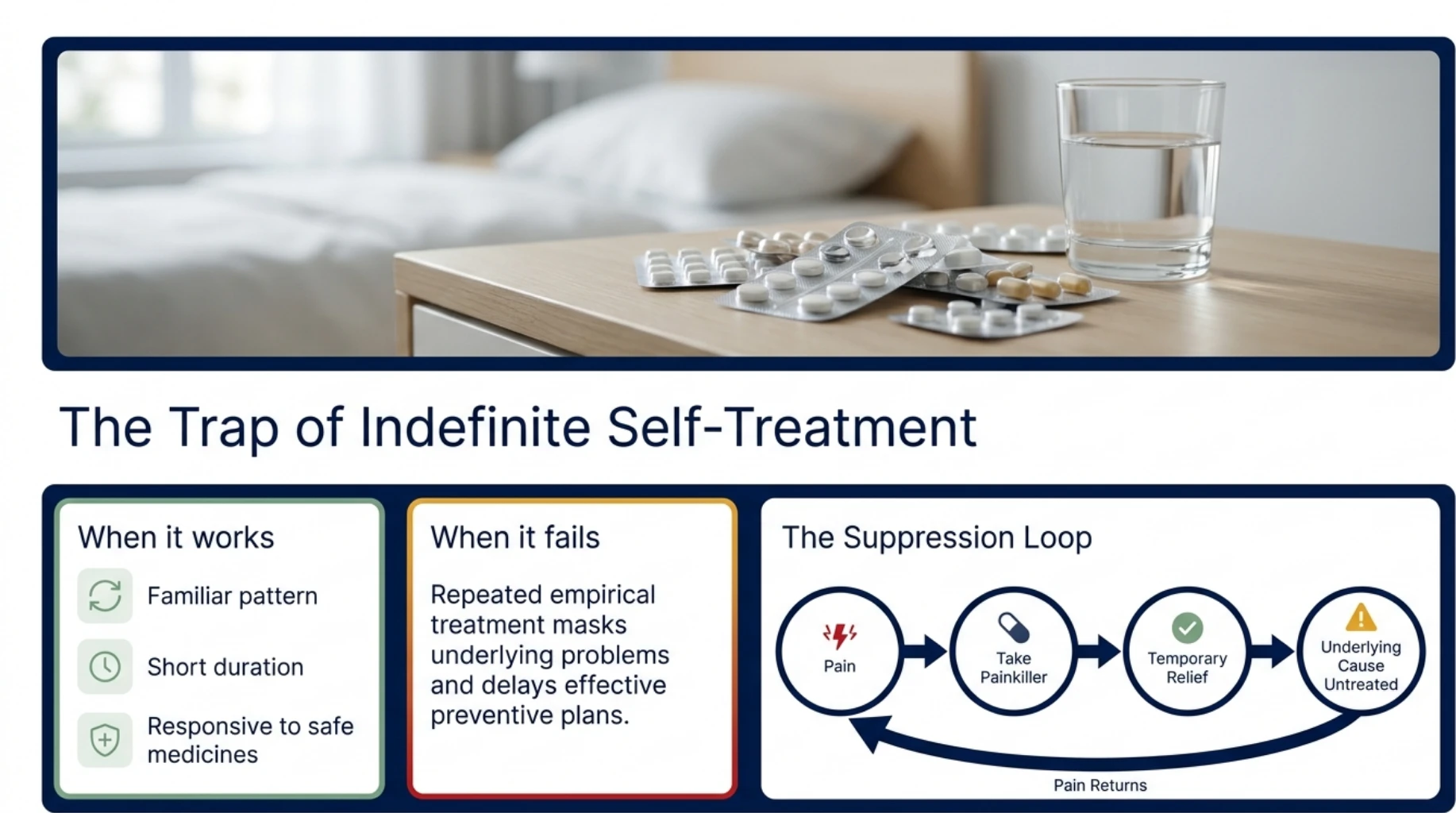
Self-treatment can be reasonable for an occasional, familiar headache that is mild, short-lived and responds to a medicine that is safe for you. The problem begins when treatment repeatedly suppresses the pain without clarifying why the headache keeps returning.
Recurring symptoms may reflect:
- inadequately treated migraine
- tension-type headache
- poor sleep or sleep apnea
- dehydration or irregular meals
- eye strain
- neck and shoulder muscle problems
- anemia
- medication side effects
- excessive caffeine or caffeine withdrawal
- painkiller overuse
- another medical or neurological condition
The pattern matters more than one isolated episode. A headache that has occurred in the same recognizable way for years is clinically different from one that appeared recently and is becoming progressively more severe.
It is also important not to treat every headache as “sinus,” “gas,” “stress” or high blood pressure without assessment. Similar symptoms can arise from different causes, and repeated empirical treatment may delay an effective preventive plan.
Clinical headache guidance recommends distinguishing primary headache disorders from secondary headaches through the history, examination and appropriate investigation when warning signs are present.
Repeated Headaches Versus an Occasional Headache
There is no single number of episodes that automatically makes a headache dangerous. Frequency is only one part of the assessment.
A doctor may ask:
- How many days each month do you have a headache?
- How long does each episode last?
- Is the pain one-sided or on both sides?
- Is it throbbing, pressing or stabbing?
- Do light, noise, nausea or physical activity worsen it?
- Are there visual, sensory or speech symptoms beforehand?
- Which medicines do you take, and on how many days?
- Has the pattern changed recently?
Headaches occurring on 15 or more days per month are generally described as chronic, but even less frequent attacks may need medical care when they are severe, disabling or associated with warning signs. Frequent use of acute medication can also transform an episodic headache disorder into a more persistent pattern.
Sign 1: Your Headache Pattern Is Changing
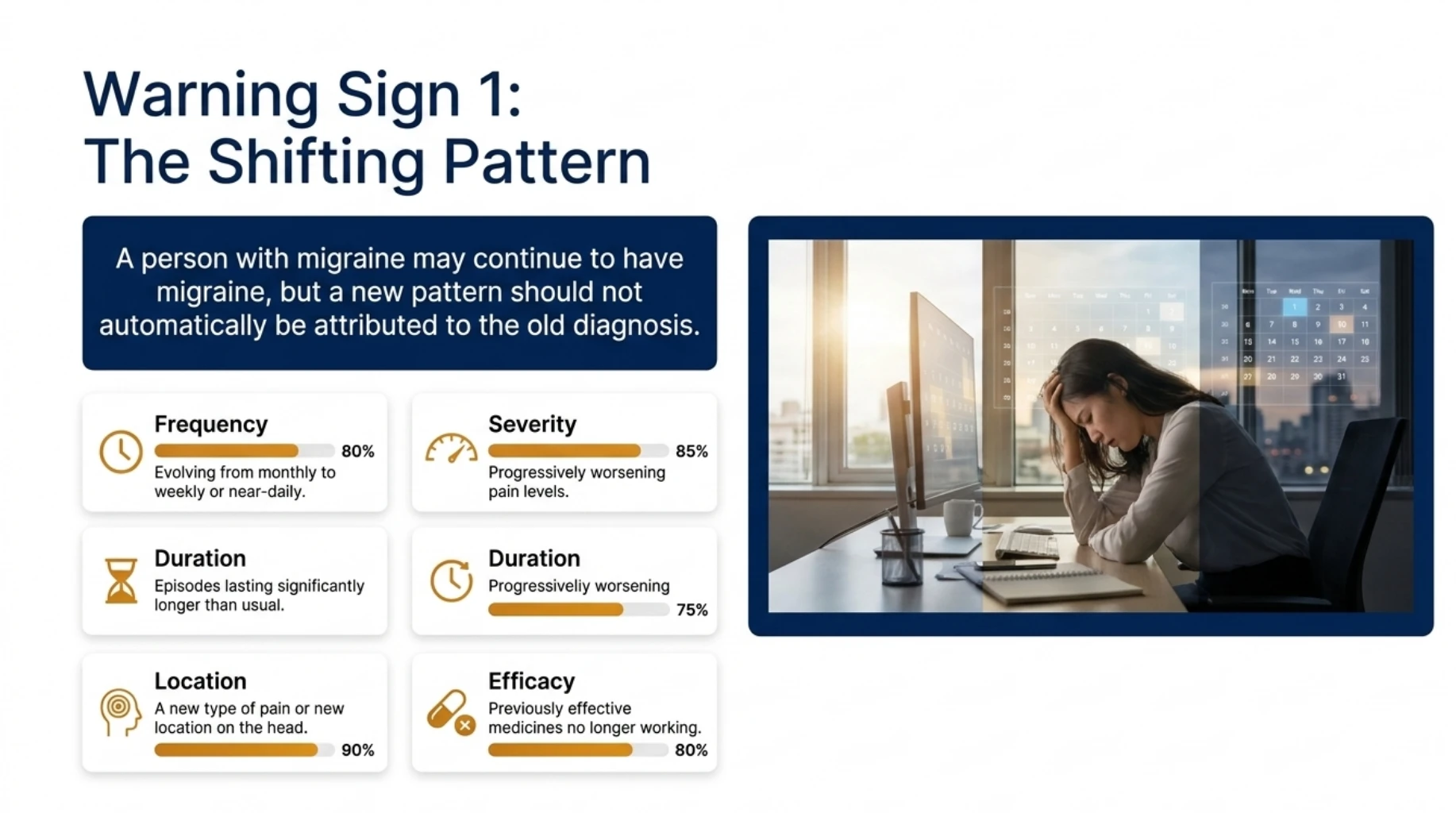
A clear change from your usual pattern is one of the most important reasons to stop relying only on self-treatment.
The change may involve:
- headaches becoming more frequent
- pain becoming progressively more severe
- a new location or type of pain
- headaches lasting much longer
- a previously effective medicine no longer working
- new vomiting, visual disturbance or neurological symptoms
- headaches beginning to wake you regularly
- a new headache with no previous similar history
A person with migraine may continue to have migraine, but a new pattern should not automatically be attributed to the old diagnosis. Someone who previously experienced one recognizable attack every few months may need reassessment if the headaches become weekly, nearly daily or substantially different.
The American Headache Society includes clear progression in severity or frequency among the warning features of a possible secondary headache. The ACR headache-imaging criteria similarly identify increasing frequency or severity as a red flag that can justify further clinical evaluation and selected imaging.
Repeated Headaches That Are Becoming More Frequent
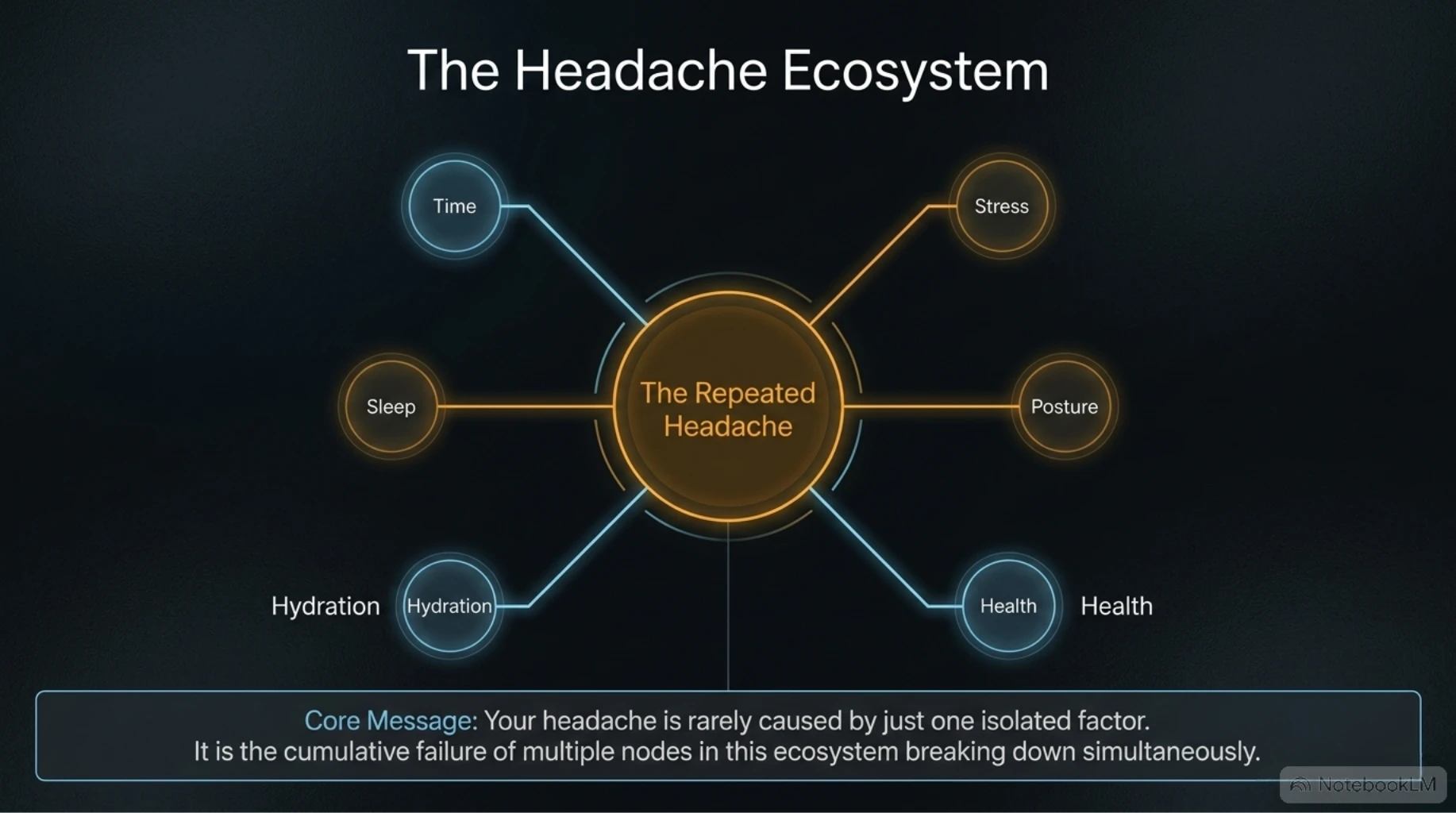
Repeated headaches may become more frequent because the underlying migraine or tension-type headache is not being adequately controlled. Sleep loss, missed meals, stress, menstrual changes and irregular caffeine intake may contribute.
Medication overuse should also be considered when headache frequency rises while painkiller use is increasing. In this situation, the person may take medicine because the headache is frequent, while the increasingly frequent medicine use may itself help maintain the headache cycle.
Do not respond to increasing headache frequency simply by increasing doses or combining several over-the-counter medicines. Combination products may contain overlapping ingredients such as paracetamol, caffeine or an anti-inflammatory medicine, creating a risk of accidental excessive dosing or medication-related harm.
A medical review can clarify whether the problem is migraine, tension-type headache, medication overuse or another cause and whether preventive treatment is more suitable than repeated rescue medication.
Sign 2: The Headache Is Sudden and Extremely Severe
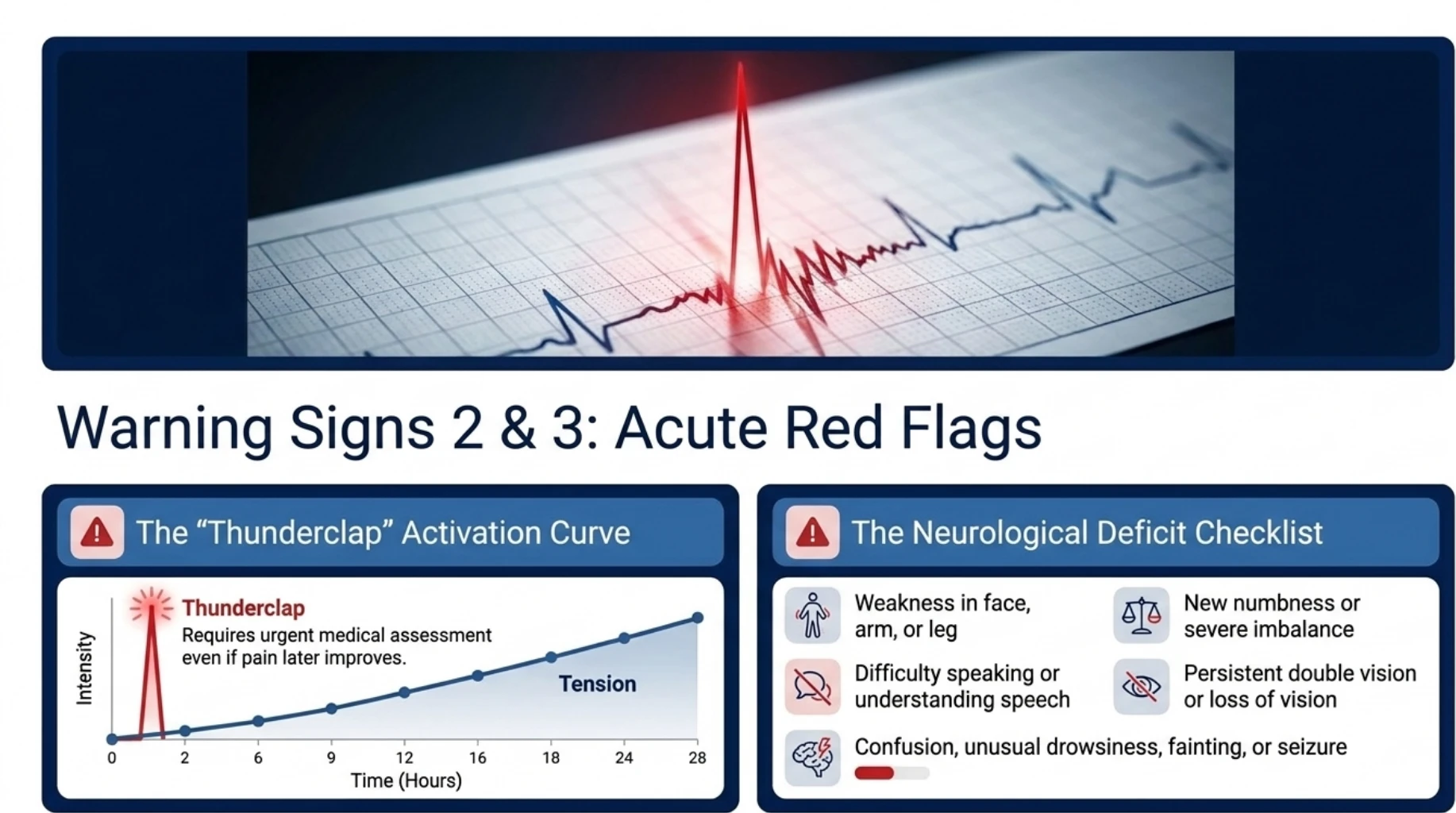
A headache that reaches maximum intensity within seconds or a few minutes is commonly described as a thunderclap headache. It may feel like an explosion, a sudden blow or the worst headache the person has experienced.
This pattern requires urgent medical assessment even if the pain later improves.
Possible causes include bleeding around the brain, a vascular abnormality, arterial dissection, cerebral venous thrombosis or another acute neurological condition. A person cannot reliably distinguish these problems from a severe migraine based only on how the pain feels.
The American Headache Society identifies sudden maximum-intensity onset as one of the most concerning secondary-headache features. ACR guidance also treats sudden severe headache as a distinct clinical situation in which urgent investigation may be required.
Call emergency services or attend an emergency department when a sudden severe headache is accompanied by:
- fainting or collapse
- vomiting
- neck stiffness
- confusion
- seizure
- weakness or numbness
- difficulty speaking
- visual loss
- severe imbalance
Do not drive yourself when symptoms are severe. Do not take a painkiller and wait several hours to see whether a first-ever thunderclap headache settles.
Sign 3: Headache Comes With Neurological or Systemic Symptoms
A familiar migraine can cause nausea, light sensitivity and, in some patients, a recognized aura. However, new or unusual neurological symptoms require assessment rather than an assumption that they are “just migraine.”
Important symptoms include:
- weakness in the face, arm or leg
- new numbness
- difficulty speaking or understanding speech
- confusion or unusual drowsiness
- fainting or seizure
- persistent double vision or loss of vision
- marked difficulty walking
- a new unequal pupil or drooping eyelid
New neurological deficits are recognized red flags for a secondary headache and may require urgent examination and brain or vascular imaging.
Systemic symptoms matter as well. Headache with fever, neck stiffness, rash, confusion or marked illness can indicate an infection involving the brain or its surrounding tissues. Headache with unexplained weight loss, night sweats or known cancer may require investigation for a systemic cause.
A severe headache with weakness, speech disturbance or facial drooping should be treated as a possible stroke emergency rather than managed at home.
Headache With Weakness, Confusion or Vision Changes
Some migraine auras cause temporary visual, sensory or speech symptoms. These usually follow a recognizable pattern and resolve. Nevertheless, a first episode, an atypical episode or a symptom that persists needs medical evaluation because stroke and other neurological conditions can resemble migraine aura.
Particular concern is warranted when:
- symptoms begin suddenly rather than spreading gradually
- one-sided weakness is present
- consciousness is altered
- symptoms last longer than usual
- the person has no previous similar aura
- the headache is very different from earlier migraines
Self-diagnosis is unreliable in these situations. A neurological examination and, when appropriate, urgent imaging are safer than assuming a new neurological symptom is migraine.
Sign 4: A New Headache Starts in a Higher-Risk Situation
A new headache deserves closer attention when it begins after age 50, during pregnancy or after delivery, in a person with cancer, or in someone with significantly reduced immunity.
These circumstances do not mean that a dangerous cause is definitely present. They lower the threshold for clinical assessment because the range of possible secondary causes is different.
New Headaches After Age 50, During Pregnancy or With Reduced Immunity
A first or substantially different headache beginning after age 50 may require assessment for conditions that are less typical in younger adults. For example, new headache with scalp tenderness, jaw discomfort while chewing, fever or visual symptoms can occur with giant cell arteritis, which requires prompt medical evaluation.
During pregnancy and the postpartum period, a new or severe headache may relate to high blood pressure, vascular complications, pituitary conditions or other pregnancy-associated causes. The American Headache Society lists pregnancy and postpartum onset among situations in which secondary headache should be considered.
People receiving cancer treatment, taking immunosuppressive medicines or living with a condition that substantially weakens immunity may have a greater risk of infection or other secondary causes. A new headache with fever, neurological symptoms or worsening general health should not be repeatedly self-treated.
The ACR includes older age at onset, cancer and immunocompromise among the red flags that influence whether imaging and further investigation are appropriate.





Written by Dr. Pankaj Kumar
General & Lifestyle Physician in Dwarka Sector 6, New Delhi · MBBS, DNB (Family Medicine), DNHE · 16 years of experience.
About the doctor →Book a consultation → Beyond Blood Sugar
 The 90-Day Prediabetes Turnaround
 The Indian Diabetes Diet Reset
 Eat to Beat Gout
 Why Is My Hair Falling?
 The 30-Day Inflammation Reset