Losing weight can require months of effort, so seeing the scale rise again can be discouraging. Weight regain after dieting is common, and it usually has more than one explanation. A smaller body requires less energy than a larger one, appetite may increase after weight loss, some lean tissue may have been lost, and the highly structured routine used during the diet may be difficult to maintain indefinitely.
That does not mean weight regain is unavoidable or that your metabolism has been permanently “damaged.”
Current research describes weight regain as a combination of biological, behavioral and environmental influences. A 2025 review notes that regain can occur after weight loss achieved through lifestyle treatment, medication or bariatric procedures and identifies appetite regulation, energy expenditure and body-composition changes among the mechanisms being studied.
Understanding these changes can help you respond more effectively than simply starting another harsher diet.
Why Does Weight Come Back After a Diet?
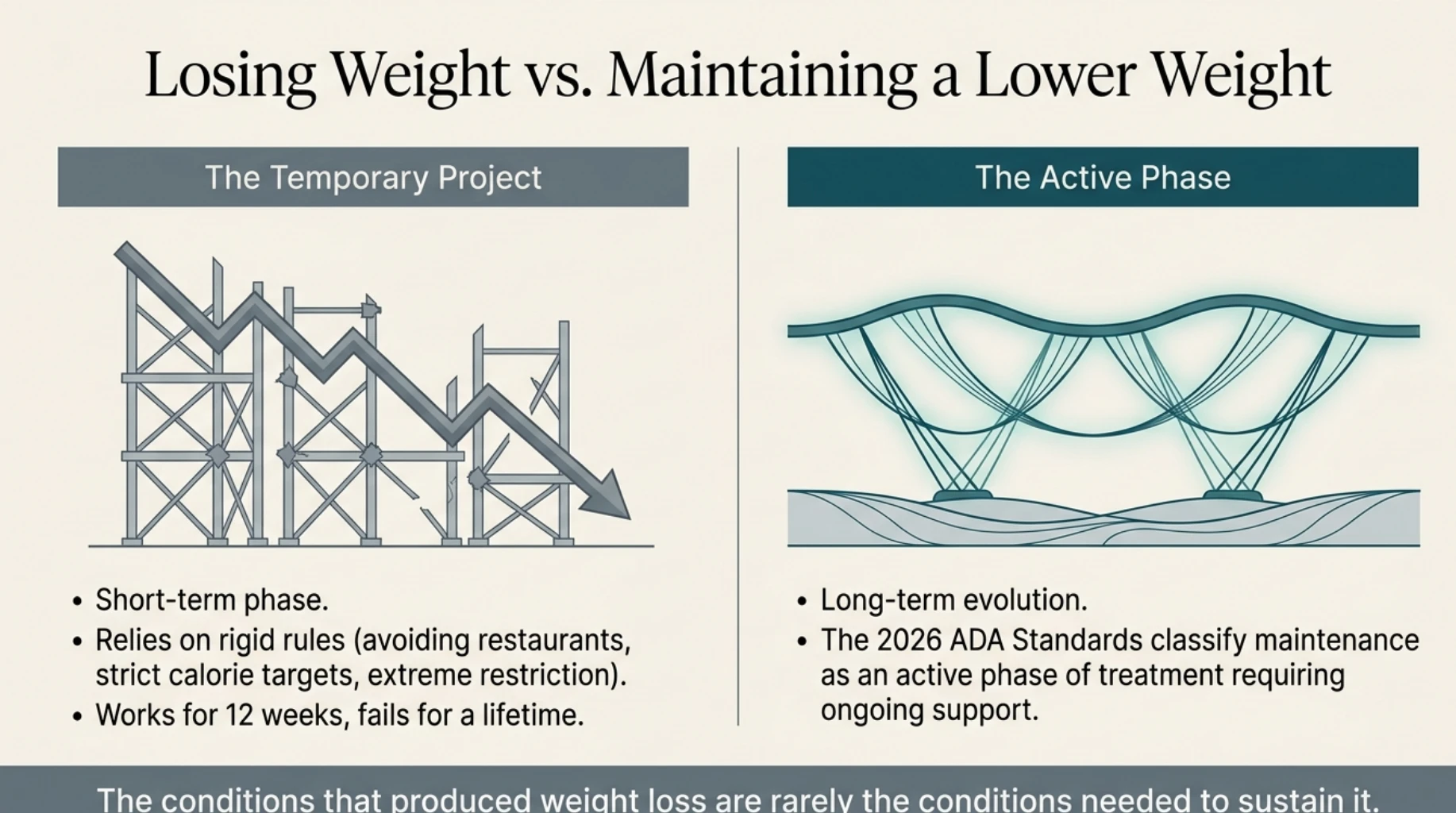
Weight can return after dieting because the conditions that produced weight loss are not always the same conditions needed to maintain a lower weight.
After weight loss, your body usually requires fewer calories, hunger may increase, and highly restrictive food rules may become harder to sustain. If physical activity also falls or old routines return, even a relatively small recurring energy surplus can gradually produce weight regain. Physiological factors including appetite regulation and energy expenditure may contribute as well.
The useful response is usually to build a long-term maintenance strategy rather than repeatedly moving between strict dieting and unrestricted eating.

Is Weight Regain After Dieting Common?
Yes.
Long-term weight maintenance is one of the more difficult parts of obesity and weight-management care. Recent reviews describe regain after successful weight loss as a frequent clinical problem rather than an unusual failure of treatment.
This happens partly because the behaviour required to lose weight is often temporary.
Someone may spend three months:
- tracking every meal
- avoiding restaurant food
- walking every evening
- skipping sweets completely
- following a fixed calorie target
Once the target weight is reached, those behaviours may gradually loosen.
This does not mean someone suddenly “stopped caring.” It means the weight-loss phase and maintenance phase were not necessarily designed as the same long-term lifestyle.
Modern guidelines therefore treat weight maintenance as an active phase of treatment. The 2026 American Diabetes Association Standards recommend continued monitoring and ongoing support after weight-loss goals are reached rather than assuming that treatment is finished once the number on the scale has fallen.
That distinction is important.
Losing weight is one task. Maintaining a lower weight is another.
A plan that works for twelve weeks is useful only if it can eventually evolve into habits that remain practical for years.
Your Body Needs Less Energy After You Lose Weight
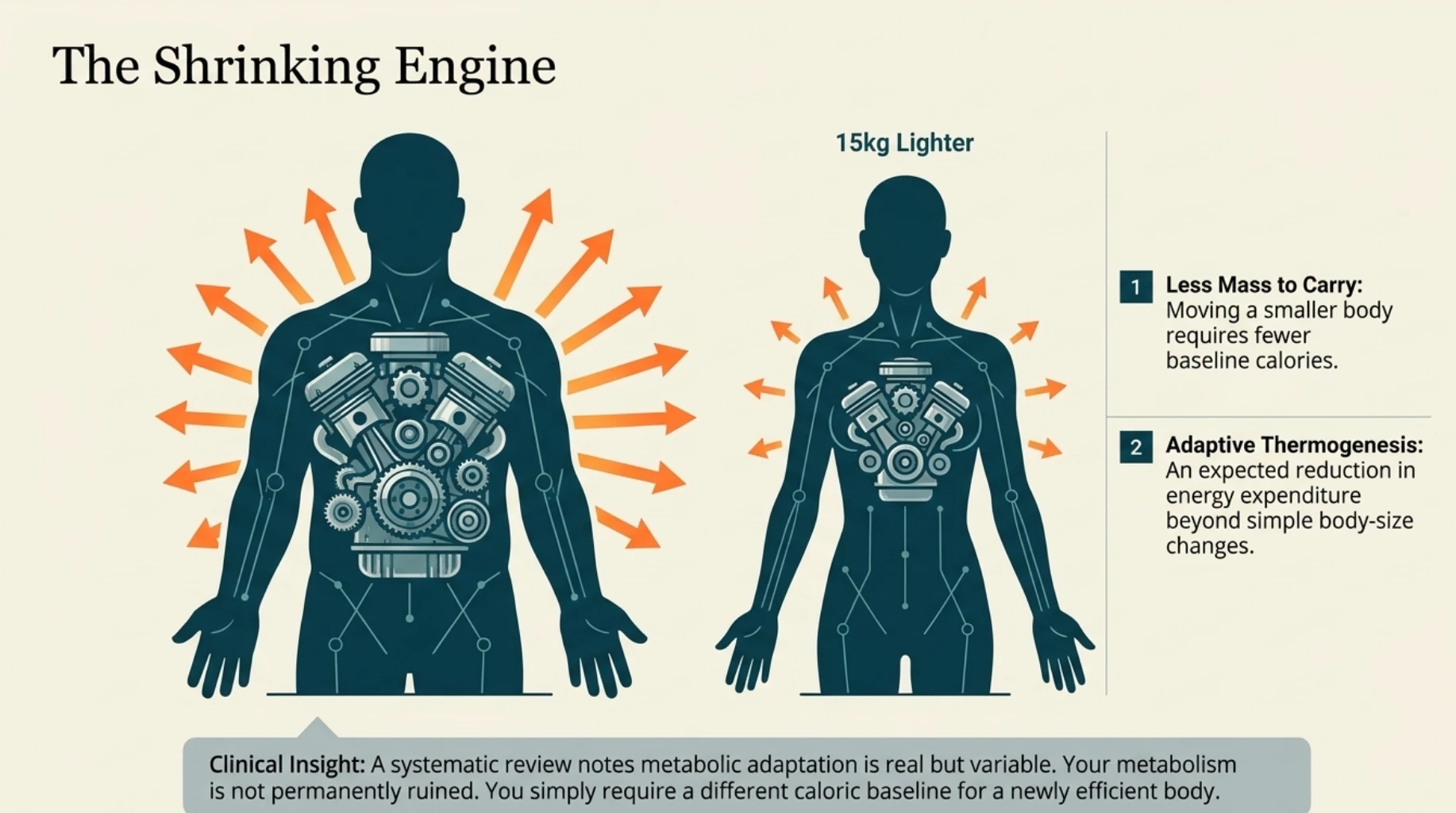
Imagine someone loses 15 kg.
The smaller body now requires less energy for basic maintenance and for many everyday activities. Walking across a room, climbing stairs and simply carrying body mass throughout the day all require slightly less energy than before.
Therefore, returning to the exact food intake that previously maintained the higher weight can gradually cause regain.
This is not a malfunction.
Part of the reduction in energy requirements is an expected consequence of having:
- less total body mass
- less fat mass
- potentially less lean mass
- lower energy cost of movement
There may also be an additional reduction in energy expenditure beyond what would be predicted from body-size changes. This is commonly called adaptive thermogenesis or metabolic adaptation.
However, this effect is often oversimplified.
Metabolic Adaptation Matters, but It Is Not the Whole Story
Online explanations sometimes describe dieting as permanently “destroying” the metabolism.
The evidence is more nuanced.
A systematic review found evidence of adaptive thermogenesis after weight loss in many studies, but its magnitude varied greatly. Better-controlled studies often found smaller effects, and adaptive thermogenesis appeared to diminish or even disappear after periods of stable weight and neutral energy balance.
A 2025 review still includes metabolic adaptation among potential contributors to weight regain, but also emphasizes that several interacting biological processes are involved and that many proposed mechanisms remain incompletely established.
The practical message is therefore:
Your energy needs may be lower after weight loss, but metabolism is not necessarily permanently broken.
This distinction matters because believing that your metabolism is “ruined” can lead to increasingly aggressive diets.
Instead, the maintenance phase should account for the fact that calorie needs, body composition, appetite and activity may now be different from when the weight-loss programme began.
Hunger Can Increase After Weight Loss
One of the most important challenges after losing weight is appetite.
The body has systems designed to protect stored energy. When fat mass decreases, signals related to hunger and satiety can change.
A 2025 meta-analysis examining appetite-related hormones after weight loss found an increase in total ghrelin—a hormone associated with hunger—and changes in several other appetite-related hormones. The degree of weight loss was also associated with a greater increase in total ghrelin.
This does not mean every person becomes constantly hungry after dieting.
Responses differ substantially between individuals.
But it helps explain why someone may say:
“The first few months were easy, but now I think about food much more often.”
That experience can have a physiological component.
Appetite may also become harder to manage when the original diet relied on:
- very small portions
- little protein
- low-fibre meals
- liquid meal replacements without a transition strategy
- removing large categories of foods
- long fasting periods that are difficult to sustain
The problem is therefore not simply whether someone knows which foods are “healthy.”
Long-term success also depends on whether the eating pattern provides enough satiety and is practical in normal life.
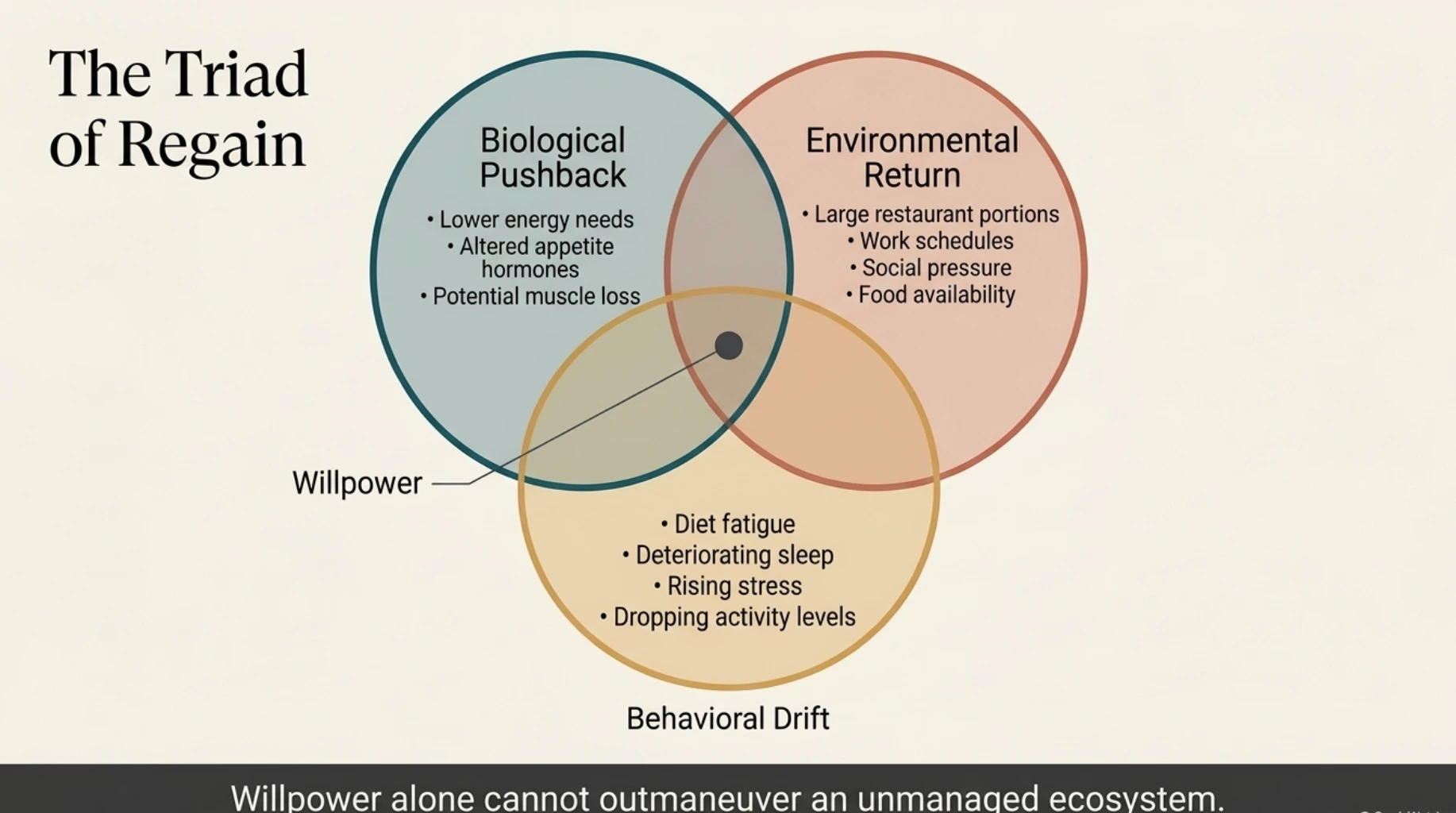
Weight Regain After Dieting Is Not Explained by Willpower Alone
Weight regain after dieting is sometimes framed as proof that someone lacked discipline.
That explanation is too simplistic.
Research suggests that after weight loss there can be physiological changes in appetite, energy expenditure and other regulatory systems that tend to favor regain.
At the same time, biology is not the only influence.
Maintenance also depends on:
- food availability
- work schedules
- social eating
- sleep
- stress
- physical activity
- medication
- affordability of healthy food
- family routines
- how restrictive the original plan was
The 2026 ADA Standards specifically recommend considering social, economic and environmental factors that affect food choices when developing long-term weight-management plans.
A useful maintenance plan therefore asks:
“What makes this lower weight difficult to maintain in this person’s actual life?”
The answer may be very different from one person to another.
Losing Muscle Can Make Weight Maintenance Harder
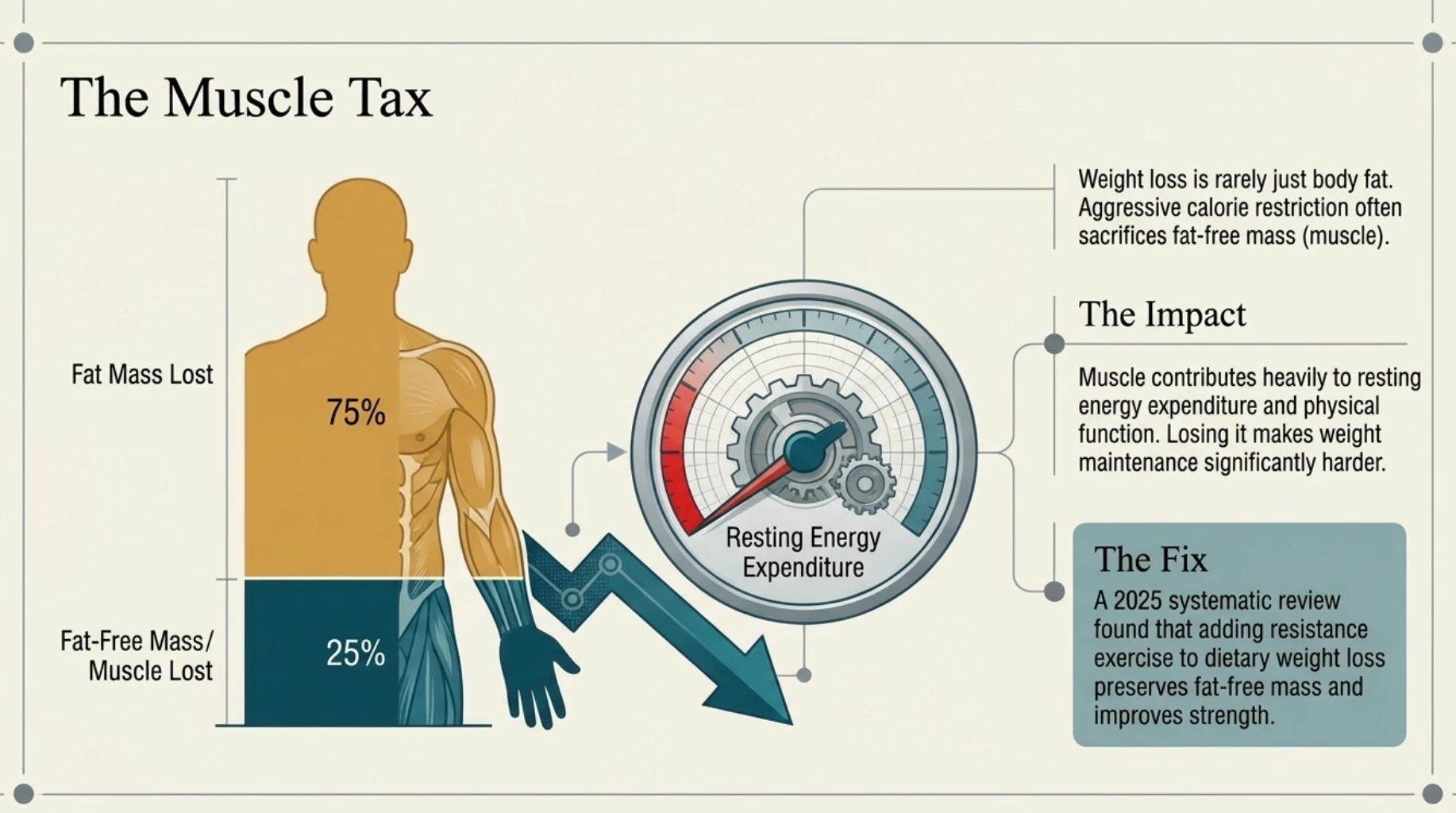
Weight loss is rarely composed entirely of body fat.
Some fat-free mass, including muscle, can also be lost, particularly during substantial calorie restriction.
This matters for two reasons.
First, muscle contributes to resting energy expenditure and physical function.
Second, losing strength can make it harder to remain active, particularly in middle-aged and older adults.
A 2025 systematic review and meta-analysis found that adding resistance exercise to a dietary weight-loss programme helped preserve fat-free mass, increased fat loss and improved muscle strength compared with diet alone.
Research into whether lean-mass loss directly causes later weight regain is still evolving. A 2025 review found some evidence linking a larger proportion of fat-free-mass loss with greater regain, but the findings across studies are not completely consistent.
So it would be inaccurate to say:
“You regained weight because you lost muscle.”
A more defensible conclusion is that preserving muscle is valuable for body composition, strength and long-term function, and it may make weight-management strategies more sustainable.
This is why a good weight-loss programme should usually include more than calorie restriction.
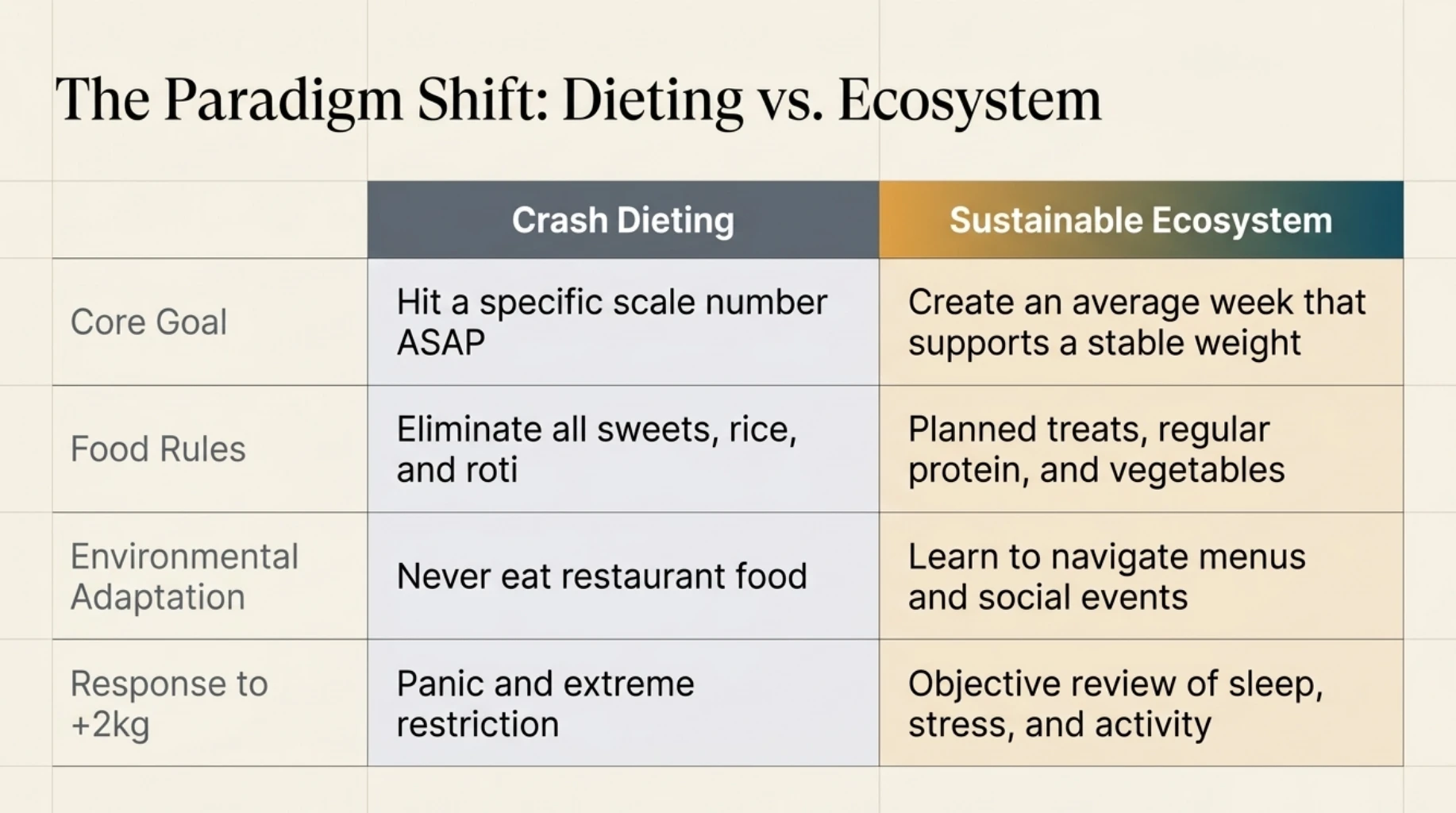
Very Restrictive Diets Are Difficult to Maintain Long Term
A diet can produce excellent short-term weight loss and still be a poor long-term maintenance strategy.
Consider a plan that requires someone to:
- eliminate all rice and roti
- never eat restaurant food
- skip dinner every day
- consume extremely low calories
- avoid all sweets indefinitely
- weigh every gram of food
Someone may follow it successfully for several weeks because there is a clear target and strong motivation.
The difficulty comes later.
If the plan does not teach how to manage ordinary Indian meals, festivals, travel, family eating and restaurant food, the person may eventually move from very strict control back toward their previous routine.
The transition can feel like failure, but often the maintenance phase was never properly designed.
Current ADA guidance recommends that very-low-calorie programmes of approximately 800–1,000 kcal/day be used only in carefully selected people under trained medical supervision and specifically states that comprehensive long-term maintenance strategies should accompany such interventions.
The same principle applies more broadly.
A sustainable programme should eventually answer:
- What will breakfast look like six months from now?
- How will restaurant meals be handled?
- What happens during travel?
- What foods can be eaten regularly rather than temporarily avoided?
- What amount of exercise is realistic every week?
- What is the plan if weight starts increasing by 2–3 kg?
Weight maintenance works better when those questions are answered before significant regain occurs.
Old Eating Patterns and Food Environments Often Return
Weight loss usually happens inside a temporary structure.
You may be meal-prepping more often, avoiding takeaway food, tracking portions or eating differently from the rest of the household. Once the active dieting phase ends, the environment that contributed to the earlier weight may still be there.
That can include:
- large restaurant portions
- readily available snacks
- late-night eating
- social pressure around food
- frequent food delivery
- long working hours
- limited time to cook
Weight-management guidance increasingly recognizes that these environmental and social factors matter. The 2026 ADA Standards recommend considering work routines, food access, cultural preferences, financial circumstances and other social factors when developing long-term weight plans.
This means maintenance should not require living permanently as though you are on a short-term diet.
A more sustainable plan might allow rice, roti, restaurant meals and occasional sweets while still maintaining:
- reasonable portions
- regular protein intake
- vegetables and fibre
- planned treats rather than continuous grazing
- awareness of liquid calories
- consistent meal structure
The aim is not perfection.
It is creating a routine in which the average week supports the weight you want to maintain.
Physical Activity May Fall After the Diet Ends
Exercise often receives extra attention during active weight loss.
Someone who previously walked 3,000 steps per day may begin walking 10,000. They may add gym sessions, weekend cycling or daily workouts.
After the target weight is reached, activity can gradually fall.
This matters because a smaller body generally uses less energy, while the loss of structured exercise reduces energy expenditure further.
Physical activity is also valuable for reasons that go beyond the calorie number. It helps preserve fitness, supports muscle function, improves metabolic health and can make long-term weight maintenance easier.
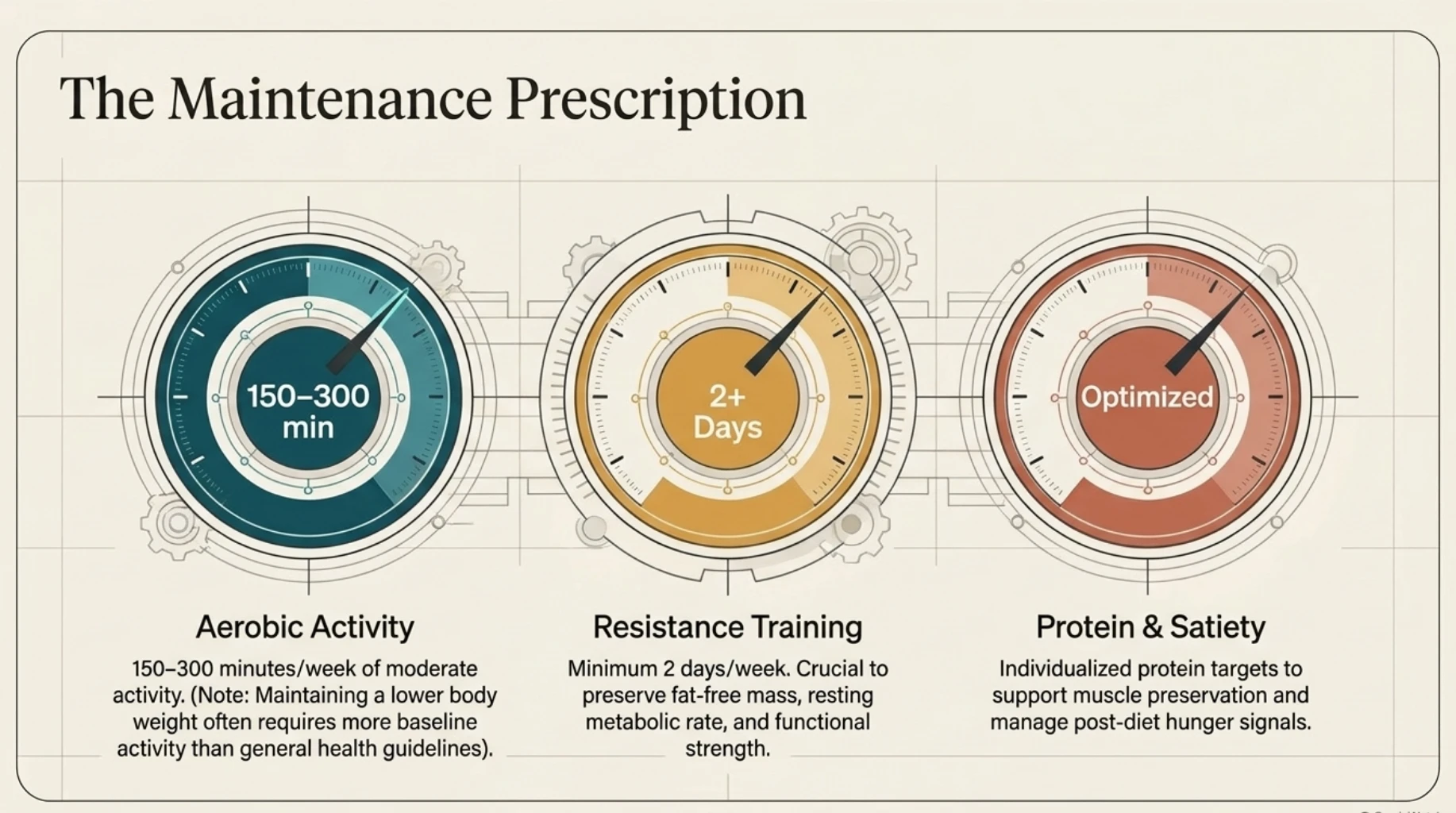
Current CDC guidance recommends at least 150 minutes of moderate-intensity aerobic activity each week plus muscle-strengthening activity on at least two days for general health. It also notes that some people need more physical activity to maintain a lower body weight.
For people with diabetes and overweight or obesity who have successfully lost weight, the 2026 ADA Standards describe effective maintenance programmes as often encouraging approximately 200–300 minutes of physical activity per week, alongside ongoing self-monitoring and support.
These are population-level recommendations, not a compulsory target for every individual.
Someone with arthritis, cardiovascular disease, severe obesity or poor fitness may need a different starting point.
Sleep, Stress and Life Changes Can Restart Weight Gain
Weight regain sometimes begins without any deliberate decision to abandon healthy habits.
Life changes.
You may:
- start a more demanding job
- begin working from home
- sleep fewer hours
- experience significant stress
- stop going to the gym
- develop back or knee pain
- travel more frequently
- begin caring for a family member
The eating pattern that previously worked may become difficult to maintain under new circumstances.
The 2026 ADA Standards for obesity evaluation specifically recommend reassessing sleep, stress, daily routine, physical activity, food patterns and psychosocial factors during follow-up rather than assuming that the original plan will remain appropriate indefinitely.
This is why a maintenance plan should be adjustable.
If a six-day gym programme no longer fits your work schedule, the answer may be a realistic three-day strength routine plus regular walking—not abandoning activity entirely because the original plan is no longer possible.
Similarly, if sleep has deteriorated, addressing sleep may make appetite and activity management easier.
Weight regain often reflects several small changes occurring together rather than one dramatic mistake.
Why Weight Regain Can Happen After Stopping Weight-Loss Medication
Modern weight-management medicines can reduce appetite and help some people achieve clinically meaningful weight loss.
However, medicines prescribed for chronic obesity treatment often work while they are being taken.
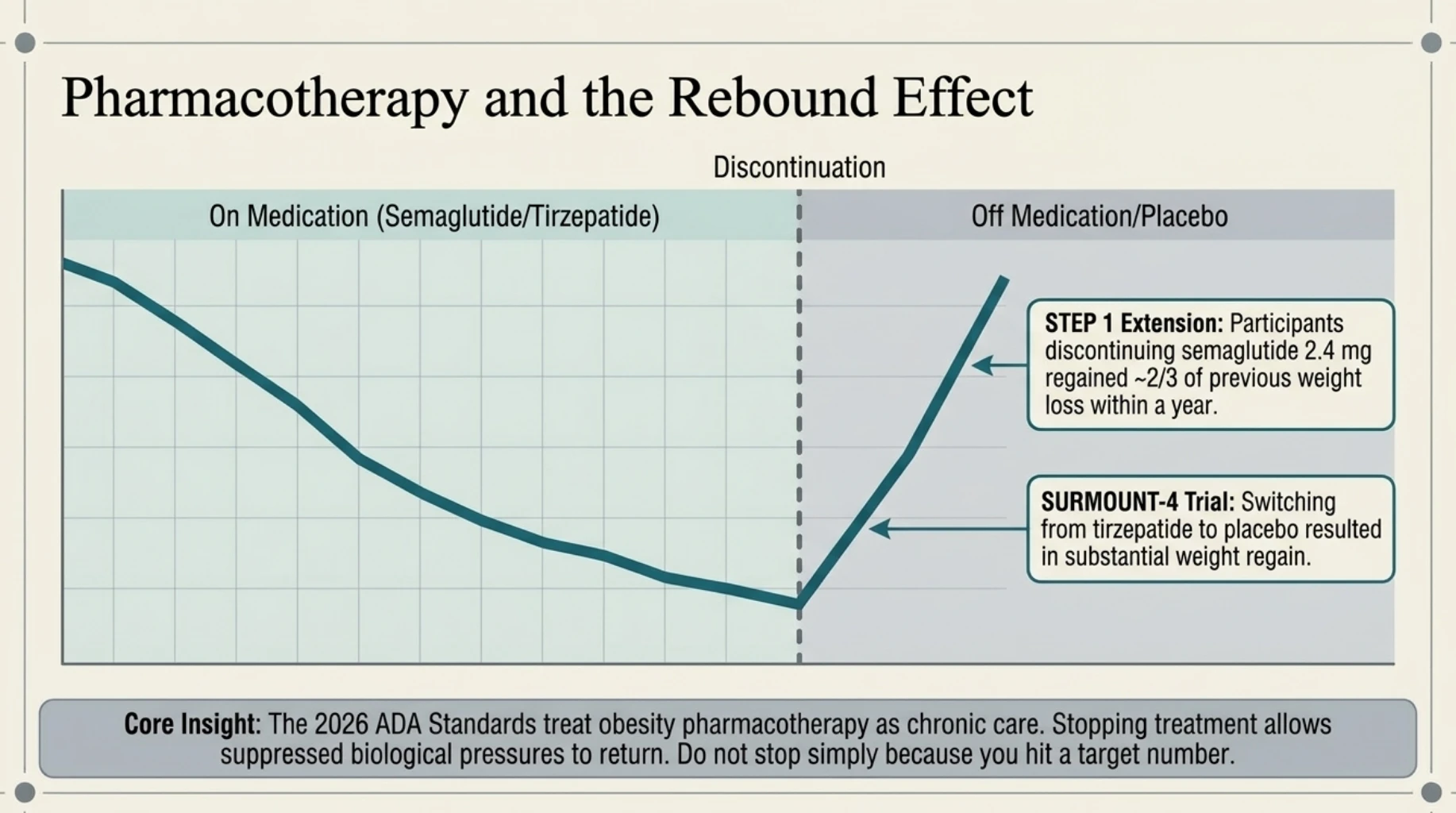
Stopping treatment can allow appetite and other biological pressures favoring weight regain to return.
This has been demonstrated in clinical trials.
In the STEP 1 extension, participants who discontinued semaglutide 2.4 mg regained approximately two-thirds of their previous weight loss over the following year, while several cardiometabolic improvements moved back toward baseline.
In the SURMOUNT-4 trial, participants who stopped tirzepatide and switched to placebo regained substantial weight, while those who continued treatment maintained and further increased their initial weight reduction.
These findings do not mean that everyone who stops medication will regain exactly the same amount.
They do show that obesity pharmacotherapy should not automatically be viewed as a short course that is stopped the moment a target weight is reached.
The 2026 ADA Standards recommend continuing obesity pharmacotherapy intended for chronic treatment when clinically appropriate because discontinuation commonly leads to renewed weight gain and deterioration of cardiometabolic risk factors.
Decisions about continuing, reducing or stopping treatment should consider:
- benefits
- adverse effects
- cost
- patient preference
- diabetes status
- other medical conditions
- ability to maintain weight without medication
Do not stop prescribed weight-management medication solely because the scale has reached a target number.
What Should You Do When Weight Starts Coming Back?
The best time to respond is usually early.
Regaining 2–3 kg does not mean you have returned to the beginning, and it does not require abandoning the entire plan.
Start by asking what changed.
Review the previous four to eight weeks.
Has there been:
- more restaurant food?
- less walking?
- poor sleep?
- increased alcohol?
- more snacking?
- a stressful period?
- fewer strength-training sessions?
- medication discontinuation?
- a new medicine associated with weight gain?
The 2026 ADA Standards recommend ongoing weight monitoring and continued intervention after weight-loss goals are achieved. Effective long-term programmes commonly include regular self-monitoring and ongoing support rather than waiting until substantial regain has occurred.
Weekly weighing may be helpful for some people.
For others, particularly when weighing triggers significant anxiety or disordered eating, waist measurements, clothing fit, activity and other health markers may be better tools.
The objective is to identify the trend without allowing the scale to dominate daily life.
Do Not Respond With a More Extreme Crash Diet
A common response to regain is:
“The previous diet was not strict enough, so this time I will eat even less.”
That can restart the same cycle.
Extreme restriction may produce rapid weight loss but can also make hunger, social eating and long-term adherence more difficult. Very-low-calorie diets should be medically supervised and accompanied by a structured maintenance plan rather than used repeatedly without follow-up.
Instead, return to the behaviours that were most sustainable.
That might mean:
- rebuilding meal structure
- reducing frequent snacks
- restarting regular walking
- planning protein at meals
- increasing vegetables and fibre
- reducing liquid calories
- returning to resistance exercise
- improving sleep
You do not necessarily need to reproduce the most restrictive phase of the original diet.
Protect Muscle With Resistance Training and Adequate Protein
Weight maintenance should protect function as well as reduce fat mass.
Resistance exercise is particularly useful because dietary weight loss can reduce fat-free mass.
A 2025 systematic review and meta-analysis found that adding resistance exercise to dietary weight loss helped preserve fat-free mass, increased fat loss and improved strength compared with diet alone.
A practical programme might include exercises such as:
- squats or sit-to-stand movements
- lunges where appropriate
- rowing movements
- presses
- resistance-band exercises
- machine or free-weight training
The programme should match age, mobility, medical conditions and previous exercise experience.
Protein intake also matters during weight loss and maintenance because it supports muscle preservation and satiety. There is no single protein target that is appropriate for everyone, particularly for people with kidney disease or other medical conditions, so recommendations should be individualized.
The key point is that preserving muscle deserves deliberate attention.
A plan focused only on making the number on the scale lower may produce a very different long-term result from one designed to improve fat loss, strength and metabolic health.
How Much Physical Activity Helps With Weight Maintenance?
There is no universal number that guarantees weight maintenance.
Current U.S. guidance recommends at least 150–300 minutes of moderate-intensity aerobic activity per week for substantial health benefits, together with muscle-strengthening exercise on at least two days weekly.
For weight maintenance, some people may need more activity than the minimum health recommendation.
CDC specifically notes that the amount required to maintain body weight varies substantially between individuals.
The best plan is therefore not necessarily:
“Exercise exactly 300 minutes.”
It is:
“Find an amount and type of activity you can maintain consistently and adjust it according to your weight trend, health and fitness.”
Walking can provide much of the aerobic activity.
Strength training adds a different benefit by helping maintain muscle and function.
Try to reduce long sedentary periods as well. A person who exercises for 45 minutes but then remains seated for most of the day may benefit from more movement throughout working hours.
What if You Have Already Regained Most of the Weight?
Do not assume that the previous effort was wasted.
You may still have learned:
- which meals keep you satisfied
- which foods trigger overeating
- which exercise you enjoy
- how sleep affects appetite
- which parts of the previous plan were unrealistic
The next attempt should use that information.
A medical or structured weight-management review can help distinguish between:
- behavioral drift
- excessive dietary restriction followed by rebound eating
- medication effects
- poor sleep
- depression or chronic stress
- hypothyroidism or another medical contributor
- recurrence after stopping obesity medication
- loss of muscle and physical activity
The goal should not simply be to repeat exactly what worked for six weeks previously.
It should be to design a plan that has a better maintenance phase.
When Weight Regain May Need Medical Review
Some regain after stopping a highly structured diet is common, but medical assessment may be useful when:
- weight is increasing rapidly
- regain is substantial despite continued lifestyle efforts
- a new medicine was started
- thyroid symptoms are present
- periods have become irregular
- there are signs of PCOS
- sleep apnea is suspected
- depression or severe stress is affecting eating
- glucose or HbA1c is worsening
- weight-loss medication has recently been stopped
- repeated dieting is leading to binge eating or extreme restriction
The 2026 ADA Standards recommend asking about previous dieting and current or past disordered eating behaviours during obesity and diabetes care because repeated cycles of severe restriction can coexist with eating-related distress.
Seek medical assessment rather than simply intensifying dieting if weight gain is accompanied by:
- new leg swelling
- breathlessness
- major fluid retention
- marked weakness
- another unexplained medical change
Rapid changes may not represent ordinary fat regain.
Weight Regain and Weight-Maintenance Assessment in Dwarka
If weight is returning after a diet, an assessment can help determine what has changed and whether the current plan is sustainable.
Dr. Pankaj Kumar can review:
- previous weight-loss methods
- amount and timing of weight regain
- weight and waist trends
- current dietary pattern
- hunger and cravings
- physical activity and strength training
- sleep
- medicines
- diabetes and prediabetes risk
- thyroid reports where relevant
- PCOS-related metabolic concerns
- previous or current weight-management medication
- need for further medical assessment or referral
The aim is not simply to prescribe another restrictive diet.
A useful long-term strategy considers maintenance from the beginning.
Dr. Pankaj Kumar
MBBS, DNB Family Medicine, Sir Ganga Ram Hospital
General & Lifestyle Physician
Special interest in Diabetes
Diet Plus Minus
13A, Pocket-2, Sector-6, Doctors Lane
Dwarka, New Delhi – 110075
India
Book an Appointment with Dr. Pankaj Kumar
Frequently Asked Questions
Is Weight Regain After Dieting Normal?
It is common.
After weight loss, energy requirements are lower and appetite-regulation changes may favor increased food intake. Behavioral and environmental factors also influence whether the lower weight is maintained.
Common does not mean inevitable.
Long-term support, physical activity, sustainable nutrition and monitoring can improve maintenance.
Does Dieting Permanently Damage Your Metabolism?
Not usually.
Energy expenditure declines after weight loss partly because the body is smaller. Additional adaptive thermogenesis can occur, but research suggests its magnitude varies and may reduce after weight stabilization.
The term “metabolic damage” therefore overstates what the evidence shows.
Why Am I Hungrier After Losing Weight?
Weight loss can alter appetite-regulating physiology.
A 2025 meta-analysis found increases in total ghrelin after weight loss, with larger weight loss associated with a greater increase. Other appetite-related hormones also changed, although responses were variable.
Hunger after weight loss is therefore not always simply lack of discipline.
Can Losing Muscle Cause Weight Regain?
Muscle loss may contribute to lower energy requirements and reduced physical function, but weight regain has multiple causes.
A 2025 review identified fat-free-mass loss as one possible physiological contributor while emphasising that the evidence is still developing.
Preserving muscle remains worthwhile for strength and body composition.
Is Resistance Training Useful After Weight Loss?
Yes.
A 2025 meta-analysis found that resistance exercise during dietary weight loss helped preserve fat-free mass and improve strength.
Continuing resistance training during maintenance is therefore a sensible strategy.
How Often Should I Weigh Myself After Losing Weight?
There is no compulsory frequency for everyone.
The 2026 ADA Standards describe effective long-term weight-maintenance programmes as often including body-weight monitoring weekly or more frequently, along with other forms of self-monitoring.
If frequent weighing causes significant distress, discuss alternative ways of monitoring progress.
How Much Exercise Do I Need to Prevent Weight Regain?
Adults should generally aim for at least 150 minutes of moderate-intensity activity each week plus two days of muscle-strengthening activity for overall health. Some people need more activity for long-term weight maintenance.
The appropriate amount should be adapted to fitness, health conditions and the overall weight-management plan.
Will I Regain Weight if I Stop Semaglutide?
Regain is common after discontinuation, but individual outcomes vary.
In the STEP 1 extension, participants regained approximately two-thirds of their previous semaglutide-associated weight loss during the year after treatment stopped.
Do not stop or restart medication without discussing the long-term plan with the prescribing clinician.
What Happens if Tirzepatide Is Stopped?
In the SURMOUNT-4 randomized withdrawal trial, participants switched from tirzepatide to placebo regained substantial weight, whereas continued treatment maintained and extended weight reduction.
That trial involved a defined study population and should not be interpreted as predicting exactly what will happen to every individual.
Do Weight-Loss Medicines Have to Be Taken Forever?
Not necessarily in every person, but many obesity medicines are intended for chronic treatment.
The 2026 ADA Standards recommend continuing chronic obesity pharmacotherapy when clinically appropriate because stopping treatment often leads to recurrent weight gain and loss of cardiometabolic benefit.
Long-term decisions should consider effectiveness, tolerability, cost, preference and medical risk.
Should I Go Back on a Very Low-Calorie Diet if Weight Returns?
Not automatically.
Very-low-calorie diets can be appropriate for selected people under medical supervision, but current ADA guidance emphasizes that they should be accompanied by a comprehensive long-term maintenance programme.
Repeated unsupervised crash diets may simply reproduce the same cycle.
Does Regaining 2 kg Mean My Diet Failed?
No.
Small changes in weight can reflect fluid, glycogen, food intake and normal variation as well as body fat.
A persistent upward trend matters more than one measurement.
Early modest regain can be a useful signal to review food, activity, sleep and other factors before the trend becomes larger.
Can Weight Regain Be Prevented Completely?
No strategy can guarantee that no weight will ever return.
Long-term weight maintenance is influenced by biology, behaviour, environment, medicines and life circumstances.
The goal is to reduce recurrence, detect it early and respond appropriately—not demand perfect weight stability.
Author Box
Dr. Pankaj Kumar
MBBS, DNB Family Medicine, Sir Ganga Ram Hospital
General & Lifestyle Physician
Special interest in Diabetes
Dr. Pankaj Kumar provides general medical and lifestyle-based care at Diet Plus Minus in Dwarka, New Delhi. His approach includes assessment of weight regain, metabolic health, diabetes risk, nutrition, physical activity, sleep and medication-related factors, with specialist referral when appropriate.
Medical Disclaimer
This article provides general educational information and does not replace an individual medical consultation, examination, diagnosis or treatment plan.
Do not start, stop or change prescription weight-management medicines based solely on information in this article.
Very-low-calorie diets and highly restrictive programmes may require medical supervision, particularly in people with diabetes, kidney disease, cardiovascular disease or other medical conditions.
If weight is increasing rapidly together with significant swelling, breathlessness or another acute medical change, seek medical assessment because the increase may represent fluid retention rather than ordinary fat regain.
References
- van Baak MA, Mariman ECM. Physiology of Weight Regain after Weight Loss: Latest Insights. Current Obesity Reports. 2025;14:28. Reviews current evidence on appetite control, fat-free mass, metabolic physiology and other mechanisms potentially involved in weight regain.
- Obesity-Induced and Weight-Loss-Induced Physiological Factors Affecting Weight Regain. Nature Reviews Endocrinology. 2023. Reviews appetite regulation, energy expenditure, adaptive thermogenesis and biological drivers of weight regain.
- American Diabetes Association Professional Practice Committee. Obesity and Weight Management for the Prevention and Treatment of Diabetes: Standards of Care in Diabetes—2026. Diabetes Care. 2026;49(Suppl 1):S166 onward. Provides recommendations on long-term maintenance, physical activity, self-monitoring, very-low-calorie diets and chronic obesity pharmacotherapy.
- Wilding JPH, Batterham RL, Davies M, et al. Weight Regain and Cardiometabolic Effects After Withdrawal of Semaglutide: The STEP 1 Trial Extension. Diabetes, Obesity and Metabolism. 2022;24:1553–1564.
- Aronne LJ, Sattar N, Horn DB, et al. Continued Treatment With Tirzepatide for Maintenance of Weight Reduction in Adults With Obesity: The SURMOUNT-4 Randomized Clinical Trial. JAMA. 2024.
- Fasting Appetite-Related Gut Hormone Responses After Weight Loss Induced by Calorie Restriction, Exercise, or Both in People With Overweight or Obesity: A Meta-analysis. 2025. Found weight-loss-associated changes in ghrelin and other appetite-related hormones.
- Binmahfoz A, Dighriri A, Gray C, Gray SR. Effect of Resistance Exercise on Body Composition, Muscle Strength and Cardiometabolic Health During Dietary Weight Loss in People Living With Overweight or Obesity: A Systematic Review and Meta-analysis. BMJ Open Sport & Exercise Medicine. 2025.
- Centers for Disease Control and Prevention. Physical Activity and Your Weight and Health. Updated 2026. Provides current recommendations on physical activity, muscle strengthening and individual variation in activity needed for weight maintenance.
- American Diabetes Association Professional Practice Committee for Obesity. Screening, Diagnosis, Evaluation, and Staging of Obesity in Adults: Standards of Care in Overweight and Obesity—2026. Covers reassessment of nutrition, physical activity, sleep, medication use, stress and environmental factors during long-term obesity care.

Written by Dr. Pankaj Kumar
General & Lifestyle Physician in Dwarka Sector 6, New Delhi · MBBS, DNB (Family Medicine), DNHE · 16 years of experience.
About the doctor →Book a consultation → Beyond Blood Sugar
 The 90-Day Prediabetes Turnaround
 The Indian Diabetes Diet Reset
 Eat to Beat Gout
 Why Is My Hair Falling?
 The 30-Day Inflammation Reset