
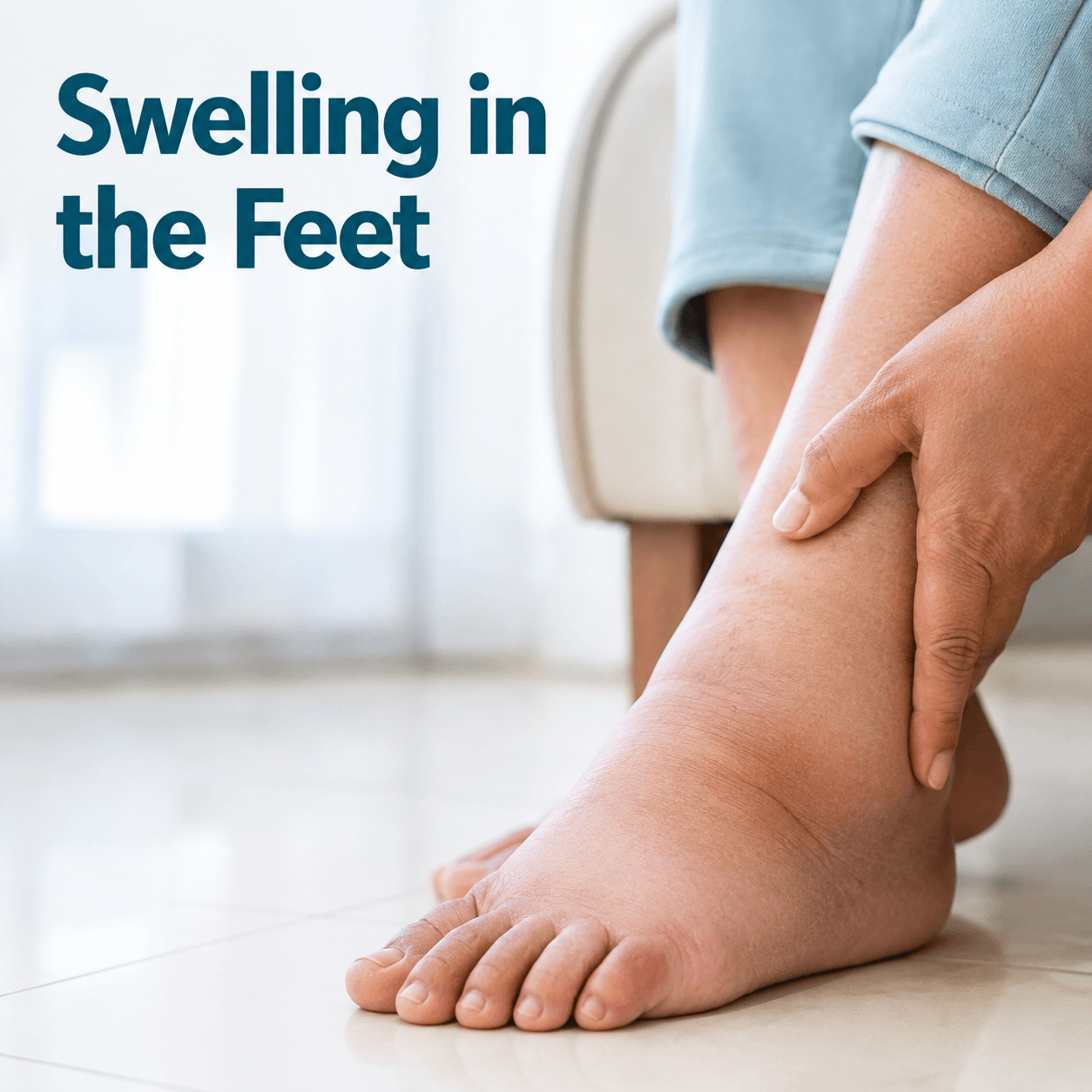
A little ankle puffiness after a long journey, several hours of standing or a particularly salty meal may settle on its own. However, swelling in the feet that is new, persistent, repeatedly returning or affecting only one leg deserves more attention.
Foot and ankle swelling usually occurs when fluid accumulates in the tissues, a condition known as edema. The reason may be relatively straightforward, such as prolonged sitting or a medicine side effect, but swelling can also occur with problems involving the veins, heart, kidneys, liver or lymphatic system. Sudden one-sided swelling may even indicate a blood clot.
The pattern often provides important clues. Is one foot swollen or both? Did it appear suddenly or gradually? Does it improve overnight? Is there pain, redness, breathlessness, reduced urine output or rapid weight gain?
This article explains eight important causes of swelling in the feet, the warning signs adults should recognize and when a medical assessment is more appropriate than simply elevating the legs or taking a “water tablet.”

When Should Swollen Feet Be Checked?
Arrange a medical assessment when foot or ankle swelling is unexplained, persistent, worsening or repeatedly returning. It is particularly important when one leg is affected, or when swelling occurs with diabetes, heart disease, kidney disease or known problems with the leg veins.
Seek urgent care if swelling starts suddenly and is severe or painful, or if the swollen leg becomes red or hot. Breathlessness, chest pain, coughing blood, fainting or confusion together with leg swelling requires emergency assessment because a blood clot or serious heart or lung problem may be possible.
What Does Swelling in the Feet Mean?
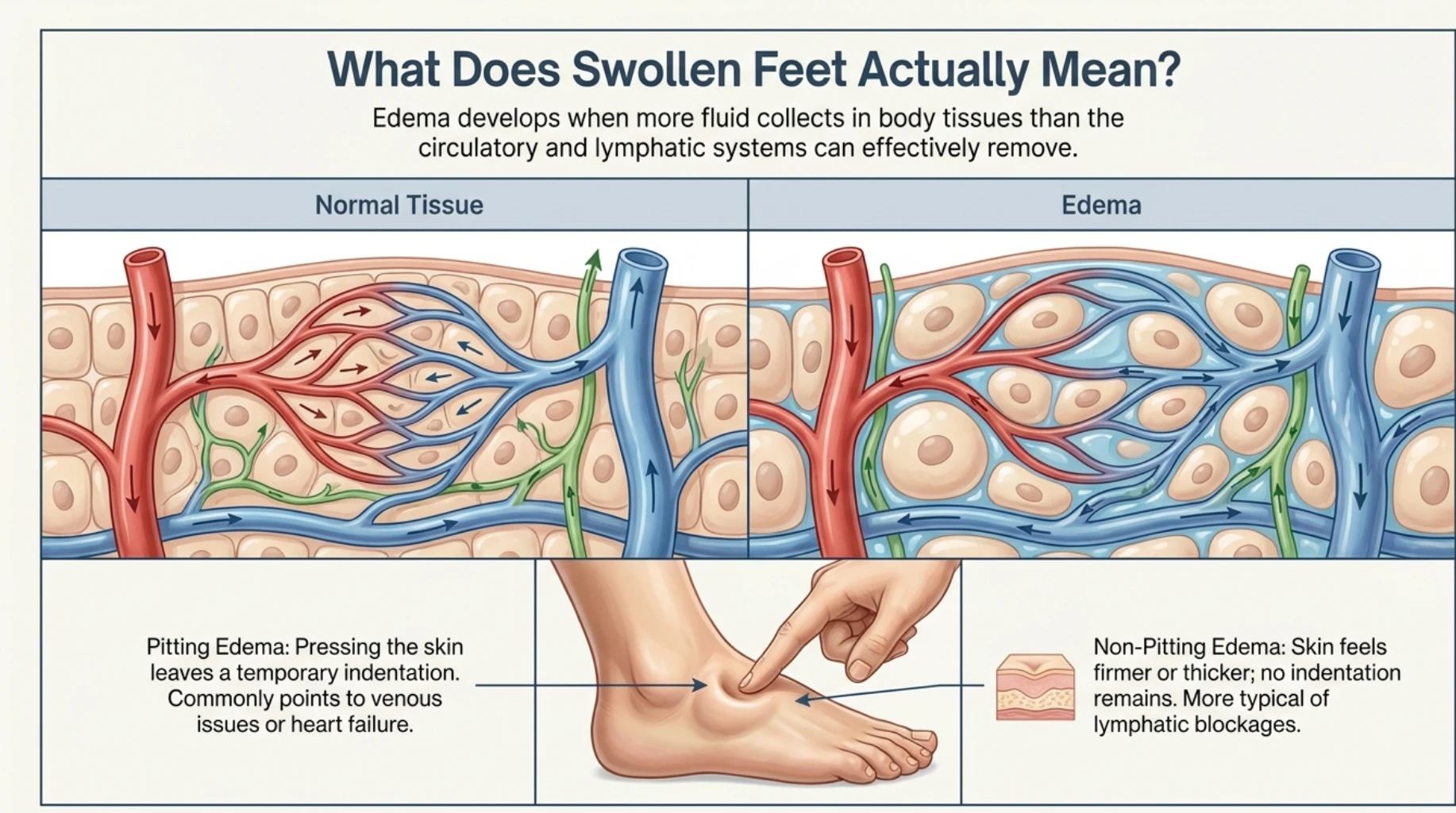
Edema develops when more fluid collects in body tissues than the circulation and lymphatic system can remove effectively.
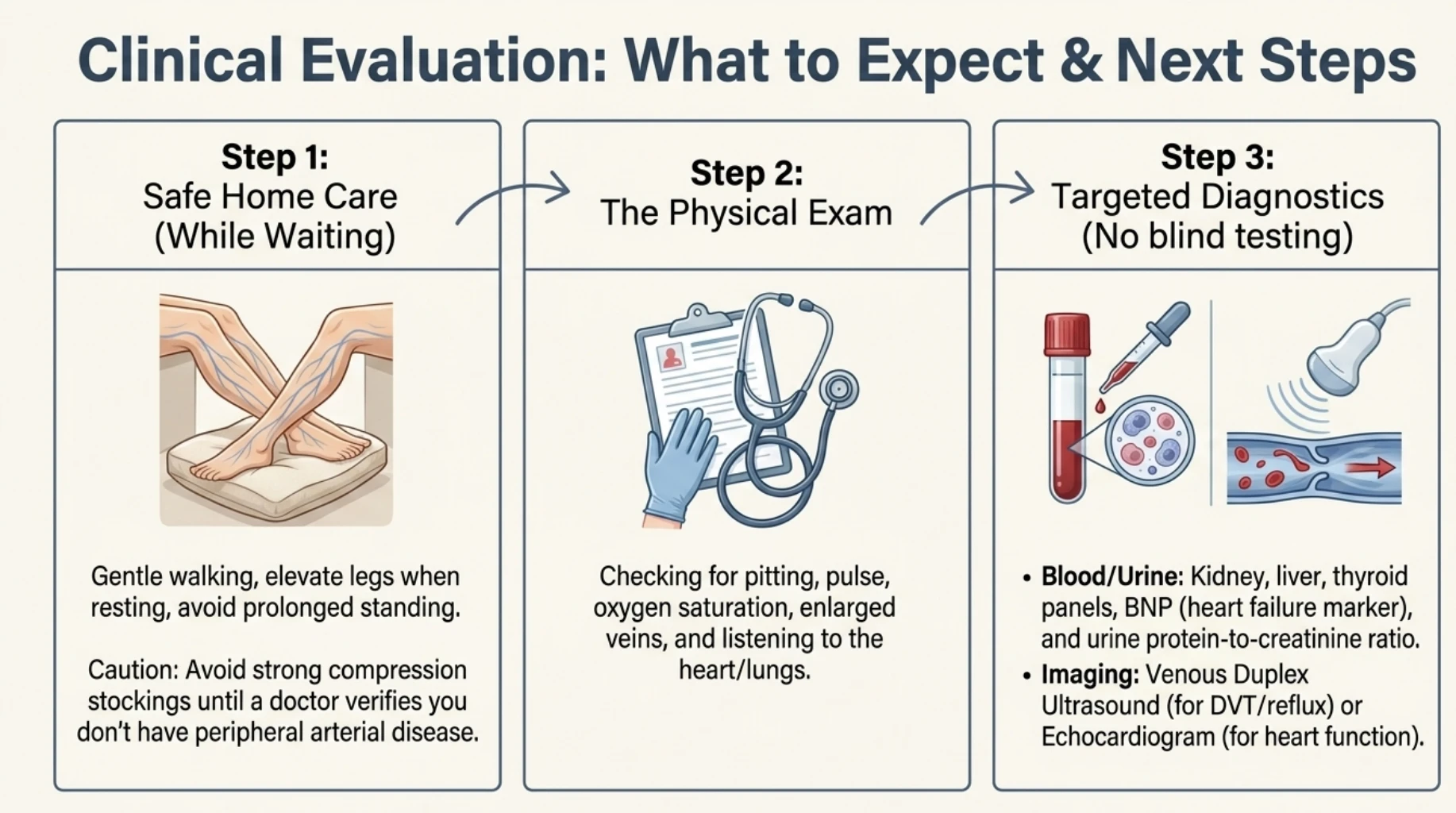
If you press a swollen ankle with a finger and a temporary indentation remains, doctors describe this as pitting edema. Pitting can occur with venous problems, heart failure and several other causes. Non-pitting swelling is more typical of some forms of lymphoedema, although the distinction is not absolute.
The timing matters as much as the appearance.
Swelling that develops after prolonged standing and improves after the legs are elevated suggests a different mechanism from swelling that appears suddenly in only one calf. Similarly, swelling of both feet together with breathlessness requires a different assessment from swelling around an ankle after an injury.
Common temporary contributors include:
- sitting or standing for long periods
- unusually high salt intake
- hot weather
- reduced activity
- pregnancy
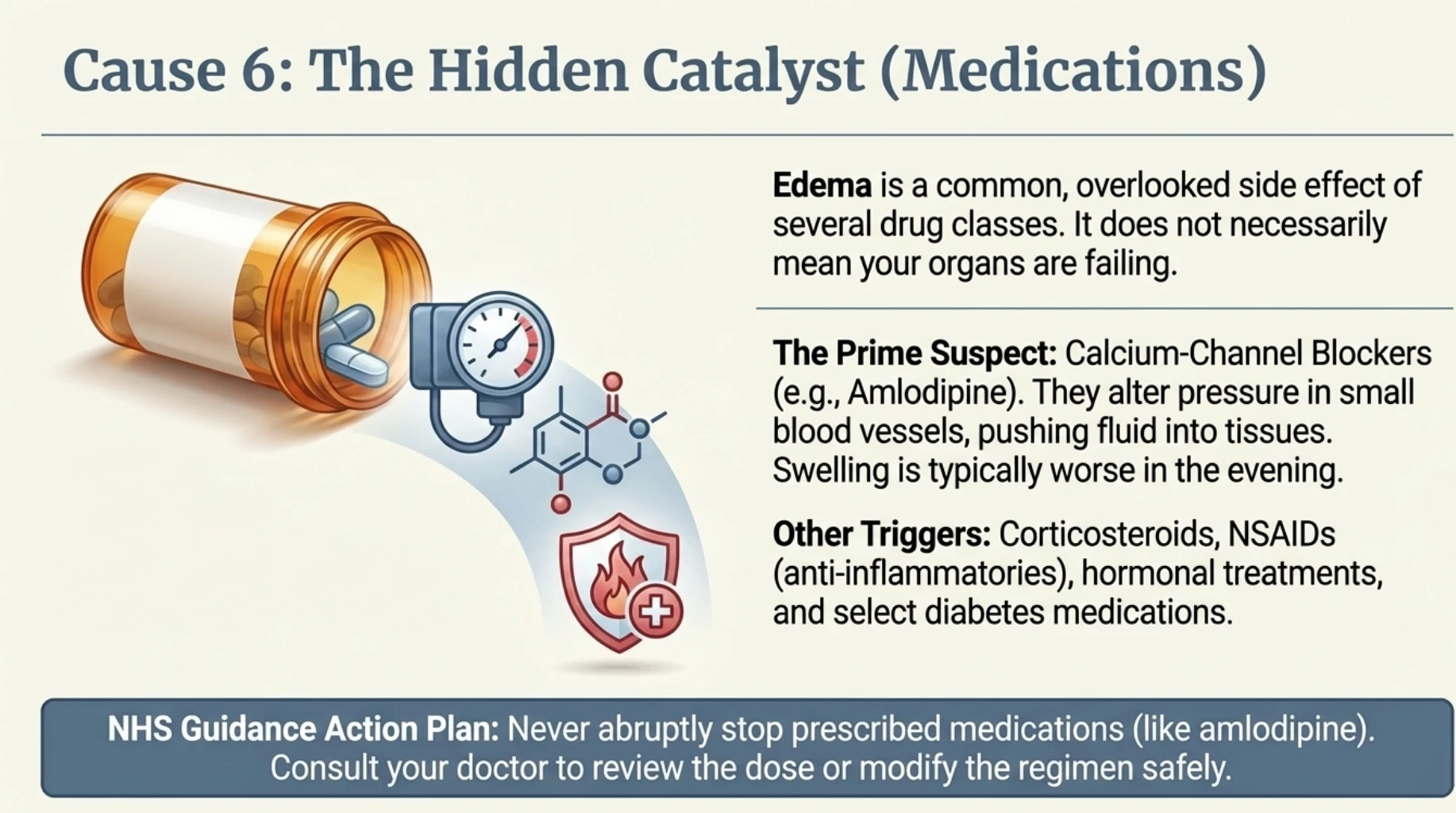
- certain medicines
However, persistent edema should not automatically be blamed on salt or age. Kidney, liver, heart and venous disease are also recognized causes of swollen ankles, feet and legs.
Swelling in the Feet in One Leg Versus Both Legs
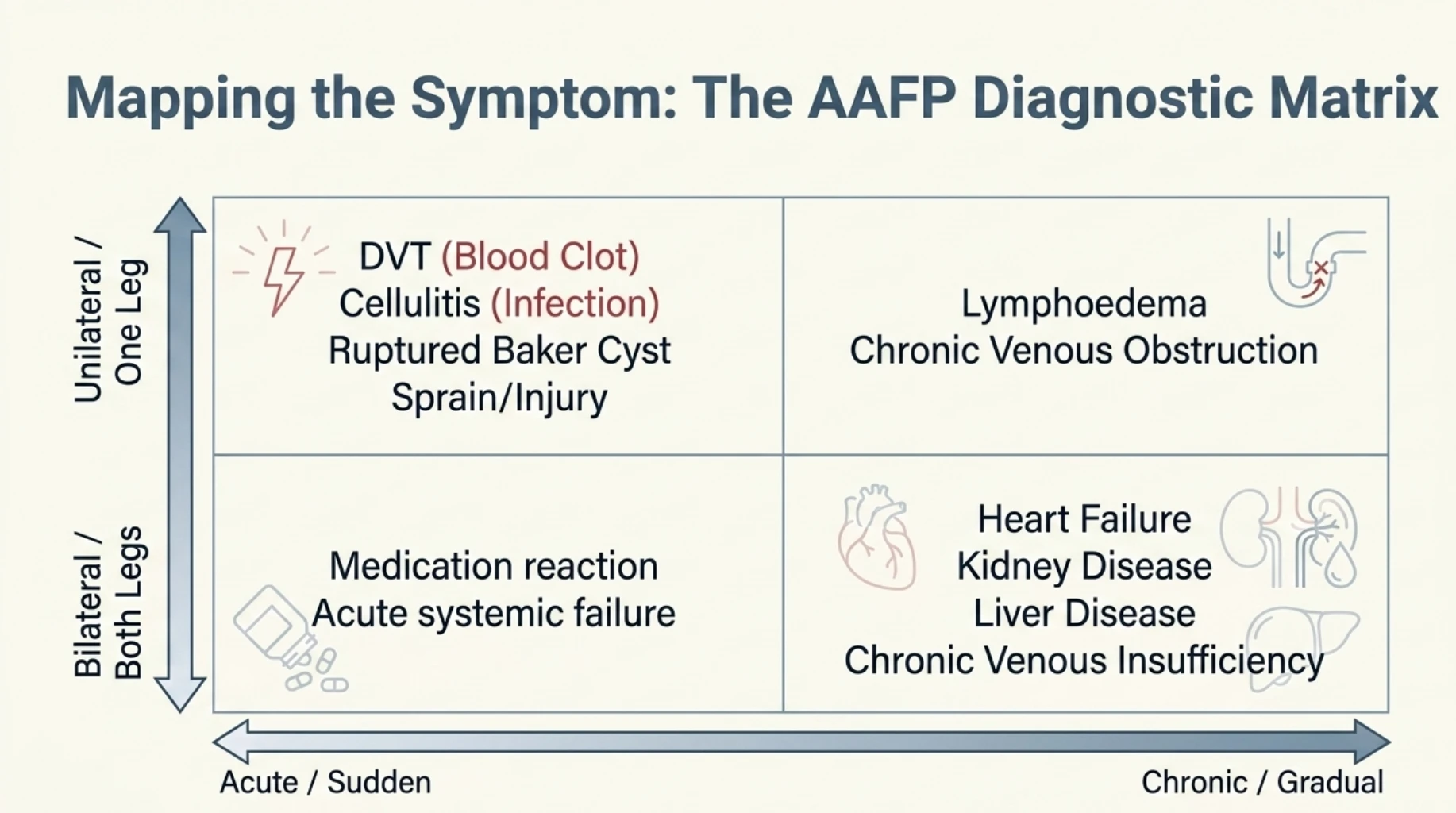
Whether the swelling affects one leg or both is one of the most useful first clues.
One-sided swelling may occur with:
- deep vein thrombosis
- infection or cellulitis
- injury
- chronic venous obstruction
- lymphoedema
- a ruptured Baker cyst
Swelling of both feet or legs may be associated with:
- chronic venous insufficiency
- heart failure
- kidney disease
- liver disease
- medicines
- thyroid disease
- lymphatic problems
The speed of onset is also important. AAFP guidance recommends assessing lower-limb edema according to both laterality—one side or both—and duration—acute or chronic because these features substantially narrow the possible causes.
When Swelling in the Feet Needs Urgent Medical Care
Not every swollen ankle is an emergency. Certain patterns, however, should not be managed at home for several days while waiting to see whether they disappear.
Seek urgent medical evaluation when:
- one leg suddenly becomes swollen without an obvious injury
- swelling is severe or rapidly worsening
- the leg is painful, red or hot
- swelling appears after surgery or prolonged immobilization
- there is fever or significant illness
- the swelling involves the face or abdomen as well
- a person with diabetes develops significant new foot swelling
Seek emergency care when swollen feet or legs occur with:
- sudden breathlessness
- chest tightness or chest pain
- coughing up blood
- fainting or marked light-headedness
- confusion
- severe difficulty breathing
These combinations may occur with pulmonary embolism or decompensated heart disease and require urgent assessment rather than a routine clinic appointment.
Cause 1: Chronic Venous Insufficiency and Prolonged Sitting or Standing
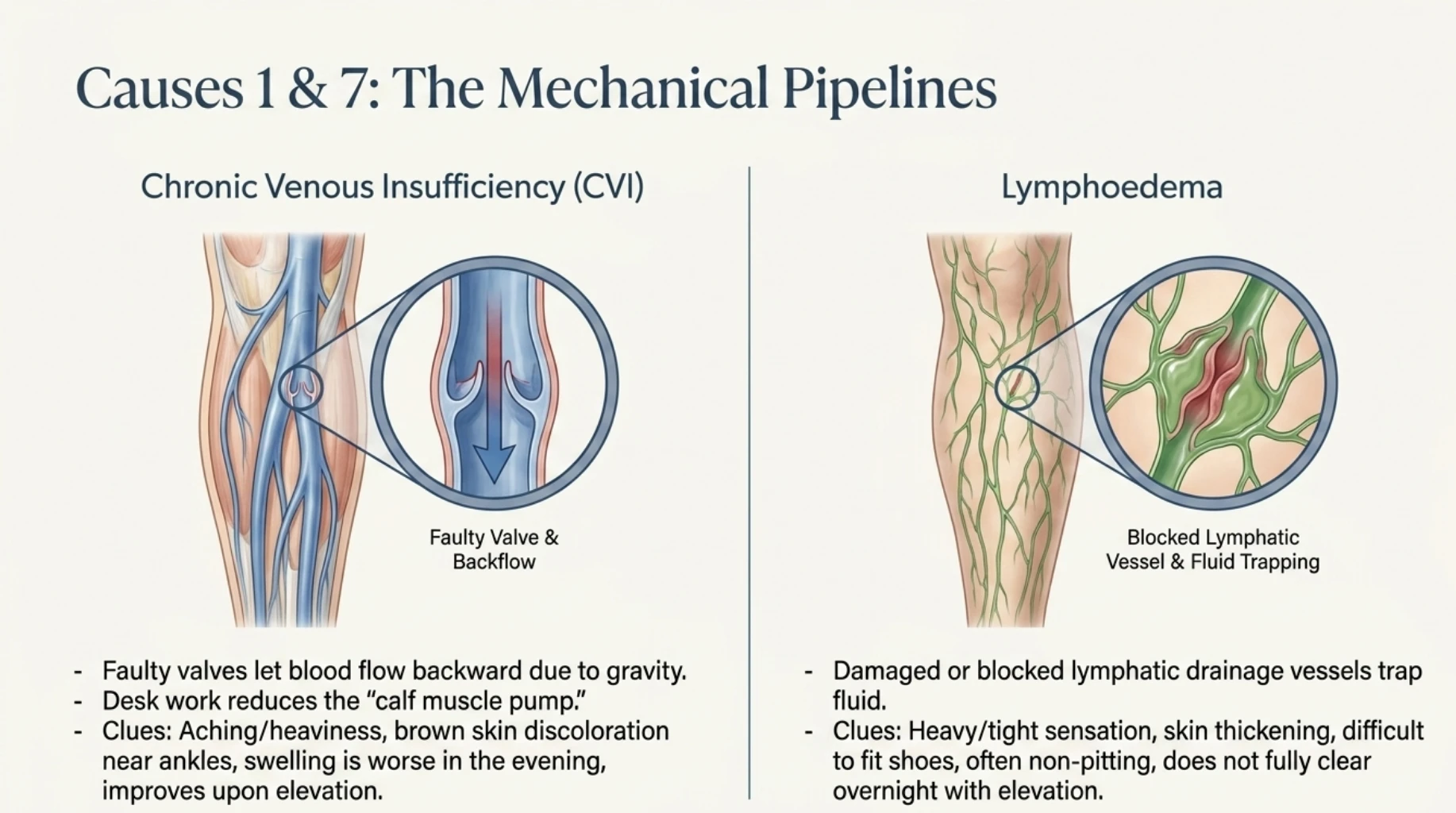
One of the common causes of persistent lower-leg swelling is chronic venous insufficiency. Veins in the legs contain valves that help blood return towards the heart. When these valves do not function efficiently, pressure builds in the leg veins and fluid can leak into surrounding tissues.
The swelling commonly affects the ankles and lower legs and may become more noticeable after several hours of standing or sitting.
Associated features can include:
- aching or heaviness in the legs
- visible varicose veins
- swelling that worsens through the day
- improvement after elevation
- brownish skin discoloration near the ankles
- itchy or inflamed skin
- ulcers near the ankle in advanced disease
Chronic venous insufficiency should not be confused with a sudden blood clot. It usually develops gradually rather than appearing abruptly.
Duplex ultrasound can be used when chronic venous insufficiency needs confirmation because it can assess venous reflux and obstruction.
Why Ankle and Foot Swelling Can Be Worse in the Evening
Gravity increases pressure in the veins of the lower legs while you are upright. This explains why venous swelling is often relatively mild in the morning and more obvious by evening.
Desk-based work can contribute even when you do not stand all day. Remaining seated for long periods reduces contraction of the calf muscles that normally helps pump venous blood upwards.
Helpful general measures may include regular walking, avoiding very long periods in one position and elevating the legs when resting. Compression stockings can be useful for selected causes of edema, particularly venous disease, but they should not simply be purchased for every swollen leg. Peripheral arterial disease and other conditions can affect whether compression is appropriate.
Cause 2: Deep Vein Thrombosis
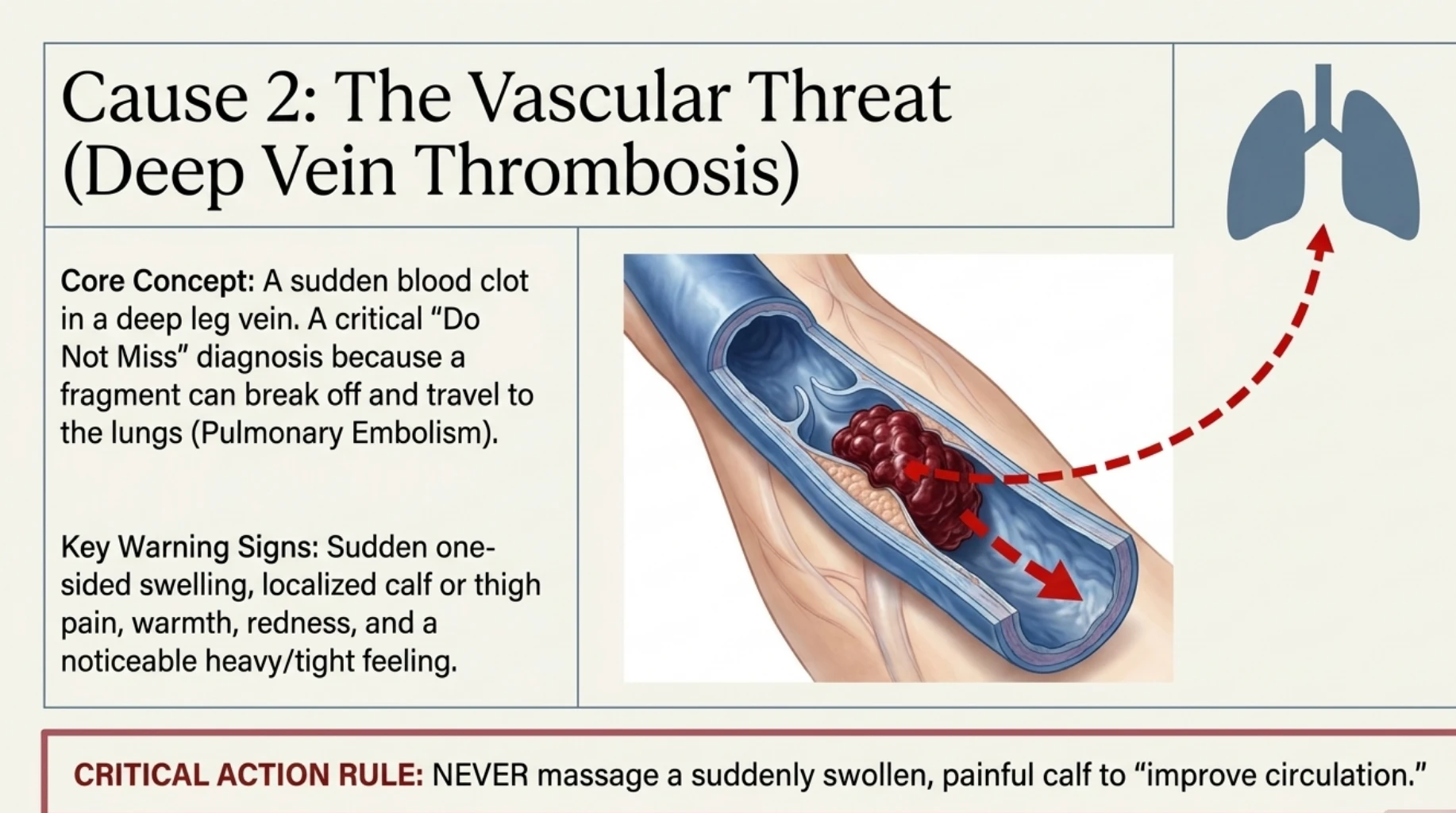
A deep vein thrombosis, or DVT, is a blood clot that usually forms in a deep vein of the leg. It is an important cause not to miss because part of the clot can travel to the lungs and cause a pulmonary embolism.
Possible features include:
- swelling mainly in one leg
- calf or thigh pain
- tenderness
- warmth
- redness or color change
- a feeling that one leg is noticeably heavier or tighter
Not everyone with DVT has all of these symptoms.
Risk may be increased after major surgery, prolonged immobility, a previous DVT, active cancer or other recognized thrombotic risk factors. Clinicians use the history, examination and validated tools such as the Wells score to estimate the probability before selecting D-dimer testing or compression ultrasound.
One-Sided Swelling With Pain, Warmth or Redness
New unilateral swelling deserves particular attention when there is no obvious sprain or injury. AAFP guidance recommends urgent evaluation of acute one-sided lower-extremity edema because DVT is among the important possible causes.
Do not massage a suddenly swollen painful calf in an attempt to “improve circulation.”
If leg swelling is accompanied by sudden breathlessness, chest pain, coughing blood or collapse, seek emergency care immediately because pulmonary embolism must be considered.
Cause 3: Heart Failure and Fluid Retention
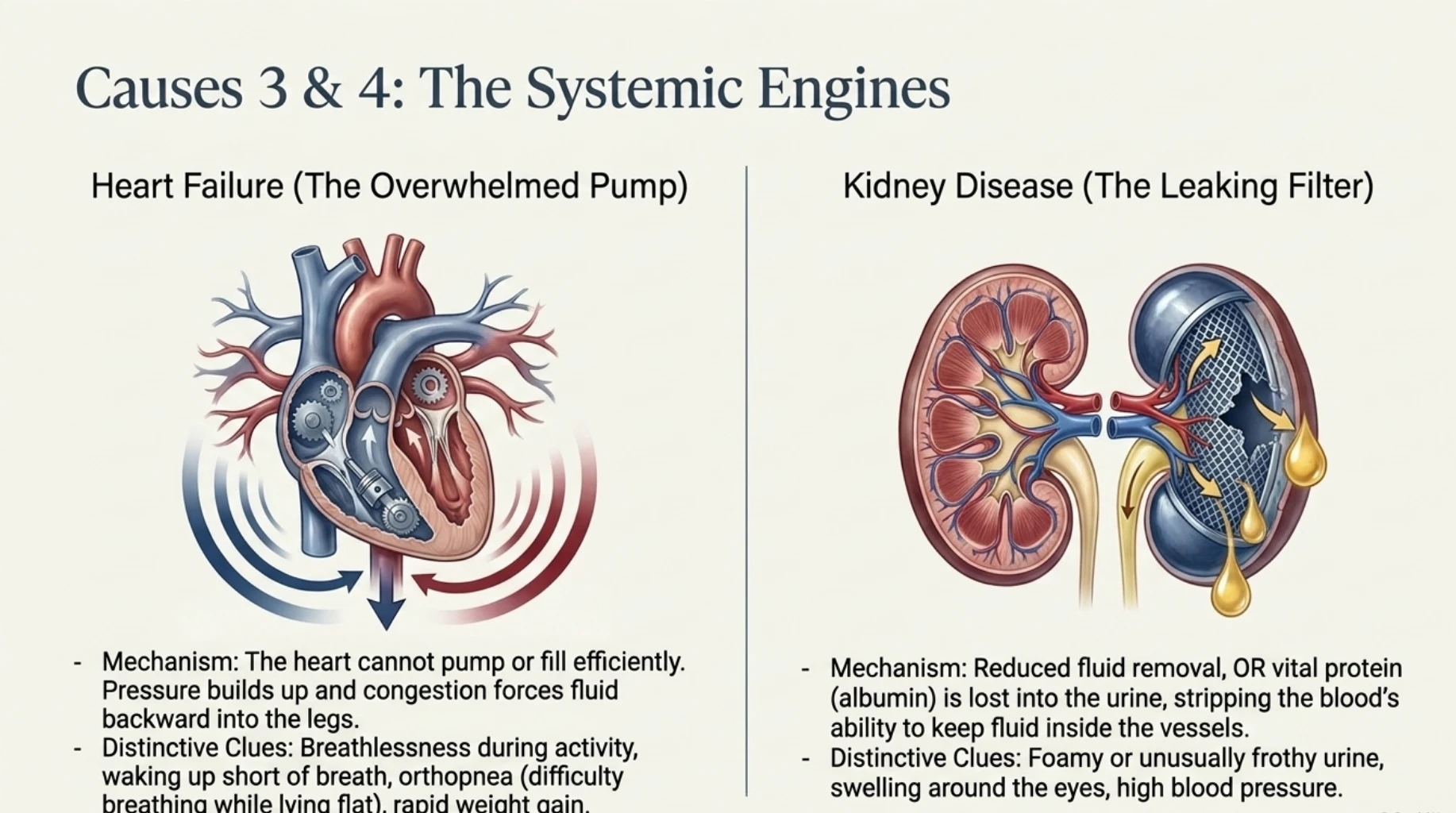
Heart failure does not mean that the heart has completely stopped working. It means that the heart cannot pump or fill efficiently enough to meet the body’s needs without abnormal pressure and congestion.
Fluid may consequently accumulate in the legs and ankles.
Heart-related swelling often affects both legs and may occur with:
- breathlessness during activity
- reduced exercise tolerance
- difficulty breathing when lying flat
- waking at night short of breath
- rapid fluid-related weight gain
- fatigue
- abdominal fullness
Ankle swelling is recognized among the typical symptoms of heart failure. Current ESC guidance also emphasizes objective cardiac assessment rather than diagnosing heart failure from swelling alone.
Many other conditions can cause ankle edema, so swollen feet do not automatically mean that a person has heart failure.
Swollen Feet With Breathlessness or Difficulty Lying Flat
Swelling becomes more concerning when it is accompanied by breathlessness or orthopnea—the need to sit up or use extra pillows because breathing becomes uncomfortable while lying flat.
AAFP guidance recommends considering cardiac assessment, including echocardiography, when lower-extremity edema occurs with findings that raise concern for heart failure, such as dyspnea or an elevated natriuretic peptide level.
Rapidly increasing swelling with worsening breathlessness should not wait for a routine appointment.
Cause 4: Kidney Disease and Protein Loss
The kidneys regulate sodium and water balance and remove excess fluid from the bloodstream. When kidney function is significantly reduced, fluid may accumulate in the feet, ankles, hands or other tissues.
Swelling can also occur when kidney disease causes substantial loss of protein into the urine. Loss of albumin lowers the blood’s ability to keep fluid inside the circulation, allowing more fluid to move into tissues.
Possible accompanying clues include:
- foamy or unusually frothy urine
- changes in urine output
- swelling around the eyes
- high blood pressure
- fatigue
- known diabetes or kidney disease
Chronic kidney disease can remain silent for a long time, so swelling should not be used as the only indicator of kidney function. Assessment may involve serum creatinine with estimated glomerular filtration rate and measurement of urinary protein or albumin. KDIGO’s 2024 guideline continues to emphasize assessment of both kidney function and albuminuria when evaluating chronic kidney disease.
Diabetes and high blood pressure are important kidney-risk conditions. A patient with either condition who develops persistent new edema should have the broader clinical picture reviewed rather than simply reducing water intake independently.
Water tablets are also not automatically appropriate. Diuretics can be useful for certain systemic causes of edema, but unnecessary use can cause dehydration and electrolyte disturbances.

Written by Dr. Pankaj Kumar
General & Lifestyle Physician in Dwarka Sector 6, New Delhi · MBBS, DNB (Family Medicine), DNHE · 16 years of experience.
About the doctor →Book a consultation → Beyond Blood Sugar
 The 90-Day Prediabetes Turnaround
 The Indian Diabetes Diet Reset
 Eat to Beat Gout
 Why Is My Hair Falling?
 The 30-Day Inflammation Reset